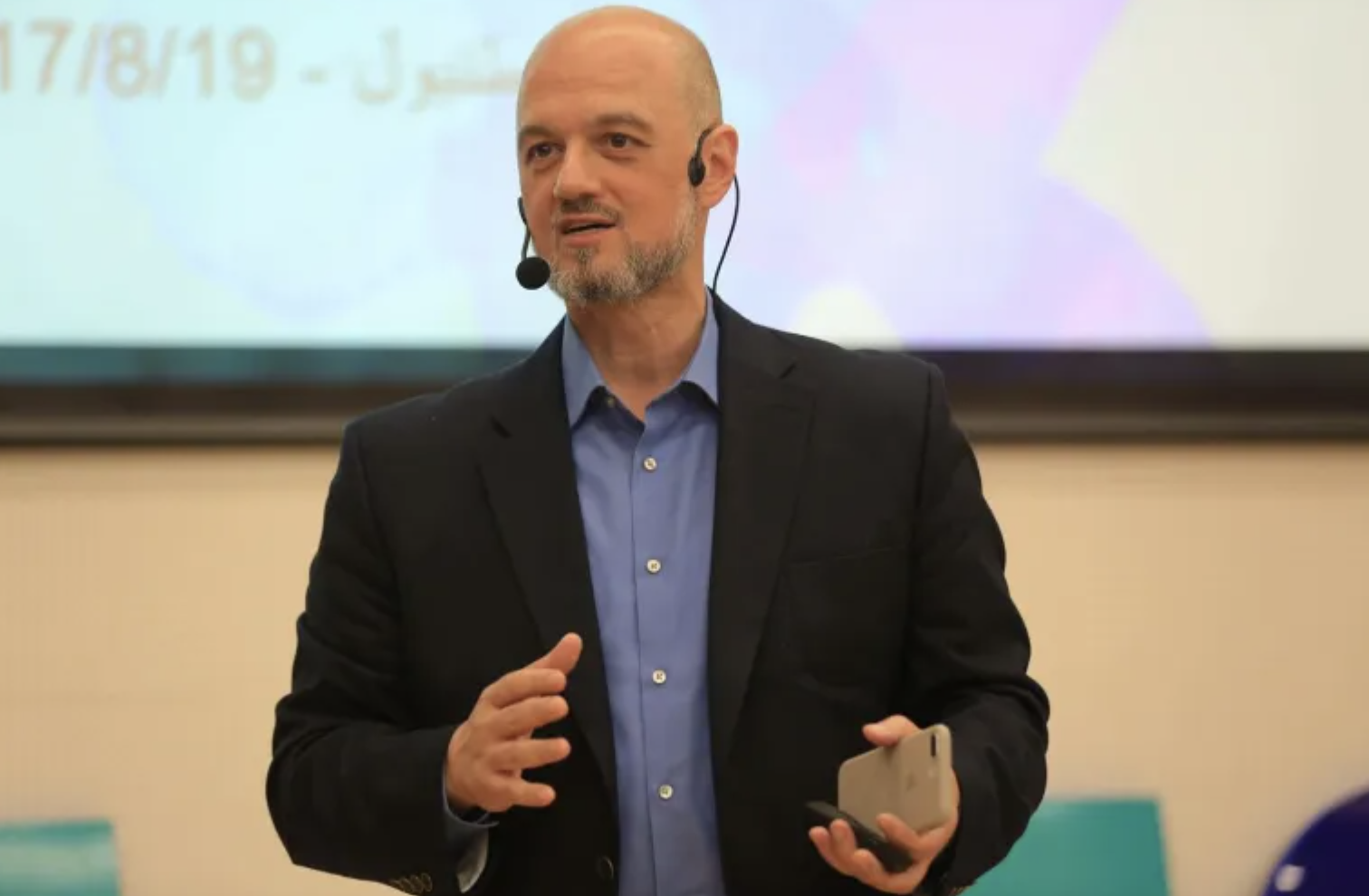
A high-profile British-Iraqi interfaith activist was turned away from Canadian soil and detained for 11 hours at Montreal-Pierre Elliott Trudeau International Airport earlier this week, in a move that has sparked intense debate over freedom of speech and political pressure shaping Canadian border policy. Anas al-Tikriti, founder of the London-based Cordoba Foundation, an organization dedicated to fostering cross-cultural dialogue between Western nations and Muslim communities, had been scheduled to address a national convention hosted by the Muslim Association of Canada in Toronto between May 16 and 18 before his entry was blocked. He was ultimately deported back to London following hours of questioning by Canadian border officials. In a formal statement released after his deportation, al-Tikriti described his detention as a prolonged, unfocused process marked by repetitive questioning that mirrored queries he had already completed on his Electronic Travel Authorisation (ETA) application form. Among the repeated questions, he said, was what he called the absurd and demeaning inquiry asking if he had ever been linked to narcotics networks, terrorist organizations or criminal groups. Al-Tikriti added that at no point did officials ask to discuss his planned remarks at the convention, his academic or political views, or the purpose of his visit. When he volunteered to provide additional context or clarification for his travel, the overseeing officer explicitly declined to hear any further information. “It was clear to me within the first three hours that they had no intention of allowing me into Canada, and that the hours that followed were a search for a pretext,” al-Tikriti said in his statement. By the afternoon of his arrival, officials had settled on a justification for the denial: they claimed al-Tikriti had provided false information on his ETA application when he stated he had never been refused a visa by another country, pointing to a 2023 U.S. visa refusal as evidence of the inaccuracy. Al-Tikriti has strongly pushed back on this claim, stating unequivocally that he did not intentionally misstate his travel history on the form. The activist founded the Cordoba Foundation in 2005, and the organization works to build intercultural dialogue and provides strategic and security policy advice to political stakeholders working on Middle East issues. The designation has long been a point of controversy: in 2014, the United Arab Emirates, where al-Tikriti spent his adolescence and early adulthood, labeled the Cordoba Foundation as a terrorist organization – a classification that rights advocates argue is politically motivated. Al-Tikriti has also been targeted by state surveillance in the past: in 2021, forensic analysts confirmed his personal iPhone had been compromised by Pegasus, the powerful military-grade spyware developed by Israeli cybersecurity firm NSO Group, with evidence pointing to the UAE as the actor behind the hack. The Muslim Association of Britain has publicly linked the Canadian decision to ongoing political pressure around the Israel-Palestine conflict, arguing the entry ban was pushed by bad-faith actors seeking to silence public criticism of Israel’s military campaign in Gaza, which critics have labeled a genocide. The organization added that the incident raises serious, troubling questions about the state of free speech in Canada, and the growing trend of targeting activists who publicly advocate for Palestinian human rights. Al-Tikriti echoed that sentiment in his statement, saying he would have respected Canadian authorities more if they had been transparent about the real reason for his denial. “I would, frankly, have had more respect for the Canadian immigration authorities had they simply said so. That they were under pressure not to admit me,” he said. “That my views on Palestine were unacceptable to them. That my criticism of Israel’s crimes against humanity was intolerable.”