标签: Asia

亚洲

  • Key Indian states hold elections that will test reach of Modi’s party in opposition strongholds

    Key Indian states hold elections that will test reach of Modi’s party in opposition strongholds

    On Thursday, voters across three Indian regions — the states of Assam and Kerala, and the federal union territory of Puducherry — headed to polling stations to cast their ballots in the first phase of a series of critical state-level elections that are widely viewed as a critical barometer of public support for Prime Minister Narendra Modi and his ruling Bharatiya Janata Party (BJP).

    These electoral contests have positioned the BJP and its regional coalition partners, the National Democratic Alliance (NDA), against a fragmented but unified front of national and regional opposition parties. Currently, the NDA holds governing power in Assam and Puducherry, while Kerala is under the control of a opposition-led administration. Two additional opposition-governed states, West Bengal and Tamil Nadu, are scheduled to hold their polling phases later this April, with official results for all five electoral contests set to be announced on May 2.

    The elections unfold against a backdrop of growing public anxiety over skyrocketing energy prices and tightening supplies of cooking gas, economic pressures amplified by the ongoing conflict in the Middle East that has roiled global commodity markets.

    For Modi and the BJP, the outcome of these state polls carries far-reaching political implications. After the 2024 national election, the BJP was forced to depend on a coalition of regional allies to form its federal government, so a strong performance across these five regions will not only cement the party’s reputation as India’s dominant political force but also strengthen Modi’s standing in the national coalition. A solid showing would also signal that the BJP is successfully making inroads into long-held opposition strongholds, expanding its geographic footprint across the country.

    At the same time, these elections are a make-or-break moment for India’s fragmented opposition, which is working to build a cohesive, sustained challenge to the BJP’s national dominance after weaker-than-expected showings in recent national and state contests.

    Each region carries its own unique political dynamics that shape the BJP’s campaign strategies. In the northeastern border state of Assam, which shares a frontier with Bangladesh, the BJP is fighting to retain its incumbent power by centering its campaign on a hardline stance toward immigration, one of the state’s most persistent and divisive issues. Ruling party leaders have leaned into sharp, polarizing rhetoric centered on claims of illegal immigration by Bengali-speaking Muslim communities, framing the election as a fight to protect the state’s demographic and cultural identity.

    In the southern state of Kerala, the BJP faces a far steeper uphill battle. Power in Kerala has historically alternated between two rival coalitions led by the Indian National Congress and national communist parties, and the BJP has never managed to gain significant electoral traction in the state. Even so, the party has poured unprecedented resources and campaign effort into expanding its political presence in the region in this cycle.

    For the small federal territory of Puducherry, the BJP is working to consolidate its influence by leveraging a pre-election coalition with a prominent regional party to hold and expand its current share of power.

    The most closely watched and contentious of all the upcoming contests remains West Bengal, where the regional Trinamool Congress has held governing power for three consecutive terms. The BJP has never controlled the state, and already high political tensions have been amplified by allegations of widespread irregularities in a recent electoral roll revision process called the Special Intensive Revision.

    Opposition parties claim the process has disenfranchised millions of eligible voters, disproportionately targeting minority Muslim communities. The Election Commission of India has rejected these claims, asserting that the revision was a routine procedural step designed to remove dead, duplicate, and fraudulent voter entries from the rolls. Similar electoral roll updates have already been carried out in multiple other Indian states in recent cycles.

  • Iran blocks Hormuz as Israeli bombing kills hundreds in Lebanon

    Iran blocks Hormuz as Israeli bombing kills hundreds in Lebanon

    Less than 24 hours after a fragile Pakistan-brokered ceasefire between Iran, Israel, and the United States was announced, the entire agreement is on the brink of collapse after Israel launched an unprecedentedly intense bombing campaign across Lebanon, prompting Iran to halt all oil tanker traffic through the strategically critical Strait of Hormuz. This vital waterway handles roughly 20 percent of the world’s daily global oil shipments, and as of Wednesday, more than 180 tankers were already transiting the strait, with hundreds more queued for entry waiting to proceed, according to reporting from Reuters.

    The crisis began unfolding shortly after the truce was finalized on Tuesday. While Israel formally agreed to the two-week cessation of hostilities with Iran, Israeli officials immediately asserted that the terms of the agreement did not extend to its ongoing military campaign against Hezbollah in southern Lebanon. Iran, however, counters that a full halt to Israeli attacks on Lebanon is one of the 10 core binding terms of the brokered deal, labeling Israel’s intensified strikes a clear violation of the agreement.

    In the 24 hours following the ceasefire announcement, Israeli forces ramped up their bombardment of Lebanon to levels described by observers as “apocalyptic.” Lebanese health authorities confirm that at least 254 people have been killed in the strikes, with more than 1,160 others wounded — some local official estimates place the death toll as high as 300. More than 100 targets across the country, including densely populated residential urban areas, were hit in a coordinated wave of attacks that unfolded over just a few minutes. Among the fatalities in southern Lebanon are 12 medics who were serving on the front lines of emergency response, Reuters confirmed.

    Lebanese Prime Minister Nawaf Salam issued an urgent public appeal on Wednesday, calling on allied and sympathetic nations to bring maximum pressure on Israel to immediately end the bombardment. “All of Lebanon’s friends are called upon to help us stop these attacks by all available means,” Salam said in his statement.

    In response to Israel’s breach of the truce, Iran has taken rapid, dramatic action to enforce its commitments to the agreement. Iranian state media outlet Fars News first confirmed Wednesday that all commercial oil tanker traffic through the Strait of Hormuz has been suspended, timed to coincide with the expansion of Israel’s attacks on Lebanon. Top Iranian officials have also openly discussed two further escalatory steps: resuming full-scale counteroffensives against Israel, and withdrawing entirely from the ceasefire agreement entirely if the Lebanese bombing does not stop immediately.

    “Iranian Foreign Minister Abbas Araghchi outlined the country’s red lines clearly in a post on his official Telegram channel Wednesday. “The conditions for a ceasefire between Iran and the United States are clear and explicit: America must choose either a ceasefire or the continuation of war through Israel; both cannot coexist,” he wrote. “The world is witnessing the killings in Lebanon. Now the ball is in America’s court, and global public opinion is watching to see whether this country will fulfill its commitments or not.”

    Israeli political commentator Ori Goldberg offered a sharp critical assessment of his country’s actions during a Wednesday interview with Al Jazeera, framing the intensified strikes as a sign of political desperation rather than military strength. Goldberg described the expanded bombing as “a pyrotechnics show meant to demonstrate Israel’s effectiveness while ultimately demonstrating its despair.” He noted that Israeli Prime Minister Benjamin Netanyahu “bet it all” on aligning with U.S. President Donald Trump to advance his regional agenda and ultimately lost, after far-right Israeli leaders were sidelined from Trump’s decision to pause attacks on Iran.

    Netanyahu, Goldberg argued, has now turned back to Lebanon, a territory that has faced repeated Israeli incursions and sovereignty violations for decades. Since the 1980s, Israeli military operations in Lebanon have killed more than 20,000 people, most of them civilians, and Israel occupied parts of southern Lebanon for 18 years through the end of the 20th century. Many far-right Israeli politicians still publicly claim all of Lebanon as part of their ideological “Greater Israel” project.

    Israeli Defense Minister Israel Katz defended the strikes in a Wednesday statement, claiming the operation targeted hundreds of Hezbollah militants at command centers across Lebanon. Katz called the attack “the largest concentrated blow Hezbollah has suffered since Operation Beepers,” the 2024 strike that used booby-trapped communication devices to kill dozens of people, including multiple children. It is worth noting that both Katz and Netanyahu are currently accused of inciting genocide in Gaza before the International Court of Justice, and the pair are also wanted by the International Criminal Court on charges of crimes against humanity and war crimes stemming from Israel’s 29-month military campaign and siege in Gaza. That campaign has left more than 250,000 Palestinians dead, wounded, or missing, and has reduced most of the Gaza Strip to ruins, even as hundreds more Palestinians have been killed in the six months since a ceasefire was implemented there.

    Regional and international actors across the political spectrum have widely condemned Israel’s escalation as a deliberate attempt to sabotage the truce. Iraqi government spokesperson Bassem al-Awadi called the strikes “evidence of its hostile plan to sabotage the truce” and “perpetuate conflict.” Qatar’s Ministry of Foreign Affairs issued a statement calling on the global community “to fulfill its responsibilities by compelling the Israeli occupation authorities to halt their barbaric massacres and repeated attacks on Lebanon, and to hold them accountable for respecting international covenants and laws.”

    Major international humanitarian aid organizations have echoed these warnings, emphasizing that the partial ceasefire, which President Trump has touted as a landmark breakthrough for Middle East peace, will not survive unless the bombing of Lebanon stops immediately. David Miliband, president and CEO of the International Rescue Committee, noted that while the Tuesday ceasefire announcement was a “welcome step,” it remains “partial, fragile, and incomplete.” Miliband pointed to the core dispute over the truce’s scope: while Trump and Israel claim Lebanon was never included in the terms, Pakistan — the primary mediator that brokered the deal — confirms that a halt to attacks on Lebanon was part of the 10-point framework agreed to by all parties.

    “Leaving one front of the conflict burning risks prolonging the crisis, not resolving it,” Miliband said.

    Ahmad Alhendawi, Save the Children’s regional director for the Middle East, North Africa, and Eastern Europe, echoed that assessment, noting that the current truce structure “is not enough” to protect vulnerable civilian populations. “We’re urgently calling for a definitive ceasefire for the wider region, which includes Lebanon, to protect children from further harm,” Alhendawi said. “A whole generation of children bears the brunt of this conflict. A definitive ceasefire for the entire regional conflict, including Lebanon, is the only way to truly protect children’s lives and futures and end the suffering. The violence must end before more children suffer irreparable harm.”

    The Wall Street Journal reported Wednesday that Iran has already notified regional mediators that it will not participate in planned in-person follow-up ceasefire talks in Islamabad, Pakistan’s capital, unless a full ceasefire is implemented in Lebanon first. That development comes as Netanyahu has publicly vowed to “continue to strike” Lebanon regardless of the truce.

    “Sounds like somebody needs to rein in Israel ASAP,” Brian Finucane, senior adviser to the US Program at the International Crisis Group, wrote on social media Wednesday. “The American people want this war to end and bombing downtown Beirut is not a path to peace.”

    Despite widespread calls to enforce a full truce, President Trump doubled down on his position Wednesday during an interview with PBS, insisting that Lebanon was “not included in the deal” and framing the Israeli assault as “a separate skirmish.” That position has been rejected by top Iranian officials, humanitarian leaders, and even U.S. lawmakers who support a lasting regional peace, who all argue that conflicts across the Middle East are deeply interconnected.

    “Aggression towards Lebanon is aggression towards Iran,” Gen. Seyed Majid Mousavi, aerospace commander of Iran’s Islamic Revolutionary Guard Corps, stated Wednesday.

    U.S. Representative Don Beyer (D-VA) called on the Trump administration to reverse course immediately. “The Trump administration must immediately make clear to Israel that the ceasefire agreement is not and cannot be functional without a ceasefire in Lebanon,” Beyer said. “The American people want this war to end, and bombing downtown Beirut is not a path to peace.”

    Amitabh Behar, executive director of Oxfam International, emphasized in a statement that no durable peace can be achieved without ending all hostilities across the entire region. “Until there is an end to all hostilities, across the entire region, no one will feel truly safe,” Behar said. “Israel’s ongoing invasion in Lebanon, its destructive occupation of Palestinian territory, ground incursion and airstrikes in Syria, its continued attacks in Gaza, and violent attacks and territorial expansion in the West Bank are still continuing despite the provisional cessation of violence with Iran. This deadly toll across the Middle East is intolerable and must stop.”

  • US resumes processing Afghan visas that will result in denials, says rights group

    US resumes processing Afghan visas that will result in denials, says rights group

    A leading advocacy organization for Afghan evacuees has sounded a sharp alarm over the Trump administration’s recent restart of special immigrant visa (SIV) processing for Afghans who supported the U.S. government, calling the long-awaited resumption a calculated deception preordained to end in widespread, blanket denials.

    #AfghanEvac, the coalition coordinating evacuation and advocacy efforts for at-risk Afghans, made the allegations public in a formal statement released Wednesday. According to group leadership, the Trump administration has begun directing Afghan SIV applicants to coordinate cross-border travel and schedule in-person interviews at U.S. embassies, but it is intentionally withholding a critical piece of information from those applicants: under current administration policies, their applications are almost certainly set to be rejected.

    “This is not speculative rumor — this is confirmed by sworn testimony from a senior State Department official,” said Shawn VanDiver, president of #AfghanEvac.

    The testimony in question comes from Andrew Veprek, the U.S. Assistant Secretary of State for Population, Refugees, and Migration, who submitted the statement to a federal court in Washington, D.C. on March 30 as part of ongoing litigation in the case *Afghan and Iraqi Allies v Rubio*, filed late last year. Veprek confirmed in his testimony that SIV processing resumed in February of this year, a step the administration was ordered to take by the court.

    However, #AfghanEvac emphasizes that processing an application is not equivalent to approving entry into the United States. Veprek’s own testimony acknowledges that the Trump-era Afghan travel ban remains fully in force via executive order, and consular officers face no requirement to notify applicants in advance of potential inadmissibility grounds that will lead to denial.

    The timing of the visa processing restart carries added significance amid a separate administration deadline to close Camp As Sayliyah, a U.S. processing facility in Qatar that currently holds more than 1,000 at-risk Afghans stuck in limbo while waiting for U.S. resettlement approval. The Trump administration originally set a March 31 deadline to shut down the camp, and the State Department has been searching for third countries willing to accept the displaced Afghans. Department officials have also blamed the prior Biden administration for what they claim was inadequate vetting of the Afghan evacuees.

    Interviews with multiple Afghans currently held at the Qatar camp contradict that claim, however. Multiple evacuees told Middle East Eye they have already received approved U.S. visas, some through pathways outside the SIV program, and standard protocol requires extensive pre-screening before evacuees are ever flown to the Qatar facility in the first place.

    As of April 8, the camp remains open, contradicting the original March 31 shutdown timeline. The only Afghans who have been allowed to leave the facility so far have accepted U.S. government stipends to return to Afghanistan — a move the State Department previously told Middle East Eye it would not pursue.

    VanDiver explained the tangible harm of the administration’s deceptive policy: “In plain terms: people are being told to show up for a process that the government already expects to end in denial, without being told that upfront. For many, that means spending scarce resources, crossing borders, and taking on real personal risk for an outcome that is effectively predetermined.”

    Veprek’s testimony also outlined new plans to increase monthly visa interview scheduling at the U.S. embassy in Islamabad, Pakistan — where thousands more Afghans are waiting for SIV outcomes — by 25% this month. Even with that increase, however, Veprek acknowledged the U.S. cannot expand processing much further, noting that allocating the majority of interview slots to Afghan applicants rather than Pakistani citizens risks damaging bilateral relations between Washington and Islamabad.

    Data from the U.S. government compiled by #AfghanEvac underscores the staggering scale of the ongoing backlog. As of August 2025, 178,110 Afghan applicants have already received chief of mission approval, the formal qualification step for an SIV. None of these approved applicants have yet completed their required interviews or received their issued visas. #AfghanEvac warns the backlog could take more than a decade to clear at current processing rates, a timeline stretched even longer by widespread staff cuts implemented last year as part of the Trump administration’s DOGE initiative.

  • Pakistan, Turkey, Egypt, Saudi Arabia a new regional power block?

    Pakistan, Turkey, Egypt, Saudi Arabia a new regional power block?

    In a breakthrough diplomatic development announced by Pakistani Prime Minister Shehbaz Sharif, the United States and Iran have reached agreement on a two-week ceasefire that came into effect in the early hours of April 8. Negotiators from both adversarial nations are scheduled to convene for follow-up peace talks this Friday in Islamabad, the Pakistani capital, marking the first formal direct engagement between the two sides in months.

    This ceasefire announcement arrives less than two weeks after Islamabad hosted a high-profile summit bringing together Pakistan, Saudi Arabia, Egypt, and Turkey. At that gathering, the four nations issued a unified call for an immediate end to hostilities across the Persian Gulf, and formalized their grouping — now dubbed the Middle East Quartet — as the primary mediating channel between Tehran and Washington. Analysts view this collective effort as the foundation of an emerging regional order aimed at reducing the influence of both Iran and Israel, whose escalating confrontations have plunged the Middle East into chaos since the outbreak of full-scale conflict in late February 2026.

    Long before the current war ignited, both Iran and Israel faced growing regional isolation, a shift that has completely upended decades of Western-led diplomatic strategy in the region. The 2020 Abraham Accords, spearheaded by the United States to normalize relations between Israel and Arab states, have effectively collapsed. The accords’ core strategic goal — securing normalization between Israel and Saudi Arabia — is now completely out of reach. While the United Arab Emirates and Bahrain signed normalization deals under the accords, Saudi Arabia has repeatedly maintained it will never formalize ties with Israel without the establishment of an independent Palestinian state. That prospect was formally ruled out by the Israeli parliament in a 2024 vote, and recent reporting indicates Saudi Arabia is already moving forward with plans to reroute a key fiber-optic cable connecting the kingdom to Europe, replacing Israel with Syria as the transit hub.

    Regional alienation of Israel has deepened across the Muslim world. Turkey suspended all formal diplomatic and economic ties with Israel in 2024 in protest of the Gaza conflict, while relations between Doha and Tel Aviv broke down completely in September 2025 following an Israeli targeted strike on Hamas leaders in the Qatari capital, an attack that drew unanimous condemnation from the United Nations Security Council.

    For its part, Iran finds itself even more isolated than it was at the start of the conflict. Once counting Russia, and to a far lesser degree China and Yemen’s Houthi movement, as its only core allies, Iran has seen its fragile regional partnerships crumble in recent months. China has deliberately distanced itself from Tehran since the outbreak of full-scale hostilities, while the Houthis, who entered the conflict in support of Iran, have been severely weakened by years of targeted Israeli airstrikes. The long-standing close alliance between Iran and Qatar was severed entirely after Iranian missiles struck Qatar’s critical Ras Laffan natural gas facility on March 18. Even Iran’s 2023 detente with Saudi Arabia, a breakthrough agreement brokered by China after years of open hostility, has collapsed completely following Iranian missile attacks on Saudi energy infrastructure earlier this year.

    It is against this backdrop of mutual pariah status for both Iran and Israel that the four-nation quartet of Pakistan, Saudi Arabia, Egypt, and Turkey has stepped up to fill the diplomatic vacuum, prioritizing regional stability after months of destructive conflict.

    The quartet’s shared strategic and economic interests have aligned to drive their push for a restructured regional order. All four states maintain robust political and economic ties with the United States, and are active members of U.S. President Donald Trump’s 2026-established Board of Peace, an international body tasked with resolving global conflicts and overseeing long-term reconstruction in Gaza. Each member also brings unique, critical assets to the alliance: Pakistan is a recognized nuclear-armed state with advanced defense capabilities; Saudi Arabia controls the world’s second-largest proven crude oil reserves, giving it unmatched global energy influence; Egypt holds strategic control over the Suez Canal, one of the world’s most vital commercial waterways; and Turkey is a longstanding NATO member with a powerful regional military. Combined, the four nations boast a total population of 500 million, making them the most politically and militarily influential bloc of Muslim-majority countries on the global stage.

    While the quartet’s collective influence is undeniable, the alliance is not without historical friction. For decades, the four nations have endured periods of tense relations, requiring deliberate diplomacy to overcome long-standing divides. Egypt and Saudi Arabia’s relationship has long been described as a “difficult marriage”: Egypt’s mid-20th century leadership of pan-Arab secular nationalism was historically viewed as a direct threat to the Saudi monarchy, but since Abdel Fattah el-Sisi took power in Cairo in 2014, the two sides have resolved their core differences. Sisi offered critical political and military support to Saudi Arabia’s 2015 military operation against the Houthis in Yemen, and the pair have since deepened their defense cooperation significantly.

    Turkey, under the long leadership of Recep Tayyip Erdoğan, has positioned itself as a regional power broker and conflict mediator, but it too has a history of frosty relations with other quartet members. Ankara’s ties with Cairo collapsed after the 2013 military coup that ousted Turkish ally Mohammed Morsi, while relations between Turkey and Saudi Arabia plunged to a historic low following the 2018 assassination of Saudi journalist Jamal Khashoggi inside the Saudi consulate in Istanbul. A 2021 U.S. intelligence assessment concluded that Saudi Crown Prince Mohammed bin Salman approved the killing, a claim he has consistently denied.

    In recent years, however, the quartet has worked through these historical divides. A formal rapprochement between Turkey and Saudi Arabia was completed in 2022, followed by a normalization of ties between Turkey and Egypt in 2025. Erdoğan toured both Cairo and Riyadh in February 2026, where he proposed multiple cross-regional geoeconomic projects to connect Asian and European markets, including the proposed Middle East Corridor designed to foster economic integration across Asia, the Persian Gulf, and Europe. Even amid recent tensions — where Pakistan has declined to intervene militarily to support Saudi Arabia against Iranian attacks, despite a 2025 strategic mutual defense pact between the two nations — the bloc has maintained its unified diplomatic push.

    As the US-Iran ceasefire holds and follow-up talks approach, the quartet’s ad hoc alliance of convenience has solidified into a transformative force in the Middle East, filling the power vacuum left by the mutual isolation of Iran and Israel and paving the way for a fundamentally restructured regional order.

    This analysis is by Natasha Lindstaedt, Professor in the Department of Government at the University of Essex, republished with permission under Creative Commons license.

  • Chinese researcher’s death after questioning in US prompts anger in Beijing

    Chinese researcher’s death after questioning in US prompts anger in Beijing

    A recent tragic death of a Chinese semiconductor researcher at the University of Michigan has sparked diplomatic demands from Beijing for a full, transparent investigation into the incident, raising fresh concerns about the growing scrutiny of Chinese academics working in the United States amid ongoing bilateral tensions. The researcher fell to his death from a campus building on March 19, and multiple US and Chinese sources have confirmed his identity as Danhao Wang, an assistant research scientist in the university’s department of electrical and computer engineering whose work focused on semiconductor technologies.

    Shortly before his death, CBS News reported, Wang had completed questioning by US federal law enforcement agents, which Chinese authorities have described as hostile. The University of Michigan confirmed in an official statement that it is treating the incident as a suspected act of self-harm, though the full circumstances surrounding the death remain unconfirmed. Both the university and Chinese government institutions have initially declined to publicly confirm Wang’s identity out of respect for the privacy of his grieving family, a position the institutions have maintained through the early stages of the case.

    The Chinese Embassy in Washington and China’s foreign ministry have repeatedly pushed US authorities to open a full investigation into the incident. Liu Pengyu, spokesperson for the Chinese Embassy in the US, told the BBC this week that the embassy was deeply distressed by the tragedy. Liu confirmed that Chinese diplomatic officials have made multiple formal representations to US government agencies and the University of Michigan regarding the case, and have been in direct contact with Wang’s family to provide full support and assistance with post-death arrangements. The embassy has also issued an advisory to all Chinese citizens studying and working in the US, urging them to increase personal safety awareness and prepare to handle interactions with US law enforcement appropriately.

    In public comments on the case, China’s foreign ministry has stressed that the death, following what Beijing calls hostile interrogation by US law enforcement, violates the fundamental legal rights of Chinese citizens, erodes trust needed for people-to-people exchanges between the two countries, and perpetuates a harmful chilling effect for Chinese academics working in the US. “China will continue to take what is necessary to firmly defend Chinese citizens’ legitimate and lawful rights and interests,” foreign ministry spokesperson Mao Ning reiterated to the BBC on Wednesday, reaffirming Beijing’s demand that US authorities deliver a full investigation and a transparent, responsible explanation to both Wang’s family and Chinese government.

    This death marks the latest high-profile incident to draw international attention to the precarious position of Chinese academics working in the US, as geopolitical tensions between Washington and Beijing continue to shape policy toward Chinese students and researchers. In 2024, another Chinese-American neuroscientist at Northwestern University died by suicide following a multi-year federal investigation into her alleged ties to Chinese academic institutions; her family has since filed a lawsuit against the university alleging unfair treatment throughout the investigation.

    Over the past five years, the US government has significantly ramped up scrutiny of Chinese researchers and students on US campuses, justifying the tougher measures with national security concerns. During the first Trump administration, a 2020 executive order barred Chinese students and researchers with suspected ties to the Chinese military from receiving US visas. In the year preceding the 2020 election, the administration further announced it would aggressively revoke visas for Chinese students, particularly those with alleged links to the Chinese Communist Party or working in sensitive, critical technology fields. That hardline position was later softened amid bilateral trade talks, when the US issued more than 600,000 student visas to Chinese citizens in a visible policy reversal.

  • Australia moves to shore up fuel supplies as it prepares for extended disruptions

    Australia moves to shore up fuel supplies as it prepares for extended disruptions

    BRISBANE, Australia — Amid lingering global energy market disruptions tied to Middle East conflict, the Australian government has announced a landmark emergency scheme to backstop two of the nation’s largest fuel suppliers amid inflated spot market prices, as Prime Minister Anthony Albanese warns that supply chain disruptions will persist long after a newly announced two-week ceasefire in the region takes hold.

    Speaking to reporters Thursday during a visit to an Ampol refinery in Brisbane, Albanese confirmed the government has finalized terms to underwrite purchases of gasoline and diesel by top domestic suppliers Ampol and Viva Energy. The agreement covers spot market fuel acquisitions made at prices well above typical commercial rates, a response to the upward price shocks that have rippled through global energy markets since the escalation of conflict in the Middle East.

    Under the scheme, the federal government will also gain authority to direct fuel distribution across the country, with priority given to regional communities and agricultural regions that have experienced widespread fuel shortages and empty gas station tanks over recent weeks.

    Albanese stressed that even if the newly brokered two-week ceasefire in the Middle East holds, the damage to global fuel supply chains will not reverse quickly. “This will have a long tail,” he said. “If the ceasefire holds, that doesn’t mean that the world global capacity comes online in a week or a month. It will take a considerable period of time. This will have a long tail. That is very, very clear.”

    Albanese described the ceasefire announcement itself as an important positive step forward, but made clear the government is preparing for extended supply-side instability. In a immediate follow-up move to shore up long-term fuel security, he will travel to Singapore Friday for high-level talks with Singaporean Prime Minister Lawrence Wong focused on strengthening bilateral energy trade and supply chain resilience.

    Albanese noted that the fast-arranged meeting — scheduled on relatively short notice — underscores the close strategic and economic ties between the two nations. “We don’t preempt one-on-one meetings at leaders’ levels, but the fact that we’re being welcomed at relatively short notice to Singapore speaks about the strength of the relationship,” he said.

    A statement from the Singaporean government confirmed the visit aligns with both nations’ ongoing regional commitments to maintaining open energy trade and consistent fuel flows. The two countries have deep existing energy interdependence: Australia ranks as Singapore’s second-largest supplier of liquefied natural gas, while Singapore is Australia’s single largest source of refined petroleum products.

    “This visit follows Australia and Singapore’s joint commitment to keep fuel flowing between both countries and to work together to strengthen energy supply chain resilience,” the Singaporean government statement added.

    Albanese emphasized that his administration is moving with urgent speed to boost domestic fuel supply and address the shortages that have disproportionately impacted non-urban areas of the country, framing the emergency underwriting scheme and upcoming Singapore talks as complementary steps to protect Australian households and businesses from extended energy market volatility.

  • Key Indian state polls begin in test for Modi’s party

    Key Indian state polls begin in test for Modi’s party

    As India enters a pivotal month of regional electoral contests, five key jurisdictions across the country are preparing to cast ballots that will carry nationwide political ramifications, serving as a critical mid-term measuring stick for Prime Minister Narendra Modi’s ruling Bharatiya Janata Party (BJP) and the fragmented national opposition. Voting kicks off first in the northeastern state of Assam, southern state of Kerala, and the union territory of Puducherry, with two additional populous states—eastern West Bengal and southern Tamil Nadu—heading to the polls later in April. All vote counting will conclude on May 4, when political analysts and parties alike will parse the results to map shifting domestic political tides.

    At the heart of this electoral cycle is the BJP’s long-held strategic goal: expanding its political footprint beyond its traditional northern and western Indian strongholds into regions where it has never secured full governing control. The party currently holds power in Assam and is a junior partner in the ruling alliance in Puducherry, but it has never formed a government in West Bengal, Kerala, or Tamil Nadu—three states where entrenched regional parties have dominated local politics for decades. Altogether, the five electoral jurisdictions hold 174 million registered voters, equal to roughly 18 percent of India’s total national electorate, making the outcome of these contests far more than a collection of regional results.

    Political analysts frame the elections as a high-stakes test for both the ruling party and the opposition, which has sought to unify to challenge the BJP’s decade-long national dominance. “It’s a big test for the BJP, which has spent years trying to expand in West Bengal and southern states like Kerala and Tamil Nadu,” Rahul Verma, a political scientist at New Delhi’s Centre for Policy Research, explained in an interview. For the main national opposition party, the Indian National Congress, which has seen its electoral influence steadily decline across India over the past decade, the contests carry even higher pressure. “The results will show whether they [Congress] can mount a serious challenge in Assam and build on recent local election gains in Kerala,” Verma added. “The election will also give a glimpse into how the broader opposition alliance is managing internal tensions.”

    A major controversy has overshadowed the entire electoral cycle: the Election Commission of India’s Special Intensive Revision (SIR), a mass update to regional voter rolls that the body says is intended to remove duplicate, outdated, or ineligible entries and add new eligible voters. But opposition parties across all five regions have levelled serious allegations against the process, claiming that millions of eligible voters—disproportionately from India’s Muslim minority community—have been improperly removed from rolls to tilt the election in the BJP’s favor. Both the BJP and the Election Commission have forcefully denied these claims of partisan manipulation.

    Beyond the national-level strategic stakes and shared controversy, each region carries its own distinct political dynamics that will shape local results:

    ### Assam
    A northeastern border state that has faced decades of political tension over migration, cultural identity, and citizenship along its porous border with Bangladesh, Assam has been governed by the BJP for 10 years, and this election will test whether the party can retain its hold on power. BJP Chief Minister Himanta Biswa Sarma has centered his campaign on rhetoric around undocumented immigration and demographic shift, repeatedly making controversial, derogatory remarks targeting Bengali-speaking Muslim residents. The Congress-led opposition has pivoted to campaigning on bread-and-butter issues: economic development, job creation, improved governance, and defense of regional cultural identity.

    ### Kerala
    One of India’s highest-performing states across key human development metrics—including literacy, universal healthcare, and life expectancy—Kerala’s politics have long alternated between two dominant statewide alliances: one led by the Communist Party of India (Marxist), and one led by the Congress. The Left alliance has held power for the past 10 years, and will be seeking to overcome widespread anti-incumbency sentiment to secure another term. Campaign discourse has centered on welfare program delivery, governance quality, and economic development, consistent with the state’s policy-focused political culture.

    ### Puducherry
    A small coastal union territory with a 30-member legislative assembly, Puducherry is currently governed by the BJP-led National Democratic Alliance. Local campaign debates have centered on core local issues: expanded welfare support, job creation, infrastructure development, and the balance of power between the union territory and India’s federal government.

    ### West Bengal
    The most populous of the five electoral regions, with more than 70 million registered voters, West Bengal has been governed by Chief Minister Mamata Banerjee and her regional Trinamool Congress party since 2011. The BJP has risen to become the party’s main challenger over the past five years, and the state will vote in two phases on April 23 and 29. Banerjee has framed the BJP as an outside force whose ideological and cultural agenda clashes with West Bengal’s unique linguistic and cultural traditions, a narrative the BJP has sought to reject. The BJP has centered its own campaign on undocumented immigration and national security, deepening political polarization in the border state. The SIR voter roll revision has been the most controversial in West Bengal, where the final updated list removed 9 million voters, with the largest share of deletions coming from Murshidabad, the state’s Muslim-majority district.

    ### Tamil Nadu
    Southern India’s Tamil Nadu has been dominated for decades by two regional Dravidian parties, the ruling Dravida Munnetra Kazhagam (DMK) and the opposition All India Anna Dravida Munnetra Kazhagam (AIADMK), which is running in this election in alliance with the BJP. Voting is scheduled for April 23, and the race has drawn national attention for the emergence of a new third force led by popular Tamil film superstar Vijay. The BJP has never gained a meaningful foothold in Tamil Nadu, where regional parties built their legacy around social justice, state autonomy, and defense of the region’s distinct linguistic and cultural identity. Even a small increase in seat share for the BJP here would be framed as a landmark breakthrough for the party’s southern expansion push.

    As voters prepare to head to the polls across the country, all major political parties are framing these regional contests as a critical preview of the next national general election, set to be held in 2029.

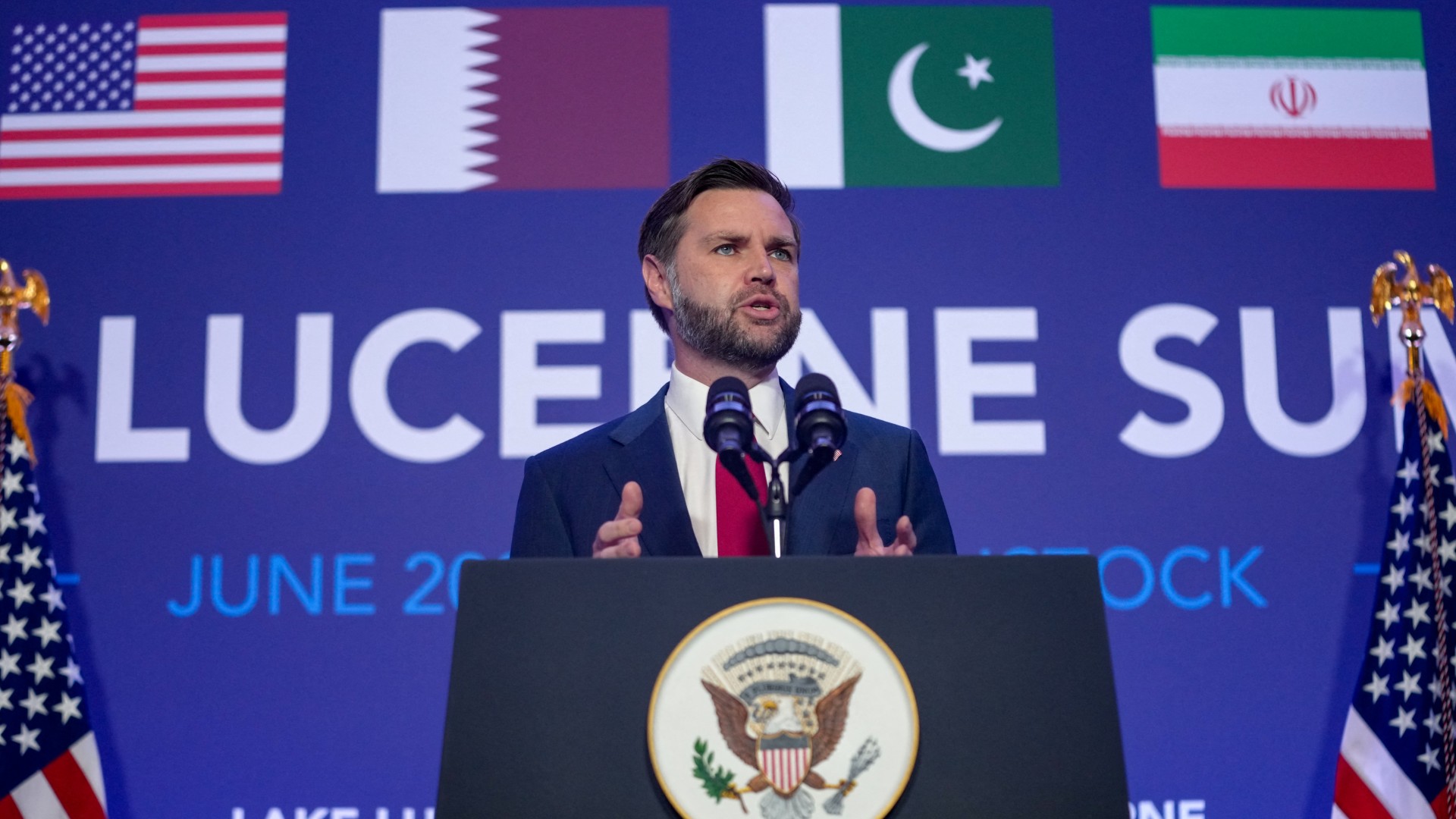
  • JD Vance to lead Iran ceasefire negotiations in Pakistan, White House says

    JD Vance to lead Iran ceasefire negotiations in Pakistan, White House says

    In a Wednesday announcement from the White House, U.S. Vice President JD Vance—who has maintained a low public profile through the U.S.-led war against Iran—will front a high-stakes U.S. negotiating delegation traveling to Islamabad, Pakistan on Friday to hash out the next steps for the newly announced U.S.-Iran ceasefire.

    Vance will begin formal bilateral and mediation talks in the Pakistani capital Saturday, joined by two of former president Donald Trump’s close personal associates: Steve Witkoff, the administration’s special envoy for global peace initiatives, and Jared Kushner, Trump’s son-in-law and a long-time informal advisor. Unlike Vance and Witkoff, Kushner holds no official position within the current U.S. administration, and both he and Witkoff have already faced public scrutiny over their handling of collapsed nuclear talks with Iran held in February, just days before the U.S. launched joint air strikes against the Islamic Republic alongside Israel.

    Pakistan will lead mediation efforts for the talks, with the country’s Prime Minister Shehbaz Sharif, Army Chief Field Marshal Asim Munir, and Foreign Minister Ishaq Dar set to host negotiations. Iran’s delegation will be led by Foreign Minister Abbas Araghchi, as of this writing it remains unconfirmed whether Israel will send any official representative to the direct talks.

    White House Press Secretary Karoline Leavitt pushed back against growing public speculation Wednesday that Vance had been sidelined from the Iran process due to his well-documented anti-interventionist stance, telling reporters that the vice president has held a central, key role in negotiations from their inception. “He is the president’s right-hand man. He is the vice president of the United States. He’s been involved in all of these discussions,” Leavitt said. Her remarks came one day after The New York Times reported Vance was the most vocal opponent of the Iran war among all Trump cabinet members. When the U.S. launched its opening wave of air strikes against Iran on February 28, Vance was notably absent from the secured situation room at Trump’s Florida resort where the president and senior advisors monitored strikes. Instead, official White House photos placed Vance in Washington D.C., alongside Tulsi Gabbard, the Director of National Intelligence and another prominent anti-intervention voice within the administration.

    The new round of in-person talks comes just 48 hours after Trump announced a two-week bilateral ceasefire agreement with Iran that includes a commitment to reopen the strategic Strait of Hormuz, a critical global chokepoint for global oil supplies. Iran’s Supreme National Security Council has formally confirmed the ceasefire, framing the agreement as a major strategic victory for Tehran and confirming the truce covers active coflicts across Iraq, Lebanon, and Yemen—one of Iran’s core non-negotiable demands.

    But the fragile truce is already facing serious strain just days after it was signed. While Israel has publicly stated it supports Trump’s ceasefire announcement, Israeli officials have insisted the truce does not extend to Lebanon. Pakistan, the lead mediator for the talks, disputes this claim, asserting the ceasefire does cover Lebanese hostilities.

    On Wednesday, that contradiction boiled over into violence: Israel launched a massive barrage of missile strikes across Beirut that killed at least 254 people, marking the deadliest single day of violence in the region since the peak of Israel’s military campaign in Gaza, which has killed more than 72,000 Palestinians since October 2023. Leavitt confirmed Wednesday that the U.S. accepts Israel’s position that Lebanon is excluded from the ceasefire, adding that Israeli Prime Minister Benjamin Netanyahu had reassured Trump of his ongoing partnership with the administration. When pressed on whether Israel’s escalated attacks in Lebanon undermine the broader ceasefire with Iran, Leavitt only said the issue would continue to be discussed between Trump and Netanyahu.

    Hezbollah, the Lebanese armed group that had observed a November 2024 ceasefire with Israel that Israel has violated thousands of times, resumed rocket attacks against Israel last month after Israel assassinated Iranian Supreme Leader Ayatollah Ali Khamenei. Israel has since launched a full ground invasion of southern Lebanon.

    Iran has warned that the escalating attacks on Hezbollah could force it to abandon the ceasefire terms. On Wednesday, the Islamic Revolutionary Guard Corps released a statement carried by Iran’s Mehr News Agency saying, “aggression against the proud Hezbollah is aggression against Iran, and that the battlefield is preparing a heavy response to the Israeli regime’s savage crimes.” By late Wednesday local time, multiple unconfirmed reports of new air strikes targeting Iranian territory emerged, stoking fears that the entire truce could collapse entirely.

    On the Strait of Hormuz, Leavitt reaffirmed Wednesday that Trump is demanding the waterway reopen immediately without restrictions, a core precondition of the ceasefire the U.S. accepted Tuesday. She added that shipping traffic through the strait had already seen an uptick on Wednesday, a claim partially corroborated by data from MarineTraffic tracking tool, though the outlet confirmed any observed increase in vessel movement remains minimal.

    A key provision of the 10-point ceasefire framework calls for Iran to impose a $2 million transit fee on every commercial vessel passing through the strait, with proceeds to be split between Iran and neighboring Oman. Oman has already publicly rejected the fee provision, stating it will not collect any such charges. The agreement allocates all collected fees to the reconstruction of critical Iranian infrastructure destroyed during the war. Still, amid the escalating violence in Lebanon, Iranian officials have confirmed they are now weighing reimposing full shipping restrictions along the waterway.

    During Wednesday’s press briefing, Leavitt also reaffirmed the administration’s core nuclear policy, stating that Iran no longer retains the capability to produce nuclear weapons—a claim the administration first made last year, despite the fact that the Iranian nuclear program was cited as the primary justification for launching the war in February. When pressed on whether the U.S. will still seize Iran’s stockpile of enriched uranium, a top Trump administration priority, Leavitt confirmed the issue remains at the top of the negotiating team’s agenda for the Islamabad talks. “That is a red line that the president is not going to back away from, and he’s committed to ensuring that takes place. We hope it will be through diplomacy,” she said. When reporters asked if Iran had signaled it would agree to hand over the enriched material, Leavitt confirmed Tehran had given such indication. Iran continues to maintain it retains the legal right to enrich uranium for peaceful civilian purposes.

  • Democrats and die-hard pro-Israel voices skewer Iran ceasefire, as Republicans back Trump

    Democrats and die-hard pro-Israel voices skewer Iran ceasefire, as Republicans back Trump

    A newly brokered two-week ceasefire between the United States and Iran has triggered deep partisan division among U.S. lawmakers, while already facing imminent collapse just hours after it was signed, following fresh outbreaks of deadly violence across the Middle East.

    The ceasefire, finalized Tuesday through Pakistani mediation after Washington extended its military deadline, has split congressional Republicans between cautious backing and open skepticism, with Democrats uniformly condemning the framework as a humiliating strategic defeat for the U.S. Even among supporters of President Donald Trump, there is sharp disagreement over the terms of the proposed permanent peace deal Iran has circulated.

    Top Republican ally Senator Lindsey Graham, an early backer of the U.S.-Israeli campaign against Iran, struck a wary tone in remarks posted to X. While he framed a diplomatic end to hostilities as the ideal outcome, he flagged serious concerns about the emerging negotiating text. Graham insisted that any final agreement must require full U.S. control over all of Iran’s approximately 900 pounds of highly enriched uranium, which must be removed from Iranian territory to block Tehran from developing a dirty bomb or resuming large-scale enrichment programs. His tough conditions cast significant doubt over the prospects for the next round of direct talks scheduled to open Friday in Islamabad, Pakistan.

    Tehran’s proposed 10-point framework for a lasting peace formalizes two key Iranian demands: full national sovereignty over the Strait of Hormuz, the world’s most critical oil chokepoint, and continued domestic uranium enrichment. Despite these terms aligned against long-standing U.S. and Israeli policy, Trump has publicly called the plan “workable.” Some senior Republicans have echoed the president’s cautious optimism: Senator Rick Scott hailed the ceasefire as “excellent news” that demonstrates the success of Trump’s “peace through strength” approach, contrasting it with what he called ineffective, weak appeasement policies of past administrations.

    But even as most congressional Republicans have aligned with Trump’s position, conservative commentators close to the president and Israeli Prime Minister Benjamin Netanyahu have lambasted the deal as a catastrophic failure. Syndicated radio host and Fox News personality Mark Levin, a vocal war supporter and Netanyahu ally, wrote on X that the 10-point plan is “an absolute disaster,” arguing that the U.S. unjustly cut Israel out of the negotiating process entirely.

    In a striking ideological overlap, Democratic lawmakers largely echoed Levin’s criticism, framing the ceasefire as a landmark blunder that cements a clear Iranian victory. Senator Chris Murphy, an early public opponent of the U.S. war on Iran, argued that Tehran’s eagerness to accept the ceasefire made its one-sided terms clear. “They will control and toll the Strait for the first time. They keep their nuclear program. They keep their missiles. What a disaster,” Murphy wrote on X.

    Senate Minority Leader Chuck Schumer, a typically staunch supporter of Israeli security, joined the criticism, echoing calls to pass a War Powers Resolution to curtail Trump’s authority to wage unauthorized war against Iran. The resolution failed on the Senate floor last month, blocked by nearly unified Republican opposition. Schumer slammed Trump as “a military moron,” noting that the months-long war has already cost U.S. taxpayers $44 billion and pushed domestic gasoline prices above $4 per gallon, leaving the U.S. far less secure than before the conflict began. “If he restarts this war, we will be in even worse shape. We must pass our War Powers Resolution to end this war for good,” Schumer added.

    Even as the political battle rages in Washington, the ceasefire has already been thrown into severe doubt by coordinated attacks across the region that began within 24 hours of the deal being signed. On Wednesday, Iran announced that one of its key oil refineries on Lavan Island had been hit in an “enemy attack,” and Tehran responded with large-scale missile and drone strikes against Gulf Arab states that it accuses of supporting the U.S.-Israeli war effort. The United Arab Emirates confirmed it was targeted by 17 ballistic missiles and 35 drones, while Qatar reported seven ballistic missile strikes and a number of drone attacks. The Financial Times also reported that a critical pumping station on Saudi Arabia’s East-West pipeline — which enables millions of barrels of oil to bypass the Strait of Hormuz for export via the Red Sea — was also hit in the coordinated strikes.

    The most severe escalation came from Israel, which launched its deadliest round of airstrikes on Lebanon since the start of the wider war, hitting densely populated central Beirut and the Bekaa Valley. Lebanon’s Ministry of Health reported that at least 112 people were killed in the strikes, with more than 800 others wounded. A spokesperson for Netanyahu’s office immediately clarified that the U.S.-Iran ceasefire “does not include Lebanon,” a direct contradiction of Pakistani Prime Minister Shehbaz Sharif’s statement that all parties had agreed to an immediate ceasefire across all theaters, including Lebanese territory.

    The Israeli escalation has already jeopardized the upcoming Islamabad peace talks. The Wall Street Journal reported that Iranian officials have informed mediators that Tehran will refuse to participate in Friday’s scheduled negotiations if Israeli attacks on Lebanon continue.

  • Middle East ceasefire may have made Iran stronger

    Middle East ceasefire may have made Iran stronger

    Ceasefires are widely framed as moments of respite: temporary halts to violence that create space for diplomatic dialogue. But in some cases, these pauses reveal a far more consequential truth: which side has actually emerged with the upper hand from a conflict. The newly negotiated ceasefire between the United States, Israel, and Iran appears to be one of these pivotal moments.

    On the surface, every party involved is publicly claiming victory. Former U.S. President Donald Trump has hailed the agreement as a “total and complete victory,” positioning it as proof that Washington achieved all its core strategic objectives. For its part, Iran’s leadership has characterized the ceasefire as a major strategic win, with the country’s Supreme National Security Council formally approving the deal on the condition that all offensive operations end.

    Beneath these competing public narratives, however, lies a deeper reality: the terms and framework of the ceasefire indicate that Iran has left the conflict not weakened, but significantly strengthened. Even after the assassination of much of the country’s senior leadership during the hostilities, the regime’s ability to quickly appoint replacements and maintain internal institutional cohesion demonstrates resilience, not imminent collapse.

    Crucially, this ceasefire was not imposed on Iran after a decisive military defeat. It was negotiated, and its core parameters were shaped by Iran’s own conditions, with tangible gains for Tehran. Tehran’s ten-point proposal served as the opening framework for talks, rather than a pre-drafted agreement forced on Iran from outside. Iran’s demands extend far beyond ending active hostilities. They include targeted sanctions relief, access to billions of dollars in frozen overseas assets, international support for post-conflict reconstruction, and continued Iranian influence over the Strait of Hormuz. The proposal also calls for a full withdrawal of U.S. military presence from the Middle East and an end to Israeli offensive operations in Lebanon.

    The Strait of Hormuz, the vital chokepoint through which roughly one-fifth of the world’s global oil supplies transit, has been reopened under Iranian oversight — a clear signal of where strategic leverage now resides in the region. Control over the strait is not just a strategic military advantage; it is a major economic asset. Reports indicate Iran has proposed continuing to collect transit fees that it implemented during the conflict, creating a steady new revenue stream at exactly the moment the country requires funding for post-war reconstruction.

    In practice, a conflict that saw sustained bombing targeting Iranian infrastructure may now leave Tehran with new financial tools to rebuild and potentially expand its regional influence. This paradoxical outcome is not unprecedented: military offensives are designed to erode an adversary’s operational capabilities, but when they fail to deliver a decisive political victory, they often open new pathways for the targeted state to gain power. Iran entered this conflict already hardened by decades of pressure. Years of sweeping international sanctions forced the regime to build systemic resilience by diversifying economic and political networks, strengthening core state institutions, and developing asymmetric military and strategic strategies.

    Far from breaking this system, the war has accelerated its evolution. Instead of collapsing, Iran has demonstrated its ability to disrupt global energy markets, absorb sustained large-scale military strikes, and force major powers to negotiate on terms that include significant economic concessions.

    This is where the disconnect in U.S. public messaging becomes most apparent. While Trump has framed the ceasefire as a total victory, a key detail tells a different story: though the temporary reopening of the Strait of Hormuz (Trump’s central public demand in recent weeks) is part of the deal, ongoing negotiations will be built around Iran’s ten-point framework, not the original U.S. 15-point plan that centered on dismantling Iran’s nuclear and missile programs. This shift is a clear indicator that Washington was seeking a quick exit from escalating conflict.

    For Iran, meanwhile, the leadership has held a consistent line: it will reject temporary arrangements unless they deliver permanent structural changes, including sanctions relief and formal security guarantees. For Washington, the ceasefire halts dangerous escalation and calms volatile global energy markets. For Tehran, it locks in the strategic leverage gained from its control of the Strait of Hormuz. This asymmetric outcome means the ceasefire is not a neutral pause in fighting; it is a turning point that could cement a major shift in regional power dynamics.

    The most impactful dimension of this shift is economic. The war sent shockwaves through global commodity markets, with oil prices swinging sharply in response to supply disruptions. But the ceasefire introduces a new, Iran-friendly dynamic: if sanctions are eased as negotiated, Iran will regain access to global energy markets at a time of sustained global demand. Combined with potential new transit revenues from the Strait of Hormuz and international reconstruction funding, this creates the conditions for a meaningful Iranian economic rebound. In the end, the war risks delivering the exact opposite of its intended outcome: instead of weakening Iran economically, it may have significantly strengthened the country’s position.

    This outcome raises a larger, foundational question: what does this ceasefire reveal about the nature of global power in the 21st century? For decades, U.S. influence in the Middle East has been built on unchallenged military dominance and coercive economic pressure. This conflict demonstrates that both pillars of U.S. power are now under significant strain.
    Militarily, the U.S. and Israel have demonstrated overwhelming conventional military capability, yet failed to achieve a decisive outcome that would eliminate Iran’s core power. Iran has retained all its core strategic capacities, maintained internal cohesion, and leveraged its geographic and economic position to shape the terms of de-escalation.

    At the same time, the international legitimacy of the U.S. and Israel has eroded considerably. The contested justifications for the war, the high civilian death toll, and the lack of broad international support have weakened both countries’ global standing, even among their traditional closest allies. U.S. soft power, a longstanding cornerstone of its global leadership, has been further diminished. Trump’s increasingly inflammatory and abusive social media posts have alienated even Washington’s closest partners, the majority of whom remained publicly silent in the face of U.S. threats to escalate the conflict.

    Economically, Iran’s proven ability to influence, and potentially monetize, global energy flows gives it a form of structural power that military force alone can never neutralize. The result is this striking paradox: a war launched to contain Iranian power has instead reinforced and expanded it.

    It remains early days for this ceasefire. Agreements can collapse, negotiations can stall, and open conflict can reignite at any time. But if the deal holds, even temporarily, it marks a critical turning point in global geopolitics. This is not because it ends the long-running conflict between Iran and the U.S.-Israeli bloc; it is because it reveals a new reality of how modern wars are won and lost. Victory today is no longer defined solely by battlefield dominance. It is determined by outcomes that are economically sustainable, politically legitimate, and strategically durable.

    Measured by these new metrics, Iran is clearly well positioned to emerge as the ultimate winner of this conflict. The U.S. and Israel may have demonstrated conventional military superiority, but Iran has demonstrated a far more consequential capacity: the ability to endure external pressure, adapt to hostile conditions, and convert that pressure into tangible strategic leverage.

    That is why this ceasefire matters far beyond the end of one phase of conflict. It marks the moment when a war designed to weaken Iran instead left it stronger, while simultaneously exposing the fundamental limits of the hard power used by the alliance that sought to contain it. This analysis comes from Bamo Nouri, an honorary research fellow in the Department of International Politics at City St George’s, University of London, and Inderjeet Parmar, a professor of international politics at the same institution.