标签: Asia

亚洲

  • Iran’s IRGC claims strikes on US targets in Kuwait, Bahrain in retaliation

    Iran’s IRGC claims strikes on US targets in Kuwait, Bahrain in retaliation

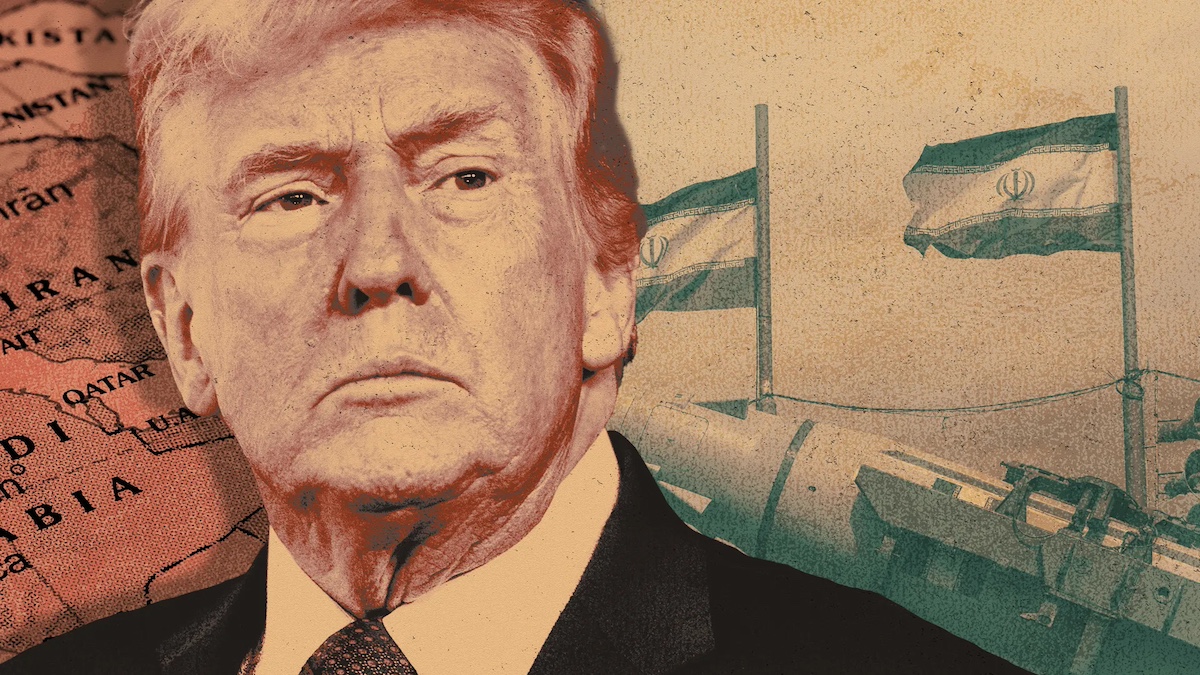
    Fresh tensions have erupted across the Persian Gulf region after Iran’s Islamic Revolution Guard Corps (IRGC) launched coordinated retaliatory strikes targeting US military facilities in Kuwait and Bahrain on Sunday morning, shattering a fragile ceasefire reached between Washington and Tehran just over a week prior.

    In an official statement carried by its affiliated media outlet Sepah News, the IRGC confirmed that its naval and aerospace divisions jointly launched the attack, deploying a combination of ballistic missiles and drones against eight key US infrastructure sites. These targets included the Ali Al Salem Air Base in Kuwait and positions belonging to the US Fifth Fleet based in Bahrain. The strike, the IRGC emphasized, came in direct response to earlier US airstrikes that hit five Iranian coastal outposts on the same morning.

    The IRGC noted that the US carried out its initial strikes under the false pretense of responding to the IRGC Navy’s enforcement action against a vessel that violated Iranian maritime rules. The statement issued a stark warning going forward: any ships attempting unauthorized passage through the strategically critical Strait of Hormuz will face far more forceful responses than in the past, and any act of aggression carried out under any pretext will be met with a crushing counterattack.

    Crucially, the IRGC pointed out that the US’s earlier strikes constituted a clear violation of the recent peace memorandum of understanding (MoU) signed by Iran and the United States to end cross-regional hostilities. Any further breaches, the statement added, will result in the full termination of all ongoing diplomatic negotiations between the two countries. Per the terms of the existing MoU, Iran holds formal responsibility for managing all maritime traffic transiting the Strait of Hormuz, a chokepoint through which roughly 20% of the world’s global oil supply passes daily.

    Sunday’s strikes drew immediate condemnation from Kuwait, whose foreign ministry decried the attack as a repeated violation of the country’s sovereign territory that undermines regional efforts to de-escalate long-running tensions. In a public statement posted to the social platform X, the ministry called the incident a “flagrant violation” of Kuwaiti sovereignty, adding that it poses a direct threat to the country’s security, stability, and the safety of all citizens and residents living within its borders.

    Bahrain also reported tangible damage from the attack: the country’s interior ministry confirmed that a residential building in Muharraq Governorate suffered structural damage, though no casualties were recorded in the incident. Authorities have already launched on-site response and inspection measures, the ministry added in its own X post.

    Local Iranian media also reported multiple explosions across southern Iran’s Hormozgan province and Qeshm Island early Sunday, matching reports of follow-up US strikes. US Central Command (CENTCOM) confirmed in a Sunday X post that it had carried out “additional strikes against multiple targets in Iran”, framing the action as a response to an earlier IRGC drone attack targeting a Panama-flagged commercial tanker transiting near the Strait of Hormuz.

    CENTCOM clarified that its latest strikes were a direct response to “continued Iranian aggression against commercial shipping”, adding that US military aircraft specifically targeted Iranian military surveillance infrastructure, communication networks, air defense positions, drone storage sites, and naval minelaying capabilities.

    The exchange of fire is the second major escalation in as many days. On Saturday, CENTCOM launched airstrikes along Iran’s southern coast, to which the IRGC responded with its own retaliatory strike against US military positions across West Asia.

    The current upsurge in violence comes just 10 days after Iran and the United States signed the initial peace MoU to end cross-regional hostilities, including an end to clashes in Lebanon. Both parties have been engaged in ongoing diplomatic negotiations to work toward a binding final peace agreement ahead of Sunday’s escalation.

  • South Korea leaves World Cup in turmoil as early exit prompts fierce criticism from president

    South Korea leaves World Cup in turmoil as early exit prompts fierce criticism from president

    South Korea’s 2024 expanded World Cup campaign has ended in early turmoil, with the national side crashing out of the group stage, triggering fierce public and political backlash that culminated in head coach Hong Myung-bo’s resignation. The Korean side got off to a promising start, securing a victory over Czech Republic in their opening Group A fixture. But successive losses to South Africa and Mexico derailed their hopes of progressing, leaving their fate dependent on other results going their way. That last glimmer of hope was extinguished on Saturday when Congo claimed a 3-1 win over Uzbekistan, eliminating South Korea from contention for one of the expanded tournament’s third-place knockout spots.

    For a nation with such a storied World Cup pedigree, the early exit has come as a profound shock. South Korea has qualified for 11 consecutive World Cup tournaments, and reached the historic semi-final when it co-hosted the competition back in 2002. This marks the second time Hong, 57, has overseen a group-stage exit for South Korea — he also led the team at the 2014 Brazil World Cup, where they failed to advance past the opening round.

    The fallout has drawn direct criticism from South Korea’s President Lee Jae Myung, who did not hold back in his scathing assessment of the national team’s failure in a detailed public statement. A self-identified long-time football fan and honorary former chairman of a professional club, and a supporter of the Korean national supporters’ group the Red Devils, Lee said he felt far more than simple surprise at the underperformance. “I feel not just surprise but deep bewilderment at this unexpected result,” he stated, targeting the broader structural flaws in the national team’s governance, oversight, and the initial decision to appoint Hong to the role.

    “Once again, it has been proven that personnel decisions determine everything. If loyalty and factionalism are valued over competence and an incapable person is appointed as a leader, the outcome is as predictable as fire,” Lee added, leveling sharp accusations that inappropriate selection criteria led directly to the team’s failure. The president called on South Korea’s Ministry of Culture, Sports and Tourism to launch a full review of the national team program and address the systemic failures that led to the early exit. He also issued a public apology to Korean football fans for the widespread disappointment caused by the result. “I sincerely apologize to the public for the deep disappointment caused by this absurd situation. We will move swiftly to reform sports administration to ensure this does not happen again,” he said.

  • Rights groups criticise Turkey protest ban ahead of Nato summit

    Rights groups criticise Turkey protest ban ahead of Nato summit

    As the 32-nation NATO alliance prepares to convene its upcoming summit in Ankara this July 7–8, sweeping pre-event security measures implemented by Turkish authorities have drawn fierce international condemnation from human rights and press freedom advocates.

    Last week, the Ankara Governorate unveiled a 13-day province-wide prohibition on all public gatherings, set to begin Sunday. Officials justified the broad restriction by citing the need for enhanced national security and protective measures surrounding the high-stakes leadership conference. The ban has been accompanied by a large-scale law enforcement crackdown that has resulted in the detention of hundreds of people across Turkey.

    Turkish authorities confirm that 225 individuals have been taken into custody, with the government identifying many detainees as alleged affiliates of two groups: the leftist Revolutionary People’s Liberation Party/Front (DHKP/C) and the Islamic State. However, the detainee pool also includes a number of prominent Turkish civil society figures unaffiliated with any militant organization. Among those held are academic Emel Memis, LGBTQ rights activist and journalist Yildiz Tar, Nevzat Ozer, a representative from leading environmental NGO the Tema Foundation, Burcu Arikan, spokesperson for the independent labor union Umut-Sen, and Semra Demir and Kursat Bafra, two attorneys with the Progressive Lawyers Association. State-run Anadolu Agency confirmed that 178 of the detained suspects have been formally arrested, while the remaining 34 have been released conditional to judicial supervision.

    Global human rights watchdog Amnesty International has issued a scathing rebuke of the measures, framing the protest ban and mass arrests as an unjustifiable assault on foundational rights to peaceful assembly and free expression. “All the excessively broad and disproportionate restrictions that prevent the exercise of the right to peaceful assembly must be lifted,” stated Esther Major, Amnesty International’s deputy research director for Europe. Major also called out a separate, parallel restriction on press freedom: NATO’s decision to deny press accreditation to dozens of Turkish journalists, including reporters from leading independent Turkish outlets such as Cumhuriyet, Sozcu, Anka, T24 and Medyascope. Major described the accreditation denial as a direct blow to media freedom, urging the alliance to reverse its decision and allow excluded journalists to cover the summit.

    The upcoming summit marks a landmark gathering for the alliance, bringing together heads of state from all 32 member states, including U.S. President Donald Trump. Turkey has held NATO membership since 1952, and currently boasts the alliance’s second-largest standing land army. For decades, the country’s NATO membership has faced criticism from Turkish leftist groups and some Islamist factions, who argue the alliance has locked Turkey into U.S. geopolitical dominance and suppressed domestic socialist and anti-imperialist movements. Public anger over the summit has intensified in recent months, fueled by widespread opposition to U.S. support for Israel’s military campaign in Gaza and recent U.S. strikes on Iran, leaving the Turkish government eager to prevent large-scale public demonstrations during the leaders’ meeting.

    Following the accreditation denial, a coalition of global and Turkish press freedom organizations released a joint statement last Friday condemning NATO’s decision. The statement highlighted a striking contradiction at the heart of the rejection: NATO’s own accreditation criteria list editorial independence as a core eligibility requirement, making it deeply inconsistent that the alliance would reject applications from outlets that are explicitly defined by that standard of independence. “Should a governmental institution with a documented track record of restricting press access have played any role in this process, NATO risks allowing domestic media pressures to influence what should be an independent credentialing framework,” the joint statement added.

    Outlets that do not meet accreditation requirements in the upcoming NATO Summit. Middle East Eye, which first reported on the unfolding controversy, reached out to NATO press officials for comment on the accusations, but received no response by the time of this publication.

    This report has been prepared for independent news dissemination from the original reporting by Middle East Eye, which provides unrivaled independent coverage and analysis of the Middle East, North Africa and broader global affairs.

  • England cricket captain Ben Stokes makes dramatic retirement announcement during test match

    England cricket captain Ben Stokes makes dramatic retirement announcement during test match

    In a stunning announcement that has sent shockwaves through the global cricket community, England men’s cricket captain Ben Stokes revealed Sunday that he will retire from all forms of international cricket within days, making the surprise declaration in the middle of the series-deciding third Test against New Zealand at Trent Bridge.

    In a video of the dressing room address shared publicly by England Cricket, Stokes told his assembled teammates ahead of Day 4 play: “This is my last two days as your captain and my last two days representing England.” The declaration came with the three-match series deadlocked at 1-1, with the match set to extend into a fifth and final day on Monday to determine the series winner.

    Stokes’ bombshell announcement landed just 15 minutes before the afternoon tea break on Day 4. In a moment that encapsulated his legendary career, the all-rounder picked up a New Zealand wicket just moments after his revelation, and received a thunderous standing ovation from the packed Trent Bridge crowd as he led the England team off the pitch at the end of the session. When addressing his teammates, Stokes kept the specific motivations behind his early exit private for the time being, saying: “The reasons can wait (about) why. But I’ve had many trips to the well before for this team and I’ve got one more trip to do.”

    Over a 15-year international career, Stokes has cemented his status as one of the most iconic and successful cricketers of his generation. His most legendary performances came in two global title wins: he was the standout star of England’s dramatic, last-ball victory over New Zealand in the 2019 50-over World Cup final at Lord’s, widely regarded as one of the most thrilling matches in cricket history. He then repeated that championship success three years later, playing a pivotal role in England’s 2022 T20 World Cup triumph — the same year he took on the role of Test captain for the national side.

    The retirement announcement caps a turbulent series for Stokes off the pitch. After the opening Test at Lord’s, Stokes and teammate Gus Atkinson made headlines when they were dropped from the squad for the second Test. The pair had spent an evening at a London nightclub, where an England team security official was reportedly assaulted by a player from professional rugby side Saracens. The England and Wales Cricket Board (ECB) initially stated the pair had “breached specific contractual obligations”, issued them written warnings, and launched a formal investigation. The independent Cricket Regulator oversight panel later concluded there was “insufficient evidence to establish that any regulatory breach occurred”, and Stokes was reinstated to the side for the deciding third Test.

    ECB chairman Richard Thompson paid tribute to Stokes’ transformative career, calling him “one of England’s greatest ever cricketers and one of the defining figures of his generation.” Thompson added: “His performances under pressure, his relentless competitiveness and his ability to produce the extraordinary when it matters most have given me and millions of other fans memories that will endure forever. Beyond his remarkable achievements on the field, his performances have inspired many youngsters to embrace cricket with positivity and belief. We are losing a batsman, a bowler, a captain and a talisman.”

  • South Africa scrapes past Bangladesh and leaves India needing to upset Australia at Lord’s

    South Africa scrapes past Bangladesh and leaves India needing to upset Australia at Lord’s

    LONDON — The final group stage matchday of the Women’s Twenty20 World Cup delivered a tense opening contest at Lord’s on Saturday, with South Africa securing a hard-fought four-wicket victory over Bangladesh that forced India into a do-or-die battle against unbeaten Australia for the last semifinal spot on Sunday.

    Going into the final round of group matches, two elite sides — India, the reigning 50-over ODI world champions, and South Africa, runners-up at the previous two T20 World Cup tournaments — were locked in a tight fight for the fourth and final remaining place in the knockout round. Australia, having won every match it has played so far in the competition, had already secured its own place in the semifinals barring an unprecedented catastrophic collapse, leaving the final knockout spot down to the contest between South Africa, India and Bangladesh.

    The historic London ground hosted a day-night doubleheader, and the opening fixture brought no shortage of drama even before the first over of play concluded. In an extremely rare statistical quirk, both teams lost their star top batters to the very first delivery of their respective innings. Opening batter Juairiya Ferdous of Bangladesh swung and missed at a fast ball from South African pace bowler Marizanne Kapp, becoming the South African speedster’s 100th career wicket in T20 international matches. Just hours later, in South Africa’s batting innings, Proteas captain Laura Wolvaardt fell to Bangladesh seamer Marufa Akter, bowled through the gap between her bat and leg pad for a golden duck. This rare pair of opening golden ducks had only occurred once before in the history of the Women’s T20 World Cup, during a 2018 contest between Sri Lanka and Bangladesh.

    Opting to bat first after winning the toss, Bangladesh struggled against South Africa’s well-rounded bowling attack. Led by Kapp’s tight 1-for-9, Shabnim Ismail’s 1-for-15, and spinner Nonkululeko Mlaba’s 2-for-22, Bangladesh could only post a total of 117 for 5 after their full 20 overs. Batter Sobhana Mostary top-scored for the side with 42 runs, while captain Nigar Sultana finished unbeaten on 32 runs from just 20 deliveries, pushing her to the top of Bangladesh’s run-scoring chart for the 2024 tournament.

    South Africa got a solid opening start from Annerie Dercksen and Tazmin Brits in their chase, but regular wickets kept the result uncertain right up to the final overs. Dercksen was caught behind the wicket in the 15th over, Kapp was run out in the 18th, and Nadine de Klerk fell in the 19th, putting the result in doubt before all-rounder Chloe Tryon scrambled two unconvincing miscued shots to cross the finish line and secure the four-wicket win.

    Following the hard-earned win, Kapp acknowledged the scrappy nature of the victory, telling reporters: “We seem to always do this but we take the win. A win is a win. Even if it was very scrappy.”

    South Africa’s win puts pressure firmly on India, who currently hold a narrow advantage over South Africa on net run rate. To lock in their place in the semifinals, India must defeat Australia in the second match of the Lord’s doubleheader to claim the final knockout spot, in one of the most anticipated final group stage matches in recent Women’s T20 World Cup history.

  • Sooryavanshi, 15, made to wait for India debut after being left out of T20 against Ireland

    Sooryavanshi, 15, made to wait for India debut after being left out of T20 against Ireland

    BELFAST, Northern Ireland — One of cricket’s most anticipated teenage prospects will have to wait a little longer for his senior international breakthrough. Vaibhav Sooryavanshi, the 15-year-old Indian batting sensation who finished as the highest run-getter in the 2025 Indian Premier League, was once again left out of India’s playing XI for the second and decisive T20I against Ireland in Belfast.

    This omission marks the second consecutive match the young prodigy has missed out on, after he did not feature in the series opener on Friday. That first match ended in a historic 34-run victory for Ireland, the first time the nation has beaten India in any format of international cricket.

    If given his cap in the upcoming five-match T20 series against England, which kicks off next Wednesday, Sooryavanshi — who will be 15 years and 93 days old on the date of the first match — will break the long-standing record for the youngest male player to debut in top-tier men’s T20 internationals. The current record belongs to Ireland’s own Joshua Little, who was 16 years and 309 days old when he made his first T20I appearance.

    A debut for Sooryavanshi would also etch his name into Indian cricket history as the youngest player to ever represent the men’s senior national team. The legendary Sachin Tendulkar, widely regarded as one of the greatest batters of all time, holds the current record for India, having made his Test debut at 16 years and 205 days back in 1989, with his ODI debut following 33 days later.

    Across all formats of men’s international cricket, the record for the youngest debutant still belongs to Pakistan’s Hasan Raza, who stepped out for his Test debut in 1996 at just 14 years and 227 days old, a mark that has stood unchallenged for nearly 30 years.

    In the second T20I at Belfast’s Stormont ground on Sunday, India captain Shreyas Iyer won the pre-match coin toss and elected to bowl first against the hosts. India handed out senior debuts to two other young prospects: all-rounder Suryansh Shedge and 24-year-old fast bowler Prince Yadav.

    National selectors opted to retain the established top-order batting trio of Sanju Samson, Abhishek Sharma and Ishan Kishan, choosing experience over the chance to introduce the teenage prodigy to the international stage on this tour.

    Full Playing XI:
    Ireland: Tim Tector, Ross Adair, Harry Tector, Lorcan Tucker (captain), Ben Calitz, Gareth Delany, George Dockrell, Matthew Humphreys, Matt Hollard, Liam McCarthy, Jai Moondra
    India: Sanju Samson, Abhishek Sharma, Ishan Kishan, Shreyas Iyer (captain), Tilak Varma, Suryansh Shedge, Shivam Dube, Axar Patel, Arshdeep Singh, Harshit Rana, Prince Yadav

  • New Zealand digs in and becomes a strong favorite to beat England in series-deciding 3rd test

    New Zealand digs in and becomes a strong favorite to beat England in series-deciding 3rd test

    On Sunday at Trent Bridge in Nottingham, New Zealand seized firm control of the third and series-deciding Test match against England, closing the first session of Day 4 at 180 for four wickets. That score gave the side an unassailable 264-run lead heading into the middle period of the day, with young all-rounder Rachin Ravindra falling agonizingly short of a sixth international century just before the lunch break.

    Resuming the morning at 120-3, Ravindra and veteran batsman Daryl Mitchell faced a challenging pitch that was producing increasingly inconsistent bounce, yet the pair managed to build a solid, match-changing partnership. Their 129-run stand for the fourth wicket came together when New Zealand was in a precarious position at 51-3 on Day 3, pulling the side out of early trouble to turn the tide of the match.

    Ravindra, who had looked in imperious form throughout his innings, was finally trapped leg before wicket by England off-spinner Shoaib Bashir when he was just six runs away from a well-deserved century, ending his knock at 94. At the end of the opening session, Mitchell remained unbeaten on 47, while wicket-keeper Tom Blundell had not yet scored, sitting on 0 not out. Through 25 overs of tightly contested play, New Zealand added 60 runs to their overnight total.

    Beyond the day’s play, the series itself carries historic stakes for both sides. New Zealand has not won a multi-Test series of three matches or more on English soil since 1999, a drought the side is keen to end on this tour. For England, the pressure is mounting: the side has not dropped a home multi-Test series since 2012, but a defeat here would heap significant additional scrutiny on the team’s leadership.

    That pressure already builds after a humiliating 4-1 Ashes defeat to Australia last year, and ongoing questions about the squad’s culture and professionalism have lingered following the controversial disciplinary dropping of star all-rounder Ben Stokes and fast bowler Gus Atkinson ahead of the second Test of this series. With New Zealand firmly in the driver’s seat, England faces an uphill battle to avoid a historic home series loss.

  • Pakistan’s military says 3 soldiers were killed in militant attack in Karachi and vows retaliation

    Pakistan’s military says 3 soldiers were killed in militant attack in Karachi and vows retaliation

    KARACHI, Pakistan – A coordinated militant attack on the headquarters of Pakistan’s paramilitary Rangers force in the southern port city of Karachi has left three service members dead and four others injured, Pakistani military officials confirmed Sunday. The assault unfolded Saturday night, when a militant attacker drove a vehicle packed with explosives into the perimeter of the Rangers’ provincial compound, setting off a blast that sparked hours of intense close-quarters combat between assailants and security forces, according to local police and civilian witnesses.

    Following the initial breach, security forces launched a rapid counter-offensive to clear the compound. In a formal statement, the military confirmed that three of the attackers were killed during the gun battle, while a fourth wounded suspect was taken into custody. Officials identified the captured attacker as an Afghan national. As of Sunday, search operations remained ongoing in neighborhoods surrounding the headquarters to root out any remaining accomplices linked to the attack.

    Shortly after the assault, the militant faction Jamaat-ul-Ahrar, a splinter group of the Pakistani Taliban, issued a statement claiming responsibility for the strike. Pakistani military officials have alleged the group operates as a proxy for Indian intelligence, though no concrete evidence was provided to support the claim. India has not yet issued an official response to the latest allegation, and New Delhi has consistently rejected similar claims made by Islamabad in previous years.

    The attack drew immediate condemnation from Pakistan’s top civilian leaders. President Asif Ali Zardari honored the three Rangers personnel killed in the line of duty, extending his deepest condolences to the bereaved families and offering prayers for a full recovery for the four wounded service members. In his statement, Zardari reaffirmed the country’s unwavering commitment to rooting out terrorism from Pakistani soil and praised the ongoing sacrifices of security forces in the multi-year fight against militancy. Prime Minister Shehbaz Sharif echoed the president’s remarks, condemning the attack and commending security forces for their rapid response that prevented a larger loss of life.

    Military officials also issued a stark warning, stating that Pakistan will take firm retaliatory action against all actors and groups found responsible for the assault. Cross-border militant activity has long been a source of tension between Pakistan and neighboring Afghanistan. In recent years, Islamabad has launched multiple cross-border airstrikes inside Afghanistan targeting militant groups it says stage attacks on Pakistani targets from Afghan territory. The Afghan government in Kabul has repeatedly denied that it allows militant groups to operate from its territory to carry out cross-border assaults.

    The attack comes amid a documented upsurge in militant violence targeting Pakistani security and police personnel across the country over the past several years, reversing years of progress made in large-scale counter-terrorism operations that weakened major militant networks in the region.

  • The US lags other countries in social media restrictions for kids, but a reform push is growing

    The US lags other countries in social media restrictions for kids, but a reform push is growing

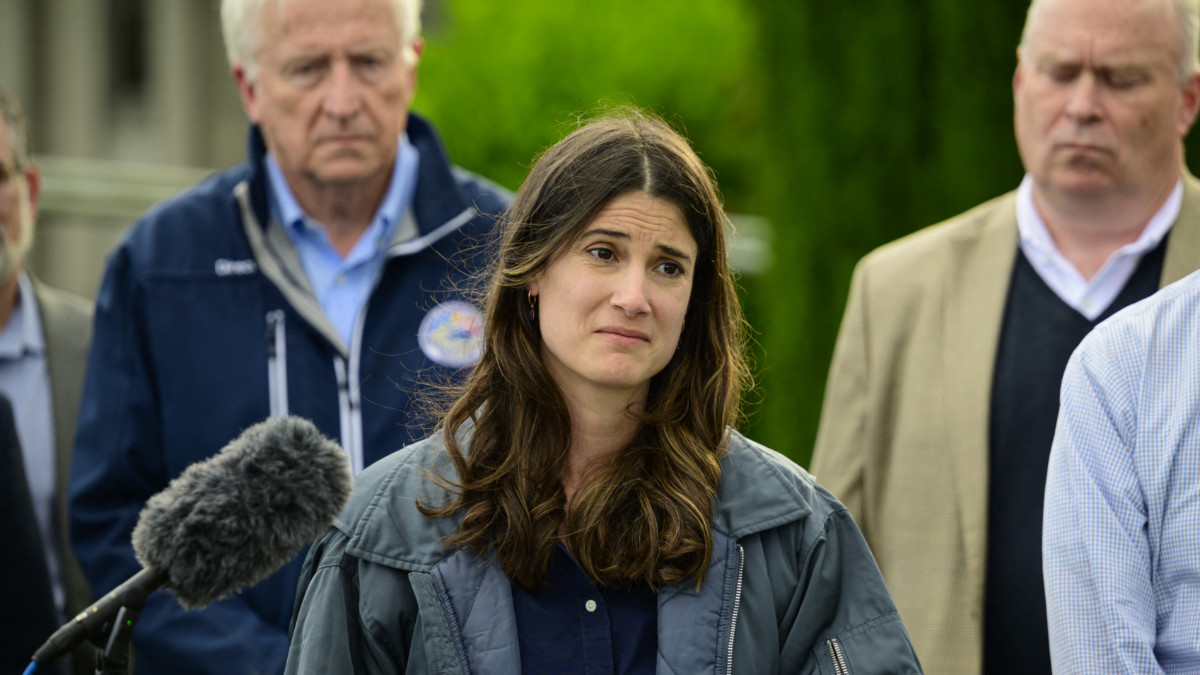
    On the sixth anniversary of a day that forever changed their lives, two grieving American mothers stood in Washington, D.C. this week, honoring not just their own sons, but hundreds of other children claimed by preventable harms linked to social media platforms. For Amy Neville and Kristin Bride, the shared tragedy that bonded them as soulmates has become the foundation of a national movement demanding sweeping accountability for tech companies and stronger protections for young users online.

    June 23, 2020, marked the loss of both Neville’s 14-year-old son Alexander and Bride’s 16-year-old son Carson. The two teenagers lived 1,000 miles apart and never met, but their deaths were both rooted in dangerous interactions on social media. Alexander, a bright, entrepreneurial teen with a memorable laugh, was connected to a drug dealer through Snapchat who sold him the fatal pill that killed him. Carson, a warm, funny teenager who loved connecting with others, died by suicide at 16 after experiencing relentless, unmoderated cyberbullying on major platforms.

    This Tuesday, the two boys were remembered alongside 270 other children and young people who have died from social media-related harms during a remembrance event in the nation’s capital. The date of their shared loss has been formally recognized by the U.S. Senate as Social Media Harms Victims Remembrance Day, a milestone that reflects growing public momentum around an issue long sidelined by federal policymakers.

    When Bride first joined advocacy work after her son’s death, she said she felt completely isolated in her grief and anger. Today, the grassroots online child safety movement has expanded dramatically, with hundreds of other bereaved parents joining the push for tighter regulation and legal accountability. That momentum has already shifted the landscape: this year saw a series of landmark jury verdicts against major tech firms that have cleared a path for future legal action, even as comprehensive federal reform remains stalled.

    Three jury decisions — two against Meta Platforms and one against Google parent Alphabet — have emerged as a turning point for the movement. For decades, Section 230 of the 1996 Communications Decency Act has shielded tech companies from legal liability for content posted by third-party users, creating a near-impenetrable barrier to accountability for child harm. Modern lawsuits, however, have avoided this protection by focusing not on user-posted content, but on the deliberate design choices platforms make to maximize engagement at the cost of child safety.

    Court evidence from these recent trials has pulled back the curtain on internal industry practices, including internal communications from tech employees comparing their addictive products to cigarettes and casino games. Matthew Bergman, head of the Social Media Victims Law Center, which represents more than 1,000 plaintiffs in cases against social media companies, called the fact that these cases are even proceeding to trial a watershed moment. “It is still a hurdle, but it is no longer a barrier,” Bergman said of Section 230.

    Global momentum for reform has also grown, with a growing list of countries including Australia, the United Kingdom, Turkey, and Indonesia implementing full or partial bans on social media use for children under 16. While the U.S. has not moved toward such sweeping restrictions, congressional pressure for regulation is building again after years of inaction. This week, House lawmakers unveiled a bipartisan draft bill, the Kids Internet and Digital Safety Act, which draws from portions of the Kids Online Safety Act (KOSA) that passed the Senate in 2024. But the proposal has already drawn criticism from advocates, who say it was stripped of its most critical provision: a legal “duty of care” that would require platforms to take reasonable steps to prevent harm to minors.

    “Without a duty of care, Big Tech companies will maintain the status quo of putting profit before the safety of our children,” Sen. Marsha Blackburn, R-Tenn., said in a statement criticizing the watered-down draft.

    Bride, who has outlined a three-pronged strategy of legislation, litigation, and public education, said the movement can continue to advance even if congressional reform stalls. “When one stalls, like legislation, then we have the trials and we have litigation,” she explained. “So we keep pressing forward. We’re not going to give up.”

    Major tech firms have responded to growing pressure by rolling out incremental safety updates in recent years. Snap, the parent company of Snapchat, said in a statement that it “works continuously to strengthen safety protections across its platform.” Platforms have introduced features like default private teen accounts, restrictions on stranger messaging, age-gated content limits, and dedicated parental controls. Instagram now restricts teen accounts to PG-13-rated content, while YouTube offers supervised accounts for preteens who have outgrown its dedicated kids app. But advocates argue these incremental changes do not address the core problem: platforms’ fundamental business model prioritizes maximum user engagement over child safety.

    “There have been some improvements. A 13-year-old child is not by default provided with an open account for adult predators to prey upon. So, you know, there are baby steps, but there are steps in the right direction. We just need more of them,” Bergman said.

    On Capitol Hill, a growing bipartisan coalition of senators is calling for urgent, sweeping action, with some even calling for a full repeal of Section 230. Sen. Josh Hawley, R-Mo., slammed congressional inaction, arguing that campaign contributions and millions of dollars in annual lobbying from the tech industry have blocked reform. “It’s the same reason that the companies want the kids online, want their privacy destroyed, want all their information — it’s money,” Hawley said.

    The Senate Judiciary Committee has amplified this pressure by inviting the CEOs of Meta, Alphabet, TikTok, and Snap to testify under oath at an upcoming hearing, framed with a provocative question: “Is This Social Media’s Big Tobacco Moment?” The hearing reflects a growing belief among policymakers and advocates that public awareness of social media’s harms to children has reached a tipping point.

    For Neville and Bride, who have attended every hearing and advocacy event for years, the fight remains personal and urgent. Both remain optimistic that meaningful change is coming, even as they acknowledge the long road ahead. Neville, who has dedicated her life to the movement, said the work is non-negotiable. “Every morning I wake up, lives are on the line. If we’re not talking about these things, if we’re not doing something about it, lives are on line,” she said. “And that’s probably not good for my nervous system, but that’s the state that I’ll live in until I’ll probably die on this hill.”

  • Senior UAE and regional officials referred to ICC over role in Sudan atrocities

    Senior UAE and regional officials referred to ICC over role in Sudan atrocities

    A broad coalition of global human rights and legal organizations, led by the Montreal-based Raoul Wallenberg Centre for Human Rights (RWCHR), has formally submitted a legal request to the International Criminal Court (ICC) calling for a full investigation into high-level foreign officials accused of enabling widespread war crimes and crimes against humanity in Sudan’s long-troubled Darfur region. The Article 15 communication, filed Monday, marks the second major push in weeks to hold external actors legally accountable for their alleged role in fueling the Sudanese conflict that has now entered its fourth year.

    The filing does not limit scrutiny to parties directly involved in the Sudanese civil war, which pits the country’s official Sudanese Armed Forces (SAF) against the rival Rapid Support Forces (RSF). Instead, it outlines detailed allegations that external state actors and their senior officials have continued to supply both warring factions with the weapons, military equipment, financing, logistical backing, and mercenary fighters required to carry out atrocities against civilian populations, in direct violation of a decades-old United Nations arms embargo on Darfur.

    Under the Rome Statute, the ICC’s founding legal framework, the coalition is pushing prosecutors to examine potential criminal liability for foreign actors under Articles 25(3)(c) and 25(3)(d) — provisions that explicitly cover aiding, abetting, and knowingly contributing to crimes carried out by organized groups acting with a shared criminal purpose.

    Specific high-level officials from the United Arab Emirates (UAE) and other regional states that have openly or covertly backed the RSF are named in the submission, including officials and intermediaries based in Libya, Ethiopia, Chad, Somalia, Kenya, and Uganda. The document also outlines broader alleged links between Iran, Turkey, and Egypt and crimes committed by the SAF, the Sudanese national military.

    The coalition’s case draws on a combination of confidential source intelligence and open-source investigative findings from multiple independent outlets and watchdog groups. A detailed annex included with the filing maps out alleged RSF supply lines that originate at three major UAE airports — Abu Dhabi International, Al Ain International, and Ras Al Khaimah International — with suspected arms cargo routed through transit hubs in Chad, Libya, and Ethiopia. The submission notes that transfers of military supplies increased dramatically starting in April 2023, when full-scale civil war resumed between the SAF and RSF, and have continued uninterrupted to the present day.

    These allegations align with a growing body of independent investigations that have documented the Gulf state’s material support for the RSF, despite consistent official denials from the UAE that it supplies weapons or military assistance to the paramilitary group. Multiple independent probes have confirmed that weapons and military materiel have been transported to RSF forces via a secret air bridge through Chad’s Amdjarass, with the UAE repeatedly identified as the primary supplier. A January 2024 investigation by Middle East Eye uncovered a sprawling network of supply lines and regional alliances stretching through Libya, Chad, Uganda, and breakaway regions of Somalia that the UAE uses to funnel arms to the RSF. A separate 2024 New York Times investigation found the UAE had disguised weapons shipments to the RSF as humanitarian aid. In April 2024, Middle East Eye revealed the RSF receives covert support from an Ethiopian military base in Asosa, matching the coalition’s allegations. Most recently, Human Rights Watch documented that Colombian mercenaries hired by a UAE-based private security firm transited Emirati military bases before deploying to Sudan to fight alongside the RSF.

    the ICC already holds jurisdiction over atrocities committed in Darfur, following a 2005 United Nations Security Council referral that grants the court authority to prosecute any individual — regardless of nationality — for international crimes committed in the region. While legal scholars note this jurisdiction could theoretically extend to Emirati officials accused of aiding RSF crimes, significant procedural obstacles remain: the UAE has never ratified the Rome Statute, and securing evidence and state cooperation would require extensive international support.

    Irwin Cotler, the founder and international chair of the RWCHR and former Canadian Minister of Justice and Attorney General, emphasized that meaningful accountability for Darfur’s atrocities cannot stop at the warring parties on the battlefield. “The suffering of the Sudanese people will not end so long as the perpetrators of atrocity crimes – and the networks of impunity that enable and sustain them – continue to act without consequence,” Cotler said in a statement accompanying the filing.

    This submission is the second high-profile request to the ICC in as many weeks targeting foreign complicity in Darfur. Earlier this month, a group of Sudanese atrocity survivors filed their own separate Article 15 communication targeting senior Emirati officials and business leaders, including UAE Vice President Mansour bin Zayed Al Nahyan.

    ICC officials confirmed earlier this year that the court’s prosecutor’s office is already actively investigating atrocities committed in Darfur since the resumption of full-scale conflict in April 2023, but to date no investigation has been opened into the role of external enablers. In a January 2025 report to the UN Security Council, the ICC prosecutor’s office explicitly acknowledged that external actors have prolonged the crisis, describing the RSF’s 500-day deadly siege of North Darfur’s capital El Fasher as “entirely manmade.” The report noted, “This conflict has been perpetuated by regional and international actors whose material and financial assistance only guarantees that this catastrophe in Darfur worsens and that war crimes and crimes against humanity will needlessly continue.”

    To date, the ICC has not issued any arrest warrants for Sudanese individuals connected to the current 2023–2025 conflict. A court spokesperson told Middle East Eye that the prosecutor’s office is currently prioritizing investigations into gender-based violence and crimes against children, abuses that a recent UN report confirmed are widespread: last week, a UN assessment found the RSF is responsible for the vast majority of sexual violence crimes committed by all warring parties in Sudan over the past three years.

    The coalition of NGOs that submitted Monday’s communication says it remains hopeful that the ICC prosecutor’s office will agree to open a formal investigation into the foreign officials and networks that have continued to sustain atrocities in Darfur from abroad.