标签: Asia

亚洲

  • Iran foreign minister returns to Pakistan despite Trump cancelling envoys’ trip

    Iran foreign minister returns to Pakistan despite Trump cancelling envoys’ trip

    Amid a rapidly shifting regional crisis in the Middle East, overlapping diplomatic efforts and fresh security incidents have created a tangled landscape of negotiations and ongoing conflict over the weekend, with major powers and regional actors clashing over war termination and territorial control.

    Iran’s top diplomatic envoy Abbas Araghci made a return trip to Islamabad on Sunday to advance peace negotiations aimed at ending the ongoing Iran war, even after former US President Donald Trump scrapped a planned trip by his own negotiating team to the Pakistani capital. Araghchi’s visit marked the second stop in a regional diplomatic tour: he first met with senior Pakistani officials including Prime Minister Shehbaz Sharif, Foreign Minister Ishaq Dar, and powerful military chief Asim Munir — a key mediator in the talks — last Saturday, before traveling to Oman for additional negotiations on Sunday. After the initial round of Pakistani talks, Iranian envoys returned to Tehran to receive updated guidance on proposals to end the conflict, Iran’s state-run Isna news agency confirmed.

    In Muscat, Araghchi held closed-door talks with Sultan Haitham bin Tariq al-Said, covering navigation security in the strategically critical Strait of Hormuz and wider Gulf waters, as well as coordinated diplomatic pushes to end the war. In remarks carried by an Iranian foreign ministry statement, Araghchi argued that long-standing US military presence in the Middle East has exacerbated regional instability and deepened divisions between local actors, calling for a new regional security architecture built without external interference. Following the conclusion of Sunday’s talks in Pakistan, the foreign minister is scheduled to travel to Moscow for further consultations, according to diplomatic sources.

    The Iranian diplomatic push came as Trump made a last-minute reversal of a planned trip by his own Middle East envoy Steve Witkoff and senior advisor Jared Kushner, his son-in-law, to Islamabad. Speaking to Fox News, Trump said he called off the trip because he saw no value in what he described as unproductive talks, and dismissed Tehran’s initial negotiating position as inadequate. In a surprising twist, Trump added that Tehran revised its proposal just 10 minutes after he announced the cancellation. “They gave us a paper that should have been better and — interestingly — immediately when I cancelled it, within 10 minutes, we got a new paper that was much better,” he told reporters, declining to share further details on the content of the revised proposal. When asked if the cancelled trip would lead to a resumption of full-scale hostilities, Trump downplayed the risk, saying “No, it doesn’t mean that. We haven’t thought about it yet.”

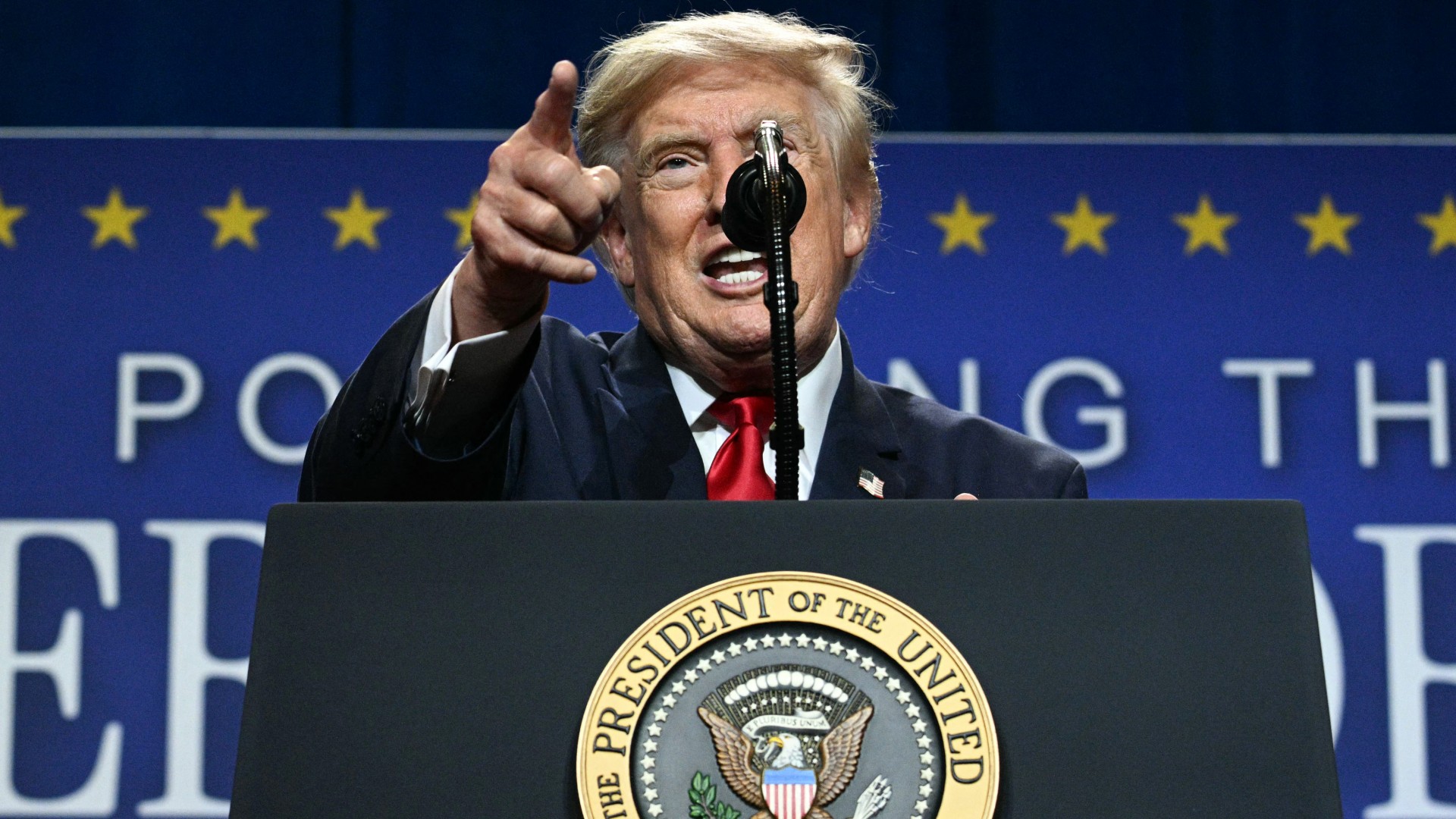
    Hours after Trump announced the cancellation of the envoy trip, a security incident near the White House Correspondents’ Association Dinner held at the Washington Hilton forced an emergency evacuation of Trump and other top US leaders. A shooting outside the venue left a Secret Service agent wounded by gunfire, but the agent survived after a bulletproof vest stopped the round, Trump confirmed. In a statement to reporters after the evacuation, Trump said the incident would not change his policy in Iran. “It’s not going to deter me from winning the war in Iran,” he said, adding that he did not believe the shooting was connected to the ongoing conflict. The president later posted an image on his social platform Truth Social showing the suspected shooter, hand cuffed and lying face down, topless, on the ground.

    Despite the diplomatic flurry over ending the Iran war, Iran’s Islamic Revolutionary Guard Corps (IRGC) reaffirmed it has no plans to lift its current blockade of the Strait of Hormuz, the chokepoint through which roughly one-fifth of the world’s total crude oil and liquefied natural gas shipments pass each year. “Controlling the Strait of Hormuz and maintaining the shadow of its deterrent effects over America and the White House’s supporters in the region is the definitive strategy of Islamic Iran,” the IRGC said in a post on its official Telegram channel. The US has responded with its own blockade of Iranian ports, escalating the standoff over the critical waterway.

    Separately, in Lebanon, ongoing violations of a existing ceasefire by the Israeli military have left multiple civilians dead and deepened humanitarian suffering over the weekend. Lebanon’s state-run National News Agency reported that Israeli airstrikes targeted multiple villages in southern Lebanon’s Nabatieh, Bint Jbeil, and Sour districts on Sunday, killing three people. The strikes mark the latest in a string of repeated Israeli attacks since a ceasefire between Israel and Lebanese armed groups came into effect on 17 April.

    Israeli forces continue to occupy a roughly 10-kilometer deep buffer zone inside southern Lebanon it calls the “yellow line,” and has barred displaced residents from returning to their homes in the area. Over the weekend, the Israeli military dropped leaflets over the village of Mansouri in the Sour district, warning civilians against entering nearly two dozen villages in the occupied zone. In a post on the social platform X, Israeli army spokesperson Avichay Adraee renewed warnings to civilians against entering areas near the Litani River, Wadi Salhania and Saluki, and published a list of dozens of villages within the yellow line where residents are officially barred from returning.

    Lebanon’s health ministry reported Sunday that the total death toll from Israeli attacks on Lebanon since 2 March has risen to 2,496, with more than 7,725 people wounded. The strikes come a day after four people were killed in Israeli airstrikes in southern Lebanon, even under the current ceasefire framework.

  • Global influencers experience Chinese cultural charm in Qufu

    Global influencers experience Chinese cultural charm in Qufu

    From April 24 to 26, 28 influential global digital content creators gathered in Qufu, the birthplace of Confucius located in Jining, Shandong Province, for a three-day cultural immersion event titled “Nishan Sacred Land: A Vision Shared with the World”. The event, designed to showcase China’s profound traditional heritage to an international audience, brought the creators through a curated journey of historical sites and folk cultural experiences unique to the region.

    On the second day of the event, the group kicked off their exploration at the Nishan Confucian Temple, the cradle of Confucianism that has stood for centuries on the sacred Nishan Mountain. They walked through the sprawling temple complex, visiting iconic historic landmarks including the grand Dacheng Hall, the main ceremonial hall dedicated to Confucius, and the riverside Guanchuan Pavilion, where Confucius is said to have reflected on the passage of time. Throughout their tour, the influencers soaked in the quiet, contemplative atmosphere of the sacred site, gaining first-hand insight into the depth and nuance of 2,500-year-old Confucian culture that has shaped East Asian civilization for millennia.

    In the afternoon, the group traveled to the nearby Nishan Luyuan Village Scenic Area, a popular cultural tourism destination that seamlessly blends traditional rural Chinese heritage with modern leisure infrastructure. Stepping fully into the experience, the creators put on authentic hanfu, the traditional clothing of China’s Han ethnic group, before joining hands-on activities rooted in ancient Chinese culture. Among these activities was traditional archery, one of the Six Arts that formed the core of ancient Chinese scholar education system, allowing the influencers to gain personal experience of traditional cultural practices rather than just observing them from a distance.

    As evening drew over the scenic area, the group joined a vibrant festive fish lantern parade, winding through the stone-paved historic alleys of the village. The evening’s highlight came after the parade, when the crowd gathered to watch datiehwa, the centuries-old folk performance art also known as molten iron fireworks. Artisans flung thousand-degree molten iron into the night sky, where it shattered into thousands of sparkling, showering sparks that lit up the dark hillside, drawing gasps of amazement from the international guests.

    The event closed with a curated performance of traditional Chinese music and folk dance, wrapping up a three-day experience that gave the global creators a holistic, intimate introduction to both Confucian philosophy and vibrant northern Chinese folk culture. Organizers of the event noted that the gathering aims to build cross-cultural understanding, letting international audiences see and feel authentic Chinese culture through the perspectives of creators they trust.

  • No driver, no pilot, no problem

    No driver, no pilot, no problem

    For decades, a world fully powered by autonomous, unmanned systems was nothing more than a far-fetched science fiction concept: aircraft that fly without human pilots, passenger vehicles that navigate roads without drivers, and delivery services that ship goods via flying drones. Today, that futuristic vision has moved from the pages of speculative stories to real-world demonstration, right in the heart of Luogang Park in Hefei, the capital city of East China’s Anhui province.

    On April 24, two well-known international content creators, Oluwabunmi Jimoh and Joe Burns, traveled to the park to get a first-hand look at Hefei’s cutting-edge progress in the field of unmanned mobility. During their visit, the pair got up close to watch electric vertical take-off and landing (eVTOL) autonomous aircraft complete test operations, experienced a fully hands-free trip around the park on a driverless electric shuttle bus, and got a close look at the efficiency of the park’s automated drone delivery network, which can drop off orders directly to visitors across the green space.

    The demonstration showcases how far China has advanced in developing and testing commercial-ready autonomous mobility solutions, positioning Hefei as a growing hub for innovation in the unmanned technology sector. Visitors and industry observers can access additional visual coverage of the event through a published original video to see the technology in action.

  • Trump says shooting at press dinner ‘won’t deter him’ from Iran war

    Trump says shooting at press dinner ‘won’t deter him’ from Iran war

    A dramatic shooting incident outside the venue of the annual White House Correspondents’ Association Dinner on Saturday night triggered an emergency evacuation of former President Donald Trump and dozens of top ranking U.S. administration officials, leaving a Secret Service agent wounded and the high-profile event postponed indefinitely. The incident, which marks the third documented assassination attempt targeting Trump in less than a year, has sent shockwaves through Washington D.C.’s political circles even as authorities move forward with criminal charges against the identified suspect.

    Emergency response protocols were activated immediately after attendees reported hearing between five and eight gunshots ring out near the Washington Hilton’s banquet hall, where the dinner was already underway. Video footage captured from the scene shows White House Press Secretary Karoline Leavitt and First Lady Melania Trump visibly stunned by the sudden gunfire, before security personnel rushed the pair offstage alongside Trump, who was pulled to the ground by his protective detail for safety.

    In an update to reporters shortly after the situation was contained, Trump confirmed that the suspected shooter had been taken into custody, labeling him a “lone wolf” and a “very sick person.” U.S. law enforcement later identified the 31-year-old suspect as Cole Tomas Allen, a resident of Torrance, California. Washington’s police chief confirmed Allen was found armed with a shotgun, a handgun, and multiple knives, and preliminary investigations indicate he was registered as a guest at the Hilton hotel where the event was held. According to anonymous sources cited by CBS News, Allen told arresting officers he specifically intended to target senior Trump administration officials. The U.S. Attorney for the District of Washington has already filed initial charges of illegal firearms possession and assault of a federal officer with a dangerous weapon, confirming that additional felony counts are forthcoming.

    One Secret Service agent was hit by gunfire during the incident, but survived unharmed after a bulletproof vest stopped the round, a detail Trump confirmed to reporters. In the hours after the evacuation, the former president drew controversy for posting an image on his Truth Social platform that showed a shirtless Allen lying face-down on the ground with his hands cuffed behind his back.

    Addressing reporters after the incident, Trump sought to link the latest attempt on his life to his high-profile policy agenda, drawing a parallel between himself and iconic former President Abraham Lincoln. “They don’t go after the ones that don’t do much,” he told reporters Saturday evening. “I hate to say I’m honoured by that, but we’ve done a lot.” This incident marks the third documented assassination attempt against Trump since July 2024, when he narrowly escaped an attempt at a Pennsylvania campaign rally that left a bullet grazing his upper body. Two months after that rally attack, a second suspect armed with a rifle was arrested at Trump’s southern Florida golf course, and was ultimately sentenced to life in prison on attempted assassination charges.

    When asked if the shooting could be connected to ongoing U.S. military tensions with Iran, Trump initially said “you never know” but quickly walked back that suggestion to align with preliminary law enforcement findings. “I don’t know if that had anything to do with it, I really don’t think so, based on what we know,” he stated. The former president went on to reaffirm his unwavering stance on U.S. policy toward Iran, saying the shooting would not deter him from advancing his priorities in the ongoing conflict. “It’s not going to deter me from winning the war in Iran,” he emphasized. The comment came just hours after Trump confirmed he had canceled a planned trip by his diplomatic envoys to hold peace talks with Iranian officials, telling reporters Tehran could “call us” whenever it was ready to negotiate.

    Officials with the White House Correspondents’ Association confirmed the dinner would be postponed to a later date, with no new scheduling details released as of Sunday morning.

  • Former Italian PM: China and EU should cooperate to restore multilateralism

    Former Italian PM: China and EU should cooperate to restore multilateralism

    Against a backdrop of escalating global geopolitical fragmentation that has shaken the foundations of long-standing international cooperation, a former leader of Italy has issued a clear call for coordinated action between China and the European Union to rebuild the global multilateral system. In an exclusive interview with China Daily conducted on the sidelines of the 2026 Shanghai Forum, which brought together global policymakers and scholars from April 24 to 26, Enrico Letta — current dean of the IE School of Politics, Economics & Global Affairs at IE University and former Italian Prime Minister — warned that the world is currently grappling with what he described as a major geopolitical ‘earthquake’ that threatens to unravel decades of collaborative progress. Letta stressed that this moment of global instability demands that two of the world’s largest economic and political actors, China and the EU, set aside differences and work in lockstep to reverse the retreat from multilateral cooperation. He specifically pushed back against the growing adoption of ‘law of the jungle’ power politics that has eroded trust between nations in recent years, reaffirming his strong commitment to upholding a rules-based international order anchored in the United Nations framework. The 2026 Shanghai Forum, which served as the stage for Letta’s remarks, has long functioned as a key platform for open dialogue between Asian and global stakeholders, making it a fitting venue for a discussion focused on repairing fractured international cooperation. Letta’s intervention comes at a time when growing unilateralism, trade tensions, and geopolitical rivalries have put the post-Cold War multilateral system under unprecedented strain, with many global leaders and analysts calling for renewed collective action to address shared challenges ranging from climate change to economic inequality.

  • Smoking dispute resolved amicably in Shenzhen

    Smoking dispute resolved amicably in Shenzhen

    A public dispute that sparked widespread online discussion over enforcement of China’s strict anti-smoking regulations has been resolved amicably between the two involved parties, an official joint investigation confirmed Saturday. The confrontation unfolded Friday evening at a non-smoking designated bus stop in Guangming District, Shenzhen, a southern Chinese metropolis known for enforcing the toughest tobacco control rules in the country.

    The clash erupted between 29-year-old Wang and 33-year-old Chen around dusk, after an attempt by one party to intervene in Chen’s smoking at the restricted public space escalated into mutual conflict. According to the investigation’s official account, Wang first poured her juice onto Chen’s cigarette-holding right hand and discarded her plastic cup onto the nearby road. In retaliation, Chen picked up the discarded cup and threw it back toward Wang. Bystanders contacted local law enforcement, who responded promptly to the incident.

    The confrontation quickly went viral on Chinese social media, spurring intense public debate across multiple key issues. Online commentators questioned whether Chen should face formal penalties for violating smoking bans, whether Wang’s counteraction was excessive relative to the initial offense, and whether law enforcement had overstepped procedural boundaries after Wang shared details of the police processing on her personal social media accounts.

    To address widespread public concern and clarify the facts of the case, local authorities assembled a joint investigation team drawing representatives from Guangming District’s health authority, public security bureau, transport department, and subdistrict office. Investigators confirmed that both parties initially demanded legal action be taken against the other, so officers transported them to a formal case handling center to complete the investigation process. In compliance with standard operational protocols, law enforcement conducted mandatory personal safety checks, with a female staff member completing Wang’s screening in a private, enclosed space to protect her privacy.

    Responding to public questions regarding the application of local smoking rules, the investigation’s official statement confirmed that Chen had violated Shenzhen’s longstanding smoking control regulations, which strictly ban smoking in all public spaces including covered and open bus stops. The local transport enforcement department has formally issued a correction order to Chen and imposed an administrative fine for the violation, bringing the public interest case to a close while upholding the city’s strict tobacco control framework.

  • Southern China braces for heavy rainfall

    Southern China braces for heavy rainfall

    A fresh, widespread round of intense rainfall is poised to impact large swathes of southern China over the coming three days, the National Meteorological Center has confirmed in its latest official forecast. The inclement weather system will begin unfolding on Sunday, starting with rain bands developing over the Sichuan Basin and Guizhou before shifting steadily eastward. Over the course of the event, the precipitation is projected to reach more than 10 provincial-level regions across southern China, including major affected areas such as Sichuan, Guizhou, Hunan, Zhejiang and Guangdong.

    Most of the impacted regions are forecast to see moderate to heavy rainfall, with the peak intensity of the event expected to fall between Monday and Tuesday, according to the center’s meteorologists. On the opening day of the event Sunday, heavy downpours are predicted to hit northeastern parts of the Sichuan Basin, central and southern Chongqing, northern Guizhou, and northeastern Yunnan, with total accumulated precipitation expected to range between 50 and 70 millimeters in these zones.

    In preparation for the prolonged heavy rain, national authorities have issued multiple warnings and public advisories to reduce risk of harm and damage. The general public has been urged to implement proactive precautions against secondary disasters triggered by heavy and sustained rainfall, adjust travel plans accordingly, and avoid areas with road waterlogging. Officials also emphasized that residents should stay tuned for the latest official weather updates, and remain aware of the hazards associated with severe convective weather, including sudden strong winds and hail.

    On Saturday, two national government bodies — the Ministry of Agriculture and Rural Affairs and the China Meteorological Administration — issued a joint warning highlighting elevated risk of farmland waterlogging across multiple affected regions. From Sunday through Wednesday, high risk of waterlogging that can damage crops and infrastructure is forecast for the Sichuan Basin, southeastern Hubei, and most parts of Hunan and Jiangxi.

    Local governments in high-risk zones have been instructed to step up preparedness measures, including proactive management of water storage levels in reservoirs and rural ponds, and intensified pre-emptive drainage operations in agricultural fields to mitigate the impact of potential waterlogging.

  • Geocultural forces reshaping China’s economic map

    Geocultural forces reshaping China’s economic map

    On April 1 this year, China’s National Bureau of Statistics published updated provincial and municipal GDP rankings that paint a clear picture: while all major Chinese economic regions have recorded consistent growth, a profound geographic reordering of the country’s economic landscape is underway.

    The most striking shift plays out at the provincial level, measured by GDP per capita. In the latest data, Jiangsu claims first place and Zhejiang takes third, leaving Guangdong in fourth position. Two decades ago, this ranking looked radically different: Guangdong held an unchallenged top spot, with Zhejiang and Jiangsu trailing far behind in third and fourth respectively.

    This reordering is even more dramatic when examining city-level data. Back in 2005, nine Guangdong cities earned a spot in the country’s top 25 ranking for GDP per capita. By comparison, Jiangsu only had five cities in that group, and Zhejiang just two. Twenty years later, that balance has flipped completely: only three Guangdong cities remain in the top 25, while Jiangsu now has seven and Zhejiang has four.

    None of this changes the fact that all three provinces remain among China’s most developed economic hubs. Since the launch of economic reforms in the late 1970s, China’s growth model centered on manufacturing and export-led development, which entrenched long-term regional inequality that heavily favored coastal eastern provinces. Guangdong was the original pioneer of this model.

    Decades ago, Shenzhen and Zhuhai, two of China’s first special economic zones, leveraged their proximity to Hong Kong and Macao respectively to rocket up the rankings: Shenzhen held first place in 2005, and Zhuhai third. By 2025, Shenzhen has fallen to sixth and Zhuhai to 16th. Guangzhou, Guangdong’s capital and largest city, which ranked eighth in 2005, has dropped to 22nd, even as it built itself into a global manufacturing and trade hub. It is also worth noting that Guangdong remains home to some of China’s most globally successful innovative firms, from telecommunications giant Huawei and drone leader DJI to tech conglomerate Tencent and electric vehicle and battery manufacturer BYD. All these firms continue to expand their influence both domestically and internationally.

    Even so, China’s cutting-edge startup ecosystem has gradually shifted northward, and the country’s latest five-year plan, released on March 12, makes this new geographic center of gravity explicit. In high-growth sectors like artificial intelligence and robotics, Hangzhou, the capital of Zhejiang, has emerged as a leading hub, home to prominent local players DeepSeek and Unitree, with backing from Hangzhou-based global tech giant Alibaba. In the fast-expanding biomanufacturing sector, national industry leader WuXi Biologics operates major facilities in Hangzhou, Suzhou (Jiangsu) and nearby Wuxi. Suzhou ranked 25th in 2005 and now sits at 7th, while Wuxi moved from 11th to 5th over the same period.

    Analysts point to the strong advantage in higher education held by Jiangsu and Zhejiang as a key driver of this divergence. Last March, The Economist profiled Zhejiang University, concluding that the institution has played a transformative role in turning Hangzhou into a world-class startup hub, mirroring how Stanford University catalyzed the growth of Silicon Valley. Leading global and domestic university rankings consistently place both Zhejiang University and Nanjing University (Jiangsu’s capital Nanjing, which moved from 31st to 11th in city-level GDP per capita rankings over 20 years) among China’s top 10 higher education institutions, alongside leading schools in neighboring Shanghai and Anhui. Guangdong has no universities that hold a consistent spot in the national top 10.

    This educational advantage that Jiangsu and Zhejiang hold is not a recent development: it stretches back centuries. The Jiangnan region, which covers the southern bank of the Yangtze River and spans most of modern Jiangsu and Zhejiang, has been China’s leading cultural and economic center since the Southern Song Dynasty. The region turned its historic strengths in agricultural productivity and trade into widespread artistic and intellectual achievement, laying the groundwork for a long-standing culture of academic excellence. In contrast, the Lingnan region that corresponds to modern Guangdong, while historically open to global seaborne trade, remained geographically and culturally separated from core regions of China for much of its history. Both regions carry deep commercial traditions, but Jiangnan’s centuries-old intellectual heritage gives it a unique edge in nurturing the skilled talent required to advance global technological frontiers.

    This shift is not limited to economics: as Jiangsu and Zhejiang expand their economic lead, they are also reemerging as central players in China’s cultural landscape. In the 1980s and 1990s, Cantonese pop culture spread across the entire country, fueled by Hong Kong’s economic boom, giving the Cantonese language unprecedented cultural prestige across China. That prestige has declined sharply alongside Hong Kong’s relative economic slowdown. At the same time, Shanghai’s rise as a global economic powerhouse has elevated the profile of Jiangnan dialects, which are reasserting their presence in the public sphere even amid nationwide efforts to standardize Mandarin.

    It is important to note that this ongoing economic and cultural shift from Guangdong to Jiangsu and Zhejiang is not a foregone conclusion. Future trajectories will depend heavily on the strategic choices and innovation success of individual entrepreneurs and firms across all regions. Global demand for Chinese goods and services is also subject to rapid shifts, shaped by ongoing trade restrictions on Chinese exports in major markets around the world. Regardless of how trends unfold in coming years, this regional reordering makes clear that China’s economic future is far from monolithic, with diverse regions competing and evolving along distinct paths.

  • Diplomats, business leaders discuss future of global economic cooperation at Sydney forum

    Diplomats, business leaders discuss future of global economic cooperation at Sydney forum

    On April 20, Sydney played host to a high-profile forum that brought together senior diplomatic representatives and top business leaders from across the globe, all gathering to deliberate on the evolving trajectory of global economic collaboration and the future framework of international trade. Organized by the Australian Business Summit Council Inc., the gathering also functioned as an advance preview event for the seventh edition of the Council’s flagship industry publication, EKONOMOS, which is scheduled for an official public launch on May 29 this year.

    The guest list for the forum included a slate of distinguished diplomatic figures, among them Arjaree Sriratanaban, Ambassador of Thailand to Australia; Diego Felipe Cadena Montenegro, Ambassador of Colombia to Australia; and Doris Adzo Denyo Brese, High Commissioner of Ghana to Australia. They were joined in the discussion by diplomatic envoys from China, Egypt, and Malta, as well as a cohort of prominent local Australian business leaders, cross-industry professionals, and representatives from the nation’s multicultural media community.

    Frank Alafaci, who currently serves as president of the Australian Business Summit Council Inc. and previously held a board position at the Australia China Friendship and Exchange Association, outlined the core mission of the upcoming seventh issue of EKONOMOS. He emphasized that the publication underscores the Council’s longstanding commitment to bridging connections between business leaders and unlocking new commercial opportunities both within Australia and across international markets.

    “It is more than a magazine; it is a meeting point of perspectives—bringing together voices from diplomacy, business, academia and government,” Alafaci told attendees during his opening remarks.

    Throughout the forum’s keynote sessions, each speaker brought unique regional and industry insights to the table. Ambassador Arjaree Sriratanaban of Thailand shone a spotlight on untapped opportunities to deepen bilateral trade and investment partnerships between Bangkok and Canberra, outlining pathways for expanded collaboration across key growth sectors. For his part, Colombian Ambassador Diego Felipe Cadena Montenegro stressed that inclusive multilateral cooperation and shared commitments to sustainable development are non-negotiable foundations for advancing mutually beneficial global economic partnerships. Local Australian entrepreneur Garry Simonian turned the discussion to the digital era, detailing how transformative technologies including artificial intelligence, digital innovation, and other emerging tools are reshaping the landscape of cross-border business and global trade.

    Following their individual keynote addresses, the three speakers joined a panel discussion moderated by Alafaci, where they delved into the most pressing current challenges facing global business, trade, and cross-border investment, and responded to a range of questions from on-site attendees. The forum closed with broad consensus among participants that open dialogue and cross-stakeholder collaboration will be critical to navigating current global economic uncertainty and unlocking inclusive growth for all regions.

  • In China, a quiet sense of safety shapes visitors’ travel experience

    In China, a quiet sense of safety shapes visitors’ travel experience

    As China eases visa policies and sees a steady rebound in inbound tourism, a new, understated feature of the country is winning widespread praise from international visitors: a pervasive, everyday sense of safety that transforms ordinary travel experiences into lasting, positive memories. What makes this appeal stand out is not dramatic landmarks or spectacular natural scenery, but small, mundane moments that reveal a deep-rooted social order that locals take for granted, but surprises first-time foreign guests.

    Take German tourist Lukas Schmidt, for example. Around 30 minutes after he finished a meal at a central Shanghai restaurant, he realized he had accidentally left his smartphone behind. By the time he hurried back to the establishment, staff had already safely stored the device, and returned it to him without any extra fuss immediately after confirming his ownership. The low-stakes but reassuring encounter left a deep impact on Schmidt. “It makes people worry less about losing things,” he noted, adding that this level of everyday safety is just a normal part of daily life across China.

    Foreign travelers still flock to China for its iconic ancient landmarks, breathtaking natural landscapes, cutting-edge futuristic cityscapes and thousands of years of rich cultural heritage. But in hundreds of thousands of travel posts, short videos, live streams and personal diaries shared under hashtags like #ChinaTravel, a consistent new theme has emerged: China’s strong public safety and social order have become a core part of the country’s global travel appeal.

    Canadian traveler Dave Mani, who has visited 55 countries across the globe, shared this sentiment in a YouTube documentary of his first trip to China earlier this year. “This is probably one of the top three safest places I’ve ever been to,” he said.

    Common examples of this everyday safety repeatedly pop up in visitors’ content: food and parcel deliveries left unattended outside residential building entrances with no risk of theft; personal bags, phones and other valuables left briefly in public cafes or parks that remain untouched when owners return. These are unremarkable scenes for Chinese locals, but eye-opening revelations for many international guests used to higher risk of theft in their home countries.

    Nighttime life in China also challenges many foreign visitors’ prior expectations. In countless major cities around the world, dark hours after sunset are tied to caution and avoidance of empty public spaces. In China, however, visitors document a vastly different scene: brightly lit public streets, groups of joggers out for late-night runs, and crowded, bustling night markets that stay active well into midnight.

    American backpacker Christian Grossi captured this atmosphere in a viral video from a Saturday night in Chongqing, where he joined thousands of locals in a central public square to watch a drone light show. “It feels super peaceful and super safe. Everyone has their phones out filming. I have never felt any sort of danger here,” he said in the clip. “You can see there is no heavy police presence, no extra security, just people out enjoying their lives.”

    ### Data and Analysis Back Up Visitor Perceptions

    This widespread perception of safety among travelers aligns with global survey data and official Chinese crime statistics. The 2025 Gallup Global Safety Report ranks China among the highest-scoring countries worldwide for public perceptions of safety and overall law and order performance. Official Chinese government data adds further context: in 2025, the total number of criminal cases across the country dropped 12.8% year-on-year, hitting its lowest level since 2000, while minor public security cases declined 3.5% over the same period.

    Analysts point to a combination of interconnected factors that drive China’s strong public safety outcomes. Widespread deployment of technology-assisted public safety monitoring systems has drastically improved emergency response times and crime prevention capacity across urban and rural areas. But beyond technology, experts emphasize that high levels of public trust in law enforcement play a foundational role.

    “When people see police regularly stepping in to help solve everyday problems, from recovering lost belongings to mediating minor disputes, trust is built naturally,” explained Lu Jifeng, a professor at Shandong University of Science and Technology. He noted that Chinese police are widely recognized for their service-oriented approach, a priority that builds public confidence over time.

    This trust is often experienced directly by foreign visitors themselves. Earlier this month, Katherine Taylor McCall, an American English teacher based in China, recovered a smartphone she had left in a ride-hailing car with rapid assistance from local police, who contacted the ride-hailing platform, identified the driver, and retrieved her device within hours. “Thank you! Chinese police, amazing!” she shared after the incident.

    At a deeper structural level, observers note that decades of rapid economic development have drastically reduced poverty-driven crime, while effective grassroots governance and widespread voluntary public participation in community safety efforts have further strengthened the overall sense of public security. Cultural traditions also play a quiet role, experts add.

    Belgian cycling enthusiast Claude Brouir experienced this social cohesion firsthand during a cross-country cycling trip across China last year. Local residents along his route volunteered help with translation, arranged affordable accommodation, and shared insights into local customs, making his solo journey far easier and more enjoyable than he expected. “Mutual trust is just part of how people interact here,” he said after the trip.

    Wang Dianli, a sociology professor at Shandong University, explains that this culture of mutual respect and harmony has deep roots. “Confucian teachings that emphasize social harmony and respect for others have shaped everyday behavior in Chinese society for centuries,” he said. That underlying cultural norm creates a baseline of mutual trust that reinforces public safety in daily life.

    For many visitors, this consistently safe, welcoming travel experience has become a reason to extend their trips — or even put down roots in China long-term. A South African content creator who runs the popular social media account “Because I’m Lizzy” has lived in China for multiple years, and cites everyday positive interactions with locals and the pervasive sense of safety as core reasons for staying. “The Chinese people really are the friendliest I’ve ever met, and I never have to worry about my safety here,” she said.

    Fabien Loudet, a French national who has lived in China for more than 16 years, compares his current experience to his childhood growing up in France, where he said a constant background awareness of risk — knowing which neighborhoods to avoid, staying constantly alert in public spaces — was just a normal part of life. “That feeling of constant unease gradually disappeared completely after I came to China,” he shared in a recent social media video. “Peace of mind is priceless. Much as I love my home country, I couldn’t see myself living back in a place without the level of safety I get to experience here every day.”