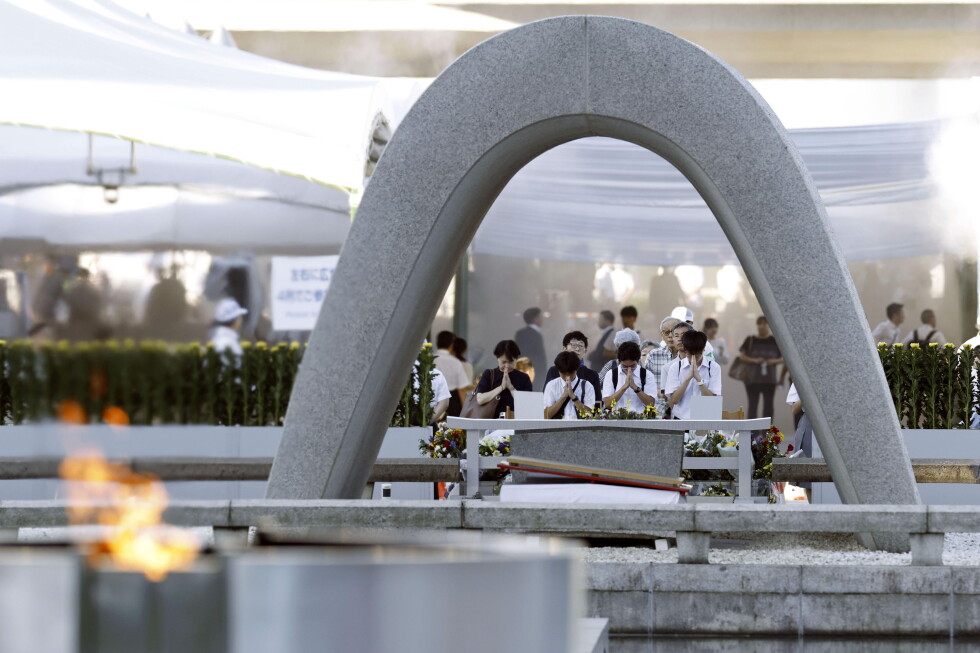
On Thursday, the western Japanese city of Hiroshima gathered to honor the 81st anniversary of the world’s first wartime atomic bombing, with local leadership issuing a stark rebuke of global reliance on nuclear deterrence amid growing tensions over Japan’s own postwar security policy.
In a peace declaration delivered at Hiroshima Peace Memorial Park, Mayor Kazumi Matsui drew a direct line between contemporary great power conflicts and the risk of repeating the catastrophic destruction of 1945. He argued that efforts to downplay the humanitarian catastrophe of nuclear weapons, paired with the acceptance of military force to advance national interests, creates a dangerous cycle of retaliation that could lead to another attack on the scale of Hiroshima and Nagasaki.
“Too many political leaders still frame nuclear deterrence as a credible strategy and legitimize state violence,” Matsui told the assembled crowd. “This only pushes the goal of a nuclear-free world further out of reach.” He closed his address by calling on individual people around the world to study the history of the bombing and take grassroots action to advance disarmament.
Nearly 50,000 people attended the annual memorial, including diplomatic representatives from more than 120 countries and regions, including the United States and Iran. At exactly 8:15 a.m. — the exact minute the U.S. B-29 Enola Gay released the bomb over the city 81 years prior — attendees fell silent for a full minute as the Hiroshima Peace Bell rang out across the memorial grounds.
Japanese Prime Minister Sanae Takaichi participated in the ceremony for the first time since taking office, stating that her administration would pursue a “realistic approach” to the goal of eliminating nuclear weapons, working within the framework of the United Nations’ Treaty on the Non-Proliferation of Nuclear Weapons. Her appearance comes amid widespread speculation that her hawkish administration, which has publicly endorsed the logic of nuclear deterrence, could loosen Japan’s long-held postwar Three Non-Nuclear Principles when the government updates its national security and defense strategy later this year.
Takaichi has already publicly called for a review of the principles, specifically opening the door to dropping the third principle that prohibits the introduction of nuclear weapons onto Japanese territory. During Thursday’s memorial, she only reaffirmed that Japan has abided by the principles to date, declining to give any binding commitment to maintain the policy going forward.
Nuclear bomb survivors, known locally as hibakusha, have voiced growing frustration and anxiety over rising global and domestic support for nuclear deterrence. The legacy of the 1945 bombings hangs heavy over modern Japanese security policy: Japan relies on the U.S. nuclear umbrella for its national defense, and has repeatedly pushed Washington for public reassurance of its security commitment and extended deterrence guarantees. As a result, the Japanese government has repeatedly rejected survivors’ calls to sign the Treaty on the Prohibition of Nuclear Weapons, or even attend the treaty’s meetings as an observer.
The Aug. 6, 1945 atomic bombing of Hiroshima levelled nearly the entire city and killed an estimated 140,000 people by the end of that year. Three days later, a second U.S. atomic bomb was dropped on Nagasaki, killing an additional 70,000 people. Japan announced its unconditional surrender on Aug. 15, 1945, bringing World War II to a close and ending nearly 50 years of Japanese imperial aggression across Asia.
Today, the population of surviving hibakusha has shrunk dramatically to just 91,105 people nationwide, roughly a quarter of the peak survivor population. The average age of survivors now exceeds 86, and even the youngest survivors have only faint, unclear memories of the attack, leaving survivors concerned that the memory of the bombing’s horror will fade from public consciousness as their generation passes.