标签: Asia

亚洲

  • Roommate charged with two counts of murder in death, disappearance of two USF students

    Roommate charged with two counts of murder in death, disappearance of two USF students

    TAMPA, Florida — Law enforcement officials announced Saturday that formal murder charges have been brought against the former roommate of a missing Bangladeshi doctoral student, nearly two weeks after the student and his girlfriend vanished from the University of South Florida (USF) campus.

    Twenty-six-year-old Hisham Abugharbieh, a U.S.-born ex-student at USF, now faces two counts of premeditated first-degree murder with a weapon connected to the disappearances of 27-year-old Zamil Limon and 27-year-old Nahida Bristy, both registered students at the institution, according to the Hillsborough County Sheriff’s Office.

    Hillsborough County Chief Deputy Joseph Maurer confirmed Friday that partial remains identified as Limon’s were recovered on the Howard Frankland Bridge early Friday. As of Saturday’s announcement, Bristy remains missing, and search operations to locate her are still ongoing across the region.

    Abugharbieh was first taken into police custody Friday following a hours-long standoff at his family’s residence, located just north of the USF campus. Officers initially responded to the property following a domestic violence report, and first moved all other family members to a secure location before Abugharbieh barricaded himself inside the home and refused to surrender. A specialized SWAT team, supported by unmanned aerial drones, tactical robots, and trained crisis negotiators, was deployed to the scene before Abugharbieh finally surrendered, walking out with his hands raised and clothed only in a blue towel.

    At the time of his initial arrest, Abugharbieh faced a string of preliminary charges including unlawful transportation of a dead body, failure to report a human death, evidence tampering, false imprisonment, and battery. The upgraded first-degree murder charges were filed following initial processing of evidence and identification of Limon’s remains.

    A family member of the missing couple shared that Limon and Bristy, both 27, had been planning to marry before their April 16 disappearance. Limon, who was pursuing a doctorate in geography, environmental science and policy, shared an off-campus apartment with Abugharbieh, and was last seen at that residence the day they vanished. Bristy, a graduate student in chemical engineering who lived in on-campus housing, was last spotted one hour later at a campus science building.

    An official autopsy to confirm the exact cause and manner of Limon’s death was scheduled for completion Saturday morning, per Maurer’s Friday statement.

    USF university spokespersons confirmed that while Abugharbieh was previously enrolled at the institution, he was not an active student at the time of the couple’s disappearance. Institutional records show he attended USF from the spring 2021 semester through spring 2023, working toward a Bachelor of Science degree in management.

    The Hillsborough County Sheriff’s Office added that Abugharbieh has a documented history of prior arrests in the county. Court records show he was charged with battery and burglary of an unoccupied residence in September 2023, plus an additional battery charge in May 2023 — all of which were classified as misdemeanor offenses.

    As a first-time offender, Abugharbieh was accepted into a court-supervised diversion program for misdemeanor charges. He completed the program in early 2024, and all prior charges against him were formally dismissed. Attempts by outlets to reach his attorney from that prior case Saturday went unanswered.

    Additional court records from 2023 show two domestic violence injunctions were filed against Abugharbieh by a family member. A county judge granted one of the requested protective injunctions and denied the second. He has also faced multiple minor charges for traffic violations over the years.

    Law enforcement is asking any member of the public with information related to Bristy’s disappearance or the case to contact the Hillsborough County Sheriff’s Office immediately to assist with the ongoing investigation.

  • Hefei’s ‘air taxi’ enthralls Mexican influencer

    Hefei’s ‘air taxi’ enthralls Mexican influencer

    On April 24, a landmark demonstration of China’s emerging electric urban air mobility technology drew international attention, when Mexican digital creator Noelia Pascual took a three-minute autonomous test flight over Luogang Park in Hefei, the capital city of East China’s Anhui province. The flight was operated by local aerospace firm Hefei Heyi Aviation Co, using its electric vertical take-off and landing (eVTOL) aircraft, commonly referred to as an “air taxi”, which is currently undergoing trial testing for future commercial urban mobility applications.

    Before boarding the autonomous aircraft, Pascual had prepared herself for a nerve-wracking, turbulent experience. But she left the flight far more impressed than she expected, praising the vehicle’s remarkable stability and robust safety design that eliminated most of her pre-flight anxiety.

    “It’s actually very stable, very similar to the experience of flying in a helicopter, but it feels more stable than a helicopter,” Pascual shared enthusiastically with onlookers immediately after completing her flight.

    She further noted that the transparent, real-time flight data displayed on an in-cabin screen played a key role in easing her concerns during the journey. “I never felt unsafe because the flight information is all displayed on the screen. You know what’s happening, and that gives you some reassurance,” she added.

    The test flight comes as China continues to accelerate research and commercial development of eVTOL technology, positioning itself as a global leader in the emerging low-altitude economy sector. For international visitors and industry observers, the successful public demonstration offers a first-hand look at how close autonomous air mobility is to becoming a practical part of daily urban transportation.

  • Global influencers explore Confucian culture at Nishan Sacred Land

    Global influencers explore Confucian culture at Nishan Sacred Land

    On April 24, 2026, a cohort of 28 international digital influencers from across the globe gathered at Nishan Sacred Land, the revered birthplace of ancient Chinese philosopher Confucius in Qufu, a city administered by Jining in east China’s Shandong Province, for a hands-on, immersive deep dive into thousands of years of Confucian cultural heritage.

    Far from a standard sightseeing tour, the trip was designed to let participants engage with Confucian traditions through multi-sensory, interactive experiences rather than passive observation. The itinerary opened with *Golden Sound and Jade Vibration*, a grand, carefully choreographed ritual music performance that draws directly from ancient Confucian ceremonial customs, setting a solemn and reverent tone for the visit. Influencers later got the chance to try on hanfu, the traditional ethnic clothing of China’s Han majority, participate in classic Confucian ceremonial rituals, and practice the ancient art of hand-copying excerpts from *The Analects*, the foundational collection of Confucius’ teachings that has shaped East Asian thought and ethics for millennia.

    This event is part of broader efforts to share traditional Chinese culture with global audiences, leveraging the reach of social media influencers to introduce the core values of Confucianism — including benevolence, filial piety, and social harmony — to international communities in an accessible, relatable format. As a site deeply tied to Confucius’ legacy, Nishan Sacred Land has emerged as a leading global destination for cultural exchange focused on Chinese philosophy and traditional thought.

  • Xi, president of Cape Verde exchange congratulations on 50th anniversary of ties

    Xi, president of Cape Verde exchange congratulations on 50th anniversary of ties

    BEIJING — On Saturday, China’s President Xi Jinping and Cape Verde’s President Jose Maria Neves exchanged official congratulatory messages to celebrate the five-decade milestone of diplomatic relations between the two nations, bringing renewed attention to the long-standing bilateral partnership between China and the West African island country.

    This 50-year anniversary marks a half-century of steadily growing cooperation, people-to-people exchanges, and mutual respect between Beijing and Praia. The diplomatic exchange comes as both sides have repeatedly reaffirmed their commitment to deepening collaborative ties across areas including infrastructure development, trade, climate action, and cultural exchange in recent years.

    As a developing small island nation, Cape Verde has benefited from China’s South-South cooperation initiatives over the decades, with Chinese investment and technical support contributing to key national infrastructure projects that have boosted local economic growth and improved public living standards. Meanwhile, the two countries have maintained consistent coordination on international and regional affairs, upholding the principles of multilateralism and the common interests of developing nations.

    The exchange of congratulations for this golden anniversary lays a clear foundation for further expanding bilateral cooperation in the coming years, as both sides look to build on 50 years of positive engagement to advance shared goals and deepen friendship between the Chinese and Cape Verdean peoples. The announcement of this diplomatic exchange was officially updated by Xinhua News Agency on April 25, 2026.

  • Hubei to boost role in central region growth

    Hubei to boost role in central region growth

    At a press briefing held Friday in Wuhan, the capital of China’s Hubei province, senior regional officials outlined an ambitious 5-year strategy to leverage the province’s unique geographic advantage and integrated transport infrastructure to reinforce its role as a core driver for Central China’s rise, while expanding its contributions to both the national domestic market and the global economy through 2030.

    Governor Li Dianxun noted that during the 15th Five-Year Plan period (2026–2030), Hubei will combine the strengths of its comprehensive multi-modal transport network—covering inland waterways, high-speed and conventional rail, intercity highways, commercial aviation, and energy pipelines—to build one of the most efficient logistics and transport ecosystems in inland China. A standout asset in this network is Ezhou Huahu International Airport, Asia’s first purpose-built air cargo hub, which launched commercial operations four years ago and already boasts the largest number of air cargo routes across China.

    According to data from local newspaper Hubei Daily, the airport currently operates 117 cargo routes, 56 of which are international services connecting 57 destinations across five continents, establishing a robust global cargo connectivity framework for the region. Beyond infrastructure expansion, Li added that Hubei will target reduced logistics costs and improved operational efficiency by attracting leading modern logistics firms, streamlining processes across cargo collection, long-haul transport, centralized warehousing, and last-mile distribution, while partnering with international stakeholders to expand cross-border logistics networks.

    Executive Vice-Governor Zhang Wenbing pointed out that Hubei holds an unmatched geographic advantage, sitting at the natural intersection linking China’s economically developed eastern coast with the fast-growing western interior, and connecting the northern and southern regions of the country. Its multi-modal transport system has seen consistent upgrading in recent years, with Hubei’s total high-speed rail mileage ranking fifth nationwide. As of the end of the first quarter of 2026, Xinhua News Agency reports, the province’s operational high-speed rail network has expanded to 2,585 kilometers, enabling 1 to 2-hour rail connections from Wuhan to multiple neighboring provincial capitals including Changsha (Hunan), Nanchang (Jiangxi), Hefei (Anhui), and Zhengzhou (Henan).

    Under the new development plan, Zhang said Hubei will continue upgrading key inter-regional transport corridors, constructing large-scale integrated transport hubs, and strengthening the province’s end-to-end logistics system. Key projects include developing a modern international shipping center along the middle reaches of the Yangtze River, and establishing a national assembly and distribution center for China-Europe freight trains in Wuhan. In addition to expanding Huahu Airport’s cargo capacity, the province will also enhance the passenger service capabilities of Wuhan Tianhe International Airport to support growing business, tourism, and people-to-people exchange demand.

    Officials also emphasized that Hubei will deepen mutually beneficial practical cooperation with global partners across multiple sectors, including cross-border trade, direct investment, scientific and technological innovation, financial cooperation, and cultural exchange. Early signs of this growing global engagement are already visible: Wuhan-based construction firm China Construction Third Bureau First Engineering Co. reported strong overseas performance in the first quarter of 2026, with newly signed overseas contracts doubling year-on-year and overseas output value jumping 96 percent from the same period last year.

    Ma Yikui, general manager of the company’s international business division, said the firm has prioritized high-growth key markets including Malaysia, Cambodia, and Indonesia, establishing dedicated regional marketing centers and optimizing project development mechanisms to secure high-quality infrastructure projects and build long-term collaborative partnerships with major global clients. Leveraging the company’s technical and operational strengths in industrial facility construction and data center development, Ma added, the firm has captured nearly 40 percent of the total data center construction market in Southeast Asia, cementing Hubei enterprises’ growing footprint in global infrastructure development.

  • Reading helps bridge world, civilizations

    Reading helps bridge world, civilizations

    Long cultivated as a deeply personal passion, reading has evolved into a foundational pillar of Chinese President Xi Jinping’s approach to governance and global diplomacy, serving as a unique bridge connecting Chinese civilization with the wider world and advancing cross-cultural dialogue. As Xi himself has noted, reading is far more than a casual pastime for him—it is an enduring way of life that continues to shape his perspective and policy philosophy.

  • Iran’s FM not to hold talks with US officials in Pakistan visit: media

    Iran’s FM not to hold talks with US officials in Pakistan visit: media

    In a clear formal statement released to regional media on Friday, Iran has definitively ruled out any planned negotiations between its foreign minister and United States officials during an official visit to Pakistan’s capital Islamabad, ending widespread speculation that a new round of peace talks would kick off this week.

    Seyed Abbas Araghchi, Iran’s top diplomat, arrived in Islamabad on the night of April 24 alongside an official Iranian delegation, Pakistan’s Ministry of Foreign Affairs has publicly confirmed. Per reporting from Iran’s semi-official Tasnim News Agency, Araghchi’s agenda during the Pakistan leg of his multi-nation tour only includes bilateral discussions with Pakistani leadership, focused exclusively on sharing Iran’s official positions aimed at reaching a permanent end to ongoing conflict between Iran, the U.S. and Israel.

    Iran’s state-owned Islamic Republic of Iran Broadcasting (IRIB) further clarified that while no direct meeting between Araghchi and U.S. representatives is on the schedule, Pakistani officials will serve as a communication channel to relay Iran’s stances on conflict resolution to the American side. This arrangement builds on prior indirect diplomatic engagement that has used Islamabad as a neutral intermediary for talks between Tehran and Washington.

    Araghchi himself outlined the broader goals of his tour in a post on the social platform X Friday, confirming that after concluding engagements in Pakistan, he will travel onward to Oman and Russia. “Embarking on timely tour of Islamabad, Muscat, and Moscow,” he wrote. “Purpose of my visits is to closely coordinate with our partners on bilateral matters and consult on regional developments. Our neighbors are our priority.”

    In a separate development also reported by Tasnim on Friday, Iran’s Islamic Revolution Guard Corps (IRGC) seized a foreign vessel that the force says was caught conducting coordination activities with the U.S. military. The details of the seizure and vessel’s identity have not yet been fully released to the public.

    The current diplomatic standoff follows a 40-day period of active conflict that ended with a temporary ceasefire between Iran, the U.S. and Israel enacted on April 8. Two days after the ceasefire went into effect, Iranian and U.S. delegations held two days of direct talks in Islamabad between April 11 and 12, but those negotiations collapsed without reaching any binding agreement.

    Regional diplomatic sources had widely anticipated a second round of talks would be held in Pakistan this week, but Iran has declined to participate. Tehran cites the continuing American naval blockade in regional waters and what it describes as Washington’s excessive, unreasonable negotiating demands as the core reasons for its refusal to engage in new talks at this time.

  • Road projects empower Tajik women

    Road projects empower Tajik women

    Nestled in the mountainous terrain of central Tajikistan, the communities strung along the proposed Obigarm-Nurobod transport corridor have long grappled with isolation. Limited connectivity cut residents off from regional markets, essential healthcare, and sustainable work opportunities — and women in these remote areas bore the brunt of this exclusion. Today, a major infrastructure project funded by the Asian Infrastructure Investment Bank (AIIB) is rewriting this story, delivering far more than just paved roads and river crossings. Beyond improved mobility, the initiative is pioneering a new inclusive development model that empowers local women through skills training and economic independence, creating ripple effects that strengthen entire families and communities.

    The Obigarm-Nurobod Road Project, a flagship infrastructure investment for central Tajikistan, centers on the construction of a critical long-span bridge and connecting road segments designed to boost regional connectivity and withstand extreme weather events. But project partners — including the AIIB and the China International Development Cooperation Agency — made the unconventional choice to pair core infrastructure construction with a standalone community development program focused explicitly on advancing women’s economic participation. Local organizations like the Center for the Development of Crafts and Modern Professional Skills in Roghun, led by director Jurayeva Safiya, have stepped in to deliver these on-the-ground programs.

    Jurayeva’s center, a purpose-built training hub with 12 fully equipped classrooms, offers short, accessible vocational courses in high-demand local trades ranging from tailoring and baking to traditional handicraft production and food processing. It complements these practical skills with foundational training in financial literacy and small business planning, designed to turn learners from passive aid recipients into self-sustaining entrepreneurs. For many participants, this model has already delivered life-changing results. Jurayeva points to the story of one single mother of four, who entered the program with no marketable skills and no independent income. After completing a 12-week sewing course, she launched her own home-based tailoring business, now running it alongside her daughters and earning a stable income that lets her support her family without outside assistance.

    “This is not charity — this is a genuine turning point,” Jurayeva explained. “When we give a woman the opportunity to build her own skill and her own business, she doesn’t just change her own life. She changes the future of her children, and she transforms the entire home.” Children grow up watching their mothers make decisions, build businesses, and succeed, she says, creating a intergenerational cycle of empowerment that extends far beyond the original training program. “When we teach a woman a profession, we aren’t just supporting one individual — we are lifting up an entire community,” she added.

    Already, early completed segments of the road project have delivered immediate tangible benefits for residents: travel times between mountain villages and regional district centers have dropped sharply, making daily commutes and emergency trips safer and more accessible. The improved corridor has also unlocked new access to regional markets that were previously too costly and time-consuming to reach, opening up new sales opportunities for local producers, many of whom are women. Looking ahead, the initiative plans to scale its women’s empowerment programming to expand its impact. Under the upcoming expansion, the entrepreneurship support program will train at least 340 women from communities along the road route, provide small grants and essential equipment for roughly 60 women-led microbusinesses, and open a new dedicated training center in Nurobod that includes on-site childcare to remove barriers for mothers looking to participate.

    Development leaders say the project’s integrated model offers a replicable blueprint for global infrastructure investment. “When development partners align financing, concessional resources, technical assistance, and on-the-ground development expertise, infrastructure becomes more inclusive, more resilient, and far more impactful,” explained Hun Kim, chief partnerships officer and director general of the AIIB’s Sectors, Themes and Financial Solutions Department. Speaking at a sub-forum of the Third High-Level Conference of the Forum on Global Action for Shared Development this week, Kim noted that the initiative is not a one-off pilot, but a model that can be replicated and expanded in other developing regions with the right cross-sector partnerships.

    Yao Shuai, deputy director of the Institute of International Development Cooperation at the China Academy of International Trade and Economic Cooperation under China’s Ministry of Commerce, emphasized that centering women in development projects goes to the core of sustainable social progress. “When women shift from being passive recipients of development benefits to active participants in community governance and local development, the sustainability and social stability of an aid project are fundamentally enhanced,” Yao explained. The project, she added, reflects China’s long-standing approach to international development cooperation, which pairs large-scale landmark infrastructure projects with small, targeted “livelihood-focused” interventions through multilateral cooperation.

    This “integration of large and small, hard and soft infrastructure” model addresses the region’s critical connectivity gaps while ensuring that the economic benefits of new infrastructure reach marginalized groups, particularly women. By embedding gender-focused programming and vocational training into the project from its earliest design stages, local communities are able to participate throughout the entire project cycle, strengthening local ownership of the initiative. “By enhancing women’s economic independence during infrastructure development, such approaches integrate gender equality into the process and help elevate women’s role in local governance and social development,” Yao noted, adding that the model helps build more inclusive, resilient social structures across developing countries.

  • Tensions build over Hormuz as peace stalls

    Tensions build over Hormuz as peace stalls

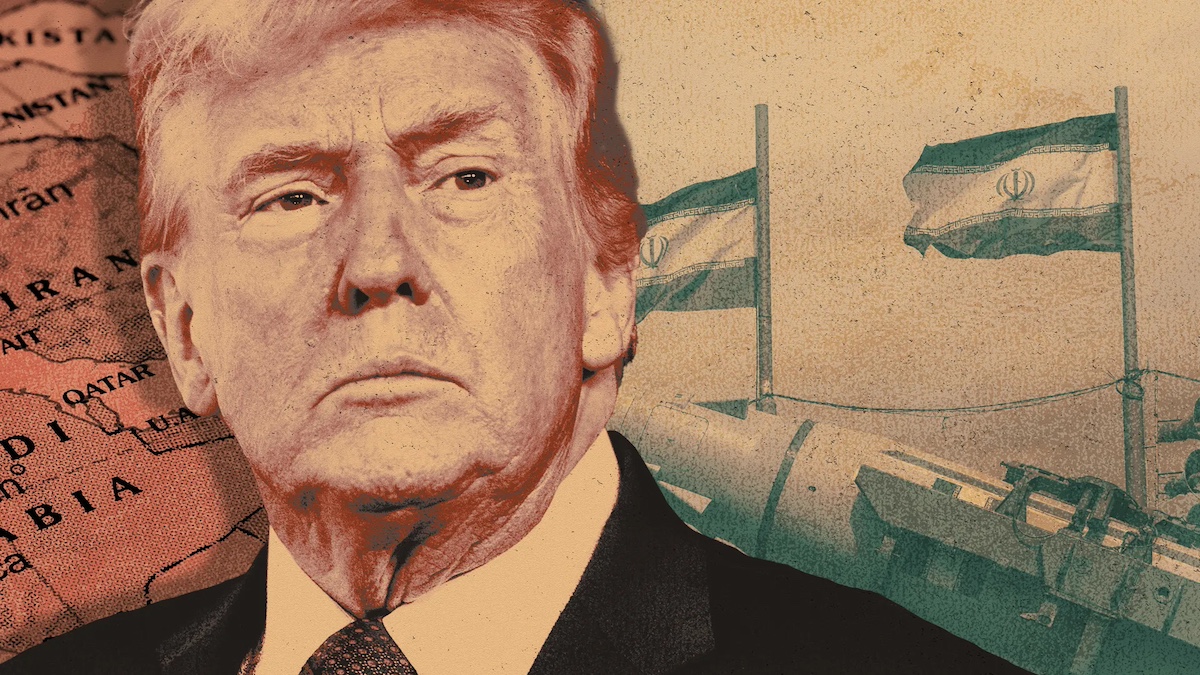
    Growing geopolitical friction has gripped the strategic Strait of Hormuz, one of the world’s most critical energy shipping chokepoints, after planned peace negotiations between the United States and Iran collapsed in Islamabad, Pakistan earlier this week. The breakdown of talks has triggered a sharp escalation of hostile rhetoric and military posturing, while a fragile extension of the Israel-Lebanon ceasefire has failed to ease broader regional volatility.

    In a provocative social media announcement this week, former US President Donald Trump issued a direct order to the US Navy, instructing forces to immediately “shoot and kill” any Iranian small craft caught laying sea mines in the strait’s international waters. Trump emphasized there should be “no hesitation” in carrying out the order, adding that ongoing US minesweeping operations in the waterway would be tripled in intensity. The president also drew widespread condemnation after reposting a user-generated video that endorsed calls to kill Iranian leaders who refuse to accept a negotiated peace deal.

    Iranian officials have roundly rejected the US threats, framing the rhetoric as blatant aggression against Iranian sovereignty. Iranian Foreign Ministry spokesperson Esmail Baghaei highlighted that Trump’s repost of the call to assassinate Iranian leadership marks an unprecedented violation of basic diplomatic norms. Top Iranian government figures, including President Masoud Pezeshkian and Foreign Minister Seyed Abbas Araghchi, have pushed back against US claims of internal division among Iranian factions, issuing a unified public statement emphasizing national solidarity. “In Iran, there are no radicals or moderates; we are all ‘Iranian’ and ‘revolutionary’, and with the iron unity of the nation and government, with complete obedience to the Supreme Leader of the Revolution, we will make the aggressor criminal regret his actions,” the leaders posted on their social media accounts.

    The recent escalation comes on the heels of the cancellation of high-stakes US-Iran peace talks scheduled for Wednesday in the Pakistani capital, just as an existing US-Iran ceasefire was set to expire. Trump ultimately extended the ceasefire deadline hours ahead of its expiration, avoiding an immediate full escalation. Despite the collapse of this week’s meeting, three anonymous Pakistani sources reported Friday that talks could resume imminently, with Araghchi expected to arrive in Islamabad Friday night. Two Pakistani government sources added that a US logistics and security delegation has already deployed to the city to prepare for new negotiations. Neither Washington nor Tehran has issued an official response to these reports as of press time.

    Regional analysts warn that the tit-for-tat escalation at the Strait of Hormuz is a deliberate coercive strategy that carries severe risks. Nagapushpa Devendra, a West Asia analyst and research scholar at Germany’s University of Erfurt, told China Daily that Trump’s positioning is designed to force Iran back to the negotiating table through pressure, even as he publicly claims he faces no time pressure to end the conflict. Devendra noted that Iran has shown no willingness to concede, and instead is prepared to leverage its control over the strait to counter US pressure. The most likely outcome of this dynamic, she explained, is an extended protracted standoff, marked by increased vessel seizures, higher risk of accidental military clashes, and growing volatility for global energy and shipping markets. Diplomatically, she added, the escalation risks eroding US allied support in the region while drawing Israel deeper into an expanding regional crisis.

    The United Nations has warned that the ongoing US-Iran conflict has already triggered devastating humanitarian consequences across the Middle East and beyond. Alexander De Croo, administrator of the United Nations Development Programme, told Reuters that the conflict has already pushed more than 30 million people back into extreme poverty, with food insecurity projected to worsen sharply in the coming months. “Even if the war stopped tomorrow, those effects, you already have them, and they will be pushing back more than 30 million people into poverty,” De Croo said, also warning of secondary impacts including widespread energy shortages and a collapse of remittance flows that support millions of vulnerable households across the region.

    In a further show of military buildup, US Central Command announced Thursday that a third American aircraft carrier strike group, led by the Nimitz-class USS George H.W. Bush, has arrived in the command’s area of responsibility, which covers all US military operations in the Middle East, according to Xinhua News Agency.

    Parallel to the US-Iran escalation, the conflict between Israel and Lebanon has entered a new phase after the two sides agreed to extend their existing ceasefire for an additional three weeks during Thursday’s White House talks brokered by Trump. The extension comes one day after an Israeli airstrike across the border killed five people, including veteran Lebanese journalist Amal Khalil, who worked for local newspaper Al-Akhbar. The strike marked the deadliest day in Lebanon since the original ceasefire took effect on April 16, Reuters reported.

    Despite the ceasefire extension, Lebanese militant group Hezbollah has rejected the terms of the truce, reserving its right to respond to any Israeli aggression during the 21-day period. Hezbollah MP Ali Fayad said that extending the ceasefire “makes no sense” in light of ongoing Israeli hostile acts, adding that the continuation of attacks gives “the resistance the right to respond at the appropriate time.” Mourners gathered in Lebanon Thursday to lay Khalil to rest, throwing flowers on her coffin as she was carried through funeral processions.

    Xinhua News Agency and other international agencies contributed reporting to this article.

  • Australia and New Zealand gather in Turkey to commemorate WWI battle

    Australia and New Zealand gather in Turkey to commemorate WWI battle

    On a pre-dawn Saturday in northwestern Turkey, delegations and attendees from Australia, New Zealand, and host nation Turkey assembled along the historic shoreline of Gallipoli to honor the 111th anniversary of one of the First World War’s most consequential military campaigns. The memorial service kicked off at 5:30 a.m. local time, timed to match the exact moment 111 years prior when soldiers of the Australian and New Zealand Army Corps (ANZAC) first came ashore on this stony beach at dawn on April 25, 1915.

    Stretching over an hour, the solemn gathering featured somber hymns, interfaith prayers, and wreath-laying rituals, with diplomatic representatives from dozens of nations across the globe joining the tribute to the fallen. The Gallipoli operation itself was a core component of a British-led Allied offensive designed to topple the Ottoman Empire during WWI. The campaign’s strategic goal was to seize control of the Dardanelles Strait, open a year-round supply and military route from the Mediterranean to Istanbul, and force the Ottoman Empire out of the war. After eight months of brutal, close-quarters combat, the offensive ended in total Allied defeat, leaving more than 100,000 young soldiers dead from both sides scattered across the peninsula’s battlefields.

    Beyond its strategic impact on the First World War, the Gallipoli campaign left a lasting legacy that reshaped three nations: for Australia and New Zealand, the shared sacrifice of ANZAC soldiers became a foundational moment that forged their distinct modern national identities. For Turkey, the successful defense of Gallipoli launched the military career of Mustafa Kemal Ataturk, who would go on to lead the Turkish War of Independence and found the modern Turkish Republic. Most remarkably, the heavy mutual loss of life ultimately laid the groundwork for a lasting, respectful friendship between the three former adversaries.

    In her opening address to the gathered crowd, New Zealand Governor-General Dame Cindy Kiro highlighted this transformative legacy. “From great suffering, understanding can grow. From former enemies, friendships can blossom. The relationship between Turkey, Australia and New Zealand is built on remembrance, respect and recognition of our shared humanity,” Kiro said.

    Following opening remarks, Turkish Colonel Fatih Cansiz recited a iconic tribute written by Ataturk in 1934, words that have been read at every major Gallipoli commemoration for nearly a century. “Those heroes that shed their blood and lost their lives … you are now lying in the soil of a friendly country. Therefore rest in peace. There is no difference between the Johnnies and the Mehmets to us where they lie side by side in this country of ours,” Cansiz read, echoing Ataturk’s message of universal respect for all fallen soldiers regardless of which side they fought on.