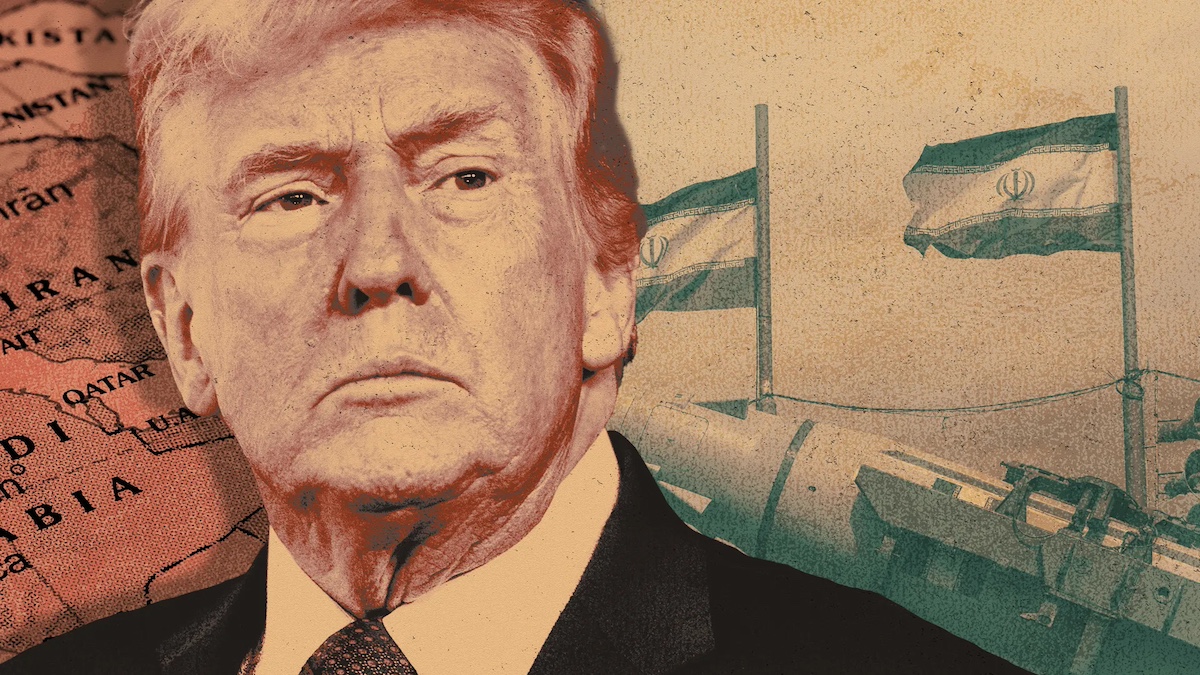
Five months after the outbreak of the 2026 Iran conflict, the United States finds itself trapped in a familiar strategic quagmire that has plagued its past major military engagements in Vietnam, Iraq and Afghanistan. Washington is too deeply entrenched to withdraw without significant political fallout, yet it lacks the leverage and military progress necessary to declare a definitive victory.
This impasse has been amplified by the chaotic, inconsistent approach of US President Donald Trump to the conflict. Trump has flip-flopped repeatedly between issuing fiery threats of what he describes as “the biggest attack since World War II” and suddenly announcing that peace talks are “imminent” — only for Tehran to immediately deny any negotiations are underway at all. This back-and-forth is not a calculated negotiating strategy; it is public evidence of a superpower learning the hard way that overwhelming air power can reduce a nation’s infrastructure to ruin, but it cannot guarantee the political settlement that military intervention was supposed to secure.
Long before the full-scale buildup to this conflict, foreign policy realists warned of this exact outcome: the persistent gap between what military force can destroy and what political outcomes it can deliver. Working alongside Israel, the US has successfully degraded Iran’s core military infrastructure, damaged facilities linked to Iran’s nuclear program, and eliminated multiple top Iranian military commanders. But these tactical gains have not translated into the strategic outcome Washington seeks: an Iranian government willing to surrender on terms the US can brand as victory, nor a stable regional order that does not require the US Navy to maintain a permanent, force-backed presence to keep the Strait of Hormuz open for global shipping. Already, commercial oil tankers have begun rerouting their journeys around the Cape of Good Hope in southern Africa to avoid the conflict zone — a shift that alone makes clear how far the conflict is from being contained, despite official Washington rhetoric.
Trump’s instinct to seek an exit ramp from the conflict is not misdirected. Unlike many of his predecessors and foreign policy advisers, he has repeatedly pulled back from carrying out the all-out maximalist strike he often threatens, in large part due to appeals from Gulf Arab states. These nations understand far better than most Washington policymakers that a wider regional war only benefits Iran’s hardline factions and the defense contractors profiting from increased arms shipments.
The critical flaw in Trump’s approach is his persistent reliance on empty threat-based leverage. When threats are never followed through, they quickly lose their credibility. The current public disconnect — the White House insisting talks will begin Monday, while Iran’s foreign ministry flatly denies any negotiations are scheduled — is a clear sign that Trump’s repeated threats have been so overused that Tehran no longer feels pressured to back down.
To achieve a genuine exit from this stalemate, Washington must abandon three long-held flawed assumptions that have shaped not just this war, but nearly every US military venture in the Middle East over the past three decades.
First, the assumption that eliminating a regime’s military capabilities will create strategic clarity, rather than strategic drift. History from Iraq to Libya shows this logic is almost always wrong. Destroying infrastructure and military assets is the easy part of military intervention; the longer bombing campaigns continue, the harder it becomes to reach a negotiated settlement. This is because hardline factions on both sides gain political and tactical power from prolonging the conflict, eroding the influence of moderates who favor a diplomatic resolution.
Second, the assumption that regional US allies are willing to bear the costs of an American-guaranteed regional security order. Saudi Arabia’s public call by Crown Prince Mohammed bin Salman for Trump to prioritize dialogue is a clear warning sign. The Gulf states that once quietly supported pressure on Tehran are now the ones pushing to de-escalate, because they border the Strait of Hormuz and cannot retreat across an Atlantic Ocean when the waterway closes to commercial traffic.
Third, and the assumption Washington is most resistant to abandon, is that “no deal” is a neutral default position while the war grinds on. In reality, every week that passes without a diplomatic settlement embeds the 2026 Iran war as the permanent baseline condition of the Middle East, rather than an emergency that demands resolution. Conflicts without clearly defined endpoints almost always expand and extend themselves, becoming self-sustaining policy commitments that are harder to exit over time.
A viable path to exit was already visible back in May and June, when Gulf states first talked Trump down from launching massive new strikes and a tentative negotiating framework nearly held. That path remains open today through the tentative Oman-brokered talks focused on securing freedom of navigation through the Strait of Hormuz.
What is missing is not opportunity, but political discipline: the willingness to accept a narrow, verifiable agreement focused on the Strait of Hormuz as a sufficient achievable objective, rather than treating it as just a stepping stone to the larger goal of total Iranian capitulation. Facing intense internal political pressure, Iran’s government will never accept total surrender at the point of a bombing threat.
Trump built much of his political brand around criticizing the endless wars his predecessors failed to end. Escaping this conflict with a better outcome than permanent stalemate will require him to embrace the harder political work of accepting a modest, workable deal now, instead of holding out for the politically satisfying but unattainable fantasy of total Iranian surrender later. Throughout history, empires that keep waiting for that one decisive blow that will force their enemy to fold almost always find themselves still waiting, years later, mired in the stalemate they could not bring themselves to exit.