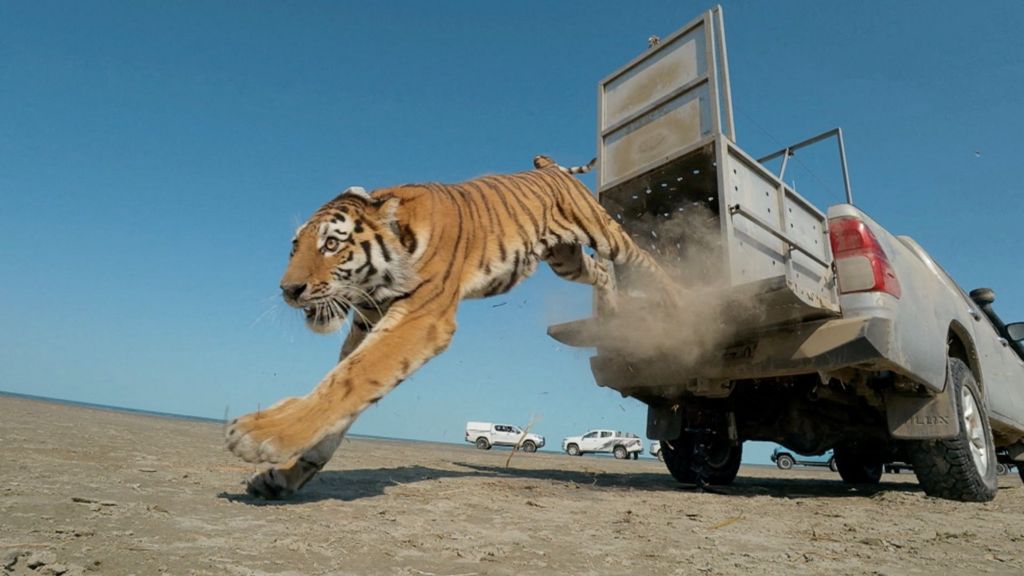
In a landmark moment for global conservation efforts, Kazakhstan has welcomed back a rare big cat to its natural landscapes after seven decades of absence. Umit, a two-year-old female Amur tiger, was recently set free into the wild as the cornerstone of an ambitious long-term initiative to reverse the extinction of tiger populations in Central Asia.
Tigers once roamed the vast steppes and forested regions of Central Asia freely, but widespread habitat loss, unregulated hunting, and human encroachment wiped out the region’s wild tiger population completely more than 100 years ago. For generations, no wild tigers have lived in the Central Asian wild, making this release a turning point for one of the world’s most iconic endangered species.
The restoration program, a collaboration between Kazakh environmental authorities, international conservation organizations, and wildlife scientists, has been years in the making. Teams spent decades preparing protected habitats, restoring prey populations, and carefully selecting and training captive-bred tigers to adapt to life in the wild before release. Umit, who was raised in a semi-wild sanctuary that prepared her for independent hunting and territory navigation, was chosen as the first tiger to be released into the wild, marking the start of what conservationists hope will be a growing, self-sustaining tiger population in the region.
This milestone comes amid growing global concern about declining big cat populations worldwide, with Amur tigers listed as an endangered species by the International Union for Conservation of Nature. Conservation leaders call the project a model for cross-border collaborative species restoration, demonstrating that with intentional planning and long-term investment, it is possible to bring back species that have been lost from their historic ranges.