标签: Africa

非洲

  • Planned demolition of a building in Nairobi goes wrong, leaves at least 4 dead

    Planned demolition of a building in Nairobi goes wrong, leaves at least 4 dead

    NAIROBI, Kenya — A routine demolition operation turned deadly Monday when a building scheduled for removal collapsed unexpectedly in Nairobi’s Blue Estate community, resulting in multiple casualties and triggering emergency response efforts. According to official statements from Kenya’s Interior Ministry, the incident claimed at least four lives while leaving four others injured.

    Rescue teams comprising military personnel and emergency services scrambled to locate potential survivors trapped beneath the massive rubble pile. On-site journalists documented rescue workers extracting victims on stretchers from the wreckage, with an Associated Press correspondent confirming visual confirmation of three fatalities at the scene.

    The collapsed structure was among numerous buildings designated for removal under the Nairobi River Regeneration Project, an urban renewal initiative aimed at environmental restoration and urban development. Authorities have launched an investigation to determine what caused the controlled demolition to go catastrophically wrong, though preliminary reports indicate significant deviations from planned procedures.

    This tragedy highlights persistent concerns about construction safety in Kenya’s capital, where rapid urbanization and housing demand frequently lead to regulatory compromises. The National Construction Authority’s previous audit revealed alarming statistics, with 58% of Nairobi’s buildings failing to meet basic safety standards—a lingering crisis that continues to endanger residents despite warnings issued after similar collapses in 2015 that killed 15 people.

  • Pope’s upcoming Africa odyssey takes him to a mosque, a prison and the site of a deadly 2021 blast

    Pope’s upcoming Africa odyssey takes him to a mosque, a prison and the site of a deadly 2021 blast

    The Vatican has unveiled comprehensive details for Pope Leo XIV’s forthcoming diplomatic journey across four African nations, scheduled from April 13-23. This significant tour will emphasize Christian-Muslim reconciliation, offer solace to victims of violence, and engage with Catholic communities in countries with complex colonial histories.

    The pontiff’s itinerary begins with a groundbreaking visit to Algeria, marking the first papal visit in the nation’s history. In Algiers, His Holiness will conduct high-level meetings with government officials, tour the renowned Great Mosque, and engage with local Catholic faithful. The Algerian leg continues in Annaba (ancient Hippo), the final resting place of St. Augustine, where Pope Leo will convene with Augustinian religious orders and celebrate Mass at the capital’s St. Augustine Basilica.

    Cameroon represents the tour’s second stop, where the Pope will host a major ‘peace meeting’ in Bamenda on April 16. This northwestern region has suffered devastating violence since 2017, with English-speaking separatists clashing with government forces, resulting in over 6,000 fatalities and 600,000 displacements according to International Crisis Group data. The visit occurs amid political tensions following President Paul Biya’s controversial re-election, with some activists expressing concern about potential political instrumentalization of the papal visit.

    Angola, a predominantly Christian former Portuguese colony, will welcome the Pope to its capital Luanda and the significant Marian shrine at Muxima. This 16th-century sanctuary, originally established by Portuguese colonizers, served as a baptismal site for enslaved Africans before their transatlantic passage, representing both deep religious significance and colonial legacy.

    The final destination, Equatorial Guinea, maintains one of Africa’s highest Catholic populations at approximately 70%. Pope Leo will visit three dioceses, meet with prison inmates, and pray at a memorial for victims of the 2021 military barracks explosion that claimed over 100 lives. The nation’s political landscape remains dominated by President Teodoro Obiang Nguema Mbasogo, Africa’s longest-serving leader, who has maintained power since 1982 amid allegations of autocratic rule despite the country’s oil wealth and widespread poverty.

  • A look at South Africa’s extreme move to deploy the army to fight crime, by the numbers

    A look at South Africa’s extreme move to deploy the army to fight crime, by the numbers

    CAPE TOWN, South Africa — In a decisive move against organized crime, President Cyril Ramaphosa has authorized an extensive military deployment spanning 13 months across five South African provinces. The unprecedented operation will deploy 2,200 soldiers to support police forces in combating two particularly destructive criminal enterprises: gang-related violence and illegal mining operations controlled by criminal syndicates.

    The deployment, effective from March 1, 2024, through March 31, 2025, represents the most prolonged military anti-crime initiative in recent years. With an allocated budget of $49.2 million, the operation will focus on Gauteng Province (home to Johannesburg), Western Cape (including Cape Town), North West, Free State, and Eastern Cape provinces.

    This strategic intervention highlights South Africa’s ongoing struggle with violent crime despite its status as Africa’s leading economy. Gang violence claims hundreds of lives annually, particularly in Cape Town’s impoverished Cape Flats district. Simultaneously, an estimated 30,000 illegal miners operate within approximately 6,000 abandoned gold and mineral mines, often employing armed violence to protect their illicit operations.

    Police authorities have outlined four primary objectives for the joint operation: significant crime reduction in targeted areas, apprehension of offenders, recovery of illegal firearms and explosives, and confiscation of narcotics. The deployment has received broad public support, with residents in crime-affected communities reportedly welcoming military presence in Johannesburg last week.

    While some opposition parties initially questioned the operation’s substantial cost, the government maintains that both gang violence and illegal mining pose fundamental threats to South Africa’s democratic institutions and economic development. This deployment marks the third military intervention against crime since 2023, though previous operations were significantly shorter in duration.

  • Whistleblower murder suspect is former elite officer, South African police say

    Whistleblower murder suspect is former elite officer, South African police say

    In a case exposing deep-seated corruption within South African law enforcement, a former member of an elite police unit has been formally charged with the murder of a key whistleblower. Matipandile Sotheni, 41, appeared in court facing allegations that he assassinated Marius van der Merwe in December of last year—an execution-style killing witnessed by the victim’s own family.

    The murder sent shockwaves across the nation, highlighting the perilous risks faced by those who challenge police misconduct. Van der Merwe had previously testified under the pseudonym ‘Witness D’ before the Madlanga commission, a major judicial inquiry into police corruption. His testimony directly implicated several officers in the torture and murder of a robbery suspect, leading to the immediate suspension of those named.

    Tragically, Van der Merwe was shot dead just three weeks after giving his landmark testimony. His death is part of a disturbing pattern: of the twelve individuals implicated in the original robbery suspect’s killing, three have since died—two by gunshot and one by suicide, according to police statements.

    Sotheni, identified as one of three suspects in the whistleblower’s murder, also faces additional charges of attempted murder against Van der Merwe’s wife and children. The case has been adjourned until March 26, pending a formal bail application. Sotheni has thus far declined to comment on the charges.

    This case has become a focal point for national outrage and demands for systemic reform, revealing the violent retaliation mechanisms within corrupt precincts and the extreme dangers confronting truth-tellers in South Africa.

  • ‘We will go wherever they hide’: Rooting out IS in Somalia

    ‘We will go wherever they hide’: Rooting out IS in Somalia

    In the rugged terrain of Somalia’s al-Miskad mountains, a critical counterterrorism operation unfolds as Puntland Defence Forces utilize drone surveillance to track Islamic State militants hiding in remote cave networks. This barren landscape, once home only to nomadic communities, has transformed into a strategic foothold for ISIS since its fighters were displaced from Middle Eastern strongholds.

    The emergence of IS-Somalia represents a significant evolution in global terrorist networks. Established by British-Somali national Abdulqadir Mumin, the group has forced al-Shabab militants out of Puntland’s mountainous regions, creating a sophisticated training and financial hub that supports ISIS affiliates across Africa and beyond. Despite being pushed out of the port city of Bosaso in early 2025, the group maintained control over villages like Dardar, where they imposed a brutal regime characterized by strict social controls and violent enforcement.

    The human cost of this conflict is profound. Local residents describe living under constant fear, with strict dress codes, gender segregation, and bans on music enforced through intimidation and violence. The story of Mahad Jama’s niece Shukri, who was kidnapped and killed while pregnant, exemplifies the trauma inflicted upon communities. Her deaf seven-year-old son was also murdered during the same attack.

    International support, particularly from the United States, has been crucial to counterterrorism efforts. The Pentagon conducted approximately 60 airstrikes against IS-Somalia in 2025 alone, with ongoing drone surveillance providing critical intelligence for ground operations. Despite these efforts, the UN estimates ISIS maintains up to 800 fighters in Somalia, more than half foreign recruits from countries including Ethiopia, Morocco, and Syria.

    The Puntland Forces have demonstrated remarkable resilience, claiming hundreds of ISIS casualties and capturing numerous foreign fighters over 16 months of intense combat. Among them is 32-year-old officer Muna Ali Dahir, one of the few women serving on the front lines, who draws motivation from her eight children back home.

    While experts like American University’s Tricia Bacon acknowledge that ISIS’s local attack capabilities have been degraded, the organization remains a dangerous node in global terrorist networks, providing resources and support to affiliates worldwide. The determination of soldiers like Abdikhair Jama—who vows to continue fighting ‘until the last fighter is captured’—reflects the ongoing nature of this complex conflict that shows no signs of imminent resolution.

  • Ugandan opposition leader goes abroad after two months in hiding

    Ugandan opposition leader goes abroad after two months in hiding

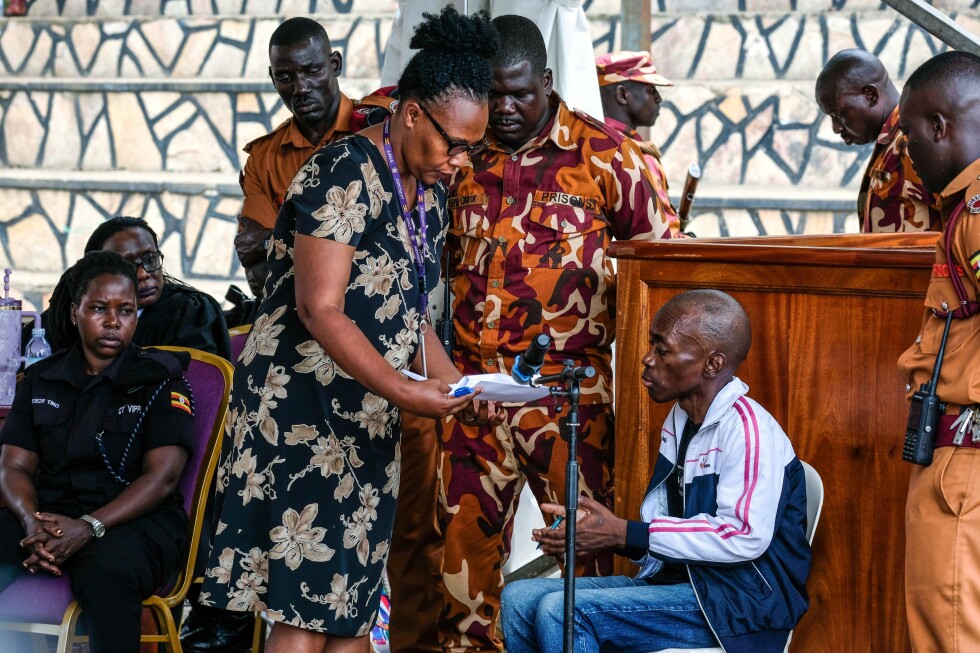
    Ugandan opposition leader and former presidential candidate Bobi Wine has emerged from a two-month period in hiding to announce his departure from the country, citing the need for “critical international engagements” and to mobilize global support against President Yoweri Museveni’s administration. The pop star-turned-politician, whose legal name is Robert Kyagulanyi Ssentamu, maintains that the January presidential election was systematically rigged to ensure Museveni’s continued rule.

    In his first public appearance in weeks, conveyed through a five-minute video statement on social media platform X, the 44-year-old opposition leader reiterated his claim to victory in the contested polls. President Museveni, 81, who has governed Uganda since 1986, officially secured 72% of the vote according to election authorities and has accused opposition factions of attempting to violently overturn the results.

    The political climate has grown increasingly tense with reports of military operations targeting Wine’s supporters. Wine alleges that authorities have conducted repeated raids on homes of his associates and established nationwide roadblocks in pursuit of him. His residence in Kampala remains under military siege, a situation that has persisted since election day.

    General Muhoozi Kainerugaba, Museveni’s son and head of Uganda’s military, previously issued alarming threats against Wine on social media, including a since-deleted post describing him as “wanted dead or alive” and threatening castration. While some government officials have denied security forces are actively hunting Wine, Kainerugaba—widely perceived as a potential presidential successor—also claimed that 30 “terrorists” from Wine’s party were killed during post-election protests.

    Expressing gratitude to Ugandans who protected him during his concealment, Wine emphatically stated: “Running for president is not a crime.” He has called for targeted international sanctions against Museveni’s government while continuing to assert his legitimate claim to the presidency amid ongoing political turmoil.

  • AP finds an Israeli group discreetly organized the mystery flights evacuating Palestinians from Gaza

    AP finds an Israeli group discreetly organized the mystery flights evacuating Palestinians from Gaza

    An extensive investigation by The Associated Press has uncovered that an Israeli organization with ties to far-right political agendas has been orchestrating covert evacuation flights transporting Palestinians from Gaza to destinations including South Africa and Indonesia. The operation, which began in May and continued through November, has transported hundreds of Gazans amid the ongoing conflict that has devastated the territory.

    The flights were organized through a complex arrangement designed to obscure Israeli involvement. Ad Kan, an Israeli group founded by soldiers and former intelligence officers, operated through another entity called Al-Majd, which presents itself as a humanitarian organization ‘supporting Palestinian lives.’ This layered structure effectively distanced the operation from its Israeli origins, according to contracts, passenger manifests, financial records, and interviews with more than two dozen individuals involved.

    Passengers interviewed expressed largely pragmatic attitudes toward the evacuations. ‘There was famine, and we had no options. My children were almost killed,’ stated one 37-year-old Palestinian who arrived in South Africa in November. Many emphasized that their primary concern was escaping the devastation, regardless of who facilitated their departure.

    The operation’s ideological underpinnings trace back to Ad Kan founder Gilad Ach, a West Bank settler activist and staunch supporter of former U.S. President Donald Trump’s controversial proposal to resettle Palestinians from Gaza. Ach had previously published detailed plans for implementing ‘voluntary exit’ programs, arguing that emptying Gaza of its Palestinian population was both feasible and in Israel’s interest.

    South African officials have condemned the flights as part of a ‘clear agenda to cleanse out the Palestinians out of Gaza and West Bank.’ Following the arrival of flights in November, South Africa revoked its 90-day visa exemption for Palestinian passport holders, citing ‘deliberate and ongoing abuse’ by Israelis linked to emigration efforts.

    Financial arrangements revealed passengers paid up to $2,000 per person through bank and cryptocurrency transfers. The operation required coordination with Israeli authorities, as Palestinians need official permission to leave Gaza. Israeli government offices declined to comment on the flights or whether those who left would be permitted to return.

    The revelation raises significant questions about the boundaries between humanitarian evacuation and political agendas in conflict zones, particularly regarding the protection of vulnerable populations and the transparency of cross-border operations during humanitarian crises.

  • Severe flooding kills 62 in Kenya, as heavy rains continue

    Severe flooding kills 62 in Kenya, as heavy rains continue

    Kenyan authorities have confirmed a devastating death toll of 62 individuals following unprecedented torrential rainfall that has triggered the worst flooding in years across the East African nation. The catastrophic weather event has particularly ravaged the capital city of Nairobi, where inadequate drainage infrastructure and unregulated urban development have significantly exacerbated the crisis.

    According to the latest reports from emergency services, the death toll has surged from 42 to 62 within just one week. Overnight rescue operations successfully saved 11 passengers trapped in a submerged minibus taxi (locally known as matatu) in Nairobi’s rising waters, while two children were dramatically rescued from a flooded residential building.

    The relentless downpours have caused multiple rivers to burst their banks, resulting in widespread destruction of homes, critical road networks, and essential utility infrastructure including power and water lines. Numerous bridges in the capital have sustained severe damage, forcing road closures and disrupting transportation systems. Several educational institutions have also been inundated following Saturday’s exceptionally heavy rainfall.

    Kenya’s Interior Ministry issued an urgent warning on Sunday, indicating that continuous heavy rainfall persists across various regions, substantially elevating flood risks nationwide. Authorities have implemented emergency evacuation protocols, strongly advising residents in low-lying areas to relocate to safer ground. Thus far, over 2,000 citizens have been compelled to abandon their homes seeking emergency shelter.

    President William Ruto announced the deployment of emergency response measures, including the distribution of essential food supplies and medical assistance to affected communities. Simultaneously, municipal crews are working to clear obstructed drainage systems that have contributed to the severity of flooding in urban areas.

    The humanitarian crisis extends beyond Kenya’s borders, with neighboring Ethiopia reporting more than 100 fatalities due to concurrent flooding and landslides in southern regions. Climate scientists emphasize that while multiple factors contribute to flooding patterns, atmospheric warming attributable to climate change has significantly increased the probability of extreme rainfall events. Global temperatures have already risen approximately 1.1°C since the pre-industrial era, with further increases anticipated without substantial emissions reductions worldwide.

  • Republic of Congo’s president reelected to fifth term, provisional results show

    Republic of Congo’s president reelected to fifth term, provisional results show

    BRAZZAVILLE, Republic of Congo — The Republic of Congo’s longstanding leader Denis Sassou N’Guesso has secured a fifth presidential term with an overwhelming 94.82% of votes, as announced by Interior Minister Raymond Zephirin Mboulou in provisional results Tuesday. The 82-year-old leader, who has dominated Congolese politics for over four decades, defeated six challengers in an election marked by internet shutdowns and restricted movement across the capital.

    The electoral process unfolded with characteristic constraints on digital connectivity, while voter turnout was officially reported at 84.65% with approximately 2.6 million ballots cast. However, observations in the capital Brazzaville revealed notably sparse activity at polling stations, with many citizens expressing skepticism about the election’s potential to alter the nation’s political trajectory.

    Sassou N’Guesso’s political journey spans 42 years, beginning with his initial rise to power in 1979. After conceding defeat in the nation’s first multi-party elections in 1992, he returned to leadership through military means following the 1997 civil war. The recent campaign highlighted significant disparities between the incumbent and his opponents, with Sassou N’Guesso being the sole candidate to conduct a nationwide tour while his image dominated the capital’s infrastructure.

    The electoral process faced boycotts from two major opposition parties citing allegations of unfair practices. Constitutional amendments in 2015, which removed presidential age and term limits, paved the way for his continued candidacy.

    This political continuity occurs against a backdrop of severe economic challenges. World Bank data indicates the nation struggles with international debt representing 94.5% of GDP, critically high youth unemployment, and pervasive poverty affecting over half of its 5.7 million citizens. Nearly half the population is under 18 years old.

    Sassou N’Guesso’s extended rule places him among Africa’s longest-serving leaders, trailing only Cameroon’s Paul Biya and Equatorial Guinea’s Teodoro Obiang Nguema Mbasogo in political longevity.

  • Will Trump help or hinder Zimbabwe’s white farmers in their compensation battle?

    Will Trump help or hinder Zimbabwe’s white farmers in their compensation battle?

    Aging white farmers displaced during Zimbabwe’s controversial land reforms two decades ago are pinning their hopes on former US President Donald Trump to secure billions in unpaid compensation from the government. This development comes as Zimbabwe struggles with a massive $23 billion debt burden that has hampered its ability to fulfill a $3.5 billion compensation agreement reached in 2020.

    The land redistribution program under former President Robert Mugabe in the early 2000s saw approximately 4,500 predominantly white-owned farms seized and redistributed to black Zimbabweans. While intended to address colonial-era land imbalances, the program triggered economic collapse and international sanctions that crippled the nation’s agricultural sector.

    Current President Emmerson Mnangagwa, seeking to repair Zimbabwe’s international standing, committed to compensating farmers for infrastructure improvements on the seized lands. However, the government’s financial constraints led to a compromise offering affected farmers just 1% of their total compensation upfront, with the remainder issued as 10-year treasury bonds paying 2% interest semi-annually.

    With many original farmers now elderly and skeptical about the government’s long-term payment capabilities, only 17% have accepted this arrangement. This has prompted some factions to seek international intervention through Washington-based lobby group Mercury Public Affairs LLC, which has connections to the Trump administration.

    The lobbying effort, coordinated through South African consultancy OB Projects Management, aims to persuade US officials to support debt clearance and new financing arrangements through international institutions like the World Bank. This approach gains significance amid potential legislative changes, as a new congressional bill proposes repealing the Zimbabwe Democracy and Economic Recovery Act of 2001, which currently restricts international funding to Zimbabwe.

    The situation has divided the farming community, with the Commercial Farmers Union distancing itself from the US lobbying efforts while other groups explore alternative solutions. Some farmers have even reached out to tech billionaire Elon Musk regarding potential financing arrangements.

    Underpinning these efforts is Zimbabwe’s vast mineral wealth, particularly its significant lithium, chromium, cobalt, and rare earth deposits. The mineral resources are seen as potential leverage for attracting US investment in exchange for debt settlement commitments.

    Zimbabwe’s Finance Minister Mthuli Ncube has expressed openness to external intervention, stating the government remains committed to compensation payments but lacks the financial capacity for immediate settlement. As the situation develops, farmers remain caught between government promises, international politics, and the pressing reality of advancing age and financial uncertainty.