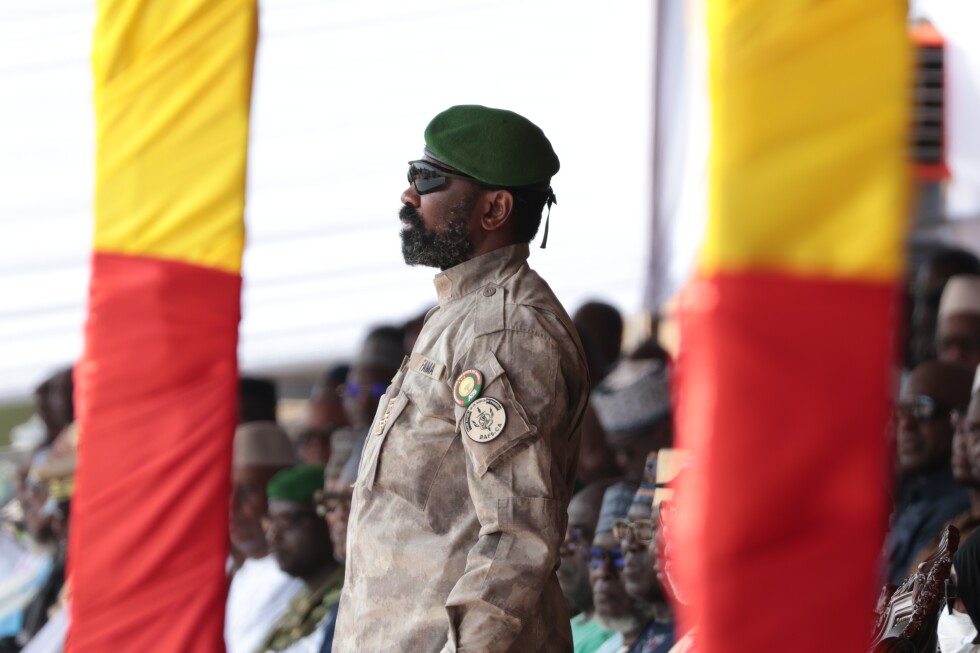
In a stunning development that has deepened the security crisis across conflict-wracked Mali, Malian authorities confirmed late Friday that active and recently dismissed military officers colluded with jihadi and separatist insurgents to carry out the largest coordinated offensive the country has seen in more than 10 years. This wave of attacks has already forced government and allied Russian forces to retreat from strategic territory and claimed the life of the nation’s defense minister.
The string of unprecedented assaults, which opened with near-simultaneous strikes targeting multiple population centers including Bamako’s main international airport, was launched earlier this month through a rare partnership between Jama’at Nusrat al-Islam wal-Muslimin (JNIM), an al-Qaida-affiliated jihadi group, and the Azawad Liberation Front (FLA), a separatist movement fighting for northern Mali’s independence. Fighters carried out the raids using motorcycles and heavy trucks, striking at least 10 separate locations across the country in coordinated action.
By the start of this week, the offensive delivered a major blow to Mali’s ruling military junta, which seized power in a 2020 coup: insurgents seized control of Kidal, a major northern city, in the retreat that followed the attacks. The violence also killed Malian Defense Minister Sadio Camara, marking one of the highest-profile casualties of the Sahel’s long-running extremist conflict.
On Friday, separatist commander Achafghi Ag Bouhanda announced in a verified online video that FLA fighters had captured another critical strategic site: the military camp in Tessalit, a northern town located near the Algerian border and adjacent to a key regional airport. The announcement came after Malian army troops and fighters from Russia’s Africa Corps withdrew from the camp ahead of the separatist advance. The Associated Press has not been able to independently verify conditions on the ground at the camp, and Malian officials have not yet issued an official response to requests for comment on the fall of Tessalit.
The most shocking revelation of the unfolding crisis came via an official statement read on Malian state television from the public prosecutor of Bamako’s Military Court. Investigations into the coordinated attacks have uncovered “solid evidence regarding the complicity of certain military personnel” – including both currently serving and recently discharged officers – in the assault, the prosecutor confirmed. The statement added that these officers directly participated in “the planning, coordination, and execution” of the attacks, and also named exiled prominent opposition politician Oumar Mariko as a co-conspirator in the plot.
The collapse of government control across swathes of northern Mali comes as the capital Bamako faces mounting pressure from insurgent blockades. JNIM this week announced a full blockade of all four major road arteries leading into Bamako, expanding on a partial fuel and supply blockade that militants imposed on the city late last year. Traffic into the capital was severely disrupted on Friday, with multiple confirmed militant roadblocks along major routes. The persistent instability and blockades have already forced multiple travel agencies to suspend operations, leaving residents facing dangerous and restricted travel across the country. “These days, traveling by road is a dangerous undertaking,” said Aminata Traoré, a frequent traveler between Bamako and the southern Sikasso region.
Mali’s junta leader Assimi Goita has pledged to press forward with counteroffensives to retake lost territory. “Military operations will continue until the armed groups involved have been completely neutralized and security has been sustainably restored throughout the country,” Goita said earlier this week. The Sahel region, a vast expanse of land south of the Sahara Desert spanning multiple West African nations, has become the global epicenter of violent extremist activity in recent years, with jihadi groups expanding their control across remote border areas as national governments struggle to contain the insurgency.