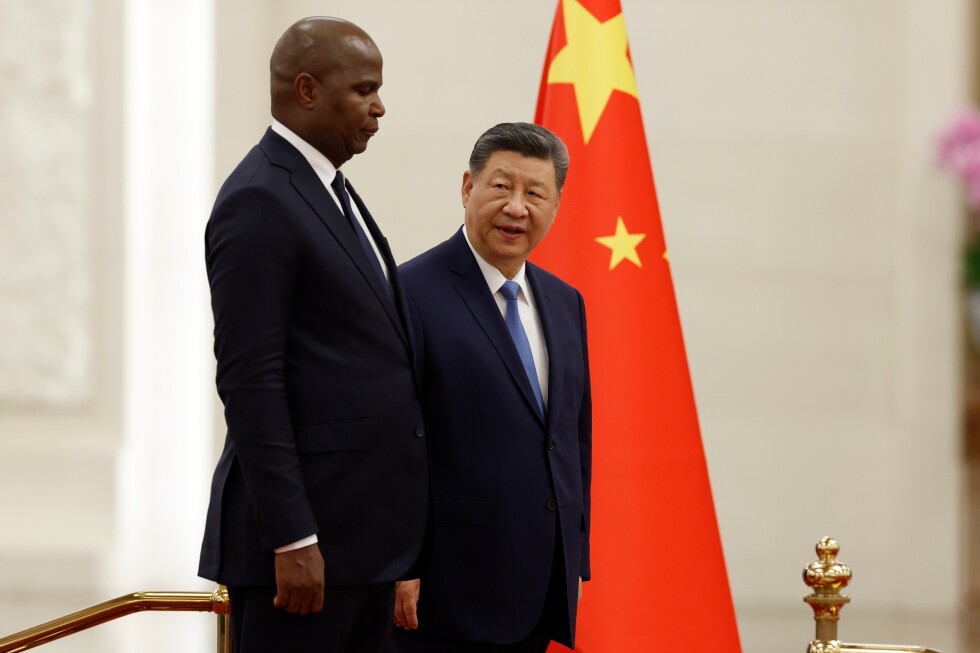
CAPE TOWN, SOUTH AFRICA – A landmark Chinese trade policy that grants duty-free market access to Africa’s largest economies for a two-year period officially entered into force on Friday, launching at a moment of stark contrast with the United States’ ongoing push for protectionist trade measures under former President Donald Trump.
The new tariff exemption framework covers the 20 biggest economies across the African continent, including regional powerhouses South Africa, Egypt, Nigeria, Algeria and Kenya. Prior to this update, China had already eliminated import tariffs for 33 low-income African nations, bringing the total number of African countries eligible for full tariff-free treatment for their exports to 53 out of the continent’s 54 sovereign states. The sole exception is the small southern African kingdom of Eswatini, which remains the only African country to maintain official diplomatic relations with Taiwan, a self-governing island that China claims as part of its own territory.
Chinese authorities frame the policy as a concrete step toward shared bilateral growth. The Customs Tariff Commission of China’s State Council emphasized that the initiative will advance mutually beneficial development between China and African trading partners. According to China’s state-run Xinhua News Agency, the first shipment to benefit from the new rules cleared customs in the southern Chinese tech hub of Shenzhen in the early hours of Friday: a 24-metric-ton consignment of fresh apples sourced from South African orchards.
China’s Ministry of Commerce noted that the policy will deliver particular gains for high-demand African agricultural exports that previously faced import duties ranging from 8% to 30%. These include cocoa from top global producers Ivory Coast and Ghana, coffee and avocados from Kenya, and citrus fruits and wine from South Africa. Combined, Ivory Coast and Ghana control more than half of the world’s total cocoa supply, while South Africa ranks as one of the world’s top exporters of citrus produce.
The policy rollout comes as many leading African economies have been actively diversifying their export markets away from the U.S., after the Trump administration implemented steep reciprocal tariffs on African goods roughly a year ago. At the height of those measures, South Africa, Africa’s most industrialized economy, faced tariffs as high as 30%, while some other African nations saw rates exceed 40%.
“South Africa looks forward to working with China in a friendly, pragmatic and flexible manner,” South African Trade Minister Parks Tau stated during bilateral trade talks held in Beijing this past February. Though the U.S. Supreme Court ruled Trump’s broad global tariffs unconstitutional and struck them down in the same month, the former president quickly announced that his administration held “very powerful alternatives” and immediately enacted new temporary import taxes to replace the invalidated measures.
Today, China already holds the position of Africa’s largest single trade partner, at a time when the continent’s demographic footprint is expanding rapidly: the United Nations projects Africa’s current population of 1.5 billion will nearly double to 2.5 billion by 2050, accounting for more than a quarter of the global population at that time.
Despite Beijing’s framing of the deal as a win-win for development, analysts point to persistent structural imbalances in the China-Africa trade relationship, alongside billions of dollars in outstanding African sovereign debt owed to Beijing. In 2025, total bilateral trade hit a record high of $348 billion. However, Chinese exports to Africa grew roughly 25% to reach $225 billion over the period, while African exports to China rose only around 5% to $123 billion, widening the existing trade deficit for African nations.
For decades, the core of the trade relationship has centered on China importing raw materials from Africa and exporting finished manufactured goods back to the continent. Thierry Pairault, a leading China-Africa researcher at France’s National Center for Scientific Research, points out that most African raw material exports – including crude oil and industrial minerals – already enjoyed tariff-free access to Chinese markets before the new policy. While Pairault acknowledges the policy will deliver modest benefits for African agricultural exporters, he argues its broader geopolitical purpose is deliberate.
“Xi Jinping is positioning China as the antithesis of Western protectionism. This gesture is intended to appeal to both African public opinion and global markets,” Pairault explained in an analysis published by the China Global South Project, a research initiative focused on China’s engagement with low and middle-income nations. Even so, he added, the policy “only applies where it costs China almost nothing.”