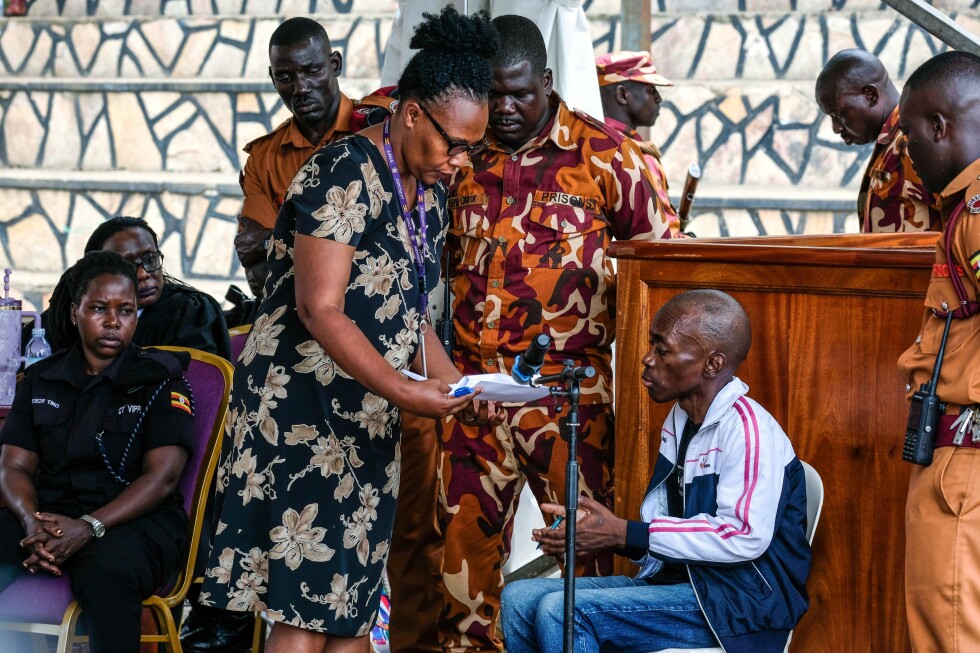
WAKISO, Uganda — A high-stakes criminal case in Uganda concluded Thursday with a judge handing down a death sentence to 38-year-old Christopher Okello, turning down the defendant’s argument that he was legally insane when he carried out a brutal machete attack that left four nursery school children dead earlier this month. The ruling triggered immediate cheers from a crowd of hundreds of local residents who gathered to watch the open-air proceedings, a case that has shaken the East African nation since the killings unfolded on April 2.
The attack targeted the Gaba Early Childhood Development Program, a nursery school located in a Kampala capital suburb. Witness accounts confirm Okello gained entry to the facility by disguising himself as a parent, engaged in a short conversation with school administrators, then locked the campus gate before launching his violent assault on the young children.
In his ruling, the judge emphasized that Okello’s insanity claim failed on the basis of evidence: the defendant had not presented any verifiable proof to back up his assertion that he was not mentally competent at the time of the crimes, justifying the death sentence the court handed down.
The fast-track, public proceedings were the result of a direct order from Ugandan President Yoweri Museveni, who instructed the judicial system to process the case through the country’s “mobile courts” mechanism. Unlike traditional closed courtroom trials, mobile courts hold sessions in open, outdoor spaces to allow members of the public to observe the justice process directly. In this case, hundreds of grieving local residents and other onlookers were able to watch the trial from start to finish.
Even as the case moved quickly to a verdict, questions and controversy have persisted over Okello’s mental state and the fairness of the expedited public trial. Throughout proceedings, Okello displayed erratic behavior: he appeared visibly nervous and had unprovoked outbursts of laughter. The Uganda Law Society has publicly criticized the process, labeling it nothing more than “a judicial lynching rally.”
Defending the approach, the Ugandan judiciary has stood by its decision to hold a quick, public trial, noting that the open-air mobile court model aligns with the institution’s commitment to bringing accessible justice directly to communities through innovative procedural approaches.
It is important to note that while Uganda still allows the death penalty in law, actual executions are extremely rare in the country. Most individuals sentenced to death remain incarcerated for decades rather than being put to death, a common practice across much of modern East Africa.
The Associated Press contributes international coverage of African current events, with additional reporting available via its dedicated Africa news hub.