标签: Africa

非洲

  • Kenya eyes export surge through zero-tariff access

    Kenya eyes export surge through zero-tariff access

    NAIROBI—Kenyan officials and industry leaders are formulating comprehensive strategies to capitalize on China’s groundbreaking zero-tariff initiative, anticipating a substantial surge in exports to the world’s second-largest economy. The development emerged during a high-level business forum convened by China Council for the Promotion of International Trade and Kenya Export Promotion and Branding Agency on Monday.

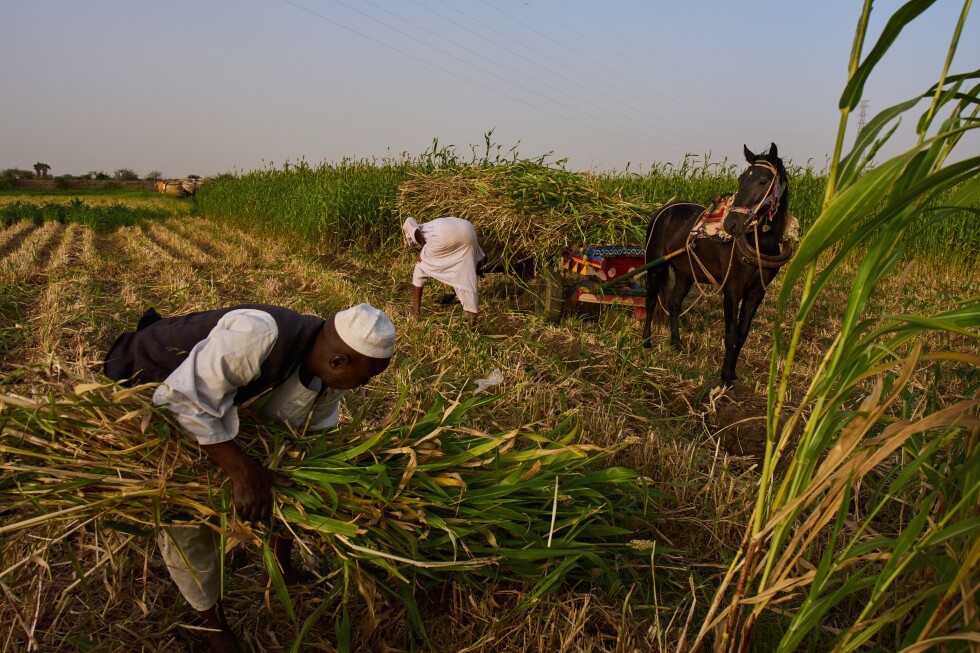
    Deputy President Kithure Kindiki characterized China’s decision to grant duty-free access to African exports, effective May 1, as a transformative catalyst that could fundamentally reshape trade dynamics and industrial cooperation between the nations. “China’s vast consumer market of over 1.4 billion presents unprecedented opportunities for Kenyan exporters,” Kindiki emphasized, outlining governmental efforts to encourage movement up the value chain through processed agricultural exports including coffee, tea, and floral products.

    The policy extension, which China will implement across all 53 African nations with which it maintains diplomatic relations, has been widely acknowledged as a pivotal measure to enhance African market access and export capabilities. Chinese Vice-President Han Zheng, addressing forum participants, framed the initiative as demonstrating China’s “resolve and sincerity in promoting Global South development for common prosperity.”

    Kenya’s strategic approach focuses on value-added transformation, with Trade Principal Secretary Regina Ombam highlighting the shift from raw commodity exports to processed goods such as avocado oil. This methodology aims to simultaneously increase foreign exchange earnings, strengthen domestic enterprises, and generate employment opportunities.

    Industry representatives acknowledged operational challenges in meeting export demands. Erick Rutto, President of the Kenya National Chamber of Commerce and Industry, stressed the necessity for producers to organize collectively to supply larger volumes while adhering to international standards. Meanwhile, Macadamia Nut Association Chairperson Pally Muthathai detailed innovative approaches including cooperative structures, contract farming, and digital platforms to coordinate over 200,000 farmers within complex value chains.

    Complementing these efforts, Cabinet Secretary Lee Kinyanjui confirmed that government agencies are actively collaborating with exporters to ensure certification compliance and facilitate connections with Chinese buyers. Financial institutions are simultaneously exploring partnership models to provide export financing solutions and support production scaling.

  • Rebels in Congo used containers to hold journalists in brutal conditions, advocacy group says

    Rebels in Congo used containers to hold journalists in brutal conditions, advocacy group says

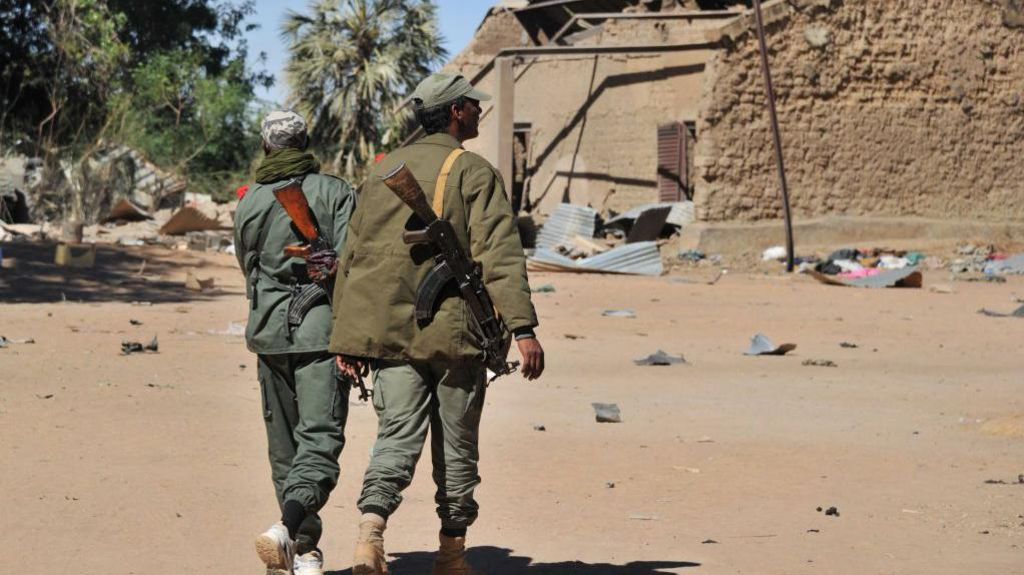
    DAKAR, Senegal — A prominent media advocacy organization has exposed severe human rights violations perpetrated by the M23 rebel faction in the eastern Democratic Republic of Congo. Reporters Without Borders (RSF) issued a damning report on Tuesday detailing how the Rwanda-backed insurgents are utilizing metal shipping containers as makeshift detention facilities under what they describe as “inhumane” and “degrading” conditions in the city of Goma.

    According to RSF’s investigation, which incorporated witness testimonies, satellite imagery, and photographic evidence gathered in 2025, at least two journalists were among numerous civilians detained within these metal containers situated at the compound of the province’s legislative assembly. The identities of sources providing testimony have been protected for security reasons.

    The report reveals disturbing details of the detention conditions, with up to 80 detainees crammed simultaneously into single containers devoid of both light and ventilation. Prisoners were permitted exit only once daily and received minimal food rations, with multiple accounts describing routine physical beatings. Witnesses described extreme temperature fluctuations—suffocating heat during daylight hours followed by intense cold at night—with some fatalities reported under these brutal circumstances. Detainees typically remained captive for several weeks before being transferred to alternative locations.

    The M23 rebel group, which seized control of Goma last year, has not responded to requests for comment from The Associated Press regarding these allegations.

    This development represents a significant deterioration of press freedom in eastern Congo, where journalists already operated under widespread threats and attacks. RSF notes that the M23 has systematically tightened control over media coverage, including imposing specific linguistic restrictions on how their presence in the region may be described.

    The mineral-rich eastern territories of Congo have endured decades of sustained conflict, with government forces combating over 100 armed groups. The M23 rebellion, backed by Rwanda, emerged as the most potent threat, making unprecedented advances throughout the region early last year by capturing key urban centers.

    Despite a truce agreement brokered by the United States and Qatar, the ongoing conflict has triggered a massive humanitarian emergency, displacing at least 7 million people from their homes.

  • Inside the alleged Russian operation to trigger anti-government protests in Angola

    Inside the alleged Russian operation to trigger anti-government protests in Angola

    Angola is preparing to try two Russian nationals and two Angolan citizens in a landmark case alleging foreign election interference, disinformation campaigns, and anti-government activities. The defendants—Russian political consultant Igor Ratchin, translator Lev Lakshtanov, Angolan sports journalist Amor Carlos Tomé, and political activist Francisco Oliveira—have been detained in Luanda for eight months facing charges ranging from terrorism and espionage to influence peddling.

    According to prosecution documents obtained by the BBC, the Russian defendants allegedly operated under Africa Politology, a shadow network emerging from the dissolved Wagner Group. The indictment claims they orchestrated a sophisticated operation to manipulate Angola’s political trajectory ahead of next year’s presidential election through disinformation dissemination and protest instigation.

    The defense teams vigorously challenge these allegations, arguing the indictment lacks concrete evidence and relies on conjecture. Russian counsel maintains their clients were merely establishing a cultural ‘Russian House’ in Luanda without state sponsorship or connections to Wagner operations.

    This case unfolds against shifting geopolitical alliances. Angola, a significant oil and diamond producer, has gradually distanced itself from Moscow under President João Lourenço’s administration. Russian entities like diamond miner Alrosa and bank VTB have exited Angola due to Ukraine-related sanctions, while Lourenço has strengthened ties with Western nations.

    Analysts interpret the alleged operation as reflecting Russian anxiety over Angola’s geopolitical reorientation. ‘This demonstrates Russian discomfort with Angola’s direction under Lourenço,’ noted Alex Vines of the European Council on Foreign Relations. ‘There’s clear disinformation intent to build sympathy toward Russia.’

    The prosecution alleges the network employed multiple tactics: recruiting local journalists, commissioning propaganda articles, and making payments exceeding $24,000 to influence Angolan media. They allegedly impersonated legitimate news sources, with one Facebook page mimicking Angola 24 Horas publishing content criticizing Western-backed infrastructure projects like the Lobito Corridor.

    Most seriously, prosecutors claim the group orchestrated July’s deadly protests—the worst since Angola’s civil war ended—that resulted in 29 deaths and 1,200 arrests. The indictment cites phone notes and photographs as evidence, though defense attorneys counter that Ratchin documented protests solely for personal safety.

    Local journalists and human rights researchers question the prosecution’s narrative, suggesting authorities may be using foreign defendants as scapegoats for organic discontent driven by poverty affecting 40% of Angolans. The indictment itself contains inconsistencies, including disputed timelines regarding Wagner-linked operative Maxim Shugalei’s whereabouts.

    Legal expert Rui Verde notes the prosecution must demonstrate deliberate coordination among the alleged activities to prove subversion intent. If convicted, the Russians face potential repatriation, though Russian diplomatic sources suggest limited official concern for ‘contractors’ not on state missions.

  • Carter, Eze and Iwobi named on Football Black List

    Carter, Eze and Iwobi named on Football Black List

    The 2025 Football Black List has achieved a historic milestone by featuring more women than men for the first time since its inception in 2008. This annual recognition celebrates black professionals making exceptional contributions to football beyond their athletic achievements.

    Among the standout honorees are England defender Jess Carter, recognized as a powerful advocate for cultural change following her experience with racist abuse during Euro 2025. Arsenal’s Eberechi Eze earns recognition for his foundation empowering south London youth through education and sports initiatives, while Fulham midfielder Alex Iwobi is acknowledged for his community project supporting underserved populations through football tournaments and mentorship programs.

    The comprehensive list spans nine categories including coaching, media, commercial, and community grassroots, highlighting diverse excellence across football’s ecosystem. Notable inclusions include Oxford United captain Naomi Bedeau, former BBC Sport journalist Jessica Creighton, and Manchester United CEO Omar Berrada.

    Co-founder Leon Mann emphasized the significance of this year’s gender balance breakthrough: ‘Black women frequently encounter substantial barriers within sports and broader society. Their recognition here powerfully demonstrates their exceptional talent and perseverance. I anticipate their visibility will inspire coming generations.’

    While celebrating progress, Mann noted ongoing challenges: ‘The inclusion of a CEO from one of football’s biggest clubs alongside elite coaches represents what was once a distant dream. However, meaningful work remains to enhance representation in leadership and coaching positions.’

    The selection process involves an expert panel comprising representatives from the Premier League, Football Association, Professional Footballers’ Association, and anti-discrimination organization Kick It Out, ensuring comprehensive evaluation of nominees’ impact on the sport.

  • Notorious apartheid police commander ‘Prime Evil’ testifies at South African hearing on killings

    Notorious apartheid police commander ‘Prime Evil’ testifies at South African hearing on killings

    JOHANNESBURG — In a landmark hearing that underscores South Africa’s renewed commitment to addressing historical injustices, Eugene de Kock, the infamous apartheid-era police commander known as “Prime Evil,” provided testimony Monday regarding the 1985 killing of four anti-apartheid activists. The inquiry represents part of the nation’s broader effort to confront previously unpunished atrocities committed by security forces during decades of institutionalized racial segregation.

    De Kock, former head of a special counterinsurgency police unit, denied direct involvement in the Cradock Four case—one of apartheid’s most shocking crimes—but revealed disturbing details about police operations. He testified that authorities maintained photographic records of approximately 6,000 anti-apartheid activists classified as “known terrorists” who were to be tracked and eliminated if arrest proved impractical. Notably, he asserted that the Cradock Four—Matthew Goniwe, Fort Calata, Sicelo Mhlauli, and Sparrow Mkonto (three of whom were teachers)—were not included on this list.

    The victims were abducted at a police roadblock before being murdered and burned, their bodies discovered in a condition that horrified the nation. De Kock further disclosed that one implicated officer sought his assistance in orchestrating a cover-up, specifically requesting help with obtaining alternative firearms and interfering with ballistic evidence.

    Now 77, de Kock appeared under police guard in Gqeberha (formerly Port Elizabeth), where the original crimes occurred. His image was deliberately obscured in official broadcasts following a judicial ruling. Having been sentenced in 1996 to two life terms plus 212 years for murder, kidnapping, and other charges related to anti-apartheid activist abuses, de Kock was paroled in 2015.

    This latest judicial review follows years of pressure from victims’ families and comes after two previous apartheid-era inquiries—widely suspected as cover-ups—failed to deliver accountability. Six former policemen identified as perpetrators were never prosecuted despite being denied amnesty during South Africa’s Truth and Reconciliation process in the late 1990s; all have since died.

    The Cradock Four investigation joins several other reopened cases examining apartheid-era crimes, including the deaths of Nobel Peace Prize winner Albert Luthuli (1967), lawyer Griffiths Mxenge (1981), and iconic activist Steve Biko (1977). Additionally, President Cyril Ramaphosa ordered a separate inquiry last year to determine whether post-apartheid governments deliberately obstructed investigations into historical human rights violations.

  • US sends drones to Nigeria to join troops sent for intelligence and training

    US sends drones to Nigeria to join troops sent for intelligence and training

    In a significant strategic move, the United States has deployed sophisticated MQ-9 Reaper drones to Nigeria to bolster the West African nation’s counterinsurgency capabilities. This development follows the arrival of approximately 200 American military personnel last month, who are providing specialized training and intelligence support to Nigerian forces.

    The drone deployment comes as Nigeria grapples with an increasingly complex security landscape, particularly in its northern regions. Islamic militant organizations including Boko Haram, its Islamic State-affiliated splinter faction ISWAP (Islamic State West Africa Province), and other extremist groups have created a multi-faceted threat environment. These organizations engage in everything from ideological insurgency to criminal activities such as kidnapping for ransom and illegal resource extraction.

    According to U.S. Africa Command (AFRICOM) officials, the high-altitude drones—capable of operating at over 40,000 feet with endurance exceeding 30 hours—will be stationed at Bauchi Airfield in northeastern Nigeria. While the exact number of deployed systems remains classified, officials emphasized these aircraft will be exclusively used for intelligence, surveillance, reconnaissance, and training purposes, not offensive operations.

    This security cooperation initiative follows diplomatic discussions prompted by concerns about religious targeting in Nigeria’s ongoing conflict. The partnership represents a strategic recalibration for the U.S. after the closure of its drone operations in neighboring Niger, where American forces were expelled by the current military government.

    The security situation in Nigeria remains dire, with recent suicide bombings in Maiduguri claiming at least 23 lives and injuring over 100 civilians. Although no group claimed responsibility, Boko Haram remains the primary suspect. The conflict, which began in 2009, has resulted in approximately 40,000 fatalities according to UN estimates, with analysts criticizing the Nigerian government’s inadequate protection of civilians amid expanding militant influence from the Sahel region.

  • Nigerian heritage key to my success – Itauma

    Nigerian heritage key to my success – Itauma

    British-Nigerian heavyweight sensation Moses Itauma has discovered profound personal meaning beyond his rapid boxing success through reconnecting with his African roots. The 21-year-old phenom, who maintains an unblemished 13-0 professional record with 11 knockouts, recently visited his father’s homeland of Nigeria for the first time in over a decade, finding answers to questions about identity that had long eluded him.

    Born in Slovakia to a Nigerian father and Slovak mother, Itauma endured racial abuse during his childhood in Eastern Europe before relocating to England. His journey to Akwa Ibom state in southeastern Nigeria provided unexpected emotional resolution. “Some of the questions that I want to be answered are in my dad’s village,” Itauma revealed. “Why am I this type of way? Why do I look this type of way? Or why do I think this type of way?”

    The heavyweight contender described an overwhelming reception at Lagos’ Murtala Muhammed Airport, where security personnel immediately embraced him as one of their own despite knowing nothing about his background. “They said just because I’m Nigerian, I’m doing well, that they’re proud of me. That’s something I’ve never had anywhere else,” Itauma noted, drawing sharp contrast with his experiences in Slovakia where he received no recognition.

    Itauma joins a growing trend of British-Nigerian boxers reconnecting with their heritage. Anthony Joshua, who sports a continent tattoo on his arm, and Lawrence Okolie, who headlined a fight card in Lagos last December, have paved the way for this cultural homecoming. While Nigeria’s boxing authorities acknowledge there’s limited financial incentive for these visits, they recognize the value in star athletes promoting the sport and connecting with their cultural roots.

    As Itauma prepares for his delayed bout against American Jermaine Franklin in Manchester on March 28, he carries with him a renewed sense of belonging. The Commonwealth champion believes victory could propel him toward world title contention, potentially with strong Nigerian support behind him. His journey illustrates how athletic excellence and cultural identity increasingly intersect in modern sports, particularly for athletes with multinational backgrounds seeking connection to their heritage.

  • Bodies of Africans were once dug up and sent to Europe for research. Now they are coming home

    Bodies of Africans were once dug up and sent to Europe for research. Now they are coming home

    JOHANNESBURG (AP) — In a solemn ceremony marking a significant step toward historical reconciliation, South Africa conducted the reburial of at least 63 ancestral remains belonging to the Khoi and San communities on Monday. The remains, which had been exhumed between 1868 and 1924 and transported to Europe for pseudoscientific research, were recently repatriated from The Hunterian Museum at the University of Glasgow following extensive negotiations initiated in 2022.

    South African President Cyril Ramaphosa presided over the ceremony alongside traditional leaders and museum representatives, delivering a powerful condemnation of the colonial-era practices that led to the removal of indigenous remains. He characterized these historical actions as “rooted in racism and used to advance theories of European racial superiority,” noting that human remains had been “dug up and turned into commodities and specimens, displayed under the cold gaze of pseudoscience.”

    The repatriation forms part of a broader continental movement across Africa seeking the return of stolen cultural artifacts and human remains. The Khoi and San peoples, widely recognized as southern Africa’s earliest inhabitants, mounted significant resistance against colonial forces, resulting in many deaths at the hands of European settlers.

    President Ramaphosa used the occasion to call for greater accountability from former colonial powers, urging European nations to acknowledge the historical injustices inflicted upon African peoples and consider reparations to former colonies. The ceremony represented not only the physical return of ancestral remains but also the restoration of dignity to communities whose heritage had been systematically violated during the colonial era.

  • Nigerian police arrest 15 after viral videos of alleged sexual assault at festival

    Nigerian police arrest 15 after viral videos of alleged sexual assault at festival

    Nigerian authorities have apprehended 15 individuals following disturbing allegations of sexual violence during the Alue-Do community festival in Delta state’s Ozoro city. The incident gained national attention after viral videos depicted groups of young men aggressively chasing, stripping, and physically assaulting women in public spaces during the traditional fertility celebration.

    The circulated footage triggered massive public outcry across social media platforms, with the hashtag #StopRapingWomen trending extensively and reigniting conversations about gender-based violence accountability in Nigeria. Despite the graphic nature of the videos, Delta State Police spokesperson Bright Edafe disclosed that no formal rape complaints have been filed in connection with the festival, noting that four interviewed victims denied experiencing rape.

    Law enforcement officials described the witnessed behaviors as ‘alarming, disgusting and embarrassing,’ confirming that identified suspects have been transferred to the state Criminal Investigation Department. Among those detained is a community leader reportedly involved in organizing the event.

    Local witnesses and activists revealed that women had received warnings against venturing outdoors during certain festival periods, suggesting targeted aggression toward those seen in public. This has raised serious concerns about potential tolerance of sexual violence under cultural pretenses.

    The traditional leadership of Ozoro has vehemently rejected characterizations of the Alue-Do festival as condoning sexual assault, maintaining it represents a legitimate fertility rite that was ‘misinterpreted and abused by some youths.’ Traditional authorities acknowledge two harassment cases but emphasize these constitute criminal behavior rather than cultural practice.

    The Delta state government has aligned with this position, asserting that no recognized festival in the region permits sexual violence and that all such acts should be treated as criminal offenses. Adding national-level condemnation, Nigeria’s First Lady Oluremi Tinubu—who has familial connections to Delta state—denounced the alleged assaults and called for rigorous prosecution of offenders while affirming that no cultural tradition justifies violating women’s rights.

  • Zimbabwe detains top opponent of changes extending president’s rule

    Zimbabwe detains top opponent of changes extending president’s rule

    Zimbabwean authorities have escalated their suppression of political dissent by detaining prominent opposition figure Tendai Biti, the leading critic of proposed constitutional amendments that would significantly extend President Emmerson Mnangagwa’s rule. The former finance minister was apprehended on Saturday in Mutare alongside Morgan Ncube, programs director of the Constitutional Defenders Forum, on charges of organizing an unauthorized public gathering without police notification.

    This represents the most high-profile detention yet in a systematic campaign against opponents of constitutional reforms that would fundamentally alter Zimbabwe’s political landscape. The proposed changes would postpone national elections until 2030, extend both presidential and parliamentary terms from five to seven years, and transfer presidential election authority from the electorate to Parliament.

    President Mnangagwa, who assumed power following the 2017 military coup that ousted longtime leader Robert Mugabe, has publicly committed to stepping down when his second term concludes in 2028. However, he has notably refrained from opposing his ruling ZANU-PF party’s concerted push for constitutional revisions that would effectively prolong his tenure.

    The government’s crackdown has intensified in recent months, with police routinely banning opposition gatherings and arresting critics. The pattern of suppression extends beyond detentions, as evidenced by the recent hospitalization of law professor Lovemore Madhuku after a severe beating by unidentified assailants he identified as police officers. Additionally, the offices of SAPES Trust, a think tank scheduled to host amendment opponents, were mysteriously set ablaze last year preceding the event.

    Despite government claims that the two-term presidential limit remains intact under the proposed amendments, critics argue that any extension of presidential terms requires mandatory public referendum approval. Justice Minister Ziyambi Ziyambi maintains that Parliament possesses adequate authority to enact the changes without popular consultation.

    International human rights organizations, including Amnesty International, have condemned the escalating pattern of repression against peaceful dissent in Zimbabwe. The developments occur against the backdrop of Mnangagwa’s controversial re-election in 2023, which international observers widely criticized for alleged electoral irregularities and suppression of opposition activities.