标签: Africa

非洲

  • UN calls for reparations to remedy the ‘historical wrongs’ of trafficking enslaved Africans

    UN calls for reparations to remedy the ‘historical wrongs’ of trafficking enslaved Africans

    In a historic move underscoring global recognition of historical injustices, the United Nations General Assembly has overwhelmingly endorsed a groundbreaking resolution characterizing the transatlantic trafficking of enslaved Africans as “the most severe crime perpetrated against humanity.” The measure, adopted with 123 votes in favor, encountered opposition from only three member states—Argentina, Israel, and the United States—while 52 nations abstained from voting.

    The comprehensive resolution advocates for concrete reparatory measures to address the enduring legacy of slavery, emphasizing that such actions represent “essential steps toward rectifying historical grievances.” It further demands the immediate and unconditional restitution of cultural artifacts—including artworks, monuments, museum collections, documents, and national archives—to their countries of origin without financial compensation.

    Ghanaian President John Dramani Mahama, a principal architect of the initiative, addressed the assembly prior to the vote, stating: “On this day, we unite in profound solidarity to affirm historical truth and pursue a pathway toward healing and restorative justice. This resolution stands as a bulwark against collective amnesia.”

    Although General Assembly resolutions lack legal binding force unlike Security Council mandates, they serve as significant barometers of international consensus. The United Kingdom’s acting UN Ambassador James Kariuki acknowledged the imperative to confront slavery’s “devastating consequences and persistent impacts,” highlighting contemporary manifestations including racial discrimination, xenophobia, and modern slavery through human trafficking and forced labor.

    The resolution explicitly condemns racialized chattel enslavement and the transatlantic slave trade as unprecedented atrocities while establishing frameworks for member states to engage in dialogues concerning reparatory justice. These encompass formal apologies, restitution mechanisms, compensation programs, rehabilitation initiatives, and legal reforms to combat systemic discrimination.

    Additionally, the measure encourages voluntary contributions to educational programs about the slave trade and promotes collaboration between UN agencies, the African Union, the Caribbean Community, and the Organization of American States to advance reparatory justice and reconciliation efforts worldwide.

  • Militants in northern Nigeria kill 10 security forces and 1 resident, officials say

    Militants in northern Nigeria kill 10 security forces and 1 resident, officials say

    ABUJA, Nigeria — In a devastating assault highlighting Nigeria’s persistent security challenges, armed militants killed nine soldiers, one police officer, and a civilian in a carefully orchestrated ambush in Kebbi state. The attack occurred Tuesday evening in the village of Giron Masa within the Shanga council area as security forces were mobilizing to respond to intelligence warnings about an impending militant operation.

    Yahaya Sarki, spokesman for the Kebbi state government, confirmed the assault and shared photographic evidence showing multiple military vehicles burned beyond recognition along a dusty roadway flanked by dense forestation. Several additional soldiers sustained serious injuries during the engagement.

    Kebbi Governor Nasir Idris visited hospitalized casualties following the incident, characterizing the attack as a significant loss for the state. He pledged full government support for the families of deceased personnel, stating authorities would ‘do everything to assist the families’ of those killed in service.

    The ambush represents the latest eruption of violence in Nigeria’s chronically unstable northwestern region, where extremist groups frequently exploit limited state presence to target security outposts and isolated communities. While no organization immediately claimed responsibility, local sources pointed toward the Islamic State Sahel Province (ISSP), known domestically as Lakurawa. This faction has demonstrated increased lethality in border regions adjoining Niger Republic.

    Lakurawa’s expanding operational capacity prompted a targeted U.S. military strike in December, conducted collaboratively with Nigerian forces. This intervention followed international concerns regarding religiously-motivated violence in the region. Nigerian military analysts note Lakurawa established stronger footholds in border communities following Niger’s 2023 military coup, which significantly deteriorated diplomatic and security cooperation between the neighboring nations.

  • Senegal appeal to be heard ‘as swiftly as possible’

    Senegal appeal to be heard ‘as swiftly as possible’

    The Court of Arbitration for Sport (CAS) has formally acknowledged Senegal’s appeal against the controversial decision to strip them of their Africa Cup of Nations title, promising a swift resolution to the high-stakes dispute. The contentious ruling by the Confederation of African Football (CAF) overturned Senegal’s dramatic 1-0 victory over Morocco in the January 18th final, instead awarding the match to Morocco with an official 3-0 forfeit scoreline.

    The controversy erupted during the championship’s final moments when match officials awarded a stoppage-time penalty to host nation Morocco. This decision prompted Senegal’s entire team to stage a walk-off protest from the pitch before eventually returning to complete the match. Following an official protest lodged by the Moroccan Football Federation (FRMF), CAF’s disciplinary committee determined that Senegal’s actions constituted a match forfeiture under competition regulations.

    CAS Director General Matthieu Reeb emphasized the urgency of the proceedings while maintaining procedural integrity: “We understand that teams and fans are eager to know the final decision, and we will ensure that arbitration proceedings are conducted as swiftly as possible, while respecting the right of all parties to a fair hearing.” The court confirmed however that no specific timeline for a verdict has been established at this preliminary stage.

    Legal experts familiar with sports arbitration suggest the process could extend for several months. Raymond Hack, former head of CAF’s disciplinary panel, projected the appeal might require up to six months to resolve, potentially placing the decision’s timing during the upcoming World Cup tournament. The outcome will determine whether Senegal retains what they believed was their second AFCON championship or whether Morocco will be officially crowned the 2025 Africa Cup of Nations winner.

  • South Africa’s police chief to appear in court over controversial health contract

    South Africa’s police chief to appear in court over controversial health contract

    South Africa’s National Police Commissioner General Fannie Masemola has been formally summoned to appear in court on April 21st regarding his alleged involvement in a controversial health services contract worth $21 million. The 62-year-old law enforcement chief received official notification to present himself before judicial authorities, though specific charges remain undisclosed by investigating bodies.

    This development marks a significant moment in South Africa’s ongoing anti-corruption efforts, as Masemola becomes the third consecutive police commissioner to face criminal investigation while holding office. The controversial tender was awarded in 2024 to Medicare24 Tshwane District, a company owned by businessman Vusimuzi ‘Cat’ Matlala, with the intended purpose of providing healthcare services to police personnel.

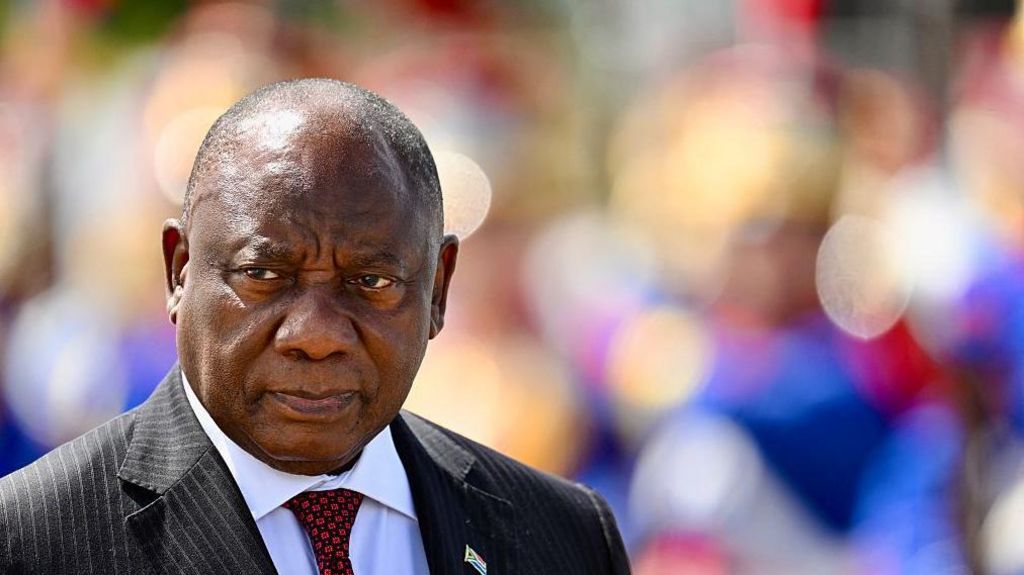
    The contract has since been terminated following corruption allegations, resulting in formal charges against twelve senior police officers connected to the procurement process. Despite the serious nature of the allegations, President Cyril Ramaphosa has remained measured in his response, stating only that he will address the matter ‘in accordance with the law’ without indicating whether suspension proceedings might be initiated.

    Police spokesperson Brigadier Athlenda Mathe confirmed that Commissioner Masemola has acknowledged the charges and pledged his full cooperation with all legal processes. The case represents another chapter in South Africa’s continued struggle with high-level corruption allegations within law enforcement institutions, drawing significant public attention to the integrity of the country’s criminal justice leadership.

  • Saudi Pro League, the US or Europe – what are Salah’s options?

    Saudi Pro League, the US or Europe – what are Salah’s options?

    As Mohamed Salah prepares to conclude his historic nine-year tenure with Liverpool FC, the football world is intently focused on the next destination for the Egyptian superstar. The 33-year-old forward, whose departure was officially confirmed on Tuesday, leaves Anfield as a Premier League legend after contributing significantly to the club’s recent championship victory under new management.

    Saudi Arabia’s Pro League emerges as the most probable landing spot, with multiple factors favoring this transition. The Middle Eastern nation views Salah as an invaluable asset—not only as the world’s premier Muslim footballer but also as a cultural icon for the Arab world. This perspective was demonstrated in 2023 when Al-Ittihad submitted a substantial £150 million bid, which Liverpool declined during Jürgen Klopp’s final season.

    The Saudi league’s financial capabilities remain unquestioned, particularly with its Public Investment Fund-backed clubs—Al-Ahli, Al-Hilal, Al-Ittihad, and Al-Nassr—all recognizing Salah’s potential to elevate the league’s global profile. Football finance expert Kieran Maguire emphasizes: “They’re paying Cristiano Ronaldo £170 million annually. Salah currently earns £20 million per year, so financial constraints won’t present obstacles.”

    Meanwhile, Major League Soccer presents an alternative possibility, though with different financial dynamics. MLS Commissioner Don Garber has publicly encouraged Salah to consider American soccer, referencing the league’s Designated Player Rule that has previously accommodated stars like David Beckham and Lionel Messi. While Messi’s base salary at Inter Miami reaches approximately £15 million, his total compensation package including ownership shares reaches $70-80 million annually.

    European options appear limited despite Salah’s continued Champions League ambitions. While Paris Saint-Germain, Bayern Munich, Real Madrid, and Barcelona theoretically possess financial capacity, each club presents complications regarding roster construction and strategic direction. A transition to another Premier League club seems particularly improbable given Salah’s legendary status at Liverpool.

    As the summer transfer window approaches, the decision ultimately rests on multiple factors beyond finances, including geopolitical considerations and Salah’s personal preferences regarding his footballing legacy.

  • Ghana demands compensation for slavery in landmark UN vote

    Ghana demands compensation for slavery in landmark UN vote

    In a landmark move at the United Nations General Assembly, Ghana is spearheading a resolution to formally recognize the transatlantic slave trade as the most severe crime against humanity in human history. The African nation’s Foreign Minister, Samuel Okudzeto Ablakwa, characterized the centuries-long practice as “the most horrendous crime that took place in the history of mankind” in recent statements to the BBC.

    The comprehensive resolution proposes several consequential measures, including urging UN member states to issue formal apologies for their historical roles in slavery and contribute to an international reparations fund. The proposal specifically advocates for establishing educational endowments, skills training programs, and support systems for the descendants of slavery victims rather than direct payments to governments.

    This initiative faces anticipated resistance from several Western nations, including the United Kingdom, which have historically rejected financial reparations based on the premise that contemporary institutions cannot bear responsibility for historical wrongs. Despite this opposition, the resolution has gained significant backing from the African Union and other international supporters who view it as essential for historical justice and collective healing.

    Ghana’s historical position as one of the primary departure points for enslaved Africans—with an estimated 12-15 million people forcibly transported to the Americas between 1500 and 1800, and over two million perishing during the treacherous journey—lends particular moral authority to its advocacy. Beyond financial considerations, the resolution demands the repatriation of cultural artifacts looted during colonial periods, which Ablakwa emphasized “represent our heritage, our culture and our spiritual significance.”

    Ghanaian President John Dramani Mahama has hailed the resolution as both “historic” and a “safeguard against forgetting,” positioning it as a crucial step in addressing historical injustices that continue to reverberate through global societies today.

  • South Africa arrests 12 senior police officers on suspicion of corruption

    South Africa arrests 12 senior police officers on suspicion of corruption

    In a significant escalation of South Africa’s anti-corruption campaign, authorities have detained twelve high-ranking police officials on charges of corruption and fraud. The arrests, confirmed by prosecutors on Wednesday, represent a direct response to mounting concerns about systemic graft within the nation’s law enforcement hierarchy.

    The detained officers, who appeared before the Pretoria Magistrates Court the same day, are implicated in a scandal involving a fraudulent health and wellness services contract awarded to Medicare24, a company with alleged connections to organized crime. Vusimuzi “Cat” Matlala, the company’s director who is currently incarcerated on unrelated attempted murder charges, was also arrested and appeared in court alongside the officers.

    This development occurs against the backdrop of two parallel investigations ordered by President Cyril Ramaphosa. The first presidential commission continues to examine corruption allegations within the police force, which previously led to the suspension of the police minister last year. Simultaneously, a parliamentary inquiry is investigating claims that senior officers maintained corrupt relationships with alleged crime bosses, including financial exchanges for preferential treatment.

    Prosecutors revealed that several arrested officers served on the bid evaluation committee that improperly awarded the contract to Medicare24. According to the National Prosecuting Authority’s investigative unit, these officers failed to disqualify the company’s application despite clear grounds for exclusion.

    All defendants have submitted affidavits supporting their bail applications, with prosecutors indicating they would not oppose temporary release pending further investigations. The case represents a critical test for Ramaphosa’s administration as it attempts to demonstrate tangible progress in combating institutional corruption.

  • Kenya floods kill 88, displace thousands

    Kenya floods kill 88, displace thousands

    Nairobi, Kenya – Torrential downpours sweeping across Kenya have triggered catastrophic flash floods that have left at least 88 people dead, displaced tens of thousands of residents, and destroyed critical infrastructure across more than a fifth of the country’s counties, the Kenyan Ministry of Interior announced Tuesday.

    The disaster has impacted 21 counties, with official data recording 34,150 people forced to flee their submerged homes and three people still unaccounted for. Widespread damage has wiped out residential properties, washed out road networks, and disabled other key public services that communities rely on. Kenya’s capital Nairobi has suffered the worst of the catastrophe, accounting for 37 of the confirmed fatalities, followed by the country’s eastern region which has recorded 21 deaths.

    As swollen rivers burst their banks across flood-stricken areas, dramatic footage and on-the-ground reports show residents wading through chest-deep murky floodwaters carrying whatever salvageable belongings they can grab, while hundreds of others are ferried to safety via overcrowded rescue boats. Over the weekend, two additional lives were lost in the Rift Valley region when heavy rain saturated hillsides and triggered lethal landslides that buried multiple homes.

    Transport links across the country have been severely disrupted, with multiple bridges fully submerged and major arteries blocked by floodwater and accumulated silt. A key stretch of the Mai Mahiu-Suswa-Narok road has been rendered impassable by debris and flood runoff, cutting off both passenger travel and the movement of commercial goods between regions.

    Humanitarian officials are sounding the alarm over rapidly deteriorating living conditions for displaced populations. In Homa Bay County alone, at least 11 villages have been overwhelmed by flooding, leaving 591 households sheltering in overcrowded temporary displacement camps. Verolyn Danga, a community health worker based at the Kobala Community Health Unit in Homa Bay, confirmed that while hundreds of residents have been evacuated to higher ground by boat, access to basic emergency health care remains severely limited for affected communities.

    The Kenya Meteorological Department has warned that the crisis is far from over, forecasting that continued heavy rainfall will persist throughout the ongoing long rains season, bringing elevated risks of additional flash floods and other storm-related hazards across vulnerable areas. Climate analysts linking the growing frequency and intensity of extreme weather events across East Africa to human-caused climate change have echoed official warnings, urging residents in high-risk zones to exercise extreme caution as emergency response operations continue.

    In response to the disaster, the Kenyan government has activated a whole-of-government contingency plan coordinated across multiple agencies. The national Ministry of Health has deployed mobile disease surveillance teams to all affected counties, issuing public health advisories aimed at preventing flood-related injuries and outbreaks of waterborne diseases common in post-flood scenarios.

  • Dozens of bodies, mostly infants, discovered in Kenya mass grave

    Dozens of bodies, mostly infants, discovered in Kenya mass grave

    Authorities in Kenya have launched a comprehensive investigation following the horrific discovery of 32 bodies, predominantly infants and fetuses, exhumed from a mass grave on property belonging to the National Council of Churches of Kenya (NCCK) in the western town of Kericho.

    The grim operation, conducted under a court order initially seeking 14 bodies, revealed what government pathologist Richard Njoroge described as ‘quite unusual’ circumstances. The remains were found stacked in gunny bags, with the exhumation process hampered by heavy rains. Preliminary examination identified seven adults and 25 children, including numerous body parts.

    Dr. Njoroge noted concerning forensic evidence suggesting the victims died at different times, with adult remains showing advanced decomposition while children’s bodies were less deteriorated. He indicated that some remains appeared to originate from hospitals and mortuaries, though definitive conclusions await complete autopsies scheduled to begin Wednesday.

    The Directorate of Criminal Investigations (DCI) revealed initial findings indicating 13 unclaimed bodies had been officially released from a hospital in neighboring Nyamira county and transported to Kericho for burial last Friday. However, the discovery of additional bodies and the clandestine nature of the burial has raised serious questions.

    NCCK officials have denied any authorization or knowledge of the burial occurring on their property, expressing shock at the discovery. Law enforcement has reportedly arrested two suspects—a public health officer from Nyamira and a cemetery caretaker—with others being questioned for potential criminal activity beyond burial irregularities.

    Human rights organization Vocal Africa condemned the discovery as a ‘staggering and horrific escalation,’ citing reports of mutilation and dismemberment among the remains that suggest unprecedented violence requiring immediate transparent investigation.

    The shocking find echoes Kenya’s recent tragedy where 429 bodies were exhumed from mass graves in the remote Shakahola forest in 2023, linked to cult leader Paul Mackenzie who allegedly instructed followers to starve themselves to death.

  • Kenya’s flower industry loses millions of dollars weekly due to the Iran war

    Kenya’s flower industry loses millions of dollars weekly due to the Iran war

    Kenya’s prestigious flower export sector is facing severe financial hemorrhaging, with weekly losses reaching $1.4 million since the onset of Middle East hostilities, according to industry reports. The Kenya Flower Council (KFC), the premier organization representing floral growers and exporters, revealed that cumulative losses have exceeded $4.2 million over the past three weeks due to escalating transportation challenges and diminished market demand.

    Clement Tulezi, Chief Executive Officer of KFC, detailed the unprecedented cost pressures: “We’re experiencing significant logistical constraints, including substantial movement delays and extended routing alternatives. Current pricing has soared to $5.80 per kilogram—the highest rate witnessed in a decade.”

    The crisis is particularly evident at Isinya Flower Farms, located 56 kilometers south of Nairobi, where export volumes have plummeted dramatically. Marketing Manager Anantha Kumar reported: “Our daily exports have collapsed from 450,000 stems to approximately 150,000-200,000 stems. This drastic reduction forces us to discard nearly half of our production capacity.”

    While Middle Eastern destinations typically constitute about 30% of Isinya’s market and 15% nationally, the conflict’s ripple effects have severely impacted European-bound shipments—which normally represent 70% of Kenya’s floral exports. Kumar explained the dual challenge: “Sky-high freight rates have made purchases unaffordable for customers, while simultaneously, availability has drastically diminished. European carriers now charge approximately $5 per kilogram, doubling standard rates, as Middle Eastern carriers have suspended operations.”

    Industry experts warn of potential massive job losses in a sector that directly employs approximately 500,000 Kenyans. The Kenya Flower Council is actively petitioning the government to establish direct cargo flights to Europe to preserve market access and provide economic relief to struggling growers.