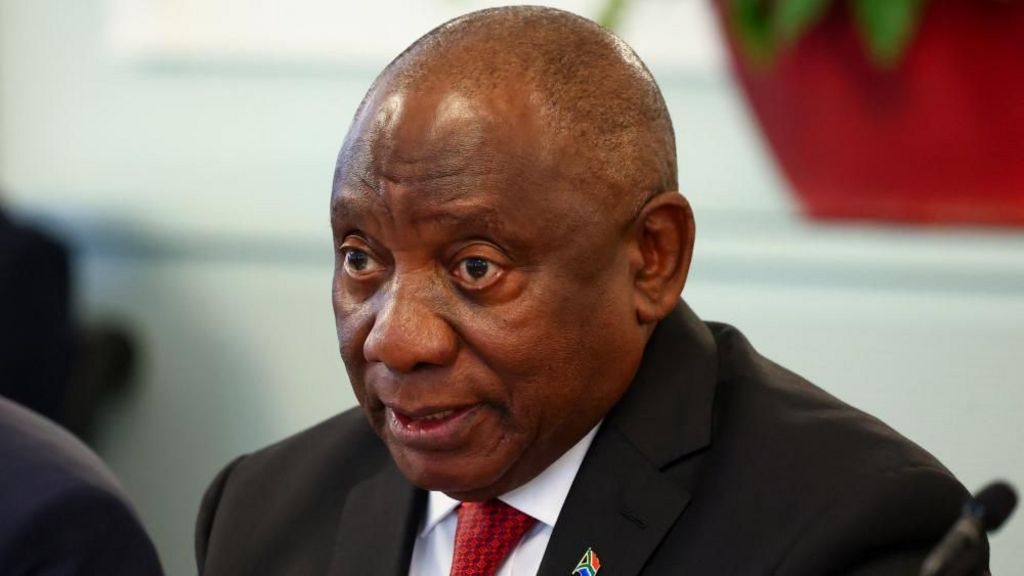
In a landmark judicial decision that has upended South Africa’s political landscape, the country’s Constitutional Court has ruled that parliament acted unconstitutionally when it blocked efforts to initiate impeachment proceedings against sitting President Cyril Ramaphosa back in 2022. The ruling directly responds to a legal challenge launched by opposition parties, who argued that the 2022 parliamentary vote to halt impeachment violated the core separation of powers enshrined in South Africa’s constitution.
The entire controversy traces back to a 2020 burglary at Ramaphosa’s private farm in rural South Africa, where intruders stole more than $500,000 in undeclared cash that had been stashed inside a sofa at the property. Following the incident, an independent panel of senior legal experts assembled by parliament concluded that there was sufficient credible evidence to open an impeachment inquiry, finding that Ramaphosa may need to answer to allegations of misconduct related to the unreported cash.
Critics of the president have raised persistent questions about the origin of the large sum of hidden money, demanding full transparency over how the funds were acquired and why they were not properly disclosed per South African ethics rules for public officials. Ramaphosa has repeatedly and forcefully denied any wrongdoing, maintaining that he has violated no laws or ethical codes during his time in office.
In 2022, when impeachment proceedings were first brought to a parliamentary vote, Ramaphosa’s long-governing party, the African National Congress (ANC), held an absolute majority in the chamber. That majority allowed the ANC to block the impeachment push from moving forward. However, the political calculus shifted dramatically following South Africa’s 2024 general election, where the ANC lost its parliamentary majority for the first time since the end of apartheid, leaving it reliant on fragile coalition agreements to retain power.
With the Constitutional Court’s latest ruling clearing the legal path for a new impeachment vote, the coming parliamentary vote will be a critical test for Ramaphosa’s presidency, with the outcome potentially reshaping the future of South African politics.