标签: Africa

非洲

  • ‘My brother hid in a rice sack’: The refugee stars playing at the World Cup

    ‘My brother hid in a rice sack’: The refugee stars playing at the World Cup

    As the 2026 World Cup unfolds across North America, three standout players taking the pitch for Australia, Germany, and Canada share a powerful, little-told common bond: all descend from African refugee families who fled devastating conflict to build new lives abroad. For these athletes, their presence on football’s biggest global stage is more than a personal achievement — it is a platform to amplify the stories of displaced people everywhere, even as growing policy shifts around the world roll back access to refugee resettlement.

    For Germany defender Antonio Rüdiger, a 33-year-old Real Madrid stalwart and two-time Champions League winner, the road to the World Cup began long before he was born. His parents fled Sierra Leone’s brutal 11-year civil war in the 1990s, making a treacherous 340-kilometer trek from their home district of Kono to the capital Freetown in search of safety. Rüdiger’s uncle took extraordinary measures to protect his young nieces and nephews from rebel factions that kidnapped thousands of children to serve as child soldiers: he hid the group inside a sack of rice, and on multiple occasions, the family pretended to be dead to avoid gunfire or abduction. After securing refugee status in Germany, Rüdiger was born in Berlin, growing up in a shared government refugee center. That early experience shaped the work ethic that carried him to the top of global football. “Nothing is given in life. You have to work for things, you have to sacrifice a lot to get where you want to go,” he told BBC Sport Africa.

    Rüdiger is far from alone among World Cup participants in carrying a refugee heritage. Canadian captain and Bayern Munich star Alphonso Davies spent his earliest years in a Ghanaian refugee camp after his family fled civil war in Liberia, a conflict that ravaged the West African nation alongside Sierra Leone in the 1990s and early 2000s. Today, Davies is part of the United Nations High Commissioner for Refugees’ (UNHCR) symbolic “Game Changing Team,” a group of elite refugee-background athletes assembled to demonstrate what displaced young people can achieve when given safety, opportunity, and a warm welcome. “Canada gave me the opportunity to be who I am and to be what I want to be in life,” Davies told UNHCR, recalling his first days in the country: going to school for the first time, playing the sport he loves, and building new friendships.

    The Australian men’s national squad, the Socceroos, fields three forwards with African refugee roots: 20-year-old Nestory Irankunda of Watford, Mohamed Toure of Norwich City, and Awer Mabil of Spain’s Castellón. All three were either born in African refugee camps or grew up in them before resettling in Australia, and Irankunda recently made history as the Socceroos’ youngest-ever World Cup goalscorer after netting in a 2-0 group stage win over Turkey. Australia’s professional footballers association has leaned into the squad’s extraordinary multicultural identity, releasing a video featuring every player naming their birthplace or family heritage to highlight the tangible benefits of immigration.

    Rüdiger, Davies, Irankunda, and dozens of other participating players have lent their names to the UNHCR campaign, alongside other high-profile athletes such as Rüdiger’s Real Madrid teammate Eduardo Camavinga (whose family fled Angola for France), former Chelsea winger Victor Moses (whose parents resettled in Nigeria from the UK), former Bosnia goalkeeper Asmir Begovic (who found refuge in Germany as a child escaping Balkan conflict), and Iraqi striker Ali Al-Hamadi (whose family fled after his father was imprisoned under Saddam Hussein’s regime).

    UN High Commissioner for Refugees Barham Salih noted that children make up a disproportionate share of the world’s displaced population, with an estimated 48.8 million displaced children globally. Many face family separation, trauma, and abuse while fleeing war, violence, and persecution.

    Despite the widespread celebration of these players’ success at the tournament, Rüdiger and other campaign participants warn that global public and political attitudes toward refugees have shifted dramatically in recent years, with growing stigma targeting displaced people. “The narrative goes a bit more blaming the refugees,” Rüdiger said, arguing that public empathy for those escaping conflict has eroded. “Obviously, you have always the good and the bad. This is life, we all are not perfect. But the thing is, if one person does bad, are all bad? You cannot smear it on everyone, because that’s not fair. Because you have people who come here, they really want to change their life, they’re doing good, they’re trying to learn. They learn the language, they go to school, they achieve something in life.”

    That shifting political landscape is particularly visible in the United States, one of the 2026 World Cup’s three co-hosts. Immediately after his inauguration in January 2025, Republican President Donald Trump signed an executive order suspending the U.S. Refugee Admissions Programme (USRAP), the country’s formal resettlement system that has admitted more than 3.7 million refugees since its launch in 1980, including more than 500,000 from African nations. Later that year, the Trump administration capped annual refugee admissions at just 7,500 for the current fiscal year — a historic low — and rearranged priority rules to favor white South African refugees, based on Trump’s widely discredited claims of a “genocide” against Afrikaners.

    State Department data shows that in the first seven months of the fiscal year (October to April), just 6,069 refugees were admitted to the U.S., and all but three of those resettled people came from South Africa. That marks a stark reversal from the final full year of former Democratic President Joe Biden’s term, when the U.S. admitted 100,034 refugees total, 34,017 of whom came from 32 different African nations. The Democratic Republic of the Congo topped that list with 19,923 resettled refugees, followed by Somalia, Eritrea, and Sudan.

    The Trump administration has defended the cuts, arguing they are “justified by humanitarian concerns or is otherwise in the national interest,” but humanitarian organizations have roundly condemned the policy. Krish O’Mara Vignarajah, president and CEO of resettlement non-profit Global Refuge, told BBC Sport Africa that the policy is a devastating betrayal of the values the World Cup represents. “Sadly, right now, the most vulnerable in Africa and across the world have been shut out entirely,” she said. “What we will see [at the World Cup] is the US spending this summer celebrating, as they should, what humans can achieve when they’re given a chance. US policymakers have spent the past year making sure fewer people get that chance, and it is a stark and deeply troubling contradiction.”

    O’Mara Vignarajah drew a contrast to 1994, the last time the U.S. hosted the World Cup, when the country resettled more than 100,000 refugees. “We knew back then that hosting the world and welcoming the world were not separate ideas,” she said. “But we have seem to have forgotten that.”

    While U.S. policy has grown dramatically more restrictive, Canada — another World Cup co-host — has seen its annual refugee acceptance numbers rise over the past decade, even as it has shifted toward stricter immigration rules in recent years. Data from Canada’s Refugee Protection Division shows that 9,972 refugee claims were approved in 2016, a figure that grew to 50,067 by 2025. Thirty-eight African nations are represented among recent approved claims, with Nigeria recording the highest number.

    For stars like Rüdiger and Davies, their performances on the World Cup pitch are meant to serve as a reminder of what welcome can achieve: they are playing for the countries that gave their families a second chance at life, and in doing so, they hope to reignite global empathy for refugees around the world.
  • Ivory Coast’s Wahi denied entry to Canada

    Ivory Coast’s Wahi denied entry to Canada

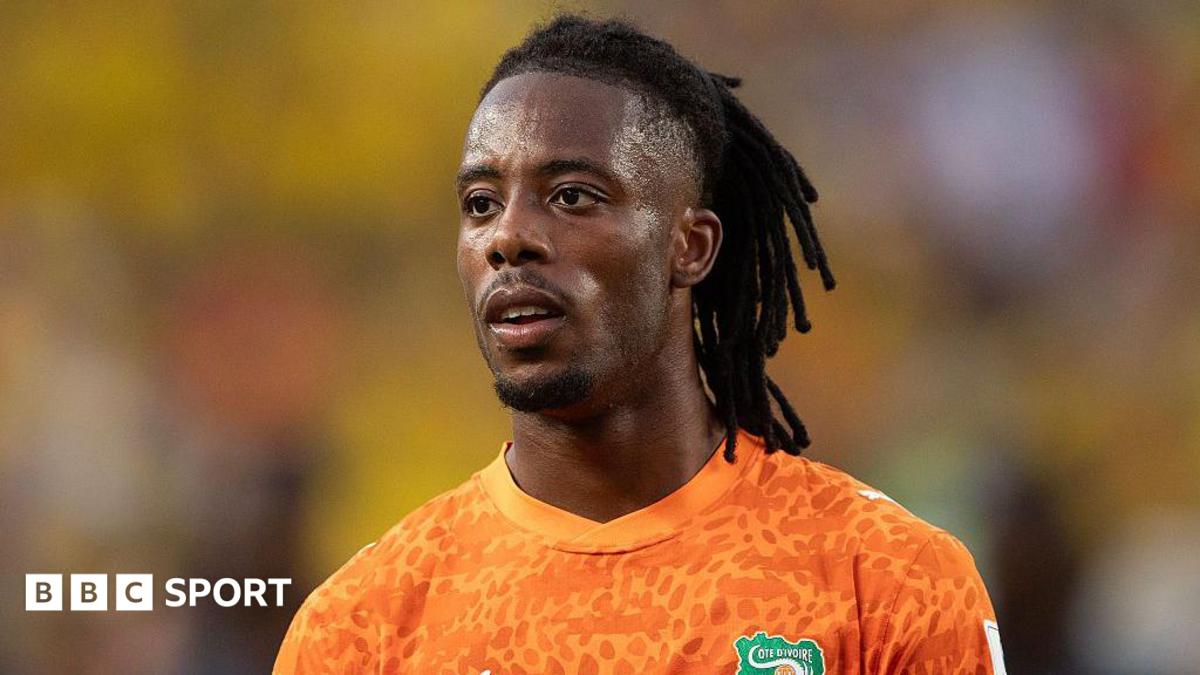
    The 2026 FIFA World Cup in North America has been rocked by fresh off-field controversy, as Ivorian international forward Elye Wahi has been barred from entering Canada for his nation’s critical Group Stage match against Germany this Saturday. The 23-year-old Nice attacker, who started in the Elephants’ opening tournament win over Ecuador, is currently entangled in a French domestic investigation into alleged spot-fixing in Ligue 1, marking the second time a World Cup participant has been denied Canadian entry over ongoing legal issues in this edition of the tournament.

    Reports first emerged last month that Wahi was taken into police custody ahead of the World Cup, with accusations that he intentionally received a yellow card during a May 2025 Ligue 1 fixture between Nice and Metz. Spot-fixing, a form of match manipulation that targets specific in-game events rather than the final result, allows corrupt actors to profit from manipulated betting markets; in this case, the fifth yellow card of Wahi’s 2025-26 season triggered an automatic suspension for the first leg of Nice’s relegation play-off against Saint-Étienne on 26 May. The first leg ended in a goalless draw, with Wahi returning for the second leg to score twice in a 4-1 victory that secured Nice’s spot in France’s top flight for the following season.

    French judicial authorities have confirmed the broad outlines of the investigation without explicitly naming Wahi. A spokesperson for the Marseille Public Prosecutor’s Office told The Athletic that a 23-year-old Ligue 1 player was arrested as part of a probe into organized fraud, organized sports corruption, criminal proceeds handling, and money laundering. Following questioning in police custody, the player was released, with investigations still ongoing as of the tournament’s opening week.

    The French Football League (LFP) later confirmed this week that it had been alerted to “an unusually high volume of bets placed on a warning [yellow card] involving the player Elye Wahi.” In an official statement, the governing body of French professional football noted that it would refrain from further public comment amid the active investigation and ongoing confidentiality requirements ordered by law enforcement, and that no disciplinary proceedings have been opened to date. The LFP added, however, that it reserves the right to take action as the probe progresses, and reaffirmed its commitment to protecting the integrity of French club competitions: “it will act with the utmost firmness against any behaviour that could compromise it.”

    The Ivorian Football Federation (FIF), which confirmed Wahi’s entry denial in an official statement released June 17, said it has not received formal notification of any judicial or administrative proceedings against the player. “To date, the FIF has not been officially notified of any judicial or administrative proceedings involving him,” the statement read. “In this particularly delicate period, the FIF extends all its support to the player and reaffirms its confidence in him. Elye Wahi remains an important element of the Ivory Coast national team.”

    The federation confirmed that Wahi will not travel with the squad to Toronto for the Germany fixture, after failing to secure the required entry authorization from Canadian authorities. Wahi will remain in the United States until the Elephants conclude their Group Stage matches, which include a subsequent fixture against Curacao in Philadelphia next Thursday. BBC Sport has reached out to both Wahi’s representatives and FIFA for additional comment on the matter, with no formal response released as of publication.

    Wahi’s entry denial comes just days after another high-profile World Cup participant was barred from entering Canada: Ghana star Thomas Partey, the former Arsenal midfielder, was refused a visa after he failed to disclose ongoing criminal proceedings in the UK, where he faces seven charges of rape and one count of sexual assault related to allegations from four separate women between 2020 and 2022. Partey has pleaded not guilty to all charges and is scheduled to stand trial in 2027. A last-ditch appeal by the Ghanaian government for a special temporary entry waiver for the Panama match was rejected by Canada’s federal court in Ottawa, leaving Partey unable to participate in Ghana’s opening tournament win.

  • Gunmen attack airport in Niger’s capital as explosions, gunfire heard

    Gunmen attack airport in Niger’s capital as explosions, gunfire heard

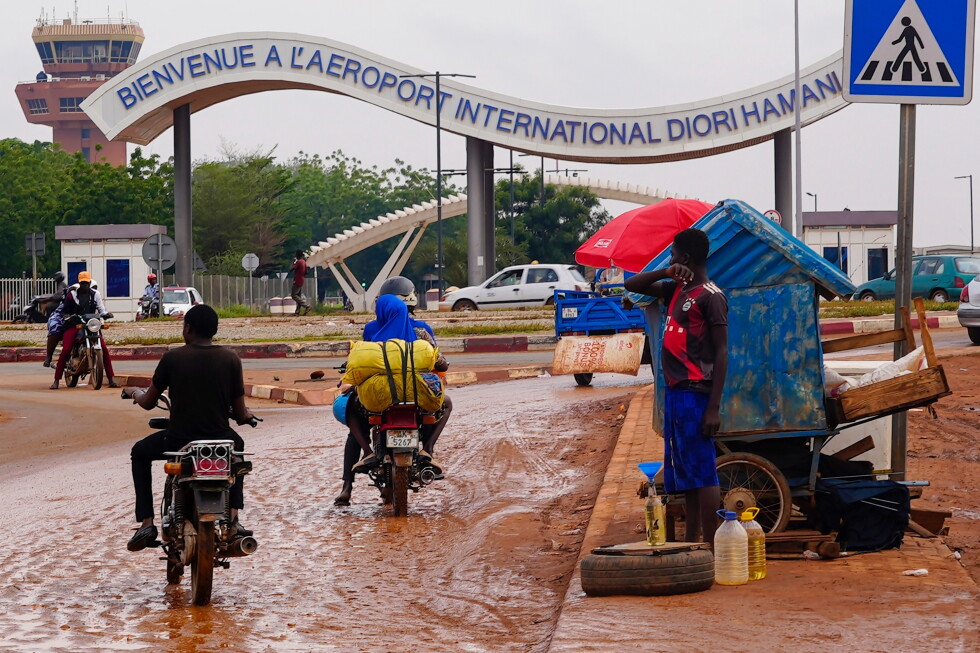
    In the early hours of Thursday, heavily armed gunmen launched an assault on Diori Hamani International Airport, the primary air gateway for Niger’s capital city of Niamey, triggering intense exchanges of gunfire and powerful explosions that shook the surrounding area, according to on-the-ground witnesses and a senior national security official.

    The anonymous security official, who is not permitted to speak publicly about ongoing operational matters, confirmed that the attackers successfully breached the airport’s outer security perimeter before forces were rapidly deployed to counter the assault. At this early stage of investigations, the identity and affiliation of the assailants remain unconfirmed, with no immediate claims of responsibility emerging from any militant group.

    Following the conclusion of the initial clash, an Associated Press reporter on site observed that Nigerian soldiers had established extensive checkpoints on all major access roads leading to the airport, conducting thorough searches of every passing vehicle and pedestrian as part of post-attack security sweeps.

    Thursday’s incident marks the second high-profile attack targeting the Niamey airport facility in 2024. Back in January, the Islamic State group claimed credit for a near-identical strike that specifically targeted Niger’s unmanned aerial drone assets stationed at the airport. In the wake of that earlier assault, military authorities announced they had significantly strengthened security protocols and patrols across the airport complex.

    The airport itself holds far more than civilian aviation significance: it houses a major Nigerien Air Force base, and serves as the operational headquarters for the joint military command of the Alliance of Sahel States (AES), the regional bloc formed by Niger, Burkina Faso and Mali. All three nations are currently governed by military juntas that took power via coups in recent years, and all three have grappled with a years-long surge in deadly jihadi insurgent violence that has destabilized large swathes of the Sahel region.

    Security analysts warn that despite stepped up defensive measures, militant groups continue to pose severe, persistent threats to high-profile targets across Niger and the broader Sahel. Beverly Ochieng, a senior security analyst at global risk consulting firm Control Risks, noted that the airport’s central role as the AES headquarters makes it an especially attractive symbolic target for extremist groups seeking to undermine the regional alliance’s security operations.

    “The symbolism of the airport as headquarters for AES will drive intent by militants to target it,” Ochieng explained.

    The ongoing instability comes amid a broader shift in regional geopolitics, as the three junta-led Sahel nations have cut military cooperation with Western powers including France and the United States, and moved closer to other global powers including Russia, while still struggling to contain the expanding jihadi insurgency that has killed thousands and displaced millions across the region since 2012.

  • Lawyer of Uganda opposition figure Besigye charged with treason-related offence

    Lawyer of Uganda opposition figure Besigye charged with treason-related offence

    A high-profile political crackdown in Uganda has drawn sharp international condemnation after a prominent opposition-aligned lawyer and former mayor was arrested from his private residence and charged with a treason-related offense linked to his representation of jailed dissident leader Kizza Besigye.

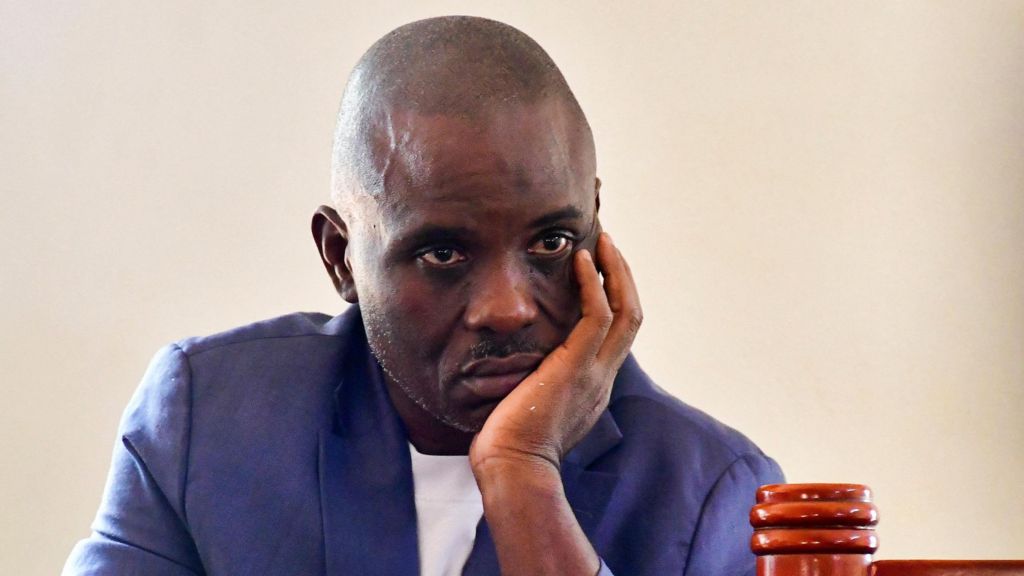
    Erias Lukwago, who currently serves as lead legal counsel for Besigye — a veteran opposition figure standing trial on multiple treason counts — made his first public appearance at a magistrate’s court in Kampala this week. Local journalists covering the hearing reported that Lukwago appeared visibly physically weakened, just days after security forces seized him from his home early Monday.

    During the court proceeding, Lukwaga formally entered a plea of not guilty to the charge of failure to report alleged treasonous activity. The magistrate ordered him remanded in state custody until next week, when the next phase of his case will convene.

    The arrest immediately sparked backlash over its open ties to Uganda’s most senior military officer: Gen Muhoozi Kainerugaba, the country’s Chief of Defence Forces and son of long-ruling President Yoweri Museveni. The general publicly took credit for the operation on his social media channels, even posting graphic content that stoked further outrage.

    Among the posts shared by Kainerugaba was a photo appearing to show a blindfolded Lukwago held in an undisclosed location. In a separate, unapologetic message, the general wrote, “I’m proud of all the hurt and pain I will inflict on the criminal Lukwago!”

    Opposition leader Bobi Wine, who fled Uganda in 2021 after contesting the presidential election over threats to his life, has alleged the arrest was ordered directly by Kainerugaba to stop Lukwago from formally serving the general with a court summons. In a post to X calling for collective action, Wine wrote: “I call upon all of us to reject and resist this brazen impunity.”

    Before Lukwago’s court appearance, his family had filed a legal petition seeking a court order to force security forces to disclose his location and release him. The family’s legal team accused authorities of abducting Lukwago, and noted that Kainerugaba had already publicly claimed responsibility for the seizure and the mistreatment his client had faced.

    This incident is far from the first time Kainerugaba has drawn controversy for incendiary social media posts. The general has a documented history of inflammatory remarks, including past boasts of abducting and torturing opposition political figures, with many of his controversial posts eventually taken down after public outcry.

    Lukwago’s legal work centers on Besigye, Uganda’s most high-profile opposition dissident who was abducted from neighboring Kenya in late 2024 and forcibly returned to Uganda to face treason charges. Besigye’s political history with Museveni stretches back decades: he once served as Museveni’s personal physician before splitting from the ruling establishment in 1999, and has challenged Museveni for the presidency in multiple elections, facing repeated detentions over the years.

  • The pressure to have baby boys can harm African mothers’ health

    The pressure to have baby boys can harm African mothers’ health

    In the bustling open-air bars of Kinshasa, the capital of the Democratic Republic of Congo, Prosper Mbumba and his wife Régine Ntumba sit together reflecting on a years-long journey shaped by centuries-old cultural tradition. When the pair married, they planned for just two children — but unyielding custom demanded one of those children be a son. Four daughters later, they continued trying, only breathing a sigh of relief when their first son finally entered the world. For Mbumba, a human rights activist from the Luba ethnic group, raising only daughters once carried the weight of social shame. “In my tribe, in my culture, that was like an insult,” he explained. “I should do my best to get more children, expecting to have a boy.” Today, after welcoming two sons, Mbumba says he finally feels a quiet sense of completion.

    This personal story is far from unique across sub-Saharan Africa, a region grappling with the world’s highest rate of maternal mortality. Home to the planet’s fastest growing population, sub-Saharan Africa accounts for 70% of all global maternal deaths, with roughly 180,000 preventable pregnancy-related deaths recorded across the continent each year, according to World Health Organization data. While global maternal mortality rates have declined gradually over recent decades, multiple interconnected forces keep the death toll stubbornly high in this region — from underfunded healthcare systems and widespread shortages of skilled medical personnel, to limited access to contraception, and deep-seated cultural pressure that forces women into repeated, dangerous pregnancies in pursuit of male heirs.

    Across much of sub-Saharan Africa, entrenched social norms frame sons as the only acceptable heirs to preserve clan lineage and family legacy, since daughters typically join their husband’s clan after marriage. This belief is so deeply woven into the social fabric that many women themselves internalize it, accepting repeated risky pregnancies as an unavoidable part of married life. Congo exemplifies this crisis: UN data puts the country’s total fertility rate at 5.9 children per woman, one of the highest in the world, driven both by cultural preference for large families, early marriage, and systemic barriers to contraception access.

    Patrick Djemo, a medical doctor who leads MSI Reproductive Choices in Congo, says the pressure to produce sons disproportionately harms women. “A lot of pressure is exerted on couples, and, as you know, mostly it is the woman who is blamed for giving birth to a girl,” Djemo explained. He added that men often use their traditional decision-making power to block their partners from accessing contraception, even when women want to stop having children. MSI Reproductive Choices operates in seven of Congo’s 26 provinces, providing contraception, reproductive counseling, and legal safe abortion to women across rural and urban areas.

    Current data from the UN Population Fund shows that roughly 29% of Congolese women of reproductive age have an unmet need for family planning — meaning they want to stop having children or space out their pregnancies but lack access to effective contraception. Congolese authorities have recognized the scope of the crisis and launched a five-year strategic plan aimed at guaranteeing universal access to affordable, high-quality family planning services for all women of childbearing age by 2026. But delivering on that promise remains an enormous, uphill challenge: Congo covers an area roughly the size of Western Europe, with cripplingly poor infrastructure and ongoing armed conflict in its eastern regions that disrupts access to healthcare for millions.

    Annie Tshiamala, head of Congo’s national association of midwives, has witnessed the human cost of this pressure first hand for more than 30 years. She still recalls one particularly harrowing case: a 40-something woman, bloodied after a difficult ninth delivery, who immediately asked if the newborn was a boy. The woman already had eight daughters, and her marriage hung in the balance over her failure to produce a male heir. When a colleague revealed the baby was another girl, Tshiamala says the woman broke down in despair: “Oh, my Lord. Why?” Tshiamala herself has faced similar pressure from her own mother-in-law, who demanded she have more children after she gave birth to four sons. Refusing the demand, she says, was only possible because her husband supported her choice.

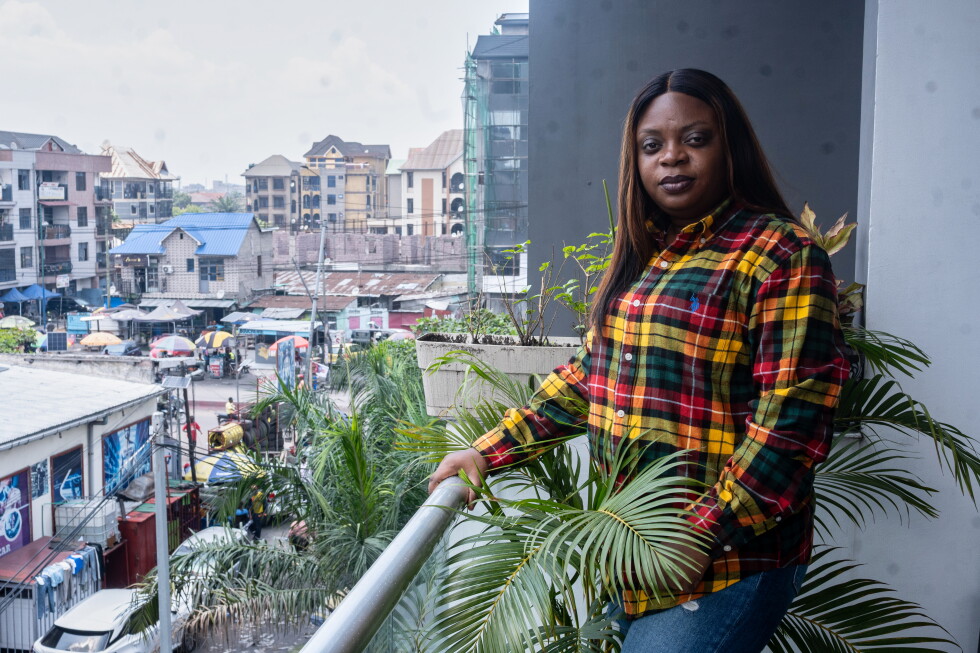
    Even educated, professional women in urban Kinshasa are not spared this social coercion. Gloria Masanka, a radio presenter for the country’s national broadcaster, is mother to two young daughters after a decade of marriage. She has already suffered two miscarriages and develops dangerous high blood pressure during pregnancies, but her in-laws still demand she keep trying for a son. “When you don’t have boys, you are not worth respect,” Masanka said, explaining that without a male heir, the family name is seen as lost. The pressure has sparked repeated family conflict: her husband has even openly threatened to take a girlfriend to father a son if she cannot.

    This investigation into maternal mortality in Africa is supported by the Gates Foundation, with The Associated Press retaining full editorial control over all content.

  • ‘I buried my parents one day after the other’ – Ebola mourners learn how to grieve safely

    ‘I buried my parents one day after the other’ – Ebola mourners learn how to grieve safely

    In the bustling, unusually quiet Nyamurongo cemetery of Bunia, the capital of Ituri province in northeastern Democratic Republic of the Congo, fresh mounds of dirt dot the grassy ground at a rate no resident has seen before. This city sits at the epicenter of an ongoing Ebola outbreak that has claimed nearly 200 lives in recent months, and every new grave tells a story of devastating loss and a desperate fight to stop the virus’s spread.

    For Joel Lonza Makumbu, the devastation of the outbreak is not an abstract public health statistic—it is a personal catastrophe that has gutted his entire family. Standing knee-deep in the soil of his mother’s fresh grave, just one day after burying his father, Makumbu describes this as his sixth trip to the cemetery in a short stretch of weeks. Ebola has already taken his parents, three sisters, and a brother-in-law, and three more of his relatives remain in treatment centers fighting the disease. “I want to say for all people [to hear] that Ebola is true,” he stresses, a urgent warning to those who still doubt the danger of the virus amid widespread local misinformation.

    The current outbreak is driven by the rare Bundibugyo strain of Ebola, which kills roughly one in four people it infects. Transmitted exclusively through direct contact with infected bodily fluids—including blood, semen, breast milk, vomit, and urine—the virus demands strict public health protocols to halt transmission, and modified, safe burial practices are widely recognized as one of the most critical interventions to stop new infections.

    Traditional Ituri funeral customs are deeply rooted in community and cultural belief: for generations, families have washed and dressed the deceased in fine clothing—women often in wedding gowns, complete with makeup—before holding multi-day ceremonies full of singing and celebration, as community members believe death is a journey to the world of ancestors, not an end. Many of these long-held practices, however, put grieving family members at extreme risk of infection, so public health teams have had to negotiate sensitive changes to these rituals.

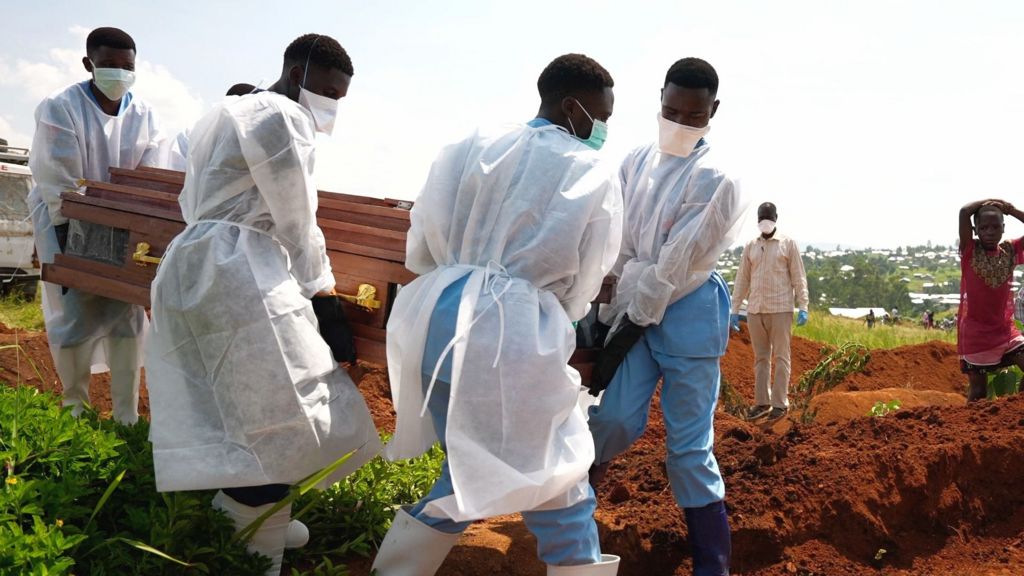
    Today, no large crowds of mourners gather at Nyamurongo, and the traditional pre-burial body washing carried out by family members is strongly discouraged. Burials that once took days of preparation now are completed in 10 minutes, with the Ebola deceased immediately sealed in leak-proof body bags before interment. But rather than forcing communities to abandon their traditions entirely, international aid groups have worked to adapt safety protocols to honor cultural needs, wherever possible without putting lives at risk.

    “We need to be very close to the communities and engage with them very closely and make sure that they understand what’s going on, they’re informed and they consent,” explains Maria Munoz-Bertrand, public health emergency coordinator for the International Federation of the Red Cross and Red Crescent (IFRC). To accommodate families, the IFRC now places sealed body bags inside solid coffins fitted with small transparent panels that allow mourners to glimpse their loved one’s body; some body bags even have clear film at the top to reveal the deceased’s face. “If the family asks for something special to be included in the procedure, as long as it respects the infection prevention and control measures, and it doesn’t put anyone at risk, we will try to accommodate the wishes of the family as much as possible, because we understand that it’s a very difficult time for families,” Munoz-Bertrand adds.

    On a recent trip with an IFRC burial team to collect a body from Bunia’s Ebola treatment centre, the delicate balance of grief, culture and safety is on full display. Outside a makeshift transit morgue tent, family members wait along the roadside to accompany their loved one to the cemetery, including one grieving mother who had just lost her child to the virus. Health workers in full personal protective equipment seal the body bag inside the coffin, disinfect their path, and retreat, before six IFRC volunteers, also fully protected, retrieve the coffin for transport.

    For 34-year-old mother of four, whose body the team retrieved that day, her father Simone Nyal watches the modified process from a distance, still reeling from how quickly the virus took his daughter. “She was ill for just one week before she succumbed. She has left us her four children – I don’t know how we will cope,” he says. At the cemetery, the woman’s mother and sister wait by the open grave, and the burial is completed in less than 10 minutes. Volunteers decontaminate their gear and depart, leaving gravediggers to fill the plot.

    Negotiating these changes requires a unique blend of cultural literacy and patience, says Julienne Anoko, an anthropologist working with the World Health Organization (WHO) who has responded to multiple Ebola outbreaks across Central and West Africa. Anoko and her team spend days listening to grieving families, acknowledging their pain, and drawing on local cultural knowledge to help communities accept the necessary changes to burial practices.

    The most challenging negotiations, Anoko says, surround the burial of pregnant women who die of Ebola. Local tradition holds that a pregnant woman must “travel light” to the afterlife, requiring the fetus to be removed before burial—a practice that would expose family members to massive amounts of infectious bodily fluids. To address this, Anoko frames the restriction through a cultural lens, explaining to communities that their own ancestors would have approved of the modified practice to protect the living. “We negotiate to make the family accept the unacceptable. Sometimes it may take three days, but we negotiate, and I use the knowledge of their culture,” she says.

    Over years of working through outbreaks, Anoko has built deep trust with local communities, bridging the gap between public health science and traditional cultural values to make safety protocols acceptable. Even with this progress, the work of containing the outbreak remains far from over. Misinformation still circulates, and for families like Makumbu’s, the pain of loss is far from over—with more loved ones still fighting for survival in treatment centres. As he finishes covering his mother’s grave, Makumbu leaves with a stark warning for the world: Ebola is real, and it continues to tear through communities in Ituri, leaving few families untouched.

  • South Africa bounce back with win over Pakistan

    South Africa bounce back with win over Pakistan

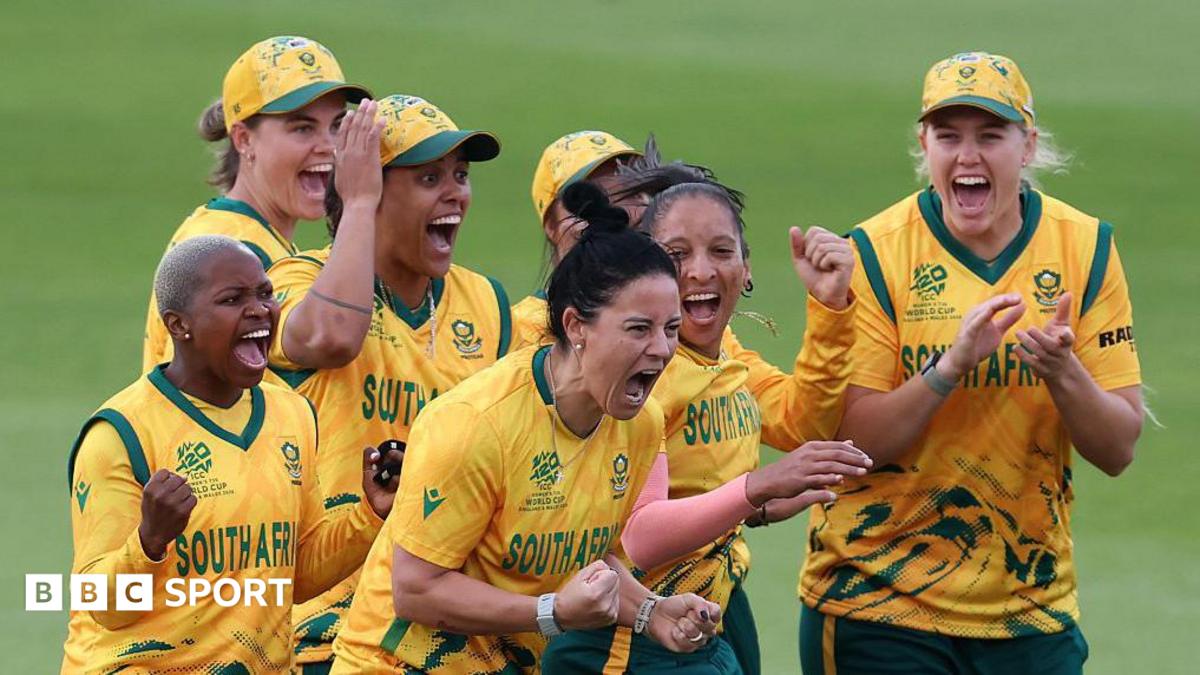
    At Edgbaston’s Group Two clash of the ICC Women’s T20 World Cup, South Africa fought to their first win of the 2025 tournament, edging past Pakistan by two wickets in a tense, low-scoring encounter that kept their semi-final hopes alive.

    Coming into the match, the Proteas – who have reached the final of the last two consecutive T20 World Cups, falling to Australia in 2023 and New Zealand in 2024 – faced an early uphill battle after a crushing opening defeat to tournament favorites Australia. Drawn in one of the competition’s toughest groups that also includes 50-over world champions India, a second loss would have left their campaign on the brink of elimination.

    It was 36-year-old veteran all-rounder Marizanne Kapp who set the tone for South Africa’s victory, delivering a devastating opening over that claimed two top-order Pakistani wickets before the first over was even completed. What followed was a string of catastrophic running between the wickets from Pakistan’s batting line-up, which gifted the Proteas three additional run-outs and left the side reeling at 29-5 inside the early overs, and later collapsing to 50-8.

    Just when a total well below 100 looked inevitable, Pakistan captain Fatima Sana produced a captain’s innings to drag her side back into contention. Teaming up with last-wicket batter Tuba Hassan for a 71-run ninth-wicket partnership, Fatima smashed an unbeaten 55 off 38 deliveries, including a spectacular final over that saw her hit two sixes off Nadine de Klerk and plunder 19 runs from the six balls. That late blitz pushed Pakistan’s final total to a competitive 126-9 from their 20 overs.

    Fatima then turned her impact to the bowling crease, claiming three wickets for just 16 runs to keep South Africa’s chase on the back foot. The Proteas stuttered through the middle overs, losing wickets at regular intervals and making hard work of the modest target, highlighting a persistent vulnerability in their batting order that analysts say will need significant improvement if the side is to compete with Australia and India for one of the group’s top two semi-final spots.

    But contributions from the lower order kept South Africa on track: all-rounder Annerie Dercksen anchored the chase with a polished 52 off 35 balls, while de Klerk backed up her bowling with a useful 37 runs from the lower order. The pair guided the Proteas across the finish line in the 17th over (16.4 overs to be exact), securing a two-wicket win with more than three overs to spare.

    For Pakistan, the defeat marks their second consecutive loss of the tournament, following a narrow defeat to India on Sunday, leaving them still searching for their first win in this year’s competition. For South Africa, the result resets their campaign, giving the side much-needed momentum ahead of their upcoming group matches as they aim to go one step further than their back-to-back final losses.

  • Cape Verde goalkeeper set to be reunited with his mum

    Cape Verde goalkeeper set to be reunited with his mum

    The 2026 FIFA World Cup has already delivered one of its most heartwarming stories, as goalkeeper Vozinha – whose extraordinary performance secured a historic goalless draw for Cape Verde against defending giants Spain – is set to be reunited with his mother ahead of the nation’s second group stage match against Uruguay this Sunday. The 40-year-old shot-stopper, who earned player-of-the-match honors after making seven game-changing saves to block Spain’s relentless attacks, captured global attention when he opened up about his mother’s absence from the tournament following the match on Monday. After decades of chasing his World Cup dream, Vozinha shared that his mother could not travel to the United States to watch him play because the high cost of the required visa put the trip out of their reach.

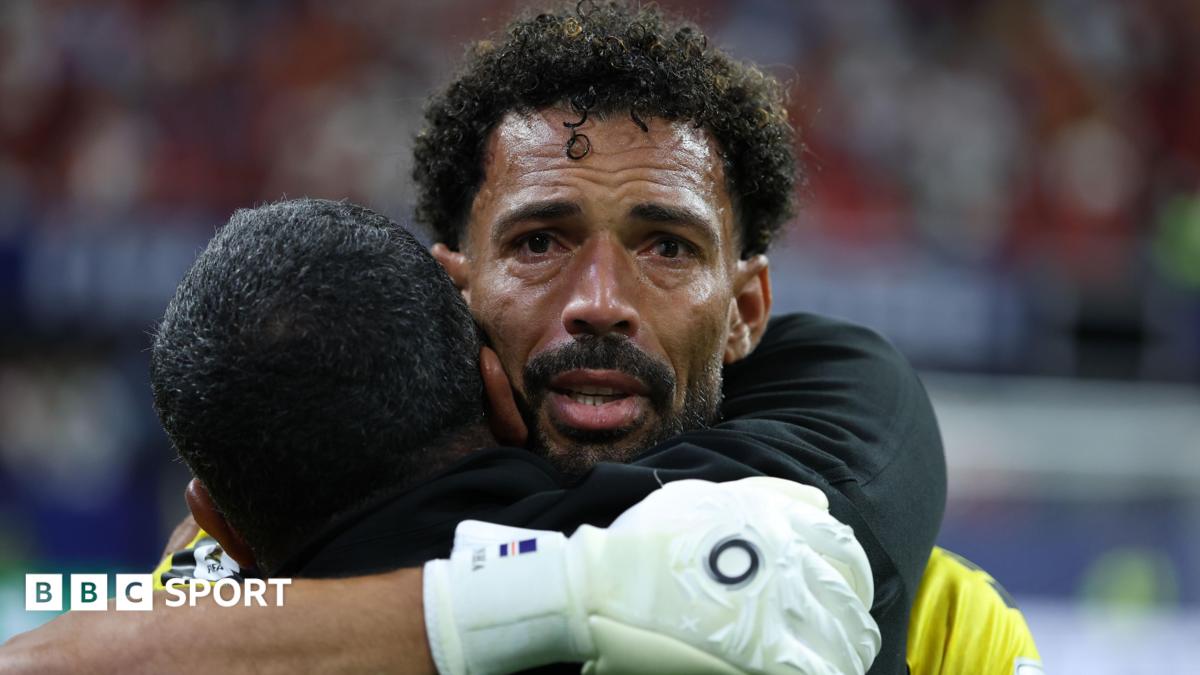
    Vozinha, who became the oldest player ever to debut in a nation’s first ever World Cup match at 40 years and 12 days old, spoke emotionally about the loss of his grandparents, who raised him and died before they could see him reach football’s biggest stage. “I cried because I grew up with my grandparents,” he told reporters after the Spain draw. “Unfortunately, they were not here. They died a few years before. They were everything to me, everything in my life. And also because of my mum. She didn’t manage to be here because of the visa. Because of the money you have to pay for the visa, we didn’t manage it in time. I would like her to be here.”

    That public comment sparked swift action from US political leaders, who moved quickly to resolve the barrier. House Democratic Leader Hakeem Jeffries, a Brooklyn-based Congressman, announced on social media platform X that the visa fees have been fully waived, and logistics are already underway to bring Vozinha’s mother to Miami for the upcoming Uruguay match. “No mother should miss the chance to see her child make history,” Jeffries said. He confirmed that he had coordinated with Secretary of State Marco Rubio to urge the State Department to use its authority to clear the way for Vozinha’s mother’s travel. “It is a privilege to announce that Vozinha’s mom will be able to secure a visa in time to attend the game this Sunday against Uruguay. All fees have been waived consistent with official policy. Travel arrangements are now being made for mother and son to reunite in Miami. I thank Secretary Rubio, US State Department officials, the government of Cape Verde and Fifa for working together to make this possible,” Jeffries added.

    A senior State Department official later confirmed the process is moving forward, saying, “We can confirm our visa team in Praia is in close touch with her and providing the needed services.” The high visa cost stems from a US policy requiring citizens of five World Cup participating nations to pay a refundable £11,000 visa deposit, though match ticket holders were granted an exemption to the rule back in May.

    Vozinha’s road to the World Cup has been far from conventional. He only turned professional at the relatively late age of 25 in 2012, and at one point considered stepping away from the Cape Verde national team before pushing on to pursue his lifelong dream of reaching the World Cup. Across his decades-long career, he has played club football across Europe and Africa, with stints in Slovakia, Angola, Moldova, and Cyprus, before landing his current role with Chaves in Portugal’s second-tier league. He has earned 91 caps for Cape Verde, and his heroics against Spain have turned him into a global cult hero, attracting millions of new followers on social media in the days since the historic draw.

    Cape Verde is competing in its first ever World Cup, and sits in Group H alongside Spain, Uruguay, and Saudi Arabia. Following Sunday’s clash with Uruguay, the African side will round out group play against Saudi Arabia on June 27.

  • Equatorial Guinea government resigns after missing targets, vice president says

    Equatorial Guinea government resigns after missing targets, vice president says

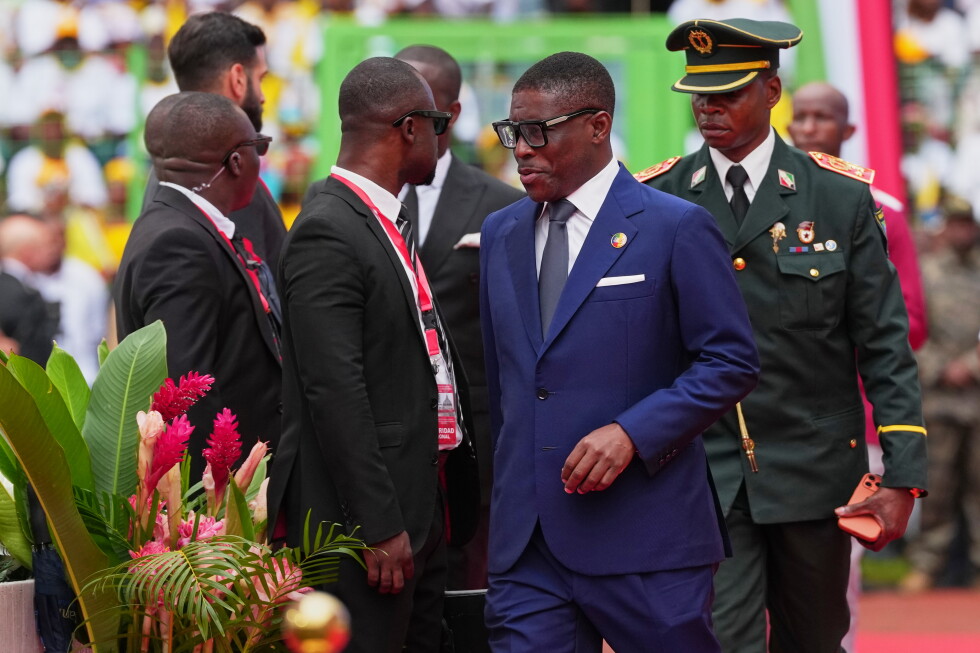
    In a sudden political shakeup in the Central African oil-rich nation of Equatorial Guinea, the full national cabinet has stepped down after an internal review found the administration delivered only 10 percent of its stated policy and development targets, Vice President Teodoro Nguema Obiang Mangue has confirmed.

    Obiang Mangue, the son of long-ruling President Teodoro Obiang Nguema Mbasogo, announced Tuesday that Prime Minister Manuel Osa Nsue Nsuga formally tendered the collective resignation of all cabinet ministers after the government fell drastically short of pre-agreed performance benchmarks. In an official statement published to the social platform X, the vice president noted that the administration’s delivery rate fell dramatically short of public expectations and the official commitments the government made when it took office. He did not, however, provide details on how the 10 percent achievement metric was calculated.

    The ruling Democratic Party of Equatorial Guinea (PDGE) has pinpointed the core issues that prompted the mass resignation: entrenched corruption across government agencies, persistent delays in key public development projects, and a years-long failure to advance economic diversification away from the country’s overwhelming dependence on oil exports. The party added that President Obiang Nguema Mbasogo himself expressed deep dissatisfaction with the sitting government’s overall performance.

    A new full cabinet is expected to be named and sworn in within the coming days, but political analysts widely note the reshuffle is unlikely to shift the country’s long-standing balance of power. President Obiang Nguema Mbasogo, who has held the presidency since 1979, is the longest-serving sitting head of state on the African continent, and maintains near-total control over the national political system, holding the sole authority to appoint all members of government.

    Dissent is effectively nonexistent in Equatorial Guinea, according to international human rights monitors. Rights advocacy organizations and the U.S. State Department have repeatedly accused the country’s ruling establishment of arbitrary detention, torture, and extrajudicial killing of political opponents and activists who challenge government policy. The country is also one of 10 African nations that entered into widely criticized deportation agreements with the former Trump U.S. administration, under which it accepts third-country asylum seekers deported from the United States.

  • Ex-Nigeria oil minister cleared in UK bribery trial

    Ex-Nigeria oil minister cleared in UK bribery trial

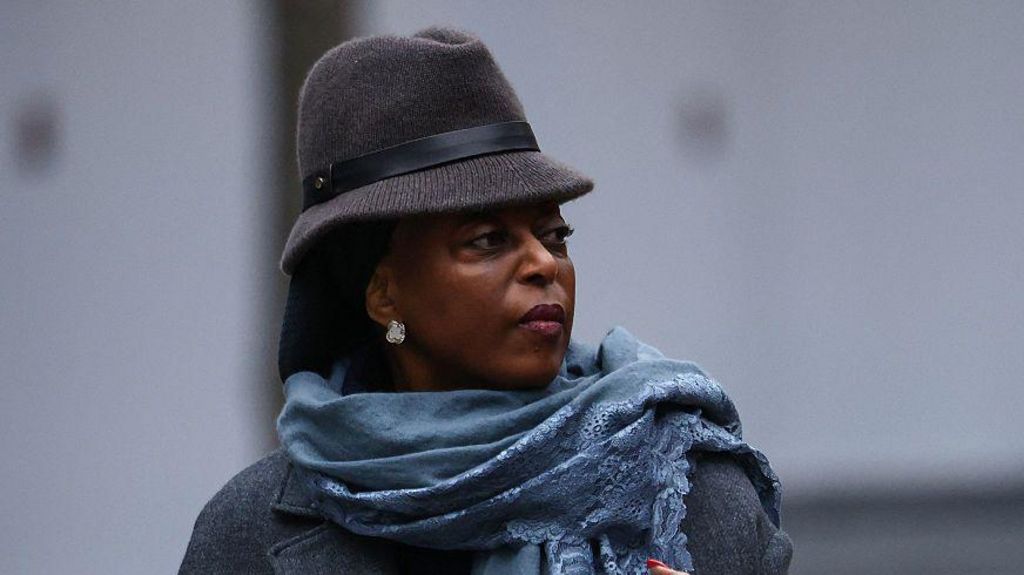
    After a high-profile 13-year investigation and a months-long trial at London’s Southwark Crown Court, a jury has delivered a stunning acquittal for Diezani Alison-Madueke, the 65-year-old former Nigerian oil minister and the first woman to lead OPEC, clearing all bribery and conspiracy charges against her. The verdict marks a major setback for the UK’s National Crime Agency (NCA), which spent more than a decade building its case against one of Africa’s most recognizable former political leaders.

    Alison-Madueke, who served as Nigeria’s oil minister from 2010 to 2015 and assumed the OPEC presidency in 2014, faced five counts of accepting bribes and one count of conspiracy to commit bribery. Prosecutors alleged that she allowed powerful oil executives holding lucrative Nigerian government contracts to fund her extravagant lifestyle, including luxury accommodations and high-end shopping sprees in the UK. Six oil tycoons were named in the indictment, but none have been charged to date. Crucially, however, prosecutors failed to prove that Alison-Madueke awarded any contracts to these individuals in exchange for improper gifts or payments.

    Two other co-defendants were also fully acquitted: Doye Agama, 69, Alison-Madueke’s older brother and a Pentecostal archbishop based in Manchester, was cleared of conspiracy to commit bribery, while 54-year-old Nigerian-British oil executive Olatimbo Ayinde was found not guilty of bribery and bribing a foreign public official. Ayinde’s case drew particular attention, as she had been working as an informant for Nigerian anti-corruption authorities when she was charged. An EFCC investigator confirmed to the court that Ayinde provided “vital information that assisted the investigation,” leading her legal team to condemn her inclusion in the prosecution as a profound injustice.

    From the opening of the trial in January, Alison-Madueke’s defense team mounted a vigorous attack on the fairness and credibility of the prosecution’s case. They argued that key documents proving their client’s innocence had disappeared during investigations in Nigeria, and that the 13-year delay in bringing the case to trial was inherently unjust, describing the prolonged process as evidence of a “broken criminal justice system” in Britain. Defense barrister Jonathan Laidlaw KC emphasized that Alison-Madueke had effectively been confined to the UK for nearly 11 years, barred from working or traveling freely, while the NCA never took steps to extradite the six uncharged oil executives alleged to have paid the bribes. The jury was never given an explanation for why those men were never prosecuted.

    Alison-Madueke said in court that she had been targeted because of her gender in Nigeria’s deeply patriarchal society, noting that her rise to the country’s second-most senior political role and the top position at OPEC made her a target for male political opponents. She framed herself as a lifelong anti-corruption advocate, so committed to procedural rigor that she earned the nickname “Madam due process,” and pointed to her trailblazing history as the first woman to sit on the board of Shell’s Nigerian operations in 2006.

    Addressing the allegations of improperly funded luxury stays and purchases, Alison-Madueke told the court that under Nigerian rules, ministers were prohibited from holding foreign bank accounts for official overseas work, and her department’s London office was so disorganized that she had to rely on advances from wealthy business contacts for living expenses. She insisted all advances were fully reimbursed in Nigeria, and that the critical evidence proving reimbursement was seized from her Abuja home in 2015 but never turned over to the court. Former Nigerian President Goodluck Jonathan, who appointed Alison-Madueke to the oil ministry post, submitted a statement confirming that it was standard practice for third parties to cover travel, accommodation and other expenses for Nigerian ministers on official overseas business.

    The investigation was ultimately undermined by unresolved inconsistencies and gaps in evidence, the defense argued. The NCA was denied direct access to the 2015 search of Alison-Madueke’s Abuja home, forcing it to rely entirely on evidence collection by Nigeria’s Economic and Financial Crimes Commission (EFCC). Yet the prosecution asked the jury to trust EFCC evidence against Alison-Madueke while simultaneously urging them to dismiss the commission’s exculpatory evidence for co-defendant Ayinde, a contradiction the defense highlighted heavily during the trial.

    Following the delivery of the verdict, Alison-Madueke called the ruling the end of a decade-long nightmare. “For 11 long, gruelling years this case has hung over my head and has tormented me and my family,” she said in a post-verdict statement. “But today, the past decade of relentless and unjust vilification, condemnation and scrutiny has finally come to an end.”