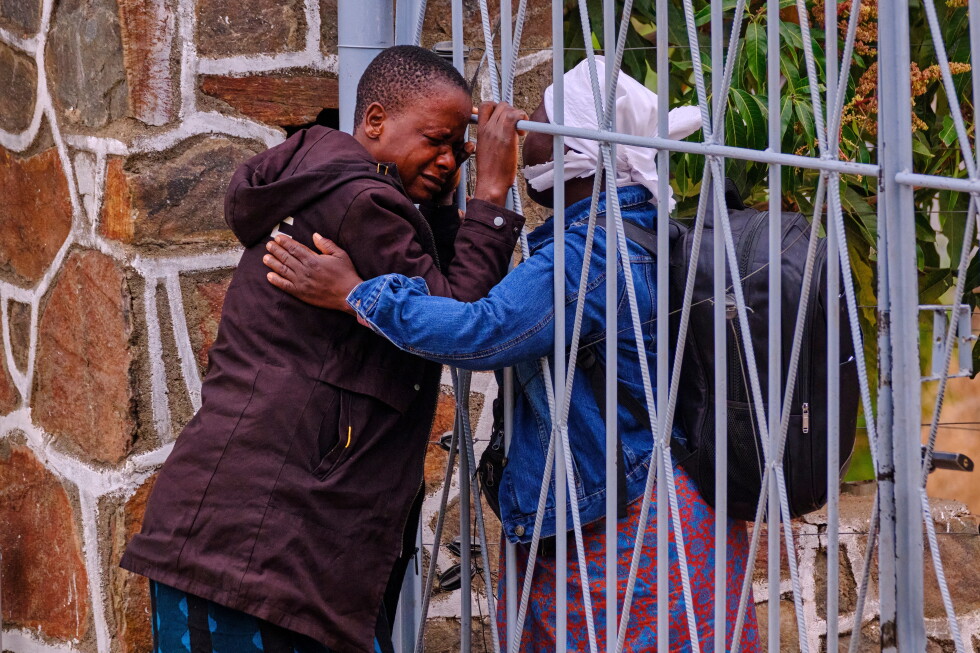
HARARE, Zimbabwe — Rescue teams continued combing the waters of Lake Kariba on Sunday for additional victims of a devastating ferry capsizing that has already claimed at least 84 lives, one of the deadliest transportation disasters to hit southern Africa in recent years.
The overloaded vessel capsized amid rough, high winds on Tuesday last week. Law enforcement officials confirmed Sunday that the confirmed death count climbed from 72, where it stood Saturday, following the recovery of a dozen more bodies pulled from the lake’s waters in the latest search operations. To date, 77 survivors have been pulled from the lake alive by local emergency responders, Zimbabwe’s national disaster management agency confirmed.
Initial estimates suggested the aging ferry was carrying as many as 153 passengers — a figure already well above its official maximum capacity of 90 people. However, updated government data now indicates the actual number of people on board the vessel when it overturned may be even higher than that initial count. No final passenger manifest has been released as officials continue working to confirm how many people were on the vessel.
“The search operation is still ongoing to recover the remains of all missing victims,” southern African nation’s police force said in a formal statement released Sunday. Emergency teams have faced challenging conditions in the large, open lake, slowing efforts to locate all missing people.
The ferry was operating along a critical transportation route, traveling from the lakeside town of Kariba to scattered rural and fishing settlements in Zimbabwe’s northwest region. Many communities in this area lack reliable road access, with existing highways heavily damaged by years of underinvestment and poor maintenance, and affordable, regular public transit options are extremely limited. This leaves water transport as the only viable connection for many residents to larger urban centers and essential services.
Tragically, children make up a significant share of the confirmed fatalities. Officials have confirmed that 18 children are among the dead, including an infant just 12 months old, with 16 of the child victims aged 10 or younger.
For context, Lake Kariba holds the title of the world’s largest man-made reservoir by volume of water. It was formed in the late 1950s and early 1960s when the Zambezi River, one of Africa’s largest waterways, was dammed for hydroelectric power. The massive lake stretches more than 200 kilometers in length and reaches widths of up to 40 kilometers across at its broadest points. It is shared by both Zimbabwe and neighboring Zambia, with the international border between the two nations running directly through the center of the lake.