标签: Africa

非洲

  • Experts warn of rising lead risks in Africa’s solar energy boom

    Experts warn of rising lead risks in Africa’s solar energy boom

    In the tight-knit residential settlement of Owino Uhuru on Kenya’s Mombasa coast, the doors of a local lead-acid battery recycling plant closed more than a decade ago. But for thousands of residents who call this neighborhood home, the toxic legacy of that facility has never faded — a warning sign of the hidden public health risks emerging as Africa’s clean energy transition drives an unprecedented surge in battery demand across the continent.

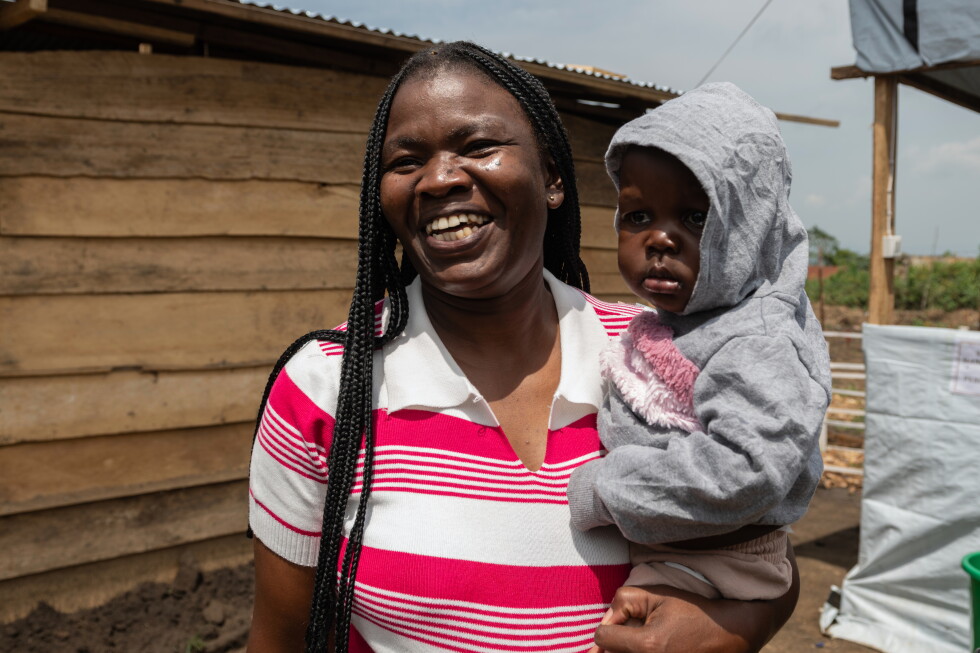
    Forty-year-old Faith Muthama, a mother of four, is one of hundreds of residents still living with chronic health damage linked to the site’s contamination. Decades after the plant first began operations, she still cannot complete routine household work without gasping for breath. A 2012 blood test confirmed what her body had already been signaling: dangerous, elevated levels of lead were circulating in her bloodstream. “Life has never been the same,” Muthama says.

    The contamination that poisons this community traces back to 2007, when Kenya Metal Refineries EPZ — a local subsidiary of an Indian firm headquartered in Mumbai — opened the recycling plant in the middle of the residential area. For seven years, the facility processed spent lead-acid batteries to extract refined lead for export to India. Residents say toxic waste from operations leached untreated into the neighborhood’s soil and groundwater, sparking a public health disaster that has been linked to more than 20 deaths to date. Even after the Kenyan government shut the plant down in 2014, the embedded lead in local ecosystems continues to sicken generations of residents.

    Medical research confirms lead exposure carries irreversible, life-altering health harms: permanent neurological damage, stunted cognitive development in children, and chronic organ damage that cuts life expectancy. Vulnerable groups including children, the elderly and pregnant people face the highest risk, as growing bodies absorb lead far more readily than adults.

    In 2025, affected residents won a rare legal victory for environmental justice: Kenya’s Supreme Court upheld a class-action lawsuit against the smelting company, ordering roughly $12 million in damages to be distributed to nearly 3,000 impacted community members. But months after the landmark ruling, activists and residents say the Kenyan state has failed to move forward with timely disbursement of the awarded funds, leaving sick residents without financial support to cover ongoing medical care.

    Seventy-year-old Alfred Ogulo, a village elder, has already spent all of his life savings on treatment for lead-related illness. Tests once showed critically high lead levels in his blood, leaving him with permanent nerve damage that leaves him unable to walk without a cane. He lives with persistent chest pain and a chronic cough, a leftover from breathing toxic fumes when the plant was active. “I am just waiting for help as I have exhausted all my resources treating myself,” Ogulo says.

    The crisis in Owino Uhuru is far from an isolated case. Public health experts warn that similar lead contamination risks are emerging across the entire African continent, driven by the rapid expansion of renewable energy access that relies heavily on lead-acid battery storage. A February 2025 report from the Centre for Global Development, an independent think tank with offices in Washington and London, finds that the boom in off-grid solar systems — widely seen as a critical solution to closing Africa’s decades-long energy access gap — has caused a sharp spike in demand for affordable lead-acid batteries, and by extension, for battery recycling services.

    Lead-acid batteries remain the dominant power storage option across low-income African markets because they cost a fraction of the price of newer alternatives such as lithium-ion batteries. But safe, environmentally sound recycling of these batteries requires expensive specialized infrastructure that most African countries lack. As a result, the majority of lead-acid battery recycling in the region falls to informal, unregulated operators who use low-cost, rudimentary methods that release massive amounts of lead particles into the surrounding air, soil and water.

    “Off-grid solar could account for a substantial share of batteries entering the recycling stream in Africa,” explained Lee Crawford, a senior research fellow at the Centre for Global Development and one of the lead contributors to the report. “That’s on top of existing demand from vehicles like cars and motorbikes.”

    Crawford notes that the high cost of safe recycling creates powerful economic incentives for operators to cut corners on environmental and public health protections. While banning lead-acid batteries entirely would address the risk, Crawford says such a ban is unfeasible given the current affordability gap with alternative technologies. The only viable path forward, he argues, is investing in scaling up safe, regulated recycling infrastructure across the continent.

    The scale of the threat is staggering. Studies conducted across Africa and South Asia estimate that between one-third and half of all children living in these regions have elevated blood lead levels, making lead poisoning one of the most widespread underreported environmental health risks in the world. Weak regulatory enforcement across many African nations amplifies the problem: while most countries have environmental rules on paper that would limit toxic exposure from lead operations, inconsistent implementation and lack of funding for inspections allow unregulated recycling to continue unchecked.

    “This is a silent threat,” Crawford said. “It’s often invisible, but it affects health, cognitive development and economic productivity for entire communities.”

    The problem of accountability extends far beyond small informal recycling workshops, experts add. Even larger, formal recycling facilities often lack proper pollution control measures, while globalized supply chains for recycled lead make it easy for responsible parties to avoid accountability for contamination. “There needs to be accountability across the entire supply chain,” Crawford emphasized.

    A small number of African countries have begun to implement policy solutions to address the gap. South Africa, for example, has introduced a formal producer responsibility framework that requires battery manufacturers to fund and manage end-of-life recycling for their products, creating a structured, regulated system for processing spent batteries. But across much of the continent, especially in countries that import most of their batteries rather than producing them domestically, assigning clear responsibility for safe recycling remains a major policy challenge.

    International development donors have increasingly shifted funding toward lithium-ion battery technologies, which do not carry the same lead-related public health risks. But industry analysts project that lead-acid batteries will remain in widespread use across Africa for decades to come, particularly in low-cost off-grid solar systems that bring energy access to remote communities.

    For the residents of Owino Uhuru, the crisis remains an immediate, daily reality. Phyllis Omido, who leads the Mombasa-based Centre for Justice Governance and Environmental Action and helped residents bring their class-action lawsuit, says the Kenyan government has failed to uphold the Supreme Court’s ruling, leaving vulnerable residents without the relief they were awarded.

    “It is sad that the state has ignored prioritizing the compensation payment as ordered by the court,” Omido said. “These monies would have alleviated the current suffering these vulnerable residents are going through.”

    Sixty-year-old Mejumaa Hassan Nyanje, who has lived in Owino Uhuru through the entire crisis, says residents feel abandoned by national leaders and the company that caused the contamination. “Is it fair that we are the ones still chasing justice while the company walks away?” Nyanje said, fighting back tears. “Will we all die before justice is served? It feels like we’ve been abandoned, like our lives and our health don’t matter.”

    This climate and environmental reporting from The Associated Press receives financial support from multiple private foundations. AP maintains full editorial control over all content.

  • Joy as record-breaking runner Sawe returns home

    Joy as record-breaking runner Sawe returns home

    Thousands of cheering Kenyans have packed the streets of Sawe’s hometown to welcome back the man who made global athletic history: Sebastian Sawe, the first runner ever to complete a full marathon in less than two hours. The groundbreaking achievement, first reported by the BBC, has sent ripples of joy and national pride across the East African nation, long renowned as a breeding ground for world-class long-distance runners.

    Local communities held impromptu celebrations, with traditional dancing, flag-waving, and street parties marking the occasion. Government officials have also joined in the tributes, highlighting Sawe’s milestone as a testament to Kenya’s enduring legacy in distance running. For decades, Kenyan athletes have dominated global marathon and long-distance track events, but Sawe’s sub-two-hour finish breaks a barrier that many in the sport once considered biologically impossible for a human runner.

    Athletics experts across the globe have already hailed the run as one of the most transformative achievements in modern sports history, opening new conversations about the limits of human endurance. Back on home soil, Sawe has been greeted as a national hero, with young runners lining the routes of his homecoming procession to catch a glimpse of the trailblazer who redefined what the sport believes is possible.

  • ‘I did not expect it’: Kenya’s Sabastian Sawe welcomed home with jubilant celebrations

    ‘I did not expect it’: Kenya’s Sabastian Sawe welcomed home with jubilant celebrations

    Nairobi, Kenya – April 29, 2026 – The air at Jomo Kenyatta International Airport crackled with national pride and unbridled excitement on Wednesday, as Kenya’s Sebastian Sawe touched down on home soil just days after etching his name into the history books of long-distance running. The 31-year-old now holds the world marathon record, and made history as the first man ever to complete a marathon in under two hours in an official competitive event.

    Sawe crossed the finish line at the 2026 London Marathon this past Sunday with an official time of 1 hour, 59 minutes and 30 seconds, smashing the previous world record set by the late Kenyan great Kelvin Kiptum in 2023 by more than a full minute. Even by halfway through the elite race, Sawe was already on track for a historic finish, clocking 1:00:29 at the midpoint. In a display of extraordinary endurance that stunned running fans around the world, he completed the second half of the 42-kilometer course even faster, finishing the final 21 kilometers in just 59 minutes and 1 second.

    Wednesday’s homecoming celebration was a testament to how deeply Sawe’s achievement resonated across his home country. His plane, operated by national carrier Kenya Airways, was greeted with a ceremonial water cannon salute upon taxiing to the gate. Inside the terminal, a throng of journalists, fans, and government officials packed the space, with traditional dancers and musicians performing to welcome the record-holder home. Sawe’s parents traveled six hours from their rural home to be there to greet their son, joining hundreds of cheering supporters. Simeon Sawe, Sebastian’s father, shared ahead of the airport welcome that his son had long held fast to his dream of breaking the world record. “He used to tell me that one day, he was going to break the record. He was so determined and hopeful that he would,” Simeon Sawe said, adding that after the historic race, the family had celebrated so continuously that “my throat still hurts from all the cheering.”

    Addressing the gathered crowd at the airport, an emotional Sawe said he had been surprised by the scale of the welcome. “I am happy about this good day, that you came to celebrate with me, I did not expect it,” he told reporters and supporters. Just days after his landmark run, he told the BBC that he already felt ready for what comes next, and remains undefeated in the four marathons he has entered throughout his professional career. When asked about future goals, he said he is already targeting a competition this autumn, and believes he is capable of posting an even faster time in coming months.

    The achievement, widely described as the “holy grail” of marathon running, has been a source of national celebration across Kenya. In the coming days, Sawe is scheduled to meet with Kenyan President William Ruto to mark his historic accomplishment.

  • Kenya gives a hero’s welcome to marathon record breaker Sabastian Sawe

    Kenya gives a hero’s welcome to marathon record breaker Sabastian Sawe

    NAIROBI, Kenya — When the aircraft carrying Sabastian Sawe, the first marathon runner in history to crack the iconic two-hour mark, touched down at Nairobi’s Jomo Kenyatta International Airport on Wednesday, Kenya rolled out a celebratory welcome fit for a national hero, opening with a dramatic water cannon salute to greet the plane carrying its newly-minted sporting legend.

    Sawe, who etched his name into the record books at Sunday’s London Marathon with a winning time of 1 hour 59 minutes 30 seconds, was greeted on the tarmac by his proud parents and Kenyan Sports Minister Salim Mvurya. Mvurya lauded the athlete’s unprecedented achievement, framing the historic milestone as a triumph for the entire East African nation long renowned for producing world-class distance runners.

    This 30-second break below the once-unthinkable two-hour threshold smashed the previous men’s marathon world record by a staggering 65 seconds, a gap rarely seen in modern elite distance running. Before stepping off the plane, Sawe told the Associated Press he felt immense pride in pulling off what many in the sport had viewed as an impossible feat for generations. Far from resting on his laurels, the 2024 Valencia Marathon champion already has his sights set on more progress: he says he plans to push his limits even further to shave additional time off his own new record.

    Following his disembarkation, Sawe was adorned with a traditional handcrafted victory wreath woven from local twigs, a cultural honor marking his historic win. A troupe of traditional Kenyan dancers performed in his honor, singing songs celebrating his breakthrough before he entered a waiting luxury government vehicle for the procession into the city. Mvurya confirmed that the country will continue its celebrations with a formal national honoring event for Sawe on Thursday.

    In interviews with the AP, Sawe’s family opened up about seeing his natural running talent from his earliest childhood. His mother Emily Sawe recalled even noticing his unusual speed decades ago, when he would sprint around during childhood bath time. “He would run too fast. So, I would say to myself, this boy will shine for me one day,” she shared.

    His father, Simion Kiplagat Sawe, watched the historic London Marathon at his brother’s home, as his own television did not have a clear enough signal to broadcast the race live. He told reporters he was so overcome with emotion when his son pulled into the lead that he stepped outside before the finish line, and only watched the winning moment on a replay after the race. “I was so happy, extremely happy. We screamed so much that now it is hard to swallow anything,” he said.

    Sawe’s path to professional running began thanks to his uncle, Abraham Chepkirwok, an elite athlete who represented Uganda in the 800-meter event at the 2008 Beijing Olympic Games. Before making history in London, Sawe already notched a major win at the 2024 Valencia Marathon, where he finished with a time of 2:02:05, and entered Sunday’s London race as the defending champion. His father echoed Sawe’s own drive for continued improvement, noting that the athlete’s disciplined and determined mindset has been key to his success. “Even now, he still says that record was not enough; he wants to lower it further,” his father said.

  • Madagascar detains French national over alleged plot to stir unrest

    Madagascar detains French national over alleged plot to stir unrest

    Madagascar’s national authorities have uncovered an alleged plot to destabilize the country’s new administration, leading to the arrest of a retired French service member and the expulsion of a senior French diplomat, according to official announcements from the island nation. The case comes just six months after a military-backed leadership change ousted the former president, deepening political friction between Madagascar and its former colonial ruler France.

    Madagascar’s chief prosecutor Nomenarinera Mihamintsoa Ramanantsoa confirmed the charges in an official video address to the public Tuesday evening. The French national, a former military personnel, faces a raft of criminal accusations including organized criminal conspiracy, sabotage of critical national infrastructure, and inciting rebellion against the sitting government. Prosecutors say the plot targeted core energy infrastructure—specifically national power grids and thermal energy facilities—with planned actions scheduled for April 18.

    Ramanantsoa added that the conspiracy network extends beyond the French detainee: a serving Malagasy army officer has also been charged in connection with the scheme, alongside multiple young Malagasy citizens who were taken into custody this week. Evidence presented by authorities includes communications from a WhatsApp chat group titled “Revolution of the Brave Citizens,” where prosecutors say conspirators mapped out plans to orchestrate widespread power outages, coax active-duty security personnel to mutiny against the current government, and mobilize youth groups to spark widespread civil unrest.

    In a parallel move, Madagascar’s Ministry of Foreign Affairs has expelled a French diplomat accused of covert involvement in the destabilization plot. France has swiftly rejected all allegations of involvement, and launched a formal diplomatic response Wednesday: the French foreign ministry summoned Madagascar’s chargé d’affaires in Paris to issue a strong protest over the expulsion, dismissing all claims of French interference as baseless. In an official statement, the ministry emphasized that France has a long record of consistent, tangible support for Madagascar, calling the accusations “not only unfounded, but also incomprehensible.”

    Additional charges against the accused include distribution of misinformation to disrupt public order and concealment of individuals wanted by Malagasy law enforcement. As of Wednesday, the French former serviceman remains in custody at a high-security penitentiary, while the young Malagasy suspects have been placed under court-ordered supervision pending trial.

    The uncovered plot unfolds against a volatile political backdrop in Madagascar. Last September, the Indian Ocean island nation saw weeks of mass youth-led protests that ultimately toppled long-serving president Andry Rajoelina. The coup was led by Colonel Michael Randrianirina, who was formally sworn in as the country’s new head of state in October 2025. Since the leadership transition, however, a rift has emerged between Randrianirina and many of the young activists who spearheaded the original protests, with the youth organizers accusing Randrianirina of hijacking their popular rebellion for personal power.

    A former French colony that gained independence in 1960, Madagascar has long maintained close political and economic ties with France, but has also faced repeated cycles of political instability and leadership turnover over the decades of post-independence rule. The current confrontation marks the most significant diplomatic rift between the two nations in recent years, as Randrianirina’s new administration works to consolidate its control amid lingering domestic opposition.

  • African athletes need support and protection – Kebinatshipi

    African athletes need support and protection – Kebinatshipi

    Reigning men’s 400m world champion Collen Kebinatshipi, the first man from Botswana to claim global gold at the World Athletics Championships, is sounding the alarm over growing talent drain from African athletics, urging continental governing bodies to step up and support homegrown athletes to stop them from seeking citizenship transfers abroad.

    The conversation around athlete nationality switches has intensified this month after global governing body World Athletics blocked six African runners from moving their athletic allegiance to Turkey, following reports of what the organization described as “lucrative” unauthorized contract offers. Among the athletes affected are five Kenyan runners, including former women’s marathon world record holder Brigid Kosgei, and top Nigerian sprinter Favour Ofili. Ofili’s case drew particular public scrutiny after the 23-year-old was incorrectly omitted from the 2024 Paris Olympic 100m entry list due to an administrative mistake by Nigeria’s athletics federation, a misstep that many observers link to the athlete’s subsequent interest in moving abroad.

    Kebinatshipi, 22, says he understands why so many African athletes opt to switch nationalities. In an interview with BBC Sport Africa, the champion noted that many elite athletes on the continent face crippling financial and logistical barriers when preparing for major international competitions. “Spending sometimes can be a bit challenging,” he explained. “I think they are doing that because they want to go where they can cut costs and be properly supported.” His solution? Kebinatshipi says African federations must invest in better support structures that match international standards, arguing that consistent, high-quality backing is the most effective way to retain top talent at home.

    Unlike some other African nations, Botswana has so far avoided widespread talent outflow, in large part due to a historic run of global success that has built confidence among the country’s next generation of runners. Last year, Kebinatshipi claimed individual 400m gold at the World Athletics Championships in Tokyo, and alongside star sprinter Letsile Tebogo, Lee Bhekimpilo Eppie and Bayapo Ndori, also won 4x400m relay gold at the same event – making Botswana the first African nation ever to claim that world title. Tebogo followed that achievement with a stunning 200m gold at the 2024 Paris Olympics, cementing the country’s status as a new global sprint powerhouse.

    This weekend, Botswana will make more history as the first African country ever to host a senior World Athletics track event, the World Relays, on home soil. For Kebinatshipi, Botswana’s rapid ascent in sprinting didn’t happen by accident: he credits much of the sport’s transformation in the country to the legacy of compatriot Isaac Makwala, a decorated Commonwealth and Olympic medallist who has mentored a generation of young Botswana runners. “My role model from a young age has been Isaac,” Kebinatshipi said. “He has also been close to me and guiding me. That’s why I had that motivation and belief that I can also do this and be like him. He has always been assisting me with training, nutrition. I really appreciate the role he played on my career up until now.”

    Raised in a small village in southwestern Botswana, Kebinatshipi first discovered his love for running during his school years. After graduating high school, he made the tough decision to pause his academic studies to focus fully on training – a gamble that paid off when he crossed the finish line in 43.53 seconds to claim world gold in Tokyo seven months ago. The historic win earned Botswana a national public holiday declared by President Duma Boko, and turned the young champion into a national icon. “I don’t really like to over-celebrate my achievements,” he said modestly. “My life has changed a lot when it comes to me going shopping. Everyone will come to me taking pictures. For me to get in the shop and spend 10 minutes I have to allow an extra 30 minutes for pictures.”

    Kebinatshipi concedes that his world title came earlier than he ever planned: he narrowly missed out on the 400m Olympic final in Paris just months before his Tokyo win, and had originally targeted breaking national records and claiming global gold by the 2028 Los Angeles Olympics. “When it comes to the national record and winning gold on global stages, those were chats that were planned for the 2028 Olympics,” he explained. “We knew that it winning in Tokyo was just a bonus and we should go back to the drawing board and work for what we are aiming for, which is the 2028 Olympics.”

    He has already made a strong start to the 2026 season, clocking 44.55s in his opening 400m race and turning in an impressive performance over 100m at the Botswana national championships. Right now, all his focus is on delivering a strong result at the World Relays in front of a home crowd. “We want to make our people here proud. We are aiming to deliver our best,” he said. “We can’t get much into aiming for world records or producing fastest times early this season because we have a long season ahead. We want to come and produce, and that’s the only thing that we are aiming for now.”

    Beyond Botswana’s success, Kebinatshipi is celebrating a broader shift across African athletics: for decades, the continent has been synonymous with middle and long-distance dominance, but a new wave of sprinters from across the continent is changing global perceptions. Names like Tebogo, South Africa’s Akani Simbine, Kenya’s Ferdinand Omanyala and Ivory Coast’s Marie-Josee Ta Lou-Smith are leading the charge, and Kebinatshipi says this evolution is a huge win for African sport. “Africans have been known for long distance events, but now we challenge ourselves in everything,” he said. “That’s why we have a big pool of sprinters in Africa.”

  • Hundreds march in Johannesburg against illegal migration as shops shut over looting fears

    Hundreds march in Johannesburg against illegal migration as shops shut over looting fears

    A wave of anti-illegal immigration demonstrations has gripped South Africa this week, with hundreds of protesters marching through the streets of Johannesburg on Wednesday to demand stricter border controls and mass deportations of undocumented migrants. The Johannesburg rally follows a similar protest held just one day earlier in the nation’s capital, Pretoria, marking a growing public mobilization around the hot-button issue of unauthorized migration.

    As Africa’s most industrialized economy with a wide range of economic opportunities, South Africa has long drawn migrants from across the continent and beyond, with both documented and undocumented people arriving in search of better work and living prospects. Current estimates of the country’s undocumented migrant population vary wildly, with commonly cited figures falling between 3 million and 5 million. No accurate, up-to-date official count exists because most migrants without legal status avoid government documentation processes.

    Wednesday’s demonstration was led by the anti-immigration group March and March, and drew participation from other prominent anti-migration organizations including Operation Dudula, as well as two registered political parties: ActionSA and the Patriotic Alliance. In comments during the march, ActionSA representative Themba Mabunda pushed back against accusations of xenophobia, framing the protest as a demand for equitable policy rather than anti-foreign sentiment. “We are not xenophobic, we just want the right thing to done in South Africa, to put the South African first,” Mabunda said. “We do want to live with foreigners in our country, but those foreigners must be legally in the country.”

    The protest disrupted daily life across Johannesburg, forcing dozens of businesses—owned by both South African locals and migrant entrepreneurs—to close their doors out of fear of potential looting, violence, or opportunistic criminal activity.

    Anti-immigration groups anchor their demands on South Africa’s ongoing socioeconomic crisis: the nation’s official unemployment rate currently sits above 30%, leaving millions of local people out of work. Proponents of stricter enforcement argue that undocumented migration contributes to urban overcrowding, unfair competition in the labor market, lost tax revenue, rising crime, and weakened border security. In some high-tension cases, anti-migration activists have even forcibly turned foreign nationals away from public health clinics, claiming undocumented visitors worsen drug shortages and overcrowding in already under-resourced facilities.

    Tensions around the issue have already spilled over into violence in recent weeks. Last month, an anti-migration march in Eastern Cape Province ended with protesters setting fire to minibus taxis and destroying public infrastructure. In KwaZulu-Natal, reported targeted attacks on Ghanaian migrants sparked a full diplomatic incident, which led to Ghana’s government summoning South Africa’s ambassador to Accra to formally address the violence.

    United Nations Secretary-General António Guterres has recently raised alarm over the growing unrest, issuing a public statement expressing concern over xenophobic attacks, harassment, and intimidation targeting migrants and foreign nationals across multiple South African provinces including KwaZulu-Natal and Eastern Cape.

    In response to rising political and public pressure, South African authorities have ramped up deportation efforts in recent years. Government data shows that between the 2021 and 2023 financial years, South Africa deported more than 109,000 undocumented migrants living in the country.

  • Robert Mugabe’s son to be deported from South Africa over firearms offence

    Robert Mugabe’s son to be deported from South Africa over firearms offence

    A Johannesburg court has handed down a ruling ordering the immediate deportation of Bellarmine Mugabe, the 28-year-old youngest son of Zimbabwe’s late former long-ruling president Robert Mugabe, following his guilty pleas on weapons and unlawful immigration charges.

    The court also handed down an additional penalty requiring Mugabe to pay a $36,000 (equivalent to roughly £26,700) fine for his convictions. His co-accused, Tobias Matonhodze, received a far harsher sentence: three years of imprisonment after pleading guilty to a slate of charges including attempted murder, unlawful possession of ammunition, defeating the ends of justice, and illegal entry into South Africa.

    The arrests of both men date back to February 19, when local law enforcement responded to a disturbance call at Mugabe’s private residence in Hyde Park, an upscale, exclusive suburb of Johannesburg. During the incident, a 23-year-old security guard was shot and rushed to a local hospital in critical condition. Prosecutors told the court that the violence erupted after a verbal altercation between the three men on the property. As the victim attempted to escape the confrontation by running outside, he was struck by two gunshots to the back, authorities confirmed. To date, the weapon used in the shooting has not been recovered by investigating officers.

    Initially, Bellarmine Mugabe also faced a charge of attempted murder connected to the shooting. However, that charge was formally withdrawn after Matonhodze accepted a guilty plea for that offense. The charge of pointing a firearm to which Mugabe pleaded guilty stems from a separate, unconnected incident; South Africa’s National Prosecuting Authority (NPA) confirmed earlier this month that Mugabe had agreed to have both cases consolidated into a single hearing to streamline proceedings.

    This is not the first time Mugabe has run afoul of the law across the Southern African region. In 2024, he was taken into custody in Zimbabwe’s border town of Beitbridge on allegations of assaulting a serving police officer. He was granted bail following that arrest, but local state-run newspaper *The Herald* reported at the time that an arrest warrant was subsequently reissued after Mugabe failed to appear for his scheduled court hearing. Just one year later, in 2025, he was arrested again on allegations of assaulting a security guard at a mining operation located in Mazowe, a town roughly an hour’s drive north of Zimbabwe’s capital, Harare. That case remains open and ongoing, with no final ruling issued as of the court’s latest decision in South Africa.

    Bellarmine Mugabe is one of two sons born to former Zimbabwean president Robert Mugabe and his second wife, Grace Mugabe. The elder Mugabe, who ruled the southern African nation for 37 years, was removed from power in a military-led coup in 2017 and died in 2019.

  • A son of late Zimbabwe leader Mugabe is ordered deported from South Africa

    A son of late Zimbabwe leader Mugabe is ordered deported from South Africa

    JOHANNESBURG – In a landmark ruling handed down Wednesday, a South African magistrate has ordered the immediate deportation of Bellarmine Mugabe, the youngest son of Zimbabwe’s former longtime autocratic ruler Robert Mugabe, after the 29-year-old entered guilty pleas to two criminal charges earlier this month.

    Magistrate Renier Boshoff ruled that law enforcement officials must transport Bellarmine Mugabe directly to Johannesburg’s OR Tambo International Airport for expulsion back to his native Zimbabwe. The conviction stems from an arrest in February, when Mugabe and his cousin, Tobias Matonhodze, were taken into custody following a shooting incident at Mugabe’s Johannesburg residence that left a domestic employee injured. Initially, both men faced far more severe attempted murder charges connected to the shooting, but investigators have never recovered the weapon used in the attack.

    As part of a plea deal with South African prosecutors, Bellarmine Mugabe pleaded guilty to two reduced charges that are not linked to the shooting: illegally residing in South Africa without valid immigration status, and brandishing an item designed to convince others it was a functional firearm. As part of his sentencing, Mugabe was given the option to pay a fine of roughly $36,000 or serve a two-year prison term, with the deportation order taking effect regardless of his fine payment.

    In contrast, Matonhodze pleaded guilty to the full attempted murder charge and additional related offenses, receiving a three-year prison sentence. The magistrate ruled that Matonhodze will also be deported to Zimbabwe once he completes his custodial sentence. Addressing Bellarmine Mugabe directly during the hearing, Boshoff acknowledged the unusual nature of the plea arrangement, noting, “I do not know whether the second accused took the rap for you. Number two pleaded guilty on all these counts… and I can only act on what is before me.”

    Bellarmine Mugabe is the youngest child of Robert Mugabe and his second wife, Grace Mugabe. Robert Mugabe, who ruled Zimbabwe as an autocrat for 37 years, was ousted from power in a 2017 military coup and died two years later at the age of 95. This latest legal action is not the first time the Mugabe family has faced high-profile criminal scrutiny in South Africa. In 2017, when Grace Mugabe still held the position of Zimbabwe’s first lady, she was accused of assaulting a young model with an electrical cord at an upscale Johannesburg hotel, in front of her sons. Though a court initially ordered her to appear for trial, she was ultimately granted diplomatic immunity and avoided prosecution.

  • Russian paramilitary carried out air strikes in Mali as rebels advanced, footage shows

    Russian paramilitary carried out air strikes in Mali as rebels advanced, footage shows

    Mali has been plunged into a dramatic new phase of its decade-long insurgency after a coordinated multi-group rebel offensive killed the country’s top defense official and forced a strategic retreat by Russian-backed government forces, newly verified video and satellite evidence confirms.

    On Saturday, a coalition of jihadist fighters from Jama’at Nusrat al-Islam wal-Muslimin (JNIM), an al-Qaeda-linked group, and Tuareg separatists from the Azawad Liberation Front (FLA) launched simultaneous attacks across multiple regions of the West African nation. The deadliest strike targeted the residence of Defense Minister Sadio Camara in the garrison town of Kati, located just 12 miles outside the capital Bamako. A suicide bomber drove an explosive-laden vehicle into the compound, sparking a fierce firefight that left Camara dead, according to a Malian government spokesperson. Satellite imagery of the aftermath confirms the entire residence was leveled in the blast, with widespread damage to adjacent properties in the neighborhood.

    In response to the Kati attack, the Kremlin-controlled Africa Corps — the Russian paramilitary force that backs Mali’s ruling military junta — launched a series of retaliatory air strikes against rebel positions near the capital. Verified footage posted by the Africa Corps shows attack helicopters launching missiles at ground targets, while drone footage captures a direct missile strike on a rebel convoy speeding along an outer Kati highway, triggering a massive fireball. BBC Verify’s geolocation analysis confirmed all clips were filmed in the Kati area, matching the group’s claims of offensive operations near Bamako.

    Despite this show of force, the Africa Corps and Malian government forces have confirmed they have fully withdrawn from Kidal, a strategically critical northern hub that served as the center of government counterinsurgency operations in the region. Kidal was captured by joint Wagner Group and Malian forces in a bloody 2023 battle, and hosted a large heavily armed garrison for over a year. However, intensifying rebel attacks in recent weeks left the base increasingly untenable.

    Before the official withdrawal announcement, BBC Verify verified footage showing military convoys evacuating the Kidal base. The Africa Corps claimed it removed all heavy equipment ahead of the pullout, but footage posted by advancing rebels shows multiple armored personnel carriers, patrol vehicles and jeeps were abandoned during the hasty retreat. Verified video from the base after the withdrawal shows rebel fighters freely roaming the abandoned facility. Malian forces have also withdrawn from the more northerly town of Tessalit, and scattered clashes have been reported on the outskirts of Bamako near the Africa Corps’ main headquarters in the capital.

    Mali has been mired in a widespread insurgency for more than a decade, and the current military junta seized power in a 2020 coup, arguing the previous civilian government had failed to contain the growing rebel threat. Since the junta took power, it cut security ties with Western nations including France, which pulled all its peacekeeping and counterinsurgency troops out of the country by 2022, and turned to Russian mercenary forces first the Wagner Group and after restructuring of Russian irregular forces, the Kremlin-controlled Africa Corps. Under the terms of the partnership, the Africa Corps provides security support to the junta in exchange for cash and access to Mali’s valuable natural resource reserves.

    However, the paramilitary force has been unable to reverse the growing momentum of rebel groups across the country, with a senior French military official estimating last year that the Africa Corps only has around 2,500 personnel deployed across Mali. Late last year, Bamako itself was placed under a rebel blockade, and Saturday’s offensive marks a major new escalation in the conflict, according to regional analysts.

    “This is a major escalation of the conflict between the military government and rebel groups,” said Jean-Hervé Jezequel, Sahel director for the International Crisis Group. “Where JNIM originally focused on seizing rural and peripheral areas, it is now directly targeting major population centers.” BBC Verify has confirmed 22 separate videos of rebel movements across seven Malian locations since Saturday’s offensive began, confirming the broad scope of the attacks. The Africa Corps has claimed that as many as 12,000 rebel fighters participated in the coordinated offensive, a figure that has not been independently verified.

    Analysts warn the fall of Kidal and the death of Camara represent significant strategic setbacks for both the Malian junta and the Russian Africa Corps model of security partnership. “Other countries that have hired the Africa Corps are watching this very closely,” said Dr. Sorcha MacLeod, a former member of the UN working group on mercenaries and a lecturer at the University of Copenhagen. “The model Moscow offers isn’t working, and it’s already costing poor countries millions of dollars in natural resources. It’s unsustainable.”

    Charlie Werb, an analyst with Aldebaran Threat Consultants, noted that while the loss of abandoned armored vehicles will be a tangible loss for the Malian military, it remains unclear whether rebel groups will be able to integrate the heavy equipment into their speed and maneuver-focused insurgent tactics. The setbacks in Mali have already raised new questions about the long-term viability of Russia’s irregular security partnerships across the Sahel, as rebel groups continue to expand their control of territory across the region.