标签: Africa

非洲

  • What is the hantavirus that has been confirmed on an Atlantic cruise ship?

    What is the hantavirus that has been confirmed on an Atlantic cruise ship?

    A suspected hantavirus outbreak on an Atlantic Ocean cruise ship has left three people dead, the World Health Organization (WHO) has confirmed. Of the six reported cases linked to the incident, one has received formal laboratory confirmation, while the remaining five are still being examined as part of ongoing investigations.

    The outbreak unfolded aboard the MV Hondius, a cruise vessel operating on a voyage from Argentina to the West African island nation of Cape Verde. WHO spokespeople told the BBC that detailed epidemiological inquiries, including additional rounds of laboratory testing, are still underway to clarify the full scope of the transmission event.

    To contextualize the public health risk, hantaviruses are a family of pathogens naturally hosted by rodent populations. The United States Centers for Disease Control and Prevention (CDC) explains that most human infections occur when people inhale aerosolized particles contaminated with virus from dried rodent urine, droppings, or saliva. Rare secondary transmission routes include bites or scratches from infected rodents.

    Infection with hantavirus can progress to one of two life-threatening syndromes. The first, Hantavirus Pulmonary Syndrome (HPS), begins with non-specific early symptoms including fatigue, elevated body temperature, and muscle pain, often followed by headaches, chills, dizziness, and gastrointestinal discomfort. Once the virus progresses to attack the respiratory system, CDC data places the mortality rate at roughly 38%.

    The second, more severe form of disease is Hemorrhagic Fever with Renal Syndrome (HFRS), which primarily targets kidney function. Advanced cases can lead to dangerously low blood pressure, internal bleeding, and acute kidney failure. Data from the U.S. National Institutes of Health estimates 150,000 new cases of HFRS are recorded globally each year, with the vast majority concentrated in Europe and Asia; over half of all annual cases occur in China. In the United States, where systematic hantavirus surveillance launched in 1993, just 890 confirmed cases were reported across the 30-year period ending in 2023. Still, one globally distributed common strain, Seoul virus, carried by widespread brown (Norway) rat populations, is present across the United States and most other regions of the world.

    Unlike many viral pathogens, no targeted antiviral treatment or vaccine exists for hantavirus infection. Current clinical guidance from the CDC centers on supportive care tailored to a patient’s symptoms: this may include supplemental oxygen therapy, mechanical respiratory support, antiviral drugs, and kidney dialysis for patients experiencing renal failure. Severe cases require admission to hospital intensive care units, with many critically ill patients needing intubation to support breathing.

    Public health officials emphasize that prevention focuses entirely on eliminating human contact with rodent populations. Core recommendations include sealing structural gaps in basements and attics that allow rodents to enter residential buildings, and wearing properly fitted protective equipment when cleaning up areas with rodent droppings to avoid inhaling contaminated dust.

    This cruise ship outbreak marks the second high-profile hantavirus death recorded this year. In February 2025, Betsy Arakawa, wife of Oscar-winning American actor Gene Hackman, died from a respiratory illness caused by HPS, the most common strain of hantavirus in the U.S. Investigators found rodent nests and dead rodent specimens in outbuildings on Arakawa’s property, where she had been staying before her death. Police documents show Arakawa searched online for information comparing flu and COVID-19 symptoms in the days before her death, highlighting the challenge of distinguishing hantavirus’s early non-specific symptoms from more common respiratory illnesses.

  • BBC uncovers the Ugandan scammers abusing dogs to elicit donations from animal lovers

    BBC uncovers the Ugandan scammers abusing dogs to elicit donations from animal lovers

    On a dusty roadside in Mityana, a small Ugandan trading hub 70 kilometers outside the capital Kampala, a rust-furred dog named Russet lay panting in visible agony. His broken hind legs, hidden from initial view in a 15-second TikTok clip posted in January last year, became the centerpiece of hundreds of fraudulent fundraising campaigns that scammed thousands of dollars from animal lovers across Europe, North America and Australia. What looked like a plea to save an injured accident victim was actually part of a multi-million-dollar hidden industry built on animal cruelty, exploitation of Western stereotypes, and viral social media engagement, a year-long investigation by BBC Africa Eye has uncovered.

    Mityana has become globally infamous among animal rescue activists as the global hub for fake online dog rescue operations. The scam relies on a simple, highly effective formula: local scammers exploit Western audiences’ widespread love for companion animals, lean into outdated stereotypes of African poverty and widespread animal neglect to trigger emotional giving, and convert viral social media content into untraceable donations that flow straight into the scammers’ pockets. Bart Kakooza, chairman of the Uganda Society for the Protection and Care of Animals, explained that the scam has flourished as unemployed young people in rural Uganda recognized they could turn global social media’s obsession with dogs into fast, easy income. “On one side, you have young people looking for any way to make money online, and on the other, you have Western donors who are deeply passionate about animal welfare,” Kakooza told the BBC. “These scammers quickly realized that putting those two together equals profit.”

    Scammers operating out of Mityana have flooded major platforms including TikTok, Instagram, Facebook and YouTube with hundreds of thousands of emotionally charged clips featuring underfed, injured dogs and cats. A typical video shows a makeshift shelter, with a voiceover or on-screen text claiming dogs have gone days without food, face eviction, or need urgent life-saving veterinary care. The videos intentionally lean into harmful stereotypes about Africa, framing young local animal rescuers as fighting against a society that does not care about animals to elicit sympathy from foreign donors. BBC Africa Eye’s data analysis found the scam has been extraordinarily lucrative: over the past five years, more than $730,000 has been raised via the popular donation platform GoFundMe alone for fake Ugandan animal shelters, with nearly 40% of all fundraisers linked to operations based in Mityana. In Mityana, the fake shelter industry is an open secret: local residents told the BBC that scammers are easily identified by the new status-symbol Subaru cars they buy with stolen donations, and are among the most respected young people in the town. Few locals dare to speak out publicly, however, for fear of retaliation from criminal scam networks.

    To uncover the inner workings of the industry, BBC Africa Eye sent an undercover reporting team to Mityana, posing as new operators looking to learn the fake shelter trade. The investigation revealed a structured, organized system: multiple content creators rent space at pre-established fake shelters, paying an entrance fee to film with the owner’s dogs. The same dogs and the same shelter are then used by dozens of separate accounts to run independent fundraisers, each claiming to be the sole caretaker of the animals. One shelter owner, Charles Lubajja, openly admitted to undercover reporters that the entire operation is a fraud built to steal money from foreign donors. He shared the common tricks scammers use to inflate donations: lying that a shelter faces imminent eviction to drive urgent giving, faking veterinary treatment by placing unused syringes on dogs’ fur without giving any actual care, and inflating the reported cost of dog food by more than 11 times. “Once you get the money from GoFundMe, you use it to buy a car or build a house,” Lubajja said in a secret recording. “Once you get a white donor, you don’t treat them like a brother. You squeeze them, you drain them dry.”

    Inside the shelters, undercover reporters found dogs kept in horrific conditions: 15 dogs crammed into a single cage, lying in their own waste, most severely underweight and lethargic. Most disturbingly, Lubajja confirmed what activists have long suspected: some scammers deliberately injure dogs to create more emotional, high-performing content. When scammers run out of new content to post, they cut or break dogs to create new fundraising appeals, he explained. The practice only slowed after donors started recognizing the pattern of abuse and warning others, leading to falling donations. “When the white people realized what was happening, they stopped giving, so scammers don’t cut dogs as often now,” he said.

    The death of Russet the dog exemplifies the full human and animal cost of this scam. After Russet’s video went viral and was shared across hundreds of accounts run by different scam groups, a British donor who wished to remain anonymous paid scammers to release the dog to a veterinary clinic in Kampala. Dr Isa Lutebemberwa, the vet who treated Russet, found his injuries were almost certainly not the result of a random traffic accident, as Lubajja claimed. An X-ray showed all of Russet’s leg bones were broken in the exact same spot – the weakest point of the bone, the place someone would target if they intended to break the leg on purpose. Though Lutebemberwa operated on Russet, the dog died a few days after the procedure, having endured weeks of unneeded suffering while scammers profited off his pain. “If you looked at his face, you could see how much he had been through,” Lutebemberwa said. “He did not deserve to die like that.” When contacted by the BBC for comment on the investigation’s findings, Lubajja denied owning Russet or harming any animals, though he did confirm that content creators pay to film at his shelter.

    As the scam has grown, a global movement of activists has emerged to shut it down. The most prominent campaign, called We Won’t Be Scammed, is run by Nicola Baird, a 49-year-old activist from Yorkshire in the UK who became an anti-scam campaigner after she was scammed herself. Baird sent money to a Mityana scammer who claimed his dog needed emergency surgery, but when she received photos of the procedure, local vets confirmed the images showed abuse, not legitimate care. “I realized I had enabled this cruelty,” Baird told the BBC. “That’s when I became determined to stop it. These scammers are the epitome of evil.” We Won’t Be Scammed now has 20,000 followers on Instagram, where the group names and shames fraudulent accounts and warns potential donors about the scam. Lubajja named the campaign as the biggest threat to the scammers’ business.

    Activists and Ugandan animal welfare leaders say the root of the problem is impulsive, unvetted giving from foreign donors, who unknowingly fuel the cycle of cruelty. “People who donate without checking are the ones causing this animal suffering – they keep fanning the fire,” Kakooza said. Baird echoed that assessment, pointing to Russet’s case as evidence: “Donations prolonged Russet’s agony. If people had not given money to those scammers, he would never have suffered as long as he did.” Activists agree that increasing awareness to cut off the flow of donations would reduce the profitability of the scam, discouraging new scammers from entering the trade and reducing the number of dogs captured for fake content. However, there is still no clear solution for the hundreds of dogs currently being held in Mityana’s fake shelters.

    Local law enforcement has struggled to address the problem: a 2023 police operation rescued 24 severely injured dogs from a Mityana fake shelter and arrested three suspects on animal cruelty charges, but the case was eventually closed, the suspects were released, and they only received a warning. Now, a coalition of Ugandan and international activists is turning to private prosecutions to hold scammers accountable, with the first case already in preparation. “We hope this case will act as a deterrent for anyone who wants to get involved in this illegal trade,” Kakooza said. For Russet and the other dogs that have already died at the hands of scammers, however, any justice will come too late.

  • Kenya’s rainy season turns deadly again, with 18 killed and 54,000 households hit over a week

    Kenya’s rainy season turns deadly again, with 18 killed and 54,000 households hit over a week

    NAIROBI, KENYA — A new week of relentless heavy rainfall has brought catastrophic devastation across Kenya, leaving 18 people dead in just seven days, national police confirmed in an update released Sunday. Authorities say most of the recent fatalities were caused by drowning, as swollen waterways and saturated terrain have turned everyday landscapes into life-threatening hazards.

    According to data from Kenya’s Interior Ministry, the crisis has disrupted the lives of more than 54,000 households spread across every region of the East African nation. The capital city of Nairobi has not been spared, with 6,000 local households already impacted by rising floodwaters that have submerged neighborhoods and blocked access to basic services.

    Across the country, critical public infrastructure has suffered extensive damage. Dozens of primary and secondary schools have been flooded, forcing widespread school closures that have put thousands of students out of classrooms. Multiple healthcare facilities have also been inundated, disrupting access to medical care for vulnerable communities. Seventeen major roads connecting regions across Kenya are now impassable, cutting off supply routes and emergency access to hard-hit areas.

    Beyond flooding, the saturated soil has triggered destructive mudslides in the western Rift Valley region, forcing thousands of residents to flee their homes for safer ground. Authorities have also issued evacuation orders for communities living downstream along the Tana and Athi rivers, where water levels behind the nation’s hydroelectric dams have climbed to dangerous heights, raising the risk of downstream flooding.

    Kenya’s national Meteorological Department is warning that the crisis is far from over, forecasting that intensified rainfall will persist through the first half of May. This ongoing downpour is part of an unusually severe rainy season that began in March, which has already left a wide path of destruction across the country. By the end of March, the early weeks of the rainy season had already claimed the lives of more than 100 Kenyans, making this one of the deadliest rainy season events in recent years for the nation.

  • A suspected hantavirus outbreak on a cruise ship in the Atlantic Ocean kills 3 people, WHO says

    A suspected hantavirus outbreak on a cruise ship in the Atlantic Ocean kills 3 people, WHO says

    Three people have died and at least three others have fallen ill in a suspected hantavirus outbreak aboard an Atlantic Ocean cruise ship, the World Health Organization (WHO) confirmed in a statement to the Associated Press on Sunday.

    As investigations into the incident continue, global health officials have already verified at least one positive case of the rodent-borne pathogen. Hantavirus, which is distributed across every inhabited continent, is primarily transmitted to humans through direct contact with urine or feces from infected rodents, most commonly common rats and mice. While human-to-human transmission is rare, the virus is capable of spreading between people and can trigger life-threatening respiratory illness if left unaddressed.

    According to the United Nations’ health agency, one affected patient is currently receiving intensive care at a hospital in South Africa. Teams are collaborating with national and local authorities to evacuate two other symptomatic passengers from the vessel to receive appropriate medical care.

    “Detailed investigations are ongoing, including further laboratory testing, full epidemiological mapping, and genetic sequencing of the virus to confirm its origin and strain,” the WHO said in its official statement. “Medical care and support are being provided to all affected passengers and crew members currently on the ship.”

    Unlike many common viral illnesses, hantavirus infection has no specific targeted treatment or approved cure. However, WHO notes that prompt, early clinical intervention drastically improves a patient’s odds of survival.

    While the WHO declined to publicly name the vessel in its initial statement, local South African media outlets have identified the ship as the MV Hondius, a passenger cruise liner sailing from Argentina to Cape Verde off the western coast of Africa. Global shipping tracking platform MarineTraffic confirmed the vessel is a Dutch-flagged cruise ship, and showed it docked in Praia, Cape Verde’s capital, on Sunday evening.

    South African health department spokesperson Foster Mohale, quoted in local reporting, shared additional details on the fatalities: the first victim, an elderly male passenger, died directly on board the ship, while his wife later succumbed to the infection after being admitted to a South African hospital.

    This recent outbreak marks a return of hantavirus to public attention, just over a year after Betsy Arakawa, wife of legendary late actor Gene Hackman, died from a hantavirus infection in New Mexico. Hackman passed away one week after his wife’s death at their shared home.

  • Three dead in suspected virus outbreak on Atlantic cruise ship

    Three dead in suspected virus outbreak on Atlantic cruise ship

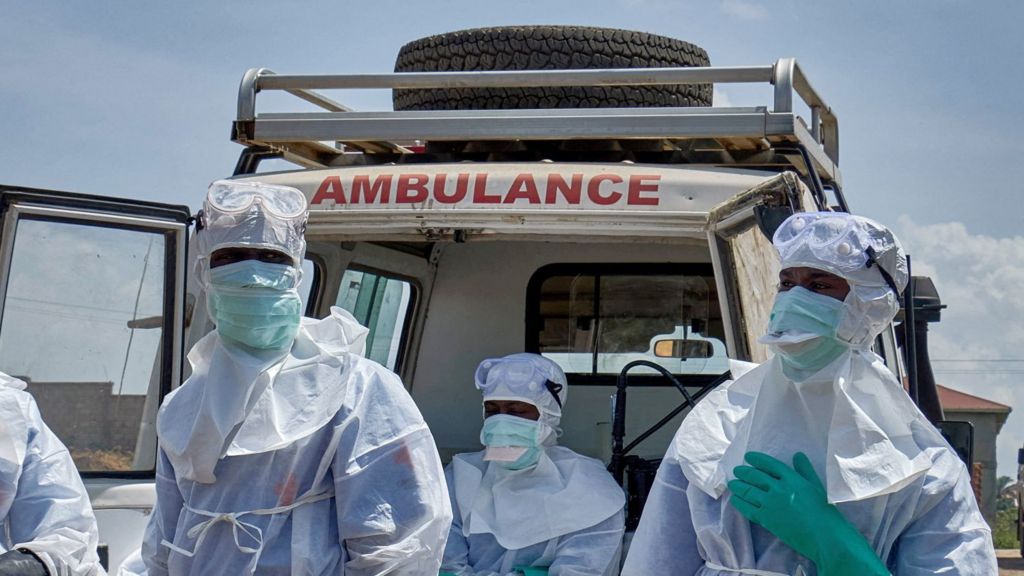
    A suspected hantavirus outbreak on an Atlantic Ocean cruise vessel has left three people dead, with multiple additional cases under active investigation, the World Health Organization (WHO) has confirmed to the BBC. The outbreak is centered on the MV Hondius, a polar expedition cruise ship operated by Dutch tour operator Oceanwide Expeditions, which was en route from Ushuaia, Argentina to Cape Verde when illnesses began to spread.

    According to official briefings, WHO has verified one case of hantavirus, with five other symptomatic passengers awaiting final testing to confirm infection. One British national remains in intensive care in South Africa following emergency medical evacuation. Tracking of the outbreak shows the first fatality was a 70-year-old passenger who developed symptoms and died on board the vessel. His remains have been taken to Saint Helena, a British overseas territory in the South Atlantic, pending next steps. The man’s 69-year-old wife also contracted the illness, was evacuated to a medical facility in Johannesburg, South Africa, and later died in hospital care. A third fatality, a 69-year-old British citizen, was also confirmed, while another British passenger remains in intensive care at the same Johannesburg hospital.

    Hantavirus infections are most commonly transmitted through environmental exposure, typically contact with rodent urine, feces or saliva from infected animals. While person-to-person transmission is rare, the virus can cause life-threatening respiratory illness in severe cases, making the on-board outbreak a significant public health concern.

    Initial reports from South Africa’s Ministry of Health had pegged the death toll at two, which was later updated to three by WHO. The ship departed on its scheduled voyage on March 20, with a planned arrival in Cape Verde on May 4. The MV Hondius is a 107.6-meter polar-class cruise ship that can accommodate up to 170 passengers across 80 cabins.

    WHO has activated its cross-border public health response framework to manage the event, which it has classified as a formal public health event. The global health body is coordinating between affected countries, South African public health authorities and the ship’s operator to organize medical evacuations for remaining symptomatic passengers, conduct a comprehensive risk assessment of the outbreak, and deliver medical and public health support to all people still on board the vessel.

  • Police officer lowered into crocodile-infested river to recover human remains

    Police officer lowered into crocodile-infested river to recover human remains

    In the aftermath of devastating floodwaters that swept through northeastern South Africa last week, a daring, high-stakes recovery operation led by elite South African police has yielded human remains from the belly of a massive 4.5-meter, 500-kilogram crocodile, in the search for a missing local businessman.

    The ordeal began when the unidentified man attempted to cross a submerged low-water bridge over the Komati River, located in South Africa’s Mpumalanga province. His vehicle quickly became trapped in the rushing floodwaters, and by the time first responders arrived at the scene, the car was empty. Authorities concluded the man had been swept away by the powerful current, according to Mpumalanga provincial police spokesperson Colonel Mavela Masondo, who shared details with South African national broadcaster SABC.

    Launching a large-scale search operation that deployed both drones and helicopters to cover the wide, fast-moving river, search teams spotted a cluster of crocodiles basking on a small exposed sandbar. As commander of the police diving unit, Captain Johan “Pottie” Potgieter told local news outlet News24 that years of field experience allowed his team to immediately identify one reptile as suspicious: unlike the other crocodiles that scattered at the noise of approaching aircraft, this giant animal stayed motionless on the bank, its abdomen visibly distended from a recent large meal.

    Teams humanely euthanized the suspected reptile before planning the dangerous recovery. In an operation police have labeled “highly dangerous and complex”, Potgieter was lowered via rope from a hovering helicopter directly to the sandbar, where he secured the massive crocodile before both he and the animal were hoisted back into the aircraft and flown to nearby Kruger National Park for examination. Potgieter acknowledged to News24 that the mission was an inherently tense experience: “The sharp-end of a crocodile is not the best place to approach it,” he said.

    Upon dissection, search teams recovered partial human remains from the crocodile’s digestive tract, along with six separate shoes. Potgieter noted that while the presence of multiple footwear suggests the crocodile may have claimed other victims in the past, crocodiles are opportunistic feeders that often swallow non-food debris that washes into their habitat, so the find does not confirm additional deaths.

    DNA testing is now underway to formally confirm whether the recovered remains belong to the missing businessman. Following the successful completion of the risky operation, South Africa’s acting police chief Lieutenant-General Puleng Dimpane publicly recognized Potgieter for his extraordinary bravery in carrying out the high-risk task.

  • Two US service members reported missing in Morocco, officials say

    Two US service members reported missing in Morocco, officials say

    In a developing incident reported over the weekend, two American service members have been declared missing while taking part in a large-scale multinational military exercise in southern Morocco, U.S. Africa Command (Africom) confirmed in a statement released Sunday.

    The missing service members were participating in African Lion 2026, the yearly joint military drill that brings together U.S. military personnel, NATO alliance partners, and multiple African partner nations. The exercise’s core mission is to enhance interoperability, strengthen tactical coordination, and deepen security cooperation across transatlantic and African defense forces.

    According to Africom’s official update, the two troops were reported missing Saturday in the area adjacent to the Cap Draa Training Area, located just outside the southwestern Moroccan city of Tan Tan. This coastal desert region near the Atlantic coast forms the primary training ground for large-scale maneuver drills during African Lion.

    A comprehensive search and rescue operation has been activated to locate the missing service members, with assets contributed by multiple nations. The mission draws on ground search teams, air reconnaissance sorties, and maritime patrol resources from the United States, Moroccan defense forces, and other participating partners. As of the latest update, the search remains ongoing with no further details released on the circumstances of the disappearance or the identities of the missing troops.

  • 2 US service members missing after military exercises in Morocco

    2 US service members missing after military exercises in Morocco

    A developing emergency is unfolding in southwestern Morocco, where two American service members have gone missing following their participation in a yeary multinational military exercise hosted in the North African nation, U.S. Africa Command (AFRICOM) announced in an official update Sunday.

    Joint search-and-rescue missions have been mobilized by the Moroccan government, U.S. military personnel and other partner nations that took part in the African Lion drills, according to AFRICOM’s public statement. The command confirmed that the circumstances surrounding the disappearance are still being probed, and search activities are continuing across the affected area.

    The incident was recorded on May 2 in the vicinity of the Cap Draa Training Area, located near Tan Tan along Morocco’s Atlantic coastline. The African Lion exercise kicked off across four different North and West African nations in April, with additional training activities hosted in Tunisia, Ghana and Senegal, and was originally scheduled to conclude in the first week of May.

    First launched in 2004, African Lion stands as the largest annual joint military training exercise led by the U.S. across the African continent. The event routinely draws senior military leadership from the U.S. and its key partner states across Africa, bringing together thousands of service members to coordinate on tactical training and security cooperation. U.S. military leaders have long framed the annual multinational exercise as a critical platform for deepening regional security partnerships, boosting participating forces’ operational readiness, and preparing for a range of unforeseen global crises.

  • Nigeria summons South African envoy over attacks on its nationals

    Nigeria summons South African envoy over attacks on its nationals

    A wave of violent anti-immigrant attacks targeting foreign nationals across South Africa has sparked diplomatic tension between the continent’s most industrialized nation and Nigeria, after Abuja formally called in Pretoria’s acting high commissioner to address the escalating crisis.

    According to an official statement from Nigeria’s foreign ministry, the scheduled Monday meeting will center on delivering Nigeria’s formal and profound concern over the recent string of xenophobic actions, including organized anti-immigration marches by nativist groups, documented assaults on Nigerian citizens, and coordinated attacks on businesses owned by Nigerian nationals. Ministry officials have explicitly warned that the ongoing unrest poses a tangible risk to the longstanding bilateral relations between the two African economic powerhouses.

    Local South African media reports confirm that at least six foreign nationals have been killed in recent weeks: two Nigerian citizens and four Ethiopian nationals, with additional attacks recorded against migrants from other African countries across the country. As the economic hub of Southern Africa, South Africa has for decades drawn migrant workers from across the continent seeking greater employment opportunities and economic stability, a trend that has fueled growing resentment among segments of the local population.

    South African President Cyril Ramaphosa has publicly condemned the violent attacks on migrants, but has also coupled this condemnation with a warning to all foreign residents that they must abide by South Africa’s domestic immigration laws. During his annual Freedom Day address last week, which marked the anniversary of South Africa’s first post-apartheid democratic elections in 1994, Ramaphosa reminded citizens of the critical solidarity and support African nations across the continent provided during the decades-long fight against the racist apartheid regime.

    Despite this official message of unity, anti-immigrant sentiment has hardened in many communities. Many South African residents blame undocumented migrants for straining public services, taking scarce formal employment opportunities from local workers, and fueling rising rates of organized crime, particularly drug trafficking. Hardline anti-immigration groups have taken to extrajudicial patrols, stopping people outside public facilities including hospitals and schools to demand proof of legal residency.

    During a large anti-immigrant march held in the capital Pretoria last week, organizers ordered all foreign-owned businesses to shut their doors ahead of the demonstration to avoid potential violence. One Nigerian resident, speaking to BBC Pidgin on the sidelines of the unrest, expressed deep disappointment with the targeting of African migrants. “It is not okay because we are blacks, we are brothers… everybody comes here just to survive,” he said.

    A South African security worker, who was blocked from reaching his job by the protest march, echoed that frustration. “It’s not what we expected as fellow Africans,” he told reporters. “It’s just making us scared – imagine if we’re scared in our own African continent – what if we go to Europe?”

    Nigeria is not the only African nation to take formal diplomatic action over the unrest. Last month, Ghana also summoned South Africa’s top diplomatic envoy after a viral video spread widely across social media showing a Ghanaian man being aggressively confronted by anti-immigrant activists who demanded he show proof of legal immigration status.

    The current rise in xenophobic tension traces back to earlier this year, when controversy erupted after the head of Nigeria’s community in the South African port city of KugoMpo, formerly known as East London, was installed in a traditional local leadership position loosely translated as “king.” Many local South African residents framed the move as an illegitimate power grab by foreign communities, stoking widespread anger that has since spread across the country.

    Official South African government data estimates that roughly 2.4 million legal migrants currently reside in the country, accounting for just under 4% of the total national population. Demographers estimate that a much larger number of migrants reside in the country without formal immigration documentation. The vast majority of migrants come from neighboring Southern African countries including Lesotho, Zimbabwe and Mozambique, nations that have a long history of providing migrant labor to South Africa’s economy. A far smaller share of the migrant population hails from Nigeria.

  • Kenya battles to stop the ‘goons and guns’ as fears of political violence grow

    Kenya battles to stop the ‘goons and guns’ as fears of political violence grow

    NAIROBI, Kenya — On a mild Wednesday last month in Kisumu, a lakeside western Kenyan city, Senator Godfrey Osotsi stepped out of a barbershop and stopped for a routine coffee break. What came next was anything but ordinary: a mob of hooded young men launched an unprovoked, brutal assault, beating the senator with punches and kicks, stealing his phones and personal valuables before melting into the busy surrounding streets.

    Surveillance camera footage of the attack spread across Kenyan social media and traditional news outlets within hours, sparking national outrage that forced parliament to summon the country’s top security leaders for urgent questioning. For Osotsi, the attack was no random robbery — he alleges it was politically motivated, saying his attackers explicitly questioned why he refused to back President William Ruto’s 2027 re-election campaign. For millions of Kenyans, the high-profile assault was not an isolated shocking incident, but confirmation of a growing, deeply feared trend: the country is once again sliding toward the cycles of deadly political violence that have scarred its modern democratic history.

    Kenya’s pattern of political parties patronizing criminal youth gangs stretches back to the early 1990s, when multiparty democracy was reintroduced after decades of one-party rule. Politicians across the ideological spectrum have long hired unemployed young people as tools of electoral intimidation, a practice that escalated into the catastrophic nationwide post-election violence of 2007, when clashes linked to these groups killed an estimated 1,500 people and displaced hundreds of thousands.

    Fifteen months out from the next mandatory general election, scheduled for August 2027 at the latest, political tensions are already rising faster than many observers expected. The assassination of veteran opposition leader Raila Odinga in October 2024 triggered a major political realignment, splitting Odinga’s long-dominant Orange Democratic Movement (ODM) into two feuding camps split over whether to back Ruto’s re-election. Most notably, former Deputy President Rigathi Gachagua, who was impeached and removed from office in 2024, is running for president against Ruto bearing a deep public grudge, opening a damaging rift within the ruling Kenya Kwanza coalition.

    Against this fragmented political landscape, attacks by hired youth gangs — widely known locally as “goons” — have grown more open and brazen. Testifying before a parliamentary committee this month, Interior Cabinet Secretary Kipchumba Murkomen acknowledged that the government is struggling to rein in the groups, which have evolved from disorganized street gangs into what he described as “sophisticated and decentralized networks.” Murkomen, appearing alongside other top security officials, confirmed that more than 104 active criminal gangs operate across the country, the vast majority of which are backed and funded by sitting politicians.

    “These gangs are owned by political leaders who play a central role in mobilizing them. The situation is chaotic, and an irresponsible leader is a direct threat to national security,” Murkomen told lawmakers, declining to name specific politicians linked to the groups. Authorities have launched a widespread crackdown, arresting at least 300 suspected gang members, seizing illegal weapons and seizing communications devices during raids — but no politicians have been taken into custody so far. Successive Kenyan administrations have repeatedly banned these groups ahead of elections, but the problem has persisted: gangs simply rebrand, mutate their structures, and reemerge under new names ahead of each electoral cycle. A senior anonymous security source told the BBC that the groups have now become permanent, formally structured organizations rather than temporary election-era mobilizations.

    Gachagua, the former deputy president and 2027 presidential challenger, has been a repeated target of this violence. Since his impeachment, he has faced more than two dozen targeted attacks by armed gangs at campaign events and church appearances, with Gachagua and his allies blaming state-sponsored criminal networks for trying to derail his presidential bid before the official campaign begins. Opposition leaders and civil society groups have long accused Kenya’s police force of either colluding with politically linked gangs or intentionally turning a blind eye to their attacks, many of which unfold in plain sight of uniformed officers. In February, a 28-year-old supporter of the anti-Ruto ODM faction was shot and killed during clashes between police and rally attendees, leading the faction to condemn what it called “state-sponsored acts of violence by police and hired goons.”

    Government spokesperson Isaac Mwaura rejected all claims of state sponsorship of gang violence, saying “the use of criminal gangs to intimidate or silence individuals undermines our democracy and will not be tolerated. Anyone found financing, supporting, or engaging in such acts will be held fully accountable under the law.”

    Attacks are not limited to opposition figures, either. In February, a senatorial candidate aligned with the ruling Kenya Kwanza alliance was forcibly dragged out of a church service and attacked by a mob in Kakamega, another western Kenyan city. During November 2024 by-elections in western and central Kenya, voting was marred by widespread violence: polling agents were assaulted, armed gang factions clashed during vote counting, and police fired tear gas to disperse crowds of voters.

    Security analysts warn that the growing frequency of these attacks is pushing Kenya toward a crisis it has barely survived once before. “These incidents paint a troubling picture of a country where political rivalry increasingly spills into organised street violence executed by hired gangs operating with precision and impunity,” said Robert Chege, a Nairobi-based security analyst. Taken individually, single attacks can sometimes be dismissed as isolated crime, but collectively they point to a nation edging back toward the violence that traumatized the country in 2007.

    Makau Mutua, a prominent legal scholar and advisor to President Ruto, wrote that the normalization of political gang violence has become a systemic problem, noting “the worrying problem in Kenya is that this is now a near norm carried out by all major political parties. It is, to wit, a Kenyan culture, an epidemic.” A 2024 report from Kenya’s state-funded National Crime Research Centre backed this assessment, finding that hundreds of criminal gangs are active nationwide, with more than 120 directly linked to politicians. Unlike the temporary election formations of the 1990s and 2000s, the report found that these groups are now deeply entrenched, permanent institutions within their local communities.

    Inspector General of Police Douglas Kanja told parliament that security forces have made progress identifying the political leaders funding and directing the gangs, promising that “this issue of goons and guns is going to stop soon. We have clearly investigated. We have seen where they come from, who funds, who does what, who is the grassroots organiser and so forth.” Responding to longstanding allegations of police complicity and inaction, Interior Minister Murkomen acknowledged that “operational challenges” including corruption and repeated information leaks have hampered enforcement, saying the government takes all allegations of officer misconduct seriously.

    Critics argue that the government’s response has been heavy on rhetoric but weak on enforcement, pointing to the lack of any arrests of politically connected gang backers despite hundreds of detentions of low-level youth. Chege described Kenya’s current security crisis as self-inflicted, sustained by decades of political patronage networks and state systems “that thrive on violence and inequality.” He added, “The question is no longer who the goons are, but who sends them, funds them and protects them? The real architects of Kenya’s rising wave of organised violence remain in the shadows.”

    As Kenya counts down to next year’s general election, ordinary citizens and civil society groups are calling for urgent action to rein in political violence before tensions escalate even further, hoping authorities can hold the powerful architects of this violence accountable before the country repeats the mistakes of its past.