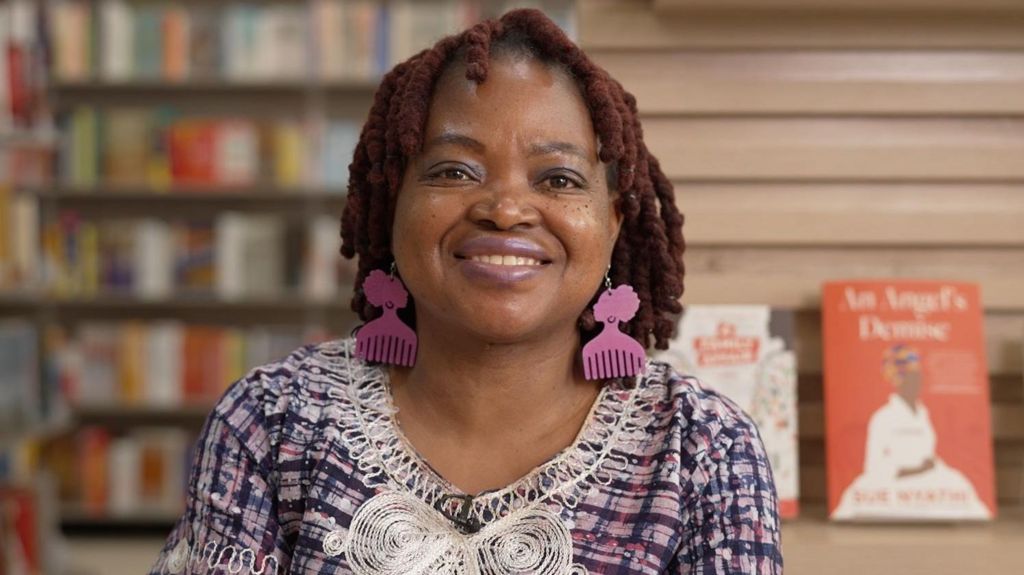
For many casual observers, Sue Nyathi’s sudden global fame looks like a classic case of overnight success. But the award-winning Zimbabwean author is quick to push back on that narrative: every bit of her current acclaim, she says, is the product of decades of unseen work, personal sacrifice, and relentless passion for storytelling. Nyathi’s journey from part-time evening writer writing after a full day in finance to a globally celebrated creator whose work tops Netflix charts across 60+ countries is a testament to how underrepresented voices can break through systemic barriers to find worldwide resonance.
Nyathi’s breakthrough story began long before her adaptation hit streaming screens. When she first sent her debut novel *The Polygamist* to traditional publishing houses, editors uniformly rejected it, claiming there was no viable commercial market for a story centered on a polygamous Zimbabwean man and the women whose lives he upends. Refusing to abandon her project, Nyathi took the self-publishing route: she sourced her own editor, typesetter, and cover artist, and printed just 500 copies of the book in 2012. The novel defied every industry expectation, quickly becoming a word-of-mouth hit that found an eager audience across southern Africa.
Decades later, that self-published debut has been adapted into a Netflix original series that currently ranks in the streamer’s global top 10 most-watched shows, reaching the number two spot in the U.S. market. Even A-list Hollywood star Taraji P. Henson publicly shared that the drama had her gripped, admitting she binged all 22 episodes in a single sitting.
Contrary to common assumptions about the story, Nyathi emphasizes that her work is not a simple critique of traditional consensual polygamy – a practice deeply woven into her own family history. Growing up, her mother’s side of the family had practiced polygamy for generations: her grandfather, who died in 1979, had five wives, and her great-grandfather had 11. Her great-grandmother, the senior wife (or Unlengkulu in local culture), served as matriarch of the family farm where all wives lived together, and even helped select new spouses for her husband. Nyathi recalls that in this traditional structure, there was no infighting: roles were clear, all labor – physical and emotional – was shared, and everything operated out in the open. “Everybody knows who’s who in the zoo,” she jokes of the open traditional model.
The story instead shines a light on what Nyathi calls the “modern, perverted version” of polygamy: a pattern of deception that preys on women’s lack of autonomy in patriarchal societies. As a young professional working in Harare in 2001, Nyathi observed that many men who publicly claimed to be monogamous were secretly maintaining multiple households and partners, lying to every woman involved. This is the core conflict of her novel.
In the story, protagonist Joyce enters what she believes is a monogamous marriage to wealthy self-made businessman Jonasi, only to slowly discover he has secretly married three other women, each with their own separate home. Even though Joyce helped Jonasi build his business empire, she remains financially dependent on him, as do his other secret wives. This power imbalance leaves all the women vulnerable, exacerbates risks like HIV transmission, and strips them of agency to negotiate their own relationships. Nyathi makes her position clear: “I’m not against polygamy. What I’m against is the lack of agency. It’s wrong for the goalposts to be shifted once you’re inside.”
The Netflix adaptation shifts the story’s setting to South Africa and films it primarily in Zulu with subtitles, a choice Nyathi says preserves cultural nuance that could never be captured in English. Unlike the novel, which is narrated entirely from the perspectives of Jonasi’s wives, the series expands the narrative scope slightly, but the core focus on women’s lived experiences remains. Nyathi says her goal was always to center women’s voices, letting each character explain the circumstances that led her to the relationship – and the response from audiences around the world has confirmed how universal these themes are. Women regularly reach out to her to say they see their own lives reflected in the characters, with many sharing they are currently married to a “Jonasi” and want to leave. Following the series’ release, Amnesty International South Africa even published official guidance for women experiencing narcissistic abuse, noting the urgent conversations the drama has sparked. “For some people, this is not just a series,” Nyathi says. “It’s their lived reality. It holds up a mirror to society.”
Not everyone has embraced the unflinching reflection the story provides. A Kenyan civil servant has publicly called for the series to be banned in Kenya, arguing it unfairly conflates traditional polygamy with deception, cheating and abuse. But Nyathi stands firmly by her work, noting that cultural practices evolve over time, and documenting the corruption of traditional norms is a valid, necessary perspective. She also points out that by centering affluent Black African protagonists, the story challenges harmful global stereotypes that consistently frame African life through the lens of poverty. She notes that one European reader told her he had never even conceptualized that wealthy Black Africans existed – a gap the series helps close.
Beyond the story itself, Nyathi’s journey as a writer highlights the deep structural barriers that face many African writers, particularly women who lack outside financial support. Nyathi dreamed of writing from childhood, but her parents pushed her toward a stable corporate career, and she spent nearly 20 years working as an investment analyst. She wrote *The Polygamist* in the evenings after work, only leaving her corporate job at age 40, several years after the book’s initial self-published release, to write full-time. Now 48, she says the label of “overnight success” erases the decades of sacrifice that got her here. “The recognition is overnight, but the work has been put in over many years, and I’ve made a lot of sacrifices,” she explains.
She notes that for most emerging writers on the continent, making a living solely from book sales is nearly impossible. Many successful African writers rely on grants, literary residencies, or spousal financial support – options that were never available to Nyathi, a single mother who juggled multiple jobs to put her son through school while keeping her writing dream alive. “Writing is a luxury that most people can’t afford,” she says, adding that this barrier means countless important African women’s voices never get heard. She also points to a persistent imbalance in global publishing: it is far easier for African writers to gain traction if they are published overseas, while domestic African work struggles to break into global markets.
The “Netflix effect” has changed that for Nyathi, finally giving her the global visibility that eluded her across four published novels and 12 years of writing on politically and socially urgent topics. She is currently putting the final touches on the first draft of a new historical novel, which she says will carry forward the same focus on resonant, human-centered themes.
For aspiring women writers who lack financial resources, Nyathi has one simple piece of advice: start where you are, and write for the love of the story. “Everything starts with a story,” she says. “If you think you have a book in you and you don’t have money, start with a pen and paper, and do it for love. Money should never be the motivation. The love is what will fuel you when it gets hard.”