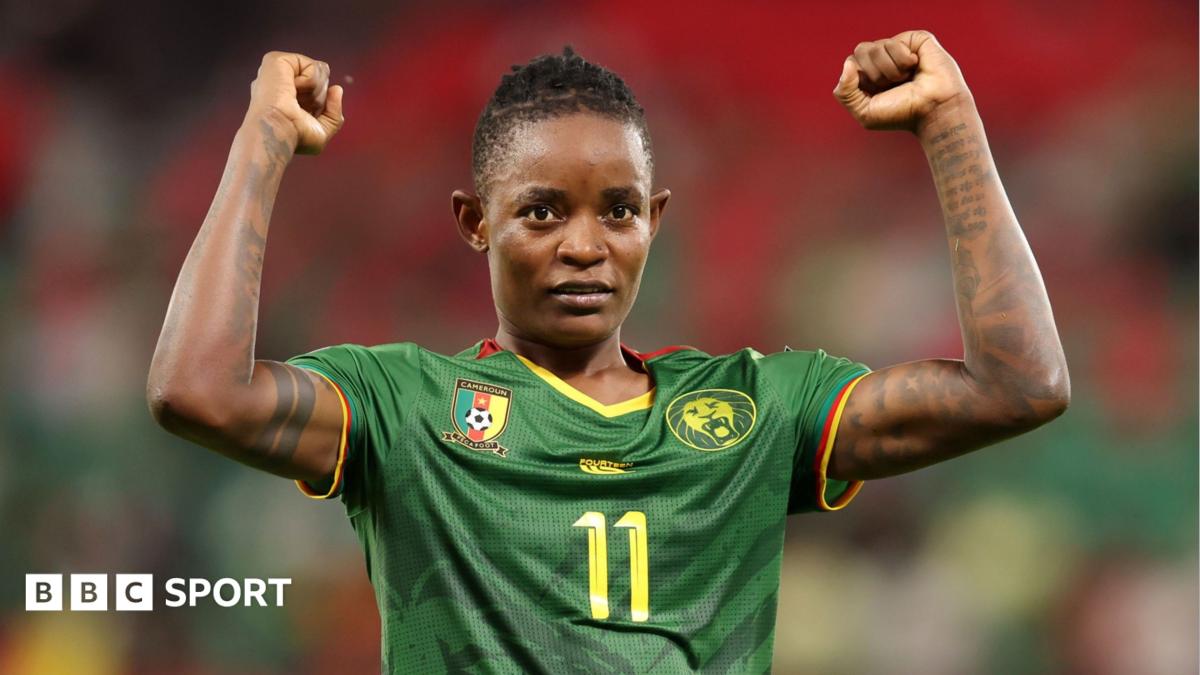
After three heartbreaking final losses spanning 12 years, Cameroon’s Indomitable Lionesses have finally claimed their maiden Women’s Africa Cup of Nations (Wafcon) crown, delivering a dominant 3-0 defeat to Cinderella story Malawi in the 2026 tournament final hosted in Rabat, Morocco. What makes this historic triumph even more extraordinary is that Cameroon almost did not even qualify for the expanded 16-team finals: they fell 3-1 on aggregate to Algeria in the second qualifying round, only advancing after Confederation of African Football (Caf) expanded the tournament field from 12 to 16 teams and awarded them a spot based on global ranking. They also missed the entire 2024 edition of the continental championship, making their underdog run to the top all the more remarkable.
The first half of the final belonged entirely to Cameroon, who put the result beyond doubt before the halftime break. In the 20th minute, a misjudged attempt from Malawi goalkeeper Mercy Sikelo to clear a cross from Naomi Eto set up the opening goal: Grace Mendoua nodded the ball back across the face of goal, Sikelo tipped it onto the crossbar, and Marie Ngah Manga pounced from close range to put Cameroon ahead. Ten minutes later, Malawi failed to clear a Cameroon corner, and Eto turned sharply to fire a stunning first-time volley into the bottom corner of the net, doubling the Indomitable Lionesses’ advantage. In stoppage time at the end of the first half, Ngah Manga scored her second of the match: Eto beat the onrushing Sikelo to a through ball, pulled it back across an open goal, and Ngah Manga tapped home her fifth goal of the tournament to make it 3-0.
Malawi, the lowest-ranked team at the 2026 Wafcon sitting 153rd in the global rankings and making their first ever appearance in the continental finals, had surged to the final on the back of the deadly attacking form of star siblings Tabitha and Temwa Chawinga. But Cameroon’s well-drilled defence marshalled midfield to cut off the supply lines to the Chawinga sisters, shutting down the attacking threat that had carried the underdogs through the knockout rounds. The Southern African side’s best chance came just after the hour mark, when Cameroon goalkeeper Michaely Bihina saved a low strike from Tabitha Chawinga, only for Temwa to fire the rebound wide of an open goal. Ngah Manga also missed a golden chance to claim a hat-trick and the tournament golden boot outright early in the second half, firing wide from six yards after rounding Sikelo. Late in the match, a Gabrielle Onguene tap-in was ruled out for offside, leaving the final scoreline at 3-0.
Cameroon’s road to the final was already full of unlikely upsets under new coach Valentine Nguele, who only took charge of the side in June. The Indomitable Lionesses knocked out defending powerhouse Nigeria 1-0 in the quarter-finals, then beat host nation Morocco on penalties in the semi-finals, with 22-year-old Benfica goalkeeper Bihina emerging as a tournament star: she pulled off nine saves against Nigeria, and saved an extra-time penalty plus three spot-kicks in the shootout against Morocco. She faced almost no serious threats in the final, as Cameroon controlled the match from the opening 20 minutes.
FIFA President Gianni Infantino joined Caf President Patrice Motsepe to present the trophy to Cameroon, who become just the fourth nation to win the Wafcon title, following Nigeria, Equatorial Guinea and South Africa. The champions also take home $2 million in prize money, marking a sweet ending after three previous final losses to Nigeria in 2004, 2014 and 2016. Ngah Manga, who ended the tournament level on five goals with Temwa Chawinga and Barbra Banda, spoke after the match about the years of work that led to the historic win: “We have been working so hard over all these years to get here. To finally be champions we are very proud.”
Both finalists will join semi-finalists Algeria and Morocco as Africa’s four representatives at the 2027 FIFA Women’s World Cup in Brazil, with Malawi making their World Cup debut alongside the North African side. Speaking from the stadium in Rabat, BBC World Service reporter Maz Farookhi noted that Caf’s decision to expand the tournament has already paid dividends for women’s football across the continent. “This tournament was described to me before the final as ‘the Women’s Africa Cup of Nations of our lifetime’, and rightly so,” Farookhi said. “Aside from host nation Morocco, no-one would have predicted such a last four line-up or the two sides who would ultimately contest the final. Caf’s decision to expand the tournament to 16 nations has proved to be the right one, allowing teams away from the likes of Nigeria and South Africa to demonstrate their qualities and bridge the gap to the continent’s elite.”
While Malawi’s fairytale run ended in a one-sided final, the debutants have already made history, and all four qualified African nations are set to head into the 2027 World Cup with momentum behind women’s football on the continent continuing to grow.