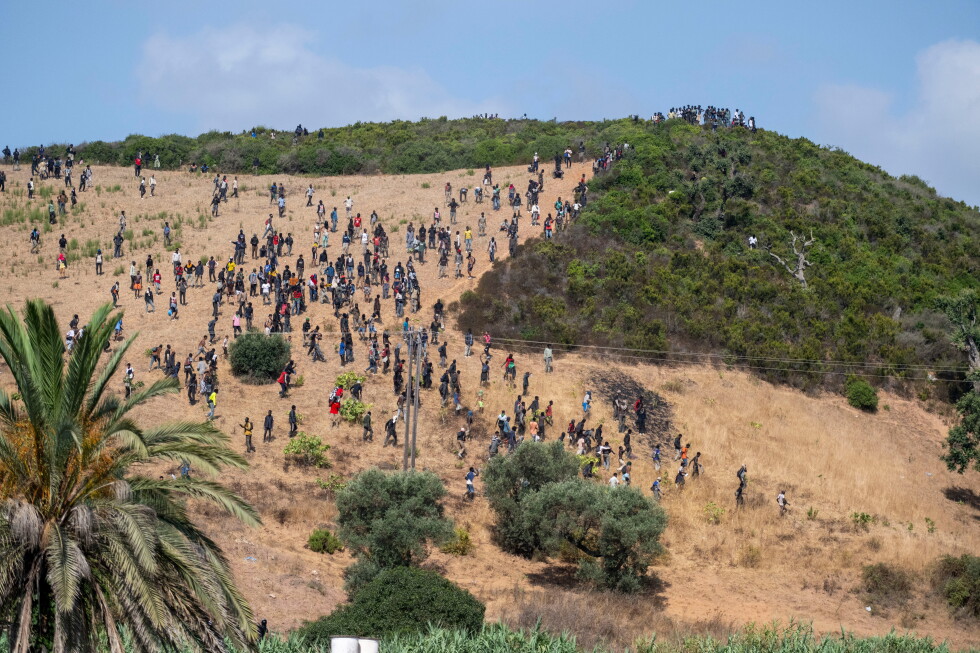
Two weeks after one of the deadliest migration crises in recent North African history left at least 90 people dead, Moroccan security services have intervened to block a new coordinated attempt to breach the border with the Spanish exclave of Ceuta. According to reporting from Morocco’s state television, hundreds of migration hopefuls and people accused of facilitating their journeys were taken into custody on Saturday, as joint Moroccan-Spanish security operations ramped up patrols and movement restrictions across the border region.
Local state broadcaster Medi 1 TV confirmed that out of the 355 people arrested, 294 were sub-Saharan African migrants attempting to reach Ceuta, while the remaining 61 were Moroccan nationals charged with aiding and abetting the unauthorized crossing attempts. The crackdown came in direct response to a widespread campaign of social media posts that called on migrants to organize a new mass crossing of the heavily fortified border. Faced with the prospect of another large-scale humanitarian crisis, both Moroccan and Spanish authorities moved quickly to reinforce border posts, expand security deployments, and restrict civilian travel into high-risk border zones.
This latest attempted crossing comes on the heels of a devastating mass push two weeks prior, when tens of thousands of migrants driven by widespread poverty and false online misinformation rushed the Ceuta border in an event that marked one of the deadliest migration episodes the region has ever recorded. Official government data puts the death toll from that event at a minimum of 90 people across both sides of the border, but independent human rights organizations have documented far higher casualty numbers.
Morocco has maintained a heavy security presence along its borders with Ceuta and Melilla, the two Spanish exclaves located on Morocco’s northern Mediterranean coast, for decades. When contacted by the Associated Press for comment on Saturday’s arrests and the scale of current security deployments, Morocco’s interior ministry declined to respond to requests for information. A senior anonymous Moroccan diplomat previously revealed that the country deploys more than 20,000 security personnel to the Ceuta border on a daily basis, an operation that costs the national government hundreds of millions of dollars annually.
For years, Morocco has served as a key transit route for migrants fleeing conflict, economic instability, and systemic poverty across Africa. Thousands of migration hopefuls arrive in the country each year, drawn by the prospect of crossing into Europe via the Spanish exclaves of Ceuta and Melilla, with the ultimate goal of reaching mainland Spain to access better economic and living opportunities.