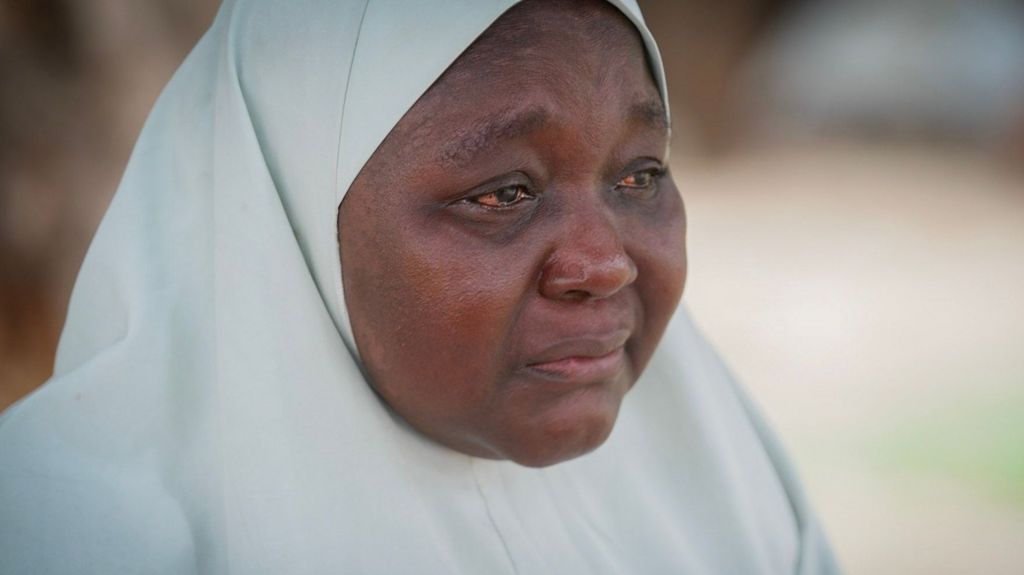
Deep in north-western Nigeria’s Zamfara state, 55-year-old Fatima sits in a dusty makeshift displacement camp, her voice breaking as she recounts the pre-dawn attack that stole her entire family. In the early hours of a June morning, dozens of motorcycle-borne bandits swept into her small village of Bia Buki, splitting into three units to trap every resident before opening fire. “If you hid in a room, they burned it down. If you ran, they shot you dead,” she told BBC World Service in a harrowing firsthand account. By the end of the coordinated raid, an estimated 70 villagers—including Fatima’s husband and six of his seven siblings—lay dead. Children fleeing the gunfire fell into hidden ditches and were left injured or abandoned, while surviving residents fled into the surrounding bush for shelter.
Fatima is one of roughly 800,000 Nigerians displaced by unrelenting violence in the country’s north-west, according to United Nations estimates. While some attacks in the region are carried out by militant Islamist factions, the vast majority of violence is perpetrated by local criminal gangs widely known as bandits. These groups, whose members are mostly drawn from the traditionally pastoralist Fulani ethnic group, have abandoned livestock herding and cattle trading for far more lucrative criminal enterprises: kidnapping for ransom, extortion, theft, and targeted killings. Operating in large mobile convoys of up to hundreds of motorcycles, they launch lightning-fast raids, escape before under-resourced security forces can respond, and enforce their control by forcing local communities to pay crippling protection fees—barring farmers from accessing their own fields unless they hand over large cash sums.
Official and independent conflict data confirms the crisis is worsening at an alarming rate. The Armed Conflict Location & Event Data Project (Acled) recorded a 78% jump in bandit attacks across north-western Nigeria’s bandit heartlands in the first half of this year, compared to the same period in 2025. Nigeria’s National Human Rights Commission reports that nationwide kidnappings have doubled over the same timeframe. “There is no region in northern Nigeria currently that does not experience one form of mass abduction or the other,” explains Malik Samuel, a security analyst at the non-profit research and advocacy group Good Governance Africa.
What began as a localized crisis in the north-west and north-east has now spread across the country, touching regions once considered safe. For over a decade, the north-east has faced an insurgency led by Boko Haram, which first gained global notoriety for the 2014 kidnapping of 276 Chibok schoolgirls. Today, kidnapping of soft targets—including schools, churches, mosques, and remote rural communities—has become a widespread revenue stream for armed groups of all ideologies, and violence is pushing steadily southward.
In May of this year, that spread became impossible to ignore when motorcycle-borne gunmen raided three schools in Oyo State, south-western Nigeria—a region long viewed as a stable, low-violence area. Thirty-nine children (the youngest just two years old) and seven teachers were abducted; one teacher was killed during the attack, and a second’s murder was filmed and shared widely on social media. After 56 days in captivity, the remaining 44 hostages were released; Nigerian authorities report they refused to pay ransom, and the hostages were freed following a security operation, with three perpetrators sentenced to life in prison after confessing to links with a Boko Haram affiliate. The attack left the community of Oriire reeling: hundreds of parents pulled their children out of school, dozens of families fled the area, and one attacked school remained shuttered for months. Oba Tajudeen Abioye, the area’s traditional ruler whose niece was abducted, says fear still grips the region. “For those of us who are left here, we are relying on the security officials, the soldiers” sent to protect the community, he says.
The spread of violence comes as Nigeria’s security forces are already stretched thin by multiple overlapping crises: the long-running Islamist insurgency in the north-east, separatist unrest in the south-east, and recurring ethnic and resource-fueled clashes in central Nigeria, where competition over water and grazing land has fueled deadly intercommunal violence. A 2025 UN report found that most Nigerian police stations are chronically underfunded and understaffed, with officers widely reported to lack critical training in hostage negotiation and forensic investigation.
In response to the growing crisis, President Bola Tinubu’s administration has increased Nigeria’s defence and security budget by 10% since December 2025, bringing it to the largest allocation in the country’s history, and has approved the recruitment of 28,000 new soldiers. To further augment overstretched regular forces, the government has turned to arming and training local community vigilante groups, particularly in violence-hit Zamfara. Thousands of local residents have joined these groups to fight back against bandit incursions.
One anonymous vigilante, interviewed by the BBC in July, says he has fought bandits at least 20 times, and requests for his group’s intervention come in weekly. Armed with an AK-47 and operating from a small concrete headquarters, he says the government has tasked his group with rooting out bandits from local communities. “Let the bandits understand that when they attack a place and kill, they can also be killed,” he says. While he notes that some areas have become safer, violence remains rampant in others, and he has called on the state government to arm and recruit more volunteers, arguing that “these people won’t be afraid of you unless you have proper weapons to fight them.”
But analysts warn that reliance on untrained, armed vigilantes carries long-term risks. Back in 2020, Zamfara state banned a large vigilante faction over evidence that extrajudicial killings carried out by the group were driving cycles of retaliatory violence. Authorities argue the new generation of vigilantes are better trained and regulated, but Samuel calls the policy a “time bomb waiting to happen.” “If citizens arm themselves how do you control them at the end of the crisis, how are you able to disarm them?” he asks.
For displaced survivors like Fatima, who now lives in a makeshift camp in Gusau, Zamfara’s state capital, 16 miles from her destroyed village, the daily reality of survival is grim. She shares the overcrowded camp with more than 1,000 other displaced people, where there is no adequate shelter, food is chronically scarce, and humanitarian aid arrives only irregularly. Families send children out to collect firewood to sell for small amounts of cash to buy food—but 22 of these children have already been kidnapped by bandits while gathering wood, Fatima says. Many days, most women in the camp go without breakfast. “When we had peace, we had our own wealth, but now the tables have turned and we have become beggars,” Fatima says, breaking down in tears.
Even 25 miles from her former home, the threat of violence never fully disappears. While army and vigilante patrols have reduced gunfire near the camp, the security situation remains tense, and military escorts are now standard for all traffic on the main road into Gusau. Fatima says she longs to return to her village, but holds little hope of that ever happening: her former home is now a de facto bandit base, where the local gang leader acts as the unofficial ruling authority, even resolving domestic disputes for families that remain. Nearby villages have been completely emptied, she says—“completely empty, not even a chicken lives there… empty villages like that are countless.” Even if she were able to return, there would be no way to rebuild: “you farm and when you go to harvest, they stop you or kidnap you.”
Fatima stops short of accusing the government of failing her community, but echoes the vigilantes’ call for more action. “Even if it is trying, it needs to do more,” she says. “There are problems and we think with more effort and more security agents, villages will be peaceful.”
Nigeria already holds one of the world’s highest out-of-school child populations, with UNESCO estimating 19 million children currently out of school, a crisis deepened by the targeting of schools for abductions. As violence spreads and insecurity grows across all regions of the country, the human cost continues to mount, with hundreds of thousands of displaced residents left waiting for more robust action to restore safety.