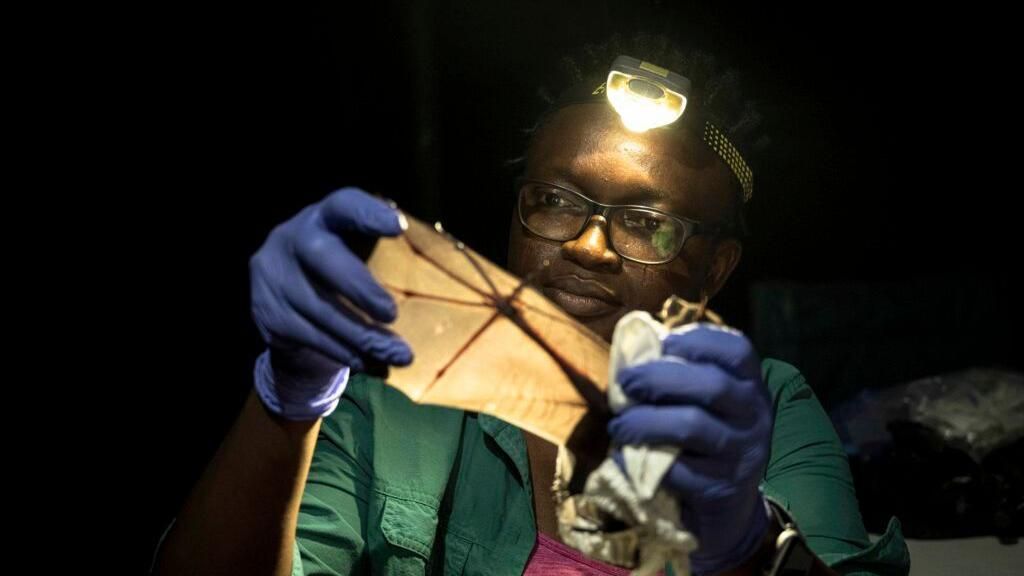
In a historic milestone for both African conservation and gender representation in environmental leadership, Nigerian ecologist Iroro Tanshi has been awarded the 2026 Goldman Environmental Prize — one of the world’s most prestigious honors for grassroots environmental advocates — for her groundbreaking work protecting endangered bats and curbing destructive human-caused wildfires in southern Nigeria. This year’s award marks the first time in the prize’s 37-year history that all six recipients are women, a shift that underscores the growing impact of female-led conservation across the globe.
Tanshi’s journey to the prize began with a moment of excitement quickly overshadowed by crisis: just days after she and her team rediscovered the elusive short-tailed roundleaf bat in Afi Mountain Wildlife Sanctuary, a protected 24,700-acre reserve in southeastern Nigeria, a large wildfire tore through the species’ only known habitat. The rediscovery, which marked the first confirmed sighting of the bat in nearly 50 years, was set to be a landmark moment for bat biology, but the uncontrolled blaze threatened to wipe the species out before it could be formally protected.
“Seeing that bat for the first time after half a century should have been huge, headline-making news,” Tanshi shared in an interview with the BBC’s *Focus on Africa* podcast. “But we immediately faced a serious, urgent problem: the wildfire that was swallowing their home.”
In Nigeria, widespread cultural stigma has long framed bats as connected to witchcraft, making public support for their protection an uphill battle. Rather than pushing conservation as a distant, disconnected goal, Tanshi centered her campaign on a shared community priority: addressing the damage that unregulated wildfires cause to both local farms and forest ecosystems. This community-centered approach won broad buy-in, turning local residents into core partners in bat and habitat protection.
Tanshi, currently a postdoctoral researcher specializing in chiropterology (bat research) at the University of Washington in the United States, identified human-caused wildfires — most often set by farmers clearing land for cultivation — as the single greatest threat to the endangered short-tailed roundleaf bat. The 2021 fire that pushed her to launch her campaign burned uncontrolled for three straight weeks, only extinguished by seasonal rainfall. “We couldn’t put it out; all we could do was watch it burn day after day,” she recalled.
Under Tanshi’s leadership, local community fire brigades were trained and organized to monitor, prevent, and respond to wildfires across the sanctuary and its surrounding areas. According to Goldman Environmental Prize organizers, the initiative has successfully prevented all major wildfire outbreaks in the region between 2022 and May 2025, a major win for both wildlife and local agricultural livelihoods that suffer from unregulated fire spread.
Beyond fire management, Tanshi’s work has prioritized shifting harmful cultural perceptions of bats through sustained community outreach. She and her team use multiple accessible media platforms to educate local residents — with a particular focus on schoolchildren — on the critical ecological roles bats play, from seed dispersal to plant pollination. Highlighting tangible local benefits, Tanshi often notes that the shea trees that produce the globally traded shea butter, used in food and cosmetics worldwide, rely on bats to disperse their seeds.
“We don’t avoid the hard conversations about the myths people believe,” Tanshi explained. “Instead, we show people that bats are integral to the ecosystems and the resources they depend on every day. Once you see how many critical roles they play, it’s impossible to ignore how important they are to protect.”
Reflecting on receiving the award, Tanshi called the honor “incredible”, saying it serves as a powerful confirmation that local, community-led conservation work has global impact. “There are very few things in this world that signal to you that the work you’re doing has global relevance than an honor like this,” she said.
The 2026 all-women cohort of Goldman Environmental Prize winners highlights the outsized, often underrecognized contribution of women environmental leaders working at the grassroots to protect vulnerable ecosystems and endangered species across the world.