博客

  • Embattled Spanish PM Sánchez insists no prior warnings before Ceuta crisis

    Embattled Spanish PM Sánchez insists no prior warnings before Ceuta crisis

    As widespread protests backed by Spain’s main opposition movement swept across the country, Spanish Prime Minister Pedro Sánchez stood before the national parliament Thursday to push back against growing criticism of his administration’s response to an unprecedented mass migrant influx into the North African Spanish exclave of Ceuta.

    In late May, more than 72,000 migrants crossed the border from Morocco into Ceuta, one of the only two European Union land border outposts on the North African mainland. When addressing lawmakers, Sánchez rejected widespread claims that his government had advance knowledge of the surge and intentionally failed to act, calling such accusations “absurd”. He also doubled down on previous claims that there was no concrete proof the Moroccan government orchestrated the mass crossing, emphasizing that Madrid and Rabat had maintained “close coordination” on migration management throughout the incident.

    Sánchez’s stance conflicts with a recent internal Spanish police report that noted the “total permissiveness” shown by Moroccan security forces towards migrants attempting the crossing, though senior Spanish officials have moved quickly to clarify the document does not officially accuse the Moroccan government of direct involvement. To date, more than 90% of the arriving migrants have been repatriated to Morocco, but roughly 5,000 people, including an estimated 1,400 unaccompanied minors, remain stranded on Ceuta’s public streets and beaches, creating a strained humanitarian and administrative situation for the small exclave.

    Multiple independent reports have confirmed that Spanish officials received advance warnings of an expected surge in border crossings after a Spanish court ruling was widely misinterpreted by migrants as a guarantee that they would not be pushed back if they successfully crossed into Ceuta. Though Sánchez has long avoided public criticism of Morocco, he broke his silence to denounce what he called “unacceptable” comments made by two Moroccan ministers regarding both Ceuta and its sister Spanish exclave Melilla.

    The Spanish government’s handling of the crisis has already sparked friction with other European Union member states. Italy, which has long struggled with its own migrant arrivals, moved quickly to implement new border restrictions for travelers coming from Spain in response to the Ceuta incident.

    During his parliamentary address, Sánchez defended the actions of Ceuta’s local police force, praising officers for prioritizing “the defense of human life” over rigid border enforcement when the mass crossing began. He also reiterated that close bilateral cooperation with Moroccan authorities allowed for the repatriation of more than 90% of migrants within just 72 hours of the crisis beginning.

    Acknowledging the severe disruption the influx has caused for Ceuta’s local residents, Sánchez framed the events of late May as a complex incident shaped by multiple overlapping actors and interests. He repeated his earlier claims that hoaxes and false rumors spread across social media platforms were a key trigger for the mass migration, a position that has already drawn significant criticism. Previously, Sánchez drew condemnation from both Russia and Israel after he blamed trafficking gangs and suggested social media accounts linked to both countries, alongside an international far-right movement, had fueled the crisis. He told lawmakers Thursday that while there is no evidence of direct state involvement from any country, he stood by his claims that linked social media accounts tied to Russia and Israel helped spread destabilizing misinformation.

    Sánchez closed his address by describing the situation in Ceuta as both a pressing humanitarian crisis and a major administrative challenge for the Spanish state, as authorities work to find long-term solutions for the thousands of migrants still remaining in the exclave.

  • Another White House renovation? A look at Trump’s new helipad

    Another White House renovation? A look at Trump’s new helipad

    A new infrastructure proposal from the Trump administration has sparked fresh debate over alterations to the White House complex, with plans to construct the first dedicated helipad on the property’s historic South Lawn drawing sharp criticism from heritage preservation groups and political opponents alike.

    For decades, presidential travel by helicopter has relied on temporary landing zones on the South Lawn, where Marine One — the standard call sign for any U.S. Marine Corps aircraft carrying the sitting president — touches down for departures and arrivals. The new proposal would replace these ad-hoc arrangements with a permanent, purpose-built helipad, a first for the White House grounds.

    Critics argue that the construction of a permanent helipad represents an unnecessary alteration to a National Historic Landmark that has retained much of its original landscape design dating back to the early 19th century. Heritage advocates note that the White House and its grounds are protected under the National Historic Preservation Act, and any significant modification requires rigorous review to ensure the property’s historical integrity is not compromised. Opponents also question the timing and cost of the project, pointing out that the estimated multi-million dollar expense comes as the administration faces scrutiny over other discretionary infrastructure spending.

    Supporters of the project counter that a permanent helipad will improve presidential safety and travel efficiency, eliminating the need to set up temporary landing barriers and security perimeters every time the president travels by helicopter. They note that current temporary arrangements require frequent rearrangement of landscaping and security equipment, which over time can cause more wear and tear on the historic grounds than a single, well-planned permanent installation.

    The debate over the helipad comes amid a longer history of modifications to the White House complex, with every modern administration carrying out renovations and infrastructure updates to accommodate evolving presidential needs. What sets this project apart is its location on the iconic historic grounds, a space that has remained largely unchanged in its core layout for more than two centuries, making even a small infrastructure project a matter of national public discussion.

  • Why did this Canadian ‘island’ seemingly vanish and reappear miles away?

    Why did this Canadian ‘island’ seemingly vanish and reappear miles away?

    A bizarre natural phenomenon off Canada’s Pacific coast has captured global attention after a landmass that looked like a small island abruptly vanished from its long-time location, only to reemerge miles away. To untangle this puzzling event, BBC Verify launched an investigation using time-lapse satellite imagery to trace the unusual movement of the feature off the coast of British Columbia.

    What many observers initially mistook for a stationary, permanent island turned out to be a massive floating mass of vegetation, sediment, and peat that broke free from its original mooring in shallow coastal waters. These rare floating landmasses, sometimes called “drifting islands,” form when accumulated organic matter and soil detach from shoreline wetlands or shallow bays due to a combination of erosion, shifting water levels, and storm activity.

    Satellite data analyzed by the verification team confirms that after separating from its original location, the large floating island drifted with coastal currents and wind patterns over several weeks, eventually coming to rest miles from where it was first mapped. The unexpected disappearance and reappearance of the feature sparked widespread curiosity and speculation on social media, with many users questioning whether the event was linked to climate change-driven coastal shifts or unusual geological activity.

    Climate researchers note that more frequent intense storm systems and rising sea levels along British Columbia’s coast are increasing the likelihood of such floating landmasses breaking free, as eroding shorelines weaken the anchors that hold accumulated organic sediment in place. While floating islands are not a new geological phenomenon, the high-profile tracking of this one through open-source satellite data has given scientists and the public a rare opportunity to observe how these mobile landforms move through coastal ecosystems.

  • ‘Humble but ambitious’ – the return of fallen giants Schalke

    ‘Humble but ambitious’ – the return of fallen giants Schalke

    In the industrial city of Gelsenkirchen, Germany, matchdays bring local life to a standstill. Every road, tram and sidewalk leads to the 62,000-seat Veltins-Arena, where crowds clad in the club’s iconic blue and white flood in to cheer on their beloved FC Schalke 04. This unbreakable bond between the club and its community has been tested more than ever over the past six years, a period marked by two promotions, two relegations, near-insolvency and constant upheaval – but it has only grown stronger through every crisis.

    The chaos of recent years traces back to a pattern of reckless financial decision-making. Years of overspending to chase instant success, combined with missed opportunities to qualify for lucrative European competitions and the financial shock of the Covid-19 pandemic, left Schalke drowning in massive debt. When the club dropped to the second-tier Bundesliga 2 for the first time in 21 years, even the worst-case scenario of total insolvency felt like a real possibility. Through it all, one thing remained certain: the fans never wavered.

    That fierce loyalty is more than just casual support – it is woven into the identity of Gelsenkirchen’s working-class community. “It’s a kind of religious feeling that people have towards Schalke,” explained Professor Frank Eckardt, who grew up in the city’s Schalke-Nord neighborhood. “It feels like people think, ‘OK, we don’t have anything else, but we have Schalke. It’s our club.’ If you go to graveyards, for example, you will find that people have Schalke on their graves in one way or the other. So it is really something deep. You can take everything from us, but you will never take Schalke from us. That’s what they really believe.”

    Even after the 2021 relegation, the club bounced back to the Bundesliga at the first attempt in 2022, giving fans hope that their struggles were over. That joy proved short-lived: a dismal campaign sent Schalke back to the second tier just 12 months later, where they would spend the next three seasons stagnating. A 10th-place finish was followed by an even grimmer 14th-place result in 2024, leaving the club just two spots above the drop to the third division.

    German football analyst Mark Lovell argues that Schalke’s repeated struggles were largely self-inflicted, brought on by the weight of unmet expectations and years of living beyond their means. “They were expected to basically walk the league every season despite having huge financial problems,” Lovell noted. “There’s sympathy for Schalke, but they’ve been their own worst enemies by chasing success and extending themselves too far. When you do suffer relegation something has to give, and they haven’t been able to buy their way out. They had to live more to their needs, get rid of their best players, and then sort of start again with a real skeleton type operation.”

    That rebuild began in earnest after the 14th-place finish in 2024, when the club turned to a new, unproven leadership team to turn their fortunes around. Tasked with engineering a promotion push was head coach Miron Muslić, a little-known Austrian manager who had just suffered relegation to England’s third tier with Plymouth Argyle. Few gave him a chance to succeed, but he quickly defied every expectation.

    “He is the face of the Schalke promotion. He is the hero because his way of coaching is so powerful. He gave the people the belief back,” explained Robin Haack, a Schalke correspondent for local outlet WAV. “Nobody knew him before. Some Austrian who was relegated to the third league in England – he must be bad. But he proved all the haters wrong in an incredible way. Fans love him like I’ve never experienced a coach has been loved before.”

    Muslić built his side around a high-pressing, hard-working style of play that perfectly aligns with Gelsenkirchen’s blue-collar identity, turning a group of underrated and discarded players into a cohesive promotion-winning unit. Working quietly behind the scenes alongside Muslić was newly appointed sporting director Frank Baumann, a former Germany international and ex-Werder Bremen sporting director who joined the club in June 2025.

    Andreas Ernst, another WAV reporter covering Schalke, described the task Baumann walked into: “He had the whole club, but it lay on the ground. They said do whatever you want to do. But with no money. We have a bad team. But come here – a very great club. Frank Baumann did everything out of nothing.”

    Lovell echoed that praise, noting that Baumann brought the steady, intelligent leadership Schalke had lacked for years: “At Schalke right now there’s some very intelligent football people behind the scenes. Frank Baumann’s a real top football man, and just a decent person, which Schalke didn’t have.”

    Baumann’s most high-profile and impactful signing was experienced veteran striker Edin Džeko, who joined Schalke in January 2025 after a difficult spell at Italy’s Fiorentina. Now 40 years old, Džeko has already proven his worth, netting eight goals in his first 13 appearances for the club, including two strikes in this season’s DFB Pokal cup win.

    For Muslić, Džeko is far more than just a goalscorer – he is an idol and a role model that has lifted the entire squad. “I grew up in Austria, but I’m from Bosnia. And Edin Dzeko for us is Gary Lineker. He’s our Johan Cruyff. He’s our Franz Beckenbauer. He’s just an idol,” Muslić told the BBC’s Euro Leagues podcast. “He’s 40 years old, and he’s still able to perform. That means he was super professional the last 25 years. That’s why he’s a role model and that’s why he will also have his impact and he will leave also his fingerprints in this upcoming Bundesliga season.”

    Schalke defender Christian Fuchs added that Džeko’s biggest contribution has been building a stable, accountable club culture, a vital foundation for long-term success. “Where it’s a player like this… there’s so much respect towards him from his team-mates. It’s so important to build a club culture, to hold players accountable, to keep them all in check,” Fuchs explained. “Even if it’s a small piece in the bigger puzzle, there is so much value that you need to give to that. Dzeko plays an important part in growing stability in the club.”

    While Džeko is a seasoned star rebuilding his legacy at Schalke, the club has also become a fresh start for players who had fallen on hard times. That is perfectly embodied by former Liverpool goalkeeper Loris Karius, who had repeatedly questioned whether to retire from football after years of struggle. At Schalke, Karius has earned a starting spot and emerged as a symbol of the club’s new resilient mindset.

    “He is the face of this new Schalke, the face of this new resilience, this new mindset,” Muslić said. “After tough years behind him, he found a new home. He found new trust – like so many other players from Schalke who had some rough moments in their careers. They found a safe heaven. And then it was just about, let’s do this together and let’s start from scratch and let’s do it in our way.”

    Schalke’s 2025-26 Bundesliga campaign got off to a tough start with a 3-0 defeat away to Augsburg, but even in defeat, the loyalty of the fanbase shone through: 6,000 visiting supporters stayed behind after the final whistle to cheer on the new squad. This weekend, the club will host reigning champions Bayern Munich for their first home game of the season, where a packed Veltins-Arena will create a typically raucous atmosphere.

    Unlike past seasons, where fans and the club expected an immediate push for European football or even the title, expectations are far more grounded this time around. Most supporters are simply hoping the club can avoid relegation and secure a long-term foothold back in Germany’s top flight. It is a far cry from the glory days of the past, but it is a mindset that fits this new, rebuilt Schalke.

    “We know the glory of the past. But we know also the present and the future,” Muslić said. “We are very humble but ambitious. Right now it’s all about playing another year in the Bundesliga.”

    As Fuchs put it, Schalke 04 belongs in the Bundesliga – and after years of chaos, the whole city is ready to prove they are back to stay.


  • Norway seizes Russian vessel to enforce $4.22B Ukrainian arbitration claim

    Norway seizes Russian vessel to enforce $4.22B Ukrainian arbitration claim

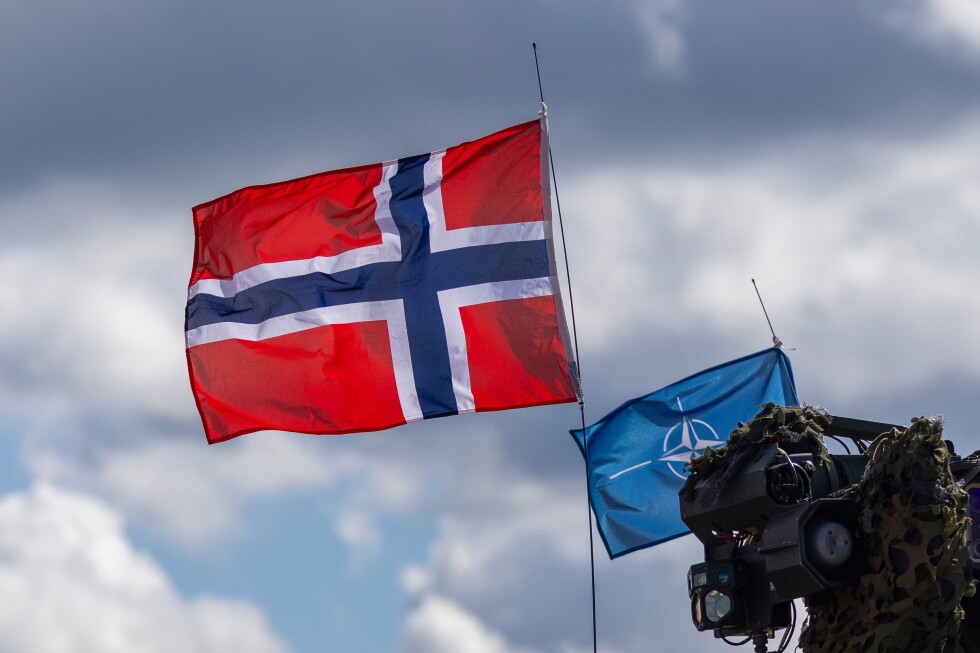
    In a landmark move to enforce an international legal judgment against Russia over its 2014 seizure of Ukrainian energy assets, Norwegian authorities have seized a Russian commercial cruise vessel in the Svalbard Arctic archipelago, acting at the request of Ukraine’s state-owned energy giant Naftogaz. This action marks one of the most high-profile asset seizures to date as part of Naftogaz’s global campaign to collect on a $4.22 billion arbitration award granted against Russia three years ago.

    The legal dispute at the heart of the incident traces back to 2014, when Russia illegally annexed Ukraine’s Crimean peninsula and seized control of Naftogaz’s energy infrastructure in the region, including natural gas fields and distribution pipelines. In 2023, a permanent arbitration tribunal based in The Hague ruled in Naftogaz’s favor, ordering Russia to compensate the company more than $4 billion for the illegal expropriation of its assets. When Moscow refused to honor the tribunal’s ruling, Naftogaz launched a global legal push, petitioning national courts across multiple countries to grant seizure orders for Russian commercial assets held within their jurisdictions.

    Wednesday’s seizure of the *Professor Molchanov* — a Russian vessel operated for commercial Arctic expedition cruises to Svalbard — was carried out under the authority of a court order issued by Norway’s Nord-Troms District Court on August 31, Svalbard Governor Lars Fause confirmed in an official statement. Following the action, the vessel has been prohibited from departing its current berth in the Svalbard settlement of Barentsburg, Fause added.

    For Naftogaz, the seizure represents a critical milestone in its years-long fight to hold Russia accountable for its actions. “This is another important step towards restoring justice for Russia’s unlawful seizure of Naftogaz assets in Crimea,” Naftogaz Chief Executive Officer Sergii Fedorenko said in a statement after the seizure. “Russia cannot evade responsibility simply by refusing to comply with an international arbitral award. We will continue to pursue Russian assets around the world.”

    Moscow has responded with fierce condemnation of the action. During an appearance at the Eastern Economic Forum in Vladivostok on Thursday, Russian President Vladimir Putin called the seizure of the civilian cruise vessel, paired with recent warnings from Ukrainian President Volodymyr Zelenskyy to foreign airlines operating in Russian airspace, “acts of state terrorism.” Zelenskyy had recently warned international carriers that flying over Russian territory would no longer be safe amid Ukraine’s expanding long-range drone campaign against Russian military and infrastructure targets.

    Putin tied both the vessel seizure and Zelenskyy’s airspace warning together, arguing that the incidents significantly complicate any path toward future peace negotiations between Russia and Ukraine. He also accused Western allies of Ukraine of being “complicit in international terrorism” for their refusal to condemn the developments.

    The seizure comes at a moment of heightened tension between Russia and Nordic nations, as Norway and neighboring Finland ramp up preparedness for potential Russian aggression amid the ongoing full-scale invasion of Ukraine. Just this week, Finland launched Europe’s largest civil defense exercise since World War II, held with explicit attention to growing threats from Moscow, and Russia recently announced it would close all German cultural centers within its borders in a tit-for-tat move after Berlin blamed Russian intelligence for a foiled drone plot at a German airport.

  • Were Christians the target of the Palm Sunday attack in Nigeria?

    Were Christians the target of the Palm Sunday attack in Nigeria?

    On March 29, a violent outbreak of gunfire shook the city of Jos, Nigeria, leaving investigators and local communities grappling with a critical question: were Christians specifically targeted for attack on one of Christianity’s most sacred holy days, Palm Sunday?

    The attack, which unfolded in the bustling central Nigerian city, saw unidentified gunmen launch a sudden assault, opening fire on civilian targets before fleeing the scene. In the immediate aftermath of the violence, conflicting reports have emerged about the motivation behind the shooting, with regional security forces yet to release a full breakdown of the attack’s perpetrators, casualties, or underlying motives.

    Jos, located in Nigeria’s Middle Belt region, has long been a flashpoint for intercommunal tensions, which often overlap with religious and ethnic divides. The timing of the attack, falling on Palm Sunday – a day that marks the beginning of Holy Week for Christian communities around the world – has fueled speculation that the attack was deliberately planned to target worshippers gathered for religious observances.

    Local security agencies have launched a manhunt for the assailants, while community leaders have called for calm as investigations continue. Nigerian authorities have not yet confirmed whether the attack was religiously motivated, but the incident has already drawn international attention to the persistent security challenges facing the West African nation, where violent attacks targeting civilian populations remain a recurring crisis.

  • USS Lincoln crew hits the streets of Thai beach city after lengthy Middle East deployment

    USS Lincoln crew hits the streets of Thai beach city after lengthy Middle East deployment

    Thailand’s sun-soaked coastal resort city of Pattaya welcomed busloads of crew members from the U.S. Navy’s USS Abraham Lincoln aircraft carrier on Thursday, marking the first shore stop for the strike group after an unprecedentedly long deployment supporting American operations in the Middle East. The nuclear-powered carrier spent a historic 264 consecutive days at sea before docking at Laem Chabang port in Chonburi province on Wednesday, capping a total deployment of 286 days to date, per official figures from the U.S. Embassy in Bangkok. Two other vessels in the Lincoln’s strike group are also anchored across Thailand: the destroyer USS Frank E. Petersen Jr. is docked at Sriracha port in Chonburi, while the cruiser USS Robert Smalls is stationed at Map Ta Phut in adjacent Rayong province. This extended uninterrupted deployment, which broke previous records for U.S. Navy operations, sparked public concern last month over mounting mental health strain among crew members and critical food supply shortages on board. While U.S. Navy officials sought to minimize reports of these challenges, former President Donald Trump drew widespread attention when he publicly stated the deployment was “not nearly long enough.” For most crew members stepping off the buses carrying them from the port to central Pattaya, the mood after months at sea was one of eager relief. Loaded down with personal luggage, several service members told the Associated Press they were thrilled to explore the Thai resort city. One sailor described the lengthy deployment as “alright” when asked, but declined to share additional comments. Local vendors and tour operators turned out in force outside the Hard Rock Hotel, the designated meeting point for crew organizing trips around Pattaya, hoping to capitalize on the influx of visiting service members. Crowding around arriving sailors, vendors offered everything from handmade souvenirs to pre-planned city tours, though many sailors politely declined offers as they waited for their arranged transportation. A-ngoon Sombat, a local artisan who makes the trip 200 kilometers from her home in central Thailand’s Ayutthaya province every time a U.S. naval vessel docks in Chonburi, set up her stall selling bright woven braided bracelets directly across from the hotel entrance. She had already recorded a handful of sales by midday Thursday, but remained uncertain about how her business would fare over the stop. “There are many vendors around. It’s really up to how lucky each of us are,” she explained. News of the massive aircraft carrier’s arrival also drew crowds of curious onlookers to a popular viewing spot just outside Laem Chabang port by Wednesday evening. Visitors arrived by car and motorcycle, peering through a mesh security fence to catch a glimpse of the 333-meter-long vessel – a length roughly equal to three American football fields – and snapping photos and videos of the massive warship. Many struck up casual conversations with other enthusiasts who shared the goal of seeing the aircraft carrier in person. Keith Eldridge, an American expat who has lived in Thailand for five years, traveled from neighboring Chachoengsao province specifically to see the Lincoln. Though he missed the actual docking, he tracked down the popular viewing spot after a tip from other ship enthusiasts. Eldridge described the massive vessel as an awe-inspiring “engineering marvel.” “When you get to look at something so big, wrapped up with so much technology – the radars, the sonars, the weapon systems, the propulsion systems – it is truly amazing that we can build it, float it, and we fight from it,” he said. Capt. Dan Keeler, the commanding officer of the USS Abraham Lincoln, confirmed the carrier is en route back to its home base in the United States, with the Thai port stop serving as a rest and resupply stop before the final leg of the journey. He noted the strike group may make additional resupply stops before reaching the U.S., but declined to share an exact date for the group’s arrival back on American soil. The carrier is scheduled to depart Thailand this weekend to continue its homeward journey.

  • Trading food for medicine and crossing the river by zip line are part of life in Nepal flood zone

    Trading food for medicine and crossing the river by zip line are part of life in Nepal flood zone

    Nearly two weeks after catastrophic glacial outburst floods tore through mountain valleys and towns across Nepal, thousands of displaced survivors sheltering in temporary relief camps are still grappling with critical gaps in essential services, even as government agencies deliver basic food provisions to those who lost everything. The disaster, triggered by a glacier collapse on August 26, has become one of South Asia’s deadliest climate-linked disasters in recent years, leaving an unprecedented trail of destruction and loss that continues to disrupt recovery efforts.

    For many families already reeling from the loss of loved ones and entire homes, the lack of access to prescription medications and emergency cash has compounded the hardship of life in temporary shelters. Suresh Kumar Karanjit, a resident who has taken shelter at a relief center in Devighat, Nuwakot district, lost his younger brother to the flood’s surging waters last week. Living with a chronic heart condition, Karanjit found that the limited medications available at the camp did not match his required prescription. With no personal cash on hand to purchase his regular drugs, he was forced to sell a carton of relief-issued noodles for 400 Nepalese rupees, equal to roughly $2.60, to cover the cost. “We have been living here for a week, and it is good that relief materials are being provided. But there is a clear lack of appropriate medicine,” Karanjit told reporters in an interview this Thursday.

    Official data from Nepal’s disaster management agency puts the confirmed death toll from the disaster at 1,252, with more than 4,200 people still listed as missing. Across the border in China’s Tibet Autonomous Region, authorities reported as of late Wednesday that 21 people had been killed and 541 others remain unaccounted for. In total, close to 4,000 displaced Nepalese residents are currently housed across 32 government-run relief centers spread across the worst-hit regions.

    Dharam Raj Uprety, Nepal’s top disaster management official, stated that authorities have established dedicated health camps staffed with licensed doctors and stocked medication at each relief hub, with additional work focused on improving hygiene and sanitation to prevent post-flood disease outbreaks. However, on-the-ground accounts from survivors contradict official claims of full service provision, highlighting gaps in matching the specific medical needs of vulnerable people with chronic conditions.

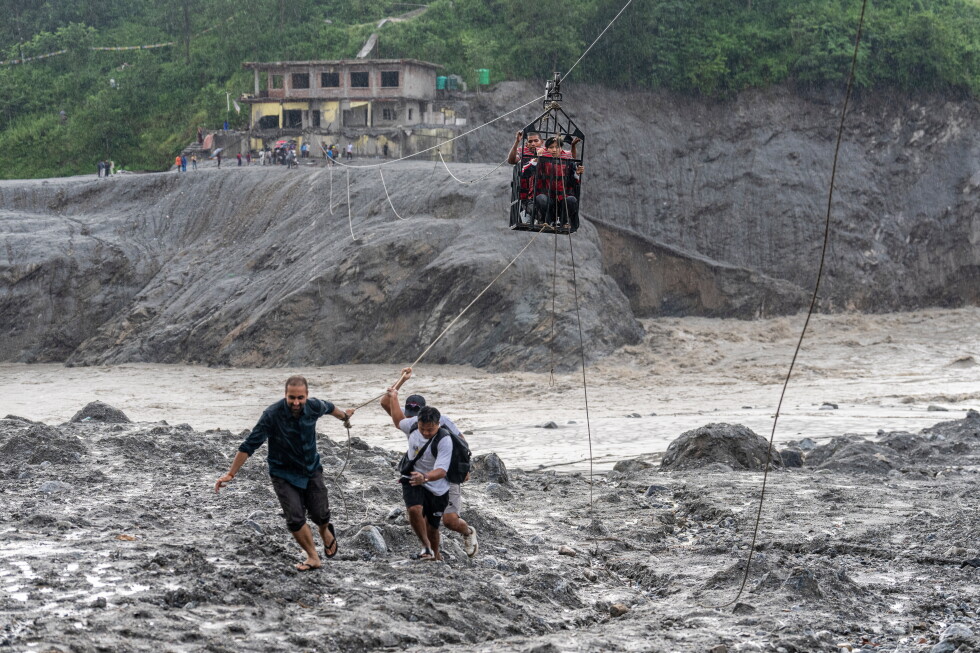
    In hard-hit areas cut off by destroyed transport links, local residents and military personnel have improvised alternative routes to restore basic connectivity. In Bidur town along the Trishuli River, where all permanent bridge crossings were washed away by floodwaters, residents now rely on a makeshift zip line to travel between the two riverbanks. Nepalese Army personnel have been deployed to assist riders as they board and disembark, while dozens of locals wait along the bank for their turn to cross.

    In recent days, rescue operations have increasingly shifted focus to collapsed tunnels at several hydropower construction sites across the flood zone, where an estimated 900 workers are believed to have been trapped when debris and floodwaters inundated the passages. Specialized rescue teams from India, China, and the United States have joined the search and recovery effort, but difficult terrain and heavy debris have slowed progress significantly. As of Thursday, there was still no confirmation as to whether any of the trapped workers remain alive.

    At the Trishuli-3A hydropower project tunnel, construction crews have begun manually clearing the upper section of the blocked passage, lawmaker Ram Neupane confirmed. An access road to the excavation site was completed over the past week, but additional rock blasting and large-scale debris removal will be required before heavy rescue machinery can be brought into the area.

    Climate scientists have long warned that rising global temperatures are accelerating glacial melt across the Himalayan mountain range, increasing the frequency and severity of glacial lake outburst floods and similar catastrophic events like the one that struck Nepal late last month.

  • Israeli minister: Palestinians leaving is only ‘solution’ in Gaza

    Israeli minister: Palestinians leaving is only ‘solution’ in Gaza

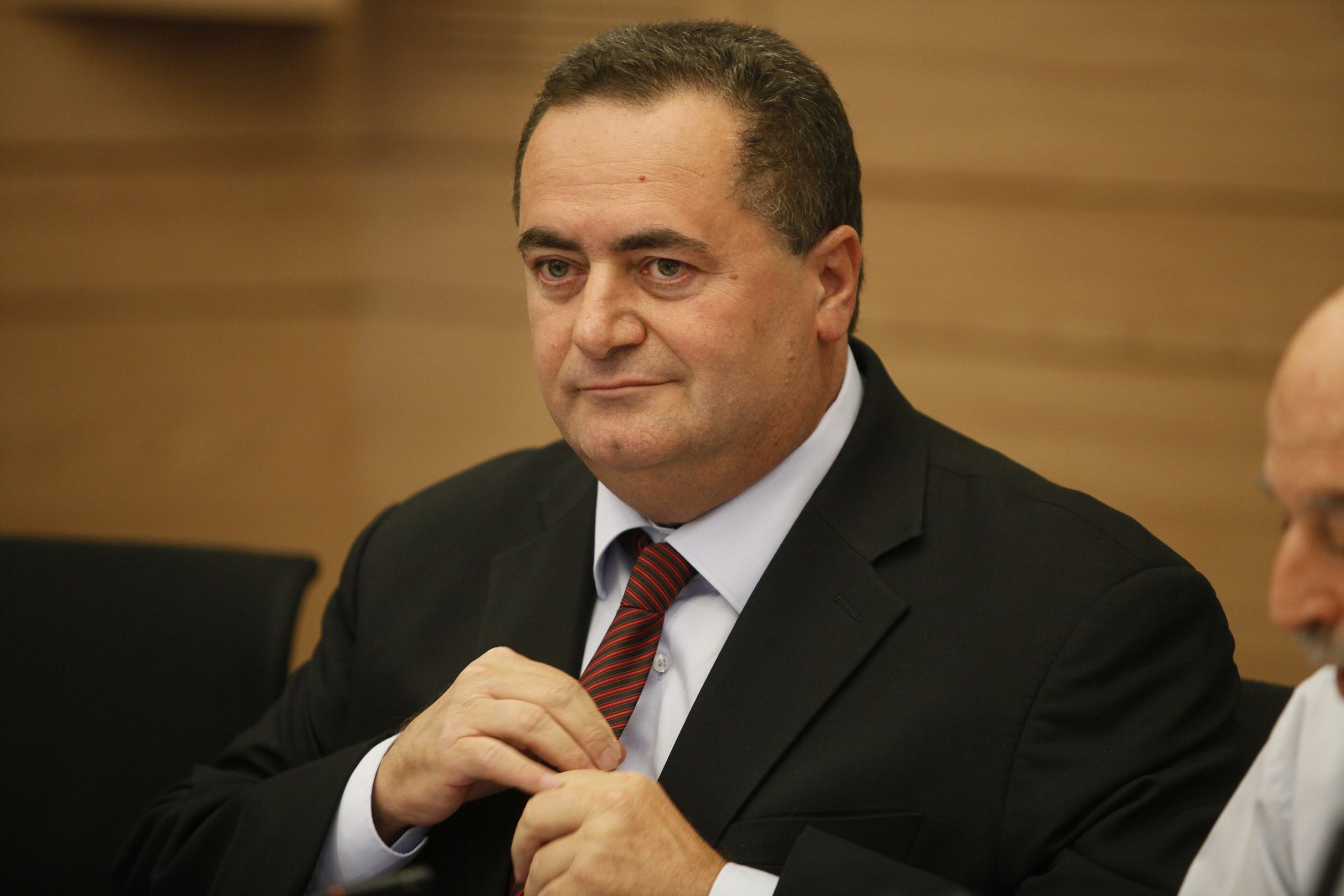
    Israeli Defense Minister Israel Katz has publicly confirmed that his country has finalized operational plans to enact a controversial proposal first put forward by former US President Donald Trump that would displace the vast majority of Palestinians from the Gaza Strip. Katz has emerged as one of the most vocal proponents of the plan, which was first unveiled in February 2025: the proposal would require roughly 2 million Palestinians to leave Gaza permanently and resettle in third countries with no right of return, after which Israel would clear the remains of the enclave, which has suffered widespread destruction from more than two years of sustained Israeli military operations that have already displaced most of Gaza’s existing population.

    Trump and his Israeli backers have framed the initiative as “voluntary migration,” but the plan has drawn fierce international condemnation. United Nations officials, multiple foreign governments, and leading global human rights organizations have universally condemned the initiative as a deliberate plot to carry out illegal ethnic cleansing against the Palestinian people of Gaza.

    Shortly after Trump first announced the proposal, Katz stated he had ordered the Israel Defense Forces to begin developing infrastructure and procedures to facilitate the mass departure of Gaza’s Palestinian population. Notably, the policy of forced displacement was ultimately dropped from the 20-point “peace plan” that Trump formally agreed to in October 2025. However, in an exclusive interview Wednesday with Israeli news outlet Ynet and leading daily newspaper Yedioth Ahronoth, Katz made clear that planning for the relocation has remained on track, and that Israel stands ready to launch the operation immediately once Trump gives the official go-ahead.

    “ There is no real solution for Gaza in the end without this migration,” Katz told reporters. He claimed that 80 percent of Palestinians residing in Gaza want to leave the territory permanently, a figure he asserted is consistently backed by public opinion surveys. Katz did not provide specific details about the origin or methodology of the purported surveys, but a May 2026 poll conducted by Israel’s Coordinator of Government Activities in the Territories (COGAT), the Israeli body that manages civilian affairs in occupied Palestinian territories, only found that nearly 80 percent of respondents wanted more information about potential relocation pathways through the Rafah or Kerem Shalom border crossings. The survey question never established that respondents sought permanent departure from Gaza.

    Independent surveys conducted by neutral pollsters paint a far different picture: most studies find that between half and a majority of Gaza residents intend to remain in their home territory, even amid the widespread destruction and crippling deprivation that has followed more than two years of conflict.

    Katz went on to state that the Israeli government is “fully prepared to move [Palestinians] out if it becomes possible—by sea, by air, by every way possible.” He added that the only factor delaying implementation is a lack of formal US backing for third countries that would agree to accept displaced Palestinians. “Every country that is willing wants American backing. Currently, President Trump didn’t cancel this; he froze it. All the Arab countries came to him due to their pressure on this matter,” Katz said.

    Katz suggested that a breakdown in the existing ceasefire and disarmament agreement with Hamas would create the conditions to move forward with the plan. He argued that “the moment will come” when it becomes clear that Hamas has failed to meet its commitments under the Phase 2 disarmament and withdrawal roadmap that the group agreed to in July 2026, which built on the initial October 2025 ceasefire deal between Hamas and Israel.

    Israel has claimed that the agreement requires Hamas to fully disarm before Israel withdraws any troops that advanced past the original October 2025 ceasefire line in violation of the truce. However, the formal text of the roadmap explicitly states that Israeli withdrawal and Hamas disarmament will proceed in parallel.

    Katz claimed that once the agreement is declared breached, Israel “will get a green light to move forward militarily, territorially, and in other areas, and this thing will gain momentum.”

    While other senior figures in Prime Minister Benjamin Netanyahu’s right-wing government have openly stated their goal of forcing Palestinians out of Gaza to make way for new Jewish Israeli settlements, Katz’s Wednesday remarks represent one of the most concrete confirmations to date that a fully developed plan to carry out the mass displacement is already in place.

    H.A. Hellyer, senior associate fellow at the UK-based Royal United Services Institute, responded to Katz’s comments by saying that “This is the Israeli defense minister admitting, completely and brazenly, that the official policy of the Israeli state is ethnic cleansing in Gaza. But somehow we are expected to take seriously those who say it is not.”

  • With a wary eye on Russia, Finland runs Europe’s largest civil defense exercise since WWII

    With a wary eye on Russia, Finland runs Europe’s largest civil defense exercise since WWII

    Deep beneath the central Finnish city of Kuopio, a massive man-made chamber carved into solid rock tells a story of a nation preparing for uncertainty. Behind thick blast doors engineered to withstand the worst impacts of nuclear or biological strikes, two young Finnish conscripts clad in full hazmat gear and filtered breathing masks move through the space, their Geiger counters clicking softly as they measure potential radiation levels. This is not a crisis response — it is the centerpiece of the largest civil defense exercise Europe has seen since the end of World War II.