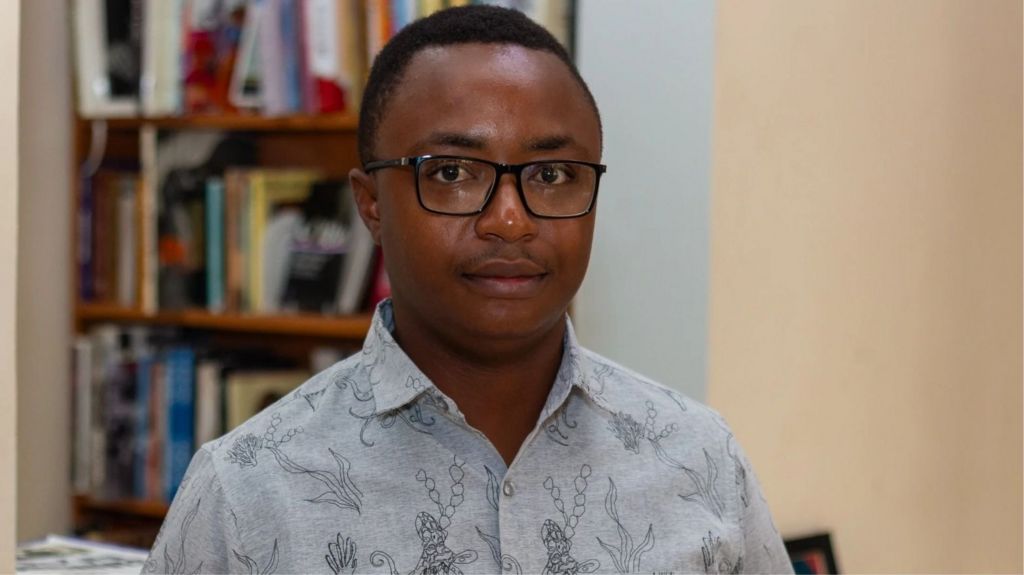
A heated controversy has erupted around this year’s Caine Prize for African Writing, after a high-profile U.S. publication claimed the winning work by Zimbabwean author Simbarashe Kundizeza was entirely generated by artificial intelligence. The 2025 award, which carries a £10,000 prize purse, was awarded to Kundizeza for his short story *The Blue Fighter*, a semi-autobiographical tale exploring family hardship amid Zimbabwe’s early 2000s economic collapse. Just one week after his win, The Atlantic published an article by journalist Vauhini Vara claiming that AI-detection tool Pangram had flagged the story as 100% AI-generated, igniting a firestorm of debate across global literary circles.
Kundizeza has issued an unreserved denial of the accusations, stating publicly on social media platform X: “For the avoidance of doubt, I wrote *The Blue Fighter*.” The author has also pushed back against Vara’s claim that tonal differences between his 2021 work and the prize-winning story prove AI involvement, arguing that the expectation writers cannot evolve their style or improve their craft over half a decade reflects a fundamental misunderstanding of creative writing. Kundizeza has shared a full documented timeline of the story’s origins, noting he drew inspiration from a 2024 poetry reading in Ghana, where South African poet Vangile Gantsho presented a work about her father’s obsession with building fish tanks. He wove this inspiration with fictionalized details from his own family’s experience: like the protagonist’s father in *The Blue Fighter*, Kundizeza’s own father—an accountant by trade—quit his stable job to grow tomatoes when Zimbabwe’s economic crisis began in 2002. The author says he has been heartened by widespread solidarity from fellow writers and readers, and has affirmed he will continue his writing practice regardless of the controversy.
Ellah Wakatama, chair of the Caine Prize board of trustees and editor-at-large at Canongate Books, has condemned The Atlantic’s decision to publish the allegations before completing a full independent investigation. Wakatama told the BBC that the prize’s leadership only received notice of the claim on a Friday, and The Atlantic published its piece just two days later, without waiting for the Caine Prize’s internal review. “I do wish The Atlantic had spent more time investigating this so that alongside Pangram, they did have evidence of real human investigation of it before tainting the prize and tainting this winner,” she said. Wakatama confirmed the prize is currently conducting an internal inquiry, with Kundizeza set to submit all earlier drafts of the story for review; organizers are also in ongoing discussions with the judges and *The Shallow Tales Review*, the outlet that first published *The Blue Fighter* earlier this year. Currently, all Caine Prize submissions—which are required to be previously published—require writers to vouch for the originality of their work, and no mandatory AI screening is required. Wakatama emphasized she does not oppose the use of AI detection as a screening tool, but rejects framing unvetted AI detector outputs as a definitive judgment. She also noted that Pangram is still an untested tool, arguing it is unfair and unethical to use the work of Black writers as a testing ground for unproven technology.
The controversy is the latest in a string of AI-related disputes to roil the global literary community in 2025. Earlier this year, Trinidadian writer Jamir Nazir retained his win at the Commonwealth Short Story Prize despite similar AI misuse allegations, while Canadian-Haitian author Thélyson Orélien withdrew his debut novel from contention for France’s prestigious Goncourt Prize over unproven AI claims that Orélien has repeatedly denied.
In defending her article, Vara argued that Pangram’s internal research indicates the tool rarely makes incorrect assessments, and conceded that no AI detection tool—including Pangram—can claim 100% accuracy. She cited a 2025 paper from researchers at the Free University of Brussels that claimed Pangram and two other leading AI detectors had zero false positive flags for non-native English writing. The paper, however, does frame detector results as only an initial flag for further investigation, not a final conclusion. Vara also noted that when she ran past Caine Prize winners and Kundizeza’s 2021 short story through Pangram, both were flagged as 100% human-written, adding that the stark tonal difference between Kundizeza’s two works raised her suspicions. She pointed to two stylistic choices she says are common in AI-generated text: frequent use of “X but Y” sentence constructions and an overabundance of metaphors, both of which she identified in *The Blue Fighter*.
Critics of the article have decried the accusations as disproportionately targeting Black and African writers, raising alarms about systemic bias in AI scrutiny of literary work. Nigerian journalist and *Republic* magazine founder Wale Lawal called The Atlantic’s piece “crazy, racist and wildly unethical.” Zimbabwean novelist Joe Ruzvidzo, author of *Welcome to Anywhere*, publicly expressed his full support for Kundizeza, arguing that the literary community must push back against what he called “this literary stop-and-frisk” targeting marginalized writers. Modupe Daramola, founder of Nigerian publishing house Noisy Streetss Limited, echoed these concerns on X, noting: “There’s something incredibly sinister about this. Pangram is itself AI-powered. Why should its assessment be treated as definitive?” Multiple industry studies have long confirmed that AI detection tools regularly produce false positives that incorrectly label human-written work as AI-generated, a flaw that disproportionately harms non-native English speakers and writers of color, who already face heightened scrutiny in global literary spaces.
As the Caine Prize’s internal investigation moves forward, the controversy has sparked a broader reckoning over the responsible use of unproven AI detection tools in literary awards, and the disproportionate impact of unvetted AI allegations on emerging Black and African writers.