博客

  • Sultan of Oman to make state visit to UK, balancing pressures from US and Iran

    Sultan of Oman to make state visit to UK, balancing pressures from US and Iran

    LONDON – Buckingham Palace announced Thursday that Sultan Haitham bin Tarik of Oman will undertake a three-day state visit to the United Kingdom next month, a high-profile diplomatic engagement unfolding as the strategically positioned Gulf nation navigates intensifying competing pressure from Washington and Tehran.

    King Charles III and Queen Camilla will welcome the Omani leader at Windsor Castle from October 20 to 22, though full details of the visit’s schedule and agenda have not been made public.

    For the United Kingdom, state visits are a carefully calibrated diplomatic tool: the monarchy leverages its full ceremonial grandeur to strengthen ties with long-standing partners and nurture relationships with allies navigating tricky geopolitical positions. Traditionally, these events include a ceremonial horse-drawn carriage procession through castle grounds, a formal inspection of honor guards, a lavish state dinner hosted by the British monarch, and closed-door bilateral talks with the UK’s elected senior government officials. While the monarch formally extends the invitation for these visits, planning and approval are always directed by the UK’s sitting government, with preparations typically taking months to finalize.

    The announcement of Sultan Haitham’s trip comes one month after former U.S. President Donald Trump issued an extraordinary threat to bomb Oman, after the Gulf state appeared close to reaching a bilateral agreement with Iran to coordinate commercial ship traffic through the Strait of Hormuz. This narrow waterway, which borders Oman along its southern coast, carried roughly 20 percent of the world’s total oil and natural gas shipments before the latest escalation of conflict across the Middle East, making its security a critical priority for global energy markets.

    This is not the first meeting between King Charles and Sultan Haitham: the British monarch hosted the Oxford-educated Omani leader for a private tea at Windsor Castle during an unofficial visit to the UK last year. The last full state visit by an Omani sultan to the United Kingdom dates back to March 1982, when the late Queen Elizabeth II welcomed Sultan Haitham’s predecessor, Sultan Qaboos bin Said.

  • Toxic wildfire haze spreads across South East Asia as ‘super’ El Niño intensifies

    Toxic wildfire haze spreads across South East Asia as ‘super’ El Niño intensifies

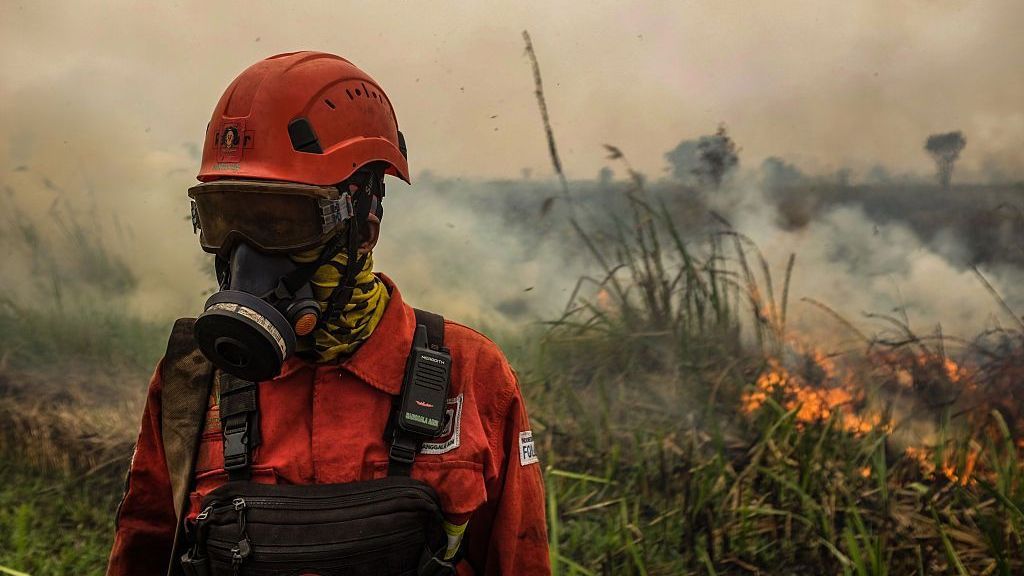
    A growing public health and environmental emergency is unfolding across Southeast Asia, as months of uncontrolled wildfires in Indonesia have spawned a thick blanket of toxic haze that has drifted across national borders, endangering millions of people and threatening massive carbon emissions from vulnerable ecosystems.

    Weeks after the first blazes ignited across Sumatra and Indonesian Borneo in mid-July, the smog now covers large swathes of Indonesia and has spread to neighboring Malaysia, Singapore, and the Philippines. In the hardest-hit areas, pollution levels have surpassed 15 times the maximum safe limit set by the World Health Organization, pushing air quality into the “acutely unhealthy” range that threatens even healthy adults, not just vulnerable groups.

    For local residents, the daily reality of living under the haze is grim. Nineteen-year-old teaching assistant Rizma Nur Fatimah, who works at a school in Banjarbaru, South Kalimantan, described visibility so poor that “you couldn’t even see your own feet” inside her classroom. Even sealed indoor spaces offer little protection: “Even inside the house, with everything closed, the haze still got in,” she said. Having grown up with annual haze events, Fatimah noted that this year’s crisis is far worse than previous seasons, leaving local communities resigned to chronic poor air quality. Twenty-three-year-old mother Misbah, from nearby Pengayuan village, said her three-year-old daughter has already developed persistent cough, sore throat, and runny nose from prolonged exposure to the smog.

    The health impacts are being felt hundreds of kilometers away, too. On the Philippine island province of Palawan, residents and medical workers report widespread respiratory and allergic symptoms linked to the drifting smoke. “We are now experiencing mild headaches,” said local physician Dr Precious Bañas-Melad. “My cousin who isn’t allergic to anything started developing allergies. My husband is the first one who had itchy eyes and throat.” Across the border in Malaysia, national health authorities have recorded sharp increases in asthma and conjunctivitis cases as air quality declines across the country.

    Between July and August alone, Indonesia’s Ministry of Health confirmed more than 50,000 cases of respiratory infections directly linked to the land and forest fires, with children under five accounting for over 12,000 of those cases.

    While this year’s extreme severity is being driven by a Super El Niño event that has worsened drought conditions across the region, experts emphasize that the recurring crisis is deeply rooted in decades of human-caused land use change. The pattern dates back to the Suharto era, when vast areas of ancient rainforest and carbon-rich peatland in Kalimantan were cleared for logging, industrial agriculture, and large-scale infrastructure projects. Today, environmental groups, researchers, and official government investigations have repeatedly documented that many commercial operators use fire as a low-cost method to clear large tracts of land for industrial plantations.

    Unlike small-scale, community-managed traditional burning practices that are tightly controlled, large-scale clearing fires are far harder to contain and create far greater harm to both public health and the environment. Drained peatlands, industrial timber estates, and oil palm plantations create landscapes that are far more vulnerable to burning, and blazes often reoccur in the same degraded areas year after year.

    What makes this year’s fires on Indonesian Borneo particularly alarming is that they are tearing through one of the world’s largest tropical peatland ecosystems. These unique landscapes act as massive natural carbon sinks: under normal waterlogged conditions, decomposition is slowed, allowing carbon to accumulate underground for thousands of years. But when drained and burned, these same carbon stores turn into what researchers call carbon “bombs,” releasing thousands of years of stored carbon into the atmosphere in just weeks or months, worsening the climate change that drives extreme drought and El Niño events in a dangerous feedback loop.

    “Peatlands are incredibly effective carbon stores because their waterlogged conditions slow decomposition, allowing carbon to accumulate underground for thousands of years,” explained Dr Nisa Novita, a peatland researcher at Indonesian conservation NGO Yayasan Konservasi Alam Nusantara. “But this also means they can become a ‘carbon bomb’ when they are drained or burned, because that carbon can be rapidly released into the atmosphere.”

    As the Super El Niño event continues to intensify through the coming months, experts warn the worst may still be ahead. Forest fire forensics expert Professor Bambang Hero Saharjo, from Institut Pertanian Bogor University, noted that in 2025, without an El Niño event, Indonesian wildfires burned roughly 359,000 hectares of land. This year, he projects the burned area could reach 11 million hectares, putting the 2026 season on par with the devastating 1997-1998 wildfires, one of the worst on record for Indonesia.

    Indonesia’s Forestry Minister Raja Juli Antoni confirmed this week that the fight to contain the blazes is now entering its most critical phase. “Our problems are not over. September is the peak of El Niño,” he said. “September is the main fight for us.”

  • Liechtenstein MPs vote to legalise abortion despite threat of veto

    Liechtenstein MPs vote to legalise abortion despite threat of veto

    In a cliffhanger vote that has underscored deep divisions over reproductive rights in the tiny Alpine European nation of Liechtenstein, the country’s 25-seat parliament has passed a grassroots citizens’ initiative by just a single vote to liberalize the country’s strict abortion laws. The proposal, spearheaded by a coalition of women’s advocates and led by 28-year-old Tatjana As’Ad from the small left-wing Free List party, would legalize abortion on request during the first 12 weeks of pregnancy, end the national ban on abortion-related information, and mandate that health insurance cover costs for the procedure.

    After weeks of tense debate, the final vote count came in at 13 in favor to 12 against, a razor-thin margin that reflected the polarizing nature of the issue in the predominantly Catholic country. Despite the narrow parliamentary approval, the legislation is all but certain to be blocked: Hereditary Prince Alois, Liechtenstein’s de facto ruler who holds sweeping executive and legislative powers rare for a modern Western European monarch, has publicly threatened to veto the initiative since it was first introduced.

    To bring the proposal before parliament, supporters gathered more than 4,900 valid signatures from the country’s 41,000 residents – nearly five times the minimum requirement needed to force a parliamentary vote. Advocates have argued that public opinion has shifted sharply in favor of liberalization since Liechtenstein’s last national referendum on abortion in 2011, when 52% of voters rejected a similar proposal. At that time, Prince Alois also signaled he would oppose any change to the status quo.

    Currently, abortion is only permitted in Liechtenstein in extremely limited circumstances: when the pregnant person’s life is at direct risk, or when the pregnancy is the result of sexual violence. Any person who performs an unauthorized abortion can face up to three years of prison time, while a woman who undergoes the procedure can be jailed for up to one year. These restrictions have forced hundreds of Liechtenstein women annually to travel to neighboring Austria or Switzerland to access abortion care. Since 2015, women have not faced criminal penalties for seeking abortion abroad, but the costs of the procedure are not covered by domestic health insurance, creating a financial barrier for low-income residents.

    Lawmakers rejected a separate amendment that would have put the issue directly to a public referendum, leaving the final decision in the hands of the hereditary prince. Roman Catholicism, which officially remains the state religion of Liechtenstein, counts nearly 80% of the population among its adherents, and the church has maintained strong opposition to abortion legalization. The Princely House has echoed this position, stating that its core objection to the initiative is that it does not include sufficient protections for unborn life. That said, Prince Alois has left the door open for more modest adjustments to current law, including lifting the existing ban on abortion-related public information and clarifying ambiguous language in the current regulations.

    Prince Alois exercises all day-to-day public governing duties on behalf of his father, Prince Hans-Adam II, and holds an extraordinary range of powers for a constitutional monarch in 21st century Europe: in addition to being able to veto any legislation passed by parliament, he can dismiss the sitting government or individual ministers, appoint all federal judges, and propose legislative changes directly. Reproductive rights advocates have framed the initiative as part of a broader push to bring Liechtenstein’s abortion laws in line with most other European countries, where abortion is legal on request in early pregnancy across the vast majority of EU member states.

  • All Blacks shake up the pack for South Africa test and drop Codie Taylor

    All Blacks shake up the pack for South Africa test and drop Codie Taylor

    JOHANNESBURG – With the four-test rugby series between New Zealand and South Africa deadlocked at one win apiece, New Zealand’s national side the All Blacks have announced major forward pack changes for the deciding third test this weekend at Johannesburg’s FNB Stadium, headlined by the promotion of hooker Asafo Aumua to the starting lineup over veteran Codie Taylor.

    The All Blacks revealed their revised matchday 23 on Thursday, which also sees debutant series involvement for lock Sam Darry and flanker Peter Lakai, who earn starting spots after coming off the bench in the first two matches. The backline, however, remains entirely unchanged following the All Blacks’ narrow 33-26 loss to the Springboks last Saturday in Cape Town.

    Taylor, the 111-test veteran who had started every one of New Zealand’s five test matches in 2024 – including the first two outings against South Africa – has been dropped from the starting 15, ending his run of opening selections this season. Aumua, who had served as Taylor’s primary backup through the first two tests of the series, will now step into the starting hooker role, with Samisoni Taukei’aho retained as a reserve.

    Darry earns his first start of the series at lock, displacing Fabian Holland who moves down to the reserves bench. Lakai, who came off the bench in both opening tests, claims the number 6 starting jersey after Simon Parker was cut from the matchday 23 squad. Flanker Wallace Sititi will also get his first taste of action in the series, named as the impact substitute loose forward. The test will also mark a personal milestone for lock Tupou Vaa’i, who is set to earn his 50th career test cap for the All Blacks.

    Speaking ahead of the high-stakes clash, All Blacks head coach Dave Rennie framed the match as a do-or-die encounter for the series title. “The team that doesn’t win this weekend can’t win the series,” Rennie said in an official statement. “That’s the kind of challenge we love to rise to.”

    The Springboks, South Africa’s national side, revealed their own matchday squad earlier this week on Monday. The side made just one key adjustment to their starting lineup, swapping out injured starting fullback Damian Willemse for star utility back Cheslin Kolbe, with winger Kurt-Lee Arendse stepping into Kolbe’s former starting spot on the wing.

    The full All Blacks matchday squad for the third test is as follows:
    Starting XV: Damian McKenzie, Will Jordan, Quinn Tupaea, Jordie Barrett, Leroy Carter, Ruben Love, Cam Roigard; Ardie Savea (captain), Luke Jacobson, Peter Lakai, Sam Darry, Tupou Vaa’i, Tyrel Lomax, Asafo Aumua, George Bower.
    Reserves: Samisoni Taukei’aho, Xavier Numia, Fletcher Newell, Fabian Holland, Wallace Sititi, Kyle Preston, Anton Lienert-Brown, Josh Moorby.

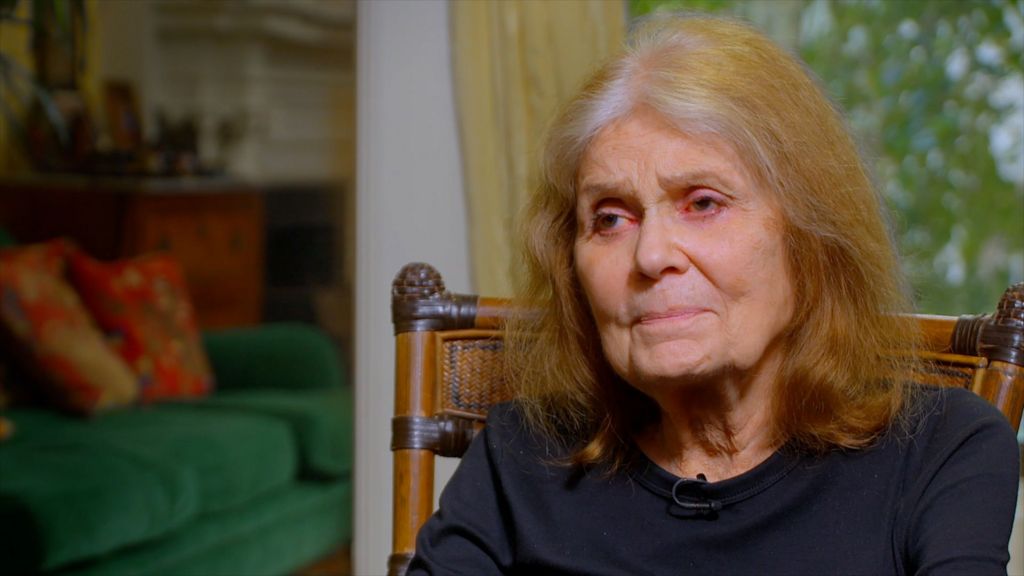
  • Gloria Steinem talks about her legacy in 2023 BBC interview

    Gloria Steinem talks about her legacy in 2023 BBC interview

    Gloria Steinem, the trailblazing writer and foundational figure of the United States feminist movement, has passed away at the age of 93, her eponymous foundation has confirmed. News of her death comes as a moment of national and global reflection on a decades-long career that reshaped conversations about gender equality, reproductive rights, and systemic discrimination against women.

    In one of her final major public interviews, recorded with the British Broadcasting Corporation (BBC) in 2023, Steinem opened up about her reflections on her life’s work and the legacy she hoped to leave behind for future generations of activists. During that conversation, she spoke candidly about the slow, incremental progress of gender justice, the challenges that remained unaddressed, and the importance of grassroots organizing in driving lasting social change.

    Steinem first rose to national prominence in the 1960s as a journalist, when her investigative reporting on gender inequality in the workplace brought mainstream attention to issues that had long been sidelined by mainstream media. She went on to co-found Ms. Magazine, one of the first national publications centered entirely on women’s perspectives and issues, and helped launch numerous organizations dedicated to advancing equal rights for women across all racial and economic backgrounds. Over the course of her life, she advocated for everything from reproductive freedom to equal pay, voting rights, and an end to gender-based violence, becoming a globally recognizable face of the second-wave feminist movement.

    Following the announcement of her death, tributes have begun pouring in from activists, politicians, and public figures around the world, who have praised Steinem for her unwavering commitment to justice and her ability to inspire generations of women to find their own voices. While her passing marks the end of an era, the work she built continues to shape ongoing movements for gender equity today.

  • Kenyan president orders crackdown on foreigners operating small businesses

    Kenyan president orders crackdown on foreigners operating small businesses

    Kenyan President William Ruto has announced an imminent crackdown on foreign nationals operating small-scale businesses across the country, framing the move as a necessary protection measure for local traders and informal vendors. The policy shift arrives amid escalating public debate over the growing presence of African migrants in Kenya’s large, dynamic informal economy, a sector that supports millions of local livelihoods.

    In an address delivered Wednesday to a gathering of small-scale traders at Nairobi’s State House, Ruto set a clear timeline for the crackdown: “From next week, all [foreign] traders doing those small businesses should close them.” He also pledged to speed up the drafting and passage of new legislation that will formally bar foreign nationals from specific segments of domestic trade, cementing the policy in national law.

    Ruto emphasized that Kenya remains fully open to foreign direct investment, drawing a sharp line between welcome investors and small-scale competitors. He specifically named foreign traders including those from China, noting that outside investors should prioritize creating local jobs and expanding national production capacity, rather than undercutting Kenyan entrepreneurs in street vending and small retail. “It cannot be that a person comes from China or elsewhere to be a hawker or open a small shop,” he stated. “We have made efforts to improve the economy, we have not improved investor confidence for hawkers to come to Kenya.”

    The announcement comes as Ruto, who will run for a second presidential term in next year’s general election, responds to growing grassroots pressure from local traders who have long complained about unfair competition from foreign operators. To date, the Kenyan government has not released official data on how many foreign nationals are engaged in small-scale trading, leaving uncertainty about the total number of people who will be affected by the new order.

    Kenya currently hosts one of the largest refugee populations in Africa, with official government figures counting roughly 857,000 registered refugees and asylum seekers as of the end of June. Around 14 percent of these individuals reside in urban areas rather than formal refugee camps, and many participate in the informal workforce to support themselves. Under current Kenyan law, refugees do hold the legal right to work and operate businesses, but they are required to obtain specialized permits to do so.

    Beyond refugees, a large number of regional migrants have moved to Kenya from neighboring countries, drawn by the nation’s status as a regional economic hub and the free movement of people provisions within the eight-nation East African Community (EAC) bloc. In major urban centers like Nairobi, these migrants work across a wide range of informal sectors, including barbershops and salons, construction, motorbike taxi services, street vending of clothing, food, and household goods. Many migrants leave their home countries to escape conflict or severe economic hardship, while others relocate to Kenya in search of better livelihood opportunities.

    Tensions between local workers and foreign traders have been building for months, driven by widespread concerns over scarce jobs and business opportunities. In July, a viral video of a Kenyan local confronting a Burundian trader in Nairobi, accusing the migrant of taking work from locals, sparked widespread regional debate. Following the incident, Burundian conflict prevention expert Fred Ngoga called for the protection of Burundian citizens living in Kenya, noting that “the majority of Kenyans are decent and good people who welcome their brothers and sisters from Burundi,” and that most Kenyans rejected the hostile treatment of the trader. Kenya’s foreign ministry also moved quickly to reassure Burundians and other EAC nationals residing in the country after the clash.

    Ruto’s new policy is expected to draw significant controversy, given Kenya’s longstanding role as an open economic and migration hub for the East African region. It also coincides with growing concerns over rising anti-migrant sentiment and xenophobia across the African continent. This year alone, South Africa has seen widespread protests targeting undocumented migrants, and tens of thousands of African migrants living in South Africa have chosen voluntary repatriation, with many reporting they have faced intimidation and targeted attacks.

  • Feminist activist and journalist Gloria Steinem dies at 92

    Feminist activist and journalist Gloria Steinem dies at 92

    Pioneering American feminist leader and women’s liberation movement figurehead Gloria Steinem has passed away at the age of 92, her eponymous foundation has confirmed. The activist died peacefully at her home in New York City on Monday, surrounded by loved ones, the organization announced in an official Instagram post.

    Steinem’s six-decade career as a journalist, editor and organizer reshaped global conversations around gender equity, leaving an enduring legacy in progressive activism. More than 50 years ago, she co-founded the Women’s Action Alliance, a pioneering nonprofit dedicated to challenging systemic gender discrimination across all areas of public life. After launching her journalism career in New York in the 1970s, Steinem co-created Ms. magazine, one of the first mainstream feminist publications that centered women’s political, social and economic rights, rather than limiting content to traditional topics of housekeeping and beauty.

    A leading voice for reproductive freedom throughout the 1970s and beyond, Steinem drew from personal experience to advocate for abortion access. At 22, she underwent an illegal abortion while living in London, a experience that deepened her commitment to the cause. She later hailed the U.S. Supreme Court’s 1973 *Roe v. Wade* ruling that established a constitutional right to abortion across the country, and remained an outspoken defender of access even after the Supreme Court overturned the landmark ruling in 2022, nearly 50 years after it was first decided.

    Beyond reproductive rights, Steinem lent her platform to a wide range of progressive causes: she was an early advocate for the legalization of same-sex marriage, campaigned for equal pay and constitutional protections for women, spoke out against the death penalty, and condemned the practice of female genital mutilation worldwide.

    Born in Toledo, Ohio in March 1934, Steinem’s early life was marked by instability and challenge: she did not attend full-time school until she was 12 years old, due to her family’s frequent moving and her mother’s struggles with mental illness. After graduating from college in the late 1950s, she won a research scholarship to spend two years in India, where she supported village women organizing nonviolent protests against unfair state policies. This experience ignited her lifelong commitment to grassroots activism, shaping her approach to organizing for decades to come.

    She returned to the U.S. and settled in New York City in the early 1960s, working as a freelance journalist before earning her breakthrough with a landmark exposé of exploitative working conditions for Playboy Club waitresses, known as Bunnies. She went on to become a featured columnist for *New York Magazine* before launching Ms. magazine in 1972, a project that cemented her status as the public face of second-wave feminism in the United States.

    In a statement honoring Steinem’s life and work, her foundation emphasized that she never stepped back from her advocacy: “she continued working for equality until the very end.”

    The statement added: “Gloria’s greatest gift was her ability to listen to others, to make others feel seen and heard. Her words, actions and example gave people permission to be their truest selves. Gloria lived true to her independent spirit, always with curiosity and a great sense of humour.”

    In her final years, Steinem remained connected to community and continued her writing, hosting regular “Talking Circles” in her home that welcomed activists, organizers and community members. The foundation confirmed this beloved tradition will continue following her death. Steinem had long planned to turn her home into a permanent hub for social justice organizing, and a posthumous memoir titled *An Unexpected Life* is set for publication in the coming months. “These are among many gifts Gloria has given the world with the hope they have ripple effects for generations to come,” the foundation said.

  • The West Bank: the Middle East’s orphan war

    The West Bank: the Middle East’s orphan war

    Against a decades-long backdrop of Israeli occupation, a coordinated campaign of displacement is unfolding across the rural West Bank, as state-aligned settler groups methodically push Palestinian communities off their ancestral land to consolidate Israeli control. The overarching goal, openly stated by senior members of Prime Minister Benjamin Netanyahu’s ruling coalition, is to force Palestinians into overcrowded urban enclaves or into exile, cementing permanent Israeli control over all of the West Bank through the creation of irreversible “facts on the ground.” Despite widespread international condemnation that labels these actions illegal under international law and a fatal barrier to any future Middle East peace deal, Israeli officials have largely ignored external objections to advance their territorial agenda.

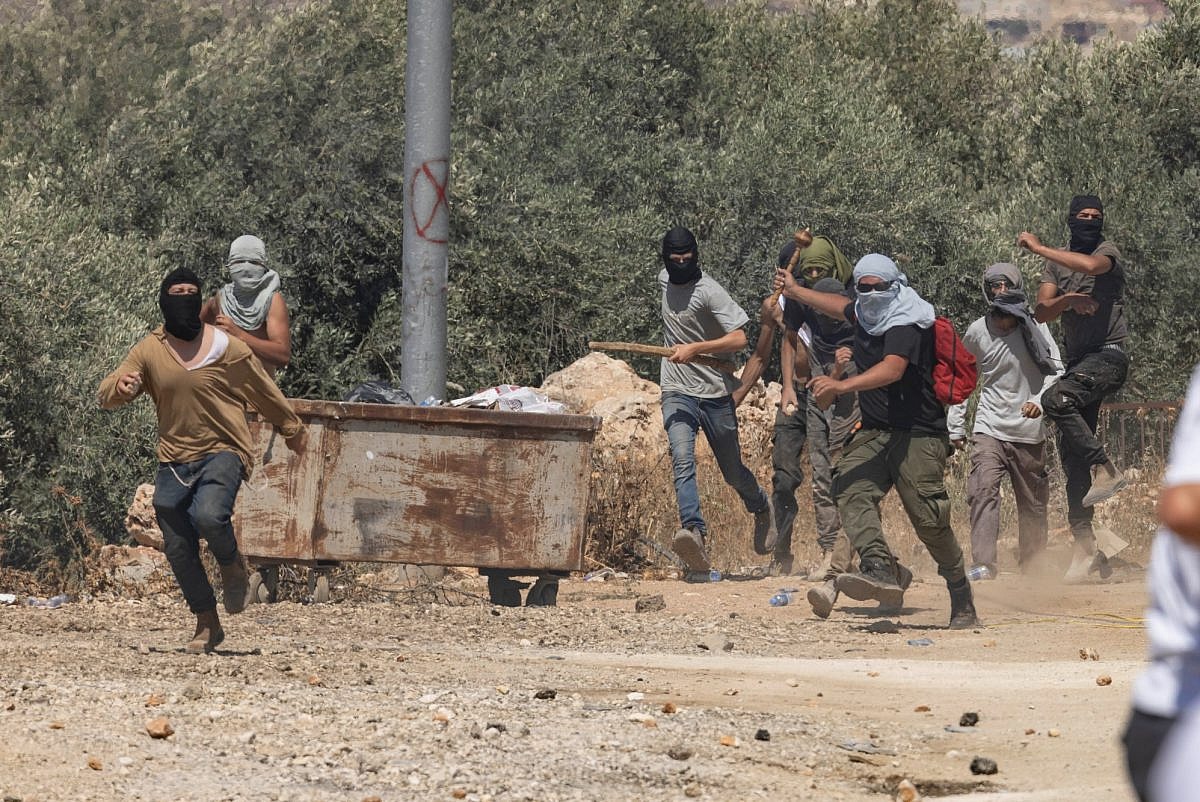
    At the forefront of this campaign are the Hilltop Youth, a militant faction of civilian settlers that establishes makeshift, unauthorized outposts on hilltops adjacent to Palestinian rural communities. Backed openly by the Israeli military, these settlers employ a wide range of intimidation and violence to force out local residents: targeted physical assaults, the destruction of homes and agricultural infrastructure, the theft or slaughter of livestock, the arson of cultivated crop fields, and deliberate sabotage of critical water access. For Palestinians living in these at-risk areas, there is virtually no path to legal protection or intervention from Israeli authorities.

    The Israel Defense Forces (IDF), which exercises full security control over most of the West Bank, claims it has no mandate to discipline Israeli settlers who attack Palestinians, arguing that this responsibility falls exclusively to civilian police. However, civilian police only operate within the boundaries of recognized Israeli settlements, leaving settlers in unauthorized outposts effectively beyond the reach of any law enforcement. This systemic gap creates a permissive environment for unchallenged violence, as confirmed by former IDF soldiers who have spoken out about their experiences. Nadav Weiman, a retired IDF sniper and researcher with Breaking the Silence – an organization that collects testimony from veterans who served in the Palestinian territories – says most frontline soldiers receive no formal instructions to intervene in settler attacks on Palestinian communities. “It’s almost impossible to enforce the law on violent settlers and very easy to do whatever we want to Palestinians,” Weiman explained in an interview.

    Netanyahu has sought to frame the violence as the work of a small fringe of extremist settlers unrepresentative of the broader settler community, promising that perpetrators will face arrest and prosecution under Israeli law. But these pledges ring hollow against political reality: Netanyahu’s governing coalition relies heavily on far-right politicians who explicitly oppose any crackdown on settler activity and openly endorse the displacement of Palestinians to eliminate any possibility of a future Palestinian state. In February, Finance Minister Bezalel Smotrich laid out the government’s unvarnished long-term goal, stating that Israel would formally “embark on a path toward sovereignty, while encouraging emigration. There is no other long-term solution.”

    This agenda aligns with Netanyahu’s longstanding political views, which have framed Palestinians as interlopers on land that rightfully belongs to Israel. As early as the 1970s, he was associated with the American lobby group “Jordan is Palestine, Inc.,” which argued that Jordan – already home to a large population of Palestinian refugees – should serve as the Palestinian national homeland.

    For many Palestinians, the current campaign of displacement amounts to a second Nakba, or “catastrophe,” referencing the mass expulsion of hundreds of thousands of Palestinians during the 1948 and 1967 Arab-Israeli wars, whose descendants have never been allowed to return to their ancestral land. Amina Khalil, a 78-year-old 1948 refugee, told The New Arab that fear of a repeat of this catastrophe now haunts younger generations of Palestinians. “My grandchildren don’t ask me, ‘What happened?’ They’re asking, ‘Is this possible now? Will it happen again?’” she said.

    Human rights organizations have documented the rapid acceleration of displacement since 2023. New York-based Human Rights Watch (HRW) confirms that at least 5,900 Palestinians have been fully or partially displaced from 107 West Bank communities over the past year. The Israeli government actively enables this campaign, HRW says, even providing monthly $50 stipends to settler groups that carry out harassment of Palestinian communities. “The Israeli government and the settlers share the same goal of maximum land and minimum Palestinians, with the authorities not only failing to stop settler violence, but actively enabling it,” wrote Sarah Sanbar, an HRW researcher focused on the region. “Settlers shoot, attack and expel Palestinians from their land, and the state provides the weapons, the legal cover, and the budget to do it.” The Israeli government has repeatedly denied it maintains any formal policy of forced displacement.

    The legal structure of occupation creates additional barriers to accountability for settlers. Only Israel’s internal intelligence service, Shin Bet, can order the IDF to arrest Israeli civilians suspected of attacking Palestinians – a resource entirely inaccessible to Palestinian residents. The Israeli government also publishes almost no public data on arrests of violent settlers, unless an incident generates damaging international public relations. High-profile arrests are extremely rare: in June, six Hilltop Youth members were arrested for arson of a mosque and destruction of property in the village of Deir Dibwan after the attack was filmed and shared widely on social media, but no trial date has yet been set. When Shin Bet has ordered mass detentions of Hilltop Youth members, it has almost always targeted acts of violence against Israeli security forces, not Palestinian civilians.

    In mid-August, Defense Minister Israel Katz acknowledged the growing frequency of violence by proposing that Israeli police take over responsibility for curbing settler attacks, arguing that the IDF’s core mission should focus on countering Palestinian resistance and border defense rather than policing settler activity. “The IDF’s role is to fight Palestinian terrorism, focus on defending borders and communities against threats, not chase boys on the hilltops,” Katz stated, though he has yet to release a formal plan or timeline for the proposed shift.

    The Hilltop Youth movement itself traces its ideological origins to a call from late Israeli Prime Minister Ariel Sharon, who urged settlers to seize strategic hilltop territory to expand Israeli control. “Everyone that’s there should move, should run, should grab more hills, expand the territory. Everything that’s grabbed will be in our hands. Everything we don’t grab will be in their hands, Sharon famously declared. After the October 7, 2023 Hamas attacks that killed more than 1,200 people in southern Israel, Netanyahu authorized the creation of armed settler militias, framing the move as a security measure to prevent future incursions. The program has since devolved into widespread, unregulated vigilantism against Palestinian communities, with attacks growing in frequency and intensity across the West Bank.

    On-the-ground examples of this campaign illustrate the systematic nature of the displacement. In the village of Qusra, near the northern West Bank city of Nablus, armed Hilltop Youth have besieged a single family home that currently shelters a dozen neighbors displaced from nearby properties for the past two weeks. Settlers occupied one of the abandoned local homes, and IDF troops who regularly visit the site make no attempt to remove the intruders. After settlers cut the village’s main water pipe, a UNICEF team has been delivering emergency food, water, medicine, and other critical supplies to the trapped residents, with no end to the siege in sight.

    One of the most high-stakes ongoing expansions targets the E1 area, an 8-square-mile stretch of land between Jerusalem and the large Israeli settlement of Ma’ale Adumim that is currently home to 33,000 Bedouin Palestinians. Netanyahu recently announced plans to construct more than 1,200 new settlement apartments in the area, with a long-term goal of building 8,000 total residences that will be formally annexed to Jerusalem, effectively cutting the West Bank into two disconnected segments. The Bedouin community of Khan al-Ahmar, which has 6,000 residents, sits directly in the path of the new development and is marked for forced expulsion. For years, the Israeli government has refused to connect Khan al-Ahmar to water, electricity, and road infrastructure shared with the adjacent Ma’ale Adumim settlement, and leading Israeli human rights group B’Tselem warns that the coming demolition of the entire community – including a local school that serves children from 11 nearby Palestinian communities – amounts to a war crime for which Israeli leaders bear direct criminal liability. The UN High Commissioner for Human Rights has called for an immediate halt to the forced displacement and settlement expansion, but Netanyahu has moved forward with the plan, approving $92 million for the construction of a separate Palestinians-only road along the eastern edge of Ma’ale Adumim to segregate Palestinian and Israeli traffic.

    In the 8,000-person village of Tel, known for its fertile fig and olive harvests, annual violence has destroyed the local agricultural economy. Over 38 years, settlements and a military base have surrounded the village, uprooting hundreds of olive trees to make way for construction. This year, a raid by dozens of settlers left four Palestinians and two Israelis dead, after which the IDF sealed off the entire village and arrested 40 residents. This year’s fig harvest is rotting unpicked on the trees, leaving residents with no source of income. “The sweetness of Tel’s figs has turned into bitterness,” said local resident Omar Ishtayeh. “The fruit that once symbolized prosperity has become a witness to a new reality threatening both the land and the people who live on it.”

    Decades-old Palestinian refugee camps in the West Bank, established after the 1948 and 1967 wars, have become another major target of Israeli military and settler activity. The camps, long centers of resistance to Israeli occupation, have been systematically raided and bulldozed over the past year, with narrow alleyways flattened to make way for Israeli tanks and aircraft. According to the United Nations Relief and Works Agency (UNRWA), the UN body responsible for supporting Palestinian refugees, at least 700 residents have been killed, 23,000 arrested, and more than 33,000 displaced in the operations. While UNRWA has developed reconstruction plans for destroyed camps in Gaza, it has only been able to address urgent humanitarian needs for displaced refugees in the West Bank, with no plans for rebuilding and no permission for residents to return to their former homes to recover belongings.

    Even Palestinian Christian communities have not been spared, despite Israeli efforts to court evangelical Christian support internationally. The 1,200-person Christian village of Taybeh has faced ongoing systematic harassment from settlers, who graze livestock on village farmland, set fire to crops, destroy fences and infrastructure, cut water and power lines, and break into private homes. After senior Vatican leaders and the World Council of Churches condemned the attacks and called for accountability, the IDF established a closed military zone around the village to bar settler entry. However, the closure also blocks residents from accessing their agricultural fields and prevents visitors, pilgrims, and aid workers from entering the village, while Hilltop Youth continue to gather at the perimeter to taunt residents in open violation of the military order.

    International criticism of the campaign has been widespread but largely ineffective. The European Union has repeatedly confirmed that Israeli settlements in the West Bank, including the E1 expansion, are illegal under international law, but has rejected calls from the European Parliament to cancel preferential trade deals that benefit Israel. In the United States, a State Department spokesperson says the Trump administration does not officially support Israeli annexation of the West Bank, and US Ambassador to Israel Mike Huckabee – a longtime supporter of Israeli settlement expansion – has called violent settlers “terrorists” despite previously arguing that settlements are legitimate Israeli communities. No diplomatic or punitive actions have followed these public statements, leaving the displacement campaign to proceed unimpeded.

  • Spanish Prime Minister rejects suggestions that Morocco was behind Ceuta border crisis

    Spanish Prime Minister rejects suggestions that Morocco was behind Ceuta border crisis

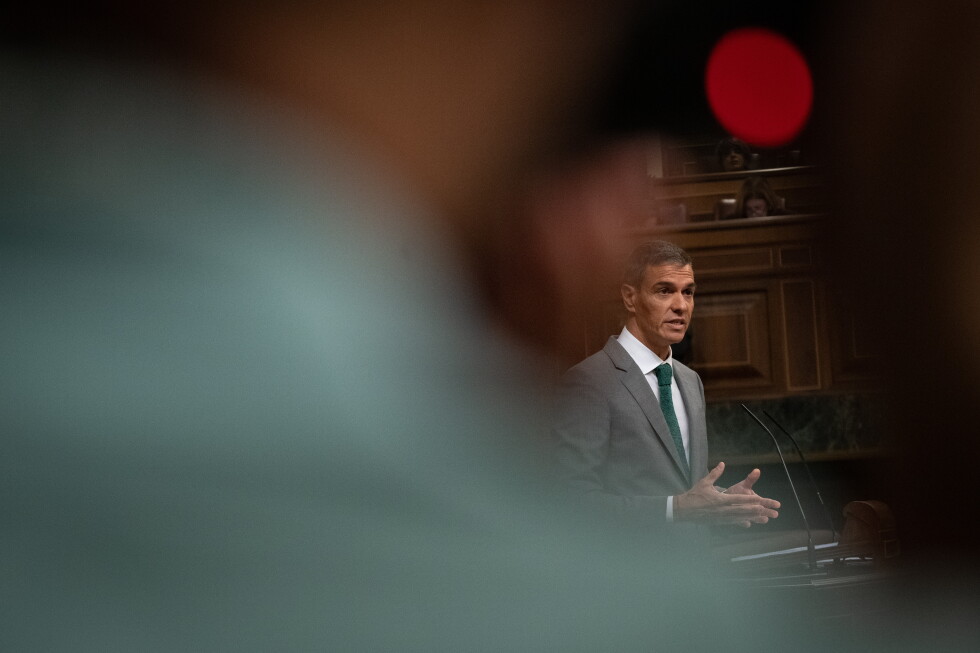
    MADRID – Standing before Spanish lawmakers on Thursday, Prime Minister Pedro Sánchez pushed back against growing opposition pressure and widespread public anger over his government’s response to the deadly mass migrant crossing into the North African Spanish exclave of Ceuta, denying claims that Moroccan state authorities planned and coordinated the unprecedented influx. “I can state with complete certainty that no institution – not our own diplomatic corps, not the European Commission, not any major international body – has presented the Spanish government with credible, solid proof that Morocco orchestrated or directly carried out this incident. There is no such evidence,” Sánchez told the legislative body. The prime minister’s comments came one day after tens of thousands of demonstrators gathered in cities across Spain to protest the ongoing humanitarian emergency in Ceuta, calling for immediate policy action and demanding Sánchez step down over his handling of the crisis. The incident, the deadliest border crossing of its kind in recent history, unfolded in late July, when roughly 72,000 migrants pushed past border barriers, swam across coastal boundaries, and entered the tiny exclave – a territory home to only 84,000 permanent Spanish residents. While the vast majority of arrivals were either sent back to Morocco voluntarily or deported by Spanish authorities within the first week, an estimated 5,000 people, including 1,200 unaccompanied minor migrants, remain stranded in Ceuta weeks later, according to figures from Spain’s national government. Local officials in Ceuta have put the remaining number even higher. Sánchez confirmed that 141 people died during their attempts to reach Ceuta, a figure that has raised questions among critics, as neither the prime minister’s office nor Spain’s interior ministry has offered transparency into how that death toll was calculated. To date, the root cause of the mass crossing remains a matter of intense debate. The Spanish government has framed the event as being primarily driven by a coordinated online recruitment campaign spread across social media platforms. Earlier this week, Spanish media published details from an internal police report that alleged Moroccan security forces showed deliberate permissiveness toward the migrants crossing from Moroccan territory. While Spanish officials quickly pushed back against framing that suggested the report directly blamed the Moroccan government in Rabat, Sánchez acknowledged on Thursday that for a 10-hour window on July 30, when arrivals reached their peak, Morocco’s national Gendarmerie police “allowed the border to be crossed.” The Spanish government has long avoided open public criticism of Morocco, a key diplomatic and trade partner for Spain and the European Union. But Sánchez did condemn inflammatory remarks from two Moroccan government ministers that questioned Spanish sovereignty over both Ceuta and Melilla, the second Spanish exclave on the North African coast. He confirmed his administration had officially summoned Morocco’s ambassador to Madrid to protest the comments. The two North African territories represent the European Union’s only shared land borders with the African continent, making them a critical frontline for EU migration policy. In a bid to address growing demands for transparency, Sánchez announced his government would eventually release key official reports detailing the circumstances of the border breach. However, the administration has not yet announced a timeline for the publication, nor has it specified what details the documents will include.

  • More than 80 migrants feared dead after boat rescued off Canary Islands

    More than 80 migrants feared dead after boat rescued off Canary Islands

    A devastating tragedy has unfolded on one of the world’s most dangerous migration routes, where dozens of people — including an infant — are now presumed dead after a packed migrant vessel spent 27 days adrift in the Atlantic Ocean off Spain’s Canary Islands.

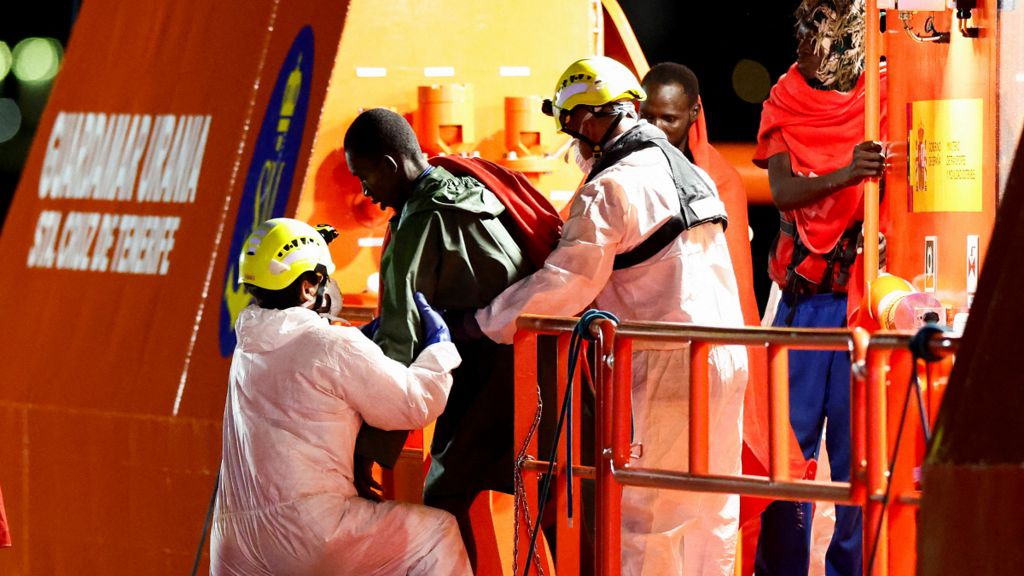
    Spanish Maritime Rescue teams located the stricken boat on Wednesday around 65 nautical miles southwest of Arguineguín, a coastal town on the island of Gran Canaria. When rescuers reached the vessel, they found 44 alive survivors and five corpses already on board. Based on accounts of the boat’s departure, human rights defenders estimate that a total of 83 people have died in the incident.

    According to early reports, the overcrowded vessel departed The Gambia, West Africa, in early August carrying an estimated 127 people. Helena Maleno Garzón, a prominent human rights activist and founder of the Spanish NGO Caminando Fronteras, confirmed the projected death toll that includes an infant. While the exact number of original passengers has not been independently verified by Spanish rescue authorities, the gap between the known 49 people found (44 survivors + 5 deceased) and the reported 127 initial occupants leaves 83 people unaccounted for, leading to the widespread presumption of their deaths.

    Tough sea conditions forced rescue teams to make a devastating decision: they were unable to retrieve the five recovered bodies from the boat before departing the area. In an official statement, Maritime Rescue explained that severe adverse weather, marked by 20-knot winds and 2.5-meter-high swells, made body recovery operation unsafe to carry out after the survivors were evacuated.

    All 44 survivors identified as men from across sub-Saharan Africa. Three of the survivors were airlifted to a local hospital in serious, critical condition, while the remaining 41 were transferred by rescue vessel to Gran Canaria. The group disembarked on the island in the early hours of Thursday morning to receive medical care and processing.

    Fernando Clavijo, the president of the Canary Islands regional government, publicly condemned the ongoing loss of life in a post to the social platform X. “It is intolerable that lives continue to be lost,” he wrote. “The Canaries cannot get used to or accept as normal the fact that the Atlantic continues to be a death trap.”

    The migration route stretching from West Africa across the Atlantic to the Canary Islands has long been recorded as one of the deadliest migrant crossings on the planet. Every year, thousands of people fleeing conflict, poverty, and instability in their home countries undertake this extremely perilous journey in the hopes of reaching Spanish territory, even though the route is known for its unforgiving conditions, including rough open seas, powerful unpredictable currents, and extremely long voyages that often stretch for weeks with limited food or water supplies. This latest incident once again highlights the deadly human cost of unmanaged irregular migration across the Atlantic.