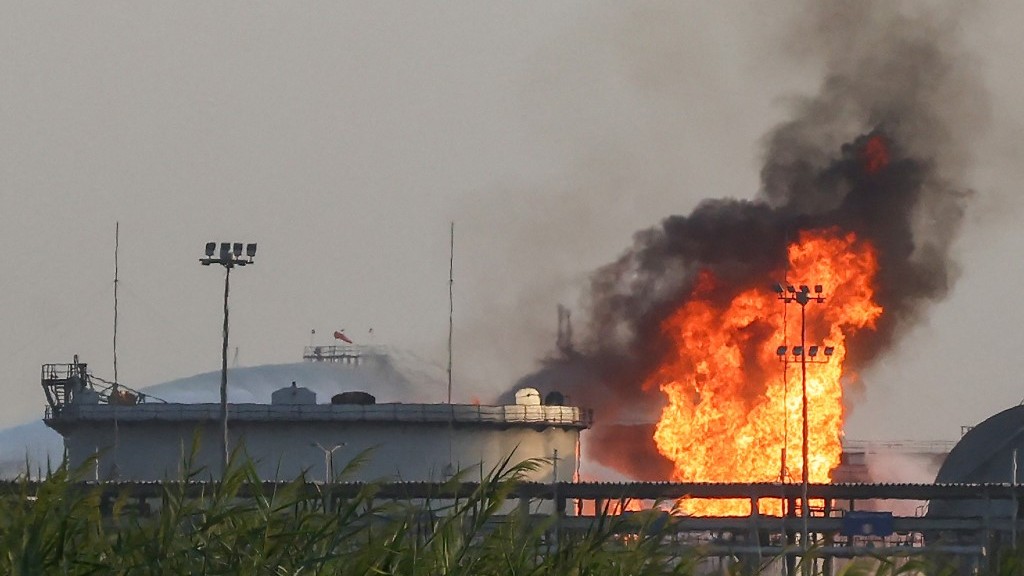
A sharp escalation of hostilities between the Saudi-led coalition and Yemen’s Houthi movement has raised new fears of a broader regional conflict, after mutual evacuation warnings were issued for critical energy infrastructure in both Sanaa and Riyadh this week. The sequence of tensions began when the Saudi-led coalition ordered civilian personnel and residents to leave the Yemeni Oil Company’s al-Sabaha central oil facility in Yemen’s capital Sanaa ahead of a planned targeted military operation. Shortly after this public evacuation order was released, multiple explosions shook Sanaa, with Houthi-aligned media confirming that airstrikes had directly struck the al-Sabaha oil installation. In immediate retaliation, the Houthi movement’s senior military spokesperson Yahya Saree issued a formal threat to target major Saudi Aramco energy facilities across Saudi Arabia, issuing his own warning for civilians and staff to evacuate all Aramco-linked sites.
“The Yemeni Armed Forces warn all employees and citizens near any Aramco oil facility to evacuate and stay away from it, as it is a legitimate target for our forces,” Saree announced in an official post on the social platform X on Tuesday. This warning followed an earlier threat from the spokesperson that any new military strike on Sanaa would be met with a forceful, damaging response inside Saudi Arabia’s capital. Saree specifically named three high-profile sites for evacuation: Aramco’s central corporate headquarters in Riyadh, King Khalid International Airport, and a major Aramco-owned refinery located in the capital.
The tit-for-tat escalation unfolded after a series of successive Houthi attacks on Saudi territory over just 48 hours. On Monday night, Houthi forces confirmed they launched a ballistic missile targeting Riyadh’s main airport, alongside a separate drone strike against King Khalid Air Base located near Khamis Mushait in southern Saudi Arabia. Coalition spokesperson Turki al-Maliki confirmed Tuesday that Saudi defense systems successfully intercepted the ballistic missile aimed at Riyadh, as well as two additional missiles fired toward Khamis Mushait. Prior to that, on Tuesday, the coalition announced its air defenses also intercepted three explosive drones launched toward northern Riyadh.
Unconfirmed social media footage posted after Monday’s attack appeared to show large plumes of fire rising across Riyadh, and a anonymous Western official based in the capital confirmed to independent outlet Middle East Eye that multiple blasts were heard across the city overnight Monday. Middle East Eye noted it could not independently verify the authenticity of the circulating social media footage.
The current wave of violence was triggered by weekend Houthi strikes on King Khalid International Airport that left at least 14 people dead and approximately 320 more injured. The major airport has remained fully closed since the attack, with Saudi authorities announcing it will not reopen until further official notification. A formal Notice to Airmen (Notam) published by Saudi aviation regulators confirms the closure will remain in place until at least October 17.
In response to the rising security risks, the U.S. Mission to Saudi Arabia issued an urgent public advisory on Saturday, urging American citizens to avoid King Khalid International Airport and its surrounding areas, and warning of widespread flight cancellations and temporary airspace restrictions. Since mid-September, the U.S. State Department has maintained a travel advisory urging U.S. citizens to reconsider all travel to the kingdom amid growing security instability.