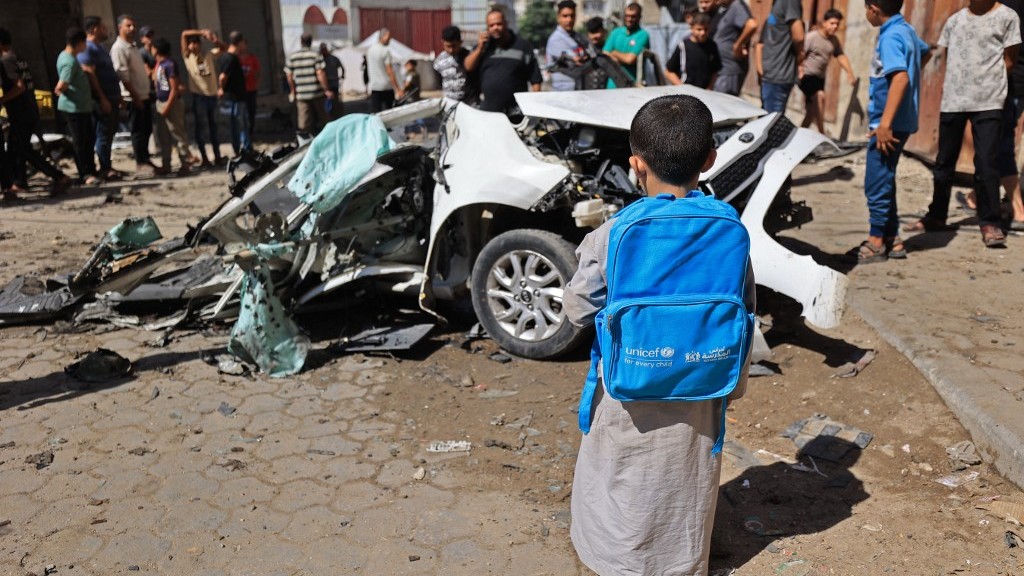
In a groundbreaking weekend publication, German outlet Der Spiegel has released shocking firsthand testimonies from 10 Israeli veterans who served in the Gaza campaign, detailing widespread, ordered killings of unarmed Palestinian civilians and a systemic practice of labeling all killed Palestinians as terrorists to cover up unlawful violence.
The testimonies paint a devastating picture of deliberate policy targeting non-combatants, ranging from indiscriminate shelling of residential areas to explicit orders to show no mercy to anyone matching loose, overbroad descriptions of potential threats. The accounts also expose deep ideological motivations fueling the violence, including far-right messianic beliefs that frame the killings as a religious duty to seize Palestinian land.
David, an infantry reservist with multiple deployments across central Gaza and Khan Younis, told the outlet that his unit was responsible for the deaths of dozens of unarmed men. He recalled a high-ranking officer openly stating, “The Arabs must be punished. They must understand that we are taking more and more land from them, pushing them back further and further.”
David, who identified the initial perpetrators of these abuses as relatively educated, secular Israeli troops, noted that as the conflict dragged on, increasingly extremist messianic fighters joined frontline units. Many of these new arrivals viewed the mass killing of Palestinians as a religious obligation, echoing extreme rhetoric already amplified by senior far-right officials in Prime Minister Benjamin Netanyahu’s ruling coalition.
“Calls to exterminate all the Arabs, build new settlements, and wipe Gaza off the map — these aren’t fringe views among soldiers, these are the same things you hear from ministers like Bezalel Smotrich or Itamar Ben Gvir,” David explained.
According to multiple testimonies, open-ended rules of engagement gave troops free rein to kill any Palestinian categorized as a man of military age, even without any evidence of militant affiliation. After killings, many troops celebrated the deaths, smoking cigarettes and boasting about their body counts to family members back home.
Yuval Green, a reservist deployed with the 55th Parachute Brigade in Khan Younis for 50 days between November 2023 and January 2024, confirmed the intentional ambiguity of kill orders. “Commanders told us ‘we will show no mercy this time. If a child goes into a house where a terrorist is, we kill the child too,’” Green recalled. “Leadership deliberately kept the rules vague, which meant any Palestinian could be killed on the spot with no consequences.”
Yaakov, another reservist who volunteered for service and spent more than eight months across the central Gaza Strip, described a deliberate scorched-earth strategy designed to leave Palestinians with no home to return to. “The policy was to destroy everything so Palestinians would have nowhere left to come back to,” he said.
Yaakov revealed that his brigade alone killed between 160 and 170 people during an 80-day deployment, and only a single person killed was even suspected of carrying a weapon. Yet every single one of the dead was officially categorized as a terrorist in military records.
Even unarmed civilians seeking relief from heat at a Gaza beach were targeted and killed, then posthumously labeled as militants, the testimonies confirm.
One reserve soldier, Tal, also detailed the aftermath of an August 2025 Israeli strike on Nasser Hospital in Khan Younis that killed 22 people, including five working journalists. Tal explained that the Israeli military has a standardized practice the troops themselves call “post-mortem incrimination”: any person killed by Israeli forces is automatically linked to Hamas to legitimize the killing in the court of global public opinion.
After the hospital strike, Israel immediately labeled the five killed journalists as Hamas terrorists. Tal explained that troops routinely referred to any press equipment as a “Hamas camera,” arguing that any recording equipment could be used by militants to monitor troop movements. “Their goal was to disable these cameras, but the Reuters cameraman they killed wasn’t a terrorist at all — he was a legitimate journalist doing his job,” Tal said. “My clear impression is that these troops just saw all journalists as terrorists by default.”
This report was originally published by Middle East Eye, an outlet that provides independent, in-depth coverage of the Middle East and North Africa region.