博客

  • AP Exclusive: Lawyer for China’s Zion Church seeks resettlement help while transiting through Taiwan

    AP Exclusive: Lawyer for China’s Zion Church seeks resettlement help while transiting through Taiwan

    In a dramatic turn of events that underscores the ongoing crackdown on unregistered religious groups and legal advocates in mainland China, a lawyer who represented one of the nation’s largest underground Christian congregations has escaped to Taiwan, where she is now urgently seeking international support for permanent resettlement.

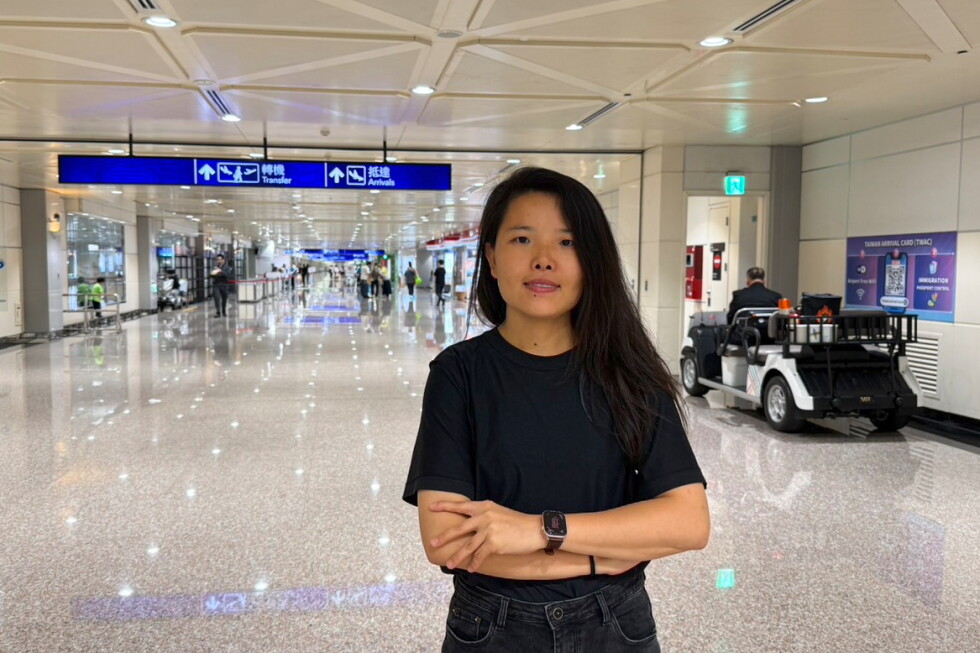
    Ruth Wang, a partner at the Beijing-based VDoor Law Firm, joined the legal defense team for leaders and members of Beijing’s Zion Church shortly after a mass arrest of 18 church affiliates, including its founder Ezra Jin, in October 2025. The sweeping detention was one of the largest single operations against an unregistered house church in modern Chinese history. In an exclusive video interview with the Associated Press conducted from her temporary base in Taiwan, Wang detailed the mounting coercive pressure Chinese authorities have placed on her firm, her colleagues, and herself in recent months.

    According to Wang, authorities delivered an ultimatum: the entire firm must voluntarily dissolve, or it would be forcibly shut down by state regulators. The pressure campaign against VDoor has been building for months. Zhang Kai, the firm’s founder and Wang’s legal mentor, has already had his legal license revoked and been placed under an exit ban barring him from leaving mainland China. Six-month practice suspensions have been issued to multiple other attorneys at the firm, and judicial officials have ordered all lawyers to drop their representation of Zion Church-linked cases and resign from the firm. Wang added that even VDoor attorneys seeking to transfer to other legal practices have faced bureaucratic barriers blocking their moves.

    The crackdown on the firm followed the high-profile 2025 arrest of Jin and 17 other Zion Church leaders. Jin was released from detention two months prior to Wang’s escape, after then-U.S. President Donald Trump raised his case during a high-level meeting with Chinese President Xi Jinping. But Wang’s escape makes clear that repression of the church and all those affiliated with it has not ended with Jin’s release.

    Founded by Jin in 2007, Zion Church is one of China’s most prominent unregistered “house churches,” religious congregations that operate outside the strict state controls requiring all religious worship to be held under the supervision of government-approved registered organizations. U.S.-based Chinese pastor Sean Long, a member of Zion Church who studies abroad, estimated last year that the network had roughly 5,000 members spread across more than 100 informal worship venues, ranging from private apartments and commercial restaurants to karaoke bars across 40 Chinese cities.

    Wang, who was on summer vacation with her family in Japan last month, says that Chinese authorities contacted her during the trip and demanded she return to Beijing for an in-person meeting. After telling regulators she could not comply, Wang made the decision not to return to mainland China, and traveled onward with her family to Taiwan. In an interview, Wang laid out the dilemma she faced: “If, as a partner in the firm, I don’t cooperate and sign to dissolve it, what will happen next? I believe it will definitely seriously affect my career development and other aspects of my life.”

    Bob Fu, founder of U.S.-based human rights nonprofit ChinaAid, says Wang’s case lays bare the extraordinary risks that legal professionals face when they choose to defend marginalized religious groups and prisoners of conscience in China. “Attorney Wang sought to fulfill the most basic responsibility of a lawyer,” Fu said. “Yet because her clients include detained leaders associated with Beijing Zion Church, she came to fear that she herself could become the next target.” Fu has called on Taiwan’s government to grant Wang and her family protection and prevent their forced repatriation to mainland China, while also urging the U.S. and other democratic governments to stand by ready to support long-term resettlement.

    Multiple Chinese authorities, including the national Public Security Bureau and the Beijing Municipal Bureau of Justice, declined to comment on the case when contacted by the AP. The American Institute in Taiwan, Washington’s de facto diplomatic mission on the island, also has not issued a public response to requests for comment.

    After arriving at a Taiwanese airport with her family, Wang applied to local authorities for temporary permission to stay while she reaches out to third countries for permanent resettlement. Taiwanese officials have allowed her to remain on the island temporarily, but have informed Wang that the current cross-strait political climate means Taipei cannot process political asylum claims from mainland Chinese citizens. Beijing claims Taiwan as an inalienable part of its sovereign territory, and cross-strait relations have deteriorated sharply in recent years under the pro-independence Democratic Progressive Party government.

    Unlike most democratic nations, Taiwan lacks a formal statutory refugee and asylum framework, and has tightened its screening of migrants from mainland China amid growing security concerns. In recent years, Taipei has rejected permanent residency applications from some Hong Kong migrants fleeing Beijing’s expanded national security crackdown, and increased scrutiny of cross-strait spouses seeking immigration to the island. In a written statement, Taiwan’s Mainland Affairs Council noted that while no formal asylum law exists, the government has an ad hoc mechanism to handle exceptional cases such as Wang’s and will process her request in accordance with existing protocols.

    Wang is currently exploring multiple resettlement pathways, including pursuing study opportunities in the United States or Canada as a route to permanent relocation for her family. If those options fail, she plans to file a formal asylum claim in a third country. Speaking about her family’s current situation, Wang acknowledged profound uncertainty: “I feel that our family is currently facing an uncertain future, and we don’t know what will happen in the future, or whether there is anywhere that can accommodate us.” Drawing on a story from the Book of Ruth in the Bible — the same source as her English name — Wang said she holds onto faith that support will emerge, just as God provided the protector Boaz for the biblical Ruth when she was displaced and adrift. “I also believe that God will give (me) such a person,” she said.

  • How Gloria Steinem changed the lives of generations of women

    How Gloria Steinem changed the lives of generations of women

    As one of the most recognizable and consequential figures of 20th-century American feminism, Gloria Steinem has spent nearly 90 years reshaping the global conversation around gender equality, turning personal experience into mass movement that has improved the lives of generations of women. Born in Toledo, Ohio on March 25, 1934, Steinem’s path to advocacy was forged in early hardship that taught her resilience long before she stepped into the national spotlight.

    Steinem’s childhood was far from conventional. Raised in a traveling caravan with her salesman father, mentally ill mother, and older sister, her life shifted dramatically when her father abandoned the family for California when she was just 10 years old. Left to care for her mother, who struggled with debilitating hallucinations, Steinem did not attend full-time school until she turned 12. She later reflected on this period, noting that she never desired children of her own because she had already raised her mother.

    In the late 1950s, a research scholarship took Steinem to India, where she spent two years supporting rural village women in organizing nonviolent protests against unjust government policies. This experience ignited her lifelong commitment to grassroots activism, a foundation she would bring to her work in the United States. Returning home in the early 1960s, she settled in New York City to build a career as a freelance writer, entering a media landscape dominated entirely by men that routinely shut women out of hard-hitting reporting.

    Steinem’s career breakthrough came in 1963, when she went undercover under the pseudonym Marie as a Playboy Bunny cocktail waitress to investigate working conditions at Hugh Hefner’s iconic brand. Her resulting exposé, *A Bunny’s Tale*, pulled back the curtain on the underpaid, exploitative, and deeply misogynistic reality of the job, detailing the physical toll of hours spent in tight corsets and towering high heels and the constant objectification Bunny workers faced. While the story made her name, it also branded her for life; even decades later, critics referenced her Bunny experience to dismiss her work. Still, she noted, the exposé led to tangible improvements in working conditions for the women employed by Playboy.

    Despite her early success, male editors continued to relegate Steinem to trivial “women’s topics” like fashion and beauty, rather than the social justice reporting she wanted to pursue. Undeterred, she landed a columnist position at *New York Magazine* in 1968, where she focused on progressive social change and women’s rights. Her 1969 essay *After Black Power, Women’s Liberation* catapulted her to national fame, cementing her status as the public face of the emerging second-wave feminist movement.

    The turning point for Steinem’s advocacy came at a 1969 abortion awareness rally, where she shared her own experience terminating an illegal pregnancy seven years earlier in London. At the time, abortion was only permitted in the UK if a woman’s physical or mental health was at risk, and the doctor who treated her extracted two promises: never reveal his name, and go on to live the life she wanted. Nearly 60 years later, she broke that promise to dedicate her memoir *My Life On The Road* to Dr. John Sharpe. The rally was a “light bulb moment” for Steinem, pushing her to become a vocal crusader for reproductive freedom, a phrase she coined that remains central to abortion rights debates around the world.

    In 1972, Steinem co-founded *Ms.* magazine alongside a collective of fellow feminist activists, the first women-founded and women-run national magazine focused on feminist issues, rather than the housekeeping and fashion content that dominated mainstream women’s publications. Male critics dismissed the publication out of hand, with one prominent news commentator predicting it would fold within six months. Instead, the first issue sold out in a week and attracted more than 26,000 initial subscribers, and the magazine remains in publication today. One of Steinem’s most famous essays for the magazine, 1978’s *If Men Could Menstruate*, remains a staple of gender studies discourse, using sharp satire to unpack how patriarchal power structures would reshape if men experienced the monthly cycle long used to marginalize women.

    Over the decades that followed, Steinem remained at the forefront of the movement for gender equality. After the Equal Rights Amendment failed to pass through Congress in 1970, she co-founded the National Women’s Political Caucus, an organization dedicated to expanding women’s representation in all areas of political and public life. She testified before the all-male Senate ERA hearings, telling lawmakers: “I have been refused service in public restaurants, ordered out of public gathering places and turned away from apartment rentals all for the clearly stated, sole reason that I am a woman.”

    Steinem’s high profile made her a target of harsh criticism and violent harassment from across the political spectrum. Critics on the right attacked her goals, while even fellow feminist leaders, including *The Feminine Mystique* author Betty Friedan, resented her rise as the face of the movement, accusing her of prioritizing celebrity and personal profit over collective action. Richard Nixon raged against her in secret White House recordings, to which she quipped back that he was one of the most sexually insecure presidents in American history. Adult magazine publisher Al Goldstein waged a vicious harassment campaign against her, publishing her private phone number and displaying a graphic nude centerfold of a Steinem look-alike outside her office that she was forced to see daily. Even into later life, she faced regular hostile confrontations in public, but she never shied away from open debate; in 2020, she was a signatory to an open letter denouncing cancel culture, arguing that respectful dialogue, not punishment, is the only way to advance social change.

    Steinem’s personal life also drew criticism from detractors and surprise from allies. Long known for rejecting marriage, once joking “I can’t mate in captivity,” she dated a series of high-profile public figures over the decades, leading critics to accuse her of using men and being too promiscuous. At 66, in 2000, she married South African environmental entrepreneur David Bale, father of actor Christian Bale, a choice that surprised many of her fellow feminists who had followed her decades of criticism of unequal marriage laws. She explained that changing legal rights had made equal marriage possible, and admitted the union also helped Bale secure a green card – though emphasized the couple shared a deep love regardless. Bale died three years later from brain lymphoma, and Steinem has lived alone in New York since.

    Over her long career, Steinem has been recognized with countless honors for her work, including the Presidential Medal of Freedom – the United States’ highest civilian honor – awarded to her in 2013 by President Barack Obama, who praised her for opening doors of opportunity and respect for millions of women. In 2024, Steinem celebrated her 90th birthday, reflecting on a legacy that transformed the landscape of American women’s rights. When asked what she hoped her impact would be, she told the BBC she hoped her work “might help individual people… to become more the unique, valuable, loved and lovable person that they want to be.”

    Today, Steinem’s legacy endures not just through the still-publishing *Ms.* magazine and the policy wins she helped secure, but through the way she redefined what women could demand and achieve. By amplifying voices that mainstream media refused to platform, she changed not just the laws, but the language of gender equality in America, leaving a blueprint for activists that continues to guide movements today.

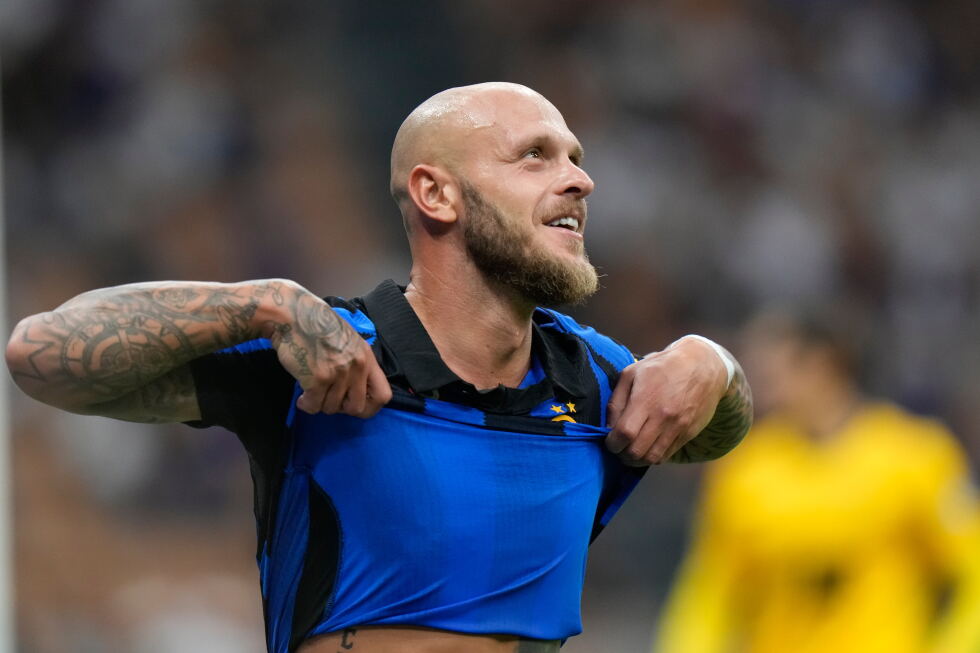
  • Inter fullback Federico Dimarco wins top honors at Italian players’ association gala

    Inter fullback Federico Dimarco wins top honors at Italian players’ association gala

    MILAN, Italy – At the glitzy Italian Football Players’ Association Awards held Wednesday night at Milan’s iconic La Scala theater, Inter Milan’s star left-back Federico Dimarco claimed the league’s highest individual honor – but the ceremony was undercut by the defender’s public disappointment over stalled contract talks with his boyhood club.

    Dimarco earned the top award after a standout 2023-24 campaign, where his explosive attacking contributions from the left flank powered Inter to a dominant Serie A title, finishing 11 points clear of second-place Napoli. This accolade marks the second major individual honor for the 26-year-old, who already won Serie A’s official MVP award in May this year.

    Despite his on-pitch success, Dimarco’s contract with Inter is set to expire at the end of the current 2024-25 season, and the fullback admitted he had expected a new deal to be finalized after his title-winning run. “We haven’t discussed it yet. I was hoping that would happen after last season,” Dimarco told reporters on the red carpet ahead of the awards.

    The award night also came hours after Inter announced a major shakeup to its front office: long-serving sporting director Piero Ausilio, who played a key role in building Inter’s recent title-winning squad, was replaced by Dario Baccin. Dimarco said he was caught off guard by the sudden management change, learning of the move through media reports after finishing a team training session. “I wasn’t expecting that. (Ausilio) is someone who I have a close relationship with. We won a lot together,” he added.

    Amid widespread transfer speculation linking him to Spanish giants Barcelona, Dimarco pushed back against rumors he was seeking an exit from San Siro. A product of Inter’s youth academy, he has cemented his place in the first team after multiple loan spells early in his career, and is currently in his sixth season as a regular starter for the club. “It’s always nice to be mentioned alongside these great clubs. But you know my history with Inter. I grew up here,” Dimarco said, reaffirming his loyalty to the Nerazzurri.

    The awards ceremony, which celebrates the best performances across Italy’s top two professional leagues, handed out a raft of other honors, with Inter dominating the first-division selections. Three Inter players – Dimarco, Alessandro Bastoni, and Manuel Akanji – earned spots among the league’s top four defenders, alongside former Cagliari rising star Marco Palestra, who recently signed for Chelsea. Inter striker Lautaro Martinez was named one of Serie A’s best forwards, alongside Como’s Nico Paz and Roma’s Donyell Malen, while Inter midfielder Hakan Calhanoglu took home midfield honors alongside Napoli’s Scott McTominay and AC Milan’s Luka Modric. Roma’s Mile Svilar rounded out the top awards as the league’s best goalkeeper.

    In coaching awards, former Arsenal and Barcelona star Cesc Fabregas took top honors after an extraordinary debut season leading Como to a shock Champions League qualification. The 21-year-old Paz was named Serie A’s best young player, while 19-year-old Mattia Liberali, who moved from Catanzaro to Como ahead of this season, took home the best young player award for Serie B. The 2023-24 Goal of the Season went to Juventus winger Francisco Conceicao for his blistering long-range strike against Roma back in March, the only award decided by fan vote rather than player polling. All other honors were determined by a vote of active professional players across the Italian league system.

  • Watch: US man struck by lightning describes ‘horrific’ experience

    Watch: US man struck by lightning describes ‘horrific’ experience

    A near-death experience with a sudden lightning strike has left one American man sharing his harrowing story to warn others of the unpredictable danger of severe weather. Thomas Fahmy, the survivor, recently opened up about the split-second incident that changed a normal moment into a life-altering brush with death. In an interview detailing the event, Fahmy explained that the attack happened without significant warning, ending with a blinding bright white flash that overwhelmed his senses immediately. The jolt of the strike was so powerful that he collapsed to the ground the very instant the lightning made contact, leaving him disoriented and stunned by the sheer force of the natural phenomenon. Fahmy described the entire encounter as “horrific”, highlighting the overwhelming shock and terror that came with being hit by one of nature’s most powerful forces. His firsthand account offers a rare, unfiltered look at what it is like to survive a direct lightning strike, underscoring the importance of taking proper safety precautions during thunderstorms. While Fahmy survived the incident, his description of the experience illustrates just how quickly danger can strike even when people may not expect it.

  • Queiroz returns as Ghana head coach

    Queiroz returns as Ghana head coach

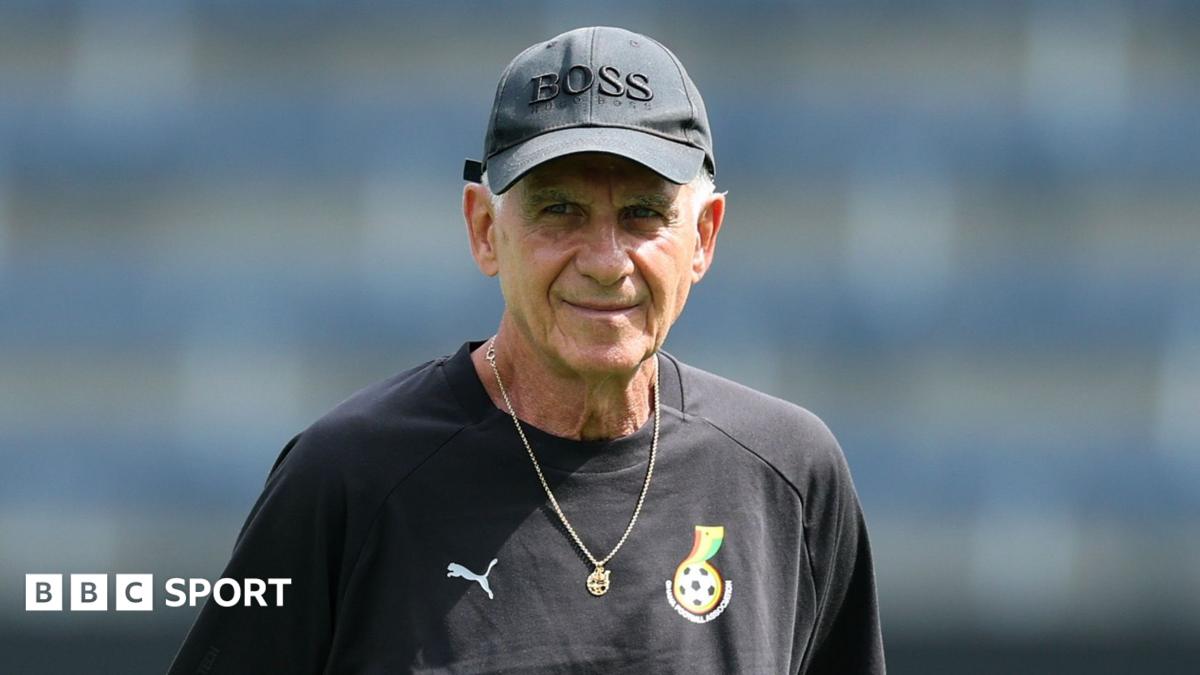
    In a unexpected turn of events that has caught the attention of global football circles, 73-year-old veteran football manager Carlos Queiroz has been reappointed as the head coach of Ghana’s men’s senior national team, the Black Stars, just months after his apparent departure following the 2024 FIFA World Cup.

    Queiroz first took the helm of the West African side in April this year, and steered the squad through a solid World Cup campaign that saw them advance to the round of 16, where they bowed out with a narrow 1-0 defeat to Colombia. Immediately after that final match, the experienced manager seemed to confirm his exit via a social media post, leading many to assume his tenure with Ghana had come to a close.

    However, after a series of internal deliberations, the Ghana Football Association (GFA) has opted to bring Queiroz back for a second spell in charge. While the governing body has not yet released details on the length of his new contract, it confirmed in an official statement that the manager will be tasked with guiding the Black Stars into what the association calls “a successful new phase on the international stage”.

    “The GFA believes Queiroz’s extensive international experience, technical expertise and knowledge of the Black Stars position him strongly to lead the team into this next chapter,” the statement read.

    Queiroz brings an unparalleled level of global tournament experience to the role, having managed at five consecutive FIFA World Cups— a rare achievement for any coach. Prior to his first stint with Ghana, he has led national sides including Iran, Portugal, Egypt, South Africa, Colombia and Qatar at the highest level of international competition. He also previously built his reputation as a top tactical mind during two separate stints as assistant manager to Sir Alex Ferguson at English Premier League giants Manchester United.

    The GFA noted that further details surrounding Queiroz’s new mandate, including contract terms and performance targets, will be made public at a later date. Queiroz will kick off his second tenure with the Black Stars immediately, leading the team into 2027 Africa Cup of Nations qualifiers, which are set to kick off later this month.

    Ghana has been drawn into Group C for the qualifiers, where they will face off against regional powerhouses Ivory Coast, The Gambia and Somalia. At present, the Black Stars have not yet confirmed the dates or host venues for their first two qualifying fixtures.

  • Italian Grand Prix declared heat-hazard race

    Italian Grand Prix declared heat-hazard race

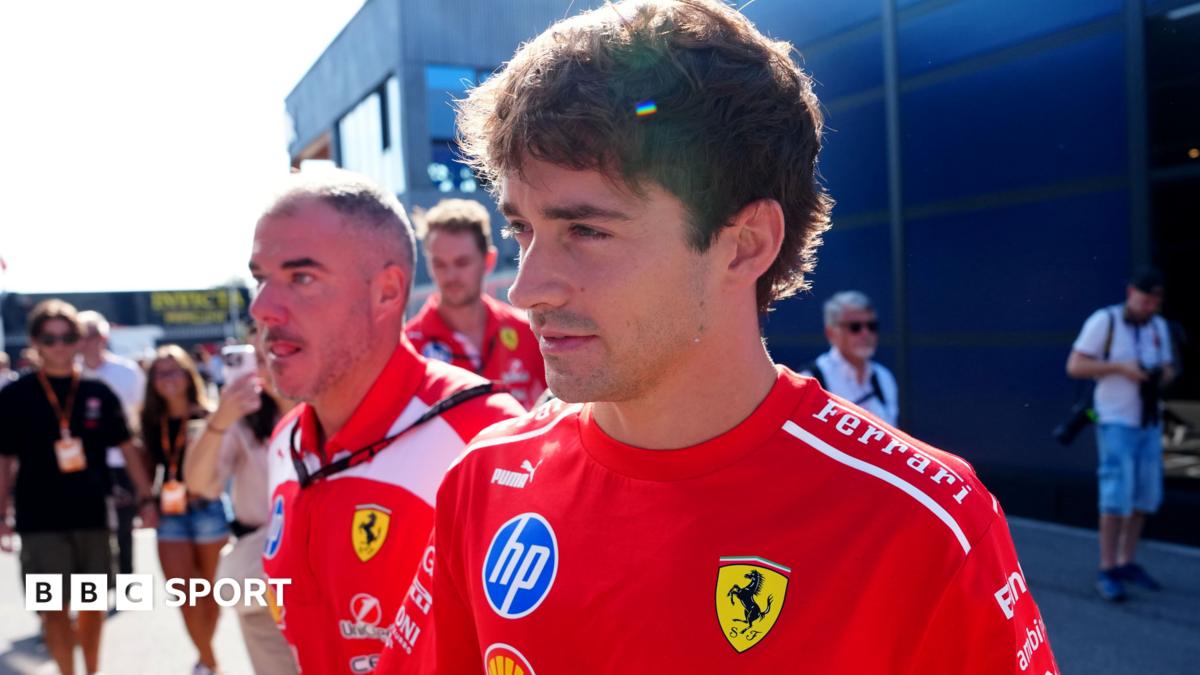
    As Italy continues to grapple with lingering extreme heat following a brutal summer heatwave, Formula 1’s iconic Italian Grand Prix at Monza has received an official heat-hazard designation from race organizers. This special classification is triggered when forecasts confirm ambient temperatures will exceed 31 degrees Celsius at any point during Sunday’s race weekend, a threshold that is all but guaranteed to be crossed at the historic northern Italian circuit.

    Located northeast of Milan, the Autodromo Nazionale Monza is projected to see mid-30s Celsius temperatures across all three days of on-track action. The region already hit a staggering 36 degrees Celsius near Milan’s Linate Airport just last Wednesday, underscoring the severity of the ongoing heat conditions.

    The heat-hazard ruling brings with it adjusted rules to protect driver safety: competitors will be permitted to use a specialized personal cooling system that pumps cooled glycol liquid through a network of small pipes integrated into a fireproof undershirt worn beneath their racing overalls. Importantly, the cooling kit is not mandatory, but drivers who opt out of using the system must add an extra 5 kilograms of ballast to their cars to maintain equal competitive weight across the grid, preventing any unfair performance advantage for those who skip the gear.

    This weekend’s Italian Grand Prix marks the second Formula 1 race of the 2024 season to receive the heat-hazard designation. The first came earlier in the summer at the Austrian Grand Prix, when a widespread European heatwave pushed temperatures into dangerous territory for drivers.

    While the cooling system is designed to reduce heat stress, many drivers have opted to avoid it in past events for two key reasons. First, the fitted undershirt can cause physical discomfort over the course of a 300-kilometer grand prix. Second, there have been previous incidents where the limited volume of coolant ran out before the checkered flag, leaving the liquid sitting in the pipes to warm up to the temperature of the car — which can climb far higher than already dangerous ambient air levels.

    The risk of severe overheating is not an overstated concern for F1 drivers. Even in milder conditions, cockpit temperatures inside the tightly packed modern Formula 1 car regularly climb above 40 degrees Celsius. On top of that, drivers must wear multiple layers of fireproof protective gear, plus a nylon balaclava and heavy carbon fiber helmet, creating a perfect environment for heat exhaustion and dangerous dehydration during long races in high heat.

  • ‘Beautiful, vibrant’ Disney star Carla Jeffery dies at 33

    ‘Beautiful, vibrant’ Disney star Carla Jeffery dies at 33

    Carla Jeffery, the United States actress best known for her breakout role across Disney Channel’s beloved *Zombies* film franchise, has passed away at 33. No details surrounding the cause of her death have been released to the public as of this reporting.

    Jeffery first earned widespread recognition for her portrayal of Bree, a warm-hearted high school cheerleader, in Disney’s 2018 original movie *Zombies*, and went on to reprise the fan-favorite role in the franchise’s 2020 and 2022 sequels. Before her rise to fame with Disney, she held a recurring role on the hit comedy series *Curb Your Enthusiasm*, where she appeared as a member of the Black family that moved in with protagonist Larry David in the aftermath of Hurricane Katrina.

    The news of Jeffery’s passing was first confirmed by her agent, Carla Alexander, who remembered the young star as a deeply gifted and joy-filled presence. “She was a beautiful, vibrant and incredibly talented woman whose radiant smile could light up any room,” Alexander said in a statement.

    Her talent management firm, Alexanders Talent, shared an official public tribute on Instagram that expressed the team’s profound grief. “Our hearts are broken as we mourn the loss of our beloved Carla Jeffery,” the post read. “For more than 20 years, Carla was part of the Alexanders Talent Management family, and watching her grow from a talented young girl into the beautiful, vibrant woman and actress she became was an incredible privilege.”

    The statement added: “We will remember her infectious smile, her laughter, her talent, and the beautiful light she carried everywhere she went. Our deepest love and condolences are with Carla’s family and loved ones. We ask that their privacy be respected during this incredibly difficult time. Rest beautifully, Carla. You will be deeply missed and forever loved.”

    Jeffery’s twin brother, Carlon Jeffery – himself also a working actor – shared the management team’s statement to his own social media, alongside additional personal tributes: a candid clip of the actress enjoying time on a beach, and a screenshot of an undated text message he had sent her. “Hey Sis, call me back when you get this. I was just calling to see how your day went! I love you to the moon & back sis,” the text opened.

    It continued: “I just want you to know how proud I am of you. Your resilience, your grace, your infectious smile that lights up a room. You are truly a light that shines bright. Don’t let anyone dim that light, even yourself. The light you carry is special and must be protected at all times. You are the best sister a brother could ask for. Pray we continue to grow closer to one another along this journey. I got your back in this life and the next.”

    Jeffery’s *Zombies* co-stars also opened up about their grief and shared heartfelt remembrances of the actress. Chandler Kinney, who portrayed Willa in the franchise, wrote that the news of Jeffery’s death “doesn’t feel real.” “Carla. The sweetest, most sparkly gal. You made every day better and brighter with your infectious positivity,” Kinney said. “I think part of why you brought such effervescence to Bree (aside from your immense talent) is because that’s really who you were in your heart; a bubbly, vivacious heart-of-gold cheerleader who loved nothing more than to uplift those around her.”

    Milo Manheim, who led the franchise as zombie football player Zed, shared a carousel of personal photos of the pair alongside a short, tender caption: “Love you Carlaboo, the sweetest, kindest, most loving person.”

  • Algerians battle deadly wildfires as Tebboune seeks death penalty for arson

    Algerians battle deadly wildfires as Tebboune seeks death penalty for arson

    A devastating and historically unmatched outbreak of wildfires has swept across northern Algeria, leaving widespread death, ecological destruction, and political upheaval in its wake. The inferno has carved a continuous line of flames from central Algeria all the way to the country’s far eastern border, forcing emergency responders to mount a desperate, resource-stretched battle to contain the blaze.

    This week, Civil Protection teams backed by army units continued to fight reignited flare-ups in the eastern provinces of Sétif and Guelma, where thousands of hectares of old-growth forest have already turned to ash. The worst-hit region is Jijel, a popular coastal province located 120 miles east of the capital Algiers, once celebrated for its pristine sandy shorelines, clear turquoise waters, and rolling hills covered in olive groves, fruit orchards, and ancient cedar forests. Today, the entire 1,200-square-kilometer expanse of Jijel’s forests is reduced to smoldering cinders and blackened stumps.

    Discrepancies over the official death toll have emerged as a major point of tension following the disaster. The Algerian Interior Ministry initially reported a national death toll of 12, all from Jijel, when the crisis escalated in late August. But on-the-ground accounts and social media footage suggest the actual number of fatalities is far higher. Videos posted online show dozens of coffins lined up alongside open mass graves, awaiting burial as high temperatures accelerate decomposition of remains.

    “After 40 years in Civil Protection fighting wildfires, I have never seen a catastrophe on this scale — human, environmental, and material. There are hundreds of dead,” Lieutenant Djabri Said told the Associated Press in an on-site interview. One high-profile case underscores the scale of the tragedy: Abdelwahab Boukrouh, a journalist with the Algerian presidency’s communications department, announced via Facebook that 12 members of his own family were killed when the fire swept through their mountain village of Ouled Riyah on the night of August 22–23, with three more relatives still unaccounted for. The victims included women, children, and elderly residents trapped in their small rural homes before they could escape. Thousands of livestock — cattle, sheep, goats, mules and donkeys — also perished in the flames, their charred remains scattered along the steep mountain paths leading to destroyed villages, where little remains of residential structures except smoking piles of rubble.

    All private and public media in Algeria operate under state oversight, and most have stuck to the official 12-death toll in their coverage, while focusing heavily on ministerial visits and state-led relief efforts. President Abdelmadjid Tebboune cut short his summer vacation to oversee the response, visiting burn victims in specialized Algiers hospitals, declaring a three-day national period of mourning, and calling an emergency Cabinet meeting. The meeting designated the Jijel region a disaster zone and unlocked emergency funding for response and recovery operations.

    A spontaneous grassroots movement of national solidarity has emerged across the country, with convoys of private and volunteer trucks carrying emergency food, medication, bottled water, and clothing streaming into fire-ravaged mountain villages. Tebboune has also announced state-funded compensation for all affected families and pledged that the government will cover the full cost of rebuilding destroyed homes. Priority has been given to repairing damaged schools to ensure they are ready for the new academic year scheduled to begin September 21.

    The disaster has sparked a heated national political debate over the president’s proposal to reinstate capital punishment for anyone found guilty of arson connected to the wildfires. Tebboune has dismissed unsubstantiated claims of organized intentional sabotage, known locally as conspiracy theories, and instead aligned his explanation with global scientific consensus: he noted that numerous Mediterranean countries, including France, Spain, Portugal and Italy, all faced extreme wildfire outbreaks this summer, driven by rising temperatures and arid conditions linked to climate change. Climate researchers have repeatedly warned that human-caused global warming is increasing both the frequency and intensity of heatwaves and droughts across the Mediterranean basin, creating ideal conditions for destructive wildfires.

    Even so, Tebboune acknowledged that “criminal hands” may have played a role in starting some blazes, and announced that all investigations are ongoing. He went on to announce that anyone convicted of arson in connection with the fires will face the death penalty, confirming that the country will end a moratorium on executions that has been in place since 1993. That year marked Algeria’s last confirmed executions, when three Islamist militants were put to death for a deadly attack at Algiers International Airport.

    Reaction to the announcement has split sharply along political lines. Parties that support Tebboune’s administration, including major Islamist political groups, have backed the proposal. However, opposition parties linked to Algeria’s pro-democracy movement and multiple leading human rights organizations have condemned the move, describing it as a dangerous retreat into authoritarian practice and a deliberate distraction from perceived failures in government wildfire management and prevention.

  • Argentine league to pause games to honour Messi

    Argentine league to pause games to honour Messi

    One of the greatest footballers in history, Lionel Messi, is set to receive a heartfelt tribute from his home nation’s top football league following his formal retirement from international football. All matches held across Argentine domestic competitions this coming weekend will grind to a halt at the 10-minute mark to hold a full minute of applause, honoring the decorated forward’s legendary decades-long career with Argentina’s men’s national team. The 39-year-old icon, who famously wore the number 10 shirt for his country throughout his international tenure, announced his decision to step away from national team duty on Monday.

    Messi’s final outing for the Albiceleste came in July’s 2026 FIFA World Cup final, where Argentina fell to Spain in a match that brought an end to a historic international run that included some of the biggest highs in the nation’s modern football history. A statement released by the Argentine Football Association confirmed the honor, saying, “In tribute and homage to Lionel Messi’s career with the Argentina national team, at the 10th minute of play in all matches the referees will stop the game and a general minute of applause will be held. We look forward to seeing you on the fields – join us in this recognition!”

    Over his 21-year international career, Messi rewrote the Argentina national team record book. He holds the nation’s all-time record for appearances with 207 senior caps, and has scored 125 international goals – the second-highest total in men’s international football history, trailing only long-time rival Cristiano Ronaldo of Portugal, who has netted 146 times. Across World Cup tournaments, Messi notched 21 goals, one behind current leader Kylian Mbappé of France for the all-time tournament scoring record.

    This is not the first time Messi has walked away from international football, though this retirement is expected to be permanent. He first announced a departure from the national side in 2016, following a heartbreaking penalty shootout defeat to Chile in the Copa America final – a result that marked Argentina’s fourth major final loss in just nine years, after Messi missed his spot kick in the deciding shootout. He reversed that decision just months later, and went on to lead Argentina to long-awaited glory: a 2021 Copa America title, followed by the nation’s third World Cup championship in Qatar 2022, where he captained the side to a dramatic penalty shootout win over France in one of the most iconic finals in tournament history.

    Messi’s path to stardom took him away from his native Argentina as a teenager, when he moved to Spain at 13 to join FC Barcelona’s famed La Masia youth academy. He never played senior club football in Argentina during his long professional career, and currently plies his trade with Major League Soccer side Inter Miami in the United States, where his contract runs through the end of the 2028 season. He will continue to play club football for Miami, despite his international retirement.

    The decision to retire permanently was cemented by a personal loss for Messi earlier this summer. In August, the footballer revealed he had been evaluating his entire football future following the death of his father, Jorge Messi, who passed away at age 68 after a prolonged battle with illness. When announcing his international retirement, Messi confirmed that his father’s passing left him “even more convinced than before” that stepping away from national team duty was the right choice for this next chapter of his life and career.

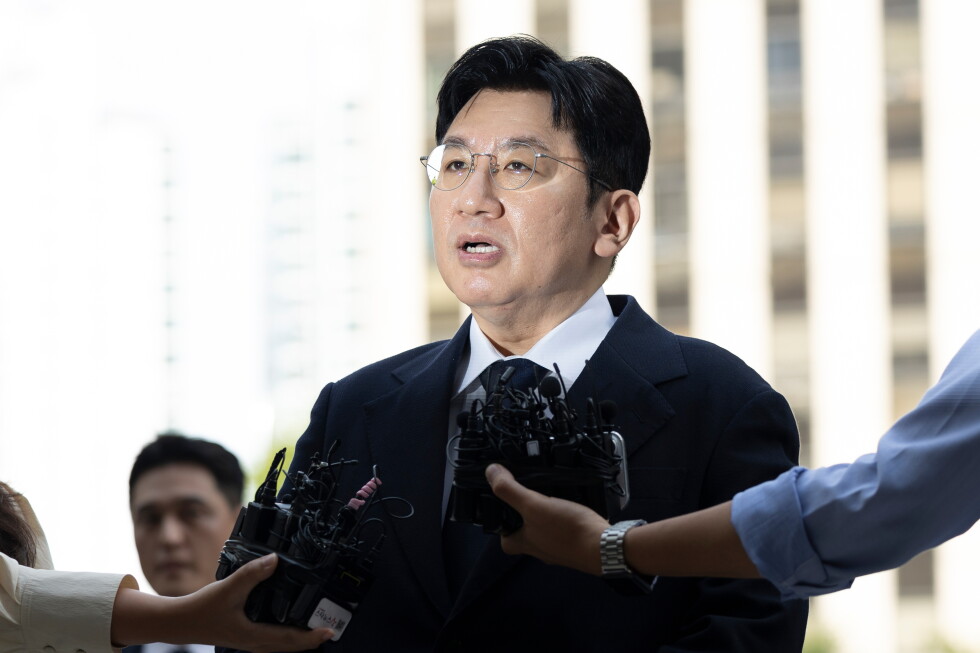
  • South Korean police seek indictment of K-pop mogul behind BTS

    South Korean police seek indictment of K-pop mogul behind BTS

    South Korean law enforcement has moved forward with a high-stakes fraud investigation into one of the most powerful figures in the global K-pop industry, calling on prosecutors to indict Bang Si-Hyuk, the billionaire chair of Hybe — the entertainment agency behind global phenomenon BTS. The Seoul Metropolitan Police Agency announced Thursday that it has referred the case against Bang to the Seoul Southern District Prosecutors’ Office, pushing for an indictment on charges of violating South Korea’s Capital Markets Act. Alongside Bang, police also referred four additional individuals — including current Hybe executives and officials from the involved private equity firm — to prosecutors for indictment, according to local South Korean media reports. The investigation centers on allegations dating back to 2019, when Bang is accused of intentionally misleading existing early investors about Hybe’s impending plans for an initial public offering (IPO). Prosecutors claim that Bang falsely stated the company had no immediate plans to go public, which convinced those early stakeholders to sell their shares to an unnamed private equity fund at a discounted price, mere months before Hybe launched its much-anticipated public market listing. Beyond the misleading investor communications, police have alleged that the private equity fund struck an undisclosed side deal with Bang that could have netted him as much as 200 billion South Korean won, equal to roughly $147 million. This agreement reportedly guaranteed Bang a 30% cut of any profits the fund generated from selling its Hybe shares after the IPO. Bang has forcefully denied all wrongdoing through his legal and corporate representatives. In an official statement released Thursday, Bang’s legal team pushed back against the allegations, saying: “We have consistently responded to the allegations with objective evidence and facts. We expect the allegations to be fully and transparently resolved through the legal process.” Hybe, the company Bang founded, has also stood by its chair amid the ongoing investigation. The case has already seen significant procedural twists: police previously submitted two separate requests to arrest Bang in April and May of this year, but both requests were rejected by prosecutors, who cited a lack of sufficient evidence to justify an arrest warrant and noted that investigators had failed to complete additional probes requested by prosecutors. Independent legal observers have noted that this pattern means prosecutors could opt to send the case back to police for further investigation rather than moving forward with an immediate indictment, extending the legal uncertainty surrounding one of South Korea’s most high-profile corporate leaders. The latest development in the legal case comes at a sensitive moment for Hybe and the K-pop giant at its core: the global supergroup BTS returned to active performances earlier this year, launching a sold-out, highly anticipated world tour after spending nearly four years on a staggered hiatus to allow the band’s seven members to complete their mandatory South Korean military service.