博客

  • 100 influencers invited to US Open spark debate on ‘tennis etiquette’

    100 influencers invited to US Open spark debate on ‘tennis etiquette’

    The US Open, one of tennis’ four prestigious Grand Slam tournaments, is facing a growing debate centered on a major shift to expand its audience reach: doubling the number of accredited influencers and content creators for this year’s New York event. The move, designed to introduce tennis to younger, digitally native audiences, has ignited discussion over how to grow the sport without compromising its long-held, unwritten etiquette rules that govern both player and fan behavior.

    Tennis has always relied on a foundation of quiet decorum during active play, a core norm that sets it apart from many other professional sports. For spectators, the expectation is simple: avoid disrupting players mid-point, a rule that reflects respect for the intensity and focus required to compete at the highest level. This year, the US Open’s decision to grant press-level accreditation to roughly 100 digital creators – twice the number invited in 2025 – as part of its broader push to turn the event into a fan-focused “tennis Disneyland” has tested that norm.

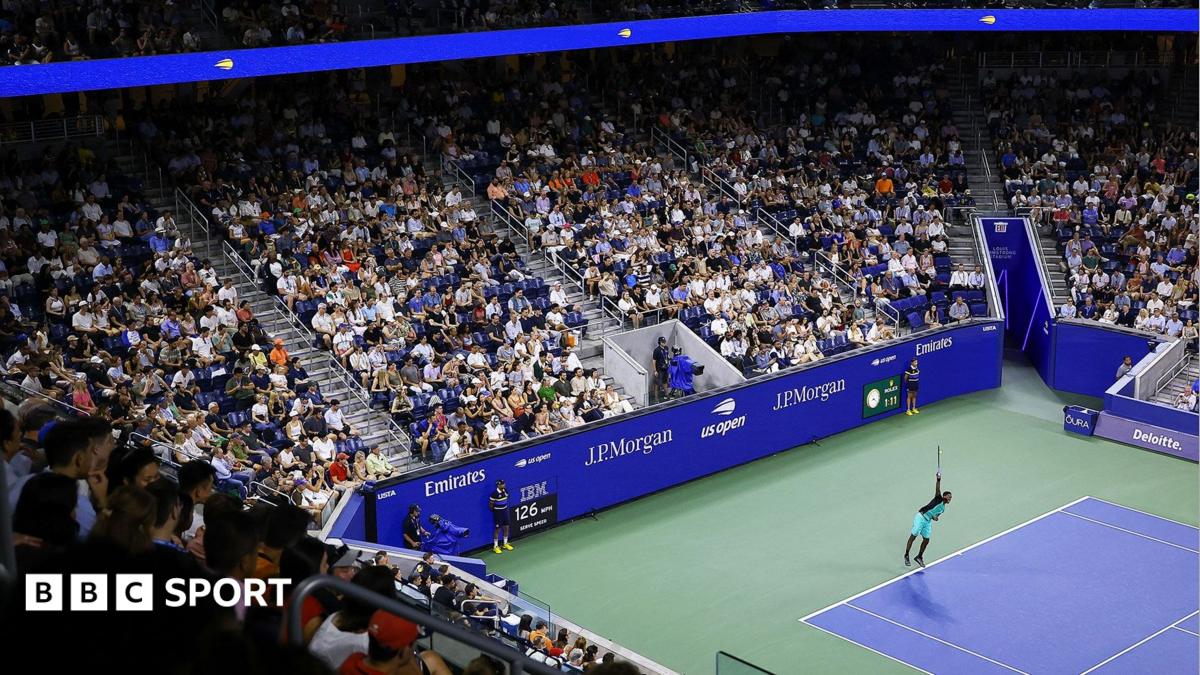
    Tension boiled over during two-time US Open champion Naomi Osaka’s opening round match on the main court at Arthur Ashe Stadium, the world’s largest tennis venue with a capacity of more than 23,000. A group of content creators set up a portable ring light for a photoshoot in their hospitality suite while Osaka was in the middle of serving, prompting an official reprimand from the chair umpire. A viral video captured the same group talking loudly while filming content during active play, forcing the umpire to publicly call for them to stop. When Osaka returned to the court for her second-round match Thursday, the umpire was forced to repeat calls for crowd silence multiple times – a frequency Osaka said she had never experienced before.

    “I tell people I normally just focus on the match and the court, but there was a moment where there was people shouting and you could hear it quite clearly,” Osaka told reporters after the match. “I think it bothered my opponent, too.”

    The four-time Grand Slam champion echoed a common middle ground held by many players, acknowledging that influencer outreach can help grow the sport, but calling for stricter management of fan and creator behavior. “It could be a good thing for people to make the sport of tennis popular to their specific audience, but I think it has to be managed a lot better, especially in the situation like my first-round match,” she said. “Overall, I think there are huge positives. You want people to continue to grow the sport. I just think it has to be in a way that everyone knows the rules and the etiquette.”

    That sentiment was echoed by American world No. 3 Jessica Pegula, who described some disruptive behavior as outright “disrespectful.” “I can appreciate the influencers coming and showcasing the US Open experience,” Pegula said. “But I do think that it’s tough when you see videos when they’re taking pictures and using the selfie lights. People are down there trying to perform. It’s their career and their job. It seems a bit disrespectful. I think it’s become a little too much this year.”

    Coco Gauff, the world No. 4 who has become one of the sport’s biggest young stars, framed the expectation as a simple matter of following event norms. “I definitely think it’s cool to have a new demographic and I definitely think it helps grow the sport,” Gauff said. “But if you’re being invited to a red carpet, you wouldn’t show up in jeans. I think it’s just follow the etiquette of the sport. That’s all.”

    Not all players have pushed back on the expanded influencer policy, however. Many veteran competitors have embraced the push to expand tennis’ reach, arguing that growing the fan base outweighs growing pains. Men’s seventh seed Daniil Medvedev, who has had a complicated relationship with New York crowds in the past, said he supports the US Tennis Association’s (USTA) new approach. “I think the more we try to raise awareness about tennis, the better it is, the more popular the sport is,” Medvedev said. “The more the sport grows, the better it is. I trust USTA with what they are doing. I think [there is] a lot more upside than downside, so go for it.”

    American 11th seed Frances Tiafoe echoed that optimism, praising the US Open for welcoming a diverse mix of attendees. “I think the Open is great because you get all types of people that want to come and watch tennis,” he said. “All different walks of life, different types of people, different type of occupations. Personally, I love that. I have no problem with anybody doing anything, coming to watch the tennis.”

    The expanded influencer accreditation is just one part of a years-long series of overhauls the US Open has rolled out to rebrand itself as a more accessible, fan-friendly event. In 2024, the tournament introduced free fan movement, allowing spectators to take their seats at any time rather than waiting for changeovers. The following year, it expanded the tournament to 15 days, adding a “Fan Week” before the main singles draw that features revamped mixed doubles competition and exhibition matches with retired and current stars. Tournament chief executive Craig Tiley has publicly framed these changes as part of a goal to create “the tennis Disneyland” that draws casual and hardcore fans alike.

    Speaking ahead of the tournament, Tiley defended the creator credential program as a necessary adaptation to modern media consumption. “We need to find ways of reaching new audiences, reaching people in a way that they connect with media today,” he said. “The creation of the creator credential has been a key part of that because it’s enabled us to talk to people in a way that they’re listening. That’s been a big focus.”

    In the wake of the high-profile disruption during Osaka’s opening match, tournament organizers have already stepped up efforts to reinforce etiquette rules. Digital screens across the Arthur Ashe Stadium complex now display frequent reminders asking attendees to “refrain from any activity that could disrupt the game, including noise levels, flash photography and ring lights.”

    In a formal statement, the USTA reiterated its commitment to balancing growth and respect for competition. “The USTA is always striving to grow tennis in this country and bring new audiences into the sport,” the organization said. “We want all of our fans and guests to have an incredible time when they attend, but we also need to ensure they do not interfere with the action and competition on the court. We are continually looking for ways to ensure fans in the stands know what is permitted and what is prohibited.”


  • Volkswagen board approves plan to cut another 50,000 jobs

    Volkswagen board approves plan to cut another 50,000 jobs

    German automotive giant Volkswagen has taken one of the most dramatic steps in its 88-year history, greenlighting a fresh round of 50,000 job cuts that brings the total number of positions targeted for elimination by 2030 to 100,000. This landmark restructuring, first signaled by CEO Oliver Blume back in July, follows an initial 50,000 job cut announcement made by the company in March.

    The multinational automaker, whose brand portfolio encompasses mass-market nameplates like Volkswagen, Skoda and Seat alongside luxury marques including Audi, Porsche, Bentley and Lamborghini, is also re-evaluating the future of four underperforming manufacturing facilities across Germany. The plants based in Emden, Zwickau, Hanover and Neckarsulm are currently operating with excess production capacity that outpaces current consumer demand, and company officials confirmed that alternative use cases for the sites are still under active assessment.

    Alongside workforce adjustments, Volkswagen outlined sweeping changes to its product lineup: by 2035, the firm will cut the total number of vehicle models it produces in half, while reducing overall product complexity by 75%. The company says it will refocus its resources on high-demand, high-margin “most compelling vehicles” and ramp up production volumes per surviving model, a strategy designed to drive significant cost reductions across operations.

    In a formal statement released Thursday, Blume framed the tough decisions as a critical investment in Volkswagen’s long-term viability, arguing the moves send a “strong signal” for the company’s future while demonstrating that leadership is “taking responsibility for our entire workforce.” As of 2025, Volkswagen employs more than 660,000 workers across its global operations.

    Christianne Benner, president of Germany’s powerful IG Metall industrial union – Europe’s largest industrial union – and deputy chair of Volkswagen’s supervisory board, acknowledged that the cuts come as the company navigates a serious “crisis situation,” noting that firm leadership had “fought hard for good solutions” amid the pressures it faces.

    Volkswagen’s restructuring push comes as the brand confronts mounting industry headwinds that have dragged profits sharply lower in recent years. Once one of the company’s largest and most reliable growth markets, China has seen plummeting Volkswagen sales amid fierce competition from domestic Chinese electric vehicle manufacturers that have leveraged lower production costs and rapid technological innovation to capture market share. Chinese automakers like BYD have seen explosive sales growth not just in their home market, but across the European Union, the United Kingdom, and Southeast Asia as they expand their global footprint. Volkswagen has also faced declining sales in the US market, a downturn partially attributed to longstanding import tariffs on vehicles introduced during the Trump administration.

    Market reaction to the approved restructuring plan was broadly positive: Volkswagen’s share price rose roughly 7% in Frankfurt trading during Friday morning hours. Company leadership emphasized that a fundamental reshaping of the firm’s global workforce capacity is non-negotiable to protect long-term competitiveness amid shifting consumer demand and the ongoing industry-wide transition to electric vehicle technology. The new round of cuts will include management roles across the group, matching the scale of the initial 50,000 reductions announced earlier this year.

  • Ukrainian quits college team over Russian signing

    Ukrainian quits college team over Russian signing

    A 20-year-old Ukrainian women’s college basketball player has opened up about her choice to exit Louisiana State University’s program, confirming that the team’s decision to add Russian player Anna Minaeva to its roster was the direct catalyst for her departure after just one season with the Tigers.

    Kate Koval, who averaged 8.3 points per game during her debut 2024-2025 season and was projected to start at center for LSU in the upcoming campaign, initially had her exit listed as being for “personal reasons” when the announcement was made. In a candid public post shared to her Instagram account, Koval tied her departure directly to Russia’s full-scale invasion of Ukraine, a conflict that has directly impacted her immediate family and childhood home.

    Koval explained that her father currently serves in the Ukrainian armed forces, defending the country against what she described as Russian military aggression. For the young player, the war is not a faraway international dispute—it is a deeply personal trauma that has touched every part of her life. “People close to me have been killed and wounded in Russian attacks, and places where I grew up and first began playing basketball have been destroyed by missile strikes,” she wrote.

    After Minaeva’s signing, Koval said she was forced to confront whether LSU could still be the right fit for her, given the profound personal toll the conflict has taken on her, her family, and her loved ones still living and fighting in Ukraine. She emphasized that her choice was not an easy one to make. “While I understand and respect that roster decisions are a part of college basketball, I have to remain true to myself, my values and my country,” she added.

    Koval still has two years of NCAA eligibility remaining, but faces a hurdle in transferring to a new program for the 2025-2026 season: the NCAA’s transfer portal has already closed for upcoming roster changes. In her statement, she appealed to the collegiate sports governing body to grant her an exception, noting the unique and serious circumstances surrounding her decision, and asking the association to recognize the deep personal stake she has in the situation.

    Despite her departure, Koval spoke warmly of her time at LSU, saying she had once felt she found a home within the program’s community. She expressed gratitude to her former teammates, who she said became like family, as well as to the program’s coaching staff, administrative team, university professors, and the wider LSU community. “I will always cherish the relationships, experiences, and memories I made there,” she said.

  • Myanmar’s Min Aung Hlaing visiting Vietnam as he seeks to normalize relations with ASEAN

    Myanmar’s Min Aung Hlaing visiting Vietnam as he seeks to normalize relations with ASEAN

    HANOI, Vietnam — Myanmar’s military-backed government leader Min Aung Hlaing has arrived in Hanoi for high-stakes talks with top Vietnamese officials, marking the latest step in his years-long campaign to repair Myanmar’s fractured regional standing and court much-needed foreign capital amid widespread international isolation.

    This diplomatic outreach comes more than five years after Min Aung Hlaing, then serving as Myanmar’s army chief, seized power in a February 2021 coup that ousted the democratically elected government led by Aung San Suu Kyi. The takeover triggered widespread global condemnation, years of diplomatic shunning, and a brutal nationwide civil conflict that has persisted to this day, following a deadly military crackdown on mass anti-coup protests that spawned a widespread armed resistance movement.

    Since his controversial swearing-in as president in April 2024, following an election widely dismissed by critics as a sham to cement the military’s permanent grip on power, Min Aung Hlaing has ramped up his global diplomatic schedule. Prior to this Vietnam visit, he has undertaken official trips to India, China, Laos, Thailand, and more recently, Eurasian nations including Kazakhstan, Belarus, and Russia, where he has held one-on-one meetings with national leaders and hosted business forums focused on attracting foreign direct investment to Myanmar.

    Vietnam holds unique significance for Myanmar’s military leadership: the two Southeast Asian countries share decades of deep military-to-military ties, including formal defense cooperation agreements. Vietnam’s state-owned military telecommunications conglomerate Viettel also holds a major stake in Mytel, one of Myanmar’s largest domestic telecom operators, which is partially owned by entities linked to Myanmar’s military.

    Despite these longstanding connections, bilateral economic ties between the two nations have weakened sharply in recent years. Official data shared by Min Aung Hlaing with Vietnamese Foreign Minister Le Hoai Trung during their August meeting in Naypyidaw shows bilateral trade plummeted from $853 million in 2020, the final full year before the coup, to just $590 million in 2025, and only reached $335 million in the first half of 2026, according to Vietnam’s foreign ministry.

    According to Myanmar’s state-run MRTV television, Min Aung Hlaing departed the country’s capital Naypyidaw on Friday morning for the visit. During his time in Hanoi, he is scheduled to hold formal talks with Vietnamese President To Lam and other senior Vietnamese government leaders, alongside attending an investment-focused business forum accompanied by members of his cabinet.

    This trip marks Min Aung Hlaing’s third official visit to an Association of Southeast Asian Nations (ASEAN) member state as he works to rebuild Myanmar’s standing within the 11-nation regional bloc. Following the 2021 coup, ASEAN barred Min Aung Hlaing from the bloc’s top-level summits for years over his failure to implement a 2021 consensus peace plan designed to de-escalate post-coup violence in Myanmar.

    Western governments have maintained broad sanctions and diplomatic shunning of Min Aung Hlaing and his inner circle since the 2021 coup, in response to the ouster of the elected government and widespread human rights violations documented by independent monitors during the ongoing civil conflict.

  • Tata Chemicals ordered out of Kenya by president

    Tata Chemicals ordered out of Kenya by president

    A major economic and diplomatic shift is unfolding in Kenya, where President William Ruto has publicly ordered Tata Chemicals, an Indian multinational chemical giant part of the sprawling Tata Group conglomerate, to cease operations and leave the country over accusations that the firm has failed to deliver sufficient local economic benefits. The announcement was made during Ruto’s recent visit to Kajiado County, the location of Tata Chemicals Magadi’s flagship soda ash extraction and processing plant on the shores of Lake Magadi, roughly 75 miles southwest of the Kenyan capital Nairobi.

    For more than a century, the Magadi site has hosted soda ash operations, with Tata taking control of the facility in 2005 after acquiring the previous owner, UK-based Brunner Mond Group. Today, the plant stands as Africa’s largest producer of natural soda ash – the industrial-grade sodium carbonate that serves as a core input for glass manufacturing, chemical production, battery manufacturing, water treatment, detergent formulation, and paper and textile production. Kenya itself ranks as the world’s fourth-largest natural soda ash producer, contributing roughly 1% of total global output, according to data from the U.S. Geological Survey.

    Under Tata’s management, the facility exports over 350,000 tonnes of soda ash annually, with more than 95% of its total product shipped to overseas markets including India, Southeast Asia, the Middle East, and other regional African economies. The operation also produces industrial and animal-feed grade natural salt. In its 2024 financial reporting, Tata Chemicals Magadi recorded roughly $78.7 million in turnover from 245,000 tonnes of soda ash sales. The firm directly employs approximately 500 local workers, and states that its community outreach programs deliver basic services including clean water, healthcare access, school infrastructure, and public works development that benefit an estimated 30,000 residents in the Magadi region.

    Despite this footprint, President Ruto has leveled sharp criticism at the company, arguing that its century-long operating contract has failed to deliver inclusive growth for Kenya and local communities in Kajiado. Speaking in Swahili during his site visit, Ruto accused the firm of extracting Kenya’s natural resources for export without adding local value, specifically saying the company has chosen to ship raw soda ash abroad instead of building domestic downstream processing facilities to manufacture finished glass and chemical products. “Tata Chemicals Magadi has had a contract for 100 years, and they have done nothing. I told them the other day to pack up and leave,” Ruto said. “They have not built anything in Kajiado, they have not built any factory in Kajiado.”

    Ruto added that the Kenyan government has already identified two new domestic and international investors to take over the Magadi operations, with a core mandate to expand local job creation, drive additional capital investment, and develop downstream manufacturing to capture more value for Kenya’s economy.

    The order to exit is the culmination of escalating regulatory tensions between Tata and the Kenyan government. Five weeks before Ruto’s public announcement, Kenya’s mining cabinet secretary had already ordered the firm to suspend all operations, citing alleged failures to pay required royalties and meet other local regulatory obligations. In response to that order, Tata released a statement saying it had submitted a full, comprehensive response addressing all concerns raised by the ministry, including detailed documentation proving its compliance with all applicable Kenyan regulations, and was awaiting a formal review of its submission and further official guidance.

    Following Ruto’s exit order, Tata Chemicals reaffirmed its position, stating that it respects the Kenyan government’s decision, and remains committed to resolving outstanding issues through constructive dialogue within the country’s legal and regulatory frameworks. The firm also noted that since its 2005 acquisition of the Magadi facility, the operation has been an important contributor to the Kenyan economy and remains a core part of Tata Chemicals’ global business portfolio.

  • From ‘dog fruit’ to darling: India’s avocado boom

    From ‘dog fruit’ to darling: India’s avocado boom

    Fifteen years ago, avocados were an afterthought in India, left to rot on branches or be eaten by feral dogs—earning them the unflattering local nickname “dog fruit.” Today, the once-overlooked fruit sits at the center of a fast-growing agricultural revolution, as surging consumer demand transforms how Indian farmers, entrepreneurs, and researchers approach avocado cultivation.

    Sunil Bopaiah, a 26-year veteran of India’s plantation industry and current group manager at Kerala-based Cottanad Plantations, has witnessed this shift firsthand. For decades, his operation, which grows cocoa, rubber, coffee, and spices in the hills of Wayanad, used avocados solely as shade trees for coffee crops. No one imagined the fruit would become a profitable standalone venture. That changed around 2011, when Bollywood icon Shilpa Shetty publicly cited avocados as a core part of her skincare routine. The celebrity endorsement triggered an immediate market shift: avocado prices doubled overnight, and they have continued climbing steadily in the years since.

    To meet rising demand, Cottanad Plantations has dedicated 40 acres exclusively to avocado cultivation, harvesting between 10 and 15 tonnes of fruit annually. The operation projects output will jump to 40–50 tonnes within the next three to four years, as the team adapts growing practices to suit the crop’s unique needs. Drawing on guidance from South African agricultural experts, the plantation completely redesigned its cultivation approach, switching to raised planting beds and wider tree spacing to protect avocado roots, which are extremely susceptible to fungal disease.

    Industry analysts estimate massive untapped potential for Indian avocado production, driven by a yawning gap between domestic supply and consumer demand. Manilal Palliyath, who works to expand India’s avocado sector, notes that India currently produces just 8,000 to 9,000 tonnes of avocados annually, while importing roughly 15,000 tonnes to meet total demand. For many farmers, shifting to avocados also offers a critical buffer against climate volatility that has hurt traditional staple crops. “Coffee and pepper have suffered because of changing climatic conditions, making diversification essential for farmers,” Palliyath explains.

    As demand grows, India’s hospitality sector has echoed the call for consistent, high-quality local avocados. Hussain Shahzad, executive chef at Mumbai-based Hunger Inc. Hospitality—which operates popular venues including The Bombay Canteen and Veronica’s—says the group currently relies on imported avocados to meet kitchen needs. While local growers have made great strides in improving cultivation, Shahzad notes that domestic produce still struggles with inconsistent quality, flavor, and availability across seasons and regions. “Imported ones currently offer the consistency we need in terms of flavour, texture, size, and ripening,” he says, adding that the group is eager to shift to local sourcing as the industry matures: “Supporting Indian agriculture and working with indigenous ingredients is central to how we approach food.”

    A new generation of Indian entrepreneurs is working to close the quality gap by bringing advanced cultivation techniques and popular foreign varieties to domestic farms. Harshit Godha, founder of the Indo-Israel Avocado Nursery in Bhopal, Madhya Pradesh, launched his business in 2021 after completing a month-long training program on avocado production in Israel. Today, his operation is thriving: over the past five years, he has supplied roughly 18,000 saplings of high-demand international varieties including Hass and Pinkerton to farmers across the country.

    Godha notes that Israel’s arid climate has pushed the country to develop the world’s most advanced water-efficient avocado growing technology, making it an ideal model for parts of India facing water scarcity. But scaling commercial production requires a complete shift from traditional Indian growing practices, where avocados were interspersed among other crops as shade trees. Commercial production requires grafting high-yield fruit varieties onto rootstocks bred to tolerate local conditions, rather than growing trees from seed. Producers also must implement aggressive pruning to keep tree heights manageable for harvesting, and plant a precise mix of two avocado varieties to enable cross-pollination—one of the most common mistakes that derails new orchards, Godha explains. “If a farmer gets this planting ratio wrong, the trees will fail to produce fruit, no matter how advanced the irrigation tech is,” he says. “This single botanical detail is what separates a highly profitable, high-yielding orchard from one that looks great on paper but fails in reality.”

    Alongside the adoption of foreign varieties, Indian agricultural researchers are working to develop standardized, high-yield domestic avocado varieties adapted to local growing conditions. Dr Ganeshan Karunakaran, principal scientist at the ICAR-Indian Institute of Horticultural Research (IIHR) in Bengaluru, has spent 25 years leading a breeding project that has already released two improved domestic varieties, including Arka Supreme.

    Karunakaran explains that the biggest barrier to a consistent domestic avocado market has been genetic variation: most existing backyard avocado trees in India are genetically distinct, leading to inconsistent fruit quality across the supply chain. “Our objective is to provide farmers with uniform, high-yielding, good-quality planting material rather than thousands of different unnamed trees,” he says. He also warns of risks from unregulated nurseries that sell unlabeled or diseased saplings, which can look healthy for years before suddenly dying, leaving farmers with devastating financial losses.

    Despite the growing pains, early adopter farmers remain optimistic about avocados’ long-term potential in India. Shiju Sebastian, who planted his first two-acre avocado orchard in Wayanad, Kerala, eight years ago, is already harvesting 3,500 kilograms of fruit annually that sells out entirely in Bengaluru. He now plans to expand his avocado cultivation by another three acres. “Avocado will never fail you. It’s such a loving and lovable fruit. I have fallen in love with this fruit now,” he says, adding that the biggest need for new growers is consistent technical guidance and guaranteed access to retail markets.

  • Watch: Moment workers are rescued from Nepal tunnel

    Watch: Moment workers are rescued from Nepal tunnel

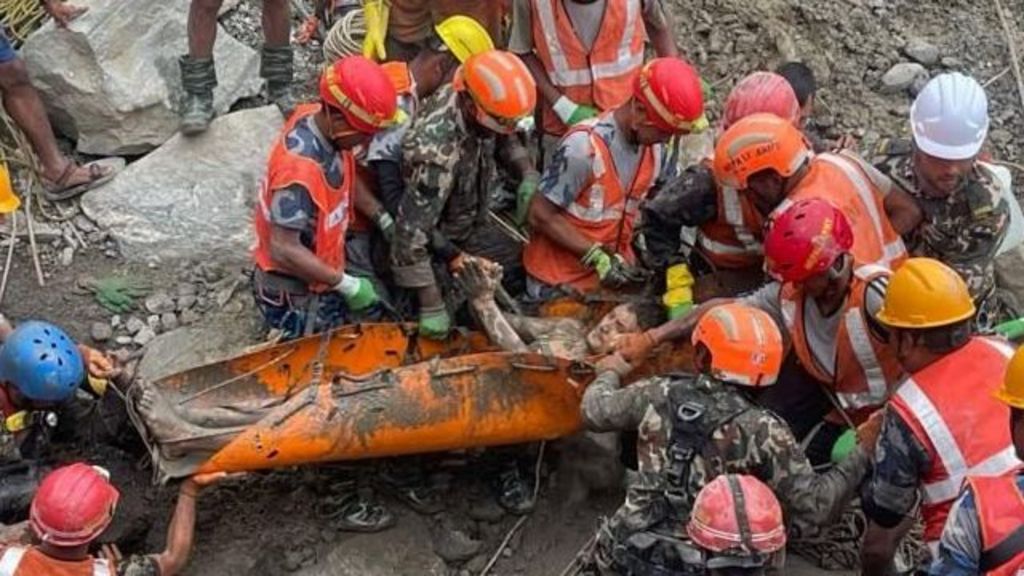
    In a gripping, widely shared moment of rescue that has drawn global attention, emergency teams in Nepal have successfully extracted two trapped workers from a flooded hydropower tunnel, more than seven days after catastrophic flash floods swept through the Nepal-China border region. The disaster, which struck with little warning, buried the tunnel entrance under debris and cut off all contact with the workers inside, leaving rescue teams racing against time to reach the trapped men before supplies of oxygen and clean water ran out. Footage captured by rescue personnel on site shows the emotional moment the two workers emerged into open air, wrapped in emergency blankets after spending more than a week trapped in the dark, waterlogged underground passage. The flash flood, triggered by unusual heavy rainfall that swelled glacial meltwater in the Himalayan highlands, devastated remote border communities, destroying infrastructure and leaving dozens of people missing or dead in the immediate aftermath. The hydropower project, a joint development initiative between Nepali and Chinese investors, had been under construction in the remote mountainous region when the disaster hit, trapping dozens of construction workers inside the unfinished tunnel. While this successful rescue offers a rare moment of hope amid the tragedy, recovery teams continue to search for other workers still reported missing in the aftermath of the flood, with relief operations ongoing to support displaced local communities.

  • Steve Irwin’s family celebrates ‘superhero’ dad, 20 years after shock death

    Steve Irwin’s family celebrates ‘superhero’ dad, 20 years after shock death

    Twenty years after iconic wildlife conservationist Steve Irwin — known globally as the Crocodile Hunter — lost his life in a tragic accident at Australia’s Great Barrier Reef, his family is honoring his memory with heartfelt tributes that highlight the far-reaching impact he left behind. On September 4, 2006, the 44-year-old TV personality died after a stingray’s barb pierced his chest while he filmed an underwater documentary, shocking fans and conservation communities around the world.

    Now 28, Bindi Irwin, Steve’s oldest child who was just 8 years old when he died, shared a moving public tribute on Instagram that has resonated with millions. She reflected on two decades of walking alongside grief, noting that for 20 years, she has stood with her family as the world joined them in mourning the loss of a man who changed how millions connected to wildlife.

    “ I always thought that my dad’s legacy is wildlife conservation; it turns out, his legacy is love. For our planet and for each other,” she wrote in her post. Bindi opened up about the loss the family has carried: her mother Terri, Steve’s widow, lost the love of her life, while she and her younger brother Robert lost the best father they could have asked for. “Grief never truly leaves us; we walk alongside it every day,” she added.

    Bindi also shared a sweet, touching detail about how her own 5-year-old daughter has built a connection with the grandfather she never got to meet. Every morning, the young girl watches Steve’s old documentaries, and already feels the warm, joyful love of the man she calls “grandpa crocodile” despite never having been held by him.

    In the years since Steve’s death, the entire Irwin family has remained committed to carrying forward his life’s work, continuing to run Australia Zoo in Queensland, the wildlife sanctuary Steve and Terri built into a global hub for conservation and education. Bindi emphasized that her father’s influence will extend for generations, writing that his impact remains so profound that it deserves celebration, not just mourning. She closed her tribute by calling Steve her family’s guardian angel, and signing off with “I love you with my whole heart.”

    Terri Irwin also joined in marking the 20th anniversary, sharing a vintage interview that revealed a little-known detail about Bindi’s name that many fans had not heard before. In the clip, the ever-enthusiastic Steve, dressed in his signature khaki, recalled the moment Bindi was born — calling it the most incredible wildlife encounter of his entire life. When he first held his newborn daughter, the inspiration for her name struck instantly. “I was flabbergasted and it was then that her name evolved. I’ve gone, ‘Bindi!’ after my favourite crocodile, Bindi,” he said in the interview, grinning widely.

    22-year-old Robert Irwin, Steve’s son, also shared his own tribute, posting a throwback photo of baby Robert being held by his father, with a simple, powerful caption: “Your legacy is forever.” Most recently, Robert carried on a family tradition last November when he won the Mirrorball Trophy on the U.S. dance competition *Dancing with the Stars* — exactly a decade after his sister Bindi took home the same title.

  • Reckoning looms for golf carts that zip through Rome’s crowded historic center

    Reckoning looms for golf carts that zip through Rome’s crowded historic center

    ROME — Beneath the centuries-old grandeur of Rome’s iconic monuments and ancient ruins, a very modern travel phenomenon is stirring heated conflict: the tourist golf cart. What started as a novel way for visitors to zip through the Eternal City’s historic core has exploded in popularity, spurring city officials to launch a sweeping crackdown on the hundreds of unregulated vehicles currently outpacing local traffic laws.

    Critics of the golf cart boom paint a bleak picture of vehicles running amok through narrow cobblestone streets, parking illegally in restricted zones, worsening already crippling congestion and exacerbating Rome’s long-running overtourism crisis. Local outlets have used inflammatory language to frame the trend, describing it as an “invasion” and claiming the historic center is being “held hostage by golf carts.”

    But proponents of golf cart tours push back, arguing the small, electric vehicles are far quieter than large tourist vans and buses, take up less limited street space, and produce zero exhaust fumes that erode and stain the city’s irreplaceable historic landmarks. Tensions between golf cart operators and other road users have boiled over repeatedly, even drawing in frustrated local drivers. During an August ride-along conducted by The Associated Press, a confrontation erupted between an eight-seater van driver and a golf cart operator, with both shouting insults and gesturing angrily as they jostled for position on the narrow street — a clash that has become increasingly common.

    Today, golf carts speed past outdoor cafes where visitors dine on spaghetti carbonara at checkered tablecloths, weave past souvenir stalls selling everything from hot priest calendars to branded “Ciao Bella!” tote bags. Most tours are tightly scheduled blitzes of Rome’s most popular hot spots, giving visitors just enough time to stop for a cappuccino or gelato between stops — until the vehicles run afoul of city authorities.

    For tourists, the tours offer a convenient way to see Rome’s top attractions in just a few hours, leaving the rest of a short trip open for casual exploration. Ruth Sanderson, a 50-year-old traveler from Manchester, England, booked a golf cart tour as a birthday surprise for her husband during their first visit to Rome. Even on that tour, however, the operator parked illegally multiple times, including in a zone reserved exclusively for car-sharing vehicles near the Spanish Steps. “We don’t have designated parking spots for golf carts, so we park wherever we can, as legally as possible,” guide Martin Halili, who owns Wheel Tours, explained to the couple.

    Long before golf carts rose in popularity, Rome’s historic center has struggled with chronic parking and congestion. A 2023 field survey conducted by the city found the historic core has only 4,300 public on-street parking spots — roughly one-quarter the number of cars owned by local residents alone. On an average day, an additional 50,000 vehicles enter the restricted area, leaving every spare cranny of curb space claimed by illegally parked cars, vans, Vespas, motorcycles and double-parked delivery trucks. For local residents already fed up with unending traffic, golf carts were the final straw.

    Luigi la Licata, head of the Monti neighborhood association, told the AP that decades of over-authorization for multiple vehicle classes have already choked local streets, and unregulated golf carts are the most visible and recent addition to the chaos. “The golf cart is the most obvious one — and the latest — but there are many others,” he said.

    Data from TripAdvisor confirms how rapidly the trend has grown: golf cart tour bookings this summer jumped 147% compared to 2024. Viator, TripAdvisor’s tour booking subsidiary, is the single largest source of bookings for these tours. Current estimates put the total number of tourist golf carts in Rome at roughly 500. One-fifth of those operators belong to Metur, an industry association founded last December to build dialogue with local residents and city officials.

    Metur president Pascal van Duijnhoven acknowledges that overtourism is a serious challenge for Rome, and that the industry is not blameless. “Overtourism is a real problem, and we’re not denying it. And maybe we’re also part of it in a way. But if we’re part of it, then at least be part of it in a smart way,” van Duijnhoven said. “We believe, especially for Rome, that it’s a solution. And we really hope that people start looking at it like this. But we need a hand. We need some help from the authorities.”

    Regulating the booming industry has proven far from straightforward for city leaders. Eugenio Patanè, Rome’s deputy mayor for sustainable mobility and transport, has been working to overhaul traffic rules citywide to cut congestion, not just for golf carts. In July, the city implemented a new rule requiring electric vehicles to pay to enter the historic center, aligning them with the existing fees for gasoline-powered cars — a policy shift that prioritizes cutting congestion over solely reducing emissions. Since the policy took effect, the number of authorized vehicles entering the center has dropped by roughly one-quarter to 350,000, and Patanè has set a goal of cutting daily entries in half long-term.

    But reining in golf carts has hit multiple roadblocks. First, inconsistent technical classifications mean some carts fall under existing traffic regulations, while others are able to operate with no restrictions. Second, oversight of passenger transport and tourism licensing is currently controlled at the regional level, not by the city of Rome. Patanè has requested that the Lazio region transfer regulatory authority to the city, a move he expects to be finalized this month. Once the city gains control, Patanè plans to introduce new rules that will set fixed approved tour routes, cap the total number of golf carts allowed to operate, and create a licensing system to select authorized operators.

    “Cities where this golf cart phenomenon is expanding truly have very few weapons,” Patanè said. “We will be able to regulate this phenomenon that has now become rampant and, in some cases, even worrisome.”

    As the city waits for regulatory power to transfer, a reckoning is already underway for operators. Enforcement actions have already increased sharply, with operators facing inconsistent but often severe penalties. Van Duijnhoven told the AP that authorities stopped vehicles owned by Metur members 14 times in the second half of August alone, with document reviews lasting up to an hour. Unlicensed operators can face penalties including having their vehicles impounded for more than a month, or fines as high as 4,000 euros ($4,600) for unlicensed tour guiding.

    During an AP visit to the area just one block from the Pantheon, reporters observed an Italian financial police officer stopping a golf cart carrying a family from Florida, spending a half-hour inspecting documents, copying down visitor ID information. Three nearby private hire vans, also parked illegally, received no enforcement action at all. Operators argue that existing private hire and taxi drivers, who see golf carts as a threat to their business, are behind the push for harsh enforcement.

    Halili, the guide who led the Sanderson family’s tour, says established transport lobbies have “waged a war” against golf cart operators, filing repeated complaints and appeals to block their operations. “They have it in for golf carts,” he said.

  • Russia shifts tactics with round-the-clock attacks on Kyiv, disrupting daily life

    Russia shifts tactics with round-the-clock attacks on Kyiv, disrupting daily life

    For nearly two years of full-scale war in Ukraine, residents of Kyiv grew accustomed to a grim, predictable pattern of Russian aerial assaults: nearly all drone and missile strikes came under cover of darkness. Late evening alerts would pop up on Telegram monitoring channels, tracking incoming drone swarms, launched missiles and the activation of Ukrainian air defenses, and civilians would weigh the threat level to decide whether to hunker indoors or descend to metro station bomb shelters. Today, that grim predictability is gone.

    Russia has rewritten its playbook for attacking the Ukrainian capital, deploying new fast-flying jet-powered drones to launch strikes around the clock. The long-held assumption that daylight hours bring safety for normal daily activity has been completely shattered. Over the past week, attacks have hit at all hours, compounding the long-standing terror of overnight strikes with the constant disruption of daytime assaults that has drained Kyiv residents emotionally and physically.

    The constant wail of air-raid sirens has become an inescapable thread woven into the fabric of Kyiv’s daily routine. Alerts interrupt morning commutes, midday grocery runs, and children’s school classes. They have intruded on life’s most meaningful moments, from joyous wedding celebrations to somber funeral gatherings, and as always, they have left civilian casualties in their wake. The unrelenting stream of alerts has pushed many residents to their breaking point, with some now questioning how much longer they can remain in the capital.

    The routine of daily disruption follows a familiar pattern: An alert triggers, Kyiv residents glance at their phone notifications or scan the sky for threats, and moments later, the distant thud of Ukrainian air defenses intercepting incoming drones echoes across the city. Plumes of smoke often rise from impact sites, and photos of destruction spread rapidly across local Telegram channels within minutes. An hour or less later, the next siren sounds.

    For public-facing businesses across Kyiv, mandatory air-raid protocols require all customers and staff to evacuate to shelters immediately when an alert is issued, turning routine activities into chaotic cycles of interruption. A bank transaction is cut off mid-conversation; a shopping trip becomes a repeated loop of entering a store, evacuating, returning, and evacuating again.

    Getting basic shopping done has turned into a nightmare for Volodymyr Bovsunovskyi, who recounted a recent trip to a local mall to buy new clothes for his nearly 4-year-old daughter. The family had only been inside for 20 minutes when an alert sounded, forcing them to rush outside, where they spotted smoke rising from a nearby impact site. They left without buying the clothes at all. “A lot has changed in the last seven days,” Bovsunovskyi said. Like many Kyiv residents, he has held out hope the attacks will slow, but the bombardment has continued unbroken, as Ukraine works to develop an effective defense against the new fast drones Russia is deploying.

    Even intercity train travel, already strained by war, has faced far longer delays and disruption. Journeys that normally take a few hours now stretch on for much longer, and in some cases, trains have stopped mid-route along tracks, forcing passengers to walk for hours through grassy fields with their luggage as one alert follows another. Getting around the city itself carries the same uncertainty.

    When Ukrainian authorities disrupt GPS signals to jam incoming Russian drones, ride-hailing apps become nearly unusable. A car that appears to be just minutes away can suddenly show up dozens of kilometers away, and an imminent pickup can suddenly shift to an estimated arrival time of thousands of minutes.

    Even life’s most intimate and momentous occasions do not escape the disruption. One Kyiv couple moved forward with their wedding plans despite the constant sirens. When 38-year-old Iryna Baranova returned home from hair and makeup appointments Wednesday morning to finish getting ready, explosions rang out across the city. “We heard two explosions, the alarm ended, we got together and went to the registration ceremony,” Baranova said, clad in a white satin gown with strands of pearls around her neck. After the ceremony, she and her 40-year-old husband Evhen Mytsyk walked hand-in-hand through a local botanical garden. Mytsyk said the ongoing attacks did not dim the joy of their wedding day. “If you wake up in the morning, you have to make the most of that day, because there might not be another chance,” he said. “At a time like this, you appreciate life and the love of your family more, and you give love more openly yourself.”

    In the same garden, Tetyana Shevchenko meditated in a small wooden gazebo modeled after a Buddhist prayer space, a practice she has kept for years to stay calm amid the constant air raids around her. “When the air raids first started, we couldn’t stand the sound at all. It was very loud, disturbing, depressing,” she said. “The body works in a way, it gets used to everything, including nighttime attacks, spending the night on the floor in the corridor, and insomnia.” Meditation also helps her navigate the slow, tedious process of bureaucratic work, which has grown even more difficult amid the frequent alerts. Shevchenko has been trying to obtain documents to recover state funds owed to her mother, who died last year. On a recent day, she waited in a long line for her appointment, only for an air-raid alert to sound just before her turn, forcing her to forfeit her spot and move to the back of the line to start the process over. “In this period of adjustments and grieving all of us are united, united in our suffering,” she said as another siren blared, followed moments later by a distant thud of an explosion.

    After a full week of unrelenting attacks, a growing number of Kyiv residents are now considering leaving the capital for safer, quieter parts of the country. Ivan Datsiv, an IT worker, was in his apartment in Kyiv’s historic Podil district when a Russian drone crashed through his floor on Tuesday, charring the walls and ceilings of his unit and completely destroying the adjacent apartment. Datsiv tries to joke about the damage, saying he had already been planning to repaint his walls anyway.

    Alerts have become so frequent that he no longer sees the point of repeatedly trekking to a bomb shelter. At the current rate, he said, the only option would be to move into a basement full-time. “The alarms sound constantly,” he said. “You don’t even have time to go down and come back up. It’s just a waste of time running back and forth.” He is now actively planning to leave Kyiv. “I’m thinking of living in another city, somewhere quiet and without this danger,” he said. From the blown-out window of the destroyed apartment next door, the view looks down onto a playground and basketball court where children still play between alerts—until another siren sounds, and minutes later, the white zigzag trail of an intercepted drone stretches across the sky.

    Bovsunovskyi is also considering leaving the capital temporarily, to give his pregnant wife and young daughter a chance to escape the constant stress and danger. The kindergarten his daughter attends moves all children to a shelter every time an alert sounds, and the alerts have grown so frequent that he now picks her up halfway through every day. “There is no stability,” he said.