博客

  • Australia and Japan start women’s basketball World Cup with wins; US faces China later

    Australia and Japan start women’s basketball World Cup with wins; US faces China later

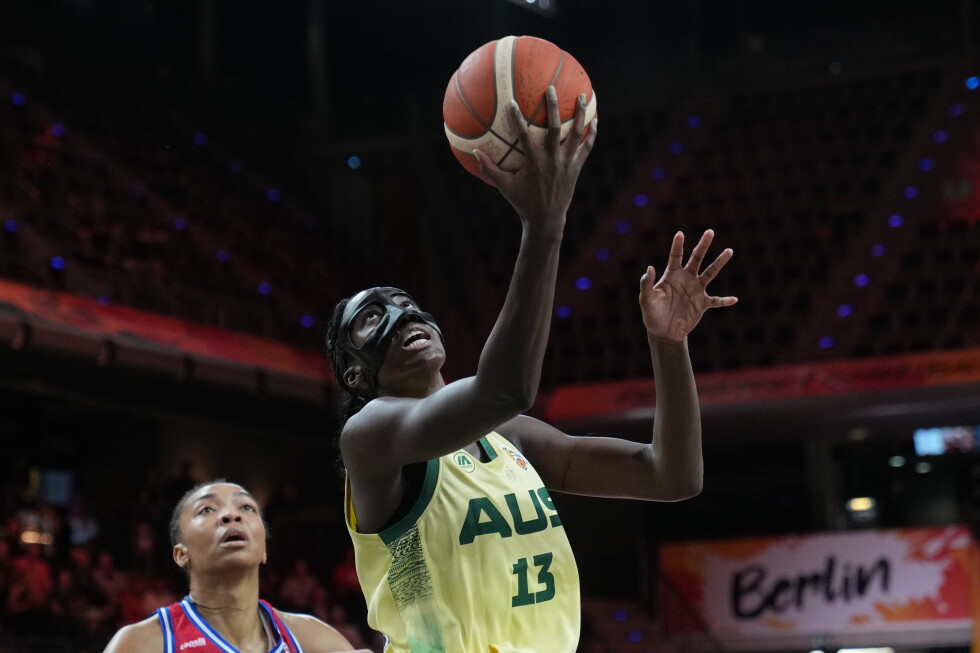
    The 20th edition of the FIBA Women’s Basketball World Cup got underway in Berlin on Friday, kicking off 16 teams’ bids for global glory with two opening-day wins for Asia-Pacific contenders Australia and Japan, while highly anticipated matches from powerhouses including the defending champion United States and China were set to tip off later the same day.

    Australia’s Opals got their campaign off to a confidence-boosting start, shaking off a pattern of opening-match losses at recent major tournaments to defeat Puerto Rico 70-54. Forward Steph Talbot anchored the team’s offense with a game-high 19 points to lead the charge. For head coach Sandy Brondello, the early win removes significant pressure from her squad ahead of upcoming group-stage matches. In this expanded 16-team tournament format, only the four group winners earn an automatic direct berth to the quarterfinals, making every opening result critical.

    In the day’s other opening contest, Japan pulled off a dramatic late comeback to edge out African side Mali 102-97. Guard Saki Hayashi led all scorers with 27 points for Japan, but the game remained in Mali’s control for nearly the full four quarters. It was not until 6:30 remained in the final frame that Mai Yamamoto knotted the score at 79-79, Japan’s first lead since tipoff. A late free throw from Kokoro Tanaka in the closing seconds locked in the comeback victory. For Mali, the defeat marks a disappointing opening to a tournament where the side was chasing just its second all-time World Cup win. Mali’s only previous victory at the event came in a 2010 overtime clash against Senegal in the 15th-place playoff, and the side went winless across five matches at the 2022 World Cup hosted by Australia.

    All eyes turned to the evening’s marquee matchups, headlined by the United States’ opening bid for an unprecedented fifth consecutive world title. The Americans, the tournament’s top seed, were set to face China in a highly anticipated clash at Berlin’s Max-Schmeling-Halle — the same 9,000-seat venue where the U.S. claimed its sixth global title with a 1998 final win over Russia. The U.S. enters the tournament with a retooled young roster, missing key stars including four-time WNBA MVP A’ja Wilson and sharpshooter Kelsey Plum, who withdrew before the tournament. Three of college basketball’s biggest names — Caitlin Clark, Paige Bueckers and Angel Reese — will lead the young American squad in its title defense.

    China’s roster has already drawn widespread attention for its unmatched size, headlined by 19-year-old phenom Zhang Ziyu, who stands 7-foot-3, and 6-foot-10 center Han Xu, who already has experience competing against American players through her tenure with the WNBA’s New York Liberty.

    Host nation Germany was making its second appearance in the tournament, with its opening match against Spain scheduled for later Friday at the main venue, Berlin Arena, which holds 14,000 spectators. Four other opening-day matches were also on the schedule: France faced Hungary, South Korea took on Nigeria at Berlin Arena, while Belgium played Turkey and the Czech Republic faced Italy at Max-Schmeling-Halle. Australia will return to action on Sunday against Turkey, while Japan is set to face host Germany in its second group-stage match Saturday.

  • China exerts tight grip on information after floods

    China exerts tight grip on information after floods

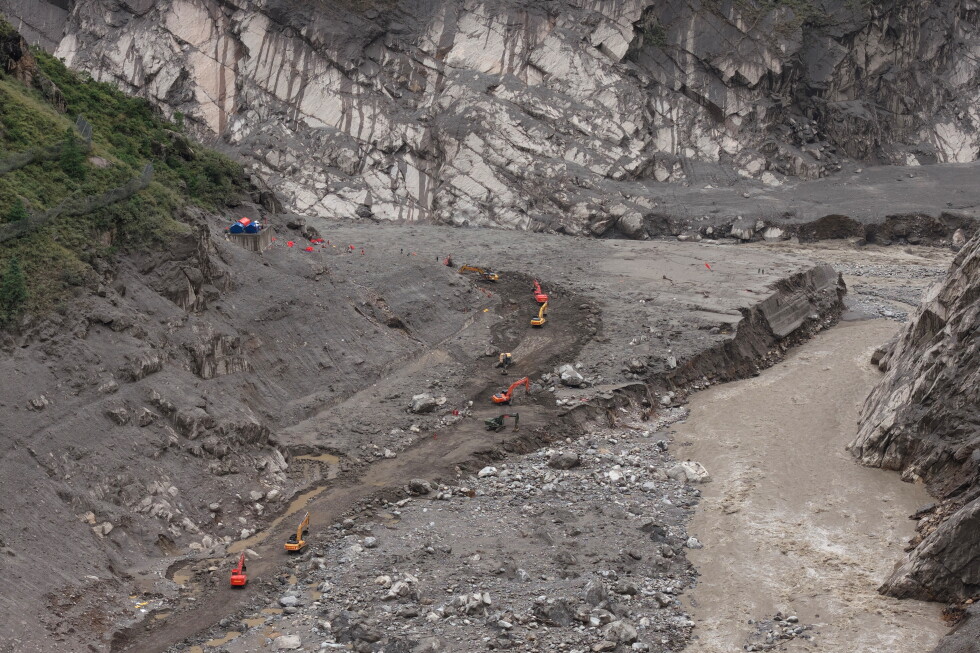
    Over a week has passed since catastrophic flash floods swept across the China-Nepal border, leaving a devastating trail of death and disruption that has now claimed more than 1,000 lives and left over 4,500 people unaccounted for across both nations. What stands out most in the wake of this natural disaster is the starkly contrasting approach to information transparency between the two neighboring countries, drawing new attention to long-standing patterns of information control in China around major crisis events.

    On Nepal’s side of the shared border, disaster response communications have aligned with open governance norms. Nepali authorities have released frequent, granular updates on fatalities and missing persons, maintaining a public, searchable online registry that tracks survivors and those lost to the floods. Independent domestic and international journalists have been granted near-unrestricted access to hard-hit areas, with only basic accreditation requirements in place. Reporters have been allowed to visit temporary aid camps for survivors, document mass burial sites, and film rescue operations, including harrowing footage of mud-caked survivors pulled from hydropower tunnels by helicopter crews.

    Grieving families have been able to share their stories publicly, conduct symbolic burial rites, and organize independent searches for missing loved ones, giving a human face to the disaster that has been largely absent from coverage on the Chinese side.

    The contrast with China’s side of the border, where the disaster impacted Tibet Autonomous Region, could not be sharper. As of the most recent update released late Wednesday, Chinese authorities report 21 deaths and 541 missing people in Tibet, including 261 foreign nationals from 23 countries. Official updates are released only every few days, and access to the disaster zone has been restricted exclusively to China’s top state-run media outlets: Xinhua News Agency and China Central Television (CCTV).
    Unlike Nepal’s open reporting, state media coverage has centered almost entirely on official disaster relief logistics rather than the human cost of the flood. Programming has highlighted rescue workers’ heroism, President Xi Jinping’s directives for relief efforts, and technical analysis of the glacial lake outburst that caused the floods. Names and personal stories of victims and their families have been almost entirely excluded from official coverage, and independent sources confirm that non-state journalists across China have been ordered not to conduct interviews with victim families, and to only republish official Xinhua material. The Associated Press, among other international news outlets, requested access to the affected areas shortly after the disaster struck but has yet to receive approval to enter.

    This tight information control is particularly pronounced in Tibet, a region that has been marked by heavy government surveillance and restricted access for foreigners and journalists since China asserted control over the area in 1951. Even for accredited foreign journalists working elsewhere in China, travel to Tibet requires special government approval, and cross-border communications for Tibetans are heavily monitored.

    Beyond restricting reporting, Chinese authorities have moved to punish social media users who have questioned the official narrative around the disaster. Tibetan cyber police have publicly announced 10 cases of people detained or fined for “spreading online rumors” related to the flood, with penalties ranging from 5 to 10 days of police detention and fines up to approximately $150. Many of these cases involved posts questioning the low official death toll, including one that noted the poster estimated at least 1,000 people had been killed, contradicting an early official count of just three dead.

    This pattern of delayed and incremental updates to disaster death tolls is not unprecedented in China. In July 2024, for example, authorities waited more than a month to revise the official death toll for severe typhoon flooding in Guangxi Province, raising it from 39 initially to 159.

    For families of missing Chinese victims, the lack of official transparency has forced them to turn to rare independent channels outside of Chinese government control to share their loved ones’ stories. One such outlet, the exile-based independent Chinese media Aquarian, has interviewed relatives of missing victims including Peng Guangming, a young worker on a Chinese-backed highway project on Nepal’s side of the border, who lost contact with colleagues just 10 minutes before the flood hit. Another missing person, He Hongrong, was last seen waiting to cross back into Tibet from Nepal, carrying a green backpack and en route to Lhasa. Her family has shared her photograph via the independent X account Fat Parrot, which reposts content from Chinese social media, in the hopes of finding new information about her whereabouts.

    The differing approaches to disaster information between the two countries have underscored how China’s system of state-controlled media and internet regulation shapes public access to information during crises, leaving critical details about the disaster’s impact on the Chinese side still unknown more than a week after the floodwaters first surged.

  • Pressure off for F1 leader Antonelli heading into home race in Italy

    Pressure off for F1 leader Antonelli heading into home race in Italy

    MILAN – For 20-year-old Kimi Antonelli, the 2025 Italian Grand Prix at Monza feels like a full-circle moment that few could have predicted just two years ago. The young Mercedes driver, who only celebrated his 20th birthday last week, now enters his home race as the unexpected leader of the Formula 1 World Championship, chasing a piece of history no Italian driver has claimed in nearly six decades.

    It was at this very same high-speed temple of speed two years ago that Antonelli made his unceremonious F1 debut. What was supposed to be his first on-track taste of grand prix racing ended after just 10 minutes, when a high-speed crash in first practice sent him limping back to the paddock, his introduction to the sport cut dramatically short.

    “That definitely was not the way I wanted to introduce myself into the sport,” Antonelli reflected ahead of this weekend’s race. “If someone, while I was walking off in the gravel, would have said, ‘in two years you’re going to be leading the world championship in this exact moment,’ I would have said ‘shut up … don’t joke with me.’ But, you know, it’s happening. And I’m very, very, very happy, very grateful. And just got to keep pushing.”

    Antonelli is already writing new storylines before the race even starts: he is the first Italian driver to enter his home grand prix at Monza atop the championship standings since legendary racer Alberto Ascari achieved the feat back in 1953. He is also bidding to become the youngest world champion in F1 history, and end a 62-year drought for Italian winners at Monza — no Italian driver has stood atop the podium at the Italian national circuit since 1966.

    His path to that historic win has hit a major setback, however. Mercedes opted to fit a brand-new power unit to Antonelli’s car this weekend, a proactive swap to avoid potential reliability issues in the second half of the championship. The change triggers a heavy grid penalty, forcing the championship leader to start the race from the very back of the grid.

    While starting from the back has dimmed his odds of victory, Antonelli says it has also stripped away the weight of expectations that comes with being a title contender racing in front of a home crowd. “I’d very much rather fight for pole and start at the front,” he admitted. “But in some ways, I feel like it makes me a bit more relaxed going into the weekend. And I think that’s why I’m going to be able to enjoy more the driving and the weekend itself. Of course, the goal is always the same, and we’re going to try to maximize the result … but definitely I feel very free mentally going into this weekend. I’m actually very excited, very much looking forward to it, but with no real pressure.”

    The layout of Monza works partially in Antonelli’s favor: the long straightaways favor Mercedes’ power unit, which has proven strong in straight-line speed this season, and the track’s design makes overtaking far easier than at most modern F1 circuits. Fans are already anticipating a thrilling charge through the field as the young Italian looks to carve his way from last place to a potential race-winning position.

    Heading into the weekend, Antonelli holds a comfortable 59-point lead over his Mercedes teammate George Russell, with Ferrari’s Lewis Hamilton in third just behind Russell. Defending champion Lando Norris of McLaren sits a further 24 points behind Hamilton, still riding momentum after back-to-back wins at the Hungarian and Dutch Grands Prix.

    The Italian Grand Prix is always the most anticipated weekend of the year for Ferrari, with the 5.793-kilometer Monza circuit packed full of tens of thousands of passionate tifosi clad in the team’s iconic red. This year, the team has extra cause for celebration and commemoration: both of Ferrari’s cars finished on top of the timing sheets in Friday’s opening practice session, with Charles Leclerc posting the fastest lap, 0.173 seconds clear of his teammate Hamilton. Russell finished third, with stand-in Red Bull driver Liam Lawson — filling in for the injured Isack Hadjar for the second consecutive race — in fourth, while Antonelli rounded out the top five with his new power unit.

    Ferrari is also marking the 30th anniversary of Michael Schumacher’s first Italian Grand Prix victory with the Scuderia, rolling out a special commemorative livery for both cars this weekend. Both Hamilton and Leclerc will also wear custom race suits featuring the seven stars that once adorned Schumacher’s helmet, a tribute to his seven world championship titles.

    Looking to defend his title, Norris has dismissed any concern over Ferrari’s new engine upgrade, which the team introduced to boost its chances of winning at its home track for the second time in three years. “I’m not worried at all,” the McLaren driver said. “I mean they’ve been very competitive, it probably will make them more competitive. Good on them, they’ll make our life a bit trickier. It’s not a worry, we just have to keep focused on our own job. We know it’s a different track … we’ve won two races but it’s not like we’ve been competitive the whole season and we know that there are things we still need to work on.”

  • China is boycotting a major Asian art festival over the naming of a Taiwanese exhibition

    China is boycotting a major Asian art festival over the naming of a Taiwanese exhibition

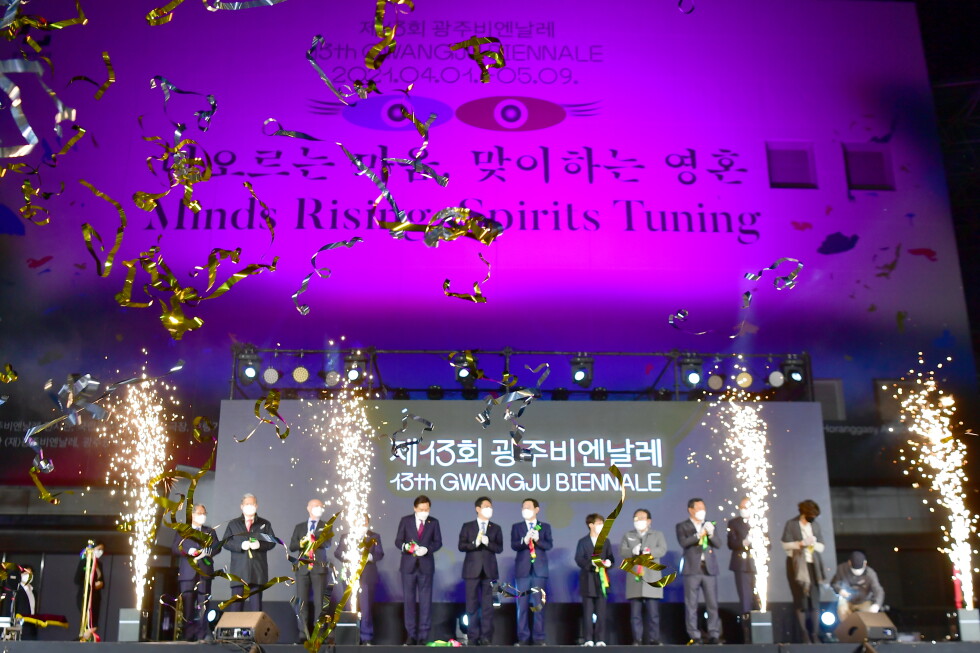
    A diplomatic and cultural standoff has disrupted Asia’s leading contemporary art event, the Gwangju Biennale in South Korea, after a cohort of Chinese artists pulled out of the exhibition in protest of organizers’ decision to allow Taiwanese participants to exhibit under the label “Taiwan Pavilion.”

    China has long upheld the one-China principle, which holds that the self-governing island of Taiwan is an inalienable part of Chinese territory. Beijing formally refers to the island as “China’s Taiwan region” and rejects any framing that suggests Taiwan has independent sovereign status. In comments released Thursday, China’s Foreign Ministry issued sharp criticism of the biennale’s organizing committee, accusing the group of “stubbornly clinging to the wrongful practice, allowing China’s Taiwan region to participate under a designation that is completely incompatible with its status.”

    Ministry spokesperson Guo Jiakun added that Beijing expects the South Korean government to translate its formal political commitment to the one-China principle into tangible action. On the same day the ministry released its statement, the participating Chinese artists confirmed their withdrawal from the exhibition, which is scheduled to open Saturday and run through mid-November.

    The contested “Taiwan Pavilion” is part of the biennale’s Pavilion Project, a parallel program featuring roughly 25 small national and institutional galleries hosted separate from the event’s main exhibition grounds. In an interview with reporters, Chinese curator Ruan Yuelai, speaking through an interpreter, framed the naming dispute as an unauthorized injection of political controversy into the cultural sphere. “The organizers of the Gwangju Biennale used an incorrect name for China’s Taiwan region over its participation in the exhibition, causing a political issue to spill over onto the realm of art,” Ruan explained. “The Chinese exhibition team cannot accept this and unanimously agreed to withdraw from the exhibition to express our strong protest.” As of Friday afternoon, the Chinese contingent had not yet removed the paintings, sculptures and other artworks originally prepared for display in the event’s China Pavilion.

    The naming disagreement has a tangled recent history. Back in August, Taiwan’s Ministry of Culture confirmed the island’s participants had originally planned to exhibit under the “Taiwan Pavilion” banner, and even protested when organizers initially proposed rebranding their space as the “National Taiwan Museum of Fine Arts Pavilion.” In a statement released Wednesday, the biennale organizers offered a public apology “for causing concerns and confusion” among stakeholders in the Pavilion Project, acknowledging that disagreements over the naming had persisted between the event team and the Taiwanese museum.

    Organizers clarified that they had signed a participation contract with the National Taiwan Museum of Fine Arts under the assumption that Taiwanese artists would exhibit under the museum’s widely used acronym, NTMoFA. Per the event team, the Taiwanese museum later demanded that the space be called “Taiwan Pavilion,” leaving organizers feeling pressured to accept the name change.

    This latest dispute is part of a broader pattern of growing diplomatic pressure from Beijing over Taiwan’s international participation. Earlier this same week, China issued a formal warning of unspecified consequences after Taiwan’s foreign minister addressed a diplomatic forum in Palau. In May, Beijing pressured an African nation to bar Taiwanese activists from taking part in an international human rights conference. Beijing has ramped up coercive diplomacy targeting Taiwan in recent years, poaching the island’s remaining formal diplomatic allies; Taiwan now counts just 12 countries that officially recognize its sovereignty. The two sides have been politically separated since the end of the Chinese civil war in 1949.

    It remains uncertain whether the current protest will escalate into a full-scale diplomatic rift between Beijing and Seoul. South Korea’s current liberal government has made improving bilateral ties with China a policy priority, and China is South Korea’s largest single trading partner. For its part, South Korea’s Foreign Ministry has moved to distance itself from the decision, noting that the naming choice was made exclusively by a non-governmental organizing body and has no connection to the South Korean government. The ministry added that Seoul hopes the dispute will not negatively impact bilateral cooperation and relations between the two countries.

  • Serbia faces EU scrutiny over upcoming funeral of convicted war criminal Ratko Mladic

    Serbia faces EU scrutiny over upcoming funeral of convicted war criminal Ratko Mladic

    As Serbia prepares to lay to rest former Bosnian Serb army commander Ratko Mladic — a convicted genocide perpetrator whose legacy continues to split the Balkans decades after the 1992-1995 Bosnian war — European Union officials have framed the coming days as a critical test of Belgrade’s commitment to European values amid its stalled bid for EU membership.

    Mladic, who was sentenced to life imprisonment in 2017 by a United Nations war crimes tribunal for overseeing some of the worst atrocities on European soil since World War II, died last week in a Dutch hospital at the age of 84. His remains were flown back to Serbia on a government-owned aircraft Thursday, triggering immediate international backlash over plans for official state honors at his funeral.

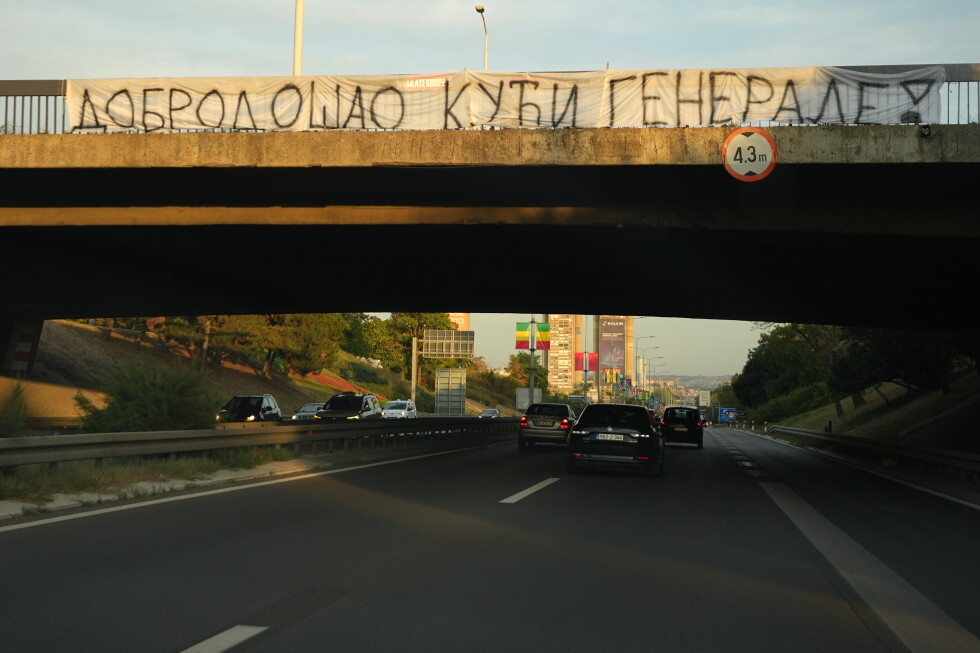
    Upon the plane’s landing in Belgrade, Mladic’s casket was draped in Serbia’s national flag, carried by uniformed Serbian army soldiers to a waiting van, and escorted through the capital to a military hospital. Serbia’s Justice Minister Nenad Vujic accompanied Mladic’s family on the repatriation flight, while crowds of nationalist supporters lit flares as the funeral cortege passed through the city. Mladic’s son, Darko Mladic, confirmed public arrangements Friday: a military commemoration scheduled for Saturday, public lying-in-state at a central Belgrade church Monday morning, and a burial at a Belgrade cemetery later that day.

    Initial comments from Vujic confirming Mladic would receive full state funeral honors sparked outrage across the ethnically fragmented Balkan region, where scars from the 1992-1995 Bosnian war — which killed more than 100,000 people and displaced over a million — remain raw. This is not the first time Serbia has honored a convicted war criminal with official military recognition: just last year, former army chief of staff Nebojsa Pavkovic, also convicted of war crimes by the UN tribunal, was buried with full military honors at Belgrade’s cemetery for distinguished citizens.

    Despite its formal status as an EU accession candidate, Serbia has long remained defiant in its reckoning with wartime actions during the Bosnian conflict, where it backed Bosnian Serb separatist forces. Many Serbs across Serbia and the Bosnian Serb entity of Republika Srpska still view Mladic as a national hero, and thousands held public vigils for him after his death, with large crowds expected to attend Monday’s burial. Serbian President Aleksandar Vucic, a populist leader whose rule has overseen growing democratic backsliding and a freeze in EU accession talks, sought to distance himself from formal responsibility for the arrangements Friday, noting he had pre-scheduled official meetings for the day of the funeral.

    “I have spoken to the Mladic family and I wish it all passes in a dignified way,” Vucic told pro-government outlet Informer TV, adding “I did all I could so that the funeral would pass as it should” without elaborating on what actions he had taken. The EU’s Enlargement Commissioner Marta Kos reiterated Friday that the bloc is closely watching every step of the process, calling the coming days “a very important test” for Belgrade.

    International criticism of the planned honors has mounted rapidly beyond the EU. Council of Europe Human Rights Commissioner Michael O’Flaherty urged both Serbian and Bosnian Serb authorities Friday to crack down on the public glorification of convicted war criminals, noting that such glorification violates Bosnian law and is not protected as free speech under the European Convention on Human Rights.

    “I abhor the public glorification of Ratko Mladic, a deceased war criminal convicted for the Srebrenica genocide and crimes against humanity, including statements by officials in Bosnia and Herzegovina’s entity of Republika Srpska and in Serbia,” O’Flaherty said in an official statement. Belgian Foreign Minister Maxime Prevot added that granting official funeral honors to Mladic would be “shameful and disrespectful for the victims,” saying he had already conveyed his strong condemnation to his Serbian counterpart responsible for European integration affairs.

    Mladic’s conviction centered on his role in three core wartime atrocities: the 1995 Srebrenica massacre, the four-year siege of Sarajevo, and the systematic abuse of non-Serb civilians in wartime concentration camps. The Srebrenica massacre, in which Mladic’s forces overran a UN-declared safe haven for Bosnian Muslims and executed more than 8,000 Bosniak men and boys, remains the only genocide legally recognized on European soil since World War II. Mass graves of Srebrenica victims are still being uncovered decades after the massacre, and survivors and victims’ families continue to push for full accountability for all those involved in the atrocities.

  • Civil rights groups urge a halt to South Africa data centers boom amid water and power fears

    Civil rights groups urge a halt to South Africa data centers boom amid water and power fears

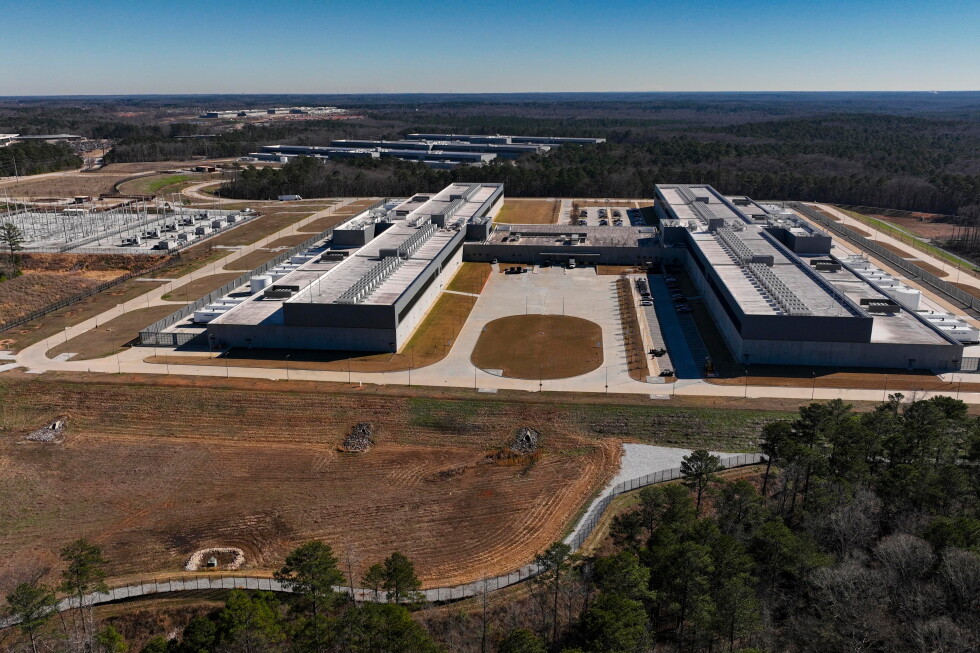
    As South Africa emerges as the leading digital infrastructure hub on the African continent, attracting billions in investment from major U.S. tech giants including Amazon, Microsoft, and Equinix, a growing coalition of civil society and human rights organizations is pushing for a moratorium on new data center projects until a full, transparent audit of their strain on the country’s limited water, energy, and land resources can be completed.

    President Cyril Ramaphosa has framed South Africa’s existing market dominance — which already holds 70% of the entire continent’s data center capacity — as a once-in-a-generation economic opportunity in the fast-growing global digital economy, and the national government has actively courted foreign tech firms to expand their footprint in the country. But as the sector explodes in growth, just as it has in the United States and other major markets, questions about unregulated expansion and its long-term social and environmental costs have moved to the forefront of public debate.

    The South African Human Rights Commission (SAHRC), the country’s independent national rights watchdog, opened a public call for input on data center development this past May, and has already received more than 250 submissions from community groups, environmental activists, and other concerned stakeholders. Dr. Eileen Carter, who leads the SAHRC’s preliminary inquiry into the sector, highlighted that a core barrier to accountable development is the complete lack of accessible, consistent, and transparent data on critical metrics: how much electricity and water each facility will consume, how land will be allocated, what environmental risks the projects pose, and how they will impact nearby residential communities.

    One high-profile project that has drawn particular backlash is Equinix’s planned hyperscale data center in Cape Town, a metro region that still carries vivid public memory of the 2018 Day Zero water crisis, when authorities warned the city could run out of municipal water entirely. Beyond water concerns, activists have raised alarm over the facility’s projected 160-megawatt power demand, coming just years after the country faced crippling, rolling nationwide blackouts known locally as loadshedding that disrupted daily life and economic activity for millions.

    While national power utility Eskom has recently reported a temporary power surplus during this year’s winter peak demand season, civil society groups remain skeptical that excess capacity should be prioritized for data center operations, rather than directed toward households and small businesses that bore the brunt of years of power shortages.

    Industry representatives have pushed back against calls for a construction moratorium, arguing that critics often misjudge the resource footprint of South African facilities. Sasha Booth-Beharilal, chair of the Internet Service Providers Association, which represents local and foreign tech firms operating data centers in the country, claimed that data center growth does not contribute to energy scarcity or drive increases in household electricity tariffs. Booth-Beharilal also noted that modern South African facilities use cutting-edge efficiency technology to cut water use to levels well below the global average, and many operators are increasingly shifting to renewable energy sources to power their operations. Operators also add that South African data centers have far smaller resource requirements than the massive hyperscale facilities common in the U.S., making direct comparisons misleading.

    Still, many policy experts side with civil society, framing the call for a temporary halt not as anti-investment, but as a necessary step to build long-term regulatory clarity that benefits all stakeholders. Pitso Tsibolane, a senior lecturer in Information Systems at the University of Cape Town, explained that clear, binding regulations do not discourage serious foreign investors — instead, it is unregulated expansion and the uncertainty it creates that undermines market confidence. Currently, Tsibolane noted, data center operators are not required to disclose binding, verifiable figures for their water, energy, and land use ahead of approval, meaning municipal and national regulators evaluate project proposals without the critical data needed to make informed decisions that serve the public good.

  • Denmark says it hopes to start deporting migrants to non-EU ‘return hubs’ as early as next year

    Denmark says it hopes to start deporting migrants to non-EU ‘return hubs’ as early as next year

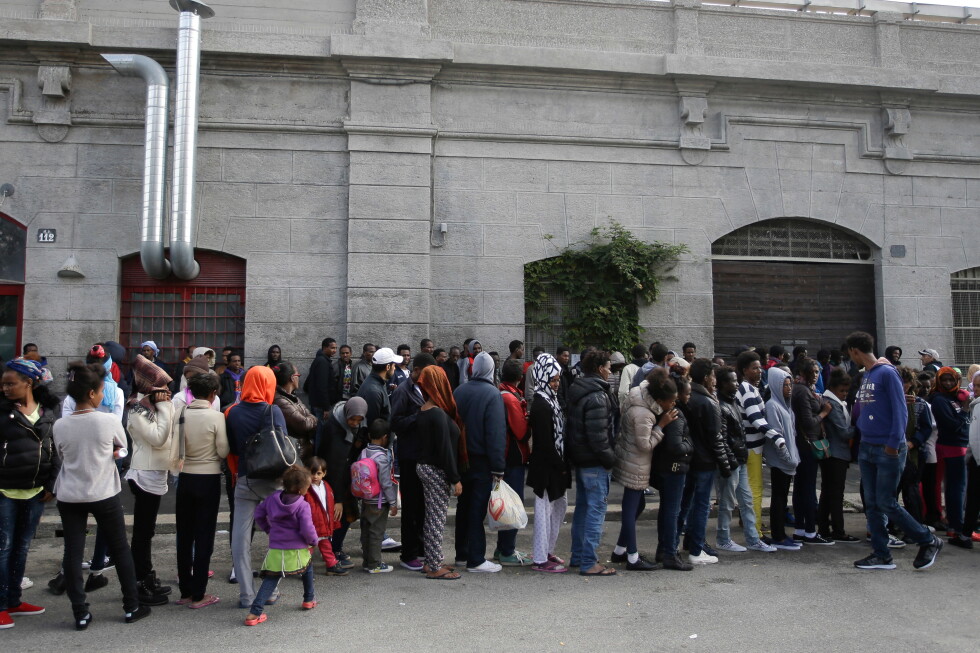
    Five leading European nations are pushing forward with a controversial plan to establish external asylum processing and deportation hubs outside the European Union, with Denmark confirming it aims to launch the first non-European facilities as early as 2027. The high-stakes meeting, hosted by Copenhagen this Friday, brought together migration and foreign policy leaders from Germany, Austria, the Netherlands, and Greece to coordinate progress on the initiative, which received formal approval from EU legislators back in June.

    Under the new EU framework, individual member states or small coalitions are permitted to negotiate bilateral or collective agreements with third countries to host rejected asylum seekers, rather than deporting migrants directly back to their countries of origin. The policy, often referred to as ‘return hubs,’ represents a major shift in how the bloc approaches irregular migration, shifting processing and detention infrastructure outside the EU’s 27-nation border.

    Opening the summit, Danish Foreign Minister Lars Løkke Rasmussen framed the plan as a pragmatic response to a shared policy challenge, arguing that the bloc cannot allow individuals without legal residency status to remain in European countries indefinitely. He added that the initiative also includes a cooperative component, noting that partner third countries would offer irregular migrants a second chance to build new lives outside the EU. The five-nation coalition has already been in active negotiations with several national governments, most of them located across Africa, to secure host agreements for the facilities, acting as pioneers for the broader EU-wide adoption of the model.

    Denmark’s Immigration and Integration Minister Morten Bødskov shared a concrete timeline for the plan in an interview with Danish public broadcaster DR, published ahead of the summit. Bødskov confirmed that negotiations with potential third-country hosts have entered a critical phase, with the goal of having fully operational return hubs up and running by 2027. Austrian asylum and migration minister Bart van den Brink echoed this urgency, telling reporters in Copenhagen that Friday’s meeting marks the next key step toward delivering the offshore facilities in the coming years.

    The plan has already drawn interest from potential host nations: in early August, a Rwandan government spokesperson told local media that negotiating to host the facilities would be a natural step, adding that Rwanda is open to hosting rejected asylum seekers who cannot settle in other countries.

    However, the initiative has faced widespread condemnation from global and regional human rights groups, which warn that offshoring migration control creates unacceptable risks for the rights of detained asylum seekers. Critics point out that external facilities would be far harder for international monitors to access, creating gaps in oversight that could lead to abuse.

    Michael O’Flaherty, the Council of Europe’s Commissioner for Human Rights, argued that vague promises of compliance with international human rights law are insufficient to protect vulnerable people. ‘States need to commit to the guardrails necessary to prevent setting up human rights black holes,’ he said in an emailed statement.

    Brussels-based migration rights organization PICUM also condemned the Copenhagen meeting, with director Michele LeVoy rejecting framing the plan as an innovative solution to migration pressures. ‘Outsourcing migration control is an old tactic to simply move people out of sight and evade human rights obligations,’ LeVoy said. Contributions to this report came from Associated Press journalists Philipp Jenne in Vienna and Sam McNeil in Brussels.

  • UK will ‘resolutely uphold’ Falklands self-determination, Miliband says

    UK will ‘resolutely uphold’ Falklands self-determination, Miliband says

    Decades of tense sovereignty dispute over the South Atlantic Falkland Islands (known as the Malvinas in Argentina) have reignited, after Argentine President Javier Milei recently made new claims to the territory and threatened sanctions against international companies moving forward with planned oil exploration near the archipelago.

    Milei used a national address Thursday to double down on Argentina’s longstanding territorial claim, arguing that the Falkland Islands are historically and legally part of Argentina. He claimed that the “winds of change” are shifting in Argentina’s favor, and warned that the proposed Sea Lion oil development off the islands’ coast poses a “clear and present danger” to his country’s interests. If Argentina does not act quickly, Milei asserted, foreign companies will gain permanent access to what he calls Argentina’s offshore oil reserves – a development he said the nation would never accept.

    The president announced plans to impose new sanctions on companies involved in the exploration project, though details of how or how broadly these restrictions will be applied have not yet been released. Argentine law already allows for sanctions against energy firms operating in projects Buenos Aires does not authorize in the disputed territory.

    The project at the center of the latest dispute is a partnership between UK-based Rockhopper Exploration and Israeli energy firm Navitas Petroleum, which plans to begin commercial oil extraction at the Sea Lion field by 2028. Located roughly 130 miles off the Falklands coast, the field holds an estimated 1.7 billion barrels of high-quality crude oil – nearly six times the volume of the North Sea’s major Rosebank oil field. In a joint statement released Friday, the two companies confirmed they hold valid exploration licenses granted by the Falkland Islands government, with full backing from the UK government. The firms added that current political tensions will not delay their project timeline.

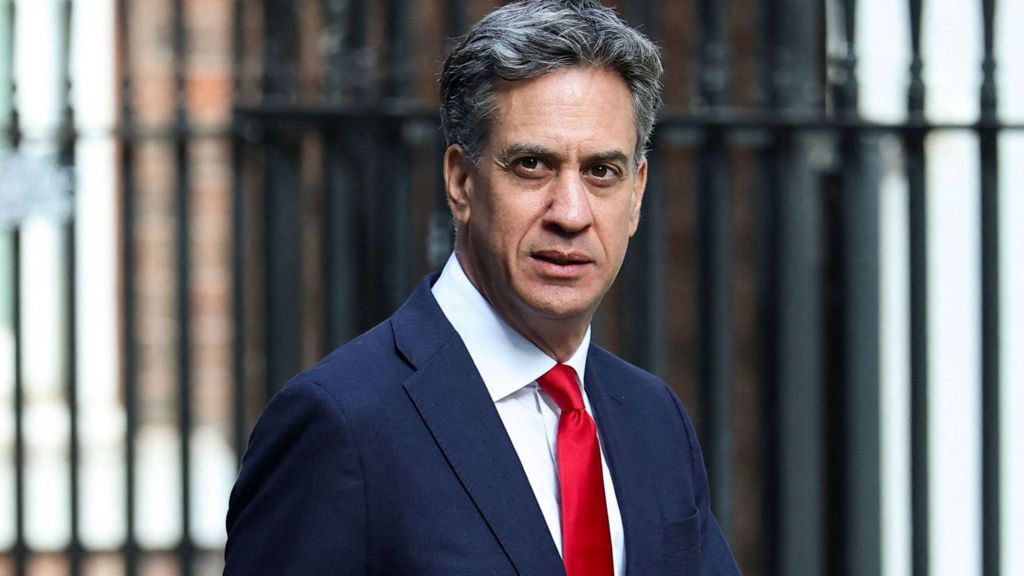
    In response to Milei’s remarks, senior UK officials have issued a unified, firm rebuke, reaffirming the UK’s commitment to upholding the Falkland Islanders’ right to self-determination. Writing on the social platform X Friday, Foreign Secretary Ed Miliband said the UK would “resolutely uphold” the self-determination of the islanders, and the territory will remain British because that is the overwhelming democratic will of its residents.

    Defence Secretary Wes Streeting echoed that position, describing the UK’s commitment to the Falklands as “absolute and unshakeable.” Streeting argued that Milei’s statement has more to do with domestic political positioning in Argentina than it does with the actual status of the disputed islands. Downing Street also issued a formal reaffirmation of the UK’s longstanding stance: the Falklands will remain a British Overseas Territory for as long as the islands’ residents wish to keep that status. A Downing Street spokesperson noted that economic threats against the Falklands from Argentine governments are not new, and added that the islanders’ right to self-determination explicitly includes the right to develop and exploit their own natural resources.

    The current dispute comes more than 40 years after the 1982 Falklands War, and the sovereignty of the South Atlantic archipelago remains a deeply divisive issue between London and Buenos Aires. In a 2013 referendum held on the islands, 99.8% of resident voters cast ballots in favor of remaining a British Overseas Territory, with just three votes against the option.

    The latest diplomatic tension also drew comment from former U.S. President Donald Trump, who hinted Thursday that the U.S. would not side with the UK in any future military conflict over the Falklands. Trump claimed the U.S. would not back the UK because Britain did not support him during what he described as his “war with Iran.” Trump’s remarks come as he previously confirmed that the U.S. position on the Falklands dispute is one of multiple policies currently under review.

  • Body of world’s youngest traditional king returns home to Uganda amid succession row

    Body of world’s youngest traditional king returns home to Uganda amid succession row

    The repatriation of King Oyo Nyimba Kabamba Iguru Rukidi IV’s remains to Uganda has kicked off an official nine-day period of national and royal mourning, while also sparking an unprecedented public dispute over who will succeed the beloved traditional ruler. Aged 34, the 13th monarch of the Tooro Kingdom passed away last week in the United States while receiving treatment for an aggressive form of cancer, cutting short a decades-long reign that captured global attention from its very start.

    King Oyo made history in 1995 when he ascended the Tooro throne at just 3 years old following the death of his father, earning a place in the Guinness World Records as the world’s youngest reigning monarch. He was formally crowned when he turned 18 in 2010, and grew into a progressive leader who ruled over more than two million people in the Tooro Kingdom, a culturally significant traditional institution based in western Uganda that retains strong cultural influence despite holding no formal political power in the country’s elected constitutional system.

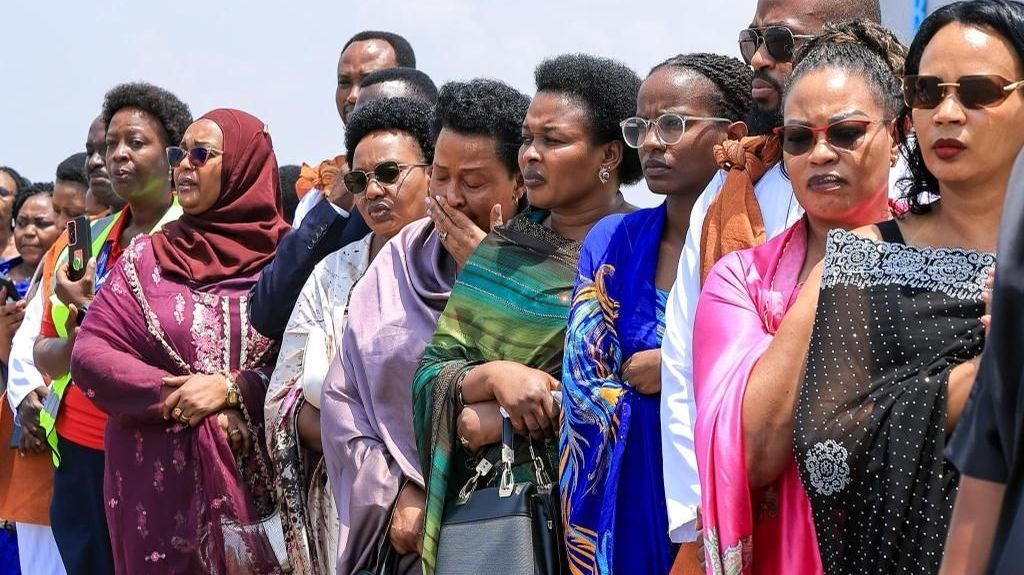
    On the day his remains touched down at Entebbe International Airport, top Ugandan political leaders including President Yoweri Museveni joined hundreds of royal mourners to pay their respects. After a short formal welcome ceremony at the airport, President Museveni laid a wreath on the king’s sealed coffin. The remains were then airlifted via military helicopter to Kyegegwa in western Uganda, before being transported by road to the Karuziika Royal Palace in Fort Portal, where Oyo’s body will lie in state for the full mourning period. Members of the public are welcome to visit the palace to pay their respects, with evening prayer services scheduled each night through the funeral.

    Across the country, tributes have poured in for the king, who was widely praised for his modernizing leadership and public advocacy. Uganda’s parliament held a special commemorative session last Thursday, where lawmakers from both the ruling party and opposition celebrated his work advancing access to education, expanding public health access, and creating economic opportunities for young Ugandans. Prime Minister Robinah Nabbanja remembered him as a unifying national figure who led critical public awareness campaigns on HIV and AIDS for youth. Acting opposition leader Patrick Nsamba Oshabe echoed these sentiments, noting that King Oyo had successfully balanced respect for centuries-old cultural heritage with a commitment to national progress and development.

    In a mark of national respect, President Museveni has granted King Oyo an official state burial, and has ordered all national flags to fly at half-mast for three days leading up to the funeral. The service is scheduled for next Saturday, September 13 – the same date King Oyo had originally planned to mark the annual Empango celebration of his coronation, a dream he held until his final days. Tooro Kingdom Prime Minister Calvin Armstrong Rwomiire Akiiki revealed that the monarch had asked officials to conceal the severity of his illness, as he remained confident he would recover and return home to mark the occasion with his people.

    As the nation mourns, a growing public rift over succession has cast uncertainty over the future of the Tooro monarchy. Because King Oyo was never officially married, there had been no publicly named heir until Akiiki announced last week that the late king did leave behind a young son, whose identity will be revealed at a later date in line with traditional Tooro customs. President Museveni also confirmed that Oyo’s mother, Queen Best Kemigisa, had told him the king had an heir.

    However, the head of the Babiito royal clan – the hereditary clan from which all Tooro kings are drawn – has publicly stated he has no knowledge of any such child. Other senior clan members have echoed the skepticism, questioning how the royal family could be kept unaware of an heir while the kingdom’s prime minister claimed knowledge of the child. “The prime minister is not supposed to talk about the king’s heir. It is a cultural process,” one anonymous senior clan member told Uganda’s state-owned New Vision newspaper. “How can we, blood relatives, not know of the child, and the prime minister says he knows? That is totally out of order.”

    Akiiki has since called for the dispute to be resolved privately out of respect for the mourning period, warning that inflammatory words spoken in grief could deepen divisions that would take generations to repair. The Ugandan national government has also stepped in to urge calm, calling on the public and cultural leaders to avoid spreading unfounded speculation on social media. Culture Minister Henry Tumukunde noted that the entire world is watching Uganda as it mourns King Oyo, and urged all parties to exercise restraint and respect. He added that any succession disputes will be resolved in accordance with Uganda’s existing laws governing traditional and cultural leaders.

    In line with longstanding Tooro tradition, King Oyo’s funeral will follow strict ceremonial customs. A church service will be held at a local congregation ahead of the burial, before a traditional royal procession carries his remains to the Karambi Royal Tombs. All burial rites must be completed by 2 p.m. local time, as tradition forbids burying Tooro monarchs after sundown.

  • Dozens die in Nigeria oil theft attempt after inhaling toxic fumes

    Dozens die in Nigeria oil theft attempt after inhaling toxic fumes

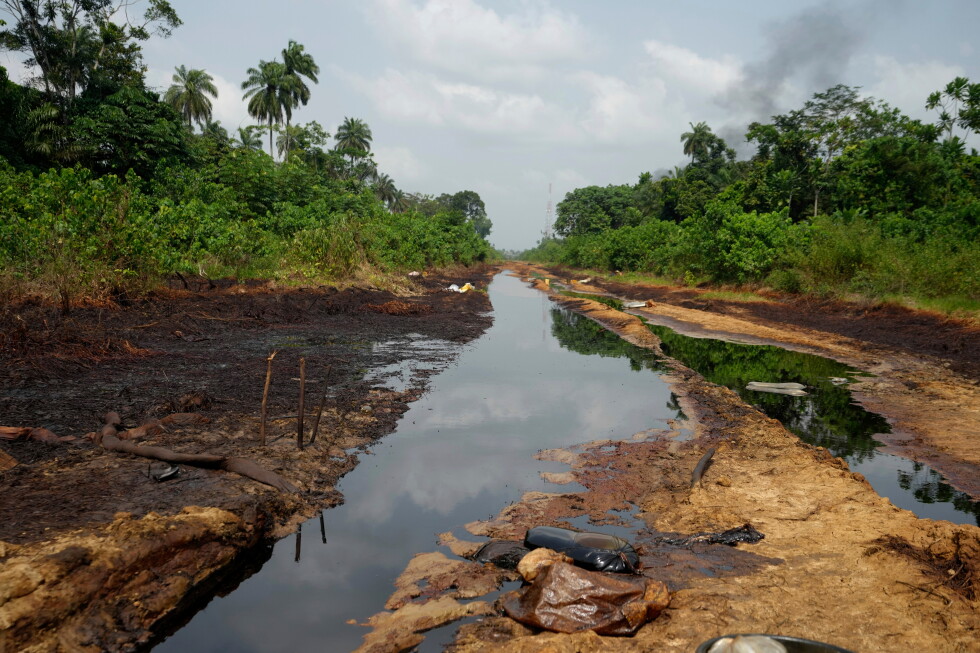
    Nigeria’s volatile oil-rich Niger Delta region has been marked by another fatal incident tied to rampant illegal crude siphoning, with at least 37 people confirmed dead after a botched oil theft operation in Rivers State, a local environmental and youth advocacy group announced Friday.

    According to the Youths and Environmental Advocacy Center, the tragedy unfolded Thursday when a group of people gathered to siphon crude oil from a commercial loading vessel via an illegal tapping point, transferring the stolen product into their small private boats. The operation went awry when the crude was released at high pressure, releasing concentrated toxic fumes that the entire group inhaled almost simultaneously. Beyond the 37 confirmed fatalities, a volunteer network tracking the incident reports that a number of other participants remain unaccounted for, leaving open the possibility that the death toll could rise further.

    Nigeria’s national police forces have officially confirmed the incident, though state authorities have not released an independent casualty count as of Friday. State police spokesperson Blessing Agabe confirmed in a statement that the deaths are tied to an attempted crude theft operation, noting that a formal investigation into the exact circumstances of the tragedy is currently underway.

    Illegal oil theft has long been an endemic issue in the Niger Delta, the core oil-producing region of Africa’s largest petroleum producer. Decades of large-scale commercial oil exploration have left the area grappling with two overlapping crises: widespread systemic poverty that pushes many local residents toward illegal activity to survive, and severe, long-lasting environmental degradation from frequent oil spills and unregulated extraction. The Nigerian federal government has repeatedly highlighted the severe economic cost of the practice, estimating that annual losses from stolen crude reach into the billions of U.S. dollars. In recent years, authorities have ramped up enforcement efforts to crack down on illegal tapping and theft operations across the region, though the persistent poverty and lack of alternative economic opportunities have kept the practice widespread.