博客

  • Liverpool target Minteh can still get dream move – Hurzeler

    Liverpool target Minteh can still get dream move – Hurzeler

    The 2025 summer Premier League transfer window has closed with one of its most high-profile sagas ending in a standstill, as Brighton & Hove Albion held firm on their valuation of young Gambian winger Yankuba Minteh, turning down two successive bids from Liverpool totalling up to £60 million. The outcome has left the future of the 22-year-old wide player unresolved, but Brighton’s young head coach Fabian Hurzeler has left the door open for a potential future move if Minteh continues his upward trajectory at the AMEX Stadium.

    Liverpool, under manager Andoni Iraola, had identified Minteh as a key target to strengthen their attacking options ahead of the new season, tabled an initial £50 million offer before upping their proposal to £60 million. Both bids were firmly rejected by Brighton, who are understood to value the pacey right winger at a figure closer to £70 million. Minteh only joined the Seagulls 12 months prior to this transfer window, arriving from Newcastle United in 2024 for a £30 million fee. Since his move to the south coast, he has established himself as a fan favorite and key first-team contributor, notching 10 goals and nine assists across 73 appearances for the club.

    Speaking ahead of Brighton’s opening Premier League fixture of the new season against Leeds United, Hurzeler made clear that while Minteh had been the subject of major transfer interest, the winger remains fully committed to the club’s project for the coming campaign. “He wears the Brighton colours, he wears the Brighton badge. He has been with us for two years now as part of the squad, he has achieved great things together with the boys,” the German head coach told reporters. “It’s also about him now to commit. In the end, we always say we want to be successful as a club, and then you can shine as individuals. That is what we have proved in the past. If we achieve things together, the attention will come to the individual players, and that will be the case also this season.”

    Hurzeler added that Minteh’s dream of a big-money move to a top club could still come to fruition down the line if both he and the club continue to deliver results. “If the whole team is successful and the individual shines then Yankuba will get a lot of attention again and he can then maybe fulfil his dream in the next transfer window,” Hurzeler said.

    While Minteh’s departure fell through, Brighton still pulled off a successful summer window in terms of transfer balancing, generating significant revenue from other player sales to reinvest in new talent. Their biggest outgoing saw highly rated central midfielder Carlos Baleba complete a £70 million move to Manchester United, opening up a spot in Brighton’s midfield that the club moved to fill on deadline day with the signing of 21-year-old Spanish defensive midfielder Chema Andres from Bundesliga side Stuttgart for a fee of £15.5 million.

    Andres’ career path has been rapid: a product of Real Madrid’s famed youth academy, he made his La Liga debut for the Spanish giants in January 2025 before moving to Stuttgart that same summer. In his single season in the German top flight, he made 41 first-team appearances and helped Stuttgart secure a top-four finish and qualification for the 2025-26 UEFA Champions League. His dominant performances in front of the defence earned him comparisons to Manchester City and Spain superstar Rodri, with fans and pundits dubbing the young Spaniard “baby Rodri”.

    Hurzeler says he understands the comparison, but stressed that Andres still has room to develop into the elite level midfielder many expect him to become. “He has this motivation of wanting to improve every day,” Hurzeler said of his new signing. “He comes on the first day and wants to go outside on the pitch, he wants to have ball touches and you can really feel that he is very ambitious. Therefore, I can understand this comparison [with Rodri] but he has a long way to go and hopefully he can get there one day. It would be a big one for us but also for the whole football world.”

    The summer 2005 transfer window marked the second consecutive season that the Premier League broke its all-time total spending record, capping a busy period of movement across the top flight that saw Brighton reinforce their reputation as one of the league’s shrewdest operators in the transfer market.

  • Nigel Farage’s party suspends top officials after undercover sting makes foreign funding claims

    Nigel Farage’s party suspends top officials after undercover sting makes foreign funding claims

    LONDON – A major controversy has shaken the right-wing anti-immigration party Reform UK, after two senior party figures were suspended from their roles on Friday. The move follows the release of undercover footage showing the pair appearing to discuss plans to accept large political donations from a foreign national, which would violate longstanding British electoral regulations.

    The suspended officials are Dan Jukes, a senior personal adviser to Reform UK leader Nigel Farage, and James Orr, the party’s national policy head and a theologian based at the University of Cambridge. In an official statement, the party confirmed that both individuals have stepped down from their positions temporarily, while an internal party investigation into the allegations moves forward.

    The damaging footage was first broadcast Thursday by UK broadcaster Channel 4. The video was obtained by investigative journalism group Verbatim, which set up a sting operation: an undercover reporter posed as the UK-based son of a wealthy American financier, while an actor played the role of the U.S. donor. In one clip recorded during a lunch that also included Farage, Jukes outlines a plan to route a £500,000 ($675,000) donation from the American financier through the reporter, in what would be an apparent workaround for foreign donation bans.

    A second set of undercover footage captures Orr discussing separate arrangements to have the U.S. donor cover the cost of public opinion polling commissioned by Reform UK. In the conversation, Orr openly acknowledged the party’s lack of domestic financial backing, telling the undercover reporter that “we just don’t have British-resident donors, British entities, that would support us.”

    Under UK electoral legislation, national political parties are prohibited from accepting any donations from individuals who are not registered UK voters, or from companies that are not formally registered in the United Kingdom. The timing of the scandal has placed a heavy cloud over Reform UK’s annual national conference, which kicked off Friday in Birmingham, central England and was scheduled to run through Saturday.

    Farage has moved quickly to contain the fallout, forcefully denying that the party has broken any electoral rules or accepted what he has called “dodgy money.” He has instead launched a counter-accusation, claiming the entire operation was a case of journalistic entrapment orchestrated by what he described as foreign-funded climate activist groups. Verbatim operates as an offshoot of the Centre for Climate Reporting, a non-profit investigative organization that states its work is funded through public grants and independent donor contributions.

    Speaking to London-based radio station LBC, Farage downplayed the comments captured on tape. “They got a couple of our contractors to say things that perhaps should not have been said,” he told the outlet. “And as a result of that, you know, they have been removed this morning. And yeah, you know, I’m not happy about it.”

    Britain’s governing Labour Party and the centrist opposition Liberal Democrats both said they had formally submitted the allegations to London’s Metropolitan Police for criminal investigation. The Electoral Commission, the independent UK body that regulates campaign finance and elections, confirmed Friday it was reviewing all available materials related to the case in line with its statutory regulatory powers, and that it remains in regular contact with the Metropolitan Police about the matter.

    Reform UK was first established in 2018 under the name the Brexit Party, created to advance a hard, clean break from the European Union. It rebranded to its current name in 2021, and has since refocused its platform on anti-establishment and hardline anti-immigration messaging. The party has seen rapid growth in both membership and public support in recent years, despite holding only 8 of the 650 seats in the House of Commons. It has repeatedly outperformed polling expectations, and secured a major victory in May 2024 local elections, a result that triggered internal panic within the Labour Party and ultimately led to the replacement of then-leader Keir Starmer, with Andy Burnham becoming the new prime minister.

    Even before this latest scandal, however, Reform UK had faced mounting setbacks. The party lost several consecutive parliamentary by-elections in recent months, and has long faced lingering questions over the sources of its funding. Farage himself stepped down from his House of Commons seat in July, amid an ongoing parliamentary ethics investigation into an undeclared £5 million gift he received from a Thailand-based cryptocurrency billionaire in 2024, just before he won election to parliament.

    Farage rejected the scrutiny, choosing to run in a snap by-election for his vacant seat to let voters decide his political fate. He won the August contest handily, though the election was widely dismissed as a pointless political stunt by his opponents, with all other major UK political parties choosing to boycott the vote.

  • Russian attacks kill at least 3 in Ukraine as US talks on the war are expected

    Russian attacks kill at least 3 in Ukraine as US talks on the war are expected

    As the Russia-Ukraine conflict enters its third year of full-scale combat following Moscow’s 2022 invasion, the war has reached a new juncture marked by intensifying air strikes and renewed hints of high-level U.S.-brokered diplomatic efforts to end the fighting.

    Local Ukrainian officials confirmed Friday that a new wave of Russian attacks across the country overnight left at least three people dead and multiple others injured. In the southern Odesa region, one civilian was killed and five people, including a child, were wounded when a massive barrage hit multiple residential properties, including two multi-story apartment blocks, regional governor Oleh Kiper announced in a Telegram post. Two police officers were killed in overnight strikes in the central-eastern city of Dnipro, while a Russian drone strike on a residential building in Kyiv left three people injured.

    The escalation of air attacks marks a shift in Russian tactics: what previously were primarily overnight raids on civilian and infrastructure targets now regularly occur during daytime hours, leaving Ukrainian communities under near-constant threat. The ground front line across eastern and southern Ukraine remains largely stalemated, with neither side able to secure major territorial advances in recent months.

    In a parallel development that has drawn global attention, Ukrainian President Volodymyr Zelenskyy confirmed Thursday in his nightly address that preliminary dates have been set for U.S. diplomatic envoys to hold meetings in both Moscow and Kyiv, with the Kyiv visit expected to take place in the coming days. Zelenskyy noted that Ukraine’s negotiation team maintains near-constant contact with U.S. counterparts and is actively preparing for the talks, stressing that sustained American diplomatic engagement is critical to advancing peace efforts. “This is very important. It is important that America remain actively engaged,” Zelenskyy said, adding that Ukraine is ready to hold substantive, high-level negotiations to end the conflict.

    Unconfirmed reports from Russian state news agency TASS emerged Friday identifying the U.S. envoys as Steve Witkoff and Jared Kushner, who are scheduled to travel to Moscow first before arriving in Kyiv on September 5 and 6. Kremlin spokesperson Dmitry Peskov declined to confirm the visit when asked by reporters Friday, saying only that the media would be notified officially if such a meeting is scheduled. U.S. officials have also not yet issued any public confirmation of the trip.

    Witkoff and Kushner previously traveled to Moscow in January 2026 for talks with Russian President Vladimir Putin, a meeting that Russian presidential aide Yury Ushakov described as constructive at the time. However, Ushakov also acknowledged that “reaching a long-term settlement can’t be expected without solving the territorial issue,” a core sticking point that has blocked all previous negotiation efforts. Following that January meeting, diplomatic momentum stalled as the White House shifted its strategic focus to escalating tensions with Iran, leading Putin to describe the negotiation process as “frozen” during a public press conference this week. This upcoming trip would mark the first time the pair have visited Kyiv since the start of the full-scale invasion.

    The renewed push for diplomacy comes as cross-border strikes have escalated on both sides. On Friday, Russian regional officials reported that a large-scale Ukrainian drone attack hit the Black Sea resort city of Sochi and the adjacent Sirius district, igniting a major fire at an oil depot. Russian media outlets expanded on the report, noting two separate fuel storage facilities were hit, one in each location.

    Ukraine has increasingly targeted Russian energy infrastructure in recent months, targeting oil facilities that form the backbone of Russia’s economy as one of the world’s largest fossil fuel exporters. Months of escalating Ukrainian strikes on refineries and key logistics hubs have caused widespread supply disruptions across Russia, growing economic pressure and mounting public frustration with the Kremlin’s failure to protect critical infrastructure. In response to the strikes, Putin issued a decree last month allowing the Russian state to temporarily seize control of critical infrastructure facilities if private owners fail to implement adequate security measures against drone attacks or refuse to rebuild damaged facilities. Independent analysts say the order is intended to force private energy and logistics companies to allocate more of their own funds to defensive measures and speed the return of damaged assets to operation, regardless of the financial cost to the firms.

    In a separate development related to the expanding spillover of the conflict, Finnish authorities announced Friday they are investigating the discovery of a Russian-manufactured drone that washed up on a rocky shoreline in the Pellinge archipelago, located east of the Finnish capital Helsinki. The Finnish Border Guard confirmed the drone appears to be a Geoscan 701, a model produced by one of Russia’s leading domestic drone manufacturers. The model is marketed for large-scale aerial surveying work and is used by both Russian state and civilian operators, the border guard noted, adding that it is too early to determine who was operating the drone or what its intended mission was.

    A local fisherman, Peter Kellgren, discovered the drone on Tuesday, telling state broadcaster Yle that the craft was found in open waters and appeared to have drifted ashore from another location.

    This report includes contributions from Claudia Ciobanu in Warsaw, Poland, and Katie Marie Davies in Manchester, England, and is part of ongoing coverage of the Russia-Ukraine conflict from The Associated Press.

  • Europe targeted by spiralling campaign of sabotage and Russia is the chief suspect

    Europe targeted by spiralling campaign of sabotage and Russia is the chief suspect

    While Europe wrapped up a record-breaking summer of extreme heat and many European political leaders stepped away for seasonal breaks, Russia never paused its expanded campaign of hybrid aggression across the continent. Alongside intensifying deadly military strikes on civilian infrastructure across Ukraine throughout August, Moscow has sharply ramped up a coordinated sabotage campaign targeting European defense and military-linked sites, according to senior European security officials and independent defense analysts.

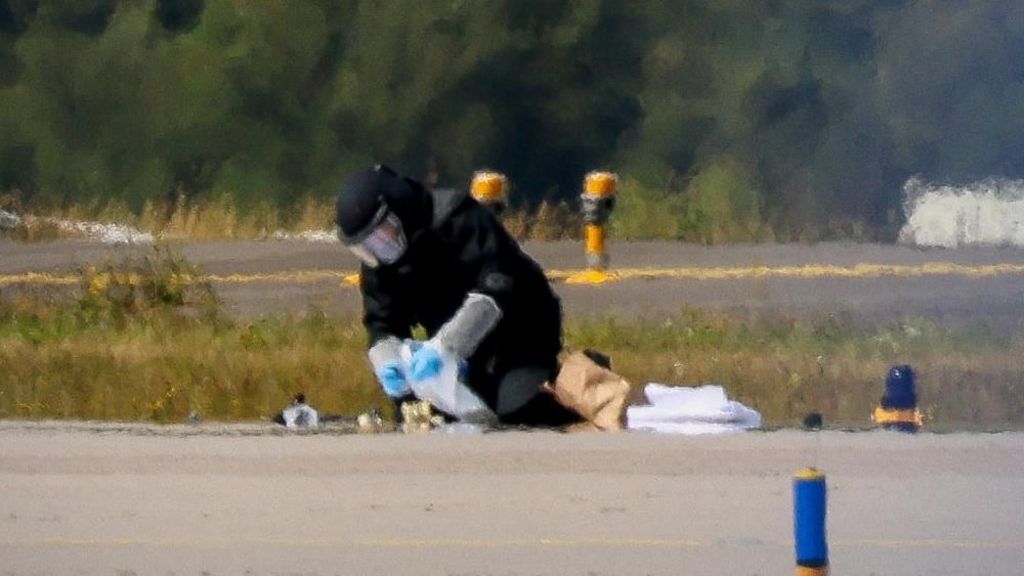
    The string of high-profile incidents began one month ago, when explosive-laden drones were discovered at Leipzig Airport, a key logistics hub for military aid bound for Ukraine. On Friday, German Interior Ministry formally pinned responsibility for the plot on Moscow, a claim that Russian President Vladimir Putin has repeatedly dismissed as unfounded, with Kremlin officials calling the accusation “absurd.”

    The Leipzig discovery was just the opening act of a month-long wave of suspicious incidents stretching from Southern Europe to the Baltic. On August 10, a large fire broke out at a defense manufacturing plant owned by Bulgarian firm EMCO, with initial reports linking the blaze to a truck ignition during a fuel delivery. Three days later, a fire at the KNDS Ammo Italy facility outside Rome triggered a massive explosion; local prosecutors have opened an investigation into negligent disaster involving unknown persons, with local outlet La Repubblica reporting that foreign interference is a key line of inquiry.

    On August 15, a fire destroyed the Tallinn factory of Milrem Robotics, a company that supplies unmanned systems to the Ukrainian military, per Kyiv Post. Estonian authorities have arrested two suspects and confirmed that possible Russian sabotage is being treated as a high-priority line of investigation. On August 25, Slovak police announced they had foiled an arson plot targeting a Ukrainian-owned drone manufacturer, seizing a large cache of incendiary materials and arresting three suspects who investigators confirm were acting on external orders. The case is notable because Slovakia has long maintained close political ties to Moscow.

    The wave of incidents continued into late August, with Poland — a nation that has emerged as one of the most frequent targets of Russian sabotage — reporting two new attacks on August 30. A fire broke out at a helicopter component manufacturing facility in Lublin, where Prime Minister Donald Tusk confirmed arson cannot be ruled out. A second attack on Polish drone producer WB Group was caught on closed-circuit television, showing a masked individual throwing incendiary devices at the facility. Tusk labeled the incident a “continuation of Russia’s escalatory activities” across Europe. The pattern spilled into September, when German authorities arrested two Bulgarian suspects in Munich on suspicion of arson, after they allegedly threw incendiary devices from a vehicle at the site of defense firm Rhode & Schwartz.

    While Russian-linked sabotage across Europe is not a new phenomenon — past plots have targeted seemingly random sites ranging from Ikea retail locations to Polish paint supply stores — analysts agree that the current concentration of attacks on military and defense infrastructure marks a significant shift. “The intensity of attacks on military sites we have seen over the past two months is unprecedented,” explained Daniela Richterova, a researcher in the Department of War Studies at King’s College London. She links this sharp uptick in activity to battlefield developments in the war in Ukraine, noting that Kyiv has increasingly expanded strikes deep into Russian territory, putting political and military pressure on the Kremlin to respond.

    Richterova argues that the current Kremlin strategy is best described as “coercive signalling”: Moscow is raising the stakes for European nations that provide military support to Ukraine, aiming to pressure governments to pull back on aid by demonstrating the domestic security risks of backing Kyiv. Germany, which has become Ukraine’s largest bilateral supplier of military aid after ramping up support following the 2022 invasion, has become a key target for this campaign.

    Other analysts offer alternative interpretations, suggesting that the sabotage campaign is as much about testing NATO’s defensive posture and willingness to respond as it is about cutting off military aid to Ukraine. “Russia is probing the boundaries of what European nations will accept as acceptable behavior, while collecting data on what attack methods work and which critical infrastructure is most vulnerable,” said Keir Giles, a senior researcher at the London-based Chatham House think tank. He frames the current campaign as deliberate preparation for a next phase of Russian aggression in Europe, designed to test how much retaliation Moscow can expect even after repeated attacks on allied territory.

    The International Institute for Strategic Studies (IISS), which tracks cross-European sabotage incidents, notes that the current surge mirrors a similar spike in activity in 2024, shortly after Ukraine’s Western allies approved the use of long-range Western-supplied weapons to strike targets deep inside Russia. That 2024 wave was dominated by a parcel bomb plot, where Russia was accused of sending packages containing liquid explosives to locations in the UK and Poland; one device ignited shortly before it was to be loaded onto a DHL cargo plane, an incident analysts now view as a test run for a larger future attack. “That plot marked a clear escalation in Moscow’s willingness to risk mass civilian casualties,” Giles added. The plot was so serious that the White House directly intervened to warn the Kremlin to halt the activity, drawing a line that Moscow appeared to acknowledge at the time, but attacks have continued unabated.

    German domestic media recently published leaked details from a federal police report showing that more than 165 suspected sabotage incidents have been recorded across Germany alone in 2025, though the report does not officially assign blame for the majority of cases. German security sources familiar with the Leipzig investigation have told local media that the individuals who placed and launched the explosive drones at the airport are believed to be Russian operatives, with at least one thought to have entered Germany specifically to carry out the plot.

    This would mark a break from the majority of recent Russian sabotage operations in Europe, which have almost exclusively relied on Russian proxies often described as a “gig economy of sabotage.” Most of these operatives are Russian-speaking residents from former Soviet states, recruited online to carry out attacks for cash rather than ideological commitment. The BBC previously reported on a case in Poland where a pair of recruited saboteurs had previously volunteered to fight for Ukraine against Russian forces, demonstrating the cash-driven nature of the work. Operational handlers almost always remain based in Russia, coordinating attacks remotely via online communication tools. The IISS compares this model to the use of disposable kamikaze drones: low-cost, easy to deploy in large numbers, and designed to be expendable if operatives are caught. The amateur nature of most operatives does lead to mistakes, however: the 2024 parcel plot was partially aborted after one operative failed to locate a correct parcel pickup point, abandoning the mission entirely. If Moscow deployed professional operatives for the Leipzig plot, analysts say that indicates the Kremlin prioritized a precise, successful attack on the critical aid hub. In the end, the drones malfunctioned and never reached their intended target.

    Russian hybrid sabotage campaigns draw heavily on Cold War-era playbooks, according to Richterova’s research. Soviet-era sabotage target lists included almost identical types of infrastructure, and the Soviet Union relied on the same deniable, small-scale attack model during peacetime, with plans to scale up operations once open conflict began. “I think we are still in the grey zone between peacetime and open war, but the attacks we have seen over recent weeks are rapidly shrinking that grey space,” Richterova explained. “That increases the risk of miscalculation around what happens next.”

    As NATO works to coordinate a unified response to the rising threat, key strategic questions remain unanswered: at what point do dozens of small, deniable attacks add up to an open act of Russian aggression that requires a formal allied response? The greatest risk of all, analysts warn, is accidental escalation. If an explosive package had detonated mid-flight on a cargo plane, or if a Leipzig drone had struck a commercial passenger aircraft, the resulting casualties would force NATO to take tangible action that could spark a direct conflict between the alliance and Russia. “A major accidental attack that causes mass casualties would leave NATO no room to step back,” Richterova said. “In the current heightened security environment, the alliance would have no choice but to respond.”


  • US diesel prices hit an all-time-high

    US diesel prices hit an all-time-high

    American drivers are now facing historic cost burdens at fuel pumps, with record-breaking diesel prices pushing household and industry expenses higher as the ongoing US-Israel conflict with Iran continues to squeeze household budgets across the nation.

    New data released by the American Automobile Association (AAA) confirms the national average price of a gallon of diesel has reached $5.85 — a dramatic jump from $3.71 just one year prior, and a new all-time high that surpasses the price spike triggered by Russia’s full-scale invasion of Ukraine in 2022. This sharp upward trend began immediately after the Iran conflict escalated in late February, tracking closely with skyrocketing wholesale crude oil costs driven by supply chain disruptions.

    The root of the supply shortage traces back to movement restrictions through the Strait of Hormuz, the critical chokepoint off Iran’s southern coast that carries roughly one-fifth of the world’s daily oil trade. In response to the outbreak of war, Iran has effectively closed the waterway, cutting off a major artery for global crude supplies and sending market prices soaring.

    To address voter anger over rising fuel costs, US President Donald Trump has announced a new energy agreement with Venezuela, which the US invaded in January, promising the deal will deliver substantial relief for American consumers at the pump. Under the terms of the deal, revealed Saturday, 17 strategic Venezuelan oil fields holding 65 billion barrels of proven oil reserves will be opened for development. Interim Venezuelan President Delcy Rodríguez states the project will bring more than $100 billion in direct investment to Venezuela, plus an additional $209 billion in tax revenue over the lifespan of the project. A senior US official confirmed to CBS News, the BBC’s US partner, that the US government will hold a 55% controlling stake in the joint venture, which will be operated by an experienced private sector partner with existing operations in Venezuela.

    Despite the optimistic framing from the White House, energy analysts have voiced significant skepticism about the deal’s ability to lower fuel prices quickly or resolve longstanding challenges that have blocked large-scale investment in Venezuela’s oil sector for decades. Many question whether the agreement can overcome years of underinvestment, regulatory uncertainty, and infrastructure decay that have kept Venezuelan oil production far below its potential.

    The skyrocketing fuel costs have already had a major political impact, with just months to go before November’s critical midterm elections. Rising prices at the pump have fueled widespread frustration among US voters, and recent Reuters/Ipsos polling reflects this discontent: President Trump’s national approval rating has dropped to just 33%, and only 31% of American adults express support for his handling of the Iran conflict.

    Price hikes are not evenly distributed across the country, AAA data shows. Drivers in Western US states face far steeper costs than consumers in other regions, a gap driven by differing state fuel taxes and longer transportation distances from major domestic oil production hubs. For example, Washington state currently boasts the highest average diesel price in the nation at $6.81 per gallon, up from $5.03 per gallon just 12 months ago. Diesel is not the only fuel hitting American pocketbooks: average national gasoline prices have also climbed to a historic $4.15 per gallon, up from $3.20 a year ago, pushing up costs for personal travel and goods transportation across every sector of the economy.

  • How could US-Iran conflict end? Three experts give their views

    How could US-Iran conflict end? Three experts give their views

    After seven months of open conflict between the United States and Iran, hopes for an immediate breakthrough peace deal have once again faded, as both sides exchange targeted strikes and dig in with uncompromising public rhetoric. The latest escalation comes just days after Washington announced a sweeping new phase of its campaign: a total economic blockade designed to punish not only Iran but also any third-party nations that continue to conduct trade with Tehran.

    The core goal of this new pressure campaign, US officials say, is to force Iran back to the negotiating table and end its repeated disruptions to commercial shipping in the Strait of Hormuz, a critical global energy chokepoint that has been effectively closed to large-scale commercial traffic since the conflict began between the US, Israel and Iran in February. The June Memorandum of Understanding (MoU), a tentative framework negotiated by both sides that was supposed to lead to a permanent ceasefire and full peace agreement within 60 days, officially expired at the end of August without any progress toward its stated goals.

    To unpack the current stalemate and the potential trajectory of the conflict, three leading regional security experts from major international think tanks shared their analysis of the shifting dynamics on and off the battlefield.

    Jason Campbell, a Senior Fellow at the Washington DC-based Middle East Institute, argues that the biggest source of ongoing uncertainty is the lack of clear, fixed US strategic goals for the conflict. “The White House is constantly re-evaluating what political outcomes it is willing to accept,” Campbell explained. Early planning assumed that limited military action would deliver a quick US victory, but that assumption has failed to materialize, leading the US to test a mix of military pressure and economic coercion.

    Currently, Campbell says the Biden administration appears comfortable with a state of controlled stasis: maintaining the broad economic blockade while carrying out periodic targeted strikes to limit Iran’s ability to disrupt shipping through the strait. US officials are betting that the new round of harsh sanctions will weaken Tehran’s position enough to force it back to negotiations on US terms. In recent weeks, US forces have managed to open a limited shipping channel through the strait, enough to avoid a catastrophic global oil price spike or broader economic collapse, but these incremental gains fall far short of the original US objectives when the conflict launched. For Campbell, the most likely outcome is that Iran will demand major concessions to reach a deal, terms that will remain politically unacceptable for the current US administration.

    Dr. Aniseh Bassiri Tabrizi, an Associate Fellow with Chatham House’s Middle East and North Africa Programme in London, says the latest US strikes and sanctions have not changed Iran’s core calculations about the conflict. “Tehran is already preparing for tighter economic pressure and a continuation of the sporadic on-off attacks we have seen over the past two months,” Tabrizi noted. Iran’s strategy remains to respond to US attacks in a proportionate way, avoiding actions that would trigger a full-scale regional war while refusing to back down.

    The new economic squeeze will undoubtedly deepen harm to Iran’s economy, which has already been battered by months of conflict and has long struggled with deep structural problems — instability that was already visible in large-scale anti-government demonstrations in December and January earlier this year. Even so, Tabrizi says there is no indication that economic pressure will push Iran’s leadership to change its position or make concessions at the negotiating table any time soon. That does not mean Tehran has ruled out a path to de-escalation, but rather that it is waiting for the US to return to the terms of the June MoU or offer concrete concessions of its own. “Tehran does not want to cave in to US pressure or alter its own approach in response to sanctions or additional attacks,” Tabrizi added.

    Nicholas Hopton, a Distinguished Fellow in international security at the Royal United Services Institute in London and former UK ambassador to Iran, argues that the latest escalation of military action will not force Iran to surrender, and economic pressure is unlikely to work as intended. That is because major trade partners of Iran including China and Russia refuse to back Washington’s unilateral sanctions, allowing Tehran to maintain critical economic ties even under the blockade. “Iran can continue to disrupt the Strait of Hormuz — they have a thumb on the jugular of the global economy,” Hopton noted.

    When it comes to the question of the White House’s exit strategy, Hopton argues the framework for a solution already exists in the June MoU. If Washington returns to negotiate the full deal outlined in that agreement, it would deliver what the US frames as a victory: weakening hardline factions within Iran’s Islamic Republic and creating international guarantees that Tehran will not develop a nuclear weapon. The core provision of the MoU — lifting all US sanctions on Iran — would over time weaken the influence of the powerful Islamic Revolutionary Guard Corp (IRGC), which dominates large swathes of Iran’s economy. Opening Iran to broad new global economic engagement would gradually drive radical political and social change, resulting in an Islamic regime that is fundamentally different in its approach and priorities, Hopton explained.

    Reaching that outcome will not be easy, however, given the IRGC’s deep penetration of Iran’s economy. It would also require significant strategic patience from the US and its partners, a commodity that is in very short supply at this stage of the conflict. “For the time being, I think we’re going to carry on with a messy, inconclusive situation that is bad for everyone,” Hopton concluded.

  • Sarawak town chokes as haze pushes air pollution past Malaysia’s emergency threshold

    Sarawak town chokes as haze pushes air pollution past Malaysia’s emergency threshold

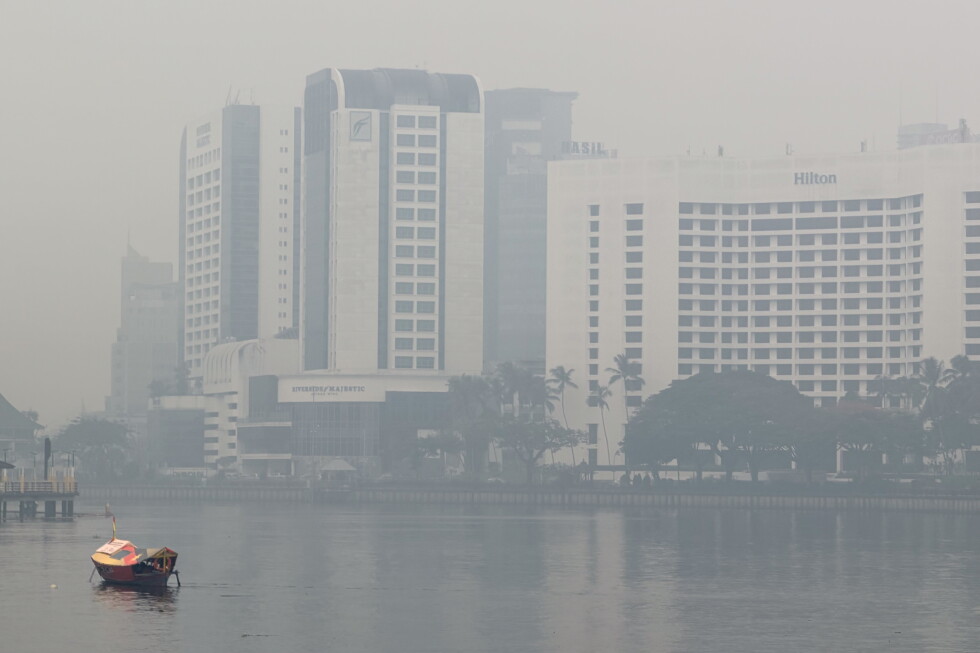
    A small agricultural town on Malaysia’s Borneo Island has recorded hazardous haze levels that cross the country’s emergency threshold, amplifying concerns over the annual regional air quality crisis driven by Indonesian forest fires. On Friday, Sarawak state’s Serian, a border community of roughly 89,000 people adjacent to Indonesia’s Kalimantan province, saw its Air Pollutant Index (API) spike to 521, according to official data from Malaysia’s environment department. Not far away, Kuching, Sarawak’s capital and largest urban center, also posted a dangerous reading of 311, placing it firmly in the hazardous category of Malaysia’s air quality scale.

    Transboundary haze is a chronic seasonal challenge for Southeast Asia. Every dry season, smoke from slash-and-burn land clearing and forest fires in Indonesia drifts across national borders, degrading air quality in neighboring countries including Malaysia, Brunei and Singapore. Under Malaysia’s regulatory framework, any API reading above 500 triggers an emergency protocol that requires halting non-essential work and outdoor activities; schools have already been ordered closed in areas with readings exceeding 200. As of Friday evening, Malaysian officials had not yet issued a formal emergency declaration for Serian.

    This year’s haze outbreak is far more severe than average, experts note, fueled by a combination of increased fire activity across multiple Indonesian provinces and extended dry weather conditions that have allowed blazes to spread rapidly across Borneo. Sarawak has emerged as the hardest-hit region in Malaysia, with multiple localities recording hazardous air pollution levels for consecutive days.

    Indonesian authorities have ramped up response efforts to contain the blazes. Latest satellite data from Indonesia’s Forestry Ministry, released Friday, shows 717 confirmed hot spots — areas of elevated temperature linked to active fires — detected across the country since August 1, with 103 new hot spots recorded in just the 24-hour period leading up to the report. To slow fire growth, Indonesian authorities have deployed large-scale ground and aerial firefighting teams, and have carried out cloud seeding operations to induce much-needed rain.

    Law enforcement action has also been stepped up, particularly in Kalimantan, the Indonesian portion of Borneo that is the source of much of this year’s smoke. Five companies operating in the province have already had their business licenses suspended over allegations that illegal fires burned within their concession areas. Forestry Minister Raja Juli Antoni announced that penalties could extend far beyond temporary suspensions: companies that fail to meet mandatory land restoration requirements, or that are found to have intentionally set fires, will face full criminal prosecution.

    The ongoing crisis highlights the persistent challenge of addressing transboundary air pollution in Southeast Asia, where dry seasonal conditions and lax land management enforcement have created a recurring public health threat that crosses national borders.

  • ‘Layer upon layer of miracles’: How Nepal flood survivors were rescued from tunnel

    ‘Layer upon layer of miracles’: How Nepal flood survivors were rescued from tunnel

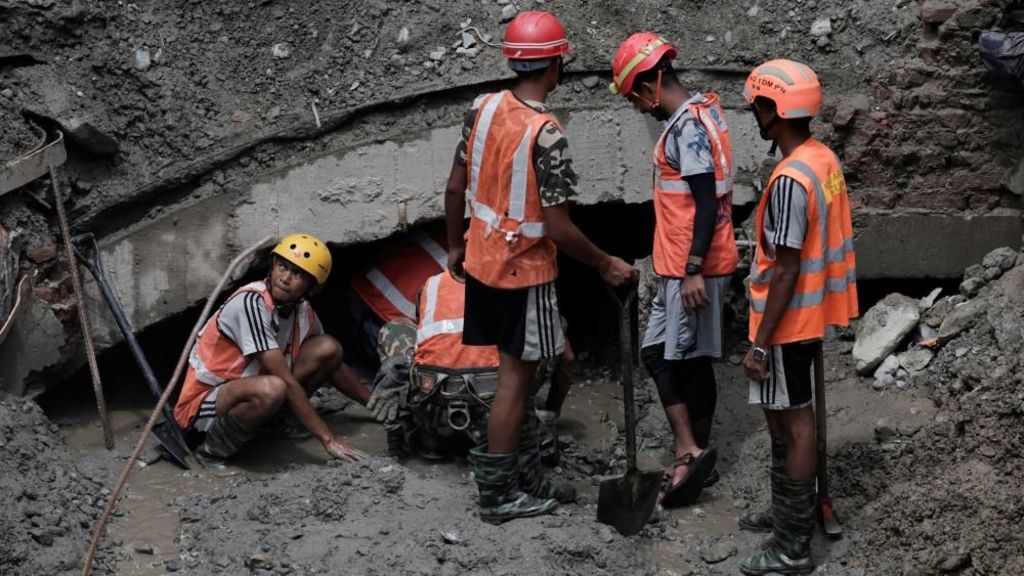
    Last week, catastrophic flash floods along the Nepal-Tibet border left more than 1,300 people dead and devastated multiple hydropower infrastructure projects, including the Trishuli 3A Hydropower Station, where a construction tunnel was completely buried under mud, rock and flood debris. In what a senior international tunnelling expert has called a succession of overlapping miracles, two workers trapped inside the blocked tunnel were pulled alive by rescue teams in the early hours of Friday, with an intensive search now underway for dozens more still missing deep in the mountain.

    Arnold Dix, president of the International Tunnelling and Underground Space Association, who has served as a lead advisor to Nepalese hydropower authorities on the unprecedented rescue operation, shared a detailed account of the extraordinary challenges his team faced from the very start of the mission.

    Unlike any rescue Dix has worked on in his decades-long career, the first major hurdle was simply locating the tunnel’s entrance. The flash flood and accompanying avalanche of debris completely rearranged the mountain landscape, moving the original entrance from its position up the hillside to a spot completely buried underground. “I’ve never known a rescue operation where you had to look for an entrance of a tunnel that was previously up the hill, that was now underground. You can imagine the enormity of the avalanche, it completely buried the entrance,” Dix explained.

    To pinpoint the entrance’s approximate location, Dix and his team combined a range of tools: conventional engineering methods, decades-old topographic maps, post-disaster satellite imagery, aerial helicopter footage, and even visible surface markers like standing power poles, to triangulate the most probable position and begin digging. Against steep odds, their approach worked, and they uncovered the buried entrance – but an entirely new set of obstacles stood between rescuers and the trapped workers.

    The entire tunnel passage was choked solid with mud and boulders, some as large as passenger cars. To clear the massive blockage, teams were forced to use controlled explosives – a dangerous measure never used in standard tunnel rescue scenarios, due to the extreme risk of collapsing the tunnel or harming trapped survivors. Dix praised the Nepalese army for its exceptional precision in executing the blasts, which successfully cleared debris without destabilizing the remaining tunnel structure.

    Rescuers also discovered the tunnel was still filled with standing floodwater. To address this hazard, Nepalese crews used excavators and heavy pumping equipment to carve a network of drainage trenches running from the interior of the tunnel all the way out to the adjacent river, draining excess water to create safe working conditions.

    In the final stage of the approach to the detected survivors, teams dug a narrow human-sized access passage through the debris along the top of the original tunnel. Dix noted this strategic choice had two key benefits: it leveraged the original tunnel’s intact roof as the roof of the new passage, cutting down on digging time and reducing collapse risk, while also mitigating the ongoing threat of secondary flooding inside the tunnel.

    In the pre-dawn hours of Friday, rescuers detected faint sounds coming from deep in the passage. After calling out to confirm the presence of survivors, they received a faint reply of “okay” from two trapped men. Within minutes, workers pulled out Sanjaya Shah and Kabir Maharjan, both alive.

    Despite this breakthrough, the rescue mission is far from complete. Dozens of workers are still believed to be trapped inside the tunnel, and teams have so far only cleared roughly 60 meters of debris from the entrance. Another 150 meters of digging remains before crews can reach the main hydropower station complex deep inside the mountain.

    Rescuers hold cautious optimism that flood debris never reached the main station complex. If debris did penetrate the station, it would bring severe complications: any survivors there could have been injured by rock and mud flows, or the area could be fully flooded.

    Dix added that rescue teams still face life-threatening risks as they push deeper into the mountain. Crews could unexpectedly encounter standing water that could trap or drown tunnellers, and the threat of a second flash flood upstream means water could surge into the tunnel from behind the rescue team, leaving crews surrounded by water on both sides.

    Even so, Friday’s successful rescue has renewed the entire team’s determination and hope that more survivors can be found. The first successful extraction confirmed that the team’s untested approach to the unprecedented disaster was correct, Dix said, giving the entire operation a jolt of renewed energy. “It’s a big relief, that we are on the right track. And it gives us renewed energy that our thinking on how to conduct the rescue works… we have never done something like this before.”

    Teams are now advancing toward what Dix calls the “Goldilocks zone,” the upper level of the hydropower station complex, where open dry space makes it the most likely area for survivors to have held out. Refusing to end the operation after the first successful rescue, Dix said the team is committed to pushing forward: “We got two people out. If we were playing at a casino, some might say it’s time to walk away, but we say game on, time to take on the house.”

  • Boy, 12, dies after car hit by train

    Boy, 12, dies after car hit by train

    A devastating traffic incident has claimed the life of a 12-year-old boy following a collision between a passenger train and a private car at a rural level crossing in County Mayo, Republic of Ireland. The crash unfolded at approximately 8:45 p.m. local time on Thursday in the small community of Kiltybo, just outside the town of Ballyhaunis.

    Local law enforcement with Gardaí, Ireland’s national police service, and multiple emergency response teams were dispatched to the scene immediately after receiving emergency calls about the crash. Of the two people inside the car at the time of impact, the 12-year-old passenger was pronounced dead by first responders on site. The driver, a man in his late 40s, was airlifted by ambulance to a nearby medical facility for urgent care; officials have confirmed his injuries are not considered life-threatening.

    None of the passengers aboard the involved train suffered harm, and all were able to safely exit the vehicle following the collision. As of Friday morning, the local road remains closed to through traffic while official investigations get underway. Forensic Collision Investigators are scheduled to conduct a detailed technical examination of the crash site to piece together the exact sequence of events that led to the collision.

    Irish authorities have notified the local Coroner’s office, and the boy’s remains have been transported to the mortuary at Mayo University Hospital. A post-mortem examination has been scheduled to confirm the official cause of death. In a public appeal, Gardaí are asking any members of the public who witnessed the incident, or who may have dashcam footage from the area around the time of the crash, to come forward to assist with the ongoing investigation.

  • War lingering, Pentagon extends Mideast troop deployments into ’27

    War lingering, Pentagon extends Mideast troop deployments into ’27

    Three years into a deeply contentious, costly and unpopular U.S. military campaign against Iran, the U.S. Pentagon has confirmed plans to extend deployments of American troops, fighter jet squadrons and naval warships in the Middle East well into next year, with some ground forces potentially remaining as late as 2027, according to an exclusive Wall Street Journal report published late Wednesday.

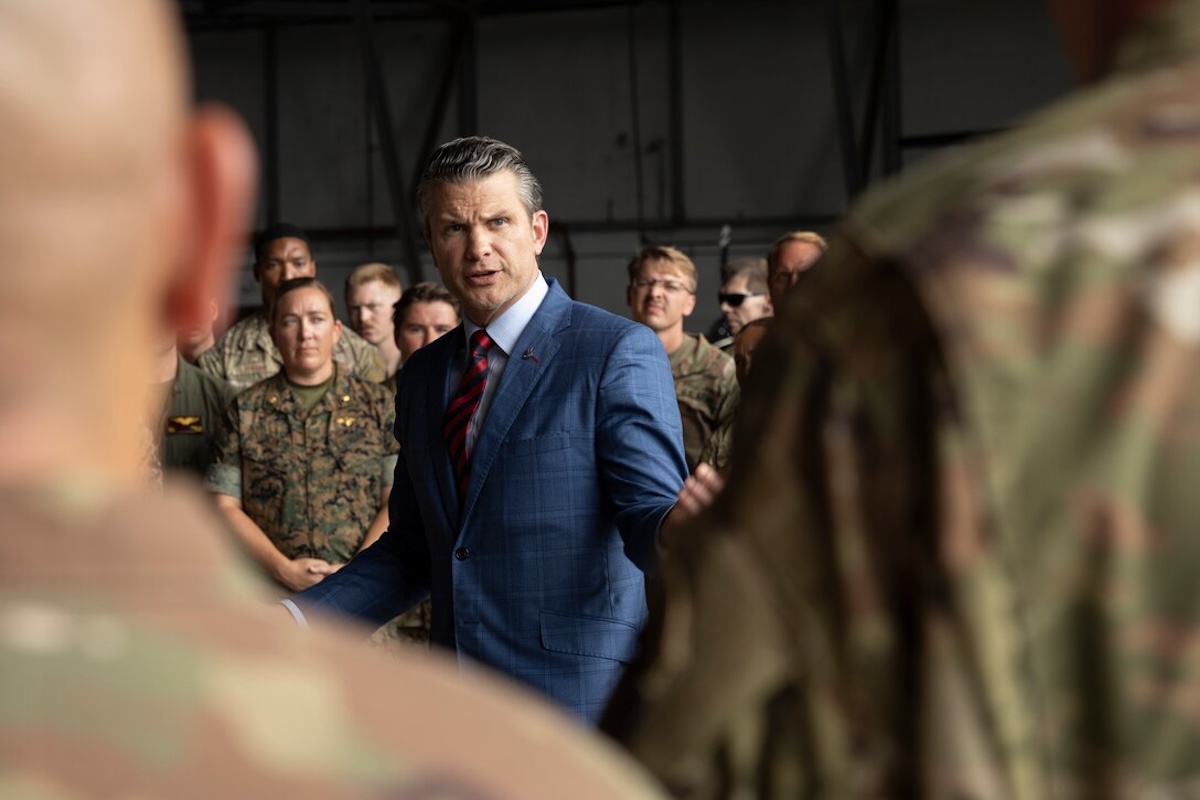
    The development marks a stark reversal of early promises from top Trump administration officials, including Pentagon Chief Pete Hegseth and President Donald Trump himself, who both repeatedly insisted the military assault on Iran would conclude quickly. Under the newly unveiled plan, the U.S. will maintain a force of roughly 50,000 service members in the region, a posture designed to preserve presidential flexibility for future policy shifts, the report notes, citing internal correspondence that military leadership sent to family members of deployed personnel. The document also confirms that elements of the Army’s elite 82nd Airborne Division could remain stationed in the Middle East through 2027.

    Intriguingly, the report adds that Trump – who has drawn widespread criticism for falsely claiming Iran is a “dead” country – is currently holding closed-door discussions with senior advisors about formally declaring the Iran war over, even as cross-border airstrikes continue, thousands of U.S. troops remain deployed in theater, and the administration continues to ramp up crippling economic sanctions on Tehran.

    Critics across policy and advocacy circles have rapidly condemned the administration’s handling of the conflict, calling the open-ended deployment a confirmation that the war was both unnecessary and illegal from its outset. “The Trump administration seems to excel at bombing schools and weddings,” Brian Finucane, senior adviser to the U.S. Program at the International Crisis Group, wrote in commentary Wednesday. “Winning the illegal and unnecessary war with Iran – not so much.”

    Hegseth has publicly thrown his support behind a new strategy that relies on “periodic” targeted bombings across Iran to keep commercial ship traffic moving through the Strait of Hormuz, a critical global energy chokepoint. But independent analysts warn this approach would lock the U.S. into a permanent state of low-intensity conflict with Iran with no clear off-ramp.

    Trita Parsi, executive vice president of the Quincy Institute for Responsible Statecraft, argued earlier this week that Trump’s current posture appears tailored to upcoming midterm elections: he is leaning toward maintaining a limited, low-level conflict through the vote, pursuing neither a diplomatic breakthrough to end the standoff nor allowing tensions to spiral into full-scale all-out war. “Iranian officials say, both publicly and privately, that they expect the U.S. and Israel to resume full-scale hostilities after the midterms regardless of the impact of the so-called D-Day sanctions,” Parsi noted in his analysis. “Regional diplomats have largely reached the same conclusion.” Parsi added that if sanctions gradually weaken Iran’s economy while global markets adjust to new trade patterns through the Strait, a prolonged pause in major operations will work against Tehran’s interests. That dynamic, he warned, could push Iranian leadership to launch dramatic military escalation in the run-up to the election, taking advantage of what they see as Trump’s domestic political vulnerability.

    The human and economic cost of the conflict continues to mount. To date, the war has killed thousands of Iranians – including hundreds of civilian children – along with at least 18 U.S. service members. For average American households, the conflict has driven an extra $1,200 in annual costs, primarily due to spiking global energy prices that have pushed gasoline costs to record highs. When asked about this financial burden on American families, Trump has publicly stated he does “not think about Americans’ financial situation” when making policy decisions about the Iran war.

    The open-ended conflict has also paved the way for the Trump administration to push for a record $1.5 trillion military spending budget for the upcoming fiscal year, a request that has amplified fears among critics that the U.S. is settling into a permanent “forever war” in the Middle East focused on Iran.

    In a public analysis published Wednesday, the National Iranian American Council outlined the growing risk of prolonged conflict for civilians on both sides. “Washington is betting that sustained military and economic pressure will eventually force Tehran to retreat,” the organization wrote. “Iran appears to be betting that it can survive long enough to force Washington to do the same. For ordinary Iranians, American servicemembers, and civilians across the region, the danger is that testing those two assumptions will require a much longer and more destructive war.”