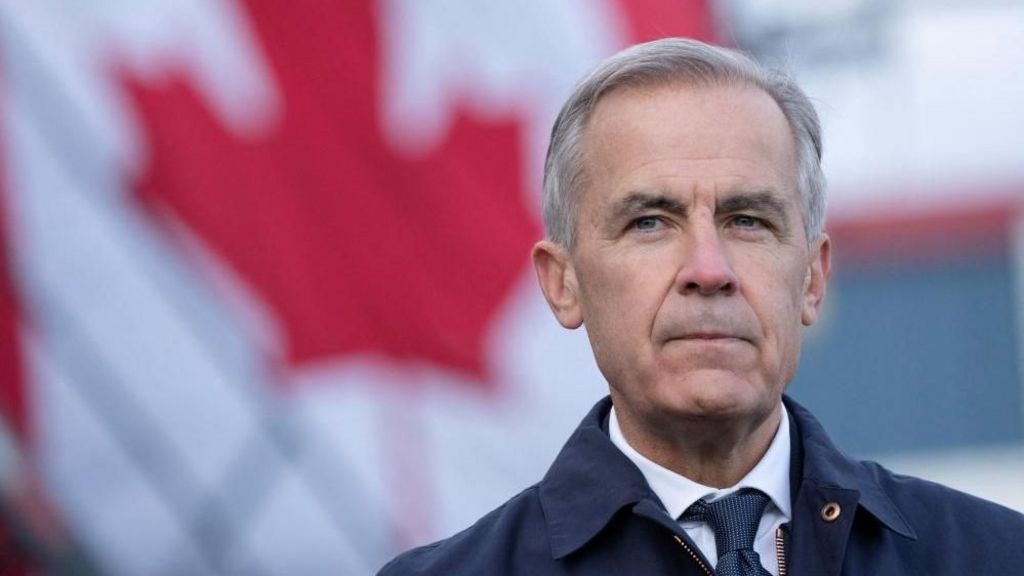
As Canada stands on the brink of a historic electoral test of national unity, Prime Minister Mark Carney has launched a two-day campaign blitz across Alberta, urging residents to reject regional separation and cement the province’s place within Canadian Confederation in Monday’s upcoming independence referendum. With polls showing a narrow majority leaning toward remaining in Canada, Carney warned Thursday that the stakes of the vote could not be higher, stressing that complacency among pro-unity voters could upend the expected outcome.
Speaking to a energized crowd of more than 7,000 supporters at a pro-unity rally in Calgary, Carney characterized the referendum as mis-timed at a moment of global economic volatility. He called on Albertans to deliver a clear, decisive rejection of separation, rejecting arguments that polling alone guarantees a pro-union outcome. “Turnout will determine the outcome,” Carney told the gathered crowd, echoing warnings from pro-union organizers who fear low voter enthusiasm could hand separation advocates an upset victory.
The referendum, scheduled for October 19, was called earlier this year by Alberta Premier Danielle Smith after a grassroots separatist movement collected nearly 300,000 signatures on a petition demanding a binding vote on provincial independence. Smith, a Conservative whose core political base includes a vocal bloc of separatist supporters, has publicly backed retaining Alberta’s place in Canada but framed the vote as a necessary step to amplify Albertans’ voices on long-simmering grievances against the federal government.
Separation advocates center their campaign on the argument that Alberta, a landlocked province rich with oil and gas reserves, has been systematically sidelined by federal policymakers in Ottawa despite the massive economic contribution its energy sector makes to national revenue. Over the past decade of successive Liberal federal governments, separatists claim, national climate and environmental policies have been prioritized over the growth of Alberta’s key fossil fuel industry, and an independent Alberta would be able to retain far more of its resource wealth for provincial investment and public services.
Pro-unity campaigners, by contrast, argue that separation would carry catastrophic near- and long-term economic consequences for the province. An independent Alberta, they warn, would immediately inherit billions in new sovereign debt, and widespread economic uncertainty would drive away major business investment and push thousands of skilled jobs across the newly created border into remaining Canadian territory. Carney and other pro-unity leaders have drawn explicit parallels between the Alberta referendum and the 2016 Brexit vote, cautioning that a vote to leave carries a host of unforeseen economic risks that will take generations to reverse.
In a nod to the legitimacy of long-held frustrations among many Albertans, Carney acknowledged in his Thursday speech that “the frustrations that many Albertans have felt are real.” To address those grievances, the prime minister has already moved in the lead-up to the vote to demonstrate federal support for Alberta’s energy sector, announcing plans to fast-track regulatory approval for a major new oil pipeline connecting Alberta’s oil fields to Canada’s Pacific coast. Carney has framed the pipeline project as a demonstration of national solidarity, noting it will help Canada diversify its export markets at a time of ongoing trade tensions with the United States driven by tariffs imposed by President Donald Trump.
Before wrapping up his two-day trip, Carney is scheduled to hold a second pro-unity rally on Friday in Edmonton, his hometown, after spending Thursday morning meeting with local business owners and pro-unity volunteers working to boost voter turnout. On the same day, Premier Smith will join Conservative Opposition Leader Pierre Poilievre – another prominent backer of retaining Alberta’s place in Canada – at a separate pro-unity event in Calgary. Separation advocates, for their part, are planning a final get-out-the-vote rally in Edmonton on Saturday to shore up support in their strongest regional strongholds.
As of this week, early voting data points to extraordinarily high voter engagement: more than 450,000 Albertans have already cast ballots either through early in-person voting or mail-in ballots, a total that already exceeds the number of ballots cast in Alberta’s most recent provincial general election. While most public opinion surveys continue to show a majority of respondents favor remaining in Canada, both campaigns have spent the final stretch of the race working feverishly to turn out their base, knowing that even a small shift in turnout could reshape the future of Canada.