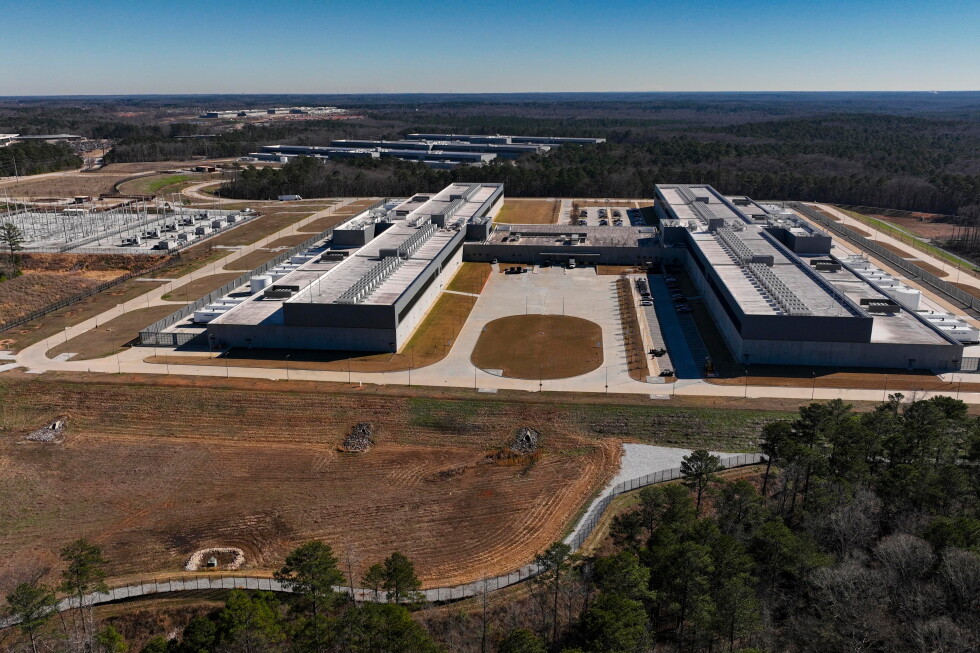
As South Africa emerges as the leading digital infrastructure hub on the African continent, attracting billions in investment from major U.S. tech giants including Amazon, Microsoft, and Equinix, a growing coalition of civil society and human rights organizations is pushing for a moratorium on new data center projects until a full, transparent audit of their strain on the country’s limited water, energy, and land resources can be completed.
President Cyril Ramaphosa has framed South Africa’s existing market dominance — which already holds 70% of the entire continent’s data center capacity — as a once-in-a-generation economic opportunity in the fast-growing global digital economy, and the national government has actively courted foreign tech firms to expand their footprint in the country. But as the sector explodes in growth, just as it has in the United States and other major markets, questions about unregulated expansion and its long-term social and environmental costs have moved to the forefront of public debate.
The South African Human Rights Commission (SAHRC), the country’s independent national rights watchdog, opened a public call for input on data center development this past May, and has already received more than 250 submissions from community groups, environmental activists, and other concerned stakeholders. Dr. Eileen Carter, who leads the SAHRC’s preliminary inquiry into the sector, highlighted that a core barrier to accountable development is the complete lack of accessible, consistent, and transparent data on critical metrics: how much electricity and water each facility will consume, how land will be allocated, what environmental risks the projects pose, and how they will impact nearby residential communities.
One high-profile project that has drawn particular backlash is Equinix’s planned hyperscale data center in Cape Town, a metro region that still carries vivid public memory of the 2018 Day Zero water crisis, when authorities warned the city could run out of municipal water entirely. Beyond water concerns, activists have raised alarm over the facility’s projected 160-megawatt power demand, coming just years after the country faced crippling, rolling nationwide blackouts known locally as loadshedding that disrupted daily life and economic activity for millions.
While national power utility Eskom has recently reported a temporary power surplus during this year’s winter peak demand season, civil society groups remain skeptical that excess capacity should be prioritized for data center operations, rather than directed toward households and small businesses that bore the brunt of years of power shortages.
Industry representatives have pushed back against calls for a construction moratorium, arguing that critics often misjudge the resource footprint of South African facilities. Sasha Booth-Beharilal, chair of the Internet Service Providers Association, which represents local and foreign tech firms operating data centers in the country, claimed that data center growth does not contribute to energy scarcity or drive increases in household electricity tariffs. Booth-Beharilal also noted that modern South African facilities use cutting-edge efficiency technology to cut water use to levels well below the global average, and many operators are increasingly shifting to renewable energy sources to power their operations. Operators also add that South African data centers have far smaller resource requirements than the massive hyperscale facilities common in the U.S., making direct comparisons misleading.
Still, many policy experts side with civil society, framing the call for a temporary halt not as anti-investment, but as a necessary step to build long-term regulatory clarity that benefits all stakeholders. Pitso Tsibolane, a senior lecturer in Information Systems at the University of Cape Town, explained that clear, binding regulations do not discourage serious foreign investors — instead, it is unregulated expansion and the uncertainty it creates that undermines market confidence. Currently, Tsibolane noted, data center operators are not required to disclose binding, verifiable figures for their water, energy, and land use ahead of approval, meaning municipal and national regulators evaluate project proposals without the critical data needed to make informed decisions that serve the public good.