As Serbia prepares to lay to rest former Bosnian Serb army commander Ratko Mladic — a convicted genocide perpetrator whose legacy continues to split the Balkans decades after the 1992-1995 Bosnian war — European Union officials have framed the coming days as a critical test of Belgrade’s commitment to European values amid its stalled bid for EU membership.
Mladic, who was sentenced to life imprisonment in 2017 by a United Nations war crimes tribunal for overseeing some of the worst atrocities on European soil since World War II, died last week in a Dutch hospital at the age of 84. His remains were flown back to Serbia on a government-owned aircraft Thursday, triggering immediate international backlash over plans for official state honors at his funeral.
Upon the plane’s landing in Belgrade, Mladic’s casket was draped in Serbia’s national flag, carried by uniformed Serbian army soldiers to a waiting van, and escorted through the capital to a military hospital. Serbia’s Justice Minister Nenad Vujic accompanied Mladic’s family on the repatriation flight, while crowds of nationalist supporters lit flares as the funeral cortege passed through the city. Mladic’s son, Darko Mladic, confirmed public arrangements Friday: a military commemoration scheduled for Saturday, public lying-in-state at a central Belgrade church Monday morning, and a burial at a Belgrade cemetery later that day.
Initial comments from Vujic confirming Mladic would receive full state funeral honors sparked outrage across the ethnically fragmented Balkan region, where scars from the 1992-1995 Bosnian war — which killed more than 100,000 people and displaced over a million — remain raw. This is not the first time Serbia has honored a convicted war criminal with official military recognition: just last year, former army chief of staff Nebojsa Pavkovic, also convicted of war crimes by the UN tribunal, was buried with full military honors at Belgrade’s cemetery for distinguished citizens.
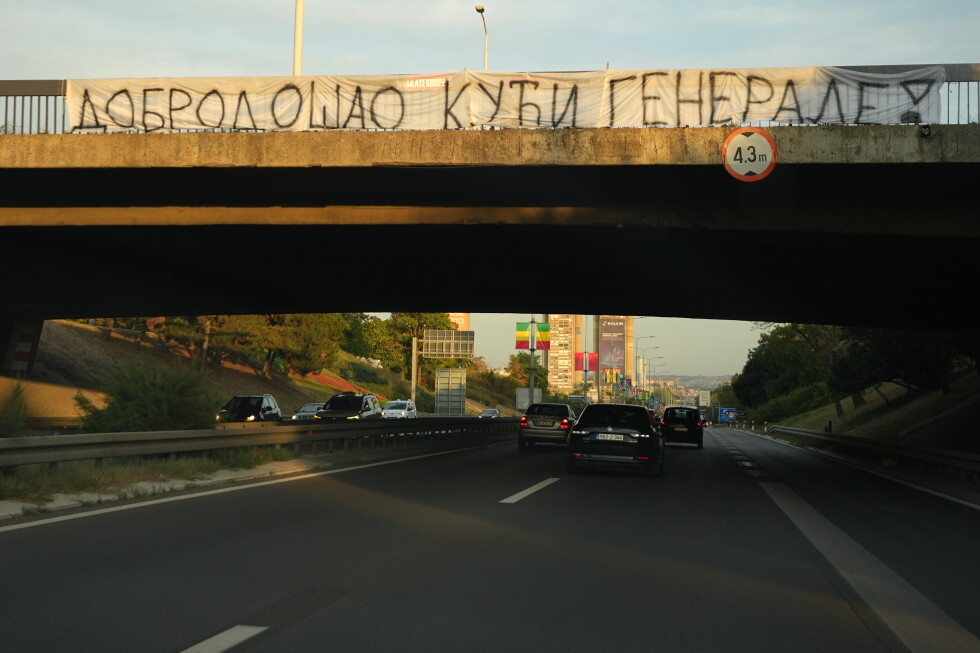
Despite its formal status as an EU accession candidate, Serbia has long remained defiant in its reckoning with wartime actions during the Bosnian conflict, where it backed Bosnian Serb separatist forces. Many Serbs across Serbia and the Bosnian Serb entity of Republika Srpska still view Mladic as a national hero, and thousands held public vigils for him after his death, with large crowds expected to attend Monday’s burial. Serbian President Aleksandar Vucic, a populist leader whose rule has overseen growing democratic backsliding and a freeze in EU accession talks, sought to distance himself from formal responsibility for the arrangements Friday, noting he had pre-scheduled official meetings for the day of the funeral.
“I have spoken to the Mladic family and I wish it all passes in a dignified way,” Vucic told pro-government outlet Informer TV, adding “I did all I could so that the funeral would pass as it should” without elaborating on what actions he had taken. The EU’s Enlargement Commissioner Marta Kos reiterated Friday that the bloc is closely watching every step of the process, calling the coming days “a very important test” for Belgrade.
International criticism of the planned honors has mounted rapidly beyond the EU. Council of Europe Human Rights Commissioner Michael O’Flaherty urged both Serbian and Bosnian Serb authorities Friday to crack down on the public glorification of convicted war criminals, noting that such glorification violates Bosnian law and is not protected as free speech under the European Convention on Human Rights.
“I abhor the public glorification of Ratko Mladic, a deceased war criminal convicted for the Srebrenica genocide and crimes against humanity, including statements by officials in Bosnia and Herzegovina’s entity of Republika Srpska and in Serbia,” O’Flaherty said in an official statement. Belgian Foreign Minister Maxime Prevot added that granting official funeral honors to Mladic would be “shameful and disrespectful for the victims,” saying he had already conveyed his strong condemnation to his Serbian counterpart responsible for European integration affairs.
Mladic’s conviction centered on his role in three core wartime atrocities: the 1995 Srebrenica massacre, the four-year siege of Sarajevo, and the systematic abuse of non-Serb civilians in wartime concentration camps. The Srebrenica massacre, in which Mladic’s forces overran a UN-declared safe haven for Bosnian Muslims and executed more than 8,000 Bosniak men and boys, remains the only genocide legally recognized on European soil since World War II. Mass graves of Srebrenica victims are still being uncovered decades after the massacre, and survivors and victims’ families continue to push for full accountability for all those involved in the atrocities.