Decades of tense sovereignty dispute over the South Atlantic Falkland Islands (known as the Malvinas in Argentina) have reignited, after Argentine President Javier Milei recently made new claims to the territory and threatened sanctions against international companies moving forward with planned oil exploration near the archipelago.
Milei used a national address Thursday to double down on Argentina’s longstanding territorial claim, arguing that the Falkland Islands are historically and legally part of Argentina. He claimed that the “winds of change” are shifting in Argentina’s favor, and warned that the proposed Sea Lion oil development off the islands’ coast poses a “clear and present danger” to his country’s interests. If Argentina does not act quickly, Milei asserted, foreign companies will gain permanent access to what he calls Argentina’s offshore oil reserves – a development he said the nation would never accept.
The president announced plans to impose new sanctions on companies involved in the exploration project, though details of how or how broadly these restrictions will be applied have not yet been released. Argentine law already allows for sanctions against energy firms operating in projects Buenos Aires does not authorize in the disputed territory.
The project at the center of the latest dispute is a partnership between UK-based Rockhopper Exploration and Israeli energy firm Navitas Petroleum, which plans to begin commercial oil extraction at the Sea Lion field by 2028. Located roughly 130 miles off the Falklands coast, the field holds an estimated 1.7 billion barrels of high-quality crude oil – nearly six times the volume of the North Sea’s major Rosebank oil field. In a joint statement released Friday, the two companies confirmed they hold valid exploration licenses granted by the Falkland Islands government, with full backing from the UK government. The firms added that current political tensions will not delay their project timeline.
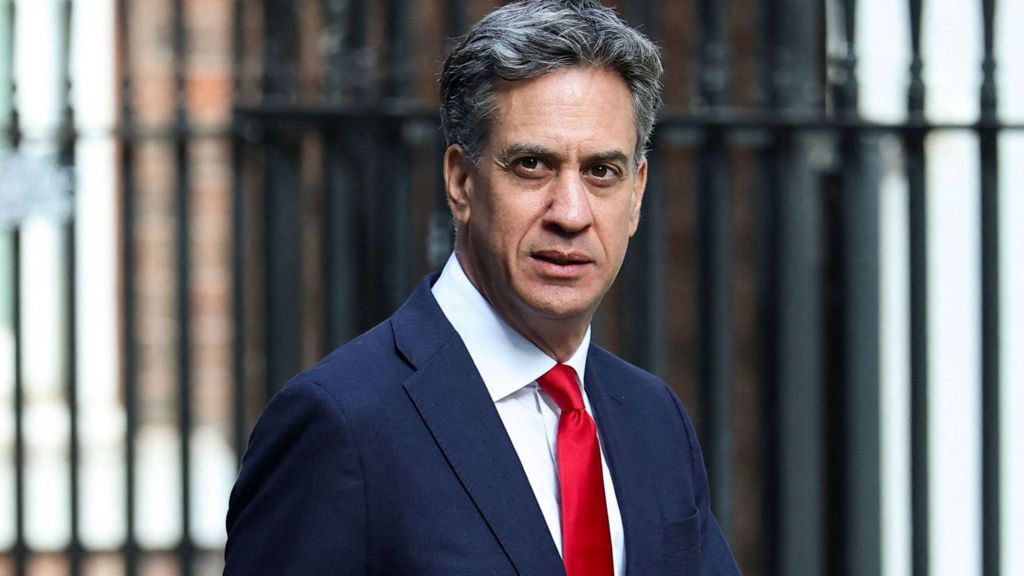
In response to Milei’s remarks, senior UK officials have issued a unified, firm rebuke, reaffirming the UK’s commitment to upholding the Falkland Islanders’ right to self-determination. Writing on the social platform X Friday, Foreign Secretary Ed Miliband said the UK would “resolutely uphold” the self-determination of the islanders, and the territory will remain British because that is the overwhelming democratic will of its residents.
Defence Secretary Wes Streeting echoed that position, describing the UK’s commitment to the Falklands as “absolute and unshakeable.” Streeting argued that Milei’s statement has more to do with domestic political positioning in Argentina than it does with the actual status of the disputed islands. Downing Street also issued a formal reaffirmation of the UK’s longstanding stance: the Falklands will remain a British Overseas Territory for as long as the islands’ residents wish to keep that status. A Downing Street spokesperson noted that economic threats against the Falklands from Argentine governments are not new, and added that the islanders’ right to self-determination explicitly includes the right to develop and exploit their own natural resources.
The current dispute comes more than 40 years after the 1982 Falklands War, and the sovereignty of the South Atlantic archipelago remains a deeply divisive issue between London and Buenos Aires. In a 2013 referendum held on the islands, 99.8% of resident voters cast ballots in favor of remaining a British Overseas Territory, with just three votes against the option.
The latest diplomatic tension also drew comment from former U.S. President Donald Trump, who hinted Thursday that the U.S. would not side with the UK in any future military conflict over the Falklands. Trump claimed the U.S. would not back the UK because Britain did not support him during what he described as his “war with Iran.” Trump’s remarks come as he previously confirmed that the U.S. position on the Falklands dispute is one of multiple policies currently under review.