博客

  • Ecuador defender Piero Hincapié completes permanent Arsenal move while at World Cup

    Ecuador defender Piero Hincapié completes permanent Arsenal move while at World Cup

    LONDON – In a transfer announcement timed just days before one of the most high-stakes matches of his international career, Premier League champions Arsenal have finalized the permanent signing of Ecuadorian center-back and left-back Piero Hincapié, the club confirmed Thursday.

    The 24-year-old had joined the Gunners on a season-long loan from German Bundesliga side Bayer Leverkusen for the 2023-2024 campaign, and his performances over the course of the year triggered a clause in the loan agreement that required Arsenal to convert the temporary move into a full permanent contract. Hincapié will officially be listed as an Arsenal player starting next Wednesday.

    Across his debut loan season in North London, Hincapié turned out 39 times for Arsenal in all club competitions, emerging as a key rotational option for manager Mikel Arteta. He spent the majority of his game time sharing starting responsibilities at left back with Italian newcomer Riccardo Calafiori, stepping in reliably for Europa League, domestic cup, and league fixtures when called upon.

    The transfer news lands right in the middle of Hincapié’s 2026 FIFA World Cup campaign with Ecuador, where he has played every minute of the team’s opening two group stage matches. So far, La Tri have recorded a narrow 1-0 defeat to Ivory Coast and a goalless stalemate against Curaçao, leaving them needing a positive result against four-time World Cup champions Germany in their final group fixture to keep their tournament hopes alive.

    Fans across Arsenal’s global supporter base are already looking ahead to Hincapié’s first full season as a permanent member of the squad, as the club prepares for another deep run in both domestic and European competitions next year.

  • Luxury consumers seen nudging sector back to growth despite global tensions

    Luxury consumers seen nudging sector back to growth despite global tensions

    MILAN – Global personal luxury goods are poised for a return to measured expansion in 2026, as hesitant high-end consumers slowly return to buying apparel, handbags, cosmetics and other premium items despite lingering cross-border geopolitical instability, leading consultancy Bain & Company outlined in its latest semi-annual industry report released Thursday.

    After two consecutive years of shrinking sales, the firm projects global revenue from personal luxury goods will climb between 2% and 4% year-over-year in 2026. That would push total sector value to between €365 billion and €373 billion ($415 billion to $424 billion), up from 2025’s total of €358 billion.

    The Americas are expected to lead the ongoing recovery, with multiple U.S.-based luxury brands registering first-quarter sales growth as high as 15% this year, per the analysis. U.S. consumers are prioritizing everyday casual luxury pieces, fine jewelry and beauty products, with shoppers under 35 driving much of the current sales momentum.

    Claudia D’Arpizio, a Bain partner and co-author of the study, noted that a sustained cultural shift is underpinning the sector’s rebound. “People are still alive and want to live their better lives,” she explained. “So there is this mega trend of looking for good quality of life, of improving their lives and finding the meaning and living the experiences that is stronger than the fear of the future.” D’Arpizio, whose firm is widely regarded as the leading authority on luxury sector analysis, added that consumer demand for normalcy has become a powerful counterweight to economic anxiety: “People want to live a normal life, that’s a stronger feeling.”

    The report also points to stabilizing pricing as a key factor drawing consumers back to the market. After widespread consumer pushback against excessive price increases in previous years, luxury brands have adjusted their strategies, holding price steady and rolling out more entry-level product lines to reconnect with cost-conscious shoppers. D’Arpizio characterized the current market dynamic as “a healthier situation vis-a-vis two years ago,” though she cautioned that many brands still have work to do to repair customer loyalty that was damaged during the period of steep price hikes.

    Bain’s baseline growth projection relies on three core assumptions: that ongoing conflicts in the Middle East will de-escalate and stabilize, that local consumer spending will offset uneven international tourism flows across key markets, and that consumer demand in China will gradually strengthen through 2026. China is expected to return to overall growth this year, boosted by rising online sales of ready-to-wear luxury goods.

    The consultancy also outlined alternative scenarios for the year. In the downside case, if geopolitical tensions escalate further, growth would flatten entirely. At the opposite end, if global tensions ease and China’s recovery accelerates faster than expected, the sector could see growth as high as 6% for 2026.

    Regional performance is projected to remain uneven across the globe. Europe continues to lag behind other major markets, with a sharp drop in international tourism driven by geopolitical uncertainty weighing on local luxury sales. Even in Dubai, a popular luxury shopping hub, the report notes that local shoppers have stepped in to offset soft tourist spending, with residents returning to in-store purchases this year.

  • Europe’s heatwave shifts east as France raises health alert to highest level

    Europe’s heatwave shifts east as France raises health alert to highest level

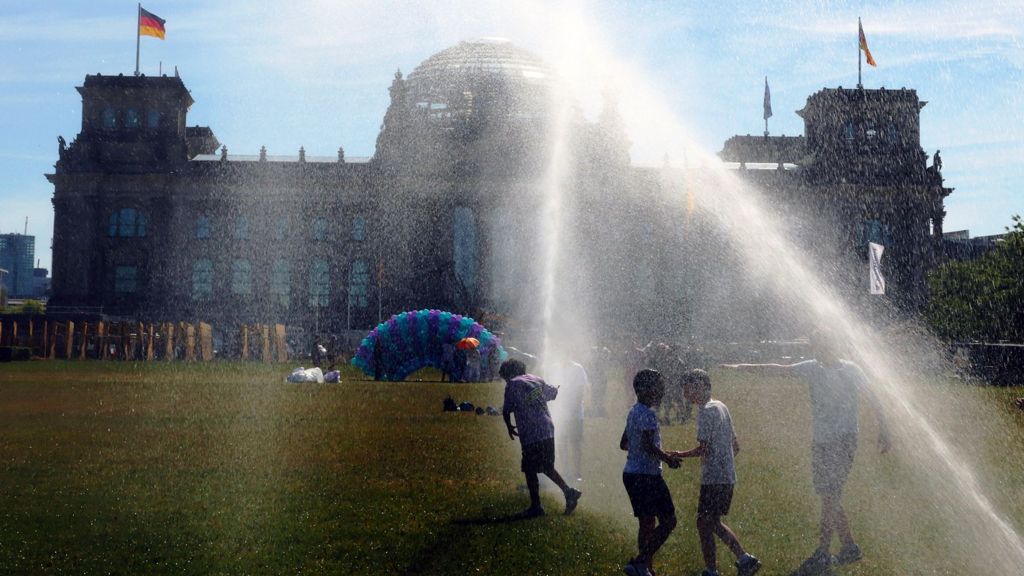
    A punishing record-breaking heatwave that has gripped Western Europe for days, bringing fatalities, strained infrastructure and broken temperature marks, is now shifting eastward, with meteorological agencies across Germany and the Czech Republic issuing urgent extreme weather warnings this week.

    After days of sweltering conditions that pushed national and regional temperature records higher across Spain, France and the United Kingdom, the heat dome is set to settle over central Europe by the end of this week. Forecasters with Germany’s national weather service DWD predict temperatures will climb as high as 40°C across western and southwestern regions of the country on Thursday, with the extreme heat spreading nationwide by Friday. Overnight temperatures in Bad Bergzabern, southwestern Germany, failed to drop below 26.2°C on Wednesday night, matching the country’s all-time record high overnight low set in 2019. DWD meteorologist Oliver Reuter noted that the current heatwave is “quite likely” to go down as one of the most extreme in German history.

    Across the Czech Republic, an extreme heat warning is already active across most of the country. Temperatures climbed well into the 30s°C on Thursday, with the country’s Hydrometeorological Institute forecasting that conditions will intensify on Friday, and could hit 40°C across parts of the nation by the weekend. Neighboring Austria is also bracing for extreme heat, with weekend temperatures in the capital Vienna projected to reach 40°C.

    The heatwave has already left a trail of devastation across Western Europe, particularly in France, where authorities have activated the country’s highest level of health emergency under the Orsan crisis response plan to boost hospital staffing and shield at-risk populations. Multiple heat-related fatalities have been confirmed, including not just elderly people, but younger residents as well. In the Paris region, a three-year-old child was found dead inside a locked car, just days after two other young children died of heat exposure in a parked car in the southern town of Carpentras. In northwestern France’s Rennes, the head of the city’s Accident and Emergency department Professor Louis Soulas confirmed that five to six recent home deaths have been linked to the extreme heat, affecting people as young as 60 years old. Paris deputy mayor Emmanuel Grégoire confirmed that mortality rates are already rising in the capital, where persistent high heat has stretched healthcare capacity. He issued a blunt warning to residents this week, calling out members of the public who continued high-intensity exercise like jogging during the red alert, noting “We must not believe ourselves to be invulnerable.”

    France has already broken multiple temperature records during the current heatwave. After recording its hottest day on record for the second consecutive day on Wednesday, Météo-France reported that the national average minimum temperature overnight hit 22°C, with the northwestern city of Nantes recording an overnight low of 27.2°C. Rennes broke its 2022 all-time high temperature record of 40.6°C on Monday with a 41°C reading the following day. Three French nuclear power plants have been taken offline due to excessive heat, which limits cooling water capacity, and intensive care units across affected regions are already at maximum capacity. Soulas warned that local intensive care units are “saturated”, adding “We are truly at a peak of activity.”

    As the heat begins to ease in western France, the region is now bracing for severe thunderstorms starting Thursday afternoon, with wind gusts projected to reach 110km/h along the Atlantic coast. Organizers of the Garorock music festival in Lot-et-Garonne have cancelled the first day of the event amid the dual threats of extreme heat and incoming storms.

    In Spain, which recorded the highest June temperature in the country’s history earlier this week – 45.1°C in the southern town of Andújar on Monday – forecasters say temperatures will peak between 38°C and 39°C on Thursday before a cooler mass of Atlantic air brings relief. Luxembourg also joined the list of countries breaking June temperature records this week, with a reading of 38.3°C in Wormeldingen, and extended a red alert for extreme thermal stress through Saturday night. Most of northern and southern Switzerland have been placed on maximum weather alert amid a significant developing drought.

    In the United Kingdom, the Met Office has extended its red extreme heat warning for parts of London and southeast England through Friday evening. Italy is still waiting for the peak of the heatwave, with forecasters predicting temperatures will hit 40°C across multiple northern regions on Monday, with overnight temperatures failing to drop below 29°C. Florence’s iconic Uffizi Gallery has paused new ticket sales through June 28, only allowing visitors with pre-existing reservations, after the museum’s air conditioning system was overwhelmed by high visitor volumes and extreme outdoor temperatures that pushed indoor readings to 32°C on Wednesday. Italian forecaster Lorenzo Tedici noted shifting expectations amid a changing climate, saying “Gone are last century’s June days of 32°C daytime temperatures and cool 17°C nights. We have become so accustomed to excess that, paradoxically, today we welcome a forecast of 34°C as good news.”

    Event organizers and transport agencies across the continent have implemented precautions: Hamburg’s half marathon scheduled for Sunday has been cancelled, Germany’s national rail operator Deutsche Bahn is offering free ticket cancellations for passengers unwilling to travel amid the heat, and Czech Railways has urged non-essential travel to be postponed.

    United Nations climate chief Simon Stiell emphasized that the current deadly heatwave is directly tied to human-caused climate change, saying “Europe’s savage heatwave has the fingerprints of the climate crisis all over it.” He called for accelerated policy action to cut emissions, speed the transition to renewable energy, protect critical forest ecosystems and boost global climate resilience. Data from the EU’s Copernicus Climate Service confirms Europe is warming twice as fast as the global average, a trend that has led to more frequent and intense summer heatwaves, growing pressure on freshwater supplies, and more severe wildfire seasons. In 2023, more than one million hectares of land burned across Europe, the highest annual total on record.

  • Earthquake is devastating blow to Venezuela at time of uncertainty

    Earthquake is devastating blow to Venezuela at time of uncertainty

    Venezuela is reeling from a devastating pair of powerful earthquakes that struck Wednesday, adding a new layer of catastrophe to a nation already grappling with political chaos and years of systemic decline. As death tolls continue to climb in the wake of the tremors, the disaster has laid bare both the enduring challenges and subtle shifts in the South American country just five months after a dramatic US military operation removed long-ruling leader Nicolás Maduro from power. Maduro, the left-wing leader who governed Venezuela from 2013 until January 2026, was captured in a dawn raid on his Caracas presidential compound and extradited to New York to face trial on international drug trafficking charges.

    In the aftermath of Maduro’s removal, his close ally and former vice-president Delcy Rodríguez stepped into the role of interim president — a move that frustrated opposition supporters, who had expected the Trump administration to install opposition leader María Corina Machado at the helm of the transitional government. Now, Rodríguez’s response to the twin earthquakes is offering a clear snapshot of what has, and what has not, changed in Venezuela, as the country confronts the severe vulnerabilities of its long-decrepit infrastructure.

    More than two hours after the quakes hit, Rodríguez delivered a national address on the state-owned television network VTV. In the gap between the disaster and her public address, official updates were extremely limited. While broken communication lines in the hardest-hit regions explain part of this delay, the information vacuum also traces back to media restrictions enacted under Maduro’s tenure. The former government shut down hundreds of independent local radio stations and online news outlets that would typically serve as critical sources of on-the-ground updates for affected communities during a crisis.

    Rodríguez spoke alongside two of her closest allies: her brother Jorge Rodríguez, president of the National Assembly, who swore her into office days after Maduro’s capture, and Diosdado Cabello, Venezuela’s interior minister and a steadfast Maduro loyalist. In a notable break from his public appearances in the months leading up to the US intervention, Cabello did not wear his customary military fatigues, instead standing silently beside the interim president alongside Jorge Rodríguez. Visibly shaken by the disaster, Rodríguez opened her address with a urgent call for national unity, appealing to a population that has remained deeply polarized for more than a decade between supporters of Maduro and his predecessor Hugo Chávez, and opposition factions.

    She also declared a national state of emergency and appointed General Juan Ernesto Sulbarán, commander of Venezuela’s National Guard, to lead the country’s disaster response efforts. This appointment reflects a long-standing pattern of Venezuelan politics: throughout the 25 years that Chávez and Maduro held power, top government positions were almost exclusively filled by high-ranking military officers. For years, most key state ministries were led by generals, and analysts widely attribute the country’s crumbling infrastructure to the lack of specialized expertise among these military appointees.

    Under pressure from the Trump administration, Rodríguez has recently made small moves to diversify her cabinet: she replaced the general leading the housing ministry with a civilian architect, and swapped the military head of the electricity ministry for a professional electrical engineer. Even with these incremental changes, decades of mismanagement, compounded by crippling US economic sanctions, have left most public infrastructure — particularly public housing — in severe disrepair. For example, the state-owned cement industry collapsed after its nationalization under Chávez, creating a nationwide shortage of building materials that has left critical structural repairs undone for years. This has left millions of buildings far more vulnerable to collapse during seismic events like this week’s quakes.

    Venezuela’s emergency response services have also suffered from chronic underinvestment, a side effect of the military’s outsized influence over national spending. For decades, funding and equipment were prioritized for the armed forces, leaving civil protection and rescue agencies without modern tools, rescue vehicles, and sufficient resources to respond to large-scale disasters. Recognizing these deep shortcomings, Rodríguez publicly thanked foreign governments that have already pledged support to Venezuela’s relief effort — and in a striking break from Maduro’s policy, she explicitly highlighted aid offers from ideologically opposed leaders, including US President Donald Trump. She told the nation that the Trump administration had maintained constant communication with Venezuelan authorities to offer support and solidarity. She also thanked the right-wing presidents of the Dominican Republic, El Salvador, and Chile for their offers of assistance.

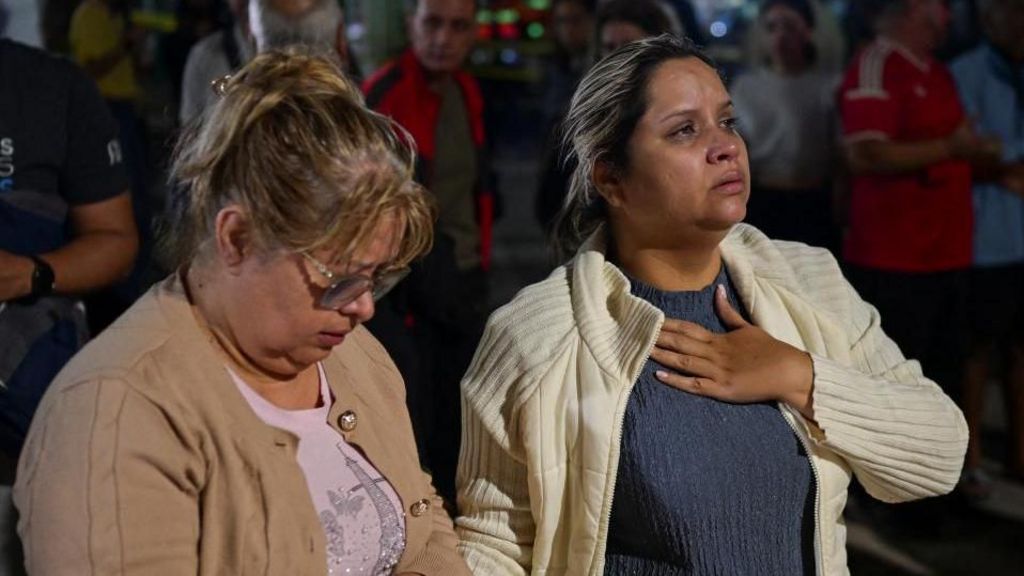
    Maduro consistently restricted foreign aid to assistance from ideological allies, so Rodríguez’s willingness to accept help from across the political divide marks a clear shift in policy. For Venezuelans waking to widespread destruction, and for the dozens of families still waiting for news of loved ones trapped under collapsed rubble, this open approach to international aid offers a faint glimmer of hope amid overwhelming tragedy and ongoing national uncertainty. “The solidarity between our people is an invaluable source of strength in moments like these,” Rodríguez said in her address.

  • At least 32 dead, 700 injured in Venezuelan earthquakes: acting president

    At least 32 dead, 700 injured in Venezuelan earthquakes: acting president

    On the night of June 23, 2026, two consecutive powerful earthquakes struck western Venezuela, triggering a major humanitarian crisis that has already left at least 32 people dead and more than 700 others injured, acting Venezuelan President Delcy Rodriguez confirmed in an official statement early Thursday.

    According to data from the United States Geological Survey (USGS), the first tremor, registering a magnitude of 7.1, hit at 22:04 GMT, just 60 seconds before a stronger 7.5-magnitude aftershock followed. Both seismic events originated near the coastal town of Moron, roughly 160 kilometers west of the capital Caracas, at a shallow depth of 10 kilometers. Seismologists note that shallow quakes of this magnitude typically produce far more severe destructive effects on built infrastructure and human populations than deeper events of the same strength.

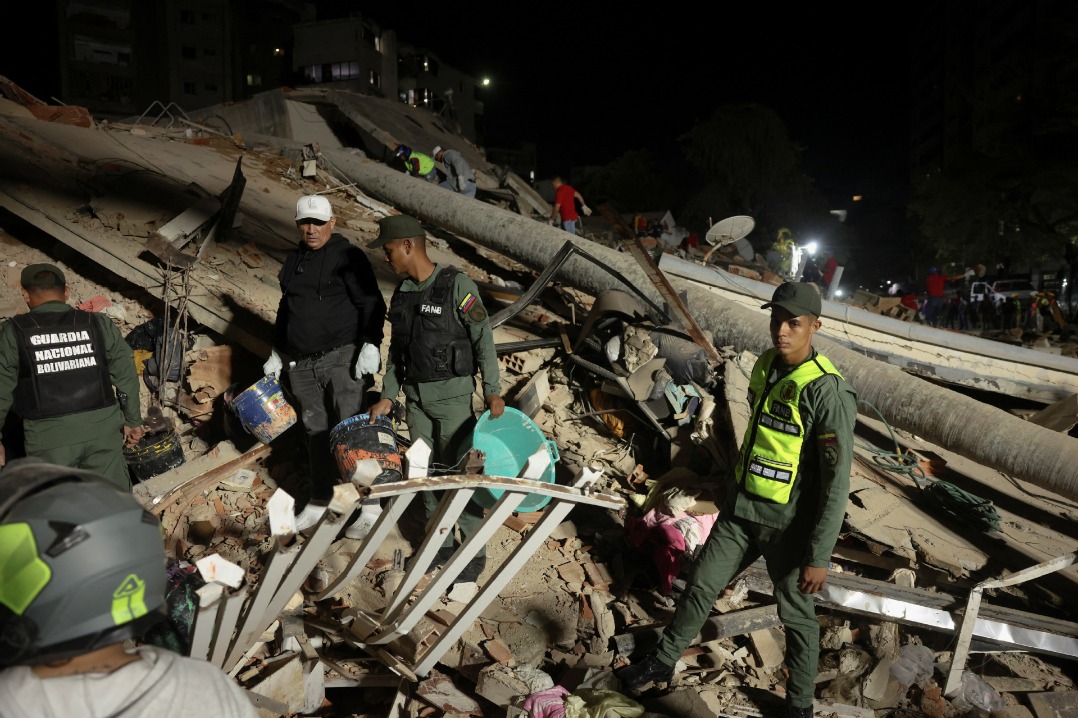
    Rodriguez confirmed that the northern coastal state of La Guaira sustained the worst damage, with dozens of structures fully collapsed, labeling the region a full “disaster zone” in her address on Venezuelan state television. She added that the current casualty count of 32 fatalities and 700 injuries does not yet include impact data from La Guaira, as widespread connectivity outages have cut off communication with hard-hit areas of the state, meaning the final death toll is expected to rise as rescue teams reach cut-off communities.

    In response to the disaster, the Venezuelan government has declared a national state of emergency, activating full-scale search and rescue operations across affected regions. A series of emergency public safety measures have also rolled out: all school activities nationwide have been suspended indefinitely, with educational facilities repurposed as supply collection centers and temporary emergency shelters for displaced residents. Public transit including the Caracas Metro and the Caracas-Miranda railway line has been temporarily halted as a precaution, and all non-essential government and private activities have been canceled for the remainder of the week. The nation’s entire public and private health network has also been activated, with priority placed on treating injured residents in the most affected regions.

    As rescue efforts ramp up, the Venezuelan government has welcomed international support, with international rescue teams expected to arrive on the ground within hours. Qatar has already dispatched rescue personnel scheduled to arrive in the country by Friday, with additional teams from Mexico and El Salvador also en route. Multiple nations have quickly pledged humanitarian support: Ecuadorian President Daniel Noboa has ordered immediate delivery of emergency aid supplies, Indian Prime Minister Narendra Modi stated India stands prepared to provide all possible assistance, and a Chinese Foreign Ministry spokesperson confirmed Thursday that China will deliver all feasible support tailored to Venezuela’s on-the-ground needs.

  • Key figure in South Africa police corruption scandal pleads guilty

    Key figure in South Africa police corruption scandal pleads guilty

    South Africa’s high-stakes investigation into systemic police corruption has taken a dramatic turn, with a central figure in the sprawling inquiry agreeing to cooperate with state prosecutors in exchange for a reduced sentence. Vusimusi “Cat” Matlala, a 49-year-old business owner at the heart of the case, has entered guilty pleas to three serious charges: corruption, fraud, and money laundering, as part of a negotiated plea agreement put before a Pretoria court.

    Matlala stands accused of orchestrating bribes paid to senior police leaders to secure a massive 360 million South African rand (equivalent to roughly $22 million) public health tender for his company, Medicare24, back in 2024. According to state advocate Santhos Manilall, the agreement requires Matlala to provide firsthand evidence against multiple high-ranking officials who have been linked to the graft scheme. If the magistrate approves the deal, Matlala will serve an eight-year prison term, a sentence prosecutors argue is a fair trade for unprecedented access to hidden details of the corruption network.

    “For the first time we have an accused who has… given us detail that we would not have been made aware of,” Manilall told the court, noting that it took nearly two months of closed negotiations to finalize the cooperation agreement. The deal mandates that Matlala deliver full, truthful testimony in all upcoming prosecutions connected to the scandal. A final ruling on whether the court will accept the agreement is expected next week.

    Among the prominent figures already facing charges tied to this case is South Africa’s national police chief Gen Fannie Masemola, who has repeatedly denied all wrongdoing. This inquiry is one of multiple parallel probes into alleged criminal infiltration of South Africa’s law enforcement agencies.

    Matlala also faces a separate, unrelated murder charge which he has denied. In addition, a witness testifying before the ongoing Madlanga Commission, the public inquiry into police graft, has named Matlala as a member of a drug trafficking cartel that claims to have deeply penetrated national police ranks. Matlala has not issued a public response to that cartel allegation, though he told a separate parliamentary corruption inquiry last year that he had no personal connections to senior police officers or politicians. He has not yet testified before the Madlanga Commission.

    The Madlanga Commission was launched last September, following a bombshell allegation from senior police officer Lt-Gen Nhlanhla Mkhwanazi, who claimed last July that well-organized crime groups had successfully infiltrated multiple levels of the South African government. Witness testimony throughout the commission’s proceedings has repeatedly centered on claims of coordinated collusion between underworld criminal leaders and senior law enforcement officials, laying bare long-suspected systemic corruption within the country’s police institutions.

  • How Aussies taught kids to stay safe in the sun

    How Aussies taught kids to stay safe in the sun

    Skin cancer has long been one of the most pressing public health challenges for sun-drenched nations like Australia, where high ultraviolet radiation levels put residents at constant elevated risk. Four decades ago, public health officials made a pivotal decision to tackle this crisis from the ground up, focusing on the youngest generation to build lifelong safe sun habits. In 1981, they launched a revolutionary nationwide public education campaign that swapped dense clinical messaging for approachable, memorable pop culture-style content to teach children how to protect themselves from harmful sun exposure.

    The centerpiece of this innovative campaign was Sid the Seagull, a cheerful yellow cartoon character paired with an upbeat, catchy jingle that quickly embedded itself in the national consciousness. Unlike traditional public health announcements that relied on dry warnings and statistics, the campaign framed sun safety as a simple, everyday habit children could easily adopt. By leveraging a beloved cartoon mascot and an easily recallable tune, public health experts made core lessons about seeking shade, wearing protective clothing, and applying sunscreen stick with kids far more effectively than any textbook or lecture could.

    Decades later, this pioneering initiative is still held up as a global model for community-focused public health education. What began as a single national campaign to reduce rising skin cancer rates has reshaped how countries around the world approach sun safety outreach, proving that accessible, engaging messaging targeted at children can create generational shifts in health behavior.

  • By the numbers: What to know about Europe’s record-breaking heat wave

    By the numbers: What to know about Europe’s record-breaking heat wave

    A punishing high-pressure heat dome has trapped an extraordinary mass of hot air from North Africa over much of Western Europe this week, driving temperatures across the continent above 40 degrees Celsius (104 Fahrenheit) and triggering a wave of all-time temperature records — even though the peak of the summer heat season is still weeks away.

    What makes this heat event particularly anomalous is its timing: extreme heat of this severity has arrived far earlier than the mid-summer window when such conditions are normally expected. The combination of soaring peak temperatures and unusually high overnight readings, paired with stifling humidity, has created conditions far more akin to a tropical climate than the temperate weather the region typically experiences in June. Day after night after day, existing national and regional temperature records have fallen one after another.

    The hot air mass originating in North Africa has spread across Spain, France, Belgium, the Netherlands and the United Kingdom, bringing searing conditions to regions that rarely see prolonged extreme heat. Unlike many warmer climate regions, most buildings and homes across these countries lack widespread, accessible air conditioning, leaving millions of residents without a reliable way to escape the oppressive heat.

    While meteorologists forecast that temperatures will gradually cool in the coming days, climate experts warn that the worst of the 2024 European summer is still ahead, with the historically hottest months of July and August still to come. To put the scale of this early heat wave in perspective, a series of staggering record-breaking measurements illustrate its unprecedented breadth and intensity:

    In the small southwestern French town of Pissos, observers recorded a high of 43.8 degrees Celsius (110.8 Fahrenheit) on Wednesday, making it the hottest temperature recorded across France during this heat event. For context, this reading is far above the average June high for the region of 25 degrees Celsius.

    Across the entire country of France, the Meteo France national weather agency confirmed that the 24-hour average temperature hit 30 degrees Celsius (86 Fahrenheit) at 30 monitoring stations on Wednesday. This marks the first time in recorded French weather history that a nationwide 24-hour average has reached this threshold, officially making Wednesday the hottest day France has ever experienced. Unlike heat events that only push daytime highs in small regions, this average — measured across both day and night hours across dozens of locations — confirms that this heat wave is far more geographically extensive than any previous heat event on record. In response to the crisis, French authorities placed more than three-quarters of the country under red-level extreme heat alerts, another first in the nation’s history.

    Across the English Channel, the United Kingdom also logged a new milestone on Thursday: a reading of 36.4 degrees Celsius (97.5 Fahrenheit) in Somerset, southern England, making it the hottest June day ever recorded in the country. UK meteorological services have extended red heat warnings for most of central and southern England, as well as Wales, urging residents to stay hydrated and avoid unnecessary outdoor activity.

    Even overnight temperatures have reached record levels, leaving vulnerable populations with no relief from the swelter. Germany’s national weather service reported that temperatures did not drop below 26.2 degrees Celsius (79.2 Fahrenheit) in Bad Bergzabern, a town in the western state of Rhineland-Palatinate. That reading matches the all-time record for Germany’s warmest night, originally set in July 2019. Across the Channel in Plymouth, England, overnight temperatures only fell to 23.0 degrees Celsius (73.4 Fahrenheit), a provisional new record for the warmest June night in the country. High humidity has trapped heat close to the ground across the region, keeping temperatures elevated well after sunset for millions of people.

    The extreme heat has already claimed lives. In France alone, at least 40 people have died in drowning incidents over the past week as residents flocked to rivers and lakes to cool off, ignoring repeated official warnings about the dangers of unsupervised swimming. French Prime Minister Sébastien Lecornu confirmed that most of the victims were young people. Related heat-related hazards have spread across the continent, with organizers of Formula 1’s Austrian Grand Prix declaring an official heat hazard as the event proceeds amid scorching conditions. This extreme heat event also coincides with a landmark court ruling on climate change in Paris, adding a layer of urgency to ongoing policy debates about climate adaptation and mitigation across Europe.

    Even Spain, a country familiar with summer heat, has faced extraordinary conditions. The northern Spanish village of Tama, long known for its cool, green Atlantic-facing landscape, hit an all-time record high of 43.7 degrees Celsius (110 Fahrenheit) earlier this week, a remarkable reading for a region that typically enjoys temperate summer weather. This heat wave has extended far into Spain’s normally cooler northern Atlantic coastal regions, areas that rarely face extreme heat warnings.

    Reporting for this article was contributed by Pan Pylas in London, Sylvie Corbet in Paris, Geir Moulson in Berlin, James Ellingworth in Duesseldorf, Germany, and Joseph Wilson in Barcelona.


  • Poland’s Tusk calls for ‘mutual respect’ during row with Ukraine

    Poland’s Tusk calls for ‘mutual respect’ during row with Ukraine

    A brewing diplomatic rift between two key Eastern European allies, Poland and Ukraine, has cast a shadow over the 2024 Ukraine Recovery Conference held in the Polish coastal city of Gdansk. Ukrainian President Volodymyr Zelensky skipped the high-profile summit, an absence that came directly after Warsaw stripped him of its highest state honor over a controversial naming decision by Kyiv.

    The core of the conflict traces back to a mid-20th century historical disagreement over the Ukrainian Insurgent Army, better known by its acronym UPA. For Ukrainians, the UPA, which operated across Eastern Europe through the 1940s and 1950s, is widely viewed as a band of heroic freedom fighters who battled for Ukrainian independence against multiple occupying powers, including Nazi Germany and the Soviet Red Army, as well as interwar Polish governing forces. But Poland holds a fundamentally different view: it accuses the UPA of perpetrating a mass genocide that killed roughly 100,000 ethnic Polish civilians in the Volhynia region — now part of modern-day northwestern Ukraine — between 1943 and 1945. Tensions flared after Ukraine formally named a military unit in honor of the UPA last month, a move that Polish President Karol Nawrocki lambasted as “outrageous”, “incomprehensible” and “deeply disappointing” that inflicted damage on decades of built trust between the two nations.

    In response to the naming decision, Polish authorities revoked the Order of the White Eagle — Poland’s highest state decoration, which had been awarded to Zelensky in 2023. Shortly after the revocation was announced, Zelensky confirmed he would return the honor to Poland. In a public statement this week, Zelensky emphasized that Ukraine remains “open to all meaningful formats of engagement with Poland in order to try to avoid conflicting interpretations of the difficult and painful chapters of our shared past”, and added that Kyiv retains profound gratitude to the Polish people for their unwavering support and longstanding cooperation throughout the war.

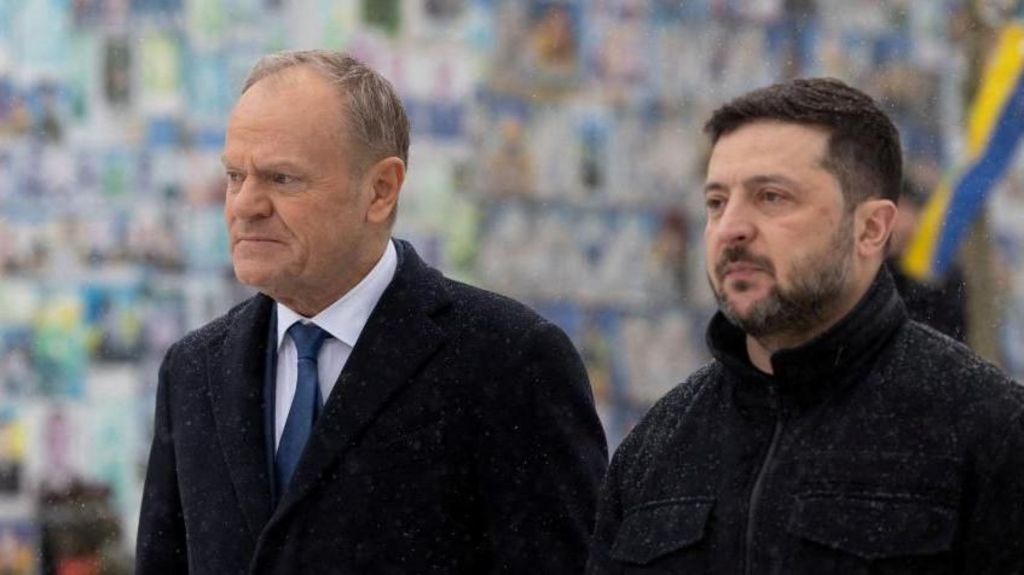
    Opening the two-day reconstruction summit on Thursday, Polish Prime Minister Donald Tusk stressed that durable progress for Ukraine’s future can only be founded on “truth, on mutual respect, on an understanding of history”. Unlike past iterations of the annual conference, where Zelensky personally led Ukraine’s delegation, this year’s Ukrainian contingent is headed by Prime Minister Yulia Svyrydenko.

    Tusk has previously moved to de-escalate the public dispute, noting that the rift between the two allies is a outcome that “delights” Russian President Vladimir Putin, and calling on both Zelensky and Nawrocki to “calm emotions, not to stoke tensions”.

    The timing of this diplomatic clash could not be more sensitive for Ukraine. Kyiv is currently locked in a brutal defensive war against Russia’s full-scale invasion, and is actively lobbying the international community for billions of dollars in additional military aid and post-conflict reconstruction investment. It is also working to demonstrate its readiness to advance European Union accession talks, which launched their first formal negotiating phase last week in Luxembourg. Both reconstruction investment and EU accession are scheduled to be top of the agenda at the Gdansk summit. Even amid the dispute, Nawrocki has stressed that the historical disagreement will not alter Poland’s longstanding commitment to supporting Ukraine in its war against Russian aggression.

    Poland has been one of Ukraine’s most stalwart allies since Russia launched its full-scale invasion in February 2022. It has absorbed hundreds of thousands of Ukrainian refugees fleeing the war, and serves as a critical logistics and transit hub for Western military and humanitarian aid bound for Kyiv’s front lines. This year’s conference draws senior representatives from across the European Union, including European Commission President Ursula von der Leyen and European Council head Antonio Costa, alongside senior officials from Bulgaria, Estonia, Finland, Latvia, Lithuania, Romania and Sweden.

  • Venezuela earthquakes in maps and charts – where they hit and how severe they could be

    Venezuela earthquakes in maps and charts – where they hit and how severe they could be

    A catastrophic seismic event has left Venezuela reeling from widespread destruction, after two powerful earthquakes hit just seconds apart in the country’s northern region, claiming at least 164 lives and leaving hundreds of people injured.

    According to data from the United States Geological Survey (USGS), the first tremor, registering a magnitude of 7.2, struck at 18:04 local time (22:04 GMT) on June 25, 2026, centered just 23 kilometers southeast of Yumare, a small town located west of the Venezuelan capital Caracas. Barely 38 seconds later, a second, stronger 7.5-magnitude quake hit the same general area, amplifying the destructive force across the region.

    Seismologists explain that a quake’s destructive power depends on more than just its magnitude. Depth of the epicenter, local population density, and regional building quality all play critical roles in determining damage severity. The first earthquake was recorded at a depth of 20.3 kilometers below the Earth’s surface, while the second was far shallower at just 10 kilometers deep – a factor that greatly increases the intensity of shaking and resulting damage to surface infrastructure. Following the event, the USGS issued a risk assessment estimating a 44% probability that the final death toll could exceed 10,000, as rescue teams continue to clear rubble and reach remote affected areas.

    Geographically, Venezuela sits along the highly active tectonic boundary where the Caribbean Plate and South American Plate slide past one another. The USGS notes that the twin quakes were almost certainly triggered by the sudden release of accumulated tectonic friction along this boundary, a common geologic driver of major seismic events in the region.

    Widespread damage has been reported across multiple states. The strongest shaking from the second quake damaged or destroyed countless structures in Caracas and the nearby coastal town of La Guaira. Venezuela’s Interior Ministry confirmed that five additional states – Trujillo, Yaracuy, Carabobo, Aragua and Miranda – have also sustained serious impacts.

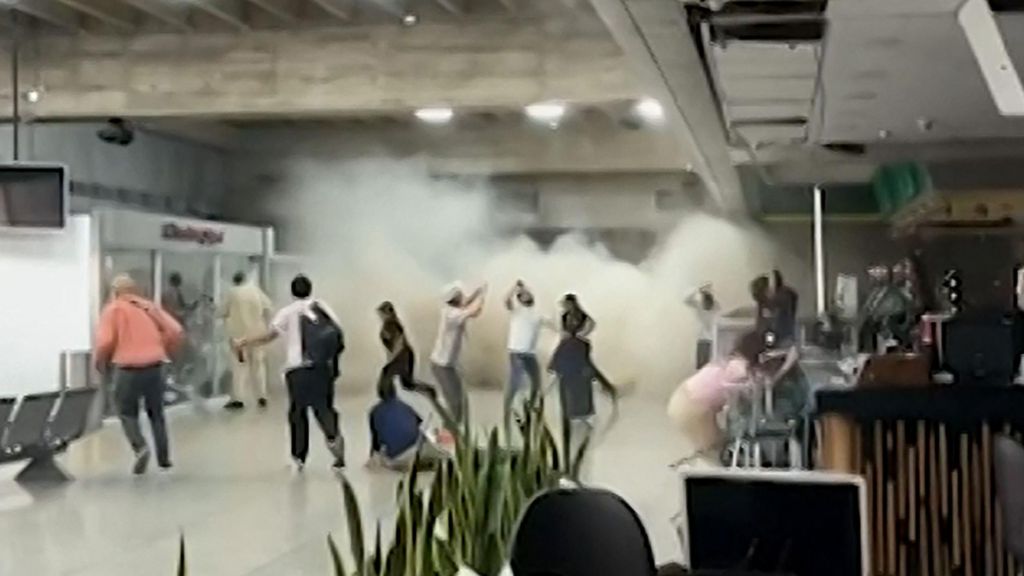
    Footage verified by the BBC shows one of the most dramatic examples of destruction: a 10-story hotel in La Guaira that has been completely reduced to rubble. Only the building’s entrance remains standing, with the collapsed remains of the rest of the structure piled high around and above it. Shockingly captured video from inside Caracas’ main international airport, located on the capital’s outskirts, shows clouds of dust and chunks of debris raining down from terminal ceilings amid the shaking. Interim President Delcy Rodríguez announced that the country’s primary international air hub has been indefinitely closed due to the severe structural damage it sustained.

    As emergency response teams begin to deploy across the affected regions, authorities are still working to compile full casualty and damage reports, with the confirmed death toll expected to rise in the coming days.