博客

  • Women alleging rape and sexual assault in France call to abolish statute of limitations

    Women alleging rape and sexual assault in France call to abolish statute of limitations

    More than 50 women who have endured sexual assault or rape, whose cases have been blocked by France’s current legal time limits for pursuing criminal claims, have joined forces to demand sweeping reform of the country’s statute of limitations laws. The collective, calling themselves *Survivors’ Voices*, includes accusers of high-profile figures ranging from disgraced financier Jeffrey Epstein and his former business partner, modeling agent Jean-Luc Brunel, to late billionaire tycoon Mohammed Al Fayed. This marks the first time such a large group of survivors has come together publicly to push for legal change, drawing renewed attention to longstanding gaps in France’s justice system for sexual violence survivors.

    Under current French legislation, adult survivors of sexual assault and rape have just 20 years from the date of the incident to file a criminal report. For survivors who were minors at the time of the abuse, the limit is extended to 30 years from the date the crime occurred. Members of the collective argue that this arbitrary cutoff sends a devastating message that their trauma and claims are less valid simply because more time has passed since the abuse took place. “Rape doesn’t expire, trauma doesn’t expire,” said Thysia Husiman, who alleges she was raped by Jean-Luc Brunel in Paris when she was 18 years old. Brunel, who was awaiting trial on charges of raping and trafficking minors, died by suicide in his Paris prison cell in 2022.

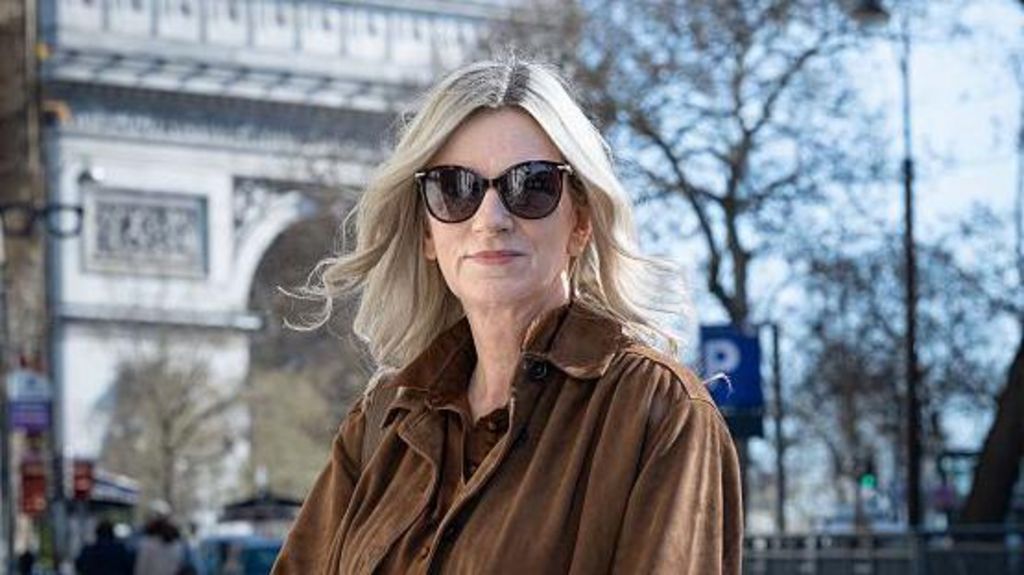
    One of the most high-profile members of the collective is Lisa Brinkworth, a former BBC producer who alleges she was sexually assaulted by Elite Model Management head Gérald Marie while working undercover in 1998 to expose abuse in the global fashion industry. As part of a BBC *Donal McIntyre Investigates* documentary, Brinkworth posed as a model to infiltrate the agency, but she says BBC leadership pressured her to stay silent about the assault immediately after it happened, fearing the incident would derail the high-budget, high-profile production. She adds that senior BBC staff withheld key evidence from her when she attempted to move forward with a claim, and she did not formally file a report with French police until 2023 years after the alleged incident.

    Brinkworth’s case against Marie was ultimately dismissed by French courts after two appeals, including a hearing before France’s highest judicial body, because it fell outside the 20-year statute of limitations. Now, she is taking her fight to the European Court of Human Rights, arguing that the current French law violates her right to access justice. Brinkworth also alleges that the BBC continues to block her efforts by refusing to hand over raw footage from the 1998 documentary, which she says contains her firsthand account of the assault recorded just minutes after it occurred. After the documentary aired in 1999, Elite Model Management sued the BBC for misrepresentation, and the two parties reached a confidential settlement that Brinkworth says the BBC has used to silence her about the assault for decades. She claims network representatives repeatedly told her she was legally barred from speaking publicly about any part of the production, including her own experience of abuse.

    In a statement responding to the allegations, a lawyer for Gérald Marie noted that previous investigations into the claims against his client in France have been closed without further action. A BBC spokesperson pushed back on Brinkworth’s claims of obstruction, saying: “As we’ve always made clear, we take these matters very seriously and we know the situation is distressing for Lisa Brinkworth. The BBC is not trying to silence Ms Brinkworth; she is free to speak about the BBC investigation and her experiences, and has done so. We have already provided material to the French authorities to help Ms Brinkworth pursue the matter and investigators have assured us they have what they currently need from the BBC. We have also provided material to Ms Brinkworth directly. We will continue to do whatever we can to assist with the process.”

    The collective’s call for reform comes amid a growing global reckoning with sexual violence, particularly in high-power industries like modeling, entertainment, and finance. Both Epstein and Brunel have died, leaving many of their accusers without any path to criminal justice, and survivors say changing the statute of limitations is a critical step toward holding perpetrators accountable and honoring the harm that survivors carry permanently.

  • MP urges UK government to take action on English football ties to Israeli occupation

    MP urges UK government to take action on English football ties to Israeli occupation

    A cross-party independent British Member of Parliament, Iqbal Mohamed, has launched a formal call for urgent government intervention to cut ties between English football and corporations accused of complicity in Israel’s illegal occupation, apartheid policies, and reported war crimes against the Palestinian people.

    In an official letter addressed to UK Culture Secretary Lisa Nandy dated Wednesday, and shared publicly via his social media channels on June 24 2026, Mohamed laid out his case that top-flight English football is being used to ‘sportswash’ grave human rights violations against Palestinians. He argued that the English Premier League (EPL), its 20 member clubs, and the Football Association (FA) — the governing body of English football — have no business maintaining commercial partnerships with firms linked to documented abuses of Palestinian human rights.

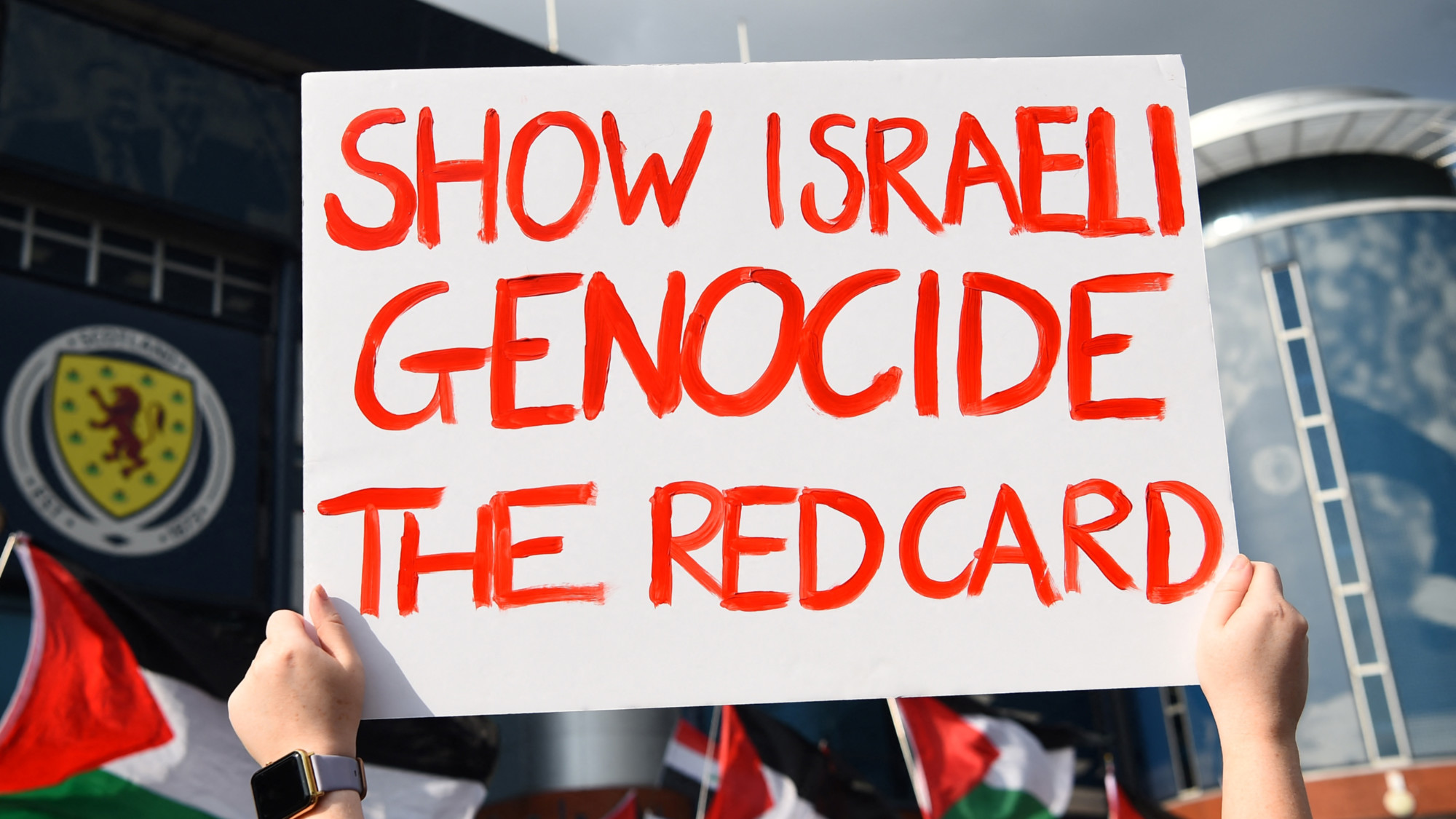
    Mohaved’s appeal draws heavily on a new investigative report released by UK-based pro-Palestinian campaign group War on Want, titled *Red Card: English Premier League Sportswashing of Israel’s Atrocities against the Palestinians*. According to the MP, the investigation identifies 16 major sponsoring companies that the United Nations and other leading international authoritative bodies have linked to complicity in Israeli violations. The named firms include global brands Alphabet/Google, AXA, BP, Canon, Carlsberg, Cisco, Coca-Cola, Expedia/Hotels.com, Eurobank, Evelyn Partners, HPE, HSBC, Meta, Oracle, Sony, and Standard Chartered.

    The report further finds that at least 10 top-flight clubs — Arsenal, Aston Villa, Chelsea, Crystal Palace, Everton, Fulham, Liverpool, Manchester City, Manchester United, and Tottenham Hotspur — maintain direct sponsorship deals with one or more of these companies. Five clubs — Liverpool, Arsenal, Tottenham, Manchester City, and Manchester United — were named as the most deeply connected to firms that facilitate Israeli atrocities, while Arsenal, Fulham, both Manchester clubs and Newcastle United were also flagged for potential implication through the activities of their majority owners.

    Mohamed also noted that every EPL club receives indirect backing from Barclays, the league’s headline sponsor. While Barclays ended its practice of underwriting Israeli wartime bonds in 2024, other major sponsors maintain active operations in occupied territories. Coca-Cola, for example, holds subsidiaries and licensing agreements in Israel that operate facilities including agricultural vineyards in occupied East Jerusalem, the occupied West Bank, and the occupied Syrian Golan Heights, all territories held by Israel in violation of international law.

    “I am very concerned that our country’s great football institutions are sportswashing Israel’s atrocities,” Mohamed wrote in the letter. He added: “Our beautiful game must not be used to sportswash such grave injustice. I ask that you ensure that the EPL must not be a profitable safe haven for companies complicit in atrocities.”

    Mohamed is calling on Nandy to facilitate coordinated action between the UK government, the EPL, the FA, individual clubs, and other relevant stakeholders to end all sponsorship and advertising partnerships with linked companies as rapidly as possible. He also urged the government to enforce a policy that ensures no UK entity, public or private, provides material aid or assistance to Israel’s illegal occupation and apartheid regime.

    Beyond commercial ties, the War on Want report also documents alleged restrictions on pro-Palestinian expression within top English football. It found that four EPL clubs — Arsenal, Brighton, Burnley and Everton — have disciplined pro-Palestinian staff and supporters in ways that may violate the right to freedom of expression and constitute unlawful discrimination.

    One high-profile case highlighted in the report is that of Mark Bonnick, an Arsenal kitman with 22 years of service at the club. Bonnick posted online criticism of Israel’s military campaign in Gaza, and following what the report describes as a coordinated smear campaign led by politically motivated individuals who falsely accused him of antisemitism, he was abruptly terminated from his role on Christmas Eve 2024.

    Following an internal investigation by the FA, no misconduct was found. Arsenal’s own internal review also confirmed there was no evidence of antisemitism, a conclusion backed by independent Jewish anti-racism campaigners. Despite this, Arsenal dismissed Bonnick on the grounds that his social media activity had brought the club “into disrepute”.

    War on Want said of the case: “Arsenal appears to have prioritised seemingly prejudiced and racist views of those who targeted him online rather than its staff’s livelihood, wellbeing and rights – including the right to freedom of expression in support of people suffering genocide, illegal occupation and apartheid.”

    As of publication, no response has been issued from the Department for Digital, Culture, Media and Sport, the Culture Secretary’s office, the EPL, the FA, or any of the named clubs or companies in response to Mohamed’s request.

  • Infantino’s Middle East playbook: How Fifa boss uses geopolitics on the World Cup stage

    Infantino’s Middle East playbook: How Fifa boss uses geopolitics on the World Cup stage

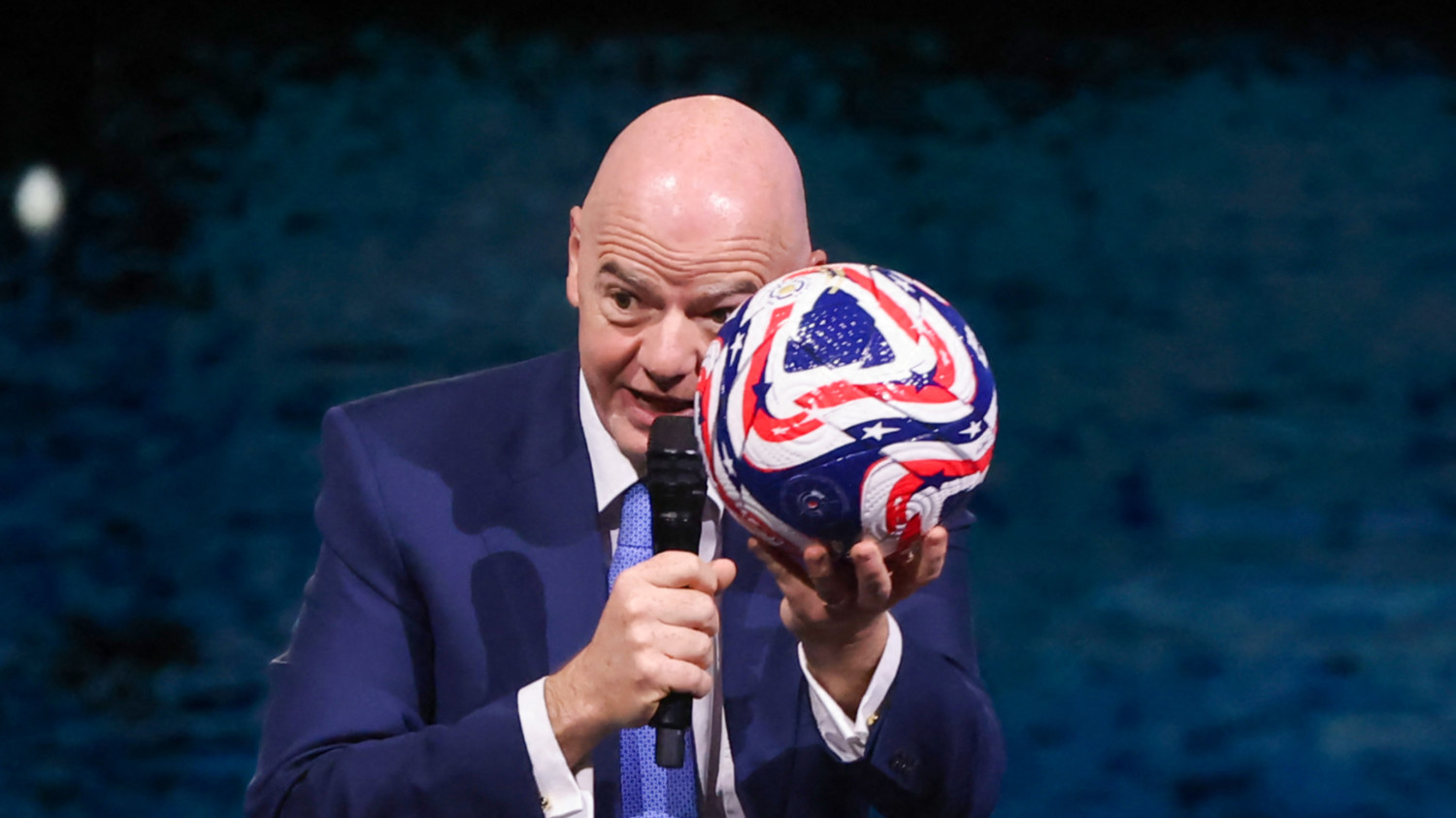
    As the 2026 expanded-format FIFA World Cup kicks off across the United States, Mexico and Canada, 48 national teams are competing across 104 matches to claim football’s most coveted global trophy. At the helm of this six-week sporting spectacle is Gianni Infantino, the Swiss-Italian president of FIFA, who oversees a multi-billion-dollar commercial and athletic empire second only to the Olympic Movement in global reach.

    For years, Infantino has publicly maintained that “politics should stay out of football and football should stay out of politics” — but this mantra has repeatedly collided with reality, nowhere more dramatically than across the Middle East, a region that has shaped Infantino’s tenure and drawn constant criticism of his leadership since he took over as FIFA president in 2016, replacing disgraced former chief Sepp Blatter.

    Infantino’s ties to the Middle East are personal as well as professional: his wife Leena al-Ashqar is Lebanese, and he was granted Lebanese citizenship by former President Joseph Aoun in early 2025. As the 2026 World Cup enters its knockout phase, a deep dive into his actions across the region reveals just how deeply intertwined politics and FIFA leadership have become during his tenure.

    The intersection of U.S. politics and FIFA’s operations came into sharp focus early in Infantino’s presidency. In early 2017, then-U.S. President Donald Trump introduced a travel ban targeting six Muslim-majority nations — Iran, Libya, Syria, Somalia, Sudan and Yemen — a restriction that was later expanded to cover 75 countries during Trump’s second term. By March of that year, Infantino acknowledged the ban could disqualify the U.S. from hosting future World Cups, noting: “Teams who qualify for a World Cup need to have access to the country, otherwise there is no World Cup.” He framed the comment as a general sporting rule rather than a direct rebuke of the Trump administration, a carefully calibrated statement that came just one month before the U.S. officially launched its joint 2026 bid alongside Mexico and Canada, which was awarded to the three nations in June 2018.

    Eight years later, those travel restrictions have created tangible disruptions for the 2026 tournament itself. Iran, whose national side is playing its group stage matches in Los Angeles despite ongoing U.S.-Israeli military action against Iran that has killed thousands of Iranians, has been barred from bringing Iranian fans into the U.S. Iranian head coach Amir Ghalenoei has publicly lashed out at Infantino and FIFA over the unequal treatment, calling his team “the most oppressed one in the whole World Cup.” Ghalenoei revealed that after Iran’s opening match, Infantino visited the squad’s dressing room to inform them they had to leave the U.S. immediately for their training camp in Mexico, adding: “It seems others are doing the planning for us.”

    Other Muslim-majority nations have faced similar entry issues: FIFA-appointed Somali referee Omar Artan was blocked from entering the U.S. over unproven Trump administration claims of ties to suspected terrorist groups. While FIFA ultimately paid Artan his full tournament fee, and UEFA later awarded him a 2026 UEFA Super Cup officiating assignment between Paris Saint-Germain and Aston Villa, the incident highlighted the impact of U.S. policy on the tournament. Iraqi striker Aymen Hussein was detained and questioned for seven hours upon entry to the U.S. before being granted access — and went on to score in Iraq’s opening World Cup match against Norway.

    Critics have repeatedly accused Infantino of currying favor with Trump, a pattern that has played out across the Middle East. In May 2025, multiple FIFA member state delegates staged a walkout of the organization’s annual congress in Paraguay after Infantino arrived hours late, delaying the entire agenda. The delay came after Infantino traveled with Trump on a trip to meet with leaders in Saudi Arabia and Qatar. The incident sparked a public rebuke from UEFA, which accused Infantino of prioritizing “private political interests” over the governance of the sport. Infantino blamed the delay on flight issues, claiming “important discussions took place in regard to the World Cup, and I felt that I needed to be there to represent football and all of you.”

    Trump, who has publicly sought a Nobel Peace Prize, was awarded the first ever “FIFA Peace Prize” by Infantino during the 2026 World Cup draw in Washington D.C. in December 2025. Infantino praised Trump for “exceptional and extraordinary actions to promote peace and unity around the world,” telling the U.S. president “You can always count on my support.” Infantino also attended Trump’s second presidential inauguration in January 2025 and the premiere of a documentary about First Lady Melania Trump, and FIFA maintains a leased office space in New York’s Trump Tower.

    Questions of FIFA’s close ties to Middle Eastern nations with questionable human rights records date back to the 2022 Qatar World Cup, awarded to Qatar in 2010, six years before Infantino took office. The run-up to the first Middle Eastern World Cup was dominated by accusations of sportswashing, driven by reports of widespread migrant worker abuses that killed more than 6,500 migrant workers between 2010 and 2021, many of whom worked on World Cup infrastructure. Critics also raised alarms over extreme summer temperatures, which led organizers to move the tournament to the winter months.

    Facing mounting global criticism, Infantino delivered a controversial 57-minute speech on the eve of the 2022 tournament, declaring: “Today I have very strong feelings. Today I feel Qatari. Today I feel Arab. Today I feel African. Today I feel gay. Today I feel disabled. Today I feel like a migrant worker.” He pushed back against critics, arguing that migrant workers earned higher wages in Qatar than they would in their home countries and claiming labor rights standards matched those of Western Europe. The comments drew fierce condemnation from global human rights groups including Amnesty International, which accused Infantino of ignoring the massive human cost of the tournament and FIFA’s own responsibility for the abuses. Qatari officials dismissed the allegations as racist double standards, but human rights organizations rejected that defense.

    Infantino’s actions around the awarding of future World Cup tournaments have also drawn scrutiny over political maneuvering in the Middle East. The 2030 tournament, marking the centenary of the first World Cup held in Uruguay in 1930, attracted multiple competing bids: a sentimental joint bid from South American nations Uruguay, Argentina, Chile and Paraguay; a European bid from Spain and Portugal that at one point included Ukraine; and a standalone bid from Morocco, which had unsuccessfully bid for the tournament six times previously. Morocco had emerged as a rising football power, reaching the 2022 World Cup semi-finals as the first African nation ever to do so, and winning the 2026 Africa Cup of Nations in a controversial final.

    By late 2024, technical evaluations ranked the joint Morocco-Spain-Portugal bid ahead of other contenders, and in December 2024, an extraordinary online FIFA Congress confirmed Morocco would co-host the 2030 tournament alongside Spain and Portugal, with three ceremonial centenary matches held in South America. But leaked internal messages revealed Infantino had floated the idea of Morocco joining the Spanish-Portuguese bid as early as 2018, contradicting FIFA’s official position that it remained neutral throughout the bidding process. Spanish Prime Minister Pedro Sanchez acknowledged in a message to then-Spanish FA president Luis Rubiales that both Rubiales and Infantino had proposed the idea to him, with Rubiales noting that FIFA’s neutrality meant the coordination should not be made public. FIFA has repeatedly denied Infantino played any role in bid negotiations. While the decision was praised by many for bringing the World Cup to Africa for only the second time after 2010’s South Africa tournament, critics have raised ongoing concerns about Morocco’s human rights record and its occupation of Western Sahara.

    The 2034 World Cup awarding process drew even sharper criticism, when Saudi Arabia was awarded the tournament as the only eligible bidder. Under FIFA’s continental rotation rules, only Asian and Oceanian confederations were eligible to host 2034, after North America hosted 2026 and Europe/Africa/South America co-host 2030. FIFA opened bidding for 2034 with no advance warning in October 2023, setting a tight 25-day deadline. Saudi Arabia immediately announced its bid, part of the kingdom’s broader strategy to rebrand its global image through major sporting investments, and Australia — the only other potential contender — withdrew before the deadline. FIFA pushed delegates to approve both the 2030 and 2034 hosts as a single package, meaning rejecting one would eliminate both. After a brief round of applause, Infantino declared the result “loud and clear” and approved both bids. Infantino argued the World Cup would act as a “catalyst for social improvements and social change” in Saudi Arabia, but a joint statement from 21 leading human rights organizations including Amnesty International and Human Rights Watch condemned the decision as “a moment of great danger” for global human rights.

    Infantino’s tenure has also brought tangible changes for football across the Middle East. In 2018, he lifted a 32-year ban on Iraq hosting competitive international matches, imposed in 1986 during the Iran-Iraq War that forced Iraq to play all home World Cup qualifiers abroad. Iraq has since hosted qualifiers in Basra and Karbala for the 2022 and 2026 tournaments, and qualified for the 2026 World Cup — its first appearance at the finals since 1986.

    In Iran, where women were largely barred from attending football matches after the 1979 Islamic Revolution, Infantino took a public stand after the 2019 death of Sahar Khodayari, an Iranian woman who died by self-immolation after being arrested for attempting to enter a stadium disguised as a man. FIFA set a firm deadline for Iran to lift the ban, with Infantino stating: “Our position is clear and firm. Women have to be allowed into football stadiums in Iran.” The Iranian government has since allowed a limited number of women to attend selected matches at Tehran’s Azadi Stadium, though full access remains restricted with small, limited ticket allocations for women.

    Infantino’s most controversial actions in the region center on the Israeli-Palestinian conflict, where he has faced criticism from all sides. He has attempted to use football as a tool for diplomacy, suggesting during a 2021 visit to Israel that Israel could co-host a future World Cup alongside the United Arab Emirates, noting “nothing is impossible. We need to think big.” The comment came months after the 2020 Abraham Accords, brokered by Trump, normalized relations between Israel and the UAE, and the first UAE club side played in Israel the following year.

    Following the 2023 outbreak of Israel’s military campaign in Gaza that has killed more than 72,000 Palestinians, global calls grew for Israel to be suspended from international football, mirroring the 2022 ban on Russia after its invasion of Ukraine. In early 2026, Infantino called for Russia’s reinstatement to international competition and argued any ban on Israel would be a “defeat.” Months later, FIFA announced it would not sanction the Israeli Football Association for allowing Israeli clubs to play matches in the occupied West Bank, claiming “the final legal status of the West Bank remains an unresolved and highly complex matter under public international law.” Instead, FIFA offered to mediate between the Palestinian and Israeli FAs, a decision that prompted the Palestinian FA to file an appeal with the Court of Arbitration for Sport. FIFA did fine the Israeli FA $185,000 for failing to address repeated incidents of racist and discriminatory abuse by fans of two top Israeli clubs.

    In early 2026, FIFA signed a strategic partnership with Trump’s Board of Peace, a body created to administer post-conflict Gaza that includes no Palestinian representatives. Infantino framed the deal as an effort to “foster investment into football for the purpose of helping the recovery process in post-conflict areas.” Months later, at the 2026 annual FIFA congress, Infantino attempted to orchestrate a public handshake between Palestinian FA president Jibril Rajoub and Israeli FA vice president Basim Sheikh Suliman. Rajoub refused the handshake, exclaiming “We are suffering!” as he left the stage. Susan Shalabi, vice president of the Palestinian FA, later explained that Rajoub told Infantino he “cannot shake the hand of someone the Israelis have brought to whitewash their fascism and genocide.”

    Despite the public rejection, Infantino has pushed forward with plans for a symbolic under-15 youth “peace match” between Israeli and Palestinian teams scheduled for September 2026 in the U.S., according to reporting from The Athletic that has not been confirmed by FIFA. The idea was first proposed by Infantino’s predecessor Sepp Blatter in 2015, but never moved forward after it was rejected by the Palestinian FA, despite support from then-Israeli Prime Minister Benjamin Netanyahu. The Palestinian FA has stated it has no knowledge of the new plans and “rejects any attempt to promote or impose matches with an occupying power that systematically targets Palestinian athletes and sports infrastructure.” The Israeli FA has said it remains willing to use football as a tool to promote normalization and peace in the region.

    As Infantino prepares to run for a fourth term as FIFA president at the organization’s upcoming 2027 congress in Rabat, Morocco, the ongoing tensions between his stated goal of keeping politics out of football and the deep political entanglements of his tenure remain the defining story of his leadership of global football’s governing body.
  • Billionaire who owns Camden Market ‘finances’ Israeli military programmes

    Billionaire who owns Camden Market ‘finances’ Israeli military programmes

    A new investigative report from independent media outlet Novara Media has uncovered a direct connection between three popular UK-based online competition platforms and an Israeli billionaire with a long history of donating to the Israeli military, as a United Nations inquiry recently confirmed Israel’s commission of genocide in Gaza.

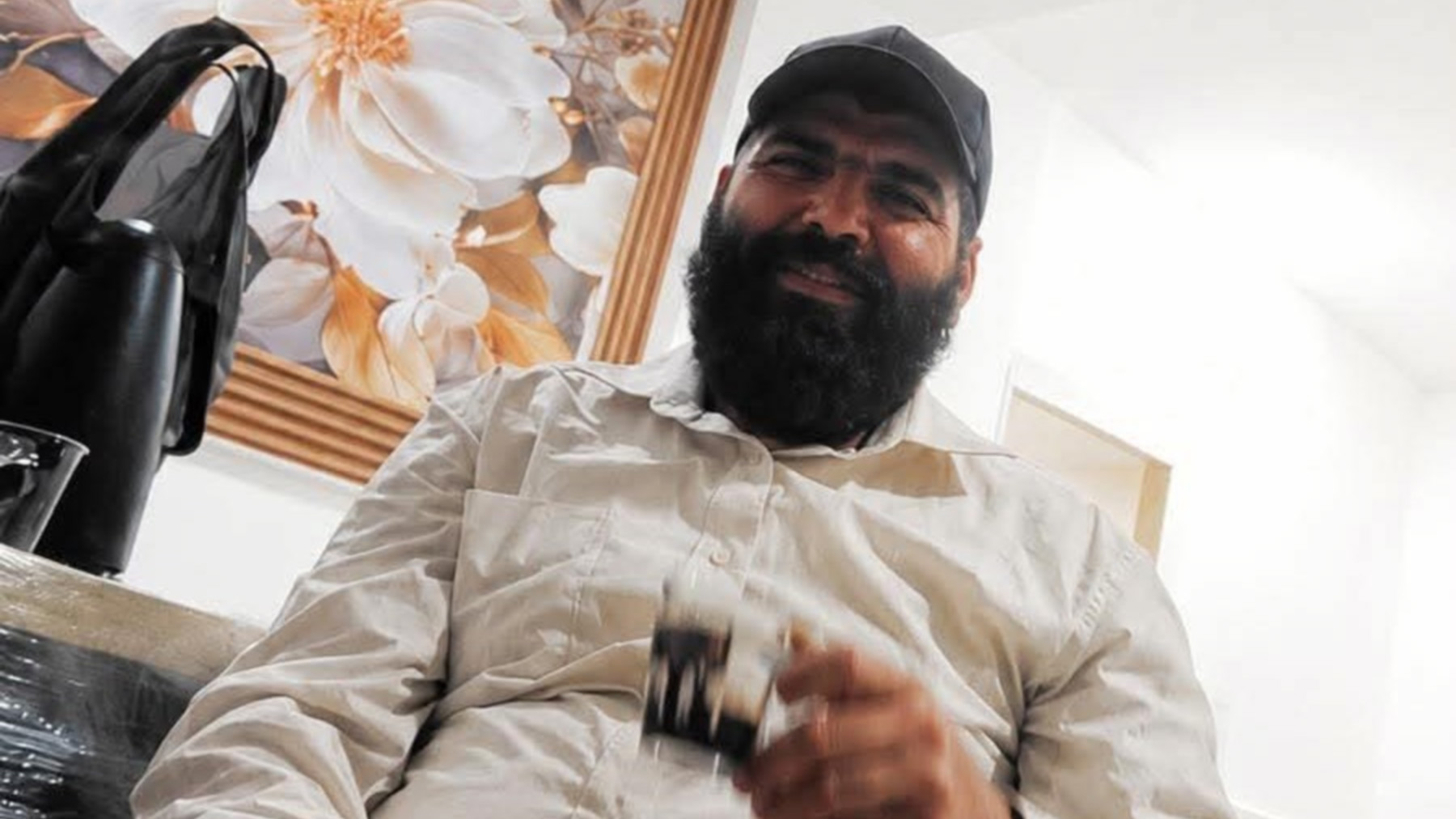
    At the center of the revelation is Teddy Sagi, the $7.1 billion billionaire (per Forbes 2024 estimates) who already holds high-profile UK assets including London’s iconic tourist destination Camden Market. Sagi controls a 69.5% majority stake in Winvia Entertainment Group, the British operator behind three of the most visited online prize draw websites in the country: Rev Comps, Best of the Better (BOTB), and Click Competitions.

    Novara’s investigation finds that hundreds of thousands of British consumers enter these platforms every month, paying entry fees in the hopes of winning high-value prizes ranging from luxury sports cars and residential properties to high-end watches and the latest consumer electronics. BOTB alone claims a track record of more than 500,000 unique winners and has disbursed over £147 million in total prizes to date, drawing consistent consumer engagement across the UK.

    Beyond his ownership of the prize draw group, Sagi holds a sprawling global business empire that includes gambling software giant Playtech, British-Israeli cybersecurity firm Kape Technologies, and a portfolio of major VPN services counting ExpressVPN, CyberGhost, Private Internet Access, and ZenMate among its holdings.

    What has drawn renewed scrutiny in light of the crisis in Gaza, however, is Sagi’s longstanding pattern of financial contributions to the Israeli military. According to Novara’s reporting, as recently as November 2023 – weeks after Israel’s military campaign in Gaza began, when the Palestinian death toll already topped 15,000 – Sagi donated 1 million Israeli shekels (equivalent to roughly $340,000) to fund homebound taxi transport for Israeli soldiers on leave from frontline positions.

    That donation is just one in a series of contributions dating back years. Before the 2023 campaign, Sagi gave more than $3 million to an Israeli Ministry of Defense scholarship program for discharged soldiers. During a 2019 industry gala, he also publicly committed to offering employment at his global companies for active Israeli troops. Sagi is no stranger to controversy either: he was named in the 2021 Pandora Papers leak, which linked him to no fewer than 60 companies registered in secretive offshore tax havens. In 1996, he also served five months in an Israeli prison following conviction on fraud and bribery charges.

    The revelations come just as a United Nations Commission of Inquiry released a long-awa report confirming that Israel has committed acts of genocide in Gaza through the deliberate targeting of Palestinian civilians, particularly children. Commission chair Srinivasan Muralidhar confirmed to reporters that since the launch of Israel’s campaign on October 7, 2023, more than 20,000 Palestinian children have been killed, and an additional 44,000 have been injured. Even after an agreed ceasefire in 2025, Muralidhar noted, children continue to face harm, with Israel disregarding both ceasefire terms and its obligation to protect Palestinian civilians under international law. Overall, the total Palestinian death toll from the campaign has surpassed 73,000, with more than 170,000 people injured, according to the commission’s data.

    Novara Media reached out to Winvia Entertainment Group for comment on the connections to Sagi and his donations to the Israeli military, but no response has been made public. This reporting was aggregated and contextualized by independent global outlet Middle East Eye, which specializes in on-the-ground coverage of the Middle East and North Africa region.

  • India beats Bangladesh and sets up must-win clash with Australia at Women’s T20 World Cup

    India beats Bangladesh and sets up must-win clash with Australia at Women’s T20 World Cup

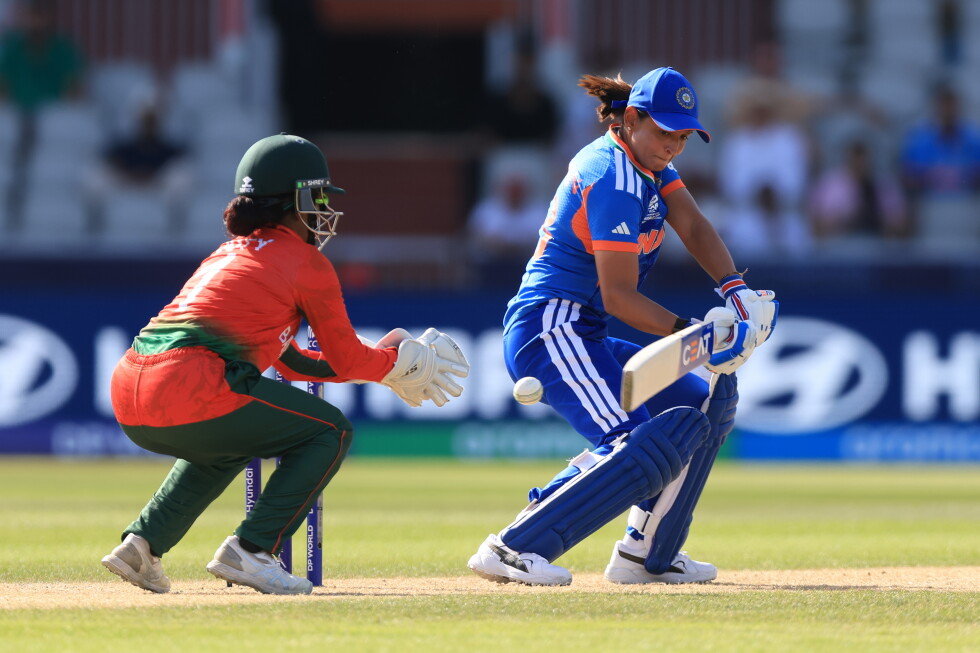
    At Old Trafford in Manchester, England, India has edged closer to a Women’s Twenty20 World Cup semifinal spot after a five-wicket victory over Bangladesh on Thursday, putting the team in position to punch its ticket to the knockout stage with an upset over undefeated Australia this weekend.

    Despite a disjointed, error-riddled fielding performance that saw Indian players drop four early catches and medium-pacer Nandni Sharma receive two official warnings for overstepping the pitch mark, India still restricted Bangladesh to a total of 136 runs for the loss of 8 wickets at the close of the innings. Bangladesh’s struggle to capitalize on India’s fielding mistakes stemmed from a critical gap in its lineup: a lack of power hitters capable of turning small errors into a match-winning big total. The team’s top scorers were Juairiya Ferdous, who notched 33 runs before being caught and bowled by Nandni in the ninth over, and captain Nigar Sultana, who contributed 32 runs before being stumped late in the innings.

    India’s successful chase got off to a flying start thanks to a lucky break for star batter Shafali Verma: Bangladesh wicketkeepers dropped Verma behind the stumps in the very first over, an error that would prove decisive. Verma took full advantage of the second chance, powering India to 63 runs for the loss of just one wicket during the powerplay segment, and hit a 29-ball half-century—her second fifty of the entire tournament. Though she was stumped for 53 runs shortly after reaching the milestone, her early blitz put India firmly in control of the chase. Additional contributions from Yastika Bhatia (23 runs) and Jemimah Rodrigues (26 runs) saw India cross the finish line at 139 for 5 with a full 19 balls left to spare.

    Speaking after the match, Verma expressed mild disappointment with her own performance, saying, “Was sad I got out. Would’ve been happier had I batted through.”

    The win sets up a winner-takes-all final group stage match against four-time unbeaten Australia, scheduled for this Sunday at London’s iconic Lord’s Cricket Ground, which has already sold out all tickets for the highly anticipated clash. Australia has cruised to four wins from four matches so far in the tournament, including a victory over South Africa—the same side that handily defeated India just last week.

    Indian captain Harmanpreet Kaur made her team’s ambitions clear following the win over Bangladesh, stating, “All set for Australia. We’ll get a lot of confidence if we win that.”

    Later the same day, South Africa was scheduled to face off against the Netherlands in their own group stage fixture.

  • Israeli forces kill unarmed man ‘in bedroom’ during West Bank home raid

    Israeli forces kill unarmed man ‘in bedroom’ during West Bank home raid

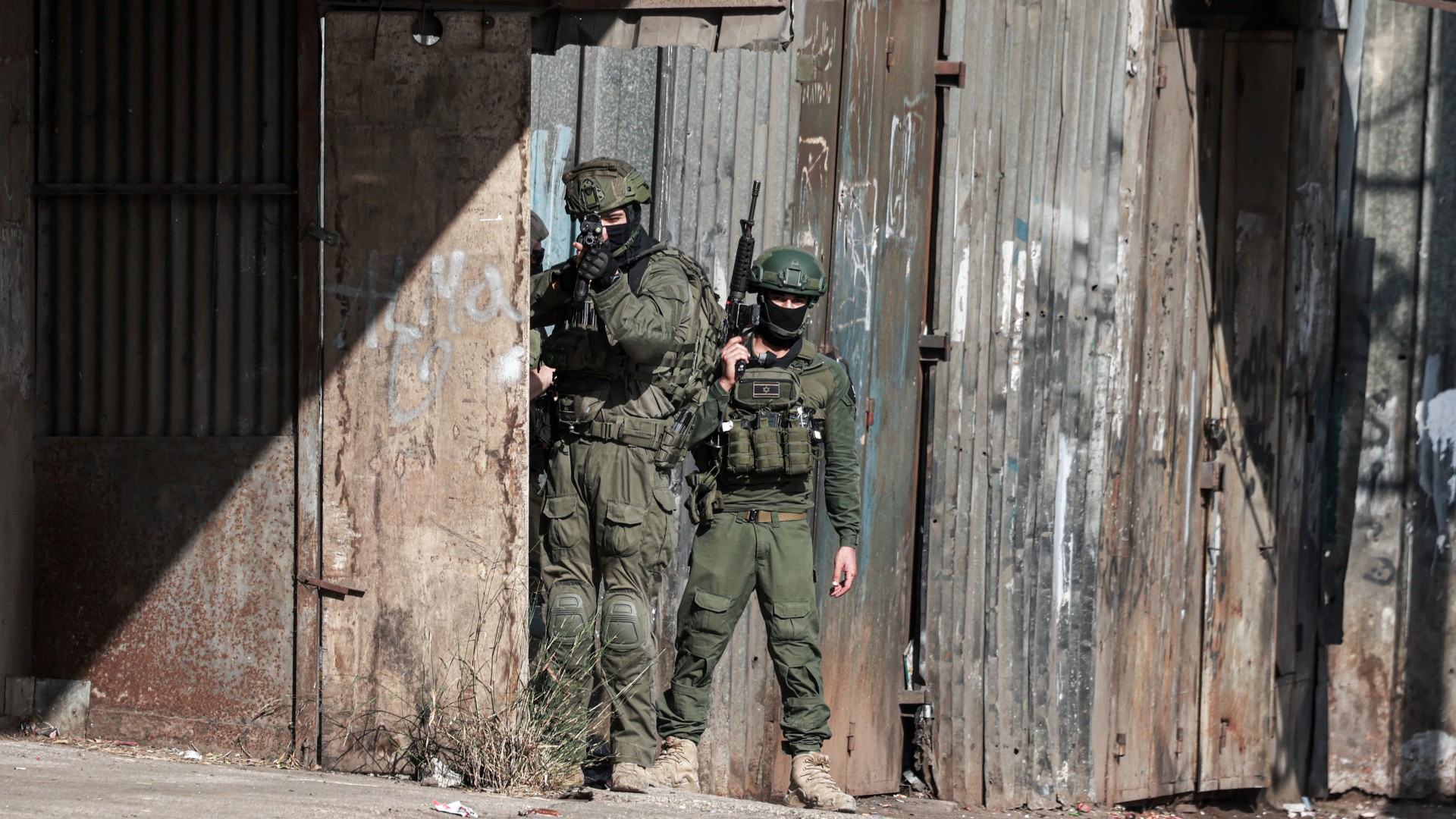
    In a pre-dawn incursion into a Palestinian village in the occupied West Bank on Tuesday, Israeli occupation forces shot and killed an unarmed 32-year-old Palestinian man inside his own bedroom, according to local reporting and family accounts of the fatal incident.

    The victim, identified as Mustafa Taha Mustafa al-Khatib, resided alone in his home in Sarta, a small village located west of Salfit, with the rest of his immediate family living across the border in Jordan. Yaseen al-Khatib, the victim’s uncle, shared detailed testimony with regional outlet Al-Araby Al-Jadeed outlining the sequence of events that led to the killing.

    Per Yaseen’s account, Mustafa had been asleep when Israeli forces arrived at his home to conduct the raid. Moving slowly to wake and dress himself, he was delayed in responding to the soldiers’ demands at the door. Before he could exit to open the door, Israeli troops forced their way inside the property, advanced directly to his bedroom, and opened fire multiple times, striking Mustafa in the chest, head and hand.

    Witnesses also confirmed that after the shooting, Israeli forces cordoned off the area and blocked local residents from reaching the wounded man to administer emergency first aid. By the time Israeli troops withdrew from the village and Palestinian paramedics gained access to the home, Mustafa had already succumbed to his severe injuries. Paramedics subsequently transferred his body to a local hospital for processing. Graphic footage of the victim’s body inside the home circulated widely across social media platforms in the hours after the raid.

    This latest fatality pushes the total number of Palestinians killed by Israeli forces and settlers in the occupied West Bank since the beginning of 2026 to 72, according to official data from the Palestinian Ministry of Health. The death toll includes 17 children, five adult women and two elderly Palestinian people.

    Fatal shootings like this one are not an isolated incident: Israeli military forces conduct nightly raid and arrest operations across West Bank population centers, most of which are carried out in the early hours of the morning when residents are asleep. These operations regularly result in the death of Palestinian civilians and the detention of dozens more each month.

    Current data from Palestinian prisoners’ rights organizations shows that approximately 9,300 Palestinians are currently being held in Israeli detention facilities. Nearly half of these detainees are being held without formal charge or trial, under Israeli administrative detention laws that allow for indefinite detention based on secret evidence that the accused is not permitted to see.

    The incident comes amid growing international scrutiny of the expanding pattern of violence against Palestinians in the occupied West Bank, linked to the ongoing expansion of illegal Israeli settlements, a process that a recent on-the-ground report by British journalist Peter Oborne characterized as state-supported ethnic cleansing. The report was published by Middle East Eye, an independent media outlet that provides original coverage of the Middle East and North Africa region.

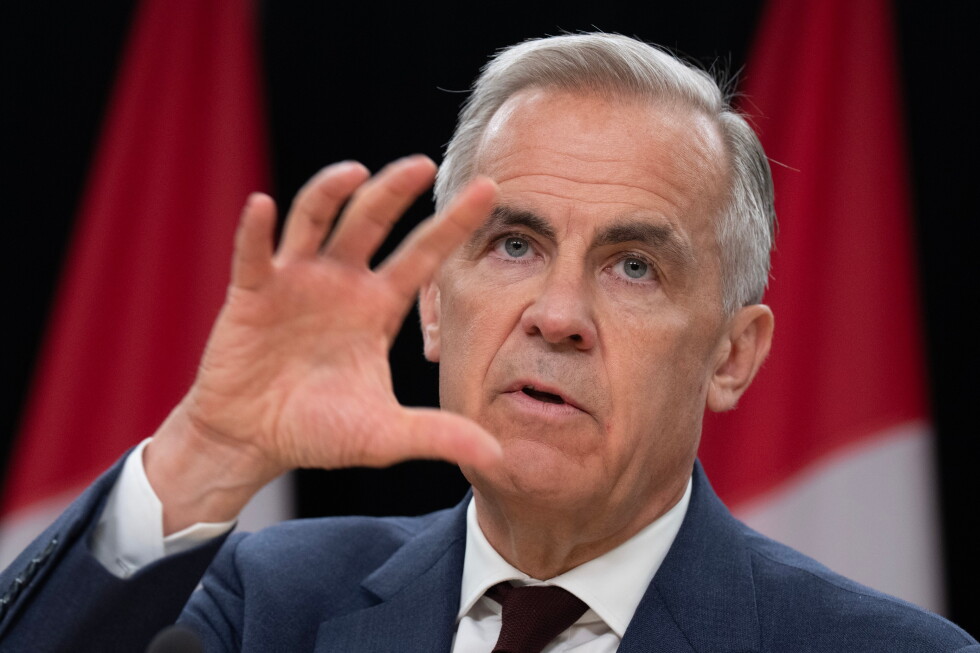
  • Carney says Canada should reopen embassies in Iran and earthquake-stricken Venezuela

    Carney says Canada should reopen embassies in Iran and earthquake-stricken Venezuela

    TORONTO – In a sharp break from decades of previous policy put in place by prior Canadian administrations, Prime Minister Mark Carney has publicly called for Canada to reverse course and reopen its long-closed diplomatic missions in Iran and Venezuela, arguing that the current lack of on-the-ground presence undermines core Canadian government responsibilities to its citizens and global humanitarian response efforts.

    Speaking to reporters on Thursday, Carney emphasized that even as Ottawa maintains sharp, fundamental disagreements with the governments of both nations, the absence of formal diplomatic posts creates unnecessary barriers that hurt both Canadian travelers and residents abroad, as well as Canada’s ability to respond quickly to unfolding emergencies. “Engagement is not endorsement,” Carney clarified. “Maintaining an embassy and delivering consular services within a country does not equate to our approval of that government’s policies.”

    The closure of Canada’s diplomatic footprint in the two countries dates back more than a decade for Iran, and five years for Venezuela. In 2012, former Conservative Prime Minister Stephen Harper severed full diplomatic ties with Iran, closed the Canadian embassy in Tehran, and expelled all Iranian diplomats from Canada, labeling the Islamic Republic the single most significant threat to global peace at the time. For Venezuela, Canada suspended embassy operations in Caracas in 2019, after the government of then-president Nicolás Maduro refused to renew work visas for Canadian diplomatic staff.

    Carney pointed specifically to recent events in Venezuela to illustrate the costs of the current policy. When a major earthquake struck the country, Canada was unable to deliver rapid, on-the-ground assistance that an active embassy would have enabled, he said. Beyond the immediate disaster response, Carney noted that the lack of diplomatic representation puts Canada at a structural disadvantage when it comes to supporting its own citizens who are living or traveling in these countries.

    “There are a number of countries where, to put it mildly, we do not see eye to eye on policy, and we currently have no official representation on the ground,” Carney said. “This situation puts us at a disadvantage, first and foremost when it comes to assisting Canadians who are present in these countries.”

    While Carney stressed that no final formal decision to reopen the embassies has been issued, he made clear that the status quo is untenable for his administration. “In my judgement, moving toward this, making a decision to reopen, is exactly what we need to do,” he said. Carney added that the current arrangement, while rooted in understandable policy differences, means Canada is failing to live up to a core basic responsibility of sovereign government. “There is an ongoing severe humanitarian crisis in Venezuela, and there is a need for rapid action, so in my view we have to change how we are approaching this,” he said.

    In a separate announcement Thursday, Carney revealed that U.S. President Donald Trump held a phone call with him on Wednesday to discuss a range of pressing international topics, including the upcoming NATO summit scheduled for next month, as well as ongoing tensions and developments involving Iran and the broader Middle East region. U.S. Defense Secretary Pete Hegseth and other senior U.S. administration officials joined the call, Carney confirmed.

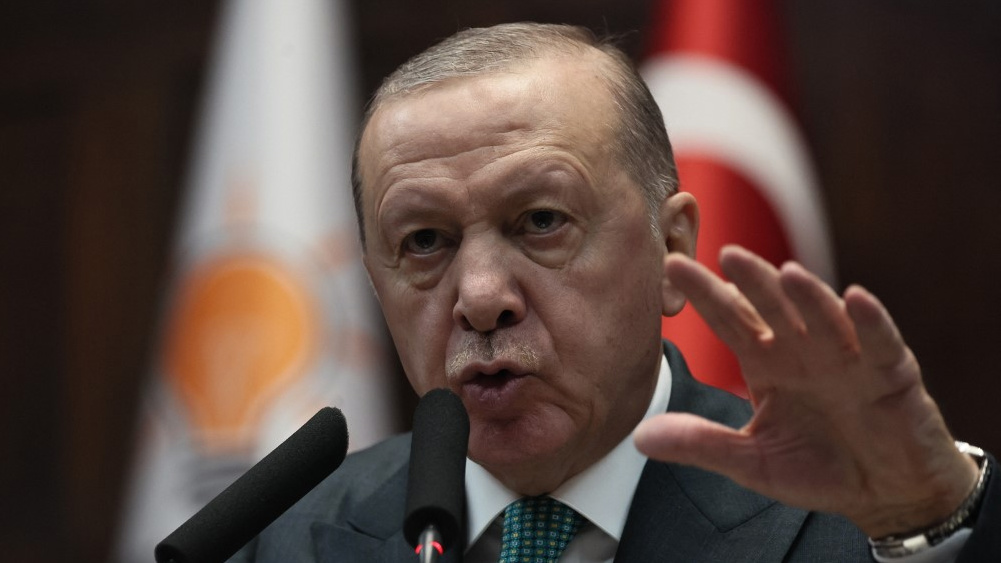
  • Erdogan applauds Iraqi Kurds’ neutrality during Iran war

    Erdogan applauds Iraqi Kurds’ neutrality during Iran war

    In a public address delivered in Ankara on Wednesday, Turkish President Recep Tayyip Erdogan has publicly commended Iraqi Kurdish authorities for their deliberate decision to steer clear of participation in the US-Israeli military campaign against Iran. The Turkish leader highlighted that the refusal of the Kurdistan Regional Government (KRG) to allow their sovereign territory to be utilized as a staging ground for strikes against neighboring Iran played a critical role in de-escalating broader regional tensions. Erdogan emphasized that this responsible choice prevented a cycle of violence that would have directly threatened the safety and stability of Kurdish communities across the region. “Greater strife that could have harmed our Kurdish brothers and sisters has been prevented,” he stated, adding that in the coming months, it will become increasingly evident how dangerous a coordinated plot the regional actors — including Turks, Kurds, Arabs, and Iranians — managed to foil together. This praise from Erdogan comes after months of sustained regional tensions, during which Kurdish leadership consistently distanced itself from the US-Israeli offensive, repeatedly warning that any form of involvement would drag the already volatile Iraqi Kurdish region into widespread chaos. This stance was maintained even amid a steady stream of cross-border attacks targeting Kurdish positions carried out by Iran and Iran-aligned Iraqi armed factions. The sequence of events dates back to early March, just days after the US and Israel formally launched their military campaign against Iran. At that time, former US President Donald Trump told news agency Reuters that he would openly support Kurdish forces launching a ground offensive against the Iranian government. Trump’s announcement coincided with widespread media reports claiming the Central Intelligence Agency (CIA) was secretly supplying weapons to Kurdish factions to aid in such an offensive. Weeks later, in an interview with Middle East Eye, a top Iraqi Kurdish military commander Sirwan Barzani pushed back against these Western media narratives, denying outright that Iraqi Kurdish forces were facilitating Iranian Kurdish opposition fighters crossing the shared border to launch attacks inside Iran. Barzani made clear that despite frustration over the hundreds of Iranian strikes on Iraqi Kurdish military outposts, his forces have no intention of launching any incursion into Iranian territory. Multiple leaders of Iranian Kurdish political parties have also issued public denials to Middle East Eye, rejecting claims that they have received US-supplied weapons through Iraqi Kurdish intermediaries, following Trump’s assertion that Washington was funneling arms to Iranian anti-government protesters via Kurdish groups. For decades, Turkey has viewed independent armed Kurdish movements across the Middle East as a core national security threat, and has repeatedly issued stern warnings against foreign attempts to mobilize Kurdish factions in regional conflicts to advance geopolitical goals. Ankara has long prioritized maintaining regional stability along its southern borders and has consistently opposed any actions that could expand the scope of the Iran conflict to neighboring states.

  • Weekly quiz: Who did Donald Trump anger after saying they begged for a photo with him?

    Weekly quiz: Who did Donald Trump anger after saying they begged for a photo with him?

    Over the past seven days, a range of notable events have unfolded across the globe, spanning international diplomacy, political scandal, and a viral act of grassroots accountability. In the international sphere, the United States and Iran have entered another week of ongoing negotiations aimed at forging peace and de-escalating long-running tensions between the two nations. Meanwhile, in Scottish politics, Peter Murrell, the former chief executive of the Scottish National Party (SNP), has received a prison sentence after being convicted of embezzling more than £400,000 in party funds. Halfway across the United Kingdom in Cardiff, a local resident made headlines after taking matters into his own hands: after reviewing CCTV footage to track down a person who illegally dumped seven bags of rubbish on his property, he personally delivered the waste right back to the perpetrator’s doorstep.

    Beyond these headline-grabbing stories, the world saw countless other developments over the past week, and this collection of events has been turned into an interactive quiz for readers to test how closely they have followed the week’s news. The quiz was compiled by journalist Ben Fell, who has put together this recurring feature to engage audiences and encourage them to revisit underreported stories from the past seven days. For readers eager to test their knowledge further, additional quizzes are available: those who enjoyed this week’s challenge can access last week’s quiz, or explore a range of older quizzes stored in the feature’s online archives. This week’s quiz also includes topical questions centered on high-profile figures and global events, including former U.S. President Donald Trump, the annual G7 summit of world leading economies, Italian Prime Minister Giorgia Meloni, and European Commission President Ursula von der Leyen.

  • Race to record China’s vanishing Dong minority heritage

    Race to record China’s vanishing Dong minority heritage

    For nearly six centuries, the Indigenous Dong people of China have called the remote mountain ranges of southwestern China home. Without a formal written language, their centuries-old cultural knowledge has been passed down exclusively through oral tradition, leaving much of their unique way of life largely underexplored and unknown to broader global society. Now, an ambitious academic-led research initiative is pulling back the curtain on this little-understood marginalized community by systematically documenting their one-of-a-kind built environment, unlocking new insights into their social structure, spiritual beliefs and longstanding traditions.

    Today, an estimated 3 million Dong people reside across the mountainous provinces of Guizhou, Hunan and Guangxi Zhuang Autonomous Region. The group is already recognized globally for its polyphonic choral singing, which was added to UNESCO’s Representative List of the Intangible Cultural Heritage of Humanity in 2009. While their unique approach to terraced agriculture, handcrafted architecture and harmonious integration of settlements with natural landscapes are equally distinctive, these cultural treasures have never been systematically digitally recorded, remaining largely invisible to outside researchers and conservationists.

    Typically tucked away in dense fir forests, with direct access to waterways at valley bottoms or mid-hill slopes, Dong settlements follow a deliberate, community-focused layout. Most villages house between 200 and 500 households, with an average of four to five people per family. Every settlement is marked by a formal gatehouse that clearly defines its territorial boundaries relative to neighboring communities. Most are also home to a signature wind-and-rain bridge: a multi-purpose structure that blends the function of a village entrance and a covered bridge, serving as a gathering space for communal events and traditional blocking ceremonies. Scattered across the village landscape are hand-dug ponds, traditional wells, and raised granaries that support daily community life.

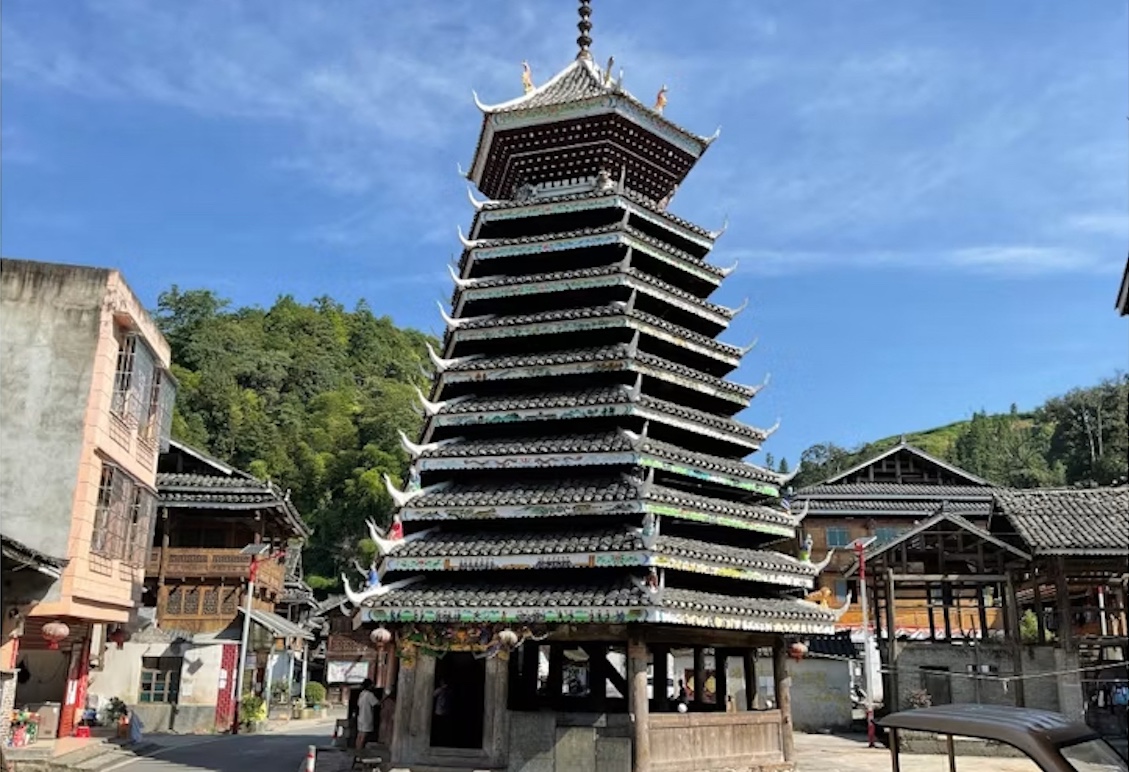
    At the core of every Dong village, surrounded by two- to three-story wooden family homes, stand two central structures that anchor the community’s spiritual and social life: the iconic drum tower and the sacred Sa-Sui shrine. The drum tower embodies the Dong people’s deeply held spiritual connection between clan kinship and the fir trees that sustain their mountain homes, while the Sa-Sui shrine serves as the central site for worship of “Sa”, the grandmother deity central to Dong religious tradition. For security, social cohesion and spiritual identity, these two structures are the most significant buildings in any Dong village.

    Despite their centuries of resilience, the Dong people’s unique built and cultural heritage now faces growing, existential threats from a combination of overlapping forces: accelerating climate change, unplanned modern development, expanding infrastructure, and the rapid growth of mass rural tourism. A warming global climate has increased the frequency of destructive wildfires and severe mountain flooding that ravage traditional wooden structures. As urban development encroaches on remote Dong territories, it brings improvements to quality of life but also introduces new fire risks via substandard electrical infrastructure retrofitted into historic wooden buildings.

    In recent years, the expansion of transportation networks including roads, railways and new bridges, paired with unregulated tourism growth, has pushed many traditional villages toward becoming superficial decorative stage sets for visitors. While tourism generates new local income, it erodes the authentic relationship between Dong architecture, the surrounding landscape and the community’s traditional way of life. Making matters worse, the remote mountain location of most Dong villages has left local communities and regional authorities with extremely limited financial and institutional resources to address threats. Existing conservation policies and frameworks are underdeveloped, meaning repair, restoration and sustainable regeneration projects have lagged far behind the pace of destruction.

    As China has undergone rapid urbanization over the past four decades, contemporary housing built with modern industrial materials and non-traditional designs has increasingly replaced historic wooden structures, irreversibly altering the visual identity and cultural meaning of traditional Dong settlements. The impact of poorly planned development can be seen at Ju Dong Village, where new infrastructure has permanently altered the historic setting surrounding the village’s ancient drum tower. Even purpose-built tourist attractions misrepresent Dong heritage: at Guizhou’s Danzhai Wanda Village, a new tourism development near Kaili, five newly constructed “iconic” drum towers are presented as standalone tourist monuments, stripped of their original contextual connection to surrounding homes, forests and community life that gives the structures their cultural meaning.

    It is this urgent need to document and protect authentic Dong heritage that gave rise to the groundbreaking *Decoding Dong* project. Launched in 2023 and completed in 2025, the interdisciplinary initiative brought together experts from architecture, anthropology, heritage science, sociology and digital humanities to create the first systematic digital record of the Dong people’s physical and cultural heritage.

    The project employed a suite of cutting-edge, complementary research methods, including 3D LiDAR scanning, aerial and terrestrial photogrammetry, 3D reality capture modeling, precise measured drawing, documentary filmmaking, and detailed geographic mapping. These technical tools were paired with oral history interviews collected directly from Dong community members, centering Indigenous knowledge in the documentation process. To date, the project has completed the first-of-its-kind digital archive of Dong architectural heritage, creating detailed digital and audio-visual records of approximately 100 historic buildings across a dozen remote Dong villages. Throughout the research process, the team prioritized consultation with key community stakeholders, including clan leaders, elderly villagers and regional cultural policymakers, to ensure the work aligned with community needs and priorities.

    While Dong Indigenous heritage remains under significant threat, constrained by limited resources for local governments and communities, the *Decoding Dong* project marks a critical step forward for conservation efforts. By building a publicly accessible, community-centered archive of cultural information supported by modern digital technology, the project team aims to raise global awareness of the Dong people’s unique cultural legacy without compromising the traditions and identity that make the community distinct.