
A dramatic cliff collapse on the scenic Atlantic coastline of Biarritz, the popular southwestern French resort town, has left one diver dead and another unaccounted for, local authorities confirmed Thursday. The massive section of cliff near the town’s iconic lighthouse gave way shortly after 8:20 p.m. local time on Wednesday, when three recreational divers were exploring the rocks at the base of the formation, according to an official statement released by Biarritz City Hall. Of the three divers caught in the collapse, one was able to climb to safety without injury and was immediately taken in by first responder teams who arrived on the scene rapidly. Emergency response units, including a team of specialized rescue divers, launched a large-scale search operation immediately after the incident. By Thursday, search crews had recovered the body of a female diver who was killed in the collapse. Search efforts for the second missing diver resumed at first light Thursday, with crews continuing to comb the area around the collapsed cliff. In the wake of the incident, local officials have implemented strict safety restrictions to prevent further harm: all public access to the area within 300 meters (985 feet) of the damaged cliff is prohibited, and the ban extends to all swimming and boating activities in that zone. The restrictions come as authorities warn of a high risk of additional cliff collapses in the area, as unstable sections of the rock formation remain standing after the initial incident. Biarritz, located in southwestern France along the Atlantic Basque Coast, is one of Europe’s most beloved tourist destinations, famous for its dramatic rugged cliffs, golden sandy beaches, and reputation as a world-class surfing spot that draws outdoor enthusiasts and leisure travelers from across the globe each year.
博客
-
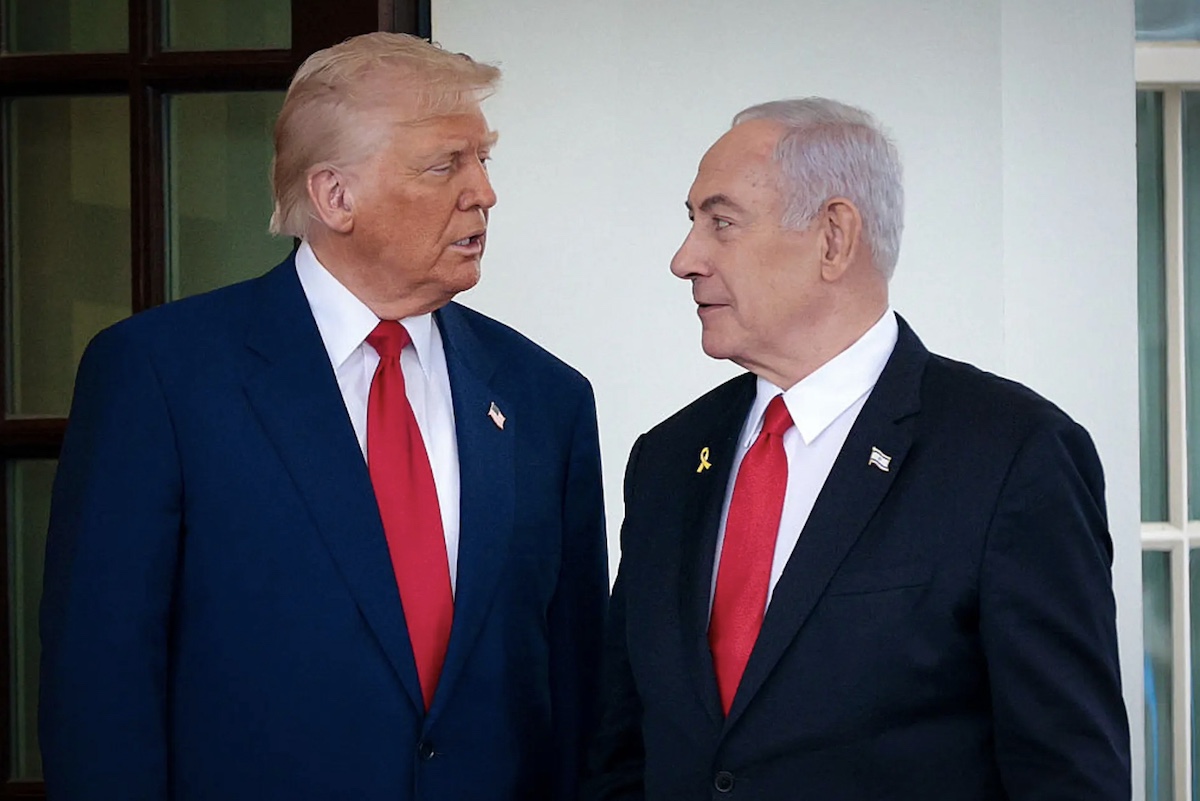
America’s ironclad bond with Israel is starting to crack
For decades, a familiar ritual has played out between Washington and Jerusalem following every regional crisis, ceasefire agreement, and tense high-stakes conversation between U.S. presidents and Israeli prime ministers. Phrases like “The bond is unshakeable” and “Our commitment to Israel’s security is ironclad” have been repeated across every sitting U.S. administration so many times that they have devolved into diplomatic liturgy: familiar and reassuring on the surface, but largely disconnected from the practical reality of how U.S. policy actually unfolds. The essay argues that Israel’s strategic leadership would benefit from a far more honest examination of this longstanding gap than it has been willing to conduct in the past.
Since Israel’s founding in 1948, the country has occupied a recurring paradox: it is a militarily powerful state that remains deeply diplomatically dependent on its closest, indispensable ally, the United States. For generations, this dynamic has created a persistent gap between what Israel deems critical to its national survival and what Washington is willing to allow. Today, a critical, rarely openly discussed question looms: are shifting structural trends in U.S. domestic politics and grand strategy widening that gap further?
To contextualize this dynamic, look back to a defining moment from 1973. During the Yom Kippur War, after Israeli armored forces had encircled Egypt’s Third Army and the Israeli government was poised to deliver a decisive, war-ending military blow, the Nixon administration intervened to stop the offensive, setting a pattern that would repeat for decades. Henry Kissinger brokered a ceasefire that saved Anwar Sadat’s battered Egyptian forces, cemented Washington’s role as the indispensable regional mediator, and left Israel with a hard lesson it has had to relearn repeatedly: when U.S. and Israeli strategic priorities diverge, Israel is always the side expected to defer.
Operation Nickel Grass, the large U.S. airlift that resupplied Israeli forces during the war, was a meaningful and consequential show of support. But it also locked in a relationship of dependency: a state cannot accept critical military resupply from a patron and then reject the political terms that come attached to that aid. This is not an inherent critique of U.S. statecraft, but rather a straightforward observation of how great-power patronage has always functioned. Ancient Athens relied on client states, Rome governed through client kings, and modern Washington maintains a network of allies that ultimately advance the patron’s core interests, not the other way around.
What has shifted dramatically in recent decades is the strategic context in which U.S. patronage is offered. Washington’s current grand strategy is focused on great-power competition with China, requiring that it redirect the vast majority of its military resources and diplomatic attention to the Indo-Pacific, rather than remaining entangled in open-ended conflicts in the Middle East. This shift is not tied to a single ideological stance or political administration; it is a fiscal and strategic reality that has persisted across changes in partisan control of the White House. Every recent Pentagon planning framework, regardless of who occupies the Oval Office, prioritizes potential flashpoints in the Indo-Pacific: the Taiwan Strait, the South China Sea, and the broader arc of competition with Beijing. What was once the central, consuming obsession of U.S. foreign policy, the Middle East, has been reclassified as a secondary distraction from the primary great-power competition.
Even among proponents of a close U.S.-Israel relationship, Israel’s value as a strategic partner is increasingly being questioned by pragmatic, realist analysts who note that core U.S. interests in the region—from energy security to counterterrorism to great power competition—can often be advanced more effectively through alliances with Arab states that do not carry the same domestic political baggage that comes with the U.S.-Israel relationship. This line of thinking is expected to gain more traction in coming years, regardless of which party controls power in Washington.
Beyond the shifts in global strategy, deep domestic political changes in the U.S. are also reshaping the alliance, and these shifts may prove the most consequential of all. For decades, U.S. support for Israel rested on a solid bipartisan consensus that has now fractured visibly. American public opinion, particularly among younger generations of voters and racial minority groups, has grown increasingly skeptical of unconditional, blank-check support for any foreign nation, Israel included. In democratic politics, demographic change drives long-term political outcomes, and the demographic cohorts most skeptical of unwavering support for Israel are the groups that will shape the future of both major U.S. political parties.
Currently, the U.S. provides Israel with $3.8 billion in annual military aid under a bilateral memorandum of understanding that expires in 2028. When the agreement comes up for renegotiation, it will take place in a domestic political environment dramatically different from the one that produced the original deal. While the current aid package remains politically untouchable in today’s Washington, it is exactly the type of foreign spending that America First-aligned voters and political movements have increasingly called into question.
None of these shifts mean that the United States is on the verge of a sudden, complete break with Israel. The relationship is too deeply embedded in U.S. institutional, cultural, and political structures to collapse overnight. The U.S. will remain Israel’s closest ally for the foreseeable future, and its support remains a core pillar of Israel’s national security, granting access to advanced weapons systems, intelligence sharing, defense technology cooperation, and critical diplomatic protection at the United Nations Security Council.
But a guarantee that the U.S. will not abandon Israel is not equivalent to a guarantee of unconditional support on every issue. Israel’s leaders must recognize this critical distinction and adjust their long-term strategic planning accordingly. The lesson from every past crisis is clear: Washington will support Israel up to the point that support conflicts with its own broader national interests. At that juncture, calls from the U.S. Secretary of State grow more insistent, military resupply shipments come with new strings attached, and the so-called “ironclad commitment” is revealed to have practical limits.
What conclusion should clear-eyed Israeli strategists draw from this analysis? It does not mean the alliance is worthless—on the contrary, it remains enormously valuable to Israel. But its value is contingent, transactional, and subject to change driven by forces outside of Jerusalem’s control: shifts in U.S. electoral politics, changing generational attitudes toward foreign policy, intensifying great-power competition, and the enduring U.S. ambition to act as the primary Middle Eastern mediator, a role that often requires concessions from Israel.
For Jerusalem, every ceasefire ultimately brings a morning of reckoning. What strategic gains did Israel secure? What critical goals were left unmet? What long-term costs will stem from the terms Washington imposed? These are the questions that outlast any immediate crisis.
Israel’s long-term security cannot be built on the assumption that any U.S. administration will always prioritize Israeli needs over its own core national calculations. A clear, unsentimental reading of the historical record offers no support for that assumption. The uncomfortable, unavoidable answer to the question of whether Israel can count on U.S. support over the long run is this: yes, as a reliable partner—but never as an unconditional guarantor.
This distinction carries enormous stakes for Israeli national strategy. The sooner Israel’s strategic establishment internalizes this reality, the sooner it can prioritize the critical work of building alternative strategic foundations: deeper diplomatic and economic ties with regional partners, greater strategic self-sufficiency, and a more diversified foreign policy that does not rely on a single patron whose top priorities will always be its own.
-

EU releases 3 billion-euro loan package for Ukraine’s recovery as part of 2-year commitment
GDANSK, Poland — A landmark conference focused on Ukraine’s post-war reconstruction and long-term recovery opened Thursday in Poland, marking a major milestone in Western financial backing for Kyiv as the European Union disbursed the first 3 billion euro ($3.4 billion) installment of its massive 90 billion euro ($101 billion) multi-year macrofinancial loan package to Ukraine, Ukrainian Prime Minister Yulia Svyrydenko announced at the event. The gathering, which brings together top European leaders including German Chancellor Friedrich Merz and European Commission President Ursula von der Leyen, serves a dual purpose: it acts as a global forum to secure pledges and investments for Ukraine’s war-ravaged economy, while sending a unified message to Moscow that Kyiv’s Western allies remain committed to supporting Ukraine for the long term.
Opening Ukraine’s membership negotiations with the EU just last week, von der Leyen used the conference to reaffirm the bloc’s unwavering commitment to Ukraine. She noted that since Russia launched its full-scale invasion in February 2022, EU member states have already provided 200 billion euros ($225 billion) in combined economic, financial, and military assistance to Ukraine. The newly approved 90 billion euro loan package spread over the next four years builds on that existing support. Von der Leyen added that the second 6 billion euro ($6.7 billion) tranche of the new package, earmarked specifically for expanding Ukrainian drone production, will be disbursed to Kyiv in the coming days.
Alongside the coordinated macrofinancial support, European leaders launched a new European equity fund designed to drive private investment into strategic sectors of Ukraine’s economy. The initiative, which grew out of 2023’s recovery conference in Rome, counts backing from the EU, Germany, Poland, Italy, and France, with an initial public seed capital allocation of up to 220 million euros. Merz explained that the fund is structured to create the confidence and risk-sharing framework private investors require to enter Ukraine’s market amid ongoing conflict. While public funding alone cannot cover the full cost of rebuilding Ukraine, Merz emphasized that the early investment and long-term capital commitment sends a clear signal: Europe believes in Ukraine’s future as part of the European family.
Svyrydenko, who leads the Ukrainian delegation after President Volodymyr Zelenskyy pulled out of the conference just days before it began, said Ukrainian officials expect to sign 160 bilateral and multilateral agreements totaling more than 10 billion euros ($11.2 billion) over the course of the conference. Addressing attendees, she framed Ukraine’s adaptation amid ongoing invasion as a unique strength: “We are forced to innovate to survive and this has become our superpower,” adding that the Ukrainian people remain deeply grateful for the support extended to their war-battered nation.
Zelenskyy’s last-minute withdrawal stems from a growing bilateral dispute between Kyiv and Warsaw over contested World War II history that has strained relations in recent weeks. The dispute erupted after Polish President Karol Nawrocki stripped Zelenskyy of Poland’s highest state honor, the Order of the White Eagle, over Zelenskyy’s decision to name a Ukrainian military unit after the Ukrainian Insurgent Army (UPA), a mid-20th century paramilitary group that fought for Ukrainian independence against Nazi Germany and the Soviet Union. Poland accuses the UPA of carrying out the genocide of tens of thousands of Polish civilians in the Volhynia and Eastern Galicia regions during World War II, a classification Kyiv disputes. Following Nawrocki’s announcement, Zelenskyy returned the honor to Poland, with other senior Ukrainian officials following suit.
Polish Prime Minister Donald Tusk noted that Zelenskyy’s absence may actually create space to reduce the current tensions between the two nations. Svyrydenko did not reference the bilateral dispute in her opening remarks at the conference. In his own address, Tusk emphasized the shared path forward: “We can only build the future on the basis of truth, mutual respect and understanding the past.” The conference proceeds amid a recent string of Ukrainian long-range strikes on strategic Russian infrastructure, including a major natural gas plant, satellite facilities, and a key railway bridge connecting the Russian-held Crimean Peninsula to mainland Russia, with Kyiv reporting that Russian military command has shifted air defense assets away from frontline positions to protect Moscow and other key Russian territory. The Associated Press contributed reporting from Kyiv and Berlin.
-
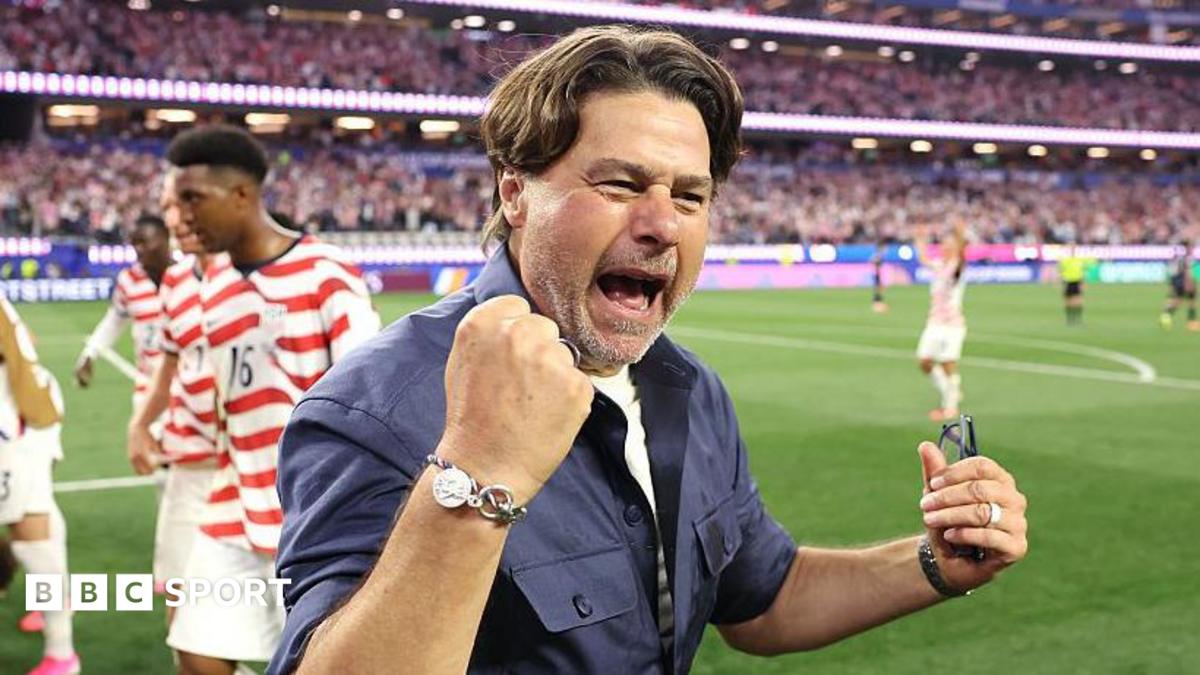
How Pochettino has US believing they can be World Cup winners
When Mauricio Pochettino first floated the idea in March 2026 that the United States men’s national soccer team could lift the FIFA World Cup trophy this summer, the claim was met with widespread skepticism. For decades, the US has been a consistent presence on the world’s biggest soccer stage, qualifying for nine of the last 10 tournaments, including the current edition. But its on-pitch results have rarely matched that consistency: over that 30-year stretch, the Stars and Stripes only advanced past the round of 16 once, reaching the quarter-finals in 2002. The nation’s greatest World Cup achievement remains a semi-final finish at the inaugural tournament in 1930, a distant milestone that has felt far out of reach for generations of American players and fans.
Seven months on from that bold opening statement, everything has changed. Appointed as US head coach in 2024 on a two-year contract, the former Tottenham Hotspur manager has already steered his new side to back-to-back group stage wins – a 4-1 rout of Paraguay followed by a 2-0 victory over Australia in Seattle – that have secured the team’s place in the knockout rounds. More than that, Pochettino has reshaped the entire identity of the national side, instilling an aggressive, attacking style of play that has caught the eye of neutrals and pundits alike. Now, across the United States, the question Pochettino first posed back in March hangs in the air, asked by diehard soccer supporters and casual new fans alike: Why not us?
In the immediate aftermath of the win over Australia, Pochettino had to pause his live pitchside interview as thousands of American fans in the stands burst into a spontaneous chant for their manager, their adoration filling every corner of the stadium. That level of public support was far from guaranteed before the tournament: initially, there was widespread uncertainty about the Argentine boss, particularly given his original contract only runs through the end of this World Cup, fuelling persistent speculation he would return to European club management once the tournament concludes.
Today, however, that skepticism has evaporated. Pochettino has built a cohesive, dynamic squad that blends explosive young homegrown talent with experienced established stars plying their trade in Europe’s top leagues, a mix that has already proven far more competitive than many pre-tournament predictions suggested. He has worked tirelessly to strip away the deep-seated “underdog” mentality that has long defined US soccer at the World Cup, replacing doubt with unshakable belief across the camp. That new mindset is written all over the inside of his temporary hotel office, where motivational slogans are painted on the walls: “why not us?”, “believe, work, compete”, and “now is our time!”
That energy has clearly transferred to the pitch. In their two opening matches, the US has played with a swagger and aggression that has caught opponents off guard. US forward Tim Weah pointed to Pochettino’s South American coaching roots as a key factor in the shift. “I think he brings that South American spirit that we’ve been missing,” Weah explained. “We’ve always been the good guys, so now it’s kind of nice being on the other end and being the aggressor a bit. It’s fun. Coach Poch is an amazing coach.”
Alignment between fans, players and staff is what makes underdog teams dangerous at major tournaments, and that unity is already on full display for the US. After beating Australia, the entire squad walked the perimeter of Seattle Stadium to applaud the home crowd, who responded by belting out a full-throated version of John Denver’s *Take Me Home, Country Roads* – a track that is quickly becoming the team’s unofficial victory anthem. Thousands of jubilant supporters poured into the streets of downtown Seattle after the final whistle, still chanting Pochettino’s name long after the match ended.
“He’s our Braveheart,” one long-time US fan told BBC Sport outside the stadium. “He is the leader who is willing to take us through the fight and the pain until the end. He has brought us a really good era. He doesn’t over complicate it and gives us a very straightforward game to watch.”
Another supporter, who has followed Tottenham for 16 years, called Pochettino’s appointment a dream come true: “The day he took over the USA was a dream come true for me and look at us now, he wants to win it!”
Even in Los Angeles, where the US will face Turkey in their final Group D match on Friday, the buzz around Pochettino and his squad is palpable. One American fan, who supports Arsenal, said even casual fans who rarely follow soccer have gotten behind the team – and that Pochettino’s history with Arsenal’s north London rivals Tottenham doesn’t matter anymore. “It feels like even people here who are not big soccer fans are now behind the team, so it is really cool,” they said. “I feel everything Pochettino has done is pretty positive. I like him. I think he is on the way out after this and that does hurt, though.”
Another fan praised the no-nonsense winning mentality Pochettino has brought to the national program, free from the internal politics that have plagued past US squads. “I think it is good to have a manager like this who comes in without the American politics. He comes in and he just wants to win. Why can’t we win it? Why not us?”
For his part, Pochettino says the connection he feels with American fans is mutual, even comparing the energy of the US crowd to that of his home nation’s famously passionate supporters. “Argentina have amazing fans, but I think we are matching Argentina,” he said after the Australia win.
With his contract set to expire at the end of the tournament, speculation has long persisted that Pochettino will leave the post to return to club management in Europe. But the team’s strong start to the World Cup, paired with the overwhelming outpouring of support from the American public, has opened the door to a possible change of plans. Asked about his future earlier this week, Pochettino made it clear the only focus right now is on the current tournament, but he did not rule out extending his stay.
“Now we’re focused on the World Cup. Then, if we want to stay, we have months to talk, or days or weeks. Because it’s four years until the next World Cup,” he told reporters in a roundtable interview. For Pochettino, the greatest legacy he can leave at this stage is not necessarily a trophy, but a lasting bond between the national team and the American public. “Of course, we want to win. But that is the legacy that we need. Why not be a part of it?”
-
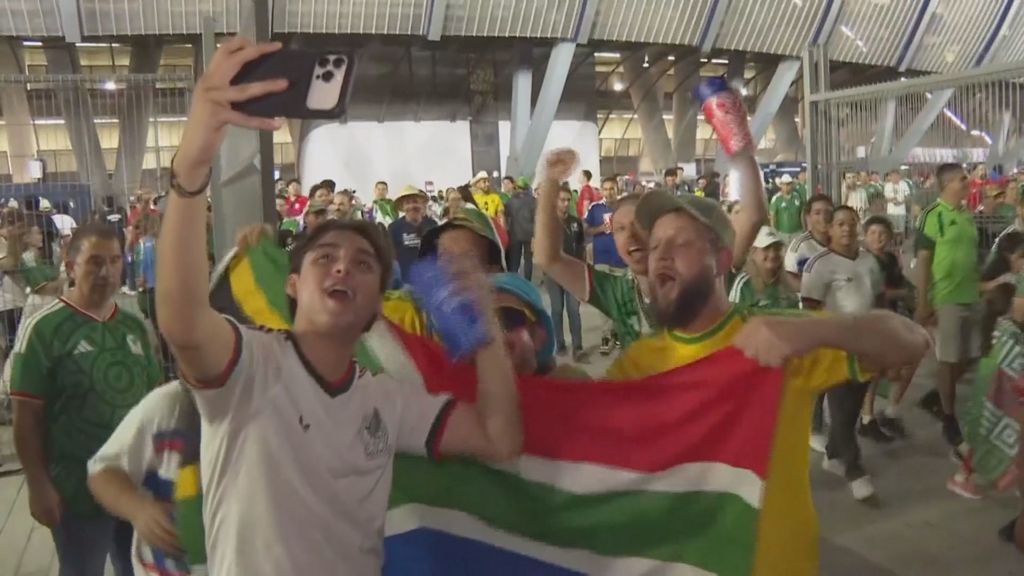
Celebrations as South Africa reach World Cup knockout stages for the first time
Football fans across South Africa and the globe are celebrating a landmark moment in the nation’s sporting history, after Bafana Bafana secured a tight 1-0 win against South Korea to book their place in the knockout stages of the FIFA World Cup for the first time ever.
For decades, South Africa has worked to build its international football profile, even hosting the 2010 World Cup as the first African nation to welcome the global tournament. But until this decisive group stage match, the side had never advanced past the group phase of football’s biggest competition. The narrow, hard-fought win over South Korea unlocked that long-awaited achievement, sending shockwaves of joy through communities back home and among football supporters worldwide who root for underdog success.
Match observers highlight that the result was built on disciplined defending and a clinical finish that proved the difference when it mattered most. Unlike many of their previous high-stakes outings, South Africa’s side held firm under repeated attacking pressure from South Korea, capitalizing on their one clear opening to find the back of the net and protect their lead through the final whistle.
In the hours after the final whistle, celebrations erupted across South Africa, with fans gathering in public spaces, sharing messages of congratulations on social media, and hailing the team for making history. This result not only marks a personal triumph for the current generation of players, who have dedicated years to reaching this stage, but also cements a new milestone for African football on the global stage. As the team prepares for their first knockout round tie, expectations and excitement are at an all-time high, with millions waiting to see how far the historic underdog run can go.
-
Zelenskyy says Russia is shifting air defenses to Moscow and other key sites after drone strikes
After more than four years of full-scale conflict, Ukraine’s accelerating long-range drone campaign targeting Russian territory is forcing Moscow to shift critical air defense assets to protect high-priority sites, Ukrainian President Volodymyr Zelenskyy announced in his Wednesday evening daily address.
Zelenskyy outlined that Russian military command has repositioned large volumes of air defense missile systems to three core locations: the Russian capital Moscow, the town of Valdai 300 miles northwest of Moscow where President Vladimir Putin maintains an official residence, and the Kerch Strait Bridge — a critical logistical link that connects the illegally annexed Crimean Peninsula to mainland Russia. “In the Moscow region alone, they have amassed hundreds of launchers,” Zelenskyy stated, adding that close to 90 additional launchers have been pulled from other Russian regions and redeployed to Valdai to reinforce defenses there.
This redeployment comes in response to a months-long escalation of Ukraine’s aerial strikes against Russian military infrastructure and energy sites across the country. Kyiv’s successful attacks have already triggered widespread fuel shortages, disrupted Russian army supply chains, slowed Moscow’s forward momentum in the invasion, and left senior Russian leadership unsettled. Recent Ukrainian drone operations have reached as far as Moscow and St. Petersburg, Russia’s second-largest city and Putin’s birthplace, as Kyiv works to cut supply lines to Russian forces occupying Crimea, which Russia illegally seized from Ukraine in 2014. Zelenskyy emphasized that the redistribution of Russian air defenses leaves vast swathes of other Russian territory exposed to future strikes by Ukraine’s modern long-range drones, which now have an operational range of more than 900 miles.
The escalation of Ukraine’s campaign comes as diplomatic efforts remain deadlocked. Zelenskyy noted that the continued Russian military pressure on Ukraine stems from Putin’s refusal to end the war and engage in good-faith negotiations for a just peace. Zelenskyy has already accepted the unconditional ceasefire proposal put forward by U.S. President Donald Trump, but Putin has rejected the offer, leaving a full year of U.S.-led peace talks with no meaningful progress.
In a surprising shift this week, Trump — who has previously been critical of Zelenskyy — praised the Ukrainian leader during a White House appearance Wednesday, calling him “courageous” and saying he is “doing pretty well” leading the war effort. After attending the recent G7 summit, Zelenskyy confirmed he secured pledges of continued Western military and political support, with promised aid set to further bolster Kyiv’s expanding drone campaign. He added that Ukraine’s ongoing operations, including those targeting supply lines to Crimea, are deliberately structured to force Russia to the negotiating table if international partners deliver the agreed-upon support. “We will quickly create conditions in which Russia will be forced to choose peace,” he said, noting that G7 leaders are fully aware of Ukraine’s requirements for this push.
Alongside developments on the strike campaign, Ukraine is closely monitoring potential shifts along its northern border with Belarus, which has long allowed Moscow to use its territory to support the invasion and hosts manufacturing facilities that back Russia’s war effort. Last week, Zelenskyy issued an ultimatum demanding Belarus disable signal repeaters on its territory that Kyiv says were used to guide Russian drone strikes on western Ukraine, threatening military action against the facilities if they remained operational. On Wednesday, Zelenskyy confirmed that Ukrainian intelligence has verified the repeaters have been turned off, but added that “there are many questions regarding Belarus” given its history of enabling Russia’s invasion.
The Washington-based Institute for the Study of War has assessed that Belarusian President Alexander Lukashenko is walking a careful diplomatic line: he continues to delay and push back against growing Kremlin pressure to bring Belarus directly into the war, while maintaining outwardly neutral rhetoric toward Kyiv. In response to ongoing uncertainty, Ukraine has ordered mandatory evacuation for all communities in the Chernihiv border region starting July 1, and Ukrainian Armed Forces Commander General Oleksandr Syrskyi confirmed last week that Kyiv is strengthening northern border defenses, including standing up new dedicated army drone units for the front.
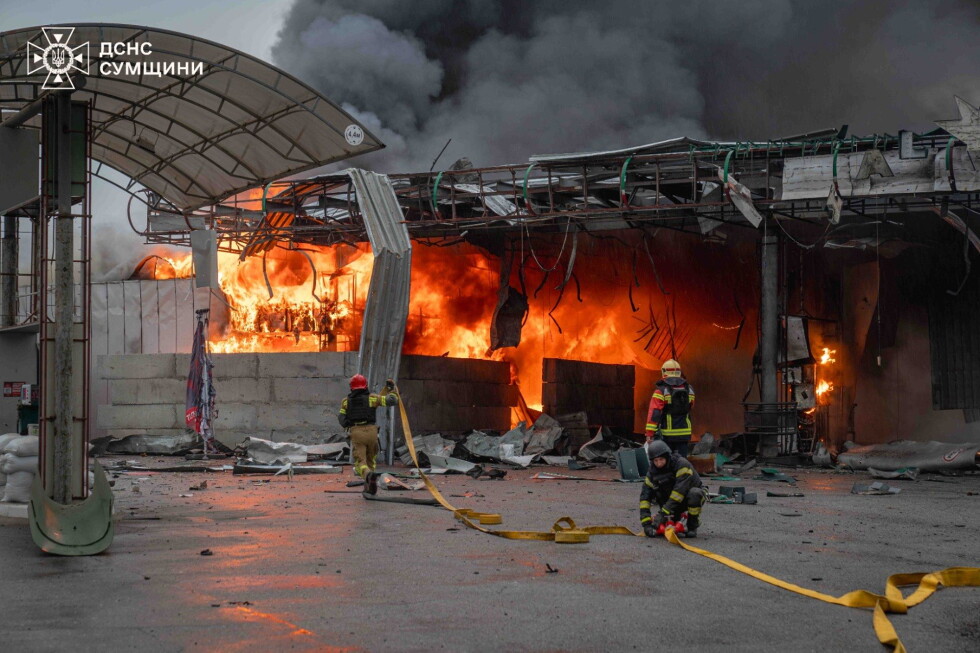
As Ukraine expands its strikes inside Russia, Moscow has continued its own bombardment of Ukrainian civilian and energy infrastructure. Overnight this week, Russia launched one ballistic missile and 90 long-range attack drones across Ukraine, Ukrainian air force officials confirmed. A drone strike on a civilian gas station in the northeastern Sumy region Thursday morning left four people injured, including two station employees, according to regional governor Oleh Hryhorov, who noted that Russian forces have targeted Sumy’s gas infrastructure 13 times in June alone. A separate overnight strike on a gas station in the southern city of Zaporizhzhia left one woman injured and damaged the facility, regional governor Ivan Fedorov reported.
For its part, Russia’s Defense Ministry stated that its air defense systems intercepted and downed 269 Ukrainian drones between late Wednesday and early Thursday, and multiple major Russian airports issued temporary flight restrictions overnight amid reported drone incursions.
-
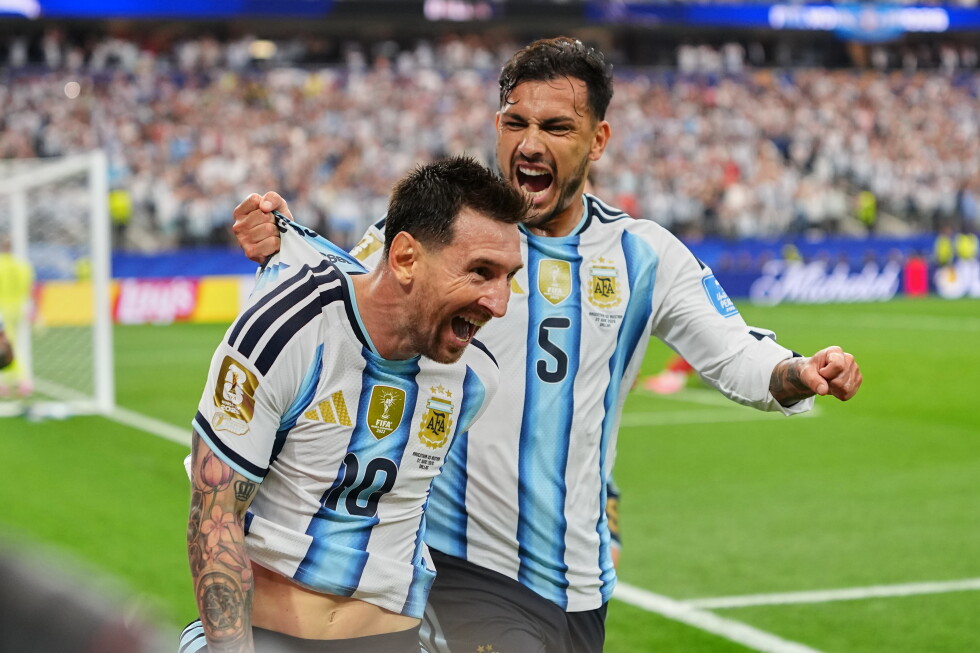
The World Cup is half over, with 54 of 104 matches complete. And the drama is just getting started
MIAMI GARDENS, Fla. — The 2026 FIFA World Cup, the largest edition of men’s global soccer championship in history, has passed its official tournament midpoint, with 54 of its 104 total matches completed and 50 still to play before a new champion is crowned at New Jersey’s MetLife Stadium on July 19.
All three co-host nations of this expanded 48-team World Cup have already secured spots in the knockout Round of 32, a milestone that has set a positive tone for the second half of the competition. Hosts the United States, Mexico, and Canada have all advanced out of group play, while the tournament’s biggest global stars have already delivered unforgettable performances that have fans buzzing. Argentina’s Lionel Messi, who celebrated his 39th birthday on the day of the midpoint milestone, has already netted five tournament goals, putting the 2022 champion in strong position to chase an unprecedented back-to-back World Cup title. France’s Kylian Mbappé, Norway’s Erling Haaland, and Brazil’s Vinícius Júnior are not far behind, each holding four goals so far.
FIFA has reported that attendance is on track to hit an all-time tournament record, with most stadiums selling out or coming close to full capacity for group stage fixtures. Beyond on-field action, the tournament has already produced heartwarming underdog stories, the most notable of which follows Cape Verde goalkeeper Vozinha, who was able to have his mother attend the tournament to cheer him on — a moment that has resonated with soccer fans worldwide.
“The best is yet to come,” FIFA President Gianni Infantino told SNTV earlier this week, echoing the widespread expectation that the knockout stage will deliver even more high-stakes drama than the opening group round. Just as in a single match, the second half of the tournament is where titles are won and legends are made.
As of the conclusion of Wednesday’s matches, 13 teams have officially locked in their Round of 32 positions. Group winners include Mexico (Group A), Switzerland (Group B), Brazil (Group C), the U.S. (Group D), Germany (Group E), and Argentina (Group J). Joining the group winners in knockout contention are France, Norway, Canada, Morocco, Colombia, Bosnia and Herzegovina, and South Africa. For South Africa, this marks the first time the nation has ever advanced to a men’s World Cup knockout stage, sparking widespread celebration among the team and its supporters. “I know how it feels, but it’s very difficult to explain how it feels,” said South African head coach Hugo Broos after the milestone qualification. “I’m very happy for the guys.”
Seven teams have already been eliminated from group stage contention, confirming they will not reach the Round of 32: the Czech Republic, Haiti, Turkey, Tunisia, Jordan, Qatar, and Panama. With 13 spots filled and seven teams out, 28 teams remain in the hunt for the 19 remaining knockout positions, setting up a series of win-or-go-home final group fixtures in the coming days. Key do-or-die matches include Australia vs. Paraguay, where a victory guarantees advancement; Japan vs. Sweden and Austria vs. Algeria, where the winner of each will claim a spot; and Cape Verde vs. Saudi Arabia, where a win would send the tiny underdog nation into the knockout round. The Group K title will also be decided when Colombia faces off against Portugal.
For co-host the United States, the path to the final runs almost entirely through the western half of the country. The Americans will open their knockout campaign in Santa Clara, California on July 1. A win there would send them to Seattle for the Round of 16, followed by a quarterfinal berth in Inglewood, California if they continue to win. Only a trip to the semifinals would take the U.S. to Arlington, Texas, and the only match the team would play in the Eastern Time Zone would be the July 19 final itself. The most probable first opponent for the U.S. in the Round of 32 is Bosnia and Herzegovina, with a potential second-round matchup against Egypt looming if both teams advance.
Once the final group stage matches conclude this Saturday, the single-elimination knockout round gets underway. With the exception of the third-place match after the semifinals, every knockout fixture is do-or-die: lose, and your tournament run ends. Any team that claims the World Cup title will need to win five consecutive elimination matches to lift the trophy.
One of the biggest storylines of the tournament so far has been a historic surge in scoring. With 161 goals already netted through 54 matches, the 172-goal total record set at the 2022 Qatar World Cup is set to be broken as early as Thursday or Friday — a surge many expected, given the tournament expanded from 64 matches in the previous 20-year format to 104 matches this year. What has stood out more is that the per-game scoring average currently sits at 2.98 goals per match, the highest average the tournament has seen in more than 50 years. For context, the 1982 Spain World Cup averaged 2.81 goals per match, the 1970 Mexico tournament averaged 2.97, and the 1958 Sweden tournament averaged 3.60. The all-time record of 5.38 goals per match set at the 1954 Switzerland World Cup — which included the iconic 7-5 quarterfinal that remains the highest-scoring match in men’s World Cup history — remains out of reach, but this year’s average still marks a major shift toward attacking play.
By the end of this Saturday, Day 17 of the tournament, 72 matches will be completed, with only 32 remaining. Saturday will also mark the end of the group stage, kicking off the full slate of single-elimination knockout play. After Saturday, the pace of the tournament will slow slightly: only one Round of 32 match is scheduled for Sunday, which pairs South Africa against Canada in Los Angeles. Play will resume daily from Monday through July 8, meaning the tournament will run 27 consecutive match days before the first and only scheduled day off before the final.
Fans are already holding out hope for a rematch of the epic 2022 World Cup final between Argentina and France, a matchup that remains entirely possible. As the bracket currently stands, the two powerhouses are seeded on opposite halves, which would pit them against each other in the July 19 final if both advance that far. Messi, who has scored all five of Argentina’s goals through two group matches, now holds the all-time record for most men’s World Cup goals with 18 total across his career. When Argentina begins its knockout run, it will essentially play a home game in South Florida: the Round of 32 match will take place in Miami Gardens, just a short distance from the Inter Miami CF stadium where Messi has played since joining MLS three years ago. For France, Mbappé has notched four goals so far this tournament, bringing his all-time World Cup total to 16 — tying him with Germany’s Miroslav Klose for second place on the all-time scoring list, just two goals behind Messi.
-
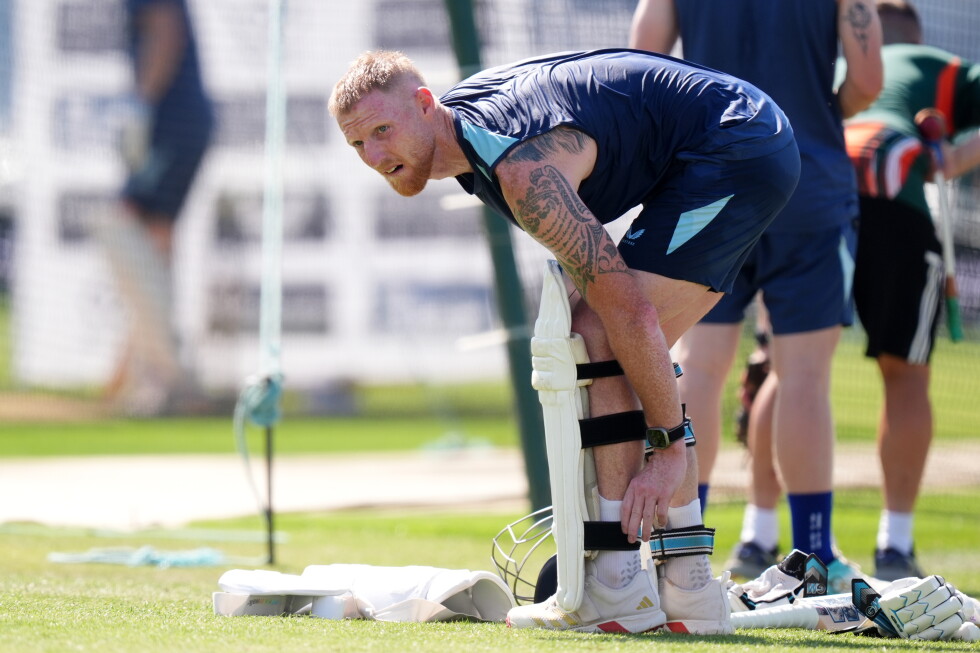
New Zealand wins toss and bats first in deciding test against England as Stokes returns
The final chapter of a tightly contested Test cricket series between England and New Zealand got underway Thursday at Nottingham’s iconic Trent Bridge, with New Zealand claiming an early tactical edge after winning the pre-match coin toss and electing to bat first. The series currently stands locked at one win apiece, making this match the ultimate decider for bragging rights—and the unusual summer heat forecast for central England could play a defining role in the outcome.
Temperatures are projected to hit an uncharacteristic 31 degrees Celsius (88 degrees Fahrenheit) for the match, baking the pitch into a firm, dry surface that is widely expected to favor batters over bowlers as the game progresses. This forecast adds an extra layer of context to New Zealand’s decision to take the batting crease first, as the pitch is likely to deteriorate and become more helpful to bowlers in later innings.
For the home side England, the match arrives in the wake of off-field disciplinary turmoil that shook the squad just two weeks prior. Following England’s opening Test victory at London’s Lord’s Cricket Ground, captain Ben Stokes and pace bowler Gus Atkinson were sanctioned for breaking team protocol during a post-match night out. The pair were dropped from the squad entirely for the second Test, which New Zealand won by a convincing margin to level the series at 1-1. Now, both Stokes and Atkinson have been recalled to the starting lineup for the decider, with Stokes resuming the captaincy after Joe Root filled in temporarily during the second Test. England have also made two further changes to their side: wicketkeeper Jamie Smith returns following a short period of paternity leave, while young spinner Shoaib Bashir comes into the team in place of fast bowler Sonny Baker.
New Zealand, on the other hand, have been forced to reshuffle their starting eleven due to a series of injury and workload management issues. The Black Caps will be without two of their key first-team players: fast bowler Matt Henry and middle-order batter Glenn Phillips, both ruled out through injury. Veteran paceman Kyle Jamieson has also been rested from the side, as the team manages his recovery from a recent flare-up of back problems. Stepping into the vacant spots are left-arm spinner Mitchell Santner, and two rookie pace bowlers, Blair Tickner and Ben Sears, who have just seven Test caps between them as a pairing.
As the first session gets underway at the sun-baked Trent Bridge, both sides are fully aware that every decision and every wicket will carry extra weight, with the series title hanging entirely on the result of this final match.
-
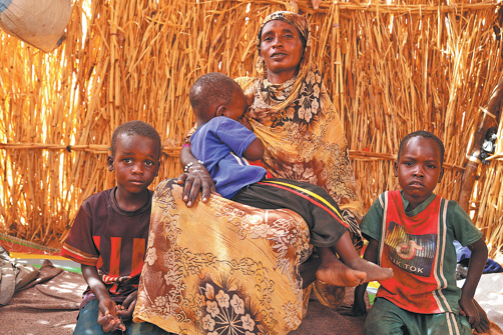
Fighting intensifies across multiple fronts in Sudan
As the brutal power conflict between Sudan’s two main military factions enters its fourth year, active fighting has ramped up sharply across multiple regions of the country, leaving global aid watchers sounding urgent alarms over a rapidly worsening humanitarian crisis for millions of vulnerable civilians.
The ongoing confrontation, which first erupted in April 2023, pits the official Sudanese Armed Forces (SAF) against the paramilitary Rapid Support Forces (RSF), with violence now spreading simultaneously across the southeastern Blue Nile region and the western regions of Darfur and Kordofan.
On Tuesday, the SAF confirmed it had intercepted and downed a hostile drone north of Al-Tuwaysha town in North Darfur State. This confrontation marks just the latest in a growing string of aerial skirmishes, where uncrewed aerial vehicles have emerged as a primary weapon for both warring factions over the past several months.
Further east, in the Blue Nile region, the SAF’s 4th Infantry Division announced it had secured new territorial advances following a large-scale offensive across multiple eastern districts of the state. The military command confirmed in an official statement that operations pushed past the Abu Dugla and Ashambo areas, concluding with the full seizure of the Al-Bar district from forces it labeled “rebel elements.”
According to the statement, government troops captured stockpiles of weapons, military hardware, and a number of enemy combatants during the operation. Military officials added that offensive operations will continue in the region to secure Sudan’s border and protect civilian populations. After months of relative quiet, Blue Nile has reemerged as a key conflict zone as the SAF works to retake control of Kurmuk, a strategically critical border town.
Independent military observers note that the renewed push in Blue Nile forms part of a broader strategic shift by the SAF: expanding military operations beyond the long-standing conflict hotspots of Darfur and Kordofan to reassert state control over vulnerable border regions.
In western Sudan, however, the humanitarian outlook in North Darfur continues to deteriorate at an alarming rate. RSF-linked social media accounts published video footage Tuesday confirming RSF fighters had entered the Ambro area of North Darfur, just days after drone strikes hit the zone and drove displaced residents to seek shelter there from nearby conflict zones.
The North Darfur Coordination of Resistance Committees confirmed that thousands of civilians have fled the Orshi area for Ambro in search of safety, adding that targeted violations against civilian populations in the western parts of the state continue without interruption. The committee stressed that displaced residents are surviving in catastrophic conditions in makeshift camp sites, and has called for expanded independent humanitarian monitoring and urgent international intervention to address the growing crisis.
To the south in North Kordofan State, human rights organization Emergency Lawyers reported that repeated RSF drone strikes on the major city of El Obeid last week destroyed the city’s central power substation. The attack triggered widespread blackouts that cut off access to clean water, disrupted critical health care services, and halted local public transport. The group warned that continued attacks on civilian and critical infrastructure will speed up mass displacement from the city, and raise the risk of a full-scale humanitarian catastrophe in one of western Sudan’s largest urban hubs.
Current United Nations estimates place the total death toll from the 3-year conflict at more than tens of thousands of people, with over 7 million people displaced internally across Sudan and an additional 1.5 million fleeing to neighboring countries to seek safety. International aid organizations have repeatedly warned that access to food, clean water, and medical care is severely limited across most conflict zones, with the risk of mass famine and preventable disease outbreaks growing by the week.
-

Audit exposes huge welfare fund abuse
China’s top legislative body is reviewing a damning annual audit that reveals widespread mismanagement, fraud, and embezzlement of billions of yuan in public welfare funds, prompting government authorities to launch targeted corrective actions to safeguard public livelihoods.
Presented by Auditor-General Hou Kai to the Standing Committee of the National People’s Congress on Tuesday, the 2025 fiscal audit evaluated the central government’s budget implementation and nationwide fiscal governance. Beyond its broad assessment of public spending, the report flagged severe irregularities across multiple high-priority social sectors, including childcare, compulsory education, employment support, public healthcare, elderly care services, affordable housing, and disability assistance. The most substantial problems were uncovered in two core social safety net programs: work-related injury insurance and maternity support funds.
Auditors traced nearly 4.87 billion yuan (equivalent to approximately $715.8 million) in problematic funds within the injury insurance system. The investigation found that roughly 3.97 million workers employed in high-risk industries either had no injury coverage at all or were enrolled under illegally reduced coverage standards that left them underprotected. As of the end of September 2025, a cross-provincial review of construction sites found that 34,100 active projects across 24 provinces had failed to provide injury insurance for 2.26 million migrant workers, resulting in 2.53 billion yuan in unpaid mandatory insurance premiums.
In addition to systemic undercoverage, auditors uncovered deliberate fraud dating back to 2013: across 22 provinces, 580 injured workers and collaborating employers had fraudulently claimed 48.13 million yuan in compensation by submitting fabricated workplace accident reports and falsified medical treatment records.
Maternity insurance and related subsidy programs also faced widespread irregularities totaling 1.08 billion yuan, with violations directly undermining the benefit rights of more than 1 million eligible people. In one common scenario, gaps in policy enforcement and calculation errors for maternity leave entitlements left 21,000 individuals across 21 provinces unable to access a total of 103 million yuan in rightfully owed benefits. In another disturbing pattern of abuse, 496 employers in 13 provinces intercepted 30.05 million yuan in maternity benefits that were intended for 3,511 of their female workers, diverting public funds designated for employee support to corporate use.
In an official statement released Wednesday, the National Audit Office noted that these widespread irregularities have directly eroded public trust in social welfare programs and diminished the tangible benefits that citizens are supposed to receive from government social policy. The office called for expanded, consistent audit oversight across all public spending sectors that impact people’s daily lives, with a specific priority placed on strengthening oversight of grassroots-level welfare distribution.
The audit’s scope extended beyond social welfare to examine public fund allocation in agriculture, finance, and natural resource conservation projects, uncovering additional cases of misuse and mismanagement. In one high-profile environmental project, a wetland protection initiative falsely claimed to have completed all required resident relocations for the protected area. In reality, fewer than 30% of the 27,000 planned relocations had been finished, with only 7,700 people moved, while persistent garbage and sewage contamination continued to threaten the wetland ecosystem.
In another case of public fund waste, 135 agricultural technology promotion projects spread across 92 counties, funded with a total of 516 million yuan in public investment, were either diverted to non-compliant uses such as corporate exhibitions and entertainment events or left completely idle with no tangible impact on local agricultural development.
Moving forward, the National Audit Office has committed to ramping up follow-up inspections and ongoing oversight to ensure all identified irregularities are fully resolved. A full public update on the progress of rectification and corrective actions is scheduled for release before the end of 2026.