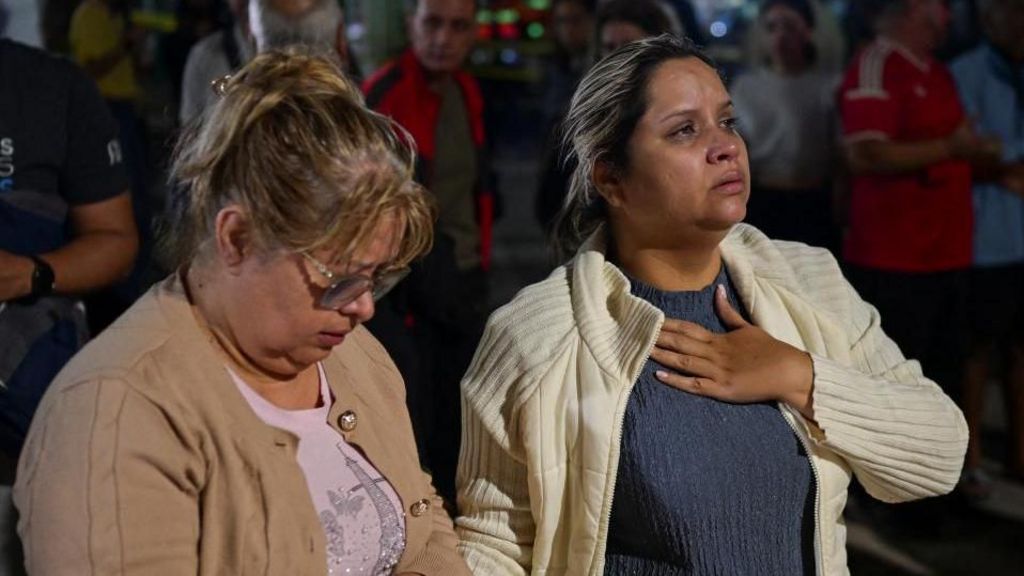
Venezuela is reeling from a devastating pair of powerful earthquakes that struck Wednesday, adding a new layer of catastrophe to a nation already grappling with political chaos and years of systemic decline. As death tolls continue to climb in the wake of the tremors, the disaster has laid bare both the enduring challenges and subtle shifts in the South American country just five months after a dramatic US military operation removed long-ruling leader Nicolás Maduro from power. Maduro, the left-wing leader who governed Venezuela from 2013 until January 2026, was captured in a dawn raid on his Caracas presidential compound and extradited to New York to face trial on international drug trafficking charges.
In the aftermath of Maduro’s removal, his close ally and former vice-president Delcy Rodríguez stepped into the role of interim president — a move that frustrated opposition supporters, who had expected the Trump administration to install opposition leader María Corina Machado at the helm of the transitional government. Now, Rodríguez’s response to the twin earthquakes is offering a clear snapshot of what has, and what has not, changed in Venezuela, as the country confronts the severe vulnerabilities of its long-decrepit infrastructure.
More than two hours after the quakes hit, Rodríguez delivered a national address on the state-owned television network VTV. In the gap between the disaster and her public address, official updates were extremely limited. While broken communication lines in the hardest-hit regions explain part of this delay, the information vacuum also traces back to media restrictions enacted under Maduro’s tenure. The former government shut down hundreds of independent local radio stations and online news outlets that would typically serve as critical sources of on-the-ground updates for affected communities during a crisis.
Rodríguez spoke alongside two of her closest allies: her brother Jorge Rodríguez, president of the National Assembly, who swore her into office days after Maduro’s capture, and Diosdado Cabello, Venezuela’s interior minister and a steadfast Maduro loyalist. In a notable break from his public appearances in the months leading up to the US intervention, Cabello did not wear his customary military fatigues, instead standing silently beside the interim president alongside Jorge Rodríguez. Visibly shaken by the disaster, Rodríguez opened her address with a urgent call for national unity, appealing to a population that has remained deeply polarized for more than a decade between supporters of Maduro and his predecessor Hugo Chávez, and opposition factions.
She also declared a national state of emergency and appointed General Juan Ernesto Sulbarán, commander of Venezuela’s National Guard, to lead the country’s disaster response efforts. This appointment reflects a long-standing pattern of Venezuelan politics: throughout the 25 years that Chávez and Maduro held power, top government positions were almost exclusively filled by high-ranking military officers. For years, most key state ministries were led by generals, and analysts widely attribute the country’s crumbling infrastructure to the lack of specialized expertise among these military appointees.
Under pressure from the Trump administration, Rodríguez has recently made small moves to diversify her cabinet: she replaced the general leading the housing ministry with a civilian architect, and swapped the military head of the electricity ministry for a professional electrical engineer. Even with these incremental changes, decades of mismanagement, compounded by crippling US economic sanctions, have left most public infrastructure — particularly public housing — in severe disrepair. For example, the state-owned cement industry collapsed after its nationalization under Chávez, creating a nationwide shortage of building materials that has left critical structural repairs undone for years. This has left millions of buildings far more vulnerable to collapse during seismic events like this week’s quakes.
Venezuela’s emergency response services have also suffered from chronic underinvestment, a side effect of the military’s outsized influence over national spending. For decades, funding and equipment were prioritized for the armed forces, leaving civil protection and rescue agencies without modern tools, rescue vehicles, and sufficient resources to respond to large-scale disasters. Recognizing these deep shortcomings, Rodríguez publicly thanked foreign governments that have already pledged support to Venezuela’s relief effort — and in a striking break from Maduro’s policy, she explicitly highlighted aid offers from ideologically opposed leaders, including US President Donald Trump. She told the nation that the Trump administration had maintained constant communication with Venezuelan authorities to offer support and solidarity. She also thanked the right-wing presidents of the Dominican Republic, El Salvador, and Chile for their offers of assistance.
Maduro consistently restricted foreign aid to assistance from ideological allies, so Rodríguez’s willingness to accept help from across the political divide marks a clear shift in policy. For Venezuelans waking to widespread destruction, and for the dozens of families still waiting for news of loved ones trapped under collapsed rubble, this open approach to international aid offers a faint glimmer of hope amid overwhelming tragedy and ongoing national uncertainty. “The solidarity between our people is an invaluable source of strength in moments like these,” Rodríguez said in her address.