博客

  • Could a Madison Square Garden wedding be the Love Story of Taylor Swift’s Wildest Dreams?

    Could a Madison Square Garden wedding be the Love Story of Taylor Swift’s Wildest Dreams?

    Speculation about the upcoming wedding of global pop superstar Taylor Swift and NFL star Travis Kelce has reached a fever pitch this week, after New York City officials confirmed a permit application has been filed to close streets surrounding Midtown Manhattan’s iconic Madison Square Garden over the Fourth of July holiday weekend.

    Dora Pekec, a communications representative for the New York City Mayor’s Office, confirmed to the BBC that the permit request was submitted in early June, requesting road closures around the arena from July 2 through July 4. The permit was first uncovered by *The New York Times*, which also reported that multiple players from Kelce’s Kansas City Chiefs have secured nearby hotel reservations for the same weekend. Since the couple announced their engagement last August, fans across the world have been combing social media and public records for any hint of the wedding’s location and timing, turning the search for details into a widespread cultural pastime.

    Crucially, city officials have not confirmed who submitted the permit application, and CNN reports that neither Swift’s nor Kelce’s name appears on the public filing. Still, *The New York Times* has outlined multiple unconfirmed indicators that point to a MSG nuptial, including reports that Amtrak police — who handle security at Penn Station, the major transit hub located directly beneath the arena — have been notified to prepare for a Swift wedding over the busy holiday weekend. The outlet also claims the couple plans to host a small, private gathering for 100 close guests on July 2, followed by a larger celebratory event on July 3 that may include surprise performances from famous guests.

    The potential venue choice has split Swift’s dedicated fanbase, with many expressing confusion over the selection of the 19,500-seat indoor arena over the scenic, outdoor location many predicted. Most fans had expected the couple to wed near Swift’s oceanside estate in Rhode Island, a guess backed by the couple’s engagement photos, which showed Kelce proposing in a lush, flower-filled garden setting. In contrast, Madison Square Garden is a windowless indoor venue in the heart of Manhattan, with no natural light and no panoramic scenic views.

    Molly Gaffney, a self-identified Swiftie from Albany, New York, called the rumored location baffling. “Her getting married in Manhattan at all, let alone during the Fourth of July during America 250, plus the World Cup, is insanity,” she said, referencing the simultaneous 250th anniversary of U.S. independence and 2026 FIFA World Cup that will draw hundreds of thousands of extra visitors to the city that weekend. “This dark, industrial location as her wedding venue couldn’t be more perplexing.” Some fans have even theorized that the permit is a deliberate decoy to distract media and fans from the couple’s actual, private wedding location — though Gaffney noted that staging such an elaborate decoy would require far more effort than it would be worth.

    But other long-time Swift fans argue the venue is a surprisingly perfect fit for the high-profile couple, who span two of the world’s biggest industries: music and professional sports. Nicki Vleisides, a New York City resident who co-hosts a popular podcast focused on Swift’s career and personal life, pointed to MSG’s unique status as a global landmark for both industries. “MSG is where music and sports come together at the most famous venue in the world,” she explained. “The more I’ve thought about it, it kind of seems like the perfect choice for both Taylor and Travis and their respective industries.”

    Vleisides’ co-host Andie Furber added that the arena also offers unbeatable security benefits for a celebrity wedding of this scale. “No drones or paparazzi can get in or out, and Taylor, Travis and guests can enter underground from blocks away with no chance of getting photographed,” she said. MSG is equipped with a private off-street entrance and underground access ramp that allows A-list guests to enter and exit completely out of public view, a feature that has made it a favorite for high-profile private events. The arena already proved its ability to handle massive security operations earlier this month, when it hosted former U.S. President Donald Trump during the 2026 NBA Finals between the New York Knicks and San Antonio Spurs.

  • Watch: No injuries after plane crashes in remote Alaska wilderness

    Watch: No injuries after plane crashes in remote Alaska wilderness

    A dramatic aviation incident unfolded deep in Alaska’s untamed Brooks Range this week, when a commercial flight carrying 10 people on board was forced to execute an emergency crash landing in one of the state’s most isolated backcountry regions. Remarkably, every single person on the aircraft walked away from the crash site without sustaining any injuries, defying the high risks that come with an unplanned landing in the rugged, unpopulated wilderness.

    The Brooks Range, a vast, remote mountain chain stretching across northern Alaska, is largely uninhabited, with few developed landing sites or access routes for emergency response. The pilot’s quick decision-making and skilled handling of the emergency situation are being credited with preventing what could have been a catastrophic outcome. While details about what caused the original in-flight emergency that forced the landing have not yet been fully released, early accounts confirm that all 10 individuals on the flight – whose identities have not been disclosed to the public as of yet – are safe and accounted for.

    Search and rescue teams, which are regularly pre-positioned to respond to incidents in Alaska’s remote wilderness, have already confirmed the safety of everyone on board. The incident has highlighted both the inherent risks of air travel in Alaska’s harsh backcountry, where small commercial flights are often the only means of accessing remote regions, and the level of preparedness that pilots and response teams maintain to mitigate these dangers.

  • US Supreme Court strikes down Hawaii limits on guns in public

    US Supreme Court strikes down Hawaii limits on guns in public

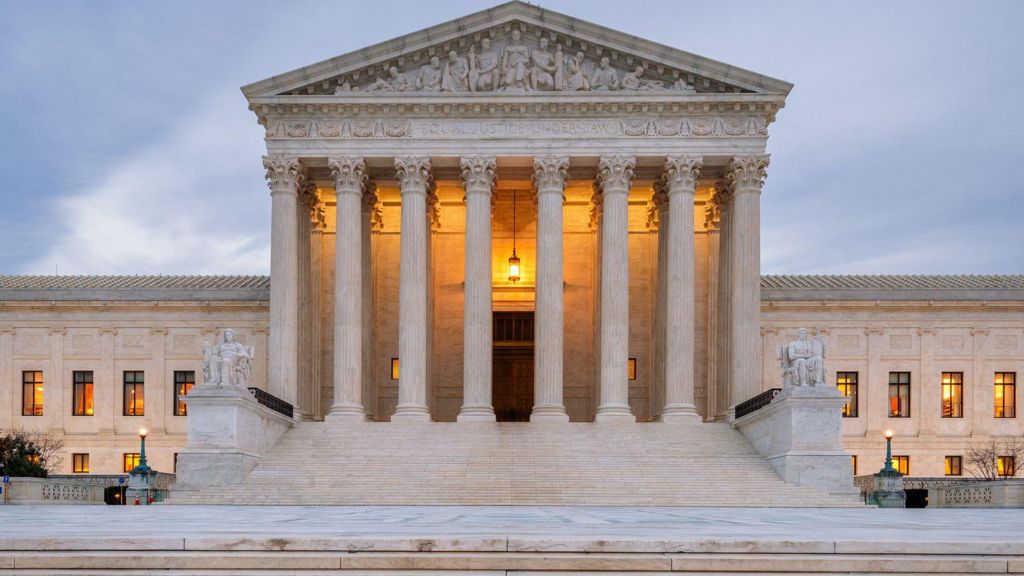
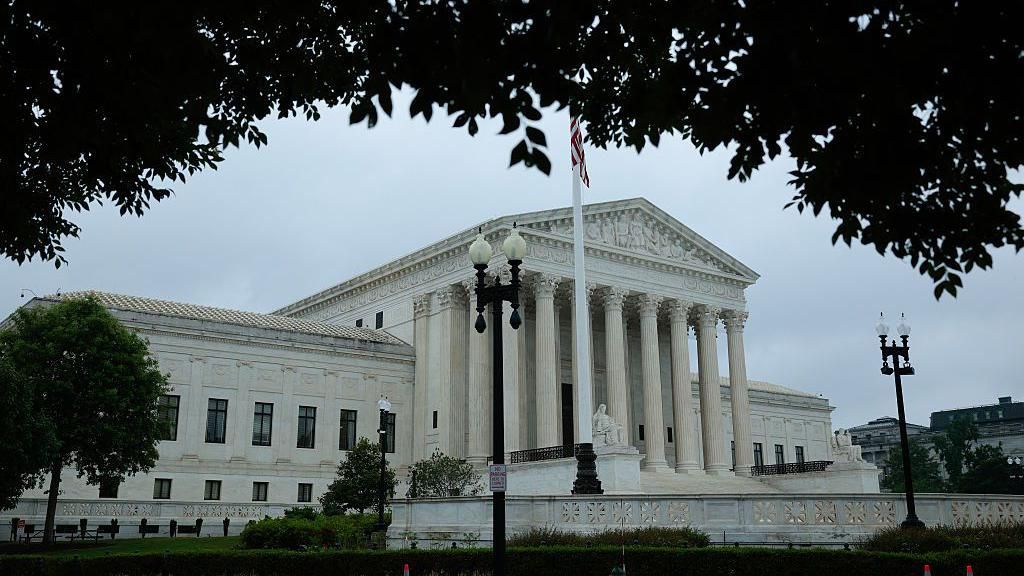
    In a decision that marks another major win for gun rights advocates across the United States, the U.S. Supreme Court has invalidated a longstanding Hawaii regulation that prohibited permit-holding gun owners from bringing concealed handguns onto privately owned land open to the general public. The 6-3 ruling, issued Thursday, aligned the court’s conservative majority with gun owners who argued that the geographic restriction on legal firearm carry violated the Second Amendment’s protection of the right to keep and bear arms.

    Writing for the majority, conservative Justice Samuel Alito rejected the lower court’s reasoning that Hawaii had the authority to ban concealed-carry permit holders from entering common public-facing private spaces including shopping malls and dine-in restaurants unless they obtained explicit permission from the property owner. Alito emphasized that the regulation placed unreasonable, crippling limits on law-abiding Hawaii residents who had already completed the state’s strict screening and qualification requirements to receive a carry permit. “This regime hobbles what the Second Amendment protects: the right of Americans to carry arms for self-defense as they go about their daily lives,” Alito wrote in the opinion, concluding that “we hold that the law is unconstitutional.”

    Critically, the court’s ruling only overturns the broad private property carry ban. It leaves intact all of Hawaii’s other existing gun restrictions, including prohibitions on carrying firearms in sensitive locations such as schools, government buildings, bars, public beaches, and public parks, according to reporting from CBS News, a media partner on the case’s coverage.

    The legal challenge originated in 2023, when three Hawaii residents and the Hawaii Firearms Coalition filed suit against the regulation, arguing it violated Second Amendment rights. A federal district court initially ruled in the challengers’ favor, finding the rule most likely contravened the constitutional right to bear arms. But Hawaii state officials appealed the ruling, and the U.S. Court of Appeals for the Ninth Circuit later upheld the challenged law, setting the stage for the Supreme Court to take up the appeal.

    The Hawaii regulation, often derisively called the “vampire rule” by gun rights supporters, required permit holders to request explicit permission from every private property owner before entering their land with a firearm. Even a routine stop to refuel a car or pick up groceries at a supermarket could leave a permit holder facing misdemeanor charges, which carried a maximum penalty of up to one year in prison. The former Trump administration threw its support behind the gun owners in the case, echoing arguments that the rule put legally authorized permit holders at unnecessary risk of criminal penalty for ordinary daily activities.

    The Supreme Court’s decision is expected to have ripple effects beyond Hawaii, as four other heavily Democratic-leaning states — California, New York, New Jersey, and Maryland — maintain nearly identical restrictions on private property gun carry. Currently, most U.S. states already allow permit holders to carry concealed firearms on publicly accessible private property, so only a small handful of state regulations will be directly affected by this precedent. This ruling marks the second time during the Supreme Court’s current term that the court has ruled in favor of gun rights expansion, building on a series of recent decisions that have rolled back long-standing gun control regulations across the country. The court’s three liberal justices issued a joint dissent opposing the majority’s decision.

  • Kenyans mark two years since Gen Z protests

    Kenyans mark two years since Gen Z protests

    It has been two full years since the wave of Gen Z-led anti-government demonstrations that rocked Kenya in 2024, and on the anniversary, families of the protesters and bystanders killed during the unrest did not stay silent. Grieving relatives gathered together and marched to Kenya’s Parliament building, the center of national political power, to honor the memories of their loved ones who lost their lives in the violent clashes that unfolded during the protests. For these families, the anniversary is not just a moment to grieve: it is a deliberate, public call for accountability that has yet to be delivered. Many of those killed were young people who joined the widespread demonstrations demanding political reform and policy change from the Kenyan government. Two years on, no conclusive legal action has been taken against those responsible for the fatalities, leaving the bereaved in a state of continued uncertainty and anger. By returning to the seat of government, the families are pushing ruling authorities to break the silence around the protest deaths and fulfill promises of justice that have remained unfulfilled for 24 months.

  • Prosecutors drop outstanding rape case against Harvey Weinstein

    Prosecutors drop outstanding rape case against Harvey Weinstein

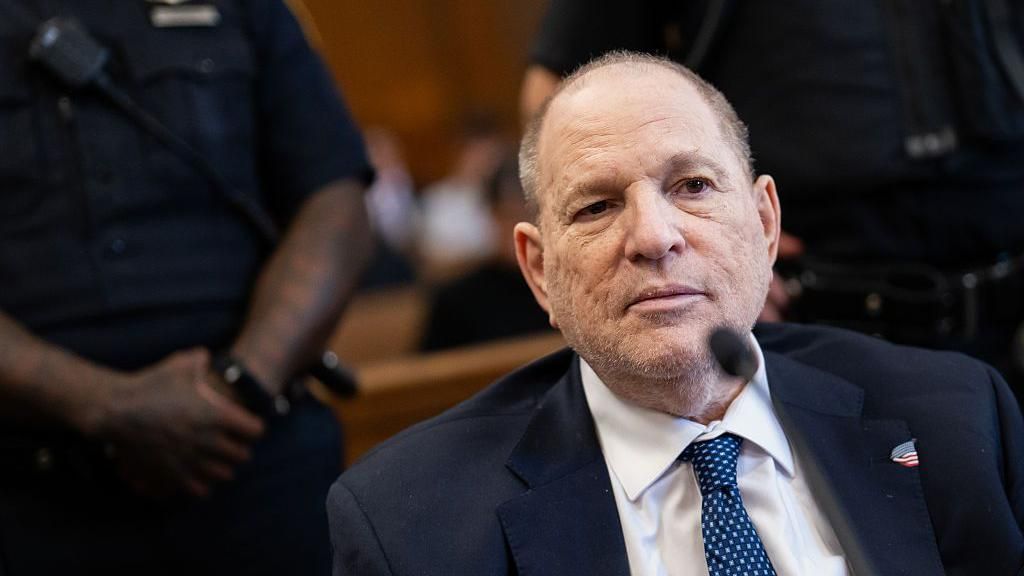
    More than seven years after the #MeToo movement first brought widespread attention to sexual misconduct allegations against disgraced Hollywood film producer Harvey Weinstein, Manhattan prosecutors have announced they will not move forward with a fourth rape trial against the fallen media mogul. This unresolved case, which has already cycled through three court proceedings, will be closed permanently, according to a formal statement from the office of Manhattan District Attorney Alvin Bragg Jr. released Thursday. The case related to accusations from Jessica Mann, a former hair stylist and actor who alleged Weinstein raped her more than a decade ago. Previous attempts to prosecute the claim have ended in procedural deadlock: one jury failed to reach a unanimous verdict in 2020, a second mistrial was declared after another hung jury in a 2022 retrial, and a 2023 conviction was later thrown out on appeal. In his statement, Bragg emphasized that his office remained fully confident in Mann’s account of the incident and her standing as a credible witness. Following in-depth consultations with the accuser, prosecutors made the decision to drop the charge after Mann confirmed she did not want to endure the emotional and logistical strain of a fourth trial, Bragg added. It is important to note that the dismissal of this case does not impact Weinstein’s other existing sexual assault convictions. The former producer remains incarcerated for a separate sexual felony conviction out of New York, as well as additional convictions for sexual misconduct handed down by a California court in 2022. The case stands as one of the most high-profile legal outcomes of the global #MeToo movement, which broke into the mainstream in 2017 after hundreds of women came forward with abuse allegations against Weinstein, sparking a nationwide reckoning over sexual harassment and assault in workplaces across every industry.

  • China’s LineShine tops supercomputer ranking with all-CPU architecture

    China’s LineShine tops supercomputer ranking with all-CPU architecture

    In a landmark advance for global high-performance computing, China’s domestically developed LineShine supercomputer has secured the top position on the latest edition of the industry-standard TOP500 supercomputer ranking, marking a transformative breakthrough in the long-sought convergence of supercomputing and intelligent computing. The Shenzhen National Supercomputing Center, which houses the new system, announced that LineShine delivers a sustained double-precision performance of 2.198 exaflops on the High Performance Linpack benchmark, making it the first supercomputer in history to cross the 2 exaflops threshold in real-world sustained operation.

    For decades, supercomputing and intelligent computing developed along separate hardware trajectories, tailored to their distinct computational requirements. Traditional high-performance supercomputing was built to handle double-precision floating-point operations, critical for demanding scientific work such as complex physical modeling and large-scale engineering simulation. By contrast, intelligent computing — which powers modern AI model training and inference — relies primarily on lower-precision or integer operations. In recent years, however, demand for integrated systems that can handle both workloads has grown rapidly, driving researchers to explore new hardware architectures that bridge this divide.

    The dominant industry approach to this integration has been heterogeneous CPU-GPU architecture, which splits workloads between central processing units that manage scheduling and control, and graphics processing units that handle accelerated computational tasks. Yet this widely adopted model carries inherent flaws: it incurs steep data transfer costs between the two hardware types, requires complex specialized programming frameworks, and often leaves a significant share of system hardware resources underutilized.

    LineShine upends this conventional model with its pioneering all-CPU “Online Acceleration” architecture. Rather than relying on external GPU accelerators, the system embeds AI matrix acceleration units directly into its domestically designed processors. This native integration allows standard CPUs to run AI workloads efficiently without offloading processing to discrete GPUs, eliminating the persistent CPU-GPU data transfer bottleneck that plagues traditional heterogeneous architectures.

    The innovations are not limited to processor design, according to LineShine’s chief designer Lu Yutong, who also serves as director of the Shenzhen National Supercomputing Center. The system delivers large-scale improvements across networking, storage, system architecture, and energy efficiency, resulting in dual breakthroughs: it delivers unmatched top-tier computing performance while also supporting broad deployment across real-world use cases. Lu noted that LineShine offers a fully practical, scalable solution for the long-debated goal of converging supercomputing and intelligent computing.

    Lei Kai, deputy director of the Shenzhen Computer Federation, told Xinhua that LineShine is already powering cutting-edge research and applications across a wide range of scientific and industrial fields. Current use cases include atmospheric and oceanographic climate modeling, large-scale advanced engineering simulation, new materials development, targeted drug discovery, brain science research, general-purpose scientific AI, and large language model inference.

    China has a long history of leadership in global supercomputing, with domestic systems claiming the TOP500 crown on multiple prior occasions. The TOP500 ranking, which benchmarks the world’s most powerful supercomputers, is updated twice annually. China first reached the number one position in 2010 with the Tianhe-1 system, followed by Tianhe-2, which held the top spot for six consecutive TOP500 editions from 2013 to 2015. From 2016 to 2017, China’s Sunway TaihuLight claimed the number one ranking four times, cementing the country’s position as a global leader in high-performance computing innovation.

  • Supreme Court allows Trump to restrict asylum seekers at border

    Supreme Court allows Trump to restrict asylum seekers at border

    In a closely watched decision that will reshape how asylum claims are processed along the US-Mexico border, the Supreme Court has delivered a 6-3 ruling upholding the Trump administration’s long-debated ‘metering’ policy, which restricts asylum access for migrants who have not yet physically entered US territory. The decision ends a years-long legal battle and paves the way for the policy to be reimplemented, nearly four years after it was rolled back by the preceding Biden administration.

    The core of the legal fight centered on interpreting a key line of US federal asylum law, which states that only migrants who have ‘arrived in the United States’ are eligible to apply for protection from persecution on political, racial, or religious grounds. The Trump administration has long argued that this language explicitly excludes asylum seekers stopped while still on the Mexican side of the border, a position that was rejected by a lower court before the case was appealed to the nation’s highest court.

    Writing the majority opinion for the court’s conservative majority, Justice Samuel Alito framed the question as a straightforward matter of common language interpretation. ‘In ordinary speech, no one would say that a person ‘arrives in’ a place . . . before the person enters that place,’ Alito wrote. The ruling reverses the lower court’s finding that the metering policy was unlawful, in the case titled Noem v. Al Otro Lado, a prominent immigrant advocacy organization.

    During oral arguments held in March, justices from both sides of the ideological spectrum pushed attorneys on both sides to clarify the legal threshold for what counts as ‘arriving in the US.’ Conservative Justice Amy Coney Barrett questioned what specific, dispositive marker would qualify a migrant as having arrived in the country, while fellow conservative Justice Neil Gorsuch asked whether a migrant waiting in a queue at a port of entry, or standing at the water’s edge of the Rio Grande, would meet the standard.

    Vivek Suri, an assistant solicitor general arguing on behalf of the Trump administration, told the court the answer was unambiguous: ‘You can’t arrive in the United States while you’re still standing in Mexico. That should be the end of this case.’ But Kelsi Corkran, an attorney from the Institute for Constitutional Advocacy and Protection representing the migrant plaintiffs, argued that migrants meet the arrival requirement once they reach the threshold of a port of entry, waiting to cross into the country.

    The ‘metering’ policy gets its name from its core function: it allows US Customs and Border Protection officials to cap the number of asylum claims processed each day, citing limited staffing and overburdened processing systems as justification for turning away additional seekers. First introduced by the Trump administration in 2016, the policy was formally rescinded in 2021 when Democratic President Joe Biden took office. With Trump’s return to the White House in 2025, the administration moved to reinstate the policy, leading to the latest legal challenge that ended at the Supreme Court.

    This ruling is not the final word on Trump’s broader border asylum agenda. Shortly after returning to office in 2025, Trump announced a separate, far more sweeping ban on asylum eligibility for most border arrivals, a policy that remains tied up in ongoing litigation and has yet to reach the Supreme Court.

  • Why these two teams will want a draw?

    Why these two teams will want a draw?

    As the final round of group stage matches at the men’s FIFA World Cup approaches, a familiar and uncomfortable debate has reemerged over tournament format ethics. This time, the focus falls on Group matches pitting Paraguay against Australia, where a mutual draw would send both national sides through to the knockout round of the competition – a scenario that has immediately sparked comparisons to one of the most infamous episodes in World Cup history, the 1982 “Disgrace of Gijon”.

    In that 1982 match between West Germany and Austria, both sides agreed to a narrow 1-0 win for West Germany that eliminated Algeria from the tournament, with both European nations advancing at the North African side’s expense. The match was widely panned for lacking any competitive spirit, as both teams spent 90 minutes going through the motions rather than fighting for a win, leading to widespread outcry and ultimately major reforms to how World Cup group stages are structured.

    Today, decades after that scandal, the same set of circumstances has emerged again: both Paraguay and Australia enter their final group fixture knowing that a tie will guarantee their progression to the next round, while any other result would open the door for a third team in the group to knock one of them out. This controversy has also reignited long-running criticism of the World Cup’s evolving format, particularly recent plans to expand the tournament to 48 teams, which critics argue will only create more frequent scenarios where a mutually beneficial result for two sides creates a huge incentive for match-fixing or uncompetitive play.

    The match, which is set to kick off in the coming days, already faces intense scrutiny from fans, pundits, and governing body FIFA, as observers wait to see whether the two sides will play open, competitive football or opt to preserve their place in the knockout round with a mutually acceptable result. The conversation around the game has once again brought to the forefront long-standing structural flaws in the World Cup’s group stage system that continue to create opportunities for controversy decades after the Disgrace of Gijon shocked the football world.

  • World leaders react with offers and solidarity after powerful quakes hit Venezuela

    World leaders react with offers and solidarity after powerful quakes hit Venezuela

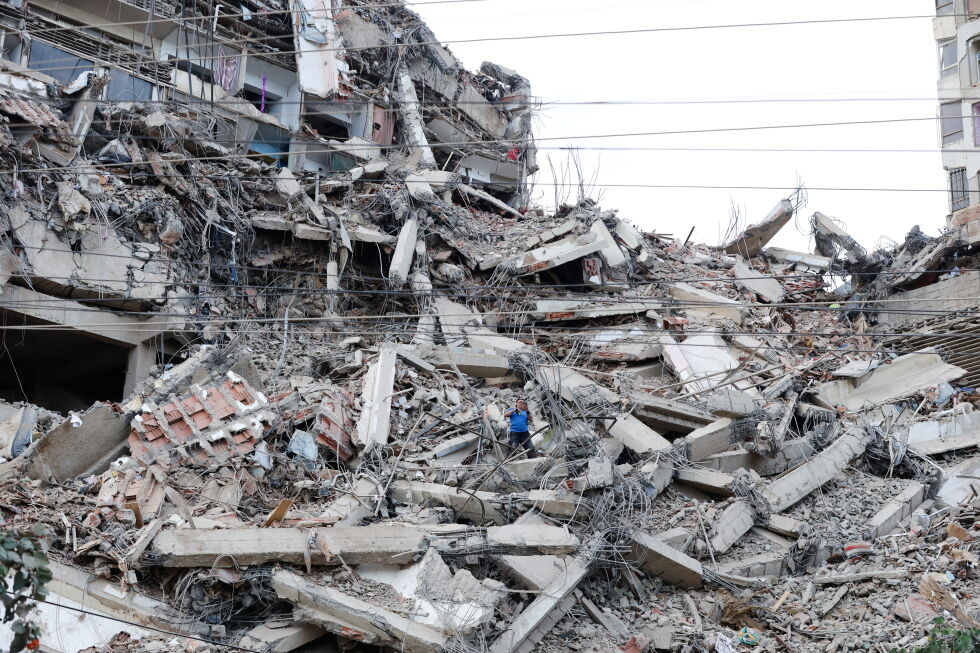
    On a devastating Wednesday evening, Venezuela was hit by two back-to-back powerful earthquakes measuring magnitudes 7.2 and 7.5, marking one of the strongest seismic events to strike the South American nation in over a century. The tremors were felt across the entire surrounding region, leaving a trail of destruction in their wake: official casualty reports confirm at least 164 people have been killed, more than 1,000 others have sustained injuries, and dozens more remain trapped beneath the rubble of collapsed buildings as of Thursday. By Thursday morning, Venezuelan emergency response teams were racing against the clock, leveraging every minute of daylight to accelerate search and rescue operations for survivors still buried under destroyed infrastructure. In the hours following the disaster, world leaders and senior officials from across the globe issued statements of solidarity and committed tangible support to Venezuela’s relief and recovery efforts.

    U.S. Secretary of State Marco Rubio shared the nation’s condolences via the social platform X, saying, “The United States extends our deepest condolences to the people of Venezuela following the devastating earthquakes.” Rubio confirmed that the U.S. was launching an immediate emergency response, noting “the United States is ‘immediately deploying search and rescue teams, medical resources, and humanitarian assistance to Venezuela.’” He extended sympathies to all grieving families, injured victims, and praised the on-the-ground rescue crews working around the clock to find survivors.

    French President Emmanuel Macron also issued a statement via X, affirming France’s unwavering solidarity with the Venezuelan people. Macron confirmed that a specialized team of 85 search and clearance rescue workers would be deployed to the disaster zone without delay, adding, “France stands ready, alongside its European partners, to provide assistance to the affected populations in response to the needs identified by the Venezuelan authorities.”

    Brazilian President Luiz Inácio Lula da Silva reaffirmed his country’s commitment to supporting Venezuela through the recovery process. Lula announced he had directed Brazil’s Ministry of Foreign Affairs to launch an immediate assessment of on-the-ground conditions to determine what forms of aid Brazil can contribute. “I reaffirm our determination to support the government of Acting President Delcy Rodríguez in the recovery of affected areas in this sister nation, whose people have demonstrated great resilience in the face of adversity,” he wrote on X.

    At a Thursday press conference, Chinese Foreign Ministry spokesperson Guo Jiakun extended sincere condolences to the Venezuelan government and all communities impacted by the quakes. “China is willing to provide assistance to Venezuela to the best of its ability, according to Venezuela’s needs,” Guo stated, confirming China’s readiness to contribute to relief efforts upon request.

    Spanish Prime Minister Pedro Sánchez shared his message of support via Instagram, writing, “All the support from me and Spain to the Venezuelan people after the devastating earthquakes of last night. Our thoughts are with the victims and their families.”

    Colombia’s President-elect Abelardo de la Espriella also voiced his full solidarity with the Venezuelan people via X. “I stand in full solidarity with the brotherly people of Venezuela following the devastating earthquake. Colombia stands with you during this difficult time with affection, respect, and hope. My prayers are with the victims and their families. God will provide,” he wrote.

  • Apple hikes MacBook and iPad prices, blaming rising chip costs

    Apple hikes MacBook and iPad prices, blaming rising chip costs

    The global consumer electronics landscape is facing a new wave of cost pressures, driven by the explosive growth of artificial intelligence, and tech giant Apple has become the highest-profile firm to pass these increased expenses onto customers. The iPhone manufacturer announced this week it is raising prices on select MacBook and iPad models across nearly all global markets, with some devices seeing price jumps of nearly 20 percent, blaming an unprecedented surge in demand for memory and storage chips from AI data center operators that has upended component pricing across the entire industry.

    In an official statement, Apple noted that the electronics sector is confronting an extraordinary challenge that has not been seen in modern memory. “We have never seen a component price increase this much, this quickly,” the company said, adding that it is “working tirelessly to find solutions” to stabilize costs for consumers. Until now, Apple had absorbed rising component expenses to keep product prices steady, but executives confirmed the strain has become too great to offset internally any longer. “We have shielded our customers from these increases so far, but we have now reached a point where we need to begin raising prices on a number of products, including today’s increases for iPad and Mac,” the statement read.

    Concrete examples of the price adjustments are already visible on Apple’s regional retail stores. In the United States, the 1-terabyte storage configuration of the MacBook Pro saw a $300 increase, jumping from the original $1,699 price point to a new $1,999. In the United Kingdom, Apple’s most affordable laptop, the 13-inch MacBook Air (referenced as “Neo” in early pricing reports), has already increased by £100 just months after its launch, rising from an introductory price of £599 to £699. Notably, Apple has not extended these price hikes to its iPhone line as of this announcement.

    Industry analysts say Apple’s decision confirms that the AI boom is no longer just a trend for cloud and enterprise services — it is now directly impacting everyday consumer hardware. Paolo Pescatore, a leading independent tech analyst, pointed out that even the world’s largest and most powerful technology company cannot escape the current component cost crisis. “This is a significant moment because even Apple, with its scale and buying power, is no longer immune to the rising cost of key components,” Pescatore explained in an interview with the BBC.

    The root cause of the price spike traces directly to the massive expansion of AI infrastructure across the tech sector. To power large language models, generative AI tools, and other AI services, companies have built thousands of new data centers, all requiring massive volumes of dynamic random-access memory (DRAM) and high-capacity storage chips. This unprecedented surge in demand has created a severe supply-demand imbalance that has pushed component prices sharply higher across the board, with every device maker feeling the pressure.

    Apple’s outgoing Chief Executive Officer Tim Cook first hinted at coming price adjustments earlier in June, speaking to The Wall Street Journal. Cook described the current state of memory chip pricing and supply as “unsustainable,” saying price increases were ultimately “unavoidable.” “We definitely need memory pricing and supply to return to reasonable levels for consumer products. That’s the bottom line,” Cook told the publication.

    Apple’s move is not an isolated case. The company’s price hike follows a wave of similar adjustments across the technology sector, as other firms also grapple with elevated component costs. Just this week, gaming hardware leader Valve announced that its original target price for the Steam Machine gaming PC was no longer viable, forcing the company to launch the device at $1,049 in the U.S. and £879 in the UK — well above initial projections. The soaring chip costs have impacted everything from personal computers to video game consoles across the entire industry.

    Market analysts expect Apple’s price hike to be the first of many across the PC and tablet space. David Naranjo, a senior analyst at market research firm Counterpoint Research, predicted that other leading brands will follow Apple’s lead in adjusting pricing in the coming months. “They may raise prices on select products, cut discounts on entry-level models, or adjust their product lines to focus more on premium devices,” Naranjo explained.

    For Apple specifically, analysts say the company is well-positioned to absorb any consumer backlash, thanks to its extremely loyal global customer base. Dipanjan Chatterjee, vice president and principal analyst at research firm Forrester, noted that Apple’s customers have repeatedly shown a willingness to pay premium prices for Apple products. “If anyone can survive a price increase with minimal blowback, it’s Apple,” Chatterjee added.