博客

  • As Ebola spreads in Congo, a radio station tries to stop health misinformation

    As Ebola spreads in Congo, a radio station tries to stop health misinformation

    In the eastern Congolese city of Bunia, epicenter of an unexpected and fast-moving outbreak of the rare Bundibugyo Ebola variant, a quiet public health battle is being waged on the airwaves. This outbreak caught local communities completely off guard, spreading undetected for weeks before authorities issued an official alert, and deep-seated misinformation and public skepticism have hindered containment efforts from the start.

    Congolese health officials formally declared the outbreak on May 15. As of this week, official records count 363 confirmed cases and at least 62 deaths, but public health experts warn these numbers almost certainly understate the true scale of the epidemic. Initial testing protocols focused on more common Ebola strains, creating critical weeks of delay that allowed the virus to expand far beyond its original three health zones to 24 zones across the region.

    Many local residents have dismissed official warnings of the outbreak as an invented “Western conspiracy,” spreading unfounded rumors that the crisis is exaggerated by opportunistic actors seeking financial gain. For 52-year-old Bunia resident Samson Gerson, a father of seven, this mistrust runs so deep that he says he would refuse any future Ebola vaccine, preferring to risk death over accepting what he sees as a dangerous, profit-driven hoax. Even basic facts about the outbreak are questioned by locals like Chantal Francine, who notes that most residents have only seen secondhand edited images of Ebola fatalities on mobile phones, leaving them skeptical of reported death tolls.

    This widespread resistance to public health guidance has already had dangerous consequences. Since the outbreak was declared, local communities have carried out at least three separate attacks on Ebola treatment centers, demanding the release of deceased patients’ bodies. During these attacks, multiple suspected Ebola patients fled the facilities, and health workers have been unable to trace their whereabouts, creating new, unmonitored transmission risks. Health officials confirm that misinformation and fear discourage residents from following safety protocols or seeking timely medical care, directly allowing the virus to spread faster.

    Public health analysts trace this deep mistrust to a combination of longstanding skepticism of the national healthcare system and limited engagement from local government officials in outbreak response. “What is key is to involve the local actors at all levels. If we try to impose what we think is right to the community, we are running towards failure,” explained Basile Rambaud, emergency programs director for Mercy Corps in Congo. “If people do not trust the response, they end up delaying to seek care, rejecting protective measures, or avoiding working with health teams, giving the virus more time to spread.”

    Compounding the crisis further is the context of ongoing violent conflict in the region. Eastern Congo remains destabilized by clashes between government forces and the Rwanda-backed M23 rebel group, plus frequent attacks by the Allied Democratic Force, an extremist group affiliated with the Islamic State that killed 16 people in Beni territory, North Kivu, just this week. Widespread population displacement from these conflicts has disrupted public health work and created more opportunities for the virus to spread across communities. There is also no approved vaccine or specific treatment for the rare Bundibugyo Ebola strain, adding an extra layer of danger and uncertainty to the response.

    Against this backdrop, one local journalist has stepped forward to fill the information gap. Vérité Johnson, editorial secretary at Bunia’s Radio Télévision Mont Bleu, launched a daily radio program specifically designed to counter false rumors and deliver accurate, accessible information about the outbreak to local residents.

    The 45-minute show, which airs every morning at 10 a.m., has quickly become a critical lifeline for communities. It regularly features public health specialists who share the latest outbreak updates, explain safety protocols, and answer listener questions directly. Listeners can call in live to ask about their concerns, and short educational jingles about Ebola safety are played throughout the broadcast day to reinforce key messages. For many residents who were unaware of the outbreak’s facts or deeply skeptical of official information, the program has helped shift perspectives.

    Congo has now faced 17 separate Ebola outbreaks since the virus was first identified in the country in 1976, so community resistance to public health measures during emergencies is a well-documented challenge. Johnson acknowledges that significant public resistance remains, but says the local media’s role in disseminating facts remains indispensable.

    “Everyone is free to think what they want, but the information remains the same. The epidemic is here,” Johnson said, confirming that the station will continue running the program as long as the outbreak persists. The WHO Director-General Tedros Adhanom Ghebreyesus has also warned that response efforts are still falling behind despite recent improvements in testing, underscoring the urgent need for trusted, local information campaigns like Johnson’s to turn the tide of the outbreak.

  • Turkmenistan’s ‘heavenly’ horses at the heart of fervent state cult

    Turkmenistan’s ‘heavenly’ horses at the heart of fervent state cult

    Against the backdrop of the tightly controlled desert nation of Turkmenistan, one of the world’s most closed countries, the annual Akhal-Teke horse beauty pageant unfolds as a uniquely vivid display of national and political culture. On the arena floor of the capital Ashgabat’s modern equestrian complex, trainers in ornate traditional uniforms trimmed with white fur headgear lead stallions draped in gold ornamentation around the stage, watched by thousands of attendees and presided over by current President Serdar Berdymukhamedov, the son of former leader and self-styled ‘Father of the Nation’ Gurbanguly Berdymukhamedov.

    AFP journalists were granted rare access to the 2024 pageant, a privilege rarely extended to foreign media in the authoritarian Central Asian state. As crowds of men in identical tracksuits waved national flags and clapped in synchronized rhythm, sand-colored stallion Hankerven – adorned with gemstone jewelry and a hand-woven traditional Turkmen carpet – took home the competition’s top honor. For local breeders and citizens, the pageant is far more than a livestock event: it is a celebration of the breed that sits at the core of modern Turkmen national identity.

    “There are no beauty contests for women in Turkmenistan but there are for horses,” explained 70-year-old veteran breeder Ashir during an interview at his stud farm just outside Ashgabat. “We Turkmen are known for our carpets and horses. That is why our flag features carpet motifs and our coat of arms depicts the Akhal-Teke.”

    The fervent state-sponsored focus on Akhal-Tekes, an ancient breed on the global endangered list, is largely rooted in the lifelong passion of former president Gurbanguly Berdymukhamedov, who has built the cult of the horse alongside pervasive personality cults for himself and his son, who inherited the presidency in 2022. Political criticism of the ruling father-son dynasty is banned in Turkmenistan, an energy-rich former Soviet republic that human rights monitors rank among the most isolated nations on Earth, alongside North Korea and Afghanistan.

    Gurbanguly, an avid equestrian, has written multiple books celebrating the Akhal-Teke breed and even recorded a viral rap song dedicated to his favorite foal, Rovach. In the lyrics, he gushes: “You are like the wind at daybreak, you are like a cherished vision. You are an inspiration… more precious than gold.” Another of his personal horses holds a Guinness World Record for the fastest 10-meter dash on hind legs, completed in just 4.19 seconds.

    State-run media regularly frames Akhal-Teke conservation and breeding as a “strategic national priority” and the “unshakeable foundation of Turkmen national identity.” The country’s official 2026 motto has already been set as “Independent neutral Turkmenistan is the homeland of purposeful winged horses,” and the breed is widely known by the reverent nickname “heavenly horses,” a title drawn from an ancient myth of an Akhal-Teke outracing a falcon in a legendary contest.

    With only an estimated 4,000 to 7,000 Akhal-Tekes alive worldwide, the vast majority reside in state-run Turkmen stud farms. A senior official from the State Organisation for Turkmen Horses confirmed to AFP that the breed remains “on the brink of extinction,” but credited the ruling leadership’s intense personal interest with securing its future. A major milestone for the breed came when UNESCO added the “art of Akhal-Teke horse breeding and traditions of horses’ decoration” to its Intangible Cultural Heritage List, a win that state officials call a “major achievement of national cultural policy.”

    Widely celebrated for their athleticism adapted to Turkmenistan’s harsh desert climate, Akhal-Tekes excel in endurance riding, dressage, and show jumping. Retired 66-year-old veterinarian Sapargeldy, who spoke to AFP on condition of not sharing his surname, described the breed’s distinctive physical traits: “large size, long legs, well-developed musculature, slender and elegant head set on a long, straight neck, expressive eyes, high withers and sturdy hooves.” The breed’s most famous feature, he added, is its unique metallic sheen in sunlight, caused by fine, hollow-core hairs that reflect light differently than other equine breeds.

    The Turkmen government traces its celebration of the Akhal-Teke back to pre-colonial nomadic traditions, when tribes roamed the Central Asian desert before the Russian Empire conquered the region in the 19th century. But in modern Turkmenistan, the horse cult is deeply intertwined with the ruling regime’s politics: monuments to Akhal-Tekes dot every major city, and in 2023 Gurbanguly unveiled a 43-meter-tall golden statue depicting himself riding an Akhal-Teke in a pose modeled after Napoleon Bonaparte.

    The breed also plays a central role in Turkmenistan’s limited diplomatic engagement with the world. When rare high-level foreign dignitaries visit the isolated country, they are often gifted a purebred Akhal-Teke as a gesture of goodwill. Past recipients include former French President Francois Mitterrand, Russian President Vladimir Putin, and Chinese President Xi Jinping.

  • Adelaide prisoner escapes jail, returns two hours later with booze

    Adelaide prisoner escapes jail, returns two hours later with booze

    A peculiar security lapse at an Australian women’s prison has sparked fierce parliamentary scrutiny over the state of correctional facility safety in South Australia, after an inmate walked away from a minimum-security prerelease unit and returned two hours later with a hidden cache of alcoholic beverages.

    The unusual incident unfolded last week at the Adelaide Women’s Prison, where the unidentified prisoner left the facility’s prerelease center without any escort or authorization. She remained outside correctional custody for two full hours before voluntarily returning to the site—smuggling in multiple bottles of alcohol hidden on her person.

    The breach came to a head on Thursday, when Correctional Services Minister Michael Brown faced intense questioning from parliamentary members over the mishap, an event that has reignited widespread public debate about whether the state’s prison system can guarantee adequate safety for both the public and people incarcerated within the system.

    While Brown acknowledged that the unapproved absence of an incarcerated person is a serious issue that demands full investigation, he pushed back against growing criticism that the incident points to systemic failure across South Australia’s correctional network. He told parliament the security breach was a single, isolated case, not evidence that all state prisons are fundamentally insecure.

    “I can give a full assurance to the people of South Australia that our correctional service delivers complete protection to the broader community,” Brown stated in his address. “I am not seeking to downplay the severity of what happened—any unapproved absence from a correctional facility is a problem, which is exactly why a formal review is already underway. At the same time, we must keep this incident in context: this was an individual from a minimum-security prerelease center who was only absent for two hours. There is no need to exaggerate the situation and stoke unnecessary fear among community members.”

    But opposition leaders have rejected the minister’s framing, warning that the lapse exposes dangerous gaps in facility security. Opposition correctional services spokesman Tim Whetstone questioned what could have happened if the inmate had chosen to smuggle in something far more dangerous than alcohol. “What protocols are in place to stop an inmate from sneaking back into the facility with a weapon?” Whetstone asked, adding that this incident is far from an isolated one.

    “This is not the first time a prisoner has managed to leave custody without permission,” he noted. “By my count, this is the second such incident in just six months.”

    In response to opposition questions, Brown reaffirmed that appropriate security measures are already in place across all state correctional facilities, and the ongoing review will identify any adjustments needed to prevent similar lapses from occurring in the future.

  • Balkan leaders attend EU summit in Montenegro as enlargement gains urgency

    Balkan leaders attend EU summit in Montenegro as enlargement gains urgency

    On Friday, political leaders from across the European Union and the Western Balkans assembled in the coastal Adriatic town of Tivat, Montenegro, for a landmark summit focused on expanding the EU’s footprint into the region — a move framed as a critical geostrategic step to counter mounting security and economic threats from Russia and China.

    The high-level gathering draws top European figures, including French President Emmanuel Macron, German Chancellor Friedrich Merz, Italian Prime Minister Giorgia Meloni, European Commission President Ursula von der Leyen, and the heads of government of all Western Balkan EU candidate states. At the top of the summit’s priority list is Montenegro’s accession process: the EU has already assembled a working group to draft the country’s official accession treaty, a clear indication that full membership is now within tangible reach.

    The push for EU enlargement has gained new urgency in recent years, as the continent confronts a cascade of interconnected challenges: imbalanced trade relations with China, sustained migration pressures, the ongoing war in Ukraine, and escalating hybrid interference from Moscow. For years, the EU has tied Western Balkan accession progress to domestic reforms, including cracking down on systemic corruption and strengthening democratic institutions — changes that leaders argue will benefit both candidate nations and the entire bloc.

    Compounding this urgency is shifting transatlantic security dynamics: as questions grow over the United States’ long-term commitment to NATO collective defense amid multiple ongoing conflicts across the globe, EU member states are moving aggressively to build up independent military capabilities and shore up the bloc’s eastern and southeastern flank.

    European Council President Antonio Costa, the summit’s host, has spent the past week touring Western Balkan capitals to underscore the EU’s renewed commitment to enlargement. Speaking in Belgrade Thursday after a meeting with Serbian President Aleksandar Vucic, Costa announced the bloc would explore streamlined pathways to accelerate membership negotiations for all regional candidates. In an era of “global geopolitical uncertainty and economic instability,” Costa argued, enlargement is “not just an opportunity. It is a geostrategic necessity for Europe.”

    Montenegro, a small mountainous nation that split from Yugoslavia and marked the 20th anniversary of its full independence from a state union with Serbia just this week, stands as the clear front-runner for membership among the Western Balkan candidate pool, which also includes Albania, Bosnia-Herzegovina, Kosovo, North Macedonia and Serbia. After joining NATO in 2017, the country of just 623,000 people has set an ambitious target of becoming the EU’s 28th member by 2028 — a goal so widely embraced that the national airline has inscribed the motto “28 by 28” on one of its commercial aircraft.

    Under EU accession rules, candidate countries must align their national legislation with 35 distinct policy areas, or “chapters,” covering everything from judicial standards to agricultural and fisheries regulations. Every chapter requires unanimous approval from all 27 existing EU member states to open, and again to close before accession can be finalized. Montenegro is far ahead of other regional candidates in completing this process. Beyond the Western Balkans, Ukraine and Moldova are also advancing their own accession bids, and Iceland will hold a public referendum in August on whether to submit an EU membership application.

    To avoid past missteps as it brings new countries into the bloc, the summit is expected to produce new accountability safeguards for incoming members. Faruk Bašić, a senior researcher at the Brussels Institute for Geopolitics, noted the gathering comes just weeks after Viktor Orbán — Hungary’s long-serving Russia-friendly former prime minister, who spent 16 years eroding democratic norms, flouting EU rules and building ties with global autocrats — suffered a stunning electoral defeat. The Orbán era has left the EU determined to prevent similar democratic backsliding among new members, Bašić explained.

    In response to the challenges created by Orbán’s rule and his frequent use of veto power to block EU action, the bloc is developing new enforcement mechanisms: financial penalties and restricted access to the EU single market will be used to pressure incoming nations to follow through on required reforms and adhere to bloc standards. “The EU is trying to find a way how to admit a country that isn’t fully ready to be admitted without losing the ability to hold it accountable after the fact,” Bašić said, noting this framework applies to Ukraine’s accession bid as well as candidates across the Western Balkans such as Serbia and Kosovo.

  • Uncle of ISIS bride Zeinab Ahmad denounces terror group as ‘evil’ in bail bid

    Uncle of ISIS bride Zeinab Ahmad denounces terror group as ‘evil’ in bail bid

    In a historic Australian court hearing that marks the country’s first prosecution for slavery offences including crimes against humanity linked to the Islamic State (ISIS), a Melbourne mechanic has publicly condemned the terror group in unflinching terms as he pushes to secure bail for his accused niece, offering up a $75,000 financial guarantee and a permanent home in his household.

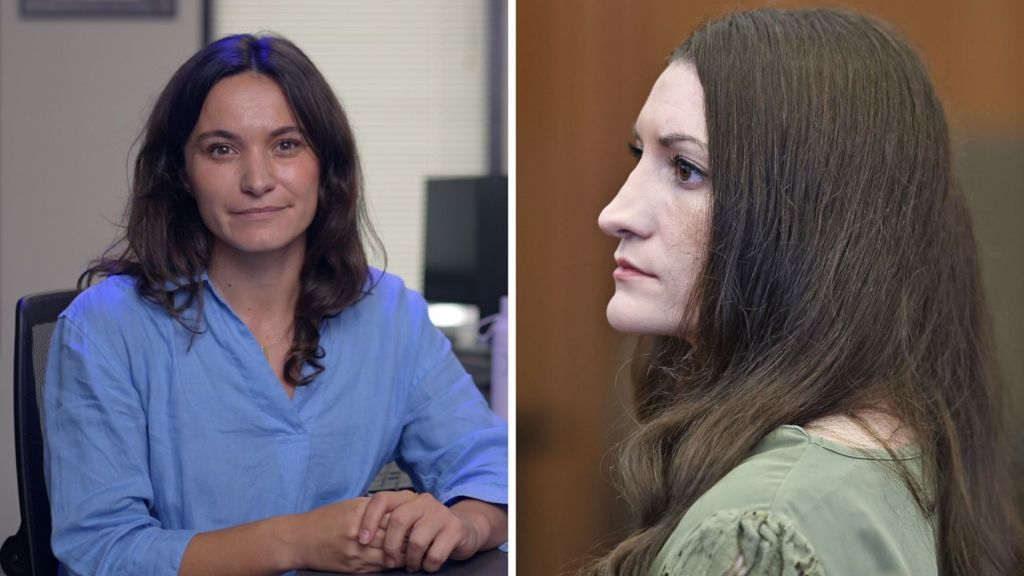
    Self-employed tradesman Abraham Abbas took the witness stand on the second day of 31-year-old Zeinab Ahmad’s bail application at the Melbourne Magistrates Court on Friday. When asked directly about his stance on the terrorist organization, Abbas did not moderate his views. “I hate those bastards. Sorry Your Honour, I do,” he told the court. “Sorry for the language — they’re evil and they don’t represent anything we believe in Islam at all.” He confirmed he stood ready to house Ahmad and meet all bail conditions if the court granted her release.

    Ahmad and her 54-year-old mother Kawsar Ahmad made international headlines when they touched down at Melbourne Airport on May 7 after more than 12 years living abroad. Both were immediately taken into custody on slavery and crimes against humanity charges — the first time such charges have been laid against suspects in Australia. Court documents outline that the pair had been held at the Al Roj displacement camp in northern Syria, alongside several minor family members, after surrendering to Kurdish forces following the collapse of ISIS’s final territorial stronghold of Baghouz in March 2019.

    Prosecutors laid out the core allegations against the family during the opening days of the bail hearing, which began Thursday. They claim that Zeinab’s father Mohammed Ahmad, who remains detained in Iraq and has not yet been charged, purchased a 15-year-old Yazidi teenager as a slave for $10,000 in approximately June 2017. The victim was captured by ISIS as part of the terror group’s systematic ethnic and religious cleansing of the Yazidi community in northern Iraq, and was passed between 17 different ISIS fighters before being freed in 2019. In testimony before the court, Australian Federal Police (AFP) Senior Constable Marc Clendenning shared the victim’s account, which details repeated beatings, sexual assault, and forced unpaid labor at the hands of Mohammed Ahmad before she was resold to another ISIS fighter in late 2018.

    While Zeinab Ahmad is not accused of directly assaulting the victim, prosecutors allege she participated in the enslavement by mistreating the teenager, ordering her to complete household labor, and failing to intervene during sexual assaults. Clendenning added that social media posts and private communications from Ahmad to relatives in Australia demonstrate what police describe as “open support for Islamic State activities, objectives, and ideological principles.”

    Law enforcement has formally opposed bail, arguing that Ahmad poses an unacceptable risk to the Australian public, in large part because she has never publicly renounced her connection to the terror group. “The accused has never explicitly renounced or stated that she no longer supports the Islamic State since her surrender to Kurdish forces,” Clendenning told the court.

    Court records confirm that Zeinab Ahmad first traveled to Turkey separately from her family, before relocating to Syria to join ISIS alongside her parents, husband, and other relatives in January 2015. Multiple family members, including her husband Dawod Elmir and two brothers, were killed by coalition forces between 2016 and 2017, according to testimony.

    Defense lawyer Grace Morgan centered her cross-examination of Clendenning on the extreme constraints that women faced under ISIS rule, noting that Zeinab Ahmad was forced to marry three different ISIS fighters over a three-year period, a claim the officer confirmed. Morgan also pushed for details about the availability of state-backed reintegration programs and electronic monitoring that would allow for strict supervision of Ahmad if she is granted bail.

    The bail application was adjourned until June 15 to allow the defense to question AFP Detective Sergeant Greg Adams, who recorded a statement from the enslaved victim in Iraq back in September 2019. The court also confirmed that domestic intelligence agency ASIO had alerted the AFP that Ahmad may hold information about another Australian family currently connected to conflict zones in the Middle East. Kawsar Ahmad, Zeinab’s mother and co-accused, is expected to file her own bail application later this June.

  • ‘Justifiably grave concerns’ about ANU, but ‘nothing unlawful’, interim chancellor says

    ‘Justifiably grave concerns’ about ANU, but ‘nothing unlawful’, interim chancellor says

    The Australian National University (ANU), one of Australia’s most prestigious higher education institutions, has been roiled by years of escalating internal controversy that culminated in the high-profile resignation of former Liberal foreign minister Julie Bishop from the post of chancellor last month. Now, the university’s acting chancellor has publicly confirmed what critics and campus stakeholders have alleged for years: the institution faces deep, systemic problems across its governance, leadership, decision-making structures, and internal culture.

    Appearing before a Senate estimates hearing on Friday, Andrew Metcalfe, who stepped into the acting chancellor role following Bishop’s departure, delivered a blunt 22-word summary of the ongoing crisis that has already prompted six additional ANU Council members to resign and triggered regulatory scrutiny from the Tertiary Education Quality and Standards Agency (TEQSA). “There are justifiably grave concerns about many aspects of the governance, leadership, decision making and culture of the ANU in recent years,” Metcalfe told the committee. “It therefore follows that rebuilding confidence in the governance and leadership of ANU will require many practical actions and the resolve to sustain them.”

    Bishop’s exit came after weeks of intense public scrutiny over her governance of the institution, with the former cabinet minister citing what she described as “unprecedented and co-ordinated interference” from TEQSA in the operations of ANU’s governing council. In his testimony, Metcalfe acknowledged that long-running tensions and repeated controversies have created a traumatic environment for ANU’s staff and student body, noting that many stakeholders he has spoken with described the past few years as marked by anger, disillusionment, and a sense of being undervalued. Even so, he added, the vast majority of campus community members remain deeply committed to ANU’s core academic mission and have continued their work despite the ongoing upheaval.

    Years of controversy have already drawn critical scrutiny from official auditors: a scathing review from the Australian National Audit Office found ANU Council approved a controversial $250 million cost-cutting program without clear evidence the cuts were either urgent or necessary.

    In the wake of Bishop’s resignation, which triggered the wave of council departures, Metcalfe confirmed ANU Council is now cooperating fully with TEQSA as it moves forward to select a permanent new chancellor. The appointment process will be overseen by a largely independent selection panel that includes Metcalfe himself, a measure he framed as a first critical step to rebuilding public and internal trust. “We believe that this largely independent selection committee is one practical way for the Council to start to earn back the trust and confidence that has been lost,” he said.

    Pressed by Liberal Senator Maria Kovacic on the wave of council departures and questions over the legality of the institution’s approach to cooperating with TEQSA during the selection process, Metcalfe confirmed the council had received legal advice recommending against cooperation, but ultimately chose to proceed in what members determined was the best interest of the university. “We’re very confident we’ve done nothing unlawful. Quite to the contrary, we made a very sensible decision,” he said.

    Metcalfe also publicly defended Interim Vice-Chancellor Rebekah Brown, who has faced unsubstantiated attacks in media coverage that have damaged her professional reputation. The ANU Council has formally concluded Brown “acted properly and in the best interest of the university at all times” amid what Metcalfe described as “pernicious actions” targeting the interim vice-chancellor.

    Speaking after the hearing, Brown outlined the staggering tangible cost the ongoing crisis has already inflicted on the institution, projecting that reputational damage alone could reach $100 million. The harm has already impacted key revenue streams, including donor contributions and international student recruitment, which are core to ANU’s operations and financial stability. “The reputational damage to the ANU has been very significant,” Brown said. “We are still modelling the impact, some of the impacts are still live. Our modelling, from the end of last year, it’s in the reputational impact in terms of our impact on our donor pipeline and our impact on our international agents work with international student recruitment, it’s in the order of $100m.”

  • Asian shares drop, with South Korea’s Kospi down more than 5%

    Asian shares drop, with South Korea’s Kospi down more than 5%

    A widespread sell-off of artificial intelligence-linked stocks pulled major Asian equity markets sharply lower on Friday, triggered by underwhelming quarterly forecasts from top U.S. technology firms that stoked broader investor jitters over the red-hot AI sector. The sharp downturn in Asia came on the heels of mixed closes on Wall Street Thursday, where weakness in big tech was offset by gains across other sectors that pushed the Dow Jones Industrial Average to a fresh all-time high.

    The market volatility began Thursday when U.S. chip giant Broadcom posted quarterly results that matched analyst expectations, but its revenue guidance for the current quarter fell short of investor projections. The shortfall sent its share price plummeting 12.6% by market close, dragging down other major players across the AI and tech ecosystem. U.S. memory chip manufacturer Micron Technology dropped 7.7%, while cloud cybersecurity firm CrowdStrike Holdings shed 3.8% in Thursday trading. Even with the tech sector pullback, the benchmark S&P 500 still managed a 0.4% gain, and the Dow Jones climbed 1.7% to set a new record close. The tech-heavy Nasdaq Composite bucked the broader upward trend, dipping just 0.1% by the closing bell.

    When Asian markets opened for trading Friday, investors moved quickly to offload AI and tech holdings, sparking steep declines across the region. South Korea’s benchmark Kospi index led the losses, falling 5.1% to 8,185.62 by midday trading, a dramatic pullback after the index roughly doubled over the past 12 months on the back of booming demand for its leading chip manufacturers. SK Hynix, one of the world’s largest memory chip producers and a key supplier to AI hardware supply chains, plunged 8.4%, while industry peer Samsung Electronics shed 5.4% in morning trading.

    Japan’s Nikkei 225, which has also hit repeated record highs in recent months driven by tech gains, slipped 1.2% to 66,532.35, with leading chip equipment manufacturer Tokyo Electron falling 7.2% to lead the downturn. The decline came even as separate government data released Friday confirmed Japanese real wages have risen for four consecutive months, a positive macroeconomic signal that failed to offset AI-related market jitters. Hong Kong’s Hang Seng Index declined 0.8% to 25,047.83, while mainland China’s Shanghai Composite Index bucked the regional trend to gain 0.4% to close at 4,075.31. Australia’s S&P/ASX 200 fell 0.5% to 8,639.50, Taiwan’s Taiex index gave up 1.5%, and India’s Sensex posted a minor 0.2% gain.

    Beyond equity markets, global oil prices stabilized Friday after falling sharply in the previous session, as investors continued to weigh persistent Middle East geopolitical risks against tentative hopes for a diplomatic breakthrough that would reopen critical energy shipping lanes. International benchmark Brent crude rose 0.4% to $95.42 per barrel, after dipping to $95.03 on Thursday. U.S. benchmark crude ticked 0.1% higher to $93.15 per barrel, still far above the roughly $70 per barrel price recorded before the outbreak of the latest regional conflict.

    For months, global energy markets have been roiled by the closure of the Strait of Hormuz, the narrow strategic waterway that carries roughly a fifth of global oil and natural gas supplies. The ongoing conflict has stoked fears that sustained energy disruptions will fuel global inflation and drag down economic growth across major economies. Even as strong corporate earnings and AI-driven enthusiasm have pushed many major stock indexes to multi-year or record highs, repeated volatility linked to Middle East tensions has created ongoing uncertainty for global investors.

    Last week, American and Iranian negotiators reached a tentative framework to extend a ceasefire, but a final agreement has yet to be signed. Complicating prospects for a permanent end to hostilities, the Iran-backed Lebanese militant group Hezbollah rejected the latest proposed ceasefire between the Lebanese and Israeli governments earlier this week, raising fears of a wider regional escalation. In a note to clients, ING commodities strategists Warren Patterson and Ewa Manthey noted that the oil market has so far traded on expectations that a diplomatic deal will quickly reopen the Strait of Hormuz, but they warned that market hopes for a rapid breakthrough may be “overly optimistic” given the lack of tangible progress in negotiations.

    In currency markets, minor fluctuations were recorded in early Friday trading. The U.S. dollar dipped slightly to 159.97 Japanese yen, down from 160.03 yen in the previous session. The euro edged marginally higher to $1.1614, up from $1.1610 at Thursday’s close. AP Business Writer Stan Choe contributed reporting to this article.

  • UK in most dangerous period I’ve known, military chief says

    UK in most dangerous period I’ve known, military chief says

    The United Kingdom now faces graver security risks and threats than at any point since the Cold War, according to the nation’s top military leader. In a candid interview with BBC Radio 4’s flagship current affairs program Today, Chief of the Defence Staff Sir Richard Knighton starkly framed the current moment as the most perilous he has witnessed in his entire professional career.

    A key indicator of this mounting tension, Knighton revealed, is the sharp spike in incursions by Russian strategic aircraft into United Kingdom airspace. In just the first five months of this year, the number of such incursions has already matched the total count recorded across the entire 12 months of 2025. This sustained pattern of aggressive probing has left the military chief warning that Russia is steadily raising the stakes, with a growing risk of accidentally crossing a red line that could trigger far more serious escalation.

    Looking back at the 2025 Strategic Defence Review, Knighton described the policy document as a clear “call to arms” for British national security. He noted that for decades, the UK armed forces structured their training and readiness around short, contained conflicts. But that framework is no longer fit for purpose, he argued: today, the UK must prepare for prolonged, large-scale conflicts of the type seen in Ukraine.

    Knighton’s comments arrive ahead of the long-delayed publication of the UK’s upcoming Defence Investment Plan, which is expected to be released in the coming weeks. The plan, which will lay out funding allocations for new military equipment and defense infrastructure across the next 10 years, was originally scheduled to be published in autumn 2025. This week, Defence Secretary John Healey confirmed that Prime Minister Keir Starmer is committed to releasing the plan before the key Nato summit scheduled for July 7.

    Responding to recent criticism from former defence secretary Lord Robertson, who warned that UK military capabilities have been severely diminished, Knighton expressed confidence that the current government recognizes the scope of existing threats and is moving to increase defence spending. “Exactly as the prime minister says, we need to spend more on defence and do it faster,” Knighton stated, adding that the core challenge for ministers remains making the tough trade-off decisions required to free up necessary resources.

    The military chief also emphasized the urgent need to adapt to the changing nature of modern warfare. He highlighted that uncrewed drones and autonomous weapons systems will grow increasingly central to future military operations, requiring UK forces to update their equipment and strategy accordingly.

    Beyond traditional airspace incursions, Knighton pointed out that Russia is probing the UK on multiple fronts, including through cyberattacks, sabotage operations, and assassination attempts on UK soil. “Russia is definitely raising the stakes and risks crossing a line,” he reiterated, stressing that the British public must understand the gravity of the current situation and accept that this may require shifting national priorities and making different policy choices.

  • Australian cockroach kingpin caught with 100,000 illegal insects in record bug bust

    Australian cockroach kingpin caught with 100,000 illegal insects in record bug bust

    In what Australian authorities have described as the largest seizure of prohibited exotic invertebrates in the nation’s history, more than 100,000 illegally kept live cockroaches have been confiscated from a commercial breeder in New South Wales, officials confirmed Friday. The operation, carried out in May, targeted a breeder operating in the regional city of Bathurst, taking two prohibited species off the black market: Madagascar hissing cockroaches and dubia cockroaches, with a total estimated street value of 200,000 Australian dollars, equal to roughly $142,000 US.

    Among the two species seized, the Madagascar hissing cockroach stands out for its extraordinary size: classified as one of the largest cockroach species on Earth, adult specimens grow between 2 and 3 inches long, far larger than the common native Australian cockroach which only reaches between 0.9 and 1.4 inches in length. Official government photos show the glossy brown invasive invertebrate is actually bigger than an average adult person’s finger.

    Australia is already a nation where cockroaches thrive, with its warm, subtropical climate supporting hundreds of native species across the country. But these two introduced species are banned entirely under Australian law: import, possession, breeding and commercial sale of Madagascar hissing and dubia cockroaches are all criminal offenses, regardless of how the specimens were originally obtained.

    Local Bathurst snake catcher Stefanie Lesser, who has experience dealing with exotic wildlife in the region, explained the illegal black market demand for these large insects to the Australian Broadcasting Corporation. She noted the roaches are primarily sold as a low-cost, convenient feed source for pet reptiles. Because of their large size, reptile owners require far fewer individual insects to feed their lizards and snakes, making the illegal roaches an attractive alternative to regulated feed options. In response, environmental officials are urging reptile and other exotic pet owners to turn to legal alternatives such as crickets or native wood roaches instead of purchasing prohibited invasive species.

    Australia maintains some of the strictest biosecurity border controls in the world, designed to protect its unique native wildlife, $100 billion agriculture and horticulture industries from destructive invasive pest outbreaks. Anyone caught smuggling undeclared or prohibited animal, insect or plant material into the country faces fines reaching thousands of Australian dollars, and can face criminal prosecution for repeat or large-scale offenses.

    In an official statement, the Department of Climate Change, Energy, Environment and Water emphasized that these exotic cockroach species have never undergone formal environmental risk assessment for introduction to Australia. If they were to establish wild populations, they could pose multiple threats to local ecosystems: they may carry and spread novel diseases to native invertebrate species, outcompete native cockroaches for resources, and disrupt local food chains, putting vulnerable native wildlife populations at risk. Authorities have warned that anyone found illegally possessing the prohibited invertebrates will face prosecution, though a department spokesperson confirmed no charges have been filed against the Bathurst breeder as of the announcement. All 100,000 seized cockroaches will be humanely euthanized to eliminate any risk of escape or release into the wild.

  • Pope Leo’s visiting Europe’s migration hot spots. Catholics hope he’ll ease political tensions

    Pope Leo’s visiting Europe’s migration hot spots. Catholics hope he’ll ease political tensions

    Early in his papacy, Pope Leo XIV is stepping into one of Europe’s most polarizing policy debates by planning back-to-back visits to two frontline migration hubs: Spain’s Atlantic Canary Islands next month, followed by Italy’s Mediterranean island of Lampedusa in early July. For years, these small, remote European outposts have borne the brunt of massive migration flows, with tens of thousands of mostly African migrants crossing one of the world’s deadliest migration routes to reach European shores. While overall arrival numbers have dropped this year, particularly in the Canaries, the issue continues to upend domestic politics in both Spain and Italy, two historically Catholic nations grappling with deep ideological divides over migration policy.

    Many faith leaders, aid workers and even the migrants themselves hope the papal visits will shift public conversation away from partisan fighting that has split right-wing factions and pitted them against progressive parties, and refocus the debate on human solidarity and compassionate support for new arrivals. “Stuck in the middle are the migrants,” explained Most Rev. José Mazuelos, bishop of the Canarias diocese that covers multiple islands in the archipelago. “So the church says, ‘Let’s give them a face, because we’re talking about people, not numbers.’”

    One such person is Eslim Jallow, a 27-year-old migrant who left Gambia with his younger brother in 2023, chasing the promise of a more stable, prosperous future before landing in the Canaries. After an initial difficult period of adaptation, Jallow mastered Spanish, completed professional coursework and now works full-time as a programmer and web developer based in Las Palmas de Gran Canaria. “Perhaps the pope will change the way in which people here look at immigrants,” Jallow said. “Immigrants should be treated with dignity and respect, not ignored.” Though Jallow is not Catholic, like the majority of migrants arriving in the islands, he says he believes Pope Leo will amplify the voices of migrants and remind the global community that they are people first, not political talking points.

    Advocacy for just and humane migration policy has long been a core priority for the Catholic Church, dating back to the papacy of Pope Francis. Just one year into his tenure, Pope Francis made his first pastoral trip outside of Rome to Lampedusa in 2013 to honor migrants who died at sea, and three years later brought 12 Syrian Muslim refugees back to Vatican City with him from a visit to Lesbos, Greece. Pope Leo has carried on this legacy, repeatedly calling for dignified treatment of migrants across the globe – most notably decrying mass deportation policies in his home country, the United States.

    Michele Pistone, a Villanova University professor who leads the institution’s new research center on migration, notes that staging these two visits so early in Pope Leo’s papacy sends a clear signal about how high of a priority migration is for the new pontiff. During his June 11 stop in the Canaries, Pope Leo will first visit the port of Arguineguín on Gran Canaria to hold a memorial for thousands of migrants who have died or gone missing while crossing the Atlantic. The following day, he will meet with migrants staying at a reception camp on Tenerife.

    In 2024 alone, the Canary Islands emerged as the epicenter of a major humanitarian crisis, with nearly 47,000 migrants from North and West Africa arriving on its shores, including thousands of unaccompanied minor migrants. Most Rev. Eloy Santiago, bishop of Tenerife whose diocese covers the small island of El Hierro, explained that half of all 2024 arrivals landed on El Hierro – a number nearly triple the island’s permanent resident population. Even though most migrants only stay for a few days before being transferred elsewhere, the influx pushed the island’s already limited public resources to a breaking point. “If a boat arrives, the couple of local doctors have to go out running to take care of them, and then the local residents who had their medical appointments can’t have them,” Santiago said.

    Catholic organizations and charities have been on the ground aiding migrants from the moment they step off the overcrowded, unseaworthy boats that carry them across the ocean. While stricter coastal controls along the African coast have cut arrival numbers dramatically this year, a long-term, unresolved challenge remains: supporting unaccompanied minor migrants who, after being placed in state care, are forced out into the streets with no job prospects or social support once they turn 18.

    For Jallow, this challenge hits close to home: his younger brother, who was paralyzed from the neck down in an accident shortly after arriving in the Canaries and currently lives in a Catholic hospital in Las Palmas, will turn 18 next year, and Jallow says he fears what will happen to him after that. Caya Suárez, secretary general for Caritas, the Catholic charity operating in the Canaries, has seen firsthand how this coming-of-age transition leaves young migrants disproportionately vulnerable. “That’s a very bad moment, even though they’d been waiting for it with hope, because they see they are still stuck without alternatives,” she explained. Caritas works to connect these young adults with housing and employment opportunities, and has even relocated a small number to mainland Spain, including Madrid and small rural communities in Galicia, even as many regional governments have refused to accept additional underage migrants.

    Many long-term Canary Islands residents report feeling abandoned by national and European institutions, left to manage a crisis they did not create as they struggle to stretch already limited resources to support new arrivals. Migrants themselves often come to the islands believing they will soon be able to travel to mainland Europe to build new lives, only to find themselves stuck on the outer edge of the EU, struggling to make ends meet, send money home to their families, or move onward. Compounded by the widespread perception that national and EU policymakers frame this as an “island problem” that local authorities must solve alone, the ongoing strain has eroded morale even among long-time island residents who are historically accustomed to migration flows between the Canaries and Latin America. Bishops across the islands say they hope the pope’s visit will renew energy for local residents who have poured years into supporting migrants. “The pope’s word can help so that in the middle of this fatigue, people can buck up again because they see they are supported,” said Santiago, who was born and ordained as a priest on the islands.

    At the national level, Spain’s Catholic Church has publicly thrown its support behind a new government measure that would grant temporary residency permits to more than half a million undocumented migrants currently living and working in the country, many of whom come from Latin America. The socialist government of Prime Minister Pedro Sánchez and the church both note that these undocumented migrants often fill critical labor gaps in hospitality, agriculture and elder care, boosting Spain’s overall economy.

    Pablo Simón, a political science professor at Madrid’s University Carlos III, explains that the church’s pro-migration stance has put it in direct opposition to Spain’s right-wing and far-right political parties. This has created an open rift between the Catholic Church and far-right groups such as Vox, which often frames its anti-migration rhetoric in religious language but has repeatedly criticized the church’s welcoming stance. The Rev. Fernando Redondo, who leads the migration department of the Spanish bishops’ conference, says the church’s position follows the core Christian mandate to welcome strangers, but acknowledges that the church faces an uphill battle changing perspectives among many faithful who believe migrants take native jobs and rely on public welfare. “We have a big challenge, which is raising awareness among our faithful … that from the viewpoint of faith, to welcome a migrant person is to welcome Christ himself,” Redondo said. “Then, of course, there needs to be ways, proper social and political ways, so that migration doesn’t become a total mess.”

    Across the Canaries, ordinary residents have long been on the front lines of the crisis: local fishermen who hand out fresh water to migrants on flimsy rafts, vacationing sunbathers who run into the surf to help migrants who have reached shore, and volunteers who greet new arrivals in more than a dozen languages. Residents have also seen successful integration in action: one small, depopulating mountain village saw its population, local economy and school revitalized after a reception center for 36 migrant children opened there, even reviving participation in the local church’s annual feast procession.

    It is for this reason that many on the islands are hoping Pope Leo will bring a simple, deeply needed message of reconciliation that centers the human experience of migration rather than partisan politics. “The pope doesn’t support this slogan of ‘let’s go, open doors for the whole world here.’ Nobody supports that,” Mazuelos said. “When here comes a gentleman in a wooden boat after five days in the Atlantic, what are we supposed to do, kick him back? We’ve got to find a way to welcome him.”

    This reporting was contributed by Dell’Orto from Minneapolis, and is part of Associated Press religion coverage supported through a collaboration with The Conversation US, with funding from Lilly Endowment Inc. The AP holds sole responsibility for the content of this report.