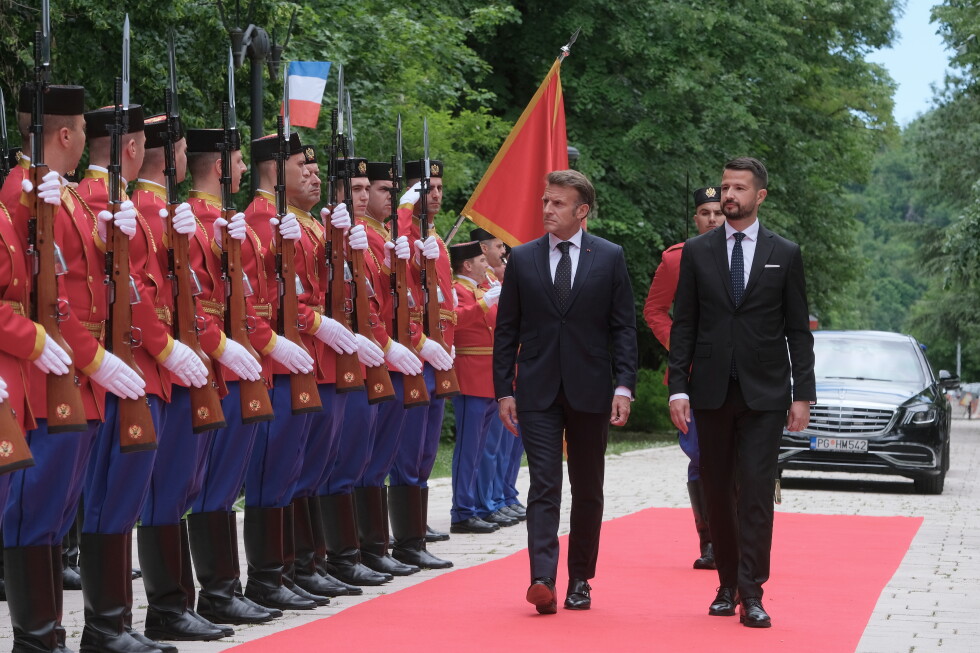
On Friday, political leaders from across the European Union and the Western Balkans assembled in the coastal Adriatic town of Tivat, Montenegro, for a landmark summit focused on expanding the EU’s footprint into the region — a move framed as a critical geostrategic step to counter mounting security and economic threats from Russia and China.
The high-level gathering draws top European figures, including French President Emmanuel Macron, German Chancellor Friedrich Merz, Italian Prime Minister Giorgia Meloni, European Commission President Ursula von der Leyen, and the heads of government of all Western Balkan EU candidate states. At the top of the summit’s priority list is Montenegro’s accession process: the EU has already assembled a working group to draft the country’s official accession treaty, a clear indication that full membership is now within tangible reach.
The push for EU enlargement has gained new urgency in recent years, as the continent confronts a cascade of interconnected challenges: imbalanced trade relations with China, sustained migration pressures, the ongoing war in Ukraine, and escalating hybrid interference from Moscow. For years, the EU has tied Western Balkan accession progress to domestic reforms, including cracking down on systemic corruption and strengthening democratic institutions — changes that leaders argue will benefit both candidate nations and the entire bloc.
Compounding this urgency is shifting transatlantic security dynamics: as questions grow over the United States’ long-term commitment to NATO collective defense amid multiple ongoing conflicts across the globe, EU member states are moving aggressively to build up independent military capabilities and shore up the bloc’s eastern and southeastern flank.
European Council President Antonio Costa, the summit’s host, has spent the past week touring Western Balkan capitals to underscore the EU’s renewed commitment to enlargement. Speaking in Belgrade Thursday after a meeting with Serbian President Aleksandar Vucic, Costa announced the bloc would explore streamlined pathways to accelerate membership negotiations for all regional candidates. In an era of “global geopolitical uncertainty and economic instability,” Costa argued, enlargement is “not just an opportunity. It is a geostrategic necessity for Europe.”
Montenegro, a small mountainous nation that split from Yugoslavia and marked the 20th anniversary of its full independence from a state union with Serbia just this week, stands as the clear front-runner for membership among the Western Balkan candidate pool, which also includes Albania, Bosnia-Herzegovina, Kosovo, North Macedonia and Serbia. After joining NATO in 2017, the country of just 623,000 people has set an ambitious target of becoming the EU’s 28th member by 2028 — a goal so widely embraced that the national airline has inscribed the motto “28 by 28” on one of its commercial aircraft.
Under EU accession rules, candidate countries must align their national legislation with 35 distinct policy areas, or “chapters,” covering everything from judicial standards to agricultural and fisheries regulations. Every chapter requires unanimous approval from all 27 existing EU member states to open, and again to close before accession can be finalized. Montenegro is far ahead of other regional candidates in completing this process. Beyond the Western Balkans, Ukraine and Moldova are also advancing their own accession bids, and Iceland will hold a public referendum in August on whether to submit an EU membership application.
To avoid past missteps as it brings new countries into the bloc, the summit is expected to produce new accountability safeguards for incoming members. Faruk Bašić, a senior researcher at the Brussels Institute for Geopolitics, noted the gathering comes just weeks after Viktor Orbán — Hungary’s long-serving Russia-friendly former prime minister, who spent 16 years eroding democratic norms, flouting EU rules and building ties with global autocrats — suffered a stunning electoral defeat. The Orbán era has left the EU determined to prevent similar democratic backsliding among new members, Bašić explained.
In response to the challenges created by Orbán’s rule and his frequent use of veto power to block EU action, the bloc is developing new enforcement mechanisms: financial penalties and restricted access to the EU single market will be used to pressure incoming nations to follow through on required reforms and adhere to bloc standards. “The EU is trying to find a way how to admit a country that isn’t fully ready to be admitted without losing the ability to hold it accountable after the fact,” Bašić said, noting this framework applies to Ukraine’s accession bid as well as candidates across the Western Balkans such as Serbia and Kosovo.