博客

  • Why are European countries moving their gold out of North America?

    Why are European countries moving their gold out of North America?

    In a move that has sparked widespread discussion among global financial circles, De Nederlandsche Bank (DNB), the central bank of the Netherlands, confirmed this week it has completed the relocation of 86 tons of the country’s gold reserves from storage locations in the United States and Canada to new custody primarily in London. The institution framed the shift as a proactive step to better position the Netherlands for potential severe crises, in light of mounting geopolitical unrest across the globe.

    The relocation, carried out between March and August of this year, moves roughly one-quarter of the Netherlands’ total 313 tons of gold previously held in North America. DNB governor Olaf Sleijpen explained that the goal of the operation is to ensure the country’s gold reserves are readily accessible for use should a crisis unfold. “We expect that we will never need to use them, but we do need to strengthen our resilience and preparedness,” Sleijpen stated.

    London was selected as the primary new storage location due to its longstanding status as the world’s leading gold trading hub. The bulk of the relocated gold, 59 tons, was reallocated via a book transfer: the Dutch sold their existing holdings in New York and purchased equivalent positions in London, eliminating the need for costly and risky cross-Atlantic physical shipment. Just over 27 tons were physically moved from North America to the Netherlands’ domestic storage facility in Zeist, with a similar volume then transferred from Zeist to the Bank of England’s vaults in London.

    The Bank of England, a 300-year-old institution based in central London, is one of the world’s largest gold custodians, holding an estimated 400,000 gold bars valued at more than £200 billion beneath its headquarters. Industry data from the World Gold Council confirms the Bank of England remains the most popular global storage location for central bank gold reserves, even as institutions increasingly diversify their custody arrangements.

    This latest relocation is part of a broader trend among European central banks that stretches back more than a decade amid repeated periods of global instability. Earlier this year, France completed the repatriation of all its gold reserves held in the U.S. back to French soil. Between 2012 and 2016, Germany’s Bundesbank repatriated 216 tons of gold from overseas storage: 111 tons from New York and 105 tons from Paris. Goldman Sachs research analysts Lina Thomas and Daan Struyven note this pattern echoes historical responses to global uncertainty: during the Cold War, many European central banks moved a portion of their gold holdings to New York for safe keeping, a shift that is now being reversed in today’s fractured geopolitical climate.

    Industry experts agree that while rising geopolitical tensions, including ongoing trade disputes and regional military conflicts, are a contributing factor to the trend of repatriation and relocation, they are not the primary driver for most banks. Joseph Cavatoni, senior market strategist at the World Gold Council, told media there is no evidence that central banks are bracing for an imminent global economic collapse. Instead, he argues, the shift reflects a growing sophistication among reserve asset managers, who are increasingly focused on optimizing the accessibility and utility of their gold holdings.

    “Inflation, interest rates and just having gold in a place where it can be traded quickly also played a role,” Cavatoni explained. “I don’t get a sense that there’s an impending doom, but what I do think is people are being better educated around how to manage their reserve assets, growing their reserve assets, and actually thinking more effectively around how to make the most of those assets.”

    The growing focus on gold reserve management comes amid a sustained surge in central bank demand for gold that dates back to the 2008 global financial crisis. Over the past four years, central banks globally have accumulated an average of 1,000 tons of gold per year, double the 500-ton annual average recorded over the previous decade, according to World Gold Council data. This demand is only projected to increase over the coming year.

    Gold has cemented its reputation as a safe-haven asset in recent years, with its price surging to multiple record highs, including a peak above $5,000 an ounce in January 2025. While prices have pulled back slightly from that all-time high, they remain at historically elevated levels. Analysts at Goldman Sachs project gold will rise to $4,900 per troy ounce by the end of 2026, a $300 increase from August 2025 levels. The sustained strong demand from central banks is cited as a key factor supporting rising gold prices.

    The appeal of gold stems from its historic role as a hedge against inflation and geopolitical turmoil. Investment firm Charles Schwab notes that over the past 50 years, gold prices have outpaced growth in the Consumer Price Index, the most widely tracked measure of inflation. Its scarcity and millennia-long status as a store of value make it attractive to investors and central banks alike during periods of economic uncertainty.

    While storing gold domestically offers national governments full control over their reserves, it also comes with significant costs. Thomas and Struyven point out that domestic storage requires major investments in physical security, independent audit infrastructure, and insurance, costs that can be prohibitive for smaller central banks.

    The rising demand for gold relocation and storage has benefited global logistics firms that specialize in secure precious metal transportation. Nader Antar, executive vice president of Brink’s Global Services, one of the few select companies authorized to handle cross-border central bank gold shipments, told media the firm has seen “increased demand” from central banks in recent years. “Heightened geopolitical and economic uncertainty, along with gold’s growing role as a strategic reserve asset, appear to be contributing to this trend,” Antar noted. Security for these operations is extensive, with industry insiders confirming that rigorous planning and layered security measures are standard to prevent any risk of theft or disruption during transit.


  • Why did Trump meet members of an anti-Zionist Orthodox Jewish group?

    Why did Trump meet members of an anti-Zionist Orthodox Jewish group?

    Weeks ahead of back-to-back critical elections – Israeli national polls and U.S. midterm contests – former U.S. President Donald Trump welcomed a delegation of Haredi Jewish leaders, several of whom hold well-documented anti-Zionist views, to the White House this Thursday, in a pre-Rosh Hashanah gathering that broke from the standard format of typical presidential holiday receptions for religious groups.

    The group of rabbis and community representatives, who traveled to Washington D.C. from the New York and New Jersey region, secured a rare one-on-one meeting with Trump at the Oval Office’s Resolute Desk, where they sat directly across from the former president. Trump’s Jewish son-in-law and former senior advisor Jared Kushner was also present for the discussion. Following the Oval Office audience, the delegation also held talks with Vice President JD Vance and U.S. Congressman Mike Lawler, a New York Republican facing a competitive re-election battle this November in the heavily Democratic-leaning 17th Congressional District.

    Yossi Gestetner, a New York-based political activist and outspoken pro-Israel voice who participated in the meeting, shared the news on social media platform X, writing: “I had the great honor and privilege to introduce 6 Leading Rabbis of the Hasidic Community in the US to @JDVance. I told the @VP that in this room there are the leaders of the most visibly Jewish people in the US, and despite the noise on social media and disagreements, he should know that his role is respected and appreciated by all those in the room.”

    Among the six rabbis in attendance was Aaron Teitelbaum, the Satmar Rebbe and a leading figure in global Orthodox anti-Zionist circles. Teitelbaum leads the ultraconservative Satmar community based in Kiryas Joel, New York – a village that falls within Lawler’s congressional district – and oversees a movement with roughly 100,000 adherents worldwide. Photographs from the meeting show Teitelbaum seated directly across from Trump, reading from a pre-prepared letter during the audience.

    Miko Peled, an Israel-American author and activist familiar with the Satmar movement, told Middle East Eye that Teitelbaum was the most influential religious leader in the visiting delegation. Other anti-Zionist Haredi leaders note that the Satmar community takes a more cautious, nuanced approach to public anti-Zionist advocacy than smaller factions such as Neturei Karta International. “We know that officially it would be politically incorrect for them to meet with people who state unambiguously that [they] call for the entire dismantlement of the Zionist state of Israel,” explained Rabbi Yisroel Dovid Weiss, a prominent Neturei Karta activist who frequently organizes protests against Israeli government policy in New York.

    The unprecedented gathering has drawn mixed reactions from across the political spectrum. Critics of current Israeli policy on social media have praised the meeting, pointing to growing questioning of the longstanding bipartisan U.S. commitment to unrestricted support for Israel among American conservative circles as a sign of potential shifting political alliances.

    According to Peled, the Haredi delegation came to the meeting with two core goals. First, they sought to publicly reaffirm their anti-Zionist positions and clarify that they do not identify as Zionists. Second, they aimed to raise awareness of growing tensions between their global community and the current Israeli government, which has escalated pressure on Haredi communities over longstanding military conscription exemptions. Haredi Jews in Israel have held widespread protests against forced conscription for decades, and demonstrations have frequently been met with violent crackdowns by Israeli police.

    The exemption for Haredi seminary students originated as a limited, temporary exception when Israel first gained statehood, but has expanded into a mass, ongoing dispute as the Haredi population has grown rapidly. Data shows Haredi Israelis made up roughly 10% of the national population in 2009, and that share has climbed to approximately 14% as of 2025. While some Haredi factions agree to work with secular Israeli political coalitions to protect their community autonomy, others remain firmly anti-Zionist, rejecting the legitimacy of the Israeli state entirely.

    A senior White House official confirmed in an email to Middle East Eye that the meeting marked the first gathering of this specific group of Haredi rabbis at the White House since 1979, though some Hasidic leaders have met with former presidents George H.W. Bush and Bill Clinton at the executive residence in the years since, leaving it unclear whether the 1979 benchmark refers specifically to anti-Zionist Haredi sects. The official added that the delegation “thanked the President for all he had done in combatting anti-Semitism, advocating for school choice with the Middle-Class Tax Credit, and for fighting for peoples of faith.”

    The official noted that the White House Faith Office regularly hosts religious leaders from across the United States to meet with the president, and that the administration has previously welcomed a range of Jewish representatives including Gaza hostage families, Holocaust survivors, and rabbis from multiple Jewish denominations.

    Peled characterized the meeting as a historic, significant moment, noting that Trump adjusted his own schedule to accommodate delays in the delegation’s private jet travel to Washington, a sign of how important the gathering was to the former president. Political analysts point out that the choice to host the delegation carries clear electoral logic: Kiryas Joel, the heart of the Satmar community in the U.S., falls directly within the congressional district represented by Lawler, a pro-Trump incumbent locked in a tight re-election race.

    Democratic critics have framed the meeting as a nakedly partisan political play. Halie Soifer, a former policy advisor to President Barack Obama and Vice President Kamala Harris who now leads the Jewish Democratic Council of America, argued that the gathering served a narrow partisan goal for the Trump administration and the Republican Party.

    “The selection of just a group of Hasidic men is on brand for Donald Trump,” Soifer told Middle East Eye. “He brought in a very small non-representative sample of Jewish leaders to the White House, and was sure to include a vulnerable Republican incumbent who is likely to lose his seat in November.”

    Soifer emphasized that the American Jewish community is not a monolith, noting that pre-holiday gatherings hosted by the Biden administration routinely included a broad cross-section of Jewish leadership, spanning all major denominations and political perspectives, rather than a narrow, non-representative fringe group.

  • US Congress passes bill punishing universities that boycott Israel

    US Congress passes bill punishing universities that boycott Israel

    On a Thursday vote, the U.S. House of Representatives has advanced a Republican-sponsored bill targeting U.S. universities that participate in boycotts of Israel or restrict student access to Israel-based academic exchange programs, setting up a critical next step for the legislation in the U.S. Senate. The final vote tally for the Protect Economic and Academic Freedom Act stood at 237 in favor to 169 against, with unusual cross-party defying the typical partisan line on this deeply divisive issue.

    Thirty-three Democratic members, most of whom are facing competitive re-election races this cycle and hold long-standing pro-Israel voting records, broke with their party to support the measure. Only two Republican lawmakers voted against the bill. The legislation’s scope is limited to postsecondary institutions that participate in federal student aid programs; it requires universities receiving federal funding for international study and foreign language initiatives to submit annual verification confirming they do not bar domestic students from joining Israel-based programs, nor block Israeli students from enrolling in programming on their own campuses.

    The debate over the bill comes against the backdrop of the ongoing Israel-Gaza war, which has reshaped U.S. political discourse around the Israeli-Palestinian conflict and amplified campus activism. The conflict erupted after Hamas-led attacks on October 7, 2023 killed roughly 1,200 people in southern Israel. Since that date, Israeli military operations in Gaza have killed more than 73,000 Palestinians, per official counts from the Palestinian Ministry of Health. In response to the humanitarian crisis unfolding in the enclave, student and faculty coalitions at dozens of top U.S. universities have stepped up pressure on institutional leadership to join the Boycott, Divestment and Sanctions (BDS) movement targeting Israel. To date, the vast majority of university administrations have either ignored these demands or rejected them outright.

    House Republican supporters of the bill framed the legislation as a necessary check on anti-Israel discrimination on taxpayer-funded campuses. “Our universities should not use taxpayer-funded federal programs to discriminate against Israeli students, faculty, institutions, or businesses simply because they are Israeli,” Tim Walberg, Republican chair of the House education committee, told colleagues ahead of the final vote. House Republican Conference leader Virginia Foxx went further, characterizing ongoing anti-war protests on college campuses as inherently antisemitic, arguing that “the antisemitic rot that has corroded college campuses must be eradicated.” She added: “Today, the House sent a clear message: if an institution of higher education chooses to capitulate to the caustic BDS movement, there will be consequences – starting with this bipartisan legislation.”

    Democratic opponents of the bill pushed back against this framing, arguing the legislation unnecessarily infringes on First Amendment protections for peaceful protest and political expression. Bobby Scott, the top Democratic member of the House education committee, argued the bill is unnecessary on its face and dangerous for free speech. “No college or university has embraced the BDS movement anyway. So, we should combat antisemitism wherever it occurs, but we should not do so by punishing protected speech or conflating a student’s view with university policies,” Scott said on the House floor. Even some lawmakers who publicly oppose BDS voted against the measure, citing core free speech principles. New York Democratic Congressman Jerrold Nadler explained ahead of the vote that while he rejects the BDS movement, he could not support the bill because protecting the right to dissent is critical to safeguarding all expression: “It is the only way to ensure speech I do agree with is equally protected,” Nadler said.

    Pro-Palestinian activists have long pushed back against claims that campus protests and BDS organizing are inherently antisemitic, arguing that critics deliberately blur the line between criticism of the Israeli government’s policies and anti-Jewish bigotry to silence legitimate dissent. Bill supporters have countered that the legislation does not target individual speech, but rather seeks to prevent discriminatory institutional practices supported by federal public funds.

    Political analysts have noted the House vote comes as partisan tensions over Israel policy have exposed deep rifts within the Democratic caucus, just ahead of a critical midterm election that will determine which party controls Congress for the final two years of the current presidential term. Some observers view the bill as a deliberate effort by House Republicans to amplify these divisions and appeal to swing voters ahead of the vote. Just months earlier, in July, more than 100 House Democrats backed a separate bill that would cut portions of U.S. military aid to Israel, a vote that laid bare the competing ideological currents within the party on Middle East policy. For now, the fate of the Protect Economic and Academic Freedom Act rests with the Senate, where it faces an uncertain path forward.

  • Flock says its cameras make US safer – so why are they being sabotaged?

    Flock says its cameras make US safer – so why are they being sabotaged?

    Across the tree-lined, affluent streets of Houston’s historic Old Braeswood neighborhood, an unusual act of coordinated resistance unfolded in the dead of late July night. Four surveillance units operated by private technology firm Flock Safety were torn from their metal mounts, their distinctive black oval casings and attached solar panels left crumpled on the pavement. Each camera bore a red sticker warning of constant 24/7 recording, and this act of sabotage is far from an isolated incident: similar attacks have already been reported in Minnesota, California, and Georgia, marking a sharp escalation in public backlash against the rapid nationwide expansion of AI-enhanced mass surveillance.

    Founded in 2017, Flock Safety has grown to become the United States’ largest provider of automatic license plate readers (ALPRs), AI-powered cameras that capture images of every vehicle that passes their field of view. While the company does not release exact deployment figures, it confirms partnerships with more than 7,000 U.S. communities and estimates roughly 100,000 Flock cameras are currently installed across the country. What sets Flock apart from older generations of ALPR technology is not just its AI capabilities, but its interconnected national database: local law enforcement agencies that purchase a small number of Flock cameras gain access to a network of tens of thousands of devices spanning multiple states. For example, Houston’s METRO Transit Authority owns just 35 Flock cameras, but can search data from more than 20,000 devices across the network, extending as far as Albany County, New York. Internal documents obtained by the BBC show this network’s scope has expanded exponentially in recent years: in Houston’s Cypress-Fairbanks Independent School District, a typical 2024 license plate search covered roughly 270 camera networks; by 2025 that number nearly doubled, and by 2026, one in five searches span more than 6,000 separate networks.

    For civil rights advocates, this broad, unregulated access to everyday movement data poses an existential threat to personal privacy. Christopher Rivera, a policy advocate with the Texas Civil Rights Project, argues that the network allows law enforcement to map every detail of a person’s daily routine: their commute to work, their children’s school campuses, their places of worship. Recent high-profile cases of misuse have amplified these concerns. Just last week, a Kentucky police officer was arrested and charged after abusing the Flock system to track his ex-girlfriend, who had a active protection order against him, more than 2,000 times. The incident was only detected by Flock’s new mandatory AI-powered audit tool designed to flag suspicious activity. In a separate 2025 case, a Johnson County, Texas, detective searched more than 80,000 Flock images to locate a woman suspected of obtaining an abortion — all without a required judicial warrant.

    Immigrant rights organizers add another layer of concern: while federal Immigration and Customs Enforcement (ICE) does not hold a direct contract with Flock, there have been multiple documented cases of local law enforcement using the Flock database to track people on behalf of immigration authorities. For Jessie, a Central American immigrant living in Houston who requested anonymity to protect her pending green card extension application, the Flock camera installed outside her home has turned daily life into a constant exercise in evasion. “It makes me feel as if I’m being stalked,” she explained, adding that she now changes her commute route daily to avoid creating a predictable movement pattern.

    Surveillance technology is not a new innovation in American policing, but the combination of AI integration and Flock’s national connected network has pushed the issue into the national spotlight. Unlike older ALPR systems that only allow searches by license plate number, Flock’s AI enables officers to search footage using descriptive terms — such as “Caucasian man, blue shirt” — expanding the scope of surveillance far beyond vehicle tracking. While Flock itself does not integrate facial recognition technology, the BBC has uncovered previously unreported documents showing that the Harris County Sheriff’s Office, which serves Houston, already uses a controversial competing facial recognition tool called Clearview AI. Clearview’s database contains more than 70 billion images scraped from public social media and internet platforms, and the company has already been fined millions in data penalties across multiple European countries, including a £7.5 million fine from the UK’s Information Commissioner’s Office. The Harris County Sheriff’s Office has declined to comment on its ongoing Clearview AI contract, which runs through March 2027.

    Law enforcement supporters of Flock argue the technology has delivered transformative public safety results that cannot be ignored. Chief Ray Schultz of the Memorial Villages Police Department, a small Houston-area jurisdiction, says his department averaged just three stolen vehicle recoveries per year before adopting Flock; today, that number stands at 45. Schultz also cited a recent case where Flock data helped locate an elderly woman with dementia who had become lost 60 miles from home, reuniting her safely with her family. “It’s a very good tool. It makes the community safer,” Schultz said, adding that while officers who misuse the system should face accountability, “don’t throw out a tool that is valuable, that can help recover a missing child.”

    The growing backlash has already led to tangible policy and business shifts across the country. More than 200 U.S. communities have chosen to cancel or decline to renew their Flock contracts since 2021, according to privacy advocacy group Secure Justice — including 90 cancellations in August 2026 alone. Major cities including Los Angeles, Seattle, and Austin have already cut ties with the company, driven by both cost concerns and widespread public opposition to mass surveillance. The issue has also become a key talking point in upcoming 2026 midterm elections, with bipartisan calls for regulatory guardrails. Republican Congressman Keith Self has introduced federal legislation that would require law enforcement to obtain a warrant before accessing Flock data for federal investigations.

    Flock has adjusted some of its policies in response to public pressure: it now requires mandatory AI-led audits of user activity, and has reduced the default data retention period from 30 days to 7 days for non-investigation related footage, though individual law enforcement agencies can still opt to store data for much longer periods. Flock founder and CEO Garrett Langley told the BBC that decisions around data retention and information sharing should be left to local governments, not private technology companies. “I don’t think a technology company should be making decisions like that,” Langley said. “As long as it’s a lawful investigation, we are not going to tell cities what laws they should or should not enforce.” Langley frames Flock as a public safety company, not a surveillance firm, a claim that is undermined by three patents the company filed between 2020 and 2025 that all include the word “surveillance” in their titles. He also noted the company’s technology has helped solve roughly one million crimes and locate more than 10,000 missing people, calling the ongoing vandalism of cameras “disappointing” and saying the debate over balancing safety and privacy is a necessary one.

    For critics and community members like Jessie, however, no policy changes can ease their concerns about the growing power of AI-driven surveillance in everyday life. “I just don’t trust that they’re doing it to keep us safe,” she says.

  • Indian state gives taxi and tuk-tuk drivers a year to learn local language

    Indian state gives taxi and tuk-tuk drivers a year to learn local language

    A contentious new regulation mandating basic conversational Marathi for taxi and tuk-tuk drivers in India’s western state of Maharashtra has triggered widespread pushback, prompting state authorities to delay enforcement by 12 months and reigniting decades-old tensions over language, migrant labor and regional identity.

    The policy, which aimed to require all commercial passenger vehicle drivers to demonstrate basic proficiency in Maharashtra’s official language, launched its first round of testing on August 20. Under the original framework, drivers who failed the oral assessment faced a one-month grace period to re-test, after which their operating licenses could be suspended or revoked entirely. State officials framed the rule as a practical public safety measure, arguing that improved communication between drivers and local passengers would reduce confusion and create safer journeys for all road users.

    But the mandate immediately sparked outcry from drivers’ unions, who warned that forcing working drivers into a high-stakes test threatened to put thousands out of work overnight. A large share of commercial drivers in Maharashtra are internal migrants, who relocated to the state from other parts of India – most notably the populous Hindi-speaking states of Uttar Pradesh and Bihar – in search of stable employment. Many of these drivers have been out of formal education for decades, leaving them little time or flexibility to study a new language while working full time to support their families.

    Amid growing public protests, Maharashtra Chief Minister Devendra Fadnavis announced the one-year extension last week, acknowledging that most migrant drivers needed far more time to build basic conversational skills. State Transport Minister Pratap Sarnaik added that further extensions could be granted down the line, after the full year of learning is completed.

    Maharashtra is home to nearly 979,000 active taxi and tuk-tuk permits, with almost half of those concentrated in the bustling Mumbai metropolitan region, one of India’s largest commercial and population hubs. For drivers who faced immediate risk of losing their livelihoods, the extension has delivered much-needed relief. “We were worried that if our licences were suspended, our daily income would be affected,” explained Lakhan Pandey, a Mumbai-based taxi driver. “Now we feel somewhat relieved.”

    Beyond the immediate policy dispute, the row has dragged into the open a political debate that has shaped Maharashtra’s public life since the state’s founding. The state was created in 1960 following a years-long mass campaign for a separate Marathi-speaking state. As Mumbai grew into India’s financial capital, it attracted wave after wave of internal migrants from across the country, and language quickly became tied to fierce disputes over access to jobs and economic opportunity for native Marathi speakers.

    In 1966, the regional nationalist party Shiv Sena was founded on a “sons of the soil” platform, which argued that Marathi speakers were being displaced from work by incoming migrants. The party went on to become one of the most dominant political forces in the state, with Marathi identity at the core of its political appeal. Today, Maharashtra’s ruling coalition is led by Fadnavis’ Bharatiya Janata Party and a faction of Shiv Sena that split from the original party in 2022, while the rival Shiv Sena faction and the regional Maharashtra Navnirman Sena both continue to prioritize Marathi identity politics.

    Political analysts note that while widespread support exists for encouraging migrants to learn basic Marathi, the issue is often amplified for political gain. “The issue is not simply about communication between drivers and passengers, but about Marathi identity, migration and employment,” said Prakash Akolkar, a veteran journalist, author and political analyst. “Ordinary people do not always treat language with the same intensity as political parties. Parties have often raised the issue when it suits the political circumstances.”

    Some advocates for Marathi promotion take a firmer stance, however. Deepak Pawar, a political scientist and head of the Marathi Abhyas Kendra, a center that promotes Marathi language learning, argued that any person who has lived and worked in Maharashtra for years should have already acquired at least basic familiarity with the language. Refusing to do so, he said, amounts to “linguistic arrogance”.

    Similar tensions have played out across other Indian states, including neighboring Karnataka, where local language activists have raised alarms that Kannada is being sidelined as many migrants rely exclusively on Hindi or English to get by.

    Under the revised Maharashtra policy, drivers are not required to read or write Marathi, or achieve fluency – only a basic working knowledge for routine work conversations. To support drivers, the state government has organized targeted training courses focused on common phrases drivers need for work: asking for passenger destinations, discussing fares, and sharing basic directions.

    Thus far, state transport department data shows that roughly 166,000 drivers have completed the training and passed the required oral test. Munawar Sheikh, a 58-year-old tuk-tuk driver, was among those who completed the course at a training center in Thane, just outside Mumbai. Over four days of classes, Sheikh and his peers learned 16 high-frequency phrases and questions, from “Where do you want to go?” to “the fare will be according to the meter.” Sheikh said the course left him confident enough to hold basic conversations with Marathi-speaking passengers.

    For many drivers, however, the biggest barrier remains finding the time to learn while working full time. Ajay Singh, a Mumbai taxi driver, said he is eager to learn Marathi but cannot afford to take time off work to attend classes. “From the time we wake up until late at night, we have to drive. Otherwise, there is no food on the table. Taking a few hours out of the day for a class is financially difficult for me,” he explained. Singh earns between 1,500 and 2,000 rupees (roughly $17 to $23) per day, and says losing even a few days of wages would leave him unable to cover rent and his children’s school fees. Instead, he is learning on the job, listening to Marathi radio during his shifts and practicing phrases with native-speaking passengers.

    Like many other migrant drivers, Pandey said he never opposed learning Marathi – he only asked for enough time to learn without putting his livelihood at risk. The one-year extension has addressed that core concern. “We live here, we work here. Of course we should learn Marathi,” Pandey said. “Just give us the time to learn it without putting our livelihoods at risk.”

  • Egyptian detainees issue call for government to apply new caps to pretrial detention

    Egyptian detainees issue call for government to apply new caps to pretrial detention

    As Egypt prepares to implement a long-awaited reform to its criminal justice system next month, hundreds of pretrial detainees held for years behind bars are making an urgent plea: they want the new statutory pretrial detention limits to apply to their ongoing cases, which have dragged on for years in many instances.

    The reform in question, the revised Criminal Procedure Code, was approved by Egyptian authorities in November last year and is scheduled to enter into force in October 2025, with the key change being a formal cap on the total length of time a defendant can be held in detention before their trial concludes. In an open letter addressed to the Egyptian government and obtained by Middle East Eye (MEE), an anonymous coalition of long-term pretrial detainees expressed cautious support for the new legislation, while calling for full inclusion of their cases.

    “We hope that it will allow us once again to enjoy freedom and the rights of citizenship,” the letter reads. “And that each of us may return to making a positive contribution, with dedication and sincerity, to the advancement of our country and society in every sphere of life, within what is possible and legally permitted.” The letter also notes that detainees have moved past past circumstances, and are ready to rejoin society if granted release.

    One prominent example highlighted by an anonymous source (who requested anonymity out of fear of government retaliation) is a 70-year-old physician who has been held in pretrial detention for more than six years. During his detention, his health has declined sharply after undergoing open-heart surgery; he now remains confined to his cell, suffering from extreme weakness, weight loss, and limited mobility, with no access to the consistent specialized medical care he requires. A second signatory, a man in his mid-30s, has already spent 11 years in pretrial detention, according to Saif Alislam Eid, a political researcher and former prisoner who maintains contact with the detainee coalition.

    Shortly after the first letter was circulated, a second group of detainees from multiple Egyptian prisons issued a separate statement titled “Enough is enough,” which takes a harder stance on systemic detention abuses. The statement calls for the immediate release of all detainees, and condemns a long list of pervasive practices: prolonged pretrial detention, the arrest and imprisonment of women and children, extrajudicial detentions, enforced disappearances, and the widespread practice known locally as “tadweer,” or charge recycling, where authorities file new or identical charges against prisoners immediately after their release or completion of a sentence, trapping them in indefinite detention. Eid confirmed to MEE that the coalition plans to launch a coordinated prison strike if the government fails to address their demands.

    Human rights defenders have publicly thrown their support behind the detainees’ call for inclusion. Samar Elhussieny, executive director of the Egyptian Human Rights Forum, told MEE that detainees are proactively pushing to guarantee they do not get locked out of the reforms they have waited years for. “They’re trying to get a step ahead,” Elhussieny explained. “They’re saying we’re committed to doing whatever you want, just don’t exclude us from the pretrial detention cap.”

    Despite the limited progress of the new pretrial detention cap, Elhussieny and other rights advocates remain deeply skeptical that the new law will lead to large-scale releases of the estimated 60,000 political and pretrial detainees currently held in Egyptian prisons. The original draft of the code faced intense pushback from global and local rights groups, the Egyptian Lawyers’ Syndicate, Journalists’ Syndicate, and independent UN experts, leading President Abdel Fattah al-Sisi to send the bill back to parliament for revisions in September 2024. Critics of the initial draft warned that it would vastly expand police and prosecutorial power, and entrench existing human rights violations including arbitrary detention, restricted access to defense lawyers, prolonged travel bans, and expedited, unfair trials.

    Elhussieny argues that the revised, final version of the code approved last November remains just as flawed, with the pretrial detention cap being the only genuinely positive amendment. “When Sisi sent the draft bill back we were expecting a better version. This didn’t happen,” she said. “It was more of a gesture from the president that I’m listening to your concerns. This law was supposed to be fixing the issues in the current law, but it’s actually more problematic.” Key unaddressed issues include the persistent practice of charge recycling, which allows authorities to keep detainees imprisoned indefinitely, and a provision that allows police to conduct interrogations without a defense lawyer present – a direct violation of the International Covenant on Civil and Political Rights, which guarantees access to legal counsel at every stage of the criminal justice process.

    Furthermore, in the months leading up to the law’s passage, between October 2024 and January 2025, the Egyptian government referred thousands of detainees to formal trial, which reclassified them to remove their status as pretrial detainees – a move widely seen as a tactical workaround to avoid applying the new detention limits to thousands of long-held prisoners. “The Egyptian government for many years now has been manipulating this idea of releasing pretrial detainees,” Elhussieny said. She added that the detainees’ urgent plea is a clear sign of their desperation to avoid being excluded from the impending reform.

    Previous Egyptian government efforts to address the crisis of prolonged pretrial detention, such as the establishment of a Presidential Pardon Committee that periodically announces small batches of releases, have done little to resolve the crisis. Elhussieny notes that the committee has only facilitated the release of dozens of detainees, while roughly 60,000 pretrial detainees remain behind bars. While the Egyptian government does not publish official data on the size of its pretrial detainee population, a 2022 estimate from the U.S. State Department placed Egypt’s total prison population at around 120,000, with pretrial detainees accounting for one-third of that total. Rights groups have also criticized the pardon committee for a pervasive lack of transparency, accusing the body of circulating “fake pardon lists” that claim to release political detainees who actually have had their detention extended by prosecutors.

    Elhussieny argues that the new legislation was largely introduced as a diplomatic gesture to ease international pressure from the European Union and United Nations, which have repeatedly raised concerns about Egypt’s growing pretrial detainee population. The final installment of a large EU economic aid package meant to shore up Egypt’s struggling economy and reduce migration flows to Europe is scheduled to be disbursed in December 2025, two months after the new law takes effect. Rights activists have heavily criticized the aid package, accusing the EU of making major concessions on human rights to clear the package for approval. Elhussieny noted that the EU is likely to review pretrial detention numbers before approving the final disbursement, creating a small incentive for the Egyptian government to implement visible reforms.

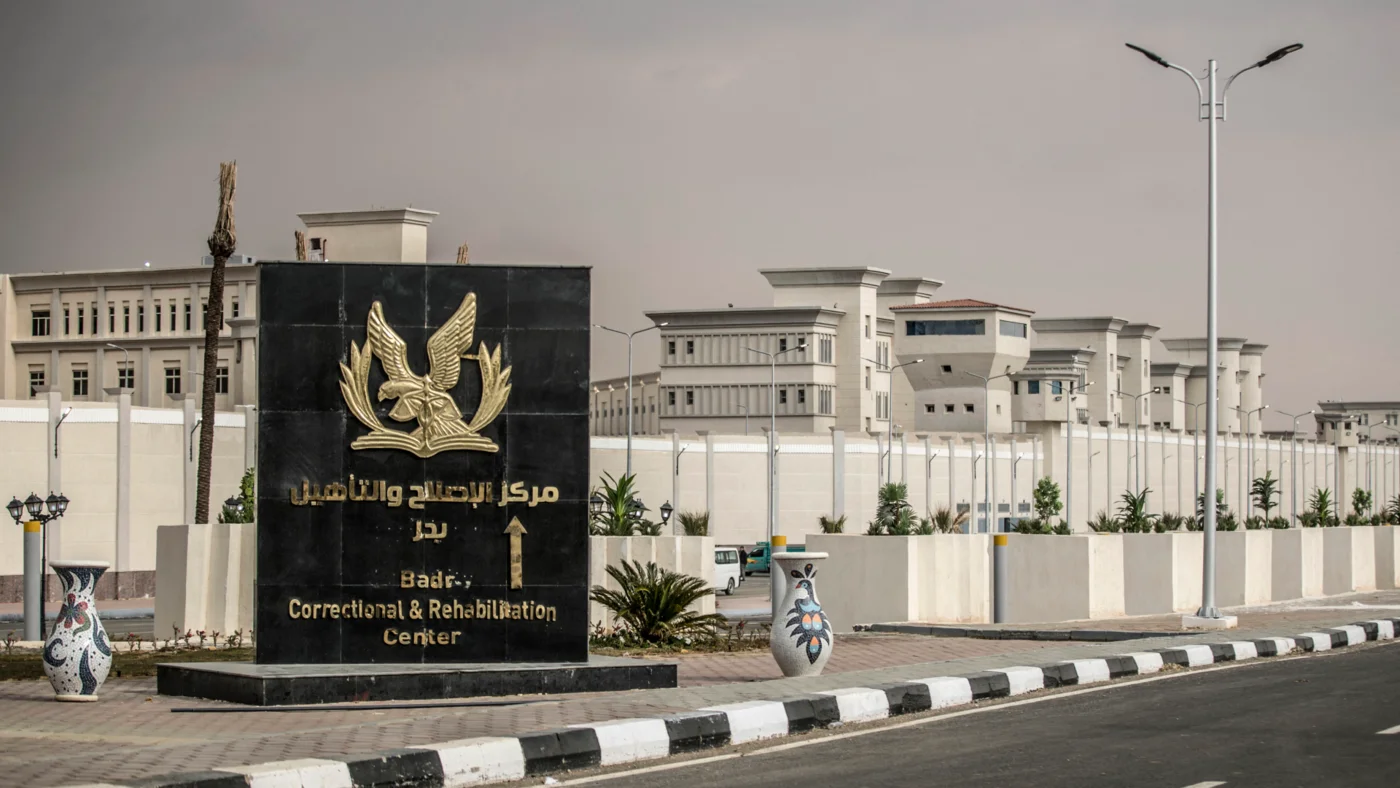
    The detainees’ appeals come as the Egyptian government has enforced a near-total information blackout on prison conditions across the country. Since mid-2024, after reports of widespread hunger strikes at the notorious Badr prison and a sharp rise in prisoner deaths, authorities have cracked down on detainees’ rights advocates and family members of detainees. Elhussieny described Egypt’s prisons as a “black box,” with almost no outside communication allowed. “Lawyers don’t have any access, families of detainees that are deemed to be a risk are banned from visiting,” she said.

  • UN General Assembly endorses a new world map that shows more accurately Africa’s size

    UN General Assembly endorses a new world map that shows more accurately Africa’s size

    In a landmark vote Friday, the United Nations General Assembly gave formal backing to a new global map projection that correctly depicts Africa’s actual geographic size, capping off a years-long advocacy campaign spearheaded by African nations and international geographic justice groups.

    The non-binding resolution, put forward by Togo with unified support from the entire African Union bloc, passed with overwhelming global backing: 164 UN member states voted in favor of the measure, while only the United States cast a opposing vote. Six nations — Serbia, Estonia, Georgia, Lithuania, Moldova, and Ukraine — chose to abstain from the vote.

    The resolution calls on governments and multilateral institutions worldwide to phase out the centuries-old Mercator projection, a mapping standard that has dominated global cartography since the 16th century, in favor of the Equal Earth projection, a modern alternative that geographers and advocacy leaders confirm renders continental proportions with far greater geographic accuracy.

    First developed in 2018, the Equal Earth projection accounts for the Earth’s natural curvature to display all landmasses in their true relative sizes. By contrast, the Mercator projection, originally created by Flemish cartographer Gerardus Mercator to aid 16th-century European maritime navigators, systematically distorts continental sizes: it inflates the apparent area of polar-adjacent landmasses including North America and Greenland, while drastically shrinking the size of equatorial regions including Africa and South America. One striking example of this distortion sees the Mercator projection depict Greenland as roughly the same size as Africa; in reality, Africa is 14 times larger than the Arctic island.

    UN officials emphasized that the resolution does not implement an outright ban on the Mercator projection, nor does it force any entity to adopt the Equal Earth model. Instead, it acts as a formal global endorsement encouraging voluntary adoption of the more accurate projection for general use, from education to public policy and digital mapping.

    Speaking ahead of the vote, Togo’s Foreign Minister Robert Dussey framed the shift as more than a technical cartographic adjustment. “Maps shape our understanding of the world,” Dussey told the assembly. “They guide education, nourish the imagination, and influence collective perceptions.”

    Advocacy groups that led the multi-year campaign to secure UN backing welcomed the resolution as a critical step toward correcting long-standing geographic bias. Africa No Filter, one of the leading organizations behind the push, noted in a statement that the group now aims to see the accurate projection integrated into everyday global systems: “We want to see accurate maps in schools, textbooks, newsrooms, businesses and on the digital platforms billions of people use every day.”

    International leaders also celebrated the vote as a small but meaningful step toward greater geographic and historical accuracy. French Foreign Minister Jean-Noël Barrot wrote on social platform X following the vote: “Changing the map obviously doesn’t change the world. But correcting a representation that distorts it is already an act of truth.”

    Geographers have long backed the shift away from general use of the Mercator projection, noting that its only practical, valid application remains the original purpose for which it was designed: maritime navigation. Mark Monmonier, a veteran geography professor at Syracuse University, summed up the widespread academic consensus in comments on the resolution: “Outside of that very narrow navigation application, there is no point in using it.”

  • McVay says entire Rams roster is traveling to Australia, but Aaron Donald’s playing status still TBD

    McVay says entire Rams roster is traveling to Australia, but Aaron Donald’s playing status still TBD

    MELBOURNE – The National Football League is set to make landmark history this week as it hosts its first-ever regular-season game on Australian soil, but one major question still hangs over the Los Angeles Rams ahead of their opening-week clash with the San Francisco 49ers: will future Hall of Fame defensive tackle Aaron Donald take the field?

    Rams head coach Sean McVay confirmed Friday, as the team wrapped up early preparations for their long-haul journey from Southern California, that the entire 53-man roster will travel Down Under for the contest at the iconic Melbourne Cricket Ground. However, he stopped short of confirming whether the recently unretired 35-year-old superstar will suit up for the historic matchup.

    Donald’s unexpected return to the NFL sent shockwaves through the league last weekend, just two and a half years after he walked away from the game following a legendary 10-season career with the Rams that included 10 Pro Bowl selections, eight First-Team All-Pro honors, and a Super Bowl victory. Since coming out of retirement, the star defender has been working aggressively to rebuild his game conditioning, and McVay acknowledged Friday that Donald has made striking progress in his comeback push.

    Still, the final call on his availability won’t be made until the team assesses how he handles the intensity of practice and travel over the coming days. “I don’t have that answer quite yet,” McVay told reporters. “His ramp-up process has gone really well – he’s so intentional about his training rhythm and daily routine. This week will be a critical indicator of how he feels, and we’re going to take it one day at a time to evaluate where he’s at. If he feels good enough to go, that’s great. If not, I have full confidence that the rest of our defensive line group, who have put in all the reps through camp, will step up and perform.”

    The Rams received more positive injury updates on two other key stars ahead of the game: star pass rusher Myles Garrett, who missed more than a dozen training camp reps with muscle soreness and a minor knee issue, is still on track to start in Melbourne. Dynamic All-Pro wide receiver Puka Nacua, who suffered a core muscle injury three weeks ago, has also cleared key recovery milestones and is expected to play. “He’s feeling really good,” McVay said of Nacua. “He’s already hitting high-speed drills at a great pace, and it’s going to be exciting to have him back out on the field with us.”

    The two NFC West rivals have taken starkly different approaches to preparation for the most geographically distant game in NFL history. The Rams are completing their full training camp week at their Woodland Hills, California facility, and will not fly to Australia until less than 48 hours before kickoff. The game is scheduled for Friday morning Melbourne time, which is Thursday night for U.S. audiences. The 49ers, by contrast, traveled to Australia earlier this week and have conducted all their on-site preparation locally to acclimate to the time zone difference.

    McVay defended the Rams’ schedule, a strategy the team has refined during previous international trips to London and Mexico City, even as he acknowledged that this journey is unprecedented in its distance. “At the end of the day, our approach comes down to one simple question: what do we think is best for our players, to put them in the best position to play at their best?” McVay said. “There are a lot of different theories and approaches to this, but I have a lot of trust in our group and the plan we’ve put in place. Hopefully it pays off, and I know our guys are confident in what we’re doing.”

  • Germany’s far-right AfD bids for first taste of power in eastern vote

    Germany’s far-right AfD bids for first taste of power in eastern vote

    As Germany prepares for this weekend’s critical state election in Saxony-Anhalt, the entire nation is holding its collective breath. Polls currently place the far-right Alternative for Germany (AfD) and its lead candidate Ulrich Siegmund on track to win an outright parliamentary majority – a result that would mark the first time a far-right party has claimed full state-level power in post-war German history, a shift that could reshape the country’s political trajectory for decades to come.\n\nFor AfD leadership, a decisive victory in this eastern German state would be far more than a regional win: it would act as a critical stepping stone toward their long-held goal of gaining national power. For the party’s opponents, however, an AfD majority represents an existential threat to Germany’s post-war democratic order.\n\nThe election also casts fresh uncertainty over the future of embattled conservative Chancellor Friedrich Merz, leader of the Christian Democratic Union (CDU). Plagued by poor public approval and booing at recent public appearances, Merz is widely seen as a liability for center-right candidates on the campaign trail. Many political observers note he may already regret his public pledge to halt the far-right’s rise, a promise that has been undermined by the AfD’s growing momentum across the country.\n\nAt the center of the election campaign is 35-year-old Siegmund, a charismatic AfD figure who has dominated media coverage and energized grassroots support in the state. Labeled “Germany’s Most Dangerous Man” by leading German magazine Der Spiegel, Siegmund has pushed back against widespread reports that neo-Nazi affiliates hold influential positions in his inner circle, often presenting a populist, relatable public image across social media – sharing content of himself interacting with adoring supporters and riding a retro East German scooter.\n\nThe AfD’s surging popularity in eastern Germany, its long-standing stronghold, has been fueled by two overlapping forces: lingering nostalgia for the pre-reunification East German era and widespread public anger at the status quo. Voters across the state have voiced deep frustration over a range of issues, including unmanaged immigration, perceived public safety failures, Germany’s stagnant national economy, skyrocketing energy costs, and billions in aid sent to Ukraine. For many committed supporters, the AfD represents the only party offering meaningful, radical change, with Siegmund framed as a leader who has restored hope for disillusioned voters. Even more hesitant backers say they have abandoned decades of support for mainstream parties, which they see as unresponsive to working-class needs. As one AfD legislator put it, a turn to regional governance would prove to voters that “the sky won’t fall in” if the party takes power.\n\nDetractors argue that the AfD’s policy platform for Saxony-Anhalt is deeply controversial and incompatible with Germany’s democratic and social values. Key planks include segregating child refugees into separate schooling, on the grounds that their stay in Germany is temporary; the party’s manifesto also condemns what it calls the aggressive promotion of “sexual deviations and non-reproductive lifestyles” over “normal family structures,” calling for a ban on LGBT rainbow flags in public schools and a curriculum that reduces focus on Nazi history and emphasizes more “positive” elements of German national history. On immigration, the party has proposed creating a dedicated task force to detain and deport migrants who lack legal residency, while calling for an immediate end to what it labels “illegal, culturally alien” mass migration.\n\nThe AfD has also faced repeated scrutiny over its well-documented pro-Russia sympathies, leading to warnings that the party cannot be trusted with sensitive state intelligence. Just this week, Berlin publicly blamed Moscow for a failed drone attack on Leipzig/Halle Airport, a claim the Kremlin has denied. The controversy comes amid reports of a Russian military mug displayed in the office of senior AfD state figure Hans-Thomas Tillschneider, who dismissed the item as a simple souvenir, adding “it’s not our war.” German security officials have also warned of escalating Russian-backed disinformation campaigns targeting AfD’s political rivals, a charge Moscow dismisses as “anti-Russian hysteria.”\n\nWidespread concerns over extremism within the party are not limited to foreign policy. Saxony-Anhalt’s AfD branch is officially classified as a right-wing extremist movement by German domestic intelligence, which accuses the local organization of being rooted in “racist ideology” and holding anti-constitutional goals. During a recent AfD rally covered by the BBC, an attendee was spotted wearing a t-shirt emblazoned with “Arisch” – the German term for Aryan, the white supremacist racial category weaponized by the Nazis to promote their ideology of a master race. While it remains unclear whether the man was a party member, supporter, or casual attendee, the incident has reinforced long-standing concerns about extremist influence within the movement. The AfD, which frames itself as a conservative libertarian movement, rejects all extremism claims as politically motivated smears and rejects any comparison to National Socialism. If elected to a majority, Siegmund has even refused to rule out dissolving the state branch of Germany’s domestic intelligence agency (BfV), the body that monitors the party’s extremist activities.\n\nGermany’s mainstream parties have maintained a long-standing “Brandmauer” (firewall) policy, ruling out any formal or informal coalition with the AfD. This political blockade means the party must win an outright parliamentary majority to take power, rather than forming a coalition with smaller parties. Its path to victory therefore depends heavily on whether smaller competing parties manage to clear the 5% vote threshold required to gain seats in the state parliament – a mathematical reality that could work heavily in the AfD’s favor if smaller rivals fail to qualify.\n\nUnlike past regional elections where the AfD has only managed to crack the mainstream firewall, this vote could see the party bypass it entirely. If the AfD secures a majority, it will face an unprecedented test: for years, the party has built its support on anti-establishment rhetoric, blaming Berlin for all of Germany’s problems. Once in power, it will no longer be able to solely rail against incumbents – it will have to deliver on its promises, facing the same governing pressures that have frustrated mainstream parties for decades.\n\nState governments in Germany wield significant authority over key policy areas including local education, policing, and cultural policy, and their delegates hold seats in the Bundesrat, the federal government’s upper legislative chamber. An AfD-led state government would therefore be able to implement its controversial policy agenda at the regional level while gaining a far louder voice in national politics. Currently, the AfD not only leads polls in most eastern states but also holds a lead in national polling, making this regional election a critical bellwether for the country’s future.\n\nThough Saxony-Anhalt is a small state by population, its upcoming election is one of the most consequential political moments in modern German history, with outcomes that will ripple across the entire nation and European politics as a whole.

  • Mistrial declared in Lindsay Clancy murder case, after jury deadlocks

    Mistrial declared in Lindsay Clancy murder case, after jury deadlocks

    After seven days of deliberation that failed to produce a unanimous verdict, a Massachusetts judge has formally declared a mistrial in the closely watched murder case against Lindsay Clancy, a 36-year-old former nurse accused of killing her three young children in 2023. The stunning outcome has left the case, and Clancy’s future, in legal limbo, deepening national divides over postpartum mental health and criminal responsibility that have gripped the American public for months.

    Clancy does not dispute that she killed her children — 5-year-old Cora, 3-year-old Dawson, and 8-month-old Callan — at their family home in Massachusetts. Immediately after the killings, she attempted suicide by stabbing herself and jumping from a second-story window, a trauma that left her permanently paralyzed. She has pleaded not guilty to three counts of first-degree murder, with her legal team arguing she was severely impaired by postpartum psychosis at the time of the crimes and cannot be held criminally liable for her actions.

    The case moved through six weeks of testimony before the jury entered deliberations. Over the course of seven days, totaling more than 40 hours of discussion, the jury signaled three times that they were unable to reach the unanimous verdict required by Massachusetts law, which demands a finding of guilt beyond a reasonable doubt to secure a conviction. On the final day of deliberations, Clancy’s lead attorney Kevin Reddington made a last-ditch effort to avoid a deadlock: he requested that one holdout juror, who the jury noted had failed to follow instructions on the reasonable doubt standard, be removed from the panel.

    Judge Jeffrey Sullivan denied Reddington’s request and ordered the jury back to continue deliberations. When the panel returned an hour later still unable to reach a consensus, Sullivan ruled there was no alternative but to declare a mistrial. Reddington immediately filed an emergency appeal to the Massachusetts Supreme Judicial Court, asking the state’s highest court to order the jury to resume deliberations and force questioning of the holdout juror. The high court rejected the appeal, clearing the way for the mistrial ruling to take effect.

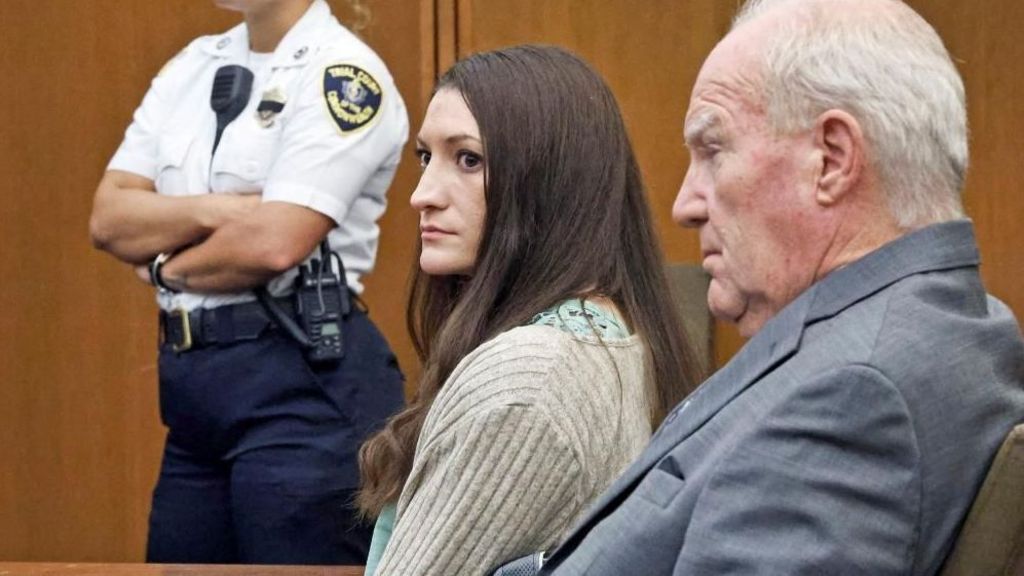
    Court observers described a quiet, shocked atmosphere in the courtroom as the ruling was announced. Clancy appeared downcast and expressionless, while Reddington was visibly upset by the outcome. Outside the courthouse, Reddington told reporters he believed 11 of the 12 jurors leaned toward a verdict favorable to Clancy, with only a single holdout blocking consensus. No official information about the jury’s internal deliberations or individual positions has been released to the public.

    A hung jury and subsequent mistrial do not resolve the case: it does not confirm Clancy’s guilt, nor does it result in an acquittal. Clancy will remain in custody at a mental health facility, held on the existing first-degree murder charges, while prosecutors weigh their next steps. A status hearing is scheduled for September 29, where the prosecution will outline its plans for moving forward. Options available to prosecutors include holding a second trial or negotiating a plea agreement with Clancy’s defense team.

    Plymouth County District Attorney Timothy Cruz told reporters Friday that no final decision had been made, and his office would review the case with its legal team before determining whether to pursue a new trial. “The facts are Lindsay Clancy killed her three children and the evidence suggested to us that she was in control of her actions when she committed those homicides,” Cruz said. Reddington has already announced he plans to file a motion to reconsider the mistrial ruling, which will be heard at the September hearing.

    The horrific nature of the crimes, combined with the central question of postpartum mental health, has made the case a national sensation that has deeply divided public opinion. Hundreds of journalists covered the trial daily, and thousands of Americans followed live streamed proceedings closely, sparking widespread debate over how the criminal legal system should treat people experiencing severe postpartum psychiatric episodes. The high level of public attention even drew comment from U.S. President Donald Trump, who weighed in from the White House Friday. He called the case a “horrible tragedy” and noted, “She did a horrible, horrible thing. Can’t be worse. I assume there’s going to be another trial… But you’ll find out what the price to pay is. There’ll be a price.”

    This story contains details of violence and suicide that may be distressing to some readers. If you or someone you know is experiencing suicidal thoughts or mental health distress, support is available globally through Befrienders Worldwide at www.befrienders.org, and in the United Kingdom through the BBC Action Line at bbc.co.uk/actionline.