博客

  • Israel’s death towers: Gaza civilians killed by remote attacks during ceasefire

    Israel’s death towers: Gaza civilians killed by remote attacks during ceasefire

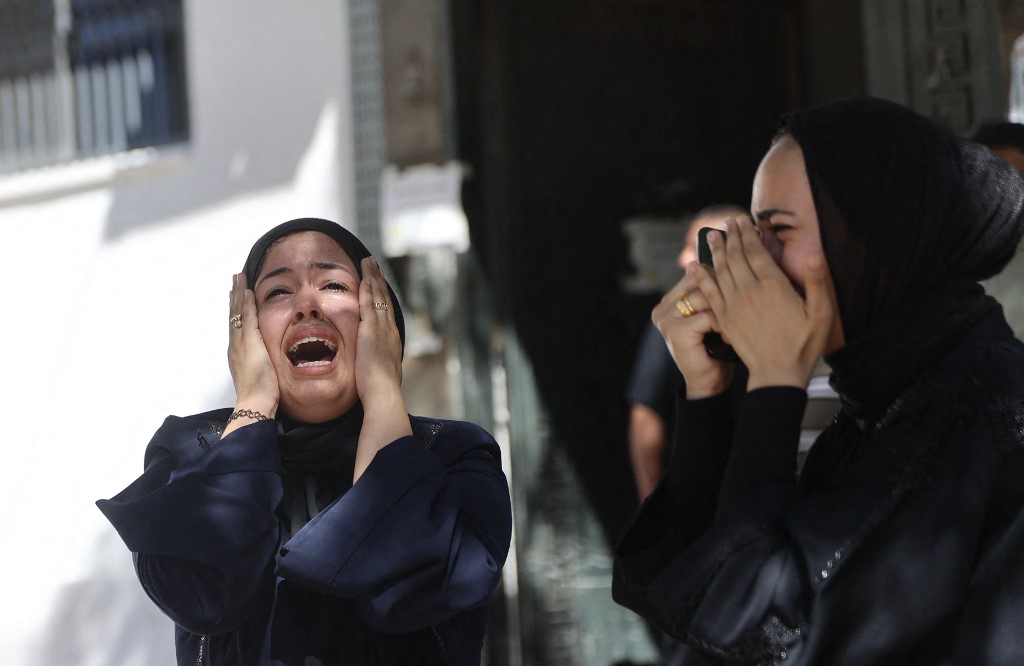
    In the final stretch of joyful wedding preparations for his daughter, 43-year-old Khalil al-Masri had every reason to smile. Less than two weeks before the ceremony, he traveled with his eldest son to Gaza City’s Rimal neighborhood to finalize payment and confirm the reservation for his daughter’s dream wedding dress. With that task complete, the pair stopped at a nearby confectionery to mark the happy occasion, joining two friends for a seat at an outdoor table. What came next was a senseless, sudden tragedy: a live bullet tore through Masri’s skull, leaving him unconscious as his son and friends stared on in terror.

    Rushed to Gaza’s al-Shifa Hospital for emergency care, Masri, a father of seven, succumbed to his fatal wound on June 14. His brother Mahmoud al-Masri described the jarring turn of fate in an interview with Middle East Eye. “It was a complete shock. He was very happy and laughing with his friends. He ordered a dessert, but the bullet penetrated his head before the order was served,” Mahmoud said. “The wedding was turned into a funeral.”

    Captured on the sweet shop’s entrance surveillance footage, Masri’s killing is far from an isolated incident. The deadly shooting unfolded against a backdrop of steadily escalating Israeli fire targeting Palestinian civilians across multiple regions of the Gaza Strip in recent weeks, even as the event is framed as occurring under a ceasefire agreement. While the exact source of the bullet has not been officially confirmed, Mahmoud says the gunfire originated from the east, pointing to two likely sources: an Israeli surveillance quadcopter operating in the area minutes before the shooting, or an Israeli military “lifter” – a fortified watchtower fitted with heavy machine guns – positioned roughly 1.7 kilometers away in the contested Yellow Zone.

    The Yellow Zone is an area Israel was required to withdraw from as part of the second phase of an earlier ceasefire deal, after occupying it in the agreement’s first stage. To date, Israel has refused to cede control of the territory, and now holds more than 60 percent of the entire Gaza Strip. Deployed at 23 separate locations across the eastern Gaza Yellow Zone, per data from the Palestinian Centre for Human Rights, these military lifters elevate weapons and surveillance hardware to extend visual range and enable open fire across large civilian-populated areas.

    The same day Masri was killed, at least five more Palestinians were hit by Israeli fire in another central Gaza City neighborhood. Among them was 19-year-old university student Muhammed Abu Hassira, who was walking home from the gym along al-Wehda Street when Israeli forces opened fire. Just like Masri’s case, witnesses could not confirm whether the fatal shot came from a quadcopter or a military watchtower.

    Khaled al-Tarshawi, Abu Hassira’s uncle, recounted the teen’s final moments to Middle East Eye. “Muhammed was on his way home from the gym at around 7pm, he was on al-Wehda Street when the Israeli occupation suddenly opened fire, hitting him and other pedestrians. He and four or five others collapsed to the ground,” al-Tarshawi said. “He was shot in the abdomen. People rushed to carry him and the other wounded to the hospital. He was transported on the seat of a wheelchair because there were no vehicles. Doctors tried to save him, but by the time he arrived, he had already lost a significant amount of blood.”

    Abu Hassira had just wrapped up his second semester studying engineering at a Gaza university, having earned his high school diploma and enrolled despite the ongoing conflict. “He was intelligent, patient, and always devoted to his parents. His mother was devastated when she received the news, but his father was even more heartbroken. Muhammed was his eldest and most beloved son,” al-Tarshawi said. “Muhammed survived the devastating Israeli attacks throughout the two and a half years of the genocide and refused to leave Gaza City. He refused to evacuate to the south and managed to stay alive during the worst periods of the genocide. But he was killed during the ceasefire by a quadcopter or a lifter.”

    Fatal Israeli fire has continued through all avenues of daily life in Gaza in the months following the October 2023 ceasefire agreement. In addition to watchtower sniper fire and quadcopter strikes, Israeli tanks and ground snipers deployed within the Yellow Zone have repeatedly opened fire on pedestrians and displaced families’ makeshift shelters in areas formally labeled “safe zones,” leaving dozens dead and injured over the past eight months.

    Just 24 hours after the killings of Masri and Abu Hassira, 13-year-old Amir al-Bashiti was killed by an Israeli bullet inside his family’s displaced person tent in Khan Younis, southern Gaza. His father Emad al-Bashiti said the bullet, which likely came from an Israeli tank, struck the boy just moments after he came inside for the night. “It was around midnight and he was playing with his cousins and friends outside the tent. I called on him to come in and sleep and I wish I didn’t,” Emad said. “He came in carrying his blanket and told me ‘I want to tell you what happened’. At the time, there were sounds of Israeli tanks moving and some gunfire close to the camp. I told him to sit down and go to sleep because there were shootings. He insisted on telling me the story before he went to sleep.”

    Before Amir could finish sharing his story, the explosive bullet tore through his head and exited his neck, killing him instantly in front of his entire family. “It wasn’t a normal bullet, it was an explosive one. I heard it explode after it penetrated his head,” Emad recalled. “He fell on the ground and vomited blood. I held his hand but he was unconscious. By the time I carried him and rushed outside to reach the hospital, he was already dead.” Amir and his family had been displaced from Rafah and had sought shelter in Khan Younis’ Batn al-Samin, a zone designated as safe for displaced people that now hosts tens of thousands of fleeing Palestinians.

    In recent weeks, the targeting of Palestinian civilians has expanded far beyond the contested Yellow Zone, with deadly strikes hitting even areas marked as safe under the ceasefire framework. On a single Friday in June, one Palestinian child was killed and two members of the Totah family wounded when an Israeli quadcopter dropped an explosive on the group as they collected water east of Gaza City. Another Palestinian was killed by Israeli fire the same day east of Deir al-Balah in central Gaza.

    Official data confirms the scope of the ongoing bloodshed: since the ceasefire agreement took effect in October 2024, at least 1,072 Palestinians have been killed and 3,463 more injured across the Gaza Strip. Since October 2023, Israeli attacks have killed at least 73,098 people in Gaza, with thousands more still missing and presumed dead under the rubble of destroyed buildings.

    For families like the al-Bashitis, the term “ceasefire” bears no relation to the reality on the ground. “Whoever calls this a ceasefire is overlooking what is actually happening on the ground. It is not a ceasefire, it is continued fire,” Emad al-Bashiti said.
  • Mbappe condemns racist posts from Paraguay senator

    Mbappe condemns racist posts from Paraguay senator

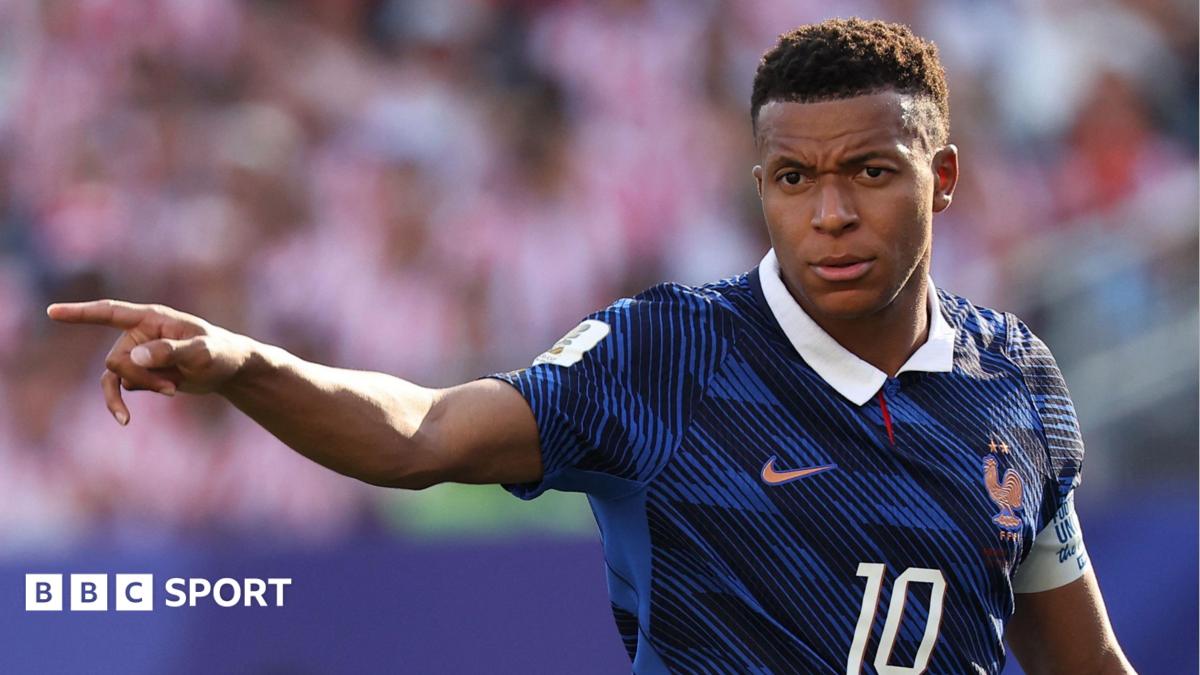
    In the wake of Paraguay’s last-16 World Cup exit at the hands of France, a firestorm of controversy has erupted over targeted racist remarks against French superstar forward Kylian Mbappe, drawing sharp condemnation from both the player and the French Football Federation (FFF).

    Celeste Amarilla, a senator representing Paraguay’s Liberal Radical Party, took to social platform X to share mocking comments about Mbappe’s ethnic origin and educational background after France secured a narrow victory over the South American side. Mbappe, who scored the winning penalty in the match to punch France’s ticket to the quarter-finals, delivered a blistering public rebuke of the senator’s words.

    Calling Amarilla a despicable figure completely unfit for public office, Mbappe emphasized that the senator does not represent the values of Paraguay itself — a nation whose players fought with honor and passion across the entire 2026 FIFA World Cup tournament. He argued that Amarilla’s reckless, open racism has overshadowed the historic achievements of the Paraguayan squad, turning global attention instead to the bigoted comments of an incompetent politician who has tarnished her country’s global reputation. Mbappe made clear he would not stand by to allow hatred and racism to spread unchallenged on the world stage.

    The FFF has echoed Mbappe’s condemnation, announcing it will move forward with filing criminal charges against Amarilla, describing her remarks as utterly abhorrent and unacceptable. In an official statement, the governing body stressed that such comments are both criminal and morally reprehensible, requiring legal prosecution regardless of jurisdiction. The FFF has formally referred the matter to public prosecutors to initiate legal proceedings, noting that these racist insults target not just Mbappe, but the entire French nation represented by the national team. “These remarks bring shame upon those who make them and those who disseminate them,” the statement added.

    Mbappe’s decisive penalty against Paraguay capped another strong tournament performance for the French forward, who entered the quarter-final stage of the 2026 World Cup tied as the tournament’s leading goal scorer with seven goals, level alongside Argentina’s Lionel Messi and Norway’s Erling Haaland. France was set to face Morocco in their quarter-final fixture in Boston just four days after the knockout win over Paraguay.

    Amarilla’s comments are not an isolated incident, either: ahead of the France-Paraguay tie, former Paraguay goalkeeper Jose Luis Chilavert drew widespread criticism for his own racist comment, claiming the Paraguayan side was facing “a squad from Africa.” That remark also drew a fierce response from FFF president Philippe Diallo, who labeled Chilavert a disgrace to the sport. “I condemn in the strongest possible terms the racist remarks made by Jose Luis Chilavert against the French national team, which undermine the values of respect, fraternity, and diversity in our football,” Diallo said. “If he was once a great goalkeeper, this man has now fallen into disgrace.”

  • Trump, Turkey and Nato: What’s at stake at the Ankara summit?

    Trump, Turkey and Nato: What’s at stake at the Ankara summit?

    A pivotal NATO summit convening this week in Ankara, Turkey, stands poised to reshape the 75-year-old transatlantic alliance’s strategic direction, as leaders gather to address a planned drawdown of United States military forces in Europe and chart a course for the bloc’s next evolution, dubbed NATO 3.0.

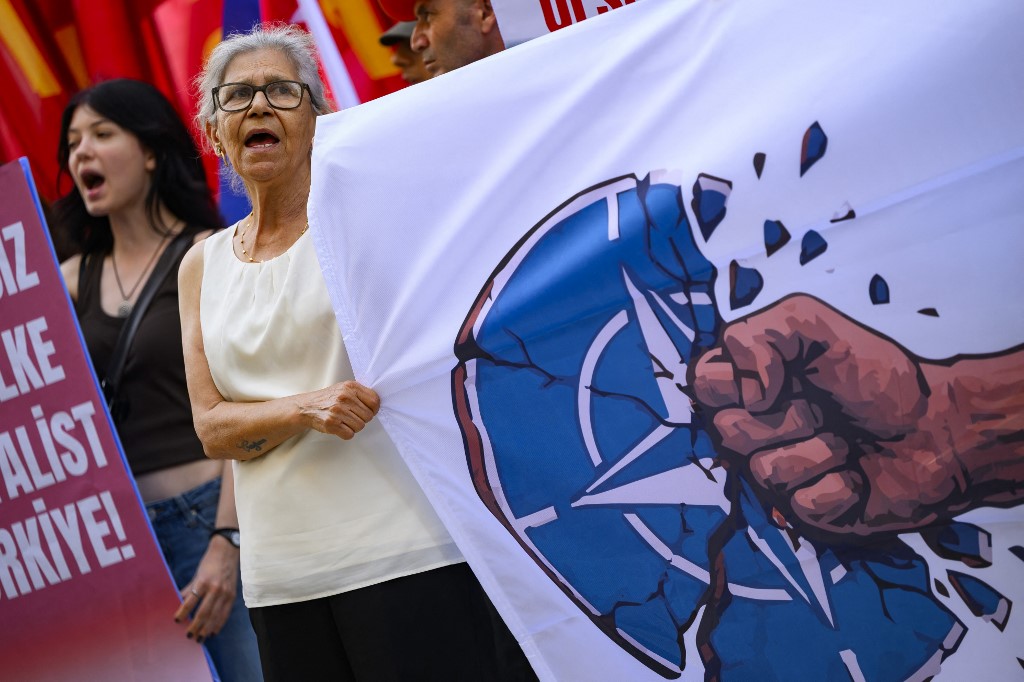
    US President Donald Trump is set to join alliance heads of state and government in the Turkish capital, where tensions are already expected to emerge over negotiations to shrink America’s long-standing military footprint on the continent. Ahead of the high-stakes gathering, Turkish authorities have launched a sweeping effort to spruce up Ankara: city workers have planted thousands of decorative flowers, resurfaced damaged arterial roads, and erected large fabric banners to cover aging, poorly maintained structures that line major summit routes. Starting Tuesday, the city will implement a two-day partial lockdown to secure the event, and security officials have detained dozens of people they identify as potential protest organizers, including members of left-wing groups, environmental activists, and pro-Palestinian demonstrators, to prevent unplanned disruptions described by officials as “public nuisances.”

    For the Turkish government, the summit represents far more than a security meeting: it is a high-profile global marketing opportunity to tie Turkey’s booming domestic defense industry to Western supply chains and highlight the country’s growing industrial capabilities. Turkey has rapidly expanded its defense manufacturing footprint in recent years, emerging as a leading global exporter of armed drones, advanced ammunition, and naval vessels, with defense exports projected to hit $10 billion in 2025. Ankara’s existing alignment with NATO’s industrial standards also positions the country to capitalize on any expansion of the alliance’s European defense output, a factor that has softened criticism from Western allies of President Recep Tayyip Erdogan’s increasingly hardline crackdown on domestic political opposition. European leaders have opted to set aside concerns over democratic backsliding in Turkey in exchange for Ankara’s commitment to contribute troops from NATO’s second-largest standing military (second only to the United States) and help jumpstart a continent-wide revival of European defense production.

    The summit’s central agenda item revolves around the alliance’s new strategic framework, already labeled NATO 3.0 by alliance insiders. The concept builds on two prior eras of alliance adaptation: the post-Cold War restructuring that defined the original NATO 1.0, and the shift to counter-terrorism readiness that followed the September 11 attacks, known as NATO 2.0. The updated framework prioritizes three core goals: upgrading allied military capabilities, modernizing cross-bloc defense industrial infrastructure, and redistributing the burden of collective defense as the United States reorients its global military focus toward countering China.

    The Pentagon has already announced a six-month review to determine which conventional forces, aircraft, and capabilities it will withdraw from European bases. While the full details of the drawdown have not been made public, anonymous military sources shared specifics with Reuters outlining steep cuts to US assets allocated to NATO: the number of F-15 and F-15E fighter jets available to the alliance will drop by a third to 99, the fleet of MQ-4 and MQ-9 Reaper surveillance and strike drones will be halved to 12, KC-135 and KC-46 refueling aircraft will be reduced from 79 to 63, and only one strategic bomber and one aircraft carrier will be assigned to NATO operations, down from the prior commitment of two each.

    Despite the reductions, NATO’s top commander, US Air Force General Alexus Grynkewich, confirmed last week that European allies have already moved to fill nearly all the capability gaps left by the US drawdown. Multiple European diplomats told Middle East Eye that the summit will formalize a strengthening of NATO’s European pillar, with member states set to pledge deeper industrial cooperation, expanded weapons production, and increased operational commitments to the alliance.

    Long-time European affairs journalist Guldener Sonumut, based in Turkey, notes that the shift will require structural changes to NATO’s command architecture. As the US steps back from conventional defense responsibilities, those roles will increasingly fall to European allies and Canada, while Washington retains control over strategic command and core planning functions. “This will require changes in Nato’s command structure, with the US retaining strategic command and planning leadership while Europeans take on more operational responsibilities,” Sonumut wrote in a weekend column.

    The summit also marks a turning point for the alliance’s defense industrial cooperation. NATO’s long-standing Standardisation Agreements (Stanag) are expected to remain the central governing framework for allied military equipment, a move that blocks the European Union from developing separate, standalone defense standards. The outcome is a major win for Turkey’s growing defense sector, which already designs and manufactures all its military hardware to meet NATO Stanag requirements. A dedicated defense-industry forum will be held on the summit’s opening day, where dozens of multinational defense cooperation agreements are set to be signed, covering sectors from multidomain operational capabilities to space-based intelligence gathering.

    Yahya Bostan, a columnist for Turkish daily Yeni Safak, argued last week that years of debate between Turkey and European powers over Ankara’s place in a post-US drawdown European security architecture have ended with a clear consensus: Turkey’s role remains firmly within the NATO alliance. Instead of building a new independent security framework, Bostan says European nations will instead increase defense spending and deepen collaboration under the NATO umbrella alongside Turkey.

    On the nuclear security front, analysts expect the US to reaffirm its role as the alliance’s primary nuclear security guarantor, potentially expanding the number of NATO member states allowed to host dual-capable weapons systems — platforms that can deploy both conventional and nuclear warheads. Currently, only five NATO allies, including Turkey, are permitted to host such systems, and Finland’s parliament has already passed legislation to approve hosting the weapons, clearing the way for its inclusion in the expanded scheme.

    European Commission President Ursula von der Leyen and NATO Secretary-General Mark Rutte framed the summit’s collaborative vision in a joint op-ed published over the weekend in *The Economist*. “This is a true endeavour on both sides of the Atlantic. Our defences are unmatched when we leverage assets, expertise and innovative capabilities from California to Kyiv, Copenhagen to Warsaw, Oslo to Ankara,” they wrote. “The only way to get there is through co-operation: combining the efforts of countries and industries, allies and partners.” Off the record, European diplomats have already acknowledged Erdogan’s key role in convincing Trump to attend the summit in Ankara, and say they are counting on the Turkish leader to reinforce the value of continued US engagement with the alliance for the Trump administration.

  • Mourning and celebration collide as Iran, US both claim victory

    Mourning and celebration collide as Iran, US both claim victory

    In a striking convergence of historical moments, two defining global events unfolded in the same week: the long-awaited burial of Iran’s slain supreme leader Ayatollah Ali Khamenei, and the United States’ 250th anniversary of national independence. Against a backdrop of a fragile 60-day ceasefire that paused a bitter US-Israeli initiated war to open negotiations for a permanent peace deal, both sides have leveraged their respective commemorative events to lay claim to victory in the conflict.

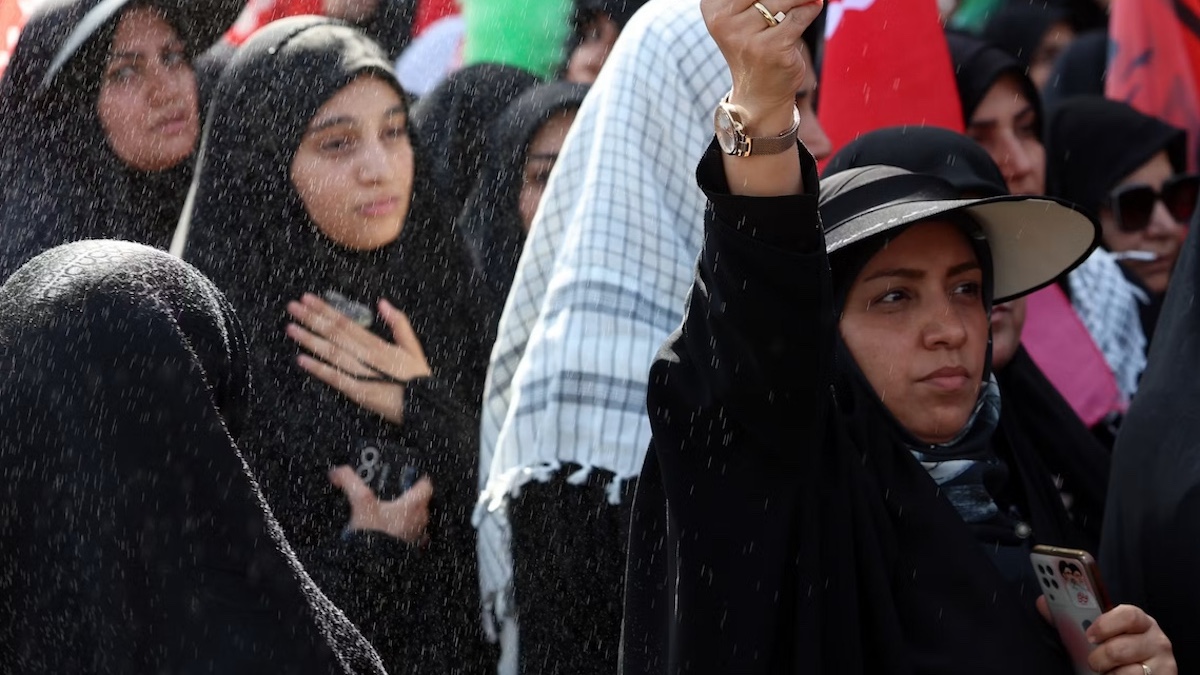
    Khamenei was deliberately targeted and killed in a US-Israeli airstrike on the very first day of the war, February 28. Islamic tradition requires prompt burial of the deceased, often within a day of death, but Khamenei’s remains were preserved for more than four months. Sustained US-Israeli bombardment across Iran made large-scale public commemorative gatherings impossible, forcing Iranian authorities to delay the farewell ceremony until the security environment allowed for a fitting tribute.

    Iran’s Islamic government aimed to push back against the invading force before holding a formal, elaborate state burial. An intermittent ceasefire took effect on April 8, which could have allowed for an earlier service – an event that would have carried the same level of security risk as the ceremony held this week, making the deliberate timing clear.

    The alignment of Khamenei’s burial with the US’ high-profile independence jubilee is no random coincidence, according to regional analysts. While some dismiss the overlap as accidental, a far more plausible reading frames the timing as a calculated move by Iran’s leadership to draw global attention away from the US celebration and assert the Islamic Republic’s continued relevance on the world stage.

    Iran’s new post-Khamenei leadership, headed by Khamenei’s son Mujtaba – who has remained out of public view after reportedly being wounded in the strike that killed his father – was fully aware of months of public planning for the US anniversary. US President Donald Trump, who partnered with Israeli Prime Minister Benjamin Netanyahu to launch the offensive against Iran, has spent months hyping the 250th independence celebration, promising to showcase what he calls America’s “Golden Age”. He used the event to once again formally claim total victory in the war against Iran.

    The evidence strongly suggests Tehran deliberately scheduled Khamenei’s burial to counter the US festivities. Iranian officials choreographed the mourning events to draw mass public participation and welcome dozens of foreign political and religious delegations from allied and friendly nations across the globe, a turnout that overshadowed much of the US celebration.

    The ceremony also honored Khamenei’s four decades of uncompromising rule as a marja, a leading source of emulation within the Shia Islamic religious hierarchy. Beyond honoring the late leader, the overlapping events sent a series of clear messages to both domestic and international audiences:
    – The Islamic Republic has survived a full-scale foreign invasion and emerged more unified and stronger than it was before the outbreak of war
    – The Iranian regime is far less unpopular and internationally isolated than the US and Israel, its main adversaries, have repeatedly claimed
    – The republic retains the resilience and capability to defend itself against both internal unrest and foreign military aggression
    – The Iranian government remains steadfast in its opposition to its enemies, and positions itself as the ultimate victor in the recent conflict

    The massive public turnout for mourning processions and the large number of foreign delegations in attendance even caught US leadership off guard: Trump had previously claimed that the Iranian people “hated” the former supreme leader, and did not anticipate the scale of public and international support on display.

    Going forward, Khamenei will be enshrined in Iranian history as a transformative religious authority, political thinker, and leader who built the Islamic Republic into a formidable, defensible regional power. While the Islamic system remains firmly entrenched in Iran, observers warn that urgent structural reform remains an unaddressed priority. Widespread public demands for expanded political and social freedoms, and improved economic living conditions, have not faded – instead, these grievances simmer beneath the surface of post-war unity.

    Uncertainty also hangs over the ongoing US-Iran negotiations, and the future political and economic trajectory of the country. If the two sides manage to reach a lasting comprehensive settlement that resolves core disputes – including Iran’s nuclear program, security in the Strait of Hormuz, the Israeli occupation of southern Lebanon, the lifting of international sanctions, the unfreezing of Iranian sovereign assets, and the reintegration of Iran’s economy into the global market – it would create space for the Iranian government to address longstanding public demands.

    Iran’s new President Masoud Pezeshkian and National Assembly Speaker Bagher Ghalibaf have both publicly signaled a willingness to pursue reform and change. However, the most powerful political actor to watch remains the Islamic Revolutionary Guard Corps (IRGC), which gained additional influence after the war thanks to its new control over the Strait of Hormuz, granting the group expanded veto power over major domestic and foreign policy decisions.

    For the moment, both Tehran and Washington can each claim a symbolic victory from their dueling, simultaneously held commemorative events. But the permanent agreement that negotiators work toward in the coming weeks will carry profound, long-lasting consequences for both nations, and for global security and stability.

    This analysis is from Amin Saikal, emeritus professor of Middle Eastern Studies at the Australian National University, The University of Western Australia, and Victoria University.

  • Jonathan Anderson shifts Dior buzz from Taylor Swift’s hidden wedding gown to sculptural couture

    Jonathan Anderson shifts Dior buzz from Taylor Swift’s hidden wedding gown to sculptural couture

    PARIS — When Jonathan Anderson stepped onto the Paris Couture Week circuit, the entire global fashion industry had one thing on its collective mind: the secret Dior wedding dress he created for global superstar Taylor Swift, who had just tied the knot with NFL icon Travis Kelce. Three days after Swift and Kelce exchanged vows at New York’s iconic Madison Square Garden — both outfitted head-to-toe in Dior designs — Anderson kicked off couture week with a bold, art-forward haute couture collection designed to redirect the world’s gaze away from the unshared celebrity gown and toward a deeply creative, medium-bending vision.

    The high-profile commission to design Swift’s wedding dress marked a major career milestone for Anderson, the 41-year-old Northern Irish designer tapped just 12 months prior by LVMH, Dior’s parent company, to revamp the luxury house’s entire fashion portfolio. For months leading up to the private wedding, industry analysts and fashion insiders had widely predicted Swift would turn to an American label like Ralph Lauren, or British heritage brand Vivienne Westwood — a designer whose pieces the pop star has regularly worn for red carpet and public appearances. But Anderson landed the coveted gig, and the one dress the entire world wanted to view was the one he refused to reveal ahead of the collection showcase. So, on the opening Monday of couture week, he made a deliberate choice to shift the conversation to fine art.

    Anderson’s 2024 fall haute couture collection leans into the experimental aesthetic of pioneering American artist Lynda Benglis, who rose to prominence in the late 1960s for her revolutionary process of pouring raw latex across gallery floors and allowing molten metal to fold and sag into organic, unplanned shapes. For this collection, Anderson reimagined Dior’s historic Parisian workrooms as an extension of Benglis’ studio: rather than cutting and assembling fabric through traditional couture techniques, artisans pressed, knotted and bent flat textiles into bold three-dimensional forms, mirroring Benglis’ approach to reshaping malleable raw materials. The parallel is intentional: just as Benglis bends flat, rigid material into unexpected living shapes, haute couture transforms flat fabric into wearable art.

    The collection’s pieces bring this concept to vivid life. A skirt made of layered silver-foiled petals rippled with every model step, while a strapless silver lamé gown featured an oversized structural bow that anchored the fluid silhouette. Tailored trousers and blouses were finished with sharp, hand-pressed pleats that held their sculptural shape. Even Dior’s legendary signature Bar jacket — the nipped-waist design that has anchored the house’s identity since Christian Dior launched his revolutionary New Look in 1947 — got a Benglis-inspired reimagining: one iteration came in lush fern-green tweed with a frayed raw fringe, another was cut from gray houndstooth and folded into a dramatic giant bow at the waist, and a third left loose chiffon threads trailing intentionally from the hem. Other looks were constructed entirely from hand-embroidered silk flowers, and one statement gown featured a wide fan of sky-blue tulle splayed across its entire bodice. Even accessories leaned into the aesthetic: four new metallic pleated handbags were co-designed with Benglis herself.

    The opening day of the showcase unfolded against the backdrop of a summer heat wave sweeping France, with temperatures climbing above 30 degrees Celsius (86 degrees Fahrenheit) in Paris. Dior included handheld fans with every guest invitation, and attendees cooled off with them throughout the runway show, which was held in the lush gardens of Paris’ Musee Rodin. The star-studded front row blended A-list pop culture names, fashion icons and contemporary artists, with guests including singer Sabrina Carpenter, actor Josh O’Connor, Priyanka Chopra Jonas, Nick Jonas, Naomi Watts, Rebecca Ferguson and Alexa Chung.

    Despite the celebrity fanfare, Anderson’s core gambit is clear: one of the world’s oldest and most recognizable luxury fashion houses can lean into experimental, unconventional creativity rather than relying solely on its legacy or celebrity ties. Anderson is frequently compared to Matthieu Blazy, his counterpart at rival luxury house Chanel, who recently designed the wedding dress for pop star Dua Lipa earlier that month — a garment that has also not been publicly revealed. This couture season holds a unique, almost ironic distinction: two of the biggest fashion stories of the moment are wedding gowns that no member of the public has been allowed to see.

    Staying true to longstanding couture tradition, Anderson closed the show with a bridal look. The closing gown was a pale, strapless column silhouette topped with a long veil made from hand-pleated chiffon, trimmed with delicate feathered dandelions and hand-embroidered cactus flowers. It was the second wedding dress Anderson had created this week — and it remains the only one the world has been able to see and photograph.

  • No, China did not manage to avoid a crash

    No, China did not manage to avoid a crash

    For decades through the 2010s, global economic observers widely regarded China’s economy as uniquely recession-resistant. Surviving both the 2008 global financial crisis and the 2015 domestic stock market crash and capital outflow event without recording a single quarter of negative growth, the country’s macroeconomic management strategy drew widespread fascination. As early as the late 2010s, analysts noted that Beijing had developed a distinct third tool for economic stabilization beyond the conventional monetary and fiscal policies used by most Western economies.

    Standard counter-cyclical policy relies on two levers: monetary policy, which cuts interest rates to encourage private borrowing and investment, and fiscal policy, which directs government spending directly to public projects to boost employment and aggregate demand. China, however, adds a third mechanism: direct credit policy. Leveraging state control over the country’s banking system, Beijing can order state-owned banks to expand lending rapidly during downturns, then rein in credit once growth stabilizes. When extended loans eventually default, the government steps in to remove nonperforming assets from bank balance sheets, allowing the system to continue lending and supporting growth that eventually reduces the relative size of public debt.

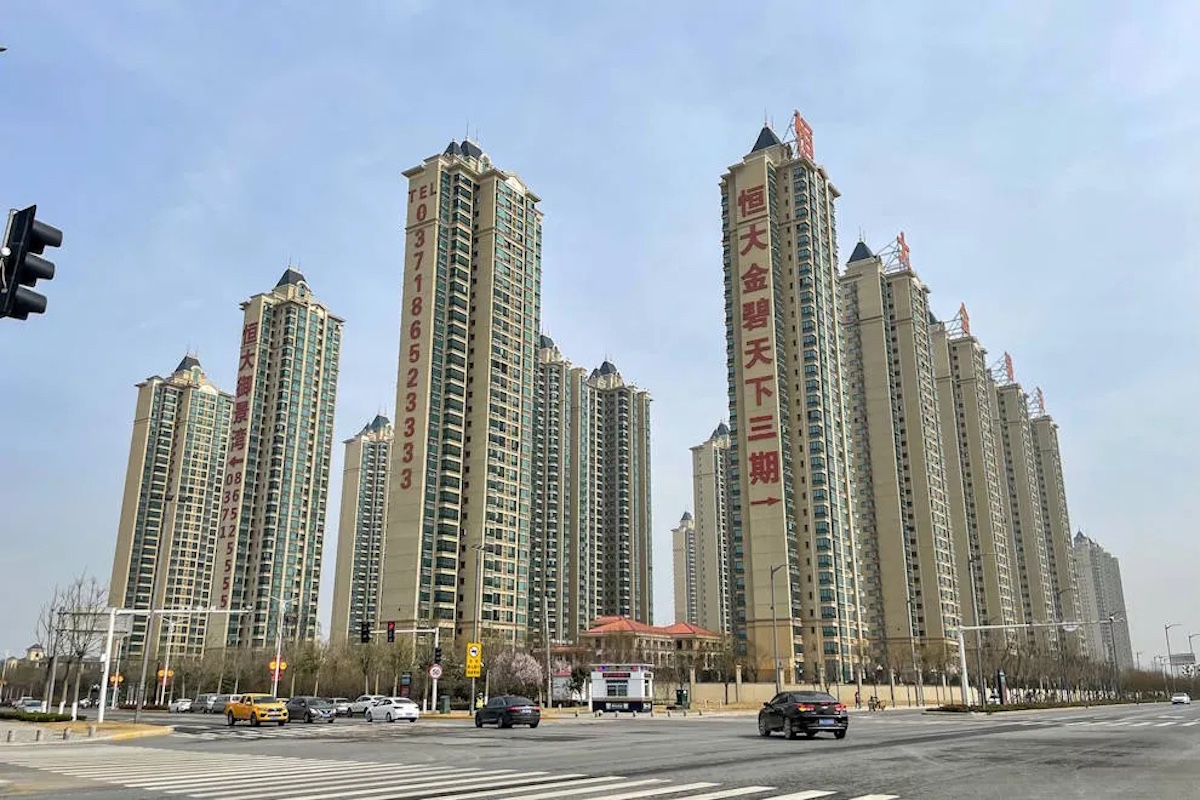
    Throughout the 2010s, this strategy relied heavily on directing new credit to the real estate sector, fueling what remains the largest property construction and price boom in modern history. That era of endless expansion came to an abrupt end in late 2021, when the default of industry giant Evergrande triggered a wave of bankruptcies and missed debt payments across the entire sector. Since then, property prices have fallen continuously, and housing construction activity has plummeted sharply, according to Bloomberg data.

    Yet official GDP growth figures never dipped below 3% even as the property crash unfolded. Mirroring its 2009 and 2015 playbook, Beijing ordered its state-controlled banking system to replace slowing real estate lending with a surge of new loans to manufacturing and industrial firms. The shift succeeded in keeping headline growth stable, leading some proponents of China’s managed market model to declare the strategy a resounding success. In a July 2026 social media post, economist Isabella M. Weber noted that many Wall Street analysts had predicted a 2008-style “Lehman moment” for China in 2021, but the bubble defused without a total financial collapse, arguing that this demonstrated an advantage of state-managed markets over unregulated free markets.

    Critics have long warned that this approach carries steep long-term costs: repeated credit-directed stimulus funnels capital to unproductive, politically favored firms, dragging down aggregate productivity growth. This pattern played out in the 2010s, when massive lending to real estate companies diverted resources from more productive sectors. Now, economists warn that the 2022-2024 wave of industrial lending could leave a lasting overhang of “zombie companies” that hoard labor and capital without generating meaningful economic output.

    Supporters of Beijing’s approach push back against these warnings, arguing that long-term costs are unproven, productivity is difficult to measure accurately, and any structural issues can be addressed later. They frame the outcome as a victory for China’s policy goals: successfully pivoting the economy away from excessive reliance on real estate development without triggering a broad economic contraction. Proponents of expanded state economic control in other countries have also held up China’s performance as evidence of the benefits of greater government intervention in markets.

    However, a closer look at labor market data and independent growth estimates tells a more complicated story. Despite official claims of continued stable growth, China did experience a sharp economic downturn following the property crash, and underlying growth remains far weaker than headline figures suggest.

    The first red flag appears in China’s labor market. In 2023, Beijing revised its methodology for calculating youth unemployment to use a narrower definition, after official figures hit record highs. Even with the methodological change, the youth unemployment trend has still moved upward. Official overall unemployment figures show only a small increase, but independent analysts note that these numbers are incomplete: they exclude migrant workers from rural areas, workers who have dropped out of the labor force, and people waiting to start new jobs. Alternative indicators, such as the non-manufacturing employment purchasing managers index, have remained consistently below pre-pandemic levels since the crash, and the migrant worker population has not grown at all since the COVID-19 pandemic. Record numbers of young people are now opting to pursue postgraduate education or civil service roles rather than entering the open job market, masking the true scale of weak labor demand.

    Even official GDP data contradicts claims that China avoided any quarterly contraction. China typically reports growth on a year-over-year basis, unlike the quarterly sequential reporting used in the U.S. and most other major economies. Official figures show that China’s economy contracted by 0.8% quarter-over-quarter in the second quarter of 2022, equal to an annualized contraction of more than 3% — a figure that was originally reported as a much steeper 9.3% contraction before being revised downward. Even official data confirms that current trend growth is roughly 2 percentage points lower than it was immediately before the pandemic.

    Numerous independent analyses suggest that even the revised official figures overstate growth, due to a long-standing practice of “smoothing” GDP numbers: official statistics understate growth in strong years and overstate it in weak years to present a more stable picture of economic performance. A 2016 academic study found that this practice has resulted in official data overstating actual growth by a substantial margin since 2002. Following the 2021 property crash, multiple independent research groups have reached similar conclusions.

    The Rhodium Group, a leading independent research firm focused on China, used alternative data sources to estimate that China’s economy actually contracted between 0.3% and 0.8% in 2022, compared to the official 3% growth figure, and grew only 1.5% to 2% in 2023, far below the official 5.2% reported. The Bank of Finland found that growth effectively stalled in 2022, and Capital Economics concluded that China did experience a full recession that year, even though growth has picked up moderately since. Adding to evidence of weak demand, China has slipped into deflation, with consumer prices falling into negative territory — a classic indicator of insufficient aggregate demand in a slowing economy.

    It is important to acknowledge that China’s credit-based stabilization policy represents a meaningful innovation in macroeconomic management that merits further study from policymakers around the world. Beijing succeeded in preventing the property crash from spiraling into a total financial collapse, a feat that many analysts once considered unlikely. Even so, triumphal claims that China has eliminated the business cycle and avoided any recessionary pain from the property bust do not hold up to scrutiny. Long-term productivity costs remain a major risk, and even in the short term, the downturn has been far deeper than official figures suggest. If China remains on a trajectory of permanently lower trend growth, the practice of smoothing official growth numbers will eventually become unsustainable, as there will not be enough strong growth in good years to offset the inflated numbers reported during downturns.

  • As quake rescue effort winds down, Venezuelans are left alone to recover their dead

    As quake rescue effort winds down, Venezuelans are left alone to recover their dead

    Two weeks after twin earthquakes struck coastal Venezuela, leaving a trail of death and destruction, hundreds of grieving relatives are still forced to dig through collapsed buildings with their bare hands and basic tools, abandoned by state authorities who have failed to provide the heavy machinery and support needed to recover the remains of their missing loved ones.

    The devastating back-to-back quakes that hit on June 24 toppled dozens of structures, including public high-rise housing blocks constructed under former socialist leader Hugo Chávez, and have officially claimed 3,342 lives, with another 16,740 people injured. But thousands more remain unaccounted for: more than 30,000 missing person reports have already been filed to an opposition-run database, a figure that far outpaces official government counts.

    For 26-year-old Noel Márquez, the disaster has been marked by unending suffering and unmet need. Márquez was away at his girlfriend’s apartment when the 10-story building his entire family called home crumbled into rubble and ignited. Rushing back to the site, he called out for his mother, pregnant sister, grandparents and siblings, and only heard a response from his 17-year-old brother Leonel, whose legs were trapped beneath heavy concrete columns.

    For hours, Márquez and his father — who also escaped being in the building that day — shouted through layers of wreckage to Leonel, listening as the teenager cried for help and gasped through thick, suffocating smoke while waiting for a government-provided crane to lift the crushing debris. The rescue equipment never arrived. Eventually, Leonel’s calls fell silent.

    That agony, however, was only the beginning. Márquez said the worst horror came when he was left to untangle the remains of his family with nothing but a hand saw and his bare hands. He managed to cut through debris to retrieve the bodies of Leonel and his mother, but was forced to leave his eight-month pregnant sister, grandmother and other relatives trapped beneath the rubble — abandoning not just their bodies, but his last hope of giving them a proper, respectful burial.

    “It’s unfair. It’s inhumane, everything that is happening,” Márquez said from the overcrowded makeshift morgue set up at La Guaira port. “We couldn’t get my brother out because we didn’t get a response from the state … and after 11 days, we are still requesting a crane.” Even a week after he delivered the recovered remains of his mother and grandfather to the morgue, Leonel’s body is still lost, he says — a loss he blames entirely on official negligence.

    Márquez is far from alone in his grief and anger. Across the hardest-hit state of La Guaira, hundreds of survivors are facing the same gruesome, heartbreaking reality 12 days after the quakes. International rescue teams that arrived in the immediate aftermath have begun departing, quietly conceding that no additional survivors are likely to be found alive under the rubble. Local authorities have shifted their focus to securing temporary shelter for the more than 14,000 displaced people left homeless by the quakes, and have pivoted publicly from sharing dramatic rescue updates on social media to rolling out a national reconstruction initiative dubbed *Venezuela Reborn*.

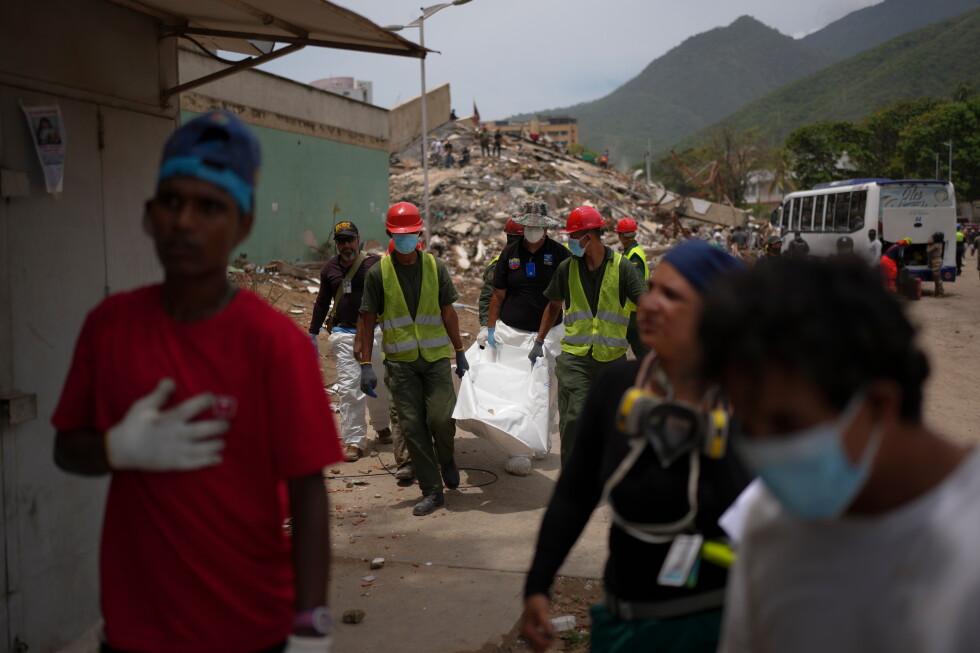
    But the pressing, horrific work of recovering the dead has fallen almost entirely to civilian family members, who say they have been abandoned by the state just as they were when they first begged for help to trap survivors in the hours after the quakes. Over the weekend, no government civil defense teams or security personnel were spotted assisting families digging through wreckage across La Guaira. Almost all the work is being done by civilians, using nothing but their hands or basic hand tools, with only occasional support from volunteer firefighters and the small remaining contingent of Mexican rescue workers who have not yet left the country.

    William Gomez, a La Guaira-based firefighter, explained that the delay has made the recovery work even more grotesque. “It has been difficult because the bodies are already in an advanced state of decomposition, decomposed to such an extent that many times when we try to remove them, they fall apart,” he said.

    Norely Rodríguez, who is searching for her 5-year-old daughter in the rubble, echoed the despair of many families. “I found her hand, but her torso is crushed,” she said. “I want to see if I can get her out whole.”

    Yeikhary Urbina, who recovered the bodies of her mother and brother Saturday, trapped in an embrace under layers of concrete, said civilian families have been left to fend for themselves entirely. “We are the ones helping ourselves: our family. Nobody else helps us except for a few volunteers,” she said.

    The disaster has reignited long-simmering anger over shoddy construction in the country’s public housing blocks, which were built for low-income families under Chávez’s administration. Multiple residents reported that they had complained for years about structural flaws in their high-rises, only to have their concerns ignored by authorities. When the quakes hit, dozens of these buildings collapsed completely, trapping hundreds inside.

    Alexander, a 42-year-old police officer who asked to be identified only by his first name over fears of official retaliation, was shaking with fury as he recovered his 12-year-old daughter’s remains after 11 days of digging. He blamed the government for ignoring long-running warnings that his housing complex was structurally unsound, for failing to send rescue teams in time to save his wife and three daughters, and now for refusing to send heavy machinery to help him retrieve their bodies.

    “Not a single person from the government was here,” he said, as he held the black plastic body bag containing his daughter’s decomposed but intact remains. “She was waiting for me to pull her out.”

    For grieving families, the lack of support has turned an already catastrophic disaster into an ongoing trauma, with many still unable to lay their loved ones to rest, and left to confront the gruesome work of body recovery entirely on their own.

  • Charlie Kirk’s family attends hearing for suspect charged with his murder

    Charlie Kirk’s family attends hearing for suspect charged with his murder

    Nearly 10 months after the high-profile assassination of influential American conservative activist Charlie Kirk on a Utah college campus, the first formal preliminary hearing for his accused killer got underway this week, bringing Kirk’s grieving family face-to-face with the man charged with his death. Kirk, the 31-year-old founder of the youth conservative group Turning Point USA and a close ally of former President Donald Trump, was fatally shot in September 2025 while delivering a speech at Utah Valley University in Orem, triggering an urgent two-day nationwide manhunt for the perpetrator. Law enforcement officials took 23-year-old Tyler Robinson into custody on September 12, 2025, and prosecutors have leveled four serious charges against him: aggravated murder, felony firearm discharge, obstruction of justice, and witness tampering. As of the opening of this week’s hearing, Robinson has not entered a formal plea, and local prosecutors are pushing forward with a pursuit of the death penalty. The preliminary hearing, which is set to run through the end of this week, opened on Monday with procedural moves and the start of evidence presentation from the prosecution. Ahead of the proceedings, Kirk’s family — including his widow Erika, two young children, parents Robert and Kathryn, and sister Mary — released a heartfelt public statement through local media, opening up about the permanent trauma of their loss. “Charlie was a beloved husband, son, brother, friend, and father,” the statement read. “Every court proceeding serves as a painful reminder of his death and the loss that has irrevocably impacted our lives and the lives of his children.” On Monday morning, Kirk’s parents and widow arrived at the Utah County courthouse separately, both maintaining privacy as they entered the building. The family expressed deep gratitude for the widespread outpouring of support they have received from across the country in the months since the shooting. “This outpouring has sustained us during the darkest days of our lives,” the statement added. “Out of respect for the judicial process, we will not be commenting further at this time. We ask for continued privacy as we navigate this process and immense grief.” For the defense team, multiple pre-hearing motions have failed to shift the trajectory of the case. Attorneys for Robinson previously attempted to have a range of evidence thrown out, all of which were denied by the court. They also launched an unsuccessful bid to bar cameras from the courtroom during the preliminary hearing, and have formally asked presiding Judge Tony Graf to eliminate the possibility of the death penalty entirely. On the opening day of the hearing, Robinson appeared in court dressed in a light-colored suit, seated quietly between his two legal representatives at the defense table. Prosecutors confirmed at the start of proceedings that four law enforcement witnesses would be called to testify during the first day of the hearing, as the state begins laying out its case against Robinson to establish that there is probable cause to move forward with a full murder trial.

  • More than 1,000 arrested as part of global human trafficking crackdown

    More than 1,000 arrested as part of global human trafficking crackdown

    A coordinated international law enforcement sweep targeting the global human trafficking trade has resulted in more than 1,000 arrests and the identification of over 2,000 victims after a five-day operation spanning four continents. Spearheaded by Interpol, with support from Europol (the European Union’s law enforcement cooperation agency) and European border management body Frontex, Operation Global Chain brought 40,000 on-the-ground officers together across 59 countries in Africa, the Americas, Asia and Europe to dismantle criminal networks engaging in sexual exploitation, forced labor, coerced criminal activity and forced begging.

    The operation, conducted between June 8 and 12, uncovered evolving smuggling routes and increasingly adaptive criminal tactics, Interpol officials confirmed. Among the major breakthroughs was the takedown of two high-profile criminal networks: one that trafficked victims to Cambodia to coerce them into participating in global online scam operations, and another that groomed underage girls through social media to force them into sex work across multiple European countries.

    Official data from the operation reveals that 2,070 confirmed and potential victims were rescued, the overwhelming majority of whom are women. Around 10 percent of all identified child victims subjected to sexual exploitation came from the Americas, highlighting an alarming emerging trend of Latin American people being trafficked to Europe for forced labor. Of the 1,024 total arrests made, 334 were direct charges for human trafficking offenses, with the remaining 690 related to linked criminal activities. An additional 201 suspected traffickers were identified for further investigation, and Interpol has already issued global notices to track down at-large wanted persons of interest.

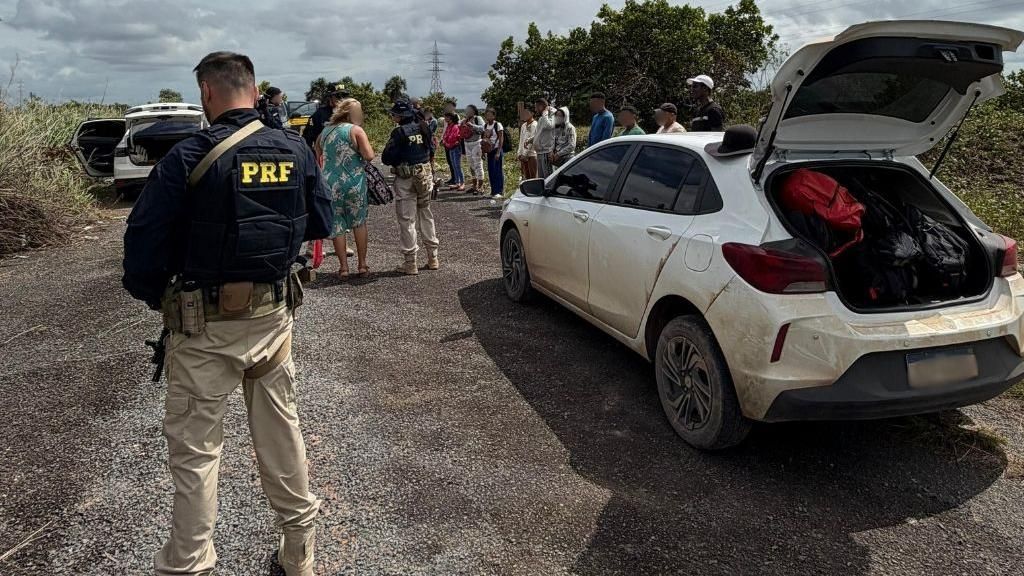
    Local law enforcement agencies across participating nations carried out targeted actions tailored to regional trafficking patterns. In Brazil, Federal Patrols were deployed along the country’s open border regions, resulting in the identification of 406 victims of a transnational trafficking ring—83 Brazilian nationals and 323 foreign citizens—who were bound for Cambodia to be forced into online scam work. Across the border in Argentina, local police rescued two Bolivian children who had been held as forced labor in a local grocery store and arrested the traffickers responsible. Colombian authorities complemented enforcement action with an airport awareness campaign to warn travelers of the risk of fraudulent job offers that often lure victims into trafficking networks.

    In Western Europe, Belgian law enforcement dismantled a cross-border trafficking ring that recruited victims through social media, held them captive, and forced them into prostitution across Belgium and neighboring France, resulting in 17 arrests. Officials note that 465 new ongoing investigations into unaddressed trafficking networks were launched as a direct outcome of the operation, and all identified victims have been transferred to national social protection and support services to aid their recovery.

    Breaking down the types of exploitation uncovered by the sweep, Interpol confirmed that sexual exploitation accounts for the largest share of detected trafficking cases, followed by forced criminal activity at 20 percent, forced labor at 11 percent, and forced begging at 2 percent. Interpol Secretary General Valdecy Urquiza emphasized that human trafficking remains one of the most lucrative and widespread forms of organized transnational crime, generating billions of dollars in illicit annual revenue while inflicting irreversible, long-term harm on survivors.

    Despite the scale of the ongoing challenge, Urquiza highlighted the operation’s outcome as a testament to cross-border collaboration. “These results demonstrate what can be achieved when countries work together to disrupt criminal networks and strengthen cooperation across regions,” he said.

  • Ex-Syrian intelligence chief found guilty of torture and sexual abuse by Austrian court

    Ex-Syrian intelligence chief found guilty of torture and sexual abuse by Austrian court

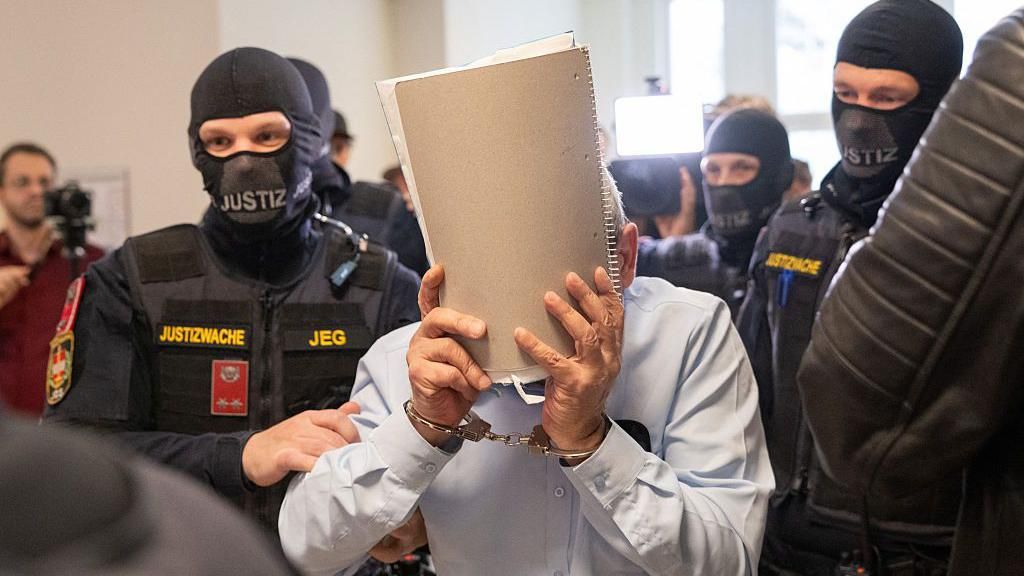
    In a landmark ruling that marks one of the rare instances of European jurisdiction over crimes linked to the Bashar al-Assad government, a court in Vienna, Austria, has convicted two former Syrian security officials of systemic torture, sexual abuse, and assault against anti-government opponents during the early stages of Syria’s civil conflict. The defendants, both of whom had sought asylum in Austria years ago, now face eight-year prison sentences, with an appeal already open to them.

    The lead defendant, identified only as Khaled al-H. per Austria’s strict privacy regulations, served as the head of Syria’s General Intelligence Directorate in the northern city of Raqqa from 2011, the same year the uprising against Assad erupted, through 2013, when the Free Syrian Army seized control of the city and prompted his flight. A member of Syria’s Druze ethno-religious minority, Khaled al-H. was found guilty of direct involvement in torture. His co-defendant, Moussab Abou R., the city’s former police chief, was convicted alongside him; both men were found guilty on additional charges of sexual coercion, aggravated coercion, and inflicting severe bodily harm.

    Prosecutors argued that the pair repeatedly ordered or intentionally failed to stop the brutal abuse of anti-government protesters held in custody in Raqqa, with the explicit goal of crushing the emerging protest movement and intimidating the civilian population into compliance. Over the course of the trial, dozens of victims, former detainees who traveled from across Europe and Syria to give testimony, shared graphic accounts of their abuse. The court heard harrowing details: victims were stripped naked before being beaten, subjected to electric shocks, and alternated between being doused in scalding and freezing water. One witness described being repeatedly lashed on the soles of his feet with electric cables. Judges also noted that nearly all survivors suffer from permanent, life-altering mental trauma as a result of their detention.

    Both defendants have repeatedly denied all charges brought against them. During the proceedings, Khaled al-H. claimed he never ordered or witnessed any acts of torture at his facility, and argued that as a member of a minority group in Assad’s Syria, he had no choice but to follow orders from the central government.

    The case has already triggered broader intrigue beyond the convictions: multiple independent media reports reveal that Khaled al-H. was brought into Austria in 2015 by the country’s former domestic intelligence agency, the BVT, at the formal request of Israel’s Mossad intelligence service as part of a classified initiative codenamed “Operation White Milk.” The Austrian Press Agency confirmed that the secret agreement was overseen by Martin Weiss, the former head of the BVT. Weiss is currently a fugitive living in Dubai, and is wanted for questioning over his alleged ties to disgraced Austrian spy Jan Marsalek, a wanted fugitive who is believed to be hiding in Moscow.

    Legal experts note that this trial is a significant milestone for universal jurisdiction efforts, which allow countries to prosecute serious human rights crimes committed anywhere in the world, regardless of the nationality of the perpetrators or victims. It remains uncommon for European nations to open and conclude such cases against current or former officials of the Assad government, making the Vienna verdict a notable shift in how European courts address atrocities linked to the Syrian civil war. Both men have confirmed they plan to exercise their right to appeal the conviction and sentence.