博客

  • Spain may style itself as Israel’s most fervent adversary, but its sanctions are far from comprehensive

    Spain may style itself as Israel’s most fervent adversary, but its sanctions are far from comprehensive

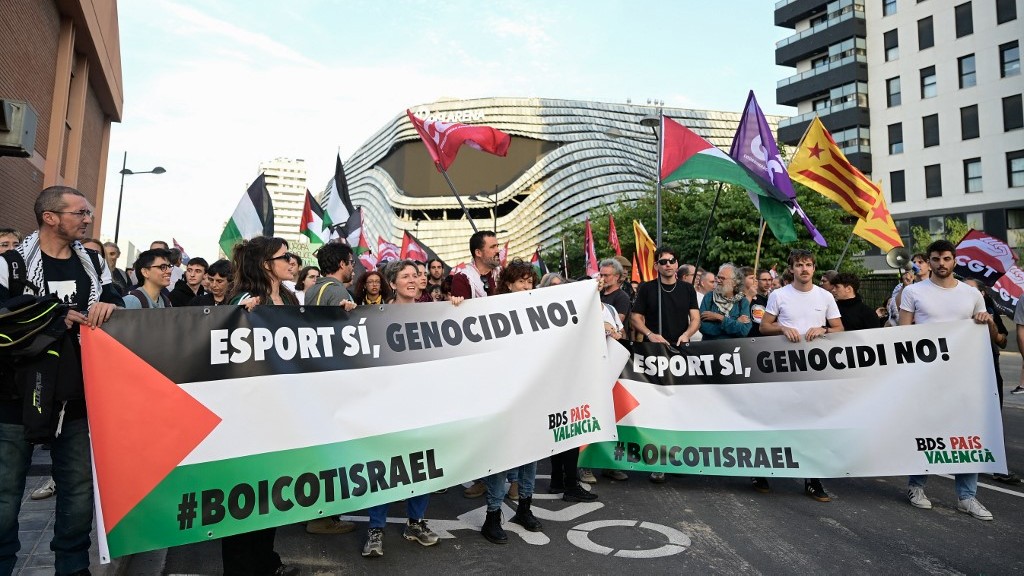
    Amid growing global outcry over Israel’s military campaign in Gaza, widely condemned by critics as genocide, most Western governments in Europe and the Americas have remained conspicuously silent on the issue. Spain has emerged as a rare exception, positioning itself as one of the most outspoken Western critics of Israel’s actions, positioning itself as an outlier among Western nations.

    Spanish Prime Minister Pedro Sanchez has pushed for multilateral action to halt global arms trade with Israel, including a high-profile campaign to suspend the EU-Israel Association Agreement. Spain was also the first and only European Union member state to formally recall its ambassador to Israel, and announced a halt to new arms sales to Israel as early as October 2023.

    However, a 2025 investigation from Barcelona’s Delas Centre for Peace Studies reveals a stark gap between this rhetoric and actual trade data. The report finds that military imports from Israel actually increased dramatically after October 2023, totaling €36.7 million ($41.9 million) by February 2025 alone. This included arms, ammunition, tanks, and armored fighting vehicles categorized under standard international trade codes. The report explicitly notes that Spain never imported more Israeli military equipment than it did in the 16 months following the 7 October 2023 attacks.

    This pattern shifted only in September 2025, when Sanchez signed into law a formal full arms embargo against Israel, alongside a ban on imports of goods from Israeli-occupied Palestinian territories. Unlike the earlier partial pause on new sales licenses, this legislation establishes a formal, blanket legal prohibition on arms trade with Israel.

    Eirene de Prada, an international law professor and member of Juristas por Palestina (Lawyers for Palestine), explained that the new legislation marks a formal shift from administrative restraint to binding legal rule. But she warns that broad loopholes, exceptions for pre-existing contracts, and ambiguous regulatory gaps leave the embargo far weaker than its public framing suggests. In comments to Middle East Eye, De Prada accused the Spanish government of deliberate doublespeak: while the embargo sends a strong symbolic statement condemning Israeli actions, regulatory loopholes embedded in the Royal Decree-Law allow trade with Israeli defense firms to continue largely uninterrupted.

    Under Spanish legislative rules, a Royal Decree-Law is classified as an emergency measure for extraordinary and urgent need, requiring parliamentary approval within 30 days of enactment. Royal Decree-Law 10/2025, passed in October 2025, justifies the embargo by noting that the extreme humanitarian crisis in Gaza creates an urgent need to block the transfer of defense and dual-use materials that Israel uses against civilian populations.

    Alejandro Pozo, an investigator at the Delas Centre, argues that even with its flaws, the legislation represents a meaningful step forward. He notes that the embargo sets a critical global precedent, proving that a full arms embargo on Israel is a politically feasible policy for Western nations. Even so, Pozo confirms that the law leaves all pre-existing military contracts intact and grants Spanish authorities broad discretion to approve exceptions when deemed justified.

    Just three months after the law’s passage, the Spanish government exercised one of these exceptions to authorize transfers of defense and dual-use materials for four Airbus-led aeronautical projects, citing the projects’ significant industrial and export potential. The approved transfer included an anti-missile defense system produced by Elbit Systems, an Israeli defense manufacturer widely documented as complicit in Israel’s military campaign in Gaza.

    Pozo explains that Israel’s core interest in trade with Spain is not selling finished weapons to Spanish buyers, but gaining access to Western markets that lower the cost of Israel’s domestic military production and sustain its long-term occupation of Palestinian territories. He added that Israeli defense firms also exploit loopholes in EU trade rules, which allow Spain to trade defense equipment via other EU member states and purchase Israeli weapons manufactured by EU-based Israeli subsidiaries. These transactions are not covered by the current embargo, and account for a large share of Israeli military-related activity in Spain. Many Israeli-designed weapons are produced in Spain by local subsidiaries of Israeli firms or by domestic Spanish manufacturers operating under Israeli production licenses.

    To close these gaps, Pozo argues that policymakers must target the financial flows that directly or indirectly fund Israel’s war machine, rather than only regulating direct arms transfers. He calls for sanctions modeled after the sweeping comprehensive sanctions the EU imposed on Russia, which target all core Israeli economic and political interests.

    Spain is far from alone in facing this contradiction between anti-Israel rhetoric and continued complicity in what UN Special Rapporteur Francesca Albanese has termed the “economy of genocide.” Colombia, another leading critic of Israel’s actions, implemented a national ban on coal exports to Israel that took effect in August 2025. But after the ban went into effect, South Africa – which brought Israel’s case before the International Court of Justice (ICJ) and co-founded the Hague Group supporting Palestinian legal claims – stepped in to become Israel’s largest coal supplier.

    South African Trade Minister Parks Tau has argued that imposing unilateral sanctions on Israel without formal multilateral UN backing violates World Trade Organization non-discrimination rules and exposes South Africa to costly international legal challenges. But Patrick Bond, director of the Centre for Social Change at the University of Johannesburg, rejects this claim. He points to a July 2024 ICJ ruling, later upheld by the UN General Assembly, that explicitly requires all nations to end any form of complicity with Israel’s illegal occupation of Palestinian territories. Bond argues this ruling creates a binding international legal obligation to restrict trade with Israel, and that South African authorities already have the legal authority to ban such exports under existing “dangerous exports” regulations – no new legislation is required. “The coal export ban could be implemented immediately,” Bond confirmed.

    Even in Colombia, where President Gustavo Petro has spearheaded a regional push for sanctions against Israel, untangling long-standing military ties has proven far more complex than banning coal exports. In February 2024, Petro announced his government would end all new arms purchases from Israel and reduce bilateral military cooperation, but Colombian Defence Minister Ivan Velasquez later confirmed that all existing contracts would be honored, including maintenance for Colombia’s fleet of Israeli-built Kfir fighter jets. The Colombian Armed Forces also still rely heavily on the Israeli-made Galil rifle, which was used extensively by Israeli forces in Palestine and Lebanon, and was deployed to suppress left-wing insurgent groups during Colombia’s decades-long civil war.

    To break these long-standing ties, Colombia signed a €3.1 billion contract with Swedish defense firm Saab in November 2025 to purchase 17 Gripen E/F fighter jets, which will replace the aging Kfir fleet by 2032. In May 2026, Petro also unveiled a domestically produced rifle to gradually replace the Galil, but the transition is expected to take five years to complete.

    A shared vulnerability of both Spain and Colombia’s embargo policies is their vulnerability to reversal by future administrations. In Colombia, President-Elect Abelardo de la Espriella, who takes office in August 2026, has already publicly proposed expanding collaboration with Israeli defense industries. His commitment to expanding extractive mining also threatens to roll back Petro’s coal export ban, which was implemented via presidential decree and has not been enshrined in permanent national legislation.

    In Spain, the embargo has greater formal legal standing as a properly enacted law, but it is still not immune to rollback. De Prada explains that a future administration with a parliamentary majority could substantially amend or fully repeal the embargo. It could also weaken the embargo in practice through broad interpretation of the “general national interests” clause that allows for frequent exceptions, or by simply reducing the rigor of regulatory enforcement.

    Pozo confirms that if the center-right Partido Popular or far-right Vox win the 2027 national elections, they could easily eliminate the embargo entirely. This would likely be a symbolic political act rather than a response to domestic defense needs, as both parties have openly condemned Sanchez’s Gaza policy. Both parties voted against the embargo in October 2025, with Vox reiterating Israel’s claimed right to self-defense and accusing the Sanchez government of using the embargo as a smokescreen to distract from domestic corruption allegations.

    Experts say Colombia’s incoming right-wing administration’s plan to rapidly reset ties with Israel serves as a clear warning to Spain’s current government. De Prada argues that sustained, long-term policy of holding Israel accountable requires far more robust regulatory measures than the current limited embargo. She told Middle East Eye: “Ultimately, the next step must be moving from a limited, reversible embargo to a comprehensive, permanent policy of non-cooperation, non-assistance, and non-recognition, supported by effective parliamentary oversight, administrative transparency, and full supply chain traceability.”

    Until that shift occurs, the gap between symbolic political gestures and concrete action, and between public rhetoric and policy practice, remains unmistakeable.
  • Spain sets World Cup record with 6th clean sheet in a row and keeper Simón extends scoreless mark

    Spain sets World Cup record with 6th clean sheet in a row and keeper Simón extends scoreless mark

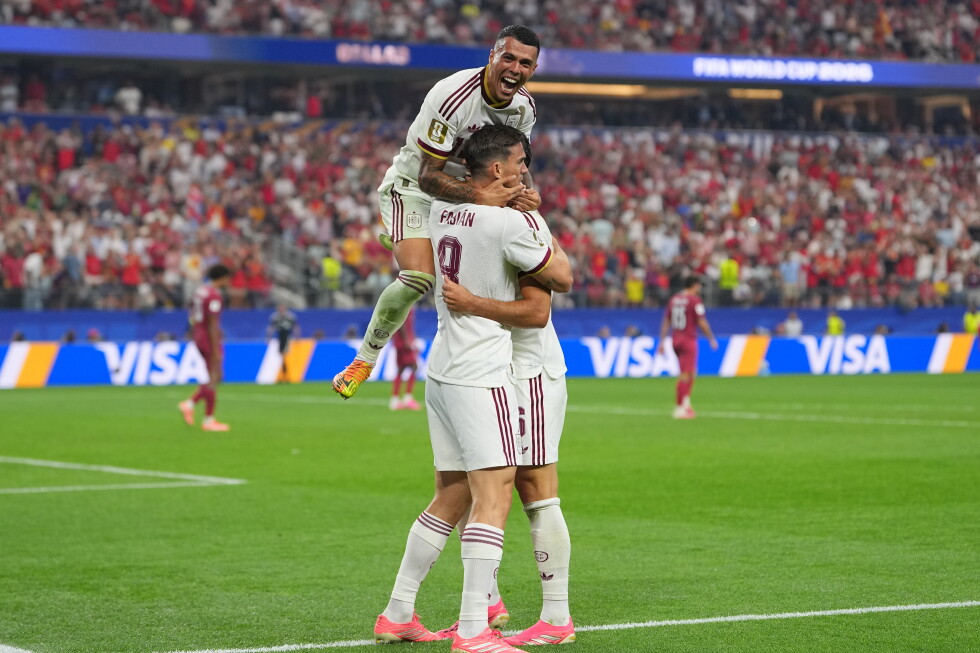
    ARLINGTON, Texas — The 2026 FIFA World Cup delivered another chapter of historic soccer achievement on Monday, as Spain cemented its place in international tournament record books with a sixth straight clean sheet and a tense 1-0 knockout-stage victory over Portugal. This milestone broke a three-way tie that had stood for decades, with Spain moving ahead of Italy’s 1990 side and Switzerland’s 2006-2010 squad for the longest consecutive run of World Cup matches without conceding a single goal.

    Spain’s defensive streak first began back in the 2022 Qatar World Cup, when the squad held Morocco scoreless through 120 minutes of regulation and extra time in a round-of-16 clash, ending in a goalless draw before Morocco advanced via penalty shootout. When Spain kicked off its 2026 group stage campaign, the team earned an unexpected 0-0 draw against underdog Cape Verde, a result that would kick off a dominant run of defensive form: four straight shutout victories that carried La Roja through to the tournament’s quarterfinals.
    Leading the historic defensive charge is starting goalkeeper Unai Simón, who stretched his personal record of consecutive scoreless minutes to an incredible 609 minutes – a mark that far outpaces the previous 517-minute record set by Italian legend Walter Zenga, who set the original benchmark during Italy’s 1990 home World Cup run with five straight clean sheets. Simón first surpassed Zenga’s record earlier last week, during Spain’s 3-0 knockout-stage opening win over Austria, a match where the Austrian side failed to register a single shot on target.

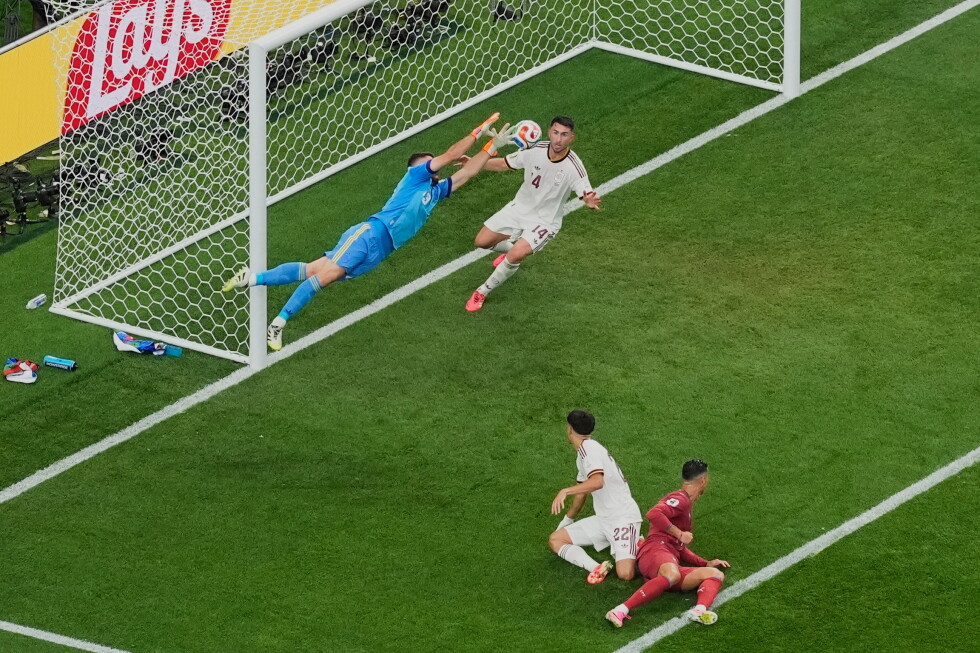
    Simón’s shutout streak actually traces back to the final group stage match of the 2022 Qatar World Cup, a 2-1 loss to Japan where the keeper’s scoreless run began after conceding the second goal of the match. Entering Monday’s high-stakes clash with Portugal, Simón had only needed to make four total saves across the entire 2026 tournament, but the star keeper was called into action twice in the first half by Portuguese icon Cristiano Ronaldo – both stops preserving Spain’s clean sheet and historic streak.
    The second of those two saves will go down as one of the most memorable highlights of the tournament: a spectacular diving stop where Simón, still airborne after launching himself to intercept the shot, reached back to secure the ball with both hands. The opportunity came after Portuguese defender Jose Sa’s header deflected off the shoulder of the 29-year-old Athletic Bilbao shot-stopper, leaving Ronaldo with an open look at goal that Simón somehow turned away.

    The late 1-0 winning goal from Mikel Merino not only sent Spain through to the World Cup quarterfinals, but also brought an end to Ronaldo’s unprecedented run of six consecutive World Cup appearances spanning from his 2006 debut, closing the book on one of the most legendary international careers in soccer history.

  • Mbappé condemns Paraguayan senator over racist remarks after World Cup match

    Mbappé condemns Paraguayan senator over racist remarks after World Cup match

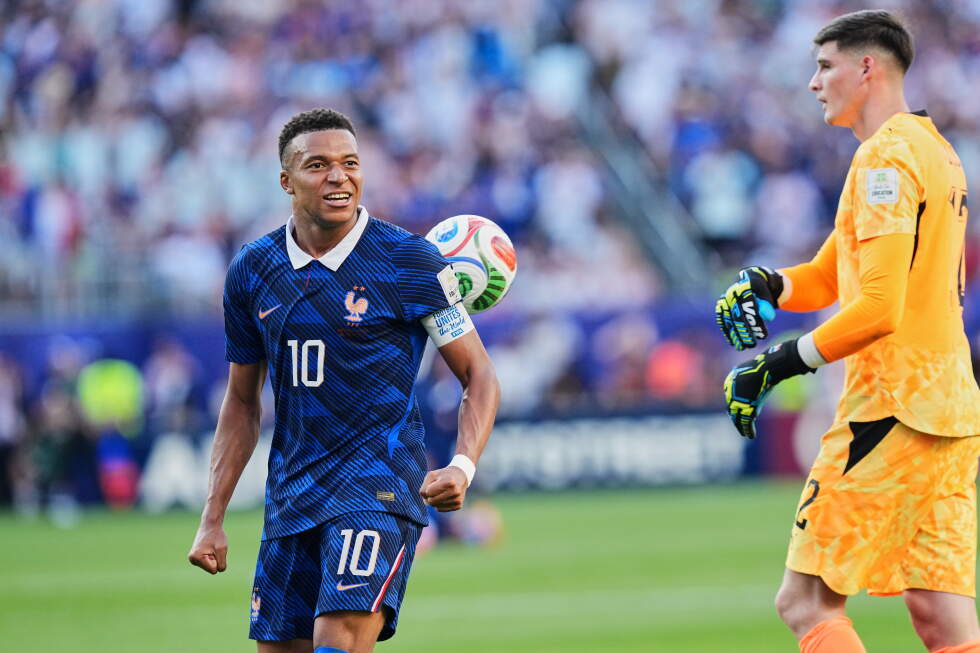
    In the wake of a controversial 2026 World Cup round of 16 match that saw France defeat Paraguay to secure a spot in the quarterfinals, a firestorm of global condemnation has erupted after a sitting Paraguayan senator made virulently racist comments targeting French captain Kylian Mbappé. Mbappé hit back at the lawmaker on Monday, delivering a scathing public rebuke that has drawn widespread international attention.

    Celeste Amarilla, a senator representing Paraguay’s Liberal Radical Party, launched the racist attack on social media platform X shortly after Mbappé converted a match-winning penalty to secure France’s 1-0 win over Paraguay on Saturday. Her comments mocked the 25-year-old’s racial origins, childhood upbringing, educational background and physical appearance, in a post that quickly spread across global social media.

    Mbappé did not stay silent in the face of the attack, posting a blunt response on his own X account that has been shared more than a million times as of Monday evening. He labeled Amarilla a “despicable woman” unfit to hold a seat in Paraguay’s national congress, noting that her reckless, openly bigoted comments had already overshadowed the historic World Cup run that the Paraguayan national team put together in this tournament.

    “Through your recklessness and your brazen racism, the entire world has already forgotten the journey and the historic effort that your players accomplished during this World Cup,” Mbappé wrote.

    Officials from both Paraguay and France have lined up to condemn Amarilla’s remarks, separating her views from official national positions. By mid-Monday, the Paraguayan government released an official statement disavowing the senator’s comments, saying they directly contradict the core values of peaceful coexistence and respect for human dignity that the South American nation officially upholds. The statement emphasized that Amarilla’s words do not represent the views of either the Paraguayan government or the Paraguayan people.

    France’s top governing body for football, the French Football Federation (FFF), also issued a formal denunciation, calling Amarilla’s comments “utterly abhorrent” and “unacceptable.” The organization confirmed it would be referring the incident to French prosecutors for formal review. FFF president Philippe Diallo also extended condemnation to a second incident of anti-French racist rhetoric from former Paraguayan football star José Luis Chilavert, who referred to the entire French national squad as “a squad from Africa” ahead of Saturday’s match. Diallo noted that Chilavert, once a widely respected top goalkeeper, had now “fallen into disgrace” for his bigoted comments.

    Marina Ferrari, France’s sports minister, also publicly expressed outrage over the incident, voicing unwavering support for Mbappé and the French national team. “By targeting Kylian Mbappé, the senator is attacking everything our captain embodies and everything our country stands for: liberty, equality and fraternity,” Ferrari wrote on X.

    France’s assistant national team coach Guy Stéphan also added his voice to the chorus of condemnation on Monday, summing up the widespread reaction in three sharp words: “In three words, it’s indignant, abject, scandalous.”

    As of Monday evening, The Associated Press has reached out to Amarilla via her social media channels to request a response to the widespread condemnation, but has not yet received a reply. France is set to continue its World Cup campaign this Thursday, when it will face Morocco in the tournament’s quarterfinal round.

  • Mikel Merino’s late goal sends Spain to quarterfinals and ends Cristiano Ronaldo’s World Cup career

    Mikel Merino’s late goal sends Spain to quarterfinals and ends Cristiano Ronaldo’s World Cup career

    ARLINGTON, Texas — A last-gasp goal from substitute Mikel Merino in the first minute of second-half stoppage time handed Spain a dramatic 1-0 round-of-16 victory over Iberian rivals Portugal at the 2026 FIFA World Cup on Monday, bringing an end to Cristiano Ronaldo’s legendary career on soccer’s biggest global stage.

    The game-changing sequence unfolded after Merino was brought down by a Portuguese defender, drawing a foul call. As Portugal’s playmaker Bernardo Silva contested the referee’s decision with officials, Merino stayed alert, quickly played the ball back into open play, sprinted toward the penalty area, and slotted a calm finish past Portuguese goalkeeper Diogo Costa after receiving a perfectly weighted pass from Ferran Torres.

    The result pushes Spain through to the World Cup quarterfinals for the first time since the Spanish side lifted their only World Cup trophy in South Africa 2010. La Roja will face off against the winner of the round-of-16 clash between the United States and Belgium this Friday in Inglewood, California, for a spot in the tournament’s final four.

    For 41-year-old Ronaldo, the defeat marks the close of an unprecedented World Cup journey that spanned six consecutive tournaments, dating back to his 2006 debut. The all-time leading men’s international goalscorer with 146 goals across 233 national team appearances entered the match chasing history: he was aiming to guide Portugal to back-to-back World Cup quarterfinals for the first time in the nation’s history.

    Merino’s storybook match is already one of the tournament’s most surprising narratives. The Arsenal midfielder, who played a key role in the Gunners’ first Premier League title win in more than two decades earlier this season, only entered the round-of-16 clash in the 85th minute. A series of injury issues that disrupted his club campaign had left his spot in Spain’s World Cup squad in doubt just weeks before the tournament kicked off.

    Monday’s tightly contested clash between the neighboring Iberian rivals was a stark contrast to their unforgettable 2018 World Cup group stage opener, widely regarded as one of the greatest World Cup matches in modern history. That eight years ago contest ended in a thrilling 3-3 draw, highlighted by Ronaldo’s only World Cup hat-trick at the senior international level.

    This time around, Spain’s suffocating defense and in-form goalkeeper Unai Simón kept Portugal’s star front line quiet for the full 90-plus minutes. Ronaldo, who notched three goals across Portugal’s run to the knockout stage, only mustered one clear goalscoring chance: a deft backheel flick in the 37th minute, after a deflected header from Joao Felix fell into his path. The attempt bounced softly enough for Simón to recover and make the game-saving grab, extending the keeper’s historic World Cup scoreless streak to 609 minutes. With the clean sheet, Spain also set a new tournament record, becoming the first nation ever to record six consecutive shutouts at a single men’s World Cup.

    Portugal threw everything forward in search of an equalizer during eight minutes of second-half stoppage time, with Silva coming closest to leveling the score when his late header drifted just over the crossbar. The outcome adds another chapter to the two nations’ World Cup rivalry: 16 years ago in South Africa, Spain also eliminated Portugal 1-0 in the round of 16, on their way to lifting the trophy. Monday’s result also reverses the outcome of last year’s UEFA Nations League final, a back-and-forth 2-2 draw that Portugal won on penalties, played almost exactly one year before this World Cup knockout clash.

  • France’s Marine Le Pen, who brought hard-right National Rally to cusp of electoral success

    France’s Marine Le Pen, who brought hard-right National Rally to cusp of electoral success

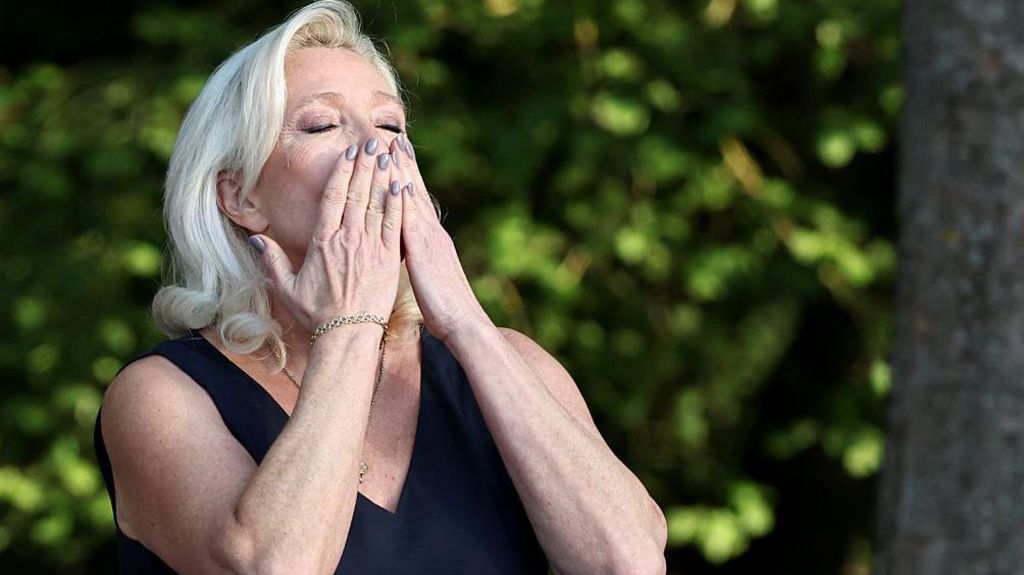
    As France’s right-wing nationalist figurehead Marine Le Pen awaits a key verdict from a Paris appeals court this Tuesday, the future of her decades-long political career hangs in the balance. Should the court rule to bar her from running in the 2027 French presidential election, it would bring an abrupt close to a political journey that has reshaped the country’s far-right landscape for a generation.

    In a gathering with supporters over the weekend in Liévin, located in the heart of her Pas-de-Calais constituency, the 57-year-old leader made clear her plan if the ruling goes against her: if barred from seeking the presidency, she will step back and throw her full support behind her hand-picked protégé, current National Rally head Jordan Bardella. Observers who attended the event noted that the moment carried the quiet air of a planned leadership transition, even as Le Pen and Bardella publicly presented a united front ahead of the verdict.

    Le Pen’s path to this crossroads stretches back more than half a century, rooted in the legacy of her father Jean-Marie Le Pen, who founded the original National Front (FN), the predecessor to today’s National Rally, in the 1970s. Her first brush with the dangers of her family’s political life came at just 8 years old, when a bomb destroyed the Le Pens’ central Paris apartment in 1976. Though Marine and her two elder sisters escaped with only minor injuries, the attack was a formative “night of horror,” as she later described it, that cemented her awareness of her father’s place in French politics.

    Eight years later, her family fractured when her mother left the household to live with her father’s biographer, later posing for *Playboy* magazine. All three sisters stood by their father, but it was the youngest, Marine, who would go on to inherit his political mantle. She once reflected in a 2004 television interview: “You’re born Le Pen’s daughter, you die Le Pen’s daughter. He’s the man of my life. He’s made me the woman I am.”

    By the early 1990s, Le Pen had graduated from law school in Paris and launched her formal political career. Her family name led to boycotts from fellow legal professionals, pushing her to focus full-time on party work within the National Front. She rose steadily through the ranks: becoming vice-president of the party in 2003, winning a seat in the European Parliament in 2004, and finally taking the party’s top leadership from her father in 2011, nine years after he reached his own political peak by advancing to the 2002 presidential runoff against Jacques Chirac.

    Once in charge, Le Pen set out on a deliberate mission to de-demonize the party her father built, working to distance it from the overt racism and antisemitism that had long defined the FN’s public image. She expelled Jean-Marie Le Pen from the party in 2015 to solidify this shift, a move that sparked a bitter family feud; after her father’s death last year, she acknowledged she would “never forgive myself for this decision, because I know it caused him immense pain.” She completed the rebrand in 2018, renaming the FN the National Rally, repositioning the once-fringe movement as a mainstream political contender while retaining its core anti-immigration platform focused on prioritizing French nationals for housing, jobs, and social benefits.

    Le Pen’s own electoral record reflects the party’s growing popularity: she placed third in the 2012 presidential race, then advanced to the runoff twice, losing to incumbent Emmanuel Macron in both 2017 and 2022. With Macron constitutionally barred from seeking a third term in 2027, Le Pen currently leads early polling for the race, positioning 2027 as her strongest ever shot at the Élysée Palace.

    But the legal conviction that led to this week’s appeal stems from a 2024 ruling that found Le Pen played a “central role” in a scheme that diverted €1.4 million (£1.2 million) in European Parliament public funds to pay unqualified National Rally party assistants. She has rejected the charges, but a disqualification from running would end her presidential bid before it formally begins.

    Le Pen’s political career has also been marked by controversial ties to the Kremlin. Decades ago, when major French banks refused to lend to the far-right party due to its history of bigotry, the National Rally turned for financing to a Russian-Czech bank linked to the Kremlin — a deal struck the same year Vladimir Putin illegally annexed Crimea from Ukraine. Le Pen openly praised Putin for years, met him at the Kremlin ahead of the 2017 election, and infamously told the BBC on the eve of the 2022 full-scale invasion that she did not believe Russia would attack Ukraine, though she later voiced support for Ukrainian sovereignty. That handshake photo with Putin has repeatedly come back to undermine her credibility with centrist voters.

    Outside of politics, Le Pen holds a professional certification in cat breeding, a hobby she has long said could be a post-political life. After suffering a regional election defeat in 2015, she told *Le Parisien* she could easily “stop everything, do something else — breed cats for example.” She earned her official breeding diploma five years later, once even earned a small side income from the venture, and was most recently spotted carrying a kitten in a pet carrier during a visit to the prime minister’s official residence in 2025. Yet for many observers, it is hard to imagine Le Pen stepping fully away from the political sphere she has inhabited since childhood.

    As the country waits for the court’s ruling, one thing is clear: whatever the outcome, the next chapter of French right-wing politics will likely be led by a new generation, with Jordan Bardella waiting in the wings to carry forward the movement Le Pen built.

  • Jordan Bardella: The ‘blank canvas’ who could be France’s youngest president

    Jordan Bardella: The ‘blank canvas’ who could be France’s youngest president

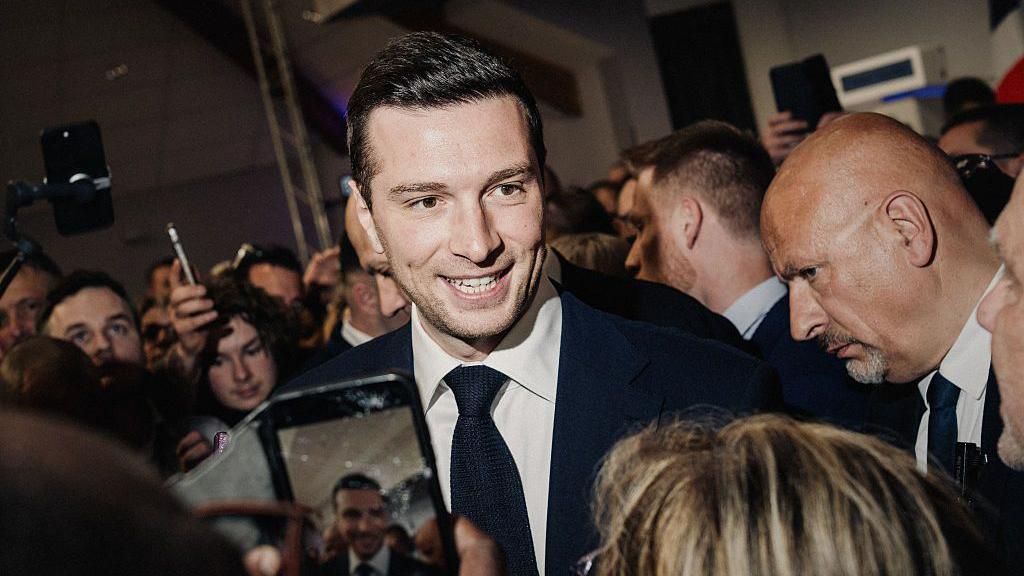
    At 30 years old, Jordan Bardella, the current president of France’s far-right National Rally (RN), stands on the cusp of a historic political breakthrough: he could become the youngest head of state in modern French history, and the first hard-right leader to occupy the Elysee Palace, if a pending court ruling bars party figurehead Marine Le Pen from running in the 2027 presidential election. The upcoming Tuesday verdict on Le Pen’s appeal trial will decide whether she retains her ban from running for public office, opening the door for Bardella to step in as the RN’s nominee. With the party holding a commanding lead in national polls and Bardella posting strong 40% approval ratings, political observers now consider a presidential victory in 2027 a plausible outcome.

    Bardella’s path to this moment began in the working-class Paris suburb of Seine-Saint-Denis, where he was raised by his Italian immigrant single mother, who often struggled to cover household expenses. While his father – also of Italian descent – owned a successful drinks distribution business in the more affluent town of Montmorency, a detail that softens the narrative of extreme working-class hardship Bardella often cites on the campaign trail, his background reflects a side of France far removed from the traditional elite that has long dominated the country’s politics. As a teen, Bardella even felt self-conscious about his non-traditional name, which stood out among the aristocratic, classic names common among the French political class.

    Bardella joined the then-National Front (FN), the RN’s predecessor, at age 17 in 2012, after convincing his initially reluctant mother to approve the move. He dropped out of university to pursue politics full-time, climbing the party ranks at a meteoric pace: he became a local departmental secretary at 19, a regional councillor for the Paris region at 20, the RN’s national spokesperson in 2017, and one of the youngest Members of the European Parliament in 2019. By 27, he had been elected president of the RN, taking the reins of the party Le Pen had remade from a fringe extremist movement into a mainstream political force.

    Bardella has long cited Le Pen as his core inspiration for joining the party, praising her unique courage, energy and political vision. That admiration quickly became mutual: Le Pen took the young rising star under her wing, elevating him to the party’s inner circle just years after he joined. In 2024, Bardella led the RN to a 33% first-place finish in snap parliamentary elections, falling just short of capturing the prime minister’s office when a center-left alliance secured a second-round victory. Despite that narrow loss, his popularity has remained robust ever since, matching Le Pen’s own steady 39% approval rating.

    Political analysts and sociologists who study the RN attribute Bardella’s broad electoral appeal to his unique ability to connect with disparate voter groups. Described by sociologist Raphael Llorca as an “incredible blank canvas,” Bardella lets different voter segments project their own ideal candidate onto him. He retains old-school RN supporters by leaning into the party’s core anti-immigration and populist platform, while courting young voters through active social media outreach, where he boasts two million followers. He balances a glamorous public profile from his relationship with Italian socialite Princess Maria Carolina of Bourbon-TTwo Sicilies with constant references to his modest upbringing to connect with working-class voters. For business leaders, he promises to cut burdensome fiscal and regulatory rules; for Eurosceptics, he pledges to renegotiate France’s EU membership terms, while reassuring moderate voters he has no intention of leaving the bloc entirely.

    Though he has carefully cultivated this adaptable public image, Bardella has rarely deviated from core RN policy, especially on the party’s signature issue of immigration. He has called for cutting social benefits for immigrants, ending birthright citizenship, and has promised that his first act as president would be to hold a national referendum on immigration to “take back control” of France’s borders. Critics have noted that the French constitution does not permit referendums on immigration, meaning the policy would require a lengthy constitutional amendment that would need broad parliamentary support to pass.

    On European policy, Bardella has abandoned the RN’s old demand for a full French exit from the EU and the euro, but has described the bloc as “profoundly old-fashioned” and “obsolete.” He has pledged to cut France’s EU budget contribution by half – a total of €10 billion – and renegotiate the EU electricity market’s price-setting rules to lower consumer energy bills. On foreign policy, he has promised to withdraw France from NATO’s integrated military command after the end of the war in Ukraine, rejected Emmanuel Macron’s proposal to extend France’s nuclear deterrence to European allies as a potential “national betrayal”, and has built close ties with other European nationalist leaders including Italy’s Giorgia Meloni – who he calls a personal role model – and Poland’s PiS opposition, with the goal of building a large nationalist bloc in the European Parliament.

    As the nation waits for Tuesday’s court ruling on Le Pen’s eligibility, Bardella has navigated a careful political balancing act, positioning himself as ready to assume the presidential nomination while vowing to stand aside if Le Pen is cleared to run. Speaking ahead of the verdict, he said he was “calm and ready to accept the consequences.” Whatever the ruling brings, the 30-year-old politician has already reshaped modern French politics, and a 2027 presidential victory would cement the most dramatic political shift in the country’s modern history.

  • China’s first batch of quake relief supplies arrives in Venezuela

    China’s first batch of quake relief supplies arrives in Venezuela

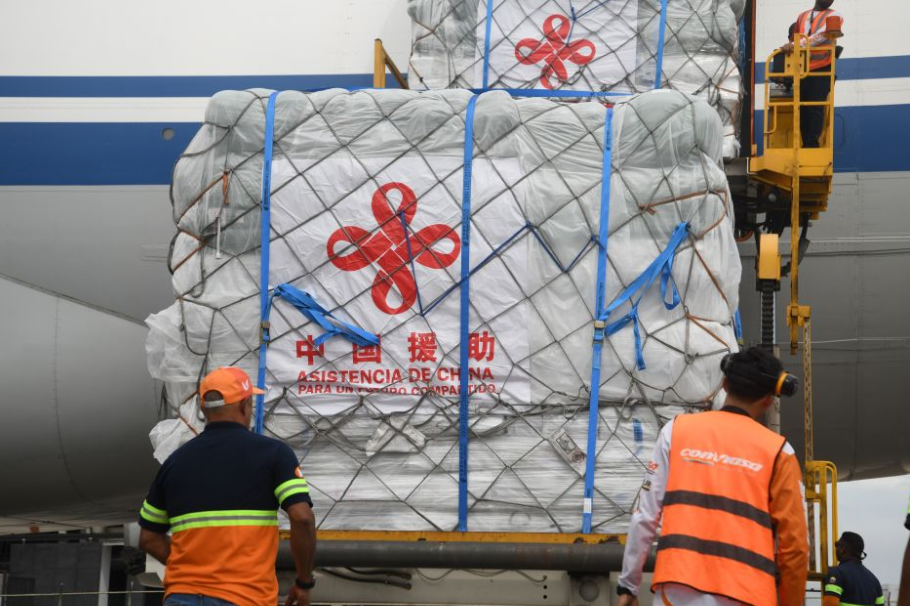
    On July 6, 2026, the first batch of emergency humanitarian earthquake relief supplies donated by the Chinese government touched down at Simon Bolivar International Airport in Maiquetia, a city located just outside Venezuela’s capital Caracas. The delivery was formally received at the airport by Venezuelan Foreign Minister Yvan Gil and Lan Hu, China’s Ambassador to Venezuela.

    This shipment comes after a devastating seismic event that struck Venezuela in late June. On the night of June 24, the country was hit by the most powerful earthquakes recorded in over 100 years: two major tremors measuring above magnitude 7 struck just 60 seconds apart. As of the latest update, the disaster has claimed the lives of 3,342 people and left 16,740 others injured, leaving thousands of residents homeless and in urgent need of basic emergency support.

    In his remarks at the airport, Foreign Minister Gil extended sincere gratitude to the Chinese government and its leadership on behalf of the entire Venezuelan people. He noted that China has maintained continuous, close coordination with Venezuelan authorities from the immediate aftermath of the earthquakes, and the arrival of these supplies marks a concrete manifestation of this solidarity. The current shipment includes critical emergency provisions such as temporary shelter tents and power generators, assets that are desperately needed to support thousands of Venezuelans who lost their homes and access to basic infrastructure in the disaster.

    Beyond the official government donation, Gil highlighted the rapid, grassroots response from the local Chinese community and Chinese-funded enterprises operating in Venezuela. He explained that these groups have been actively involved in rescue and relief operations since the earliest hours of the disaster, providing assistance to displaced residents and supporting frontline emergency teams. Gil described these on-the-ground acts of support as deeply moving, noting that the Venezuelan people have clearly seen the tangible solidarity extended by China, and that these shared efforts have further deepened the long-standing friendship between the two nations.

    Gil also emphasized that the timely delivery of relief supplies underscores the enduring nature of the all-weather strategic partnership that binds China and Venezuela, demonstrating how the two countries stand together in times of crisis.

  • Canada selects Germany’s ThyssenKrupp to build submarine fleet as it boosts NATO spending

    Canada selects Germany’s ThyssenKrupp to build submarine fleet as it boosts NATO spending

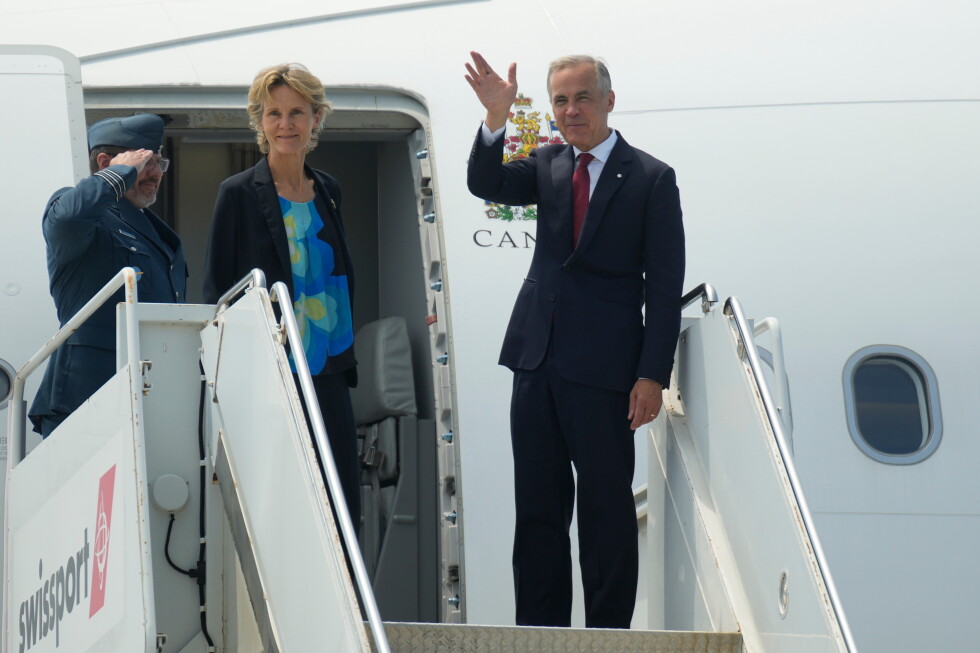
    TORONTO – In a landmark move that reshapes Canada’s defense capabilities and aligns with its new pledges to ramp up NATO-aligned military spending, the Canadian government announced Monday that Germany’s ThyssenKrupp Marine Systems (TKMS) has been chosen as the preferred supplier for a planned fleet of up to 12 new conventionally powered submarines. Marking the largest military procurement initiative in Canadian history, the decision comes just days before Prime Minister Mark Carney’s attendance at this week’s NATO summit, where alliance leaders are set to face growing pressure to back pledges for higher defense investment with concrete, actionable policy plans.

  • World Cup 2026: Fifa ‘crossed a red line’ after decision to overturn ban for US striker’s red card

    World Cup 2026: Fifa ‘crossed a red line’ after decision to overturn ban for US striker’s red card

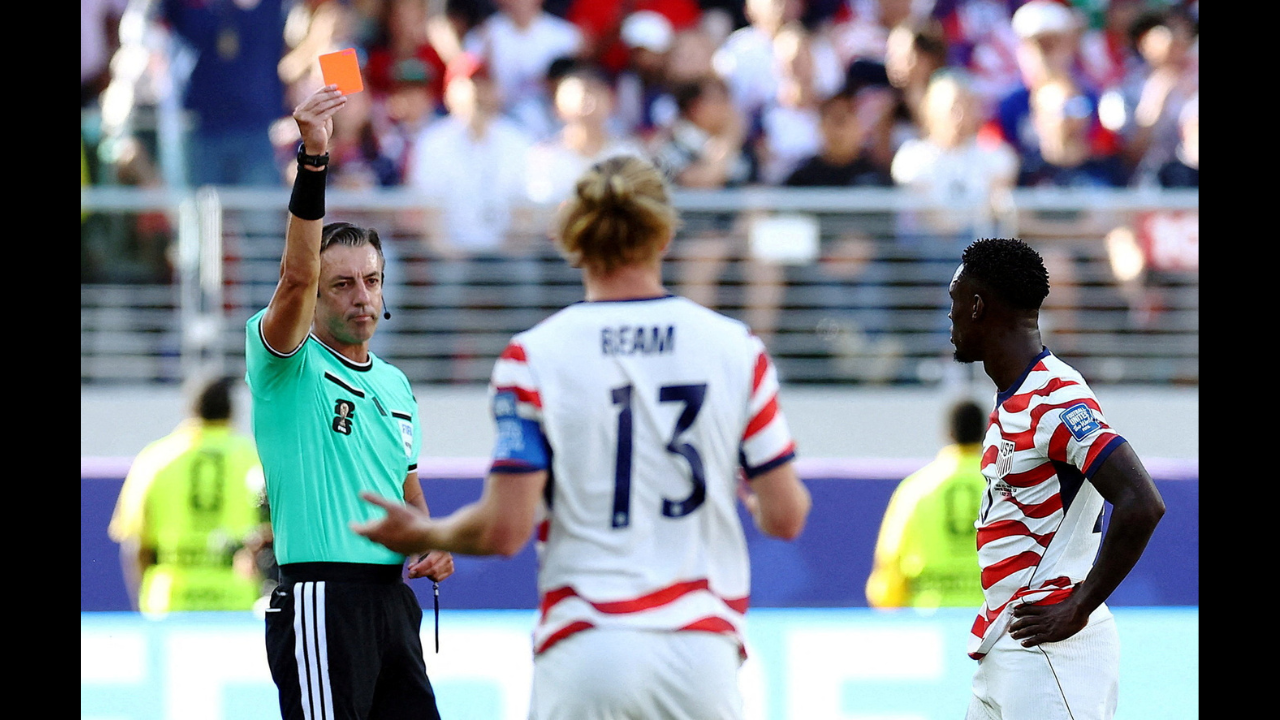
    The global football community has been thrown into uproar after Fifa’s stunning weekend announcement that U.S. striker Folarin Balogun will be cleared to compete in the United States’ upcoming World Cup match against Belgium, defying the standard automatic one-match suspension that follows a straight red card. Balogun received his sending-off during the U.S.’s previous fixture against Bosnia and Herzegovina, a punishment that under normal tournament rules would automatically bench him for the next round.

    Historically, overturning a straight red card suspension is almost unheard of: Fifa’s official disciplinary code explicitly prohibits appeals for immediate red card dismissals, and only one similar exception has ever been recorded, dating back to 1962 when automatic suspensions were not yet codified in tournament rules. This unprecedented decision comes after days of high-level lobbying from senior U.S. officials, according to reporting from American news outlet Politico. Within minutes of Balogun’s red card being issued, White House and U.S. soccer leadership launched a coordinated push to reverse the call: Andrew Giuliani, executive director of the White House Fifa World Cup Task Force, joined by U.S. Commerce Secretary Howard Lutnick and senior United States Soccer Federation officials, spent four days lobbying Fifa leadership to change the ruling. Multiple reports have also confirmed that former U.S. President Donald Trump made personal phone calls directly to Fifa President Gianni Infantino to press for the suspension to be lifted.

    Fifa has defended its reversal by citing Article 27 of its disciplinary framework, a bylaw that grants the governing body broad authority to suspend any pre-existing disciplinary measures. But the move has drawn fierce condemnation from football governing bodies, current and former leaders, pundits and fans worldwide, who universally accuse Fifa of caving to political pressure and granting preferential treatment to the U.S. tournament host.

    The Belgian Football Association, whose team stands to directly lose out from the decision, issued an official statement saying it was “astonished” by the ruling, noting that it directly contradicts core provisions of the World Cup’s disciplinary code that mandate automatic one-match suspensions for red card recipients. Though Belgium was granted the right to appeal the decision on Monday, it was given only a matter of hours on the same day to submit its challenge, a timeline critics have called intentionally restrictive.

    European football governing body Uefa also released a scathing rebuke of the decision, saying Fifa had “crossed a red line.” In its official statement, Uefa emphasized that football’s integrity depends on consistent, enforceable rules, noting that the automatic one-match suspension for a red card is not a discretionary call: “When the certainty of rules is no longer guaranteed by its guardians, the integrity of the game is at stake and the credibility of a competition is undermined,” the statement read.

    Criticism has also poured in from across the football and political spheres on social media, with many figures highlighting the glaring double standard of Fifa’s decision. Former Fifa President Sepp Blatter weighed in on X, writing, “Red cards are not overturned by political phone calls. They are overturned by rules, evidence and independent bodies… Football must never become a playground for political power.” Analysts and fans have also pointed out that Fifa has previously suspended entire national federations, including Nepal’s, for government interference in football operations — a policy that appears to have been set aside for the U.S. this time.

    Many social media users have also called out perceived favoritism toward the host nation. A Reddit commentator noted that the rarity of red card reversals has long acted as a level playing field for all teams, so making an exception for the U.S. can only be interpreted as preferential treatment. Former professional footballer Yannick Bolasie drew attention to double standards across global confederations, writing, “All I’ll say is if this was AFCON and they let a man play after he got a red card, the nonsense being said would be crazy.”

    Even some American commentators and fans have acknowledged the problematic nature of the decision. Political commentator and former Obama administration spokesperson Tommy Vietor noted, “As a fan, I am obviously overjoyed that Balogun will get to play,” but added that “it will make the rest of the world feel like the tournament was rigged.”

    The controversy has also spilled over into broader political critiques of the Trump administration. One social media commentator highlighted that Trump recently attempted to eliminate birthright citizenship at the U.S. Supreme Court — the very policy that grants Balogun, born in the United States, his American citizenship and eligibility to play for the U.S. national team. Geopolitical analyst Bruno Macaes further connected the decision to broader questions of Fifa’s political ethics, referencing ongoing global criticism of Fifa’s decision to allow Israel’s football association to remain in international competition despite accusations of genocide in Gaza.

    Trump, for his part, praised Fifa’s ruling in a post on his Truth Social platform. British media personality Piers Morgan has called the incident “the biggest story, and potential scandal, of the World Cup.” Middle East Eye has reached out to both the White House and Fifa for additional comment on the reports of political lobbying and the controversial reversal.

  • Alexandra Eala provides a ‘ray of hope’ for the Philippines despite Wimbledon exit

    Alexandra Eala provides a ‘ray of hope’ for the Philippines despite Wimbledon exit

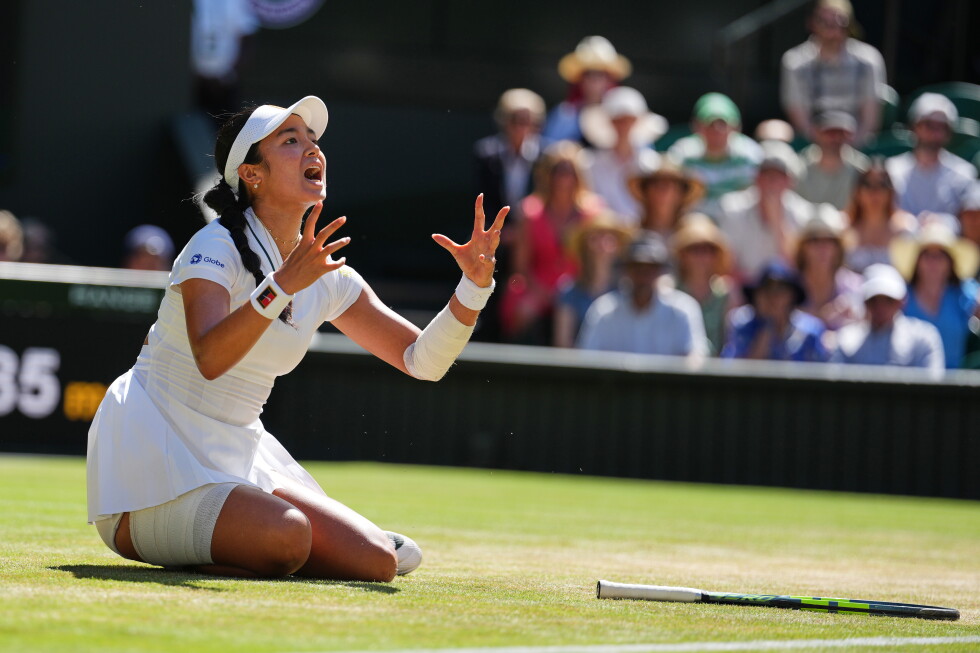
    LONDON — For 21-year-old Filipina tennis star Alexandra Eala, the 2025 Wimbledon Championships ended one round short of her first Grand Slam quarterfinal berth, but her historic run at the sport’s most prestigious grass-court tournament has already cemented her status as a trailblazer for Philippine tennis and a source of national pride.

    Eala’s Cinderella run at the All England Club delivered one of the tournament’s biggest upsets earlier in the draw, when she ousted defending champion Iga Swiatek in an electrifying third-round clash. Her run came to a close on Monday on Centre Court, however, as Italy’s Jasmine Paolini outlasted her in a tense three-set battle, 6-4, 4-6, 6-3.

    The result did little to dim the celebration of Eala’s achievement among Filipino fans, who packed watch parties across her home country and turned out in force to cheer her on in London. For the global Filipino community, Eala’s breakthrough transcends the final scoreboard.

    “She’s like a ray of hope for the Philippines,” Roberto Ocampo Jr., a London-based Filipino nurse and tennis fan who attended Eala’s match against Paolini, told reporters. “Especially at her age. She made history. That’s one thing that we can tell to the next generation.”

    As the Women’s Tennis Association confirmed, Eala’s run to the fourth round marks a historic first for Philippine tennis: she is the first player from the country to reach the last 16 of a Grand Slam singles tournament in the Open Era. This milestone comes just one year after Eala suffered a first-round exit in her 2024 Wimbledon debut, highlighting her rapid rise through the professional ranks.

    A left-handed player who trained during her teenage years at Spain’s renowned Rafael Nadal Tennis Academy, Eala has drawn inspiration from other legendary Filipino athletes who paved the way for her success. Early in the tournament, she recalled growing up watching boxing icon Manny Pacquiao, whose bouts turned into national holidays across the Philippines, where communities would gather to watch and employers would give workers time off to cheer him on.

    She also name-checked two other modern Filipino sporting greats as inspiration: weightlifter Hidilyn Diaz, the country’s first Olympic gold medalist, and gymnast Carlos Yulo, who won two Olympic gold medals at the 2024 Paris Games and returned home to a hero’s welcome with pledges of cash, property and other national honors.

    Like many Filipino sports fans, Ocampo hopes Eala’s breakthrough will open new doors for young aspiring tennis players across the Philippines, where access to the sport remains limited for many low-income communities. “This kind of sport (many) are not privileged enough to hold a tennis racket,” Ocampo said. “There’s so many kids back home, they have the talent. They need the opportunity.”

    Off the court, Eala’s star power has grown exponentially during the tournament. She met Catherine, Princess of Wales, and posed for a widely shared photo with the royal patron of the All England Lawn Tennis Club. A viral action shot of Eala diving to reach a wide shot during her upset win over Swiatek has even been memed across social media, with fans editing a superhero cape onto the young star to dub her “Super Eala.” The Philippine Embassy in the United Kingdom has closely tracked her progress throughout the tournament, sharing regular updates and public messages of congratulations to her on official channels.

    Eala herself has framed the historic run as a key step in her long-term career, rather than a final destination. Reflecting on her loss to Paolini, she acknowledged that uncharacteristic issues with her serve held her back on the day, but framed the result as a normal part of professional sport.

    “I understand that’s part of the job. I don’t think I’m going to be playing the best tennis of my life every single day,” Eala said. “But I have days like that. Everyone has days where they don’t play their best tennis.”

    The 21-year-old, who notched her first big WTA breakthrough earlier this year by reaching the semifinals of the 2025 Miami Open, said she leaves Wimbledon proud of her performance and focused on continuing her upward trajectory. “I’m really proud of how I handled things. I just have to kind of move forward and continue with my progress.”

    Eala has long said she hopes to serve as a role model for young kids across the Philippines who dream of competing in professional tennis, and her 2025 Wimbledon run has already turned that goal into reality for a new generation of aspiring athletes.