博客

  • Ex-Syrian intelligence chief found guilty of torture and sexual abuse by Austrian court

    Ex-Syrian intelligence chief found guilty of torture and sexual abuse by Austrian court

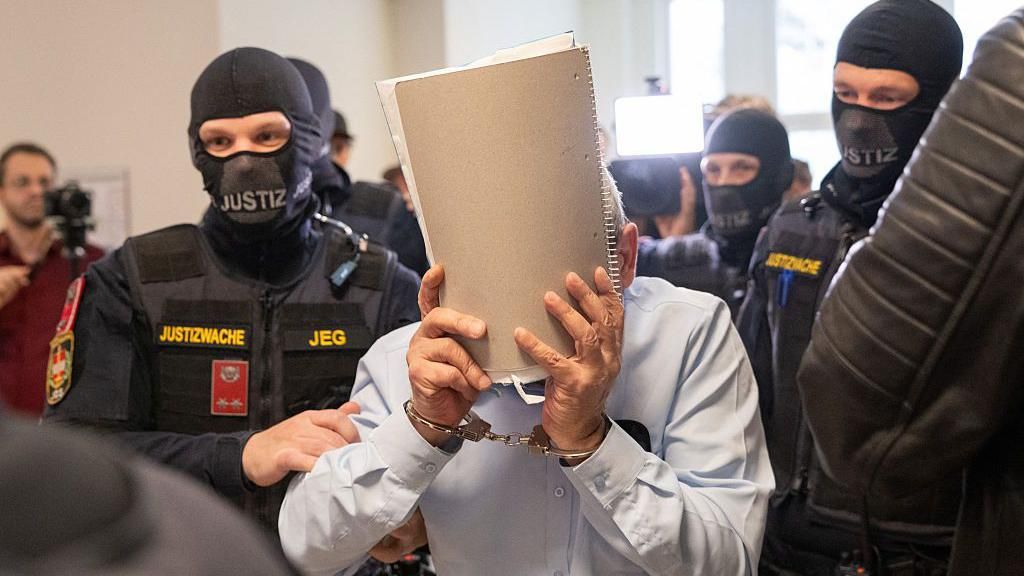
    In a landmark ruling that marks one of the rare instances of European jurisdiction over crimes linked to the Bashar al-Assad government, a court in Vienna, Austria, has convicted two former Syrian security officials of systemic torture, sexual abuse, and assault against anti-government opponents during the early stages of Syria’s civil conflict. The defendants, both of whom had sought asylum in Austria years ago, now face eight-year prison sentences, with an appeal already open to them.

    The lead defendant, identified only as Khaled al-H. per Austria’s strict privacy regulations, served as the head of Syria’s General Intelligence Directorate in the northern city of Raqqa from 2011, the same year the uprising against Assad erupted, through 2013, when the Free Syrian Army seized control of the city and prompted his flight. A member of Syria’s Druze ethno-religious minority, Khaled al-H. was found guilty of direct involvement in torture. His co-defendant, Moussab Abou R., the city’s former police chief, was convicted alongside him; both men were found guilty on additional charges of sexual coercion, aggravated coercion, and inflicting severe bodily harm.

    Prosecutors argued that the pair repeatedly ordered or intentionally failed to stop the brutal abuse of anti-government protesters held in custody in Raqqa, with the explicit goal of crushing the emerging protest movement and intimidating the civilian population into compliance. Over the course of the trial, dozens of victims, former detainees who traveled from across Europe and Syria to give testimony, shared graphic accounts of their abuse. The court heard harrowing details: victims were stripped naked before being beaten, subjected to electric shocks, and alternated between being doused in scalding and freezing water. One witness described being repeatedly lashed on the soles of his feet with electric cables. Judges also noted that nearly all survivors suffer from permanent, life-altering mental trauma as a result of their detention.

    Both defendants have repeatedly denied all charges brought against them. During the proceedings, Khaled al-H. claimed he never ordered or witnessed any acts of torture at his facility, and argued that as a member of a minority group in Assad’s Syria, he had no choice but to follow orders from the central government.

    The case has already triggered broader intrigue beyond the convictions: multiple independent media reports reveal that Khaled al-H. was brought into Austria in 2015 by the country’s former domestic intelligence agency, the BVT, at the formal request of Israel’s Mossad intelligence service as part of a classified initiative codenamed “Operation White Milk.” The Austrian Press Agency confirmed that the secret agreement was overseen by Martin Weiss, the former head of the BVT. Weiss is currently a fugitive living in Dubai, and is wanted for questioning over his alleged ties to disgraced Austrian spy Jan Marsalek, a wanted fugitive who is believed to be hiding in Moscow.

    Legal experts note that this trial is a significant milestone for universal jurisdiction efforts, which allow countries to prosecute serious human rights crimes committed anywhere in the world, regardless of the nationality of the perpetrators or victims. It remains uncommon for European nations to open and conclude such cases against current or former officials of the Assad government, making the Vienna verdict a notable shift in how European courts address atrocities linked to the Syrian civil war. Both men have confirmed they plan to exercise their right to appeal the conviction and sentence.

  • UK urged to sanction Netanyahu and justice minister over Israeli torture of Palestinians

    UK urged to sanction Netanyahu and justice minister over Israeli torture of Palestinians

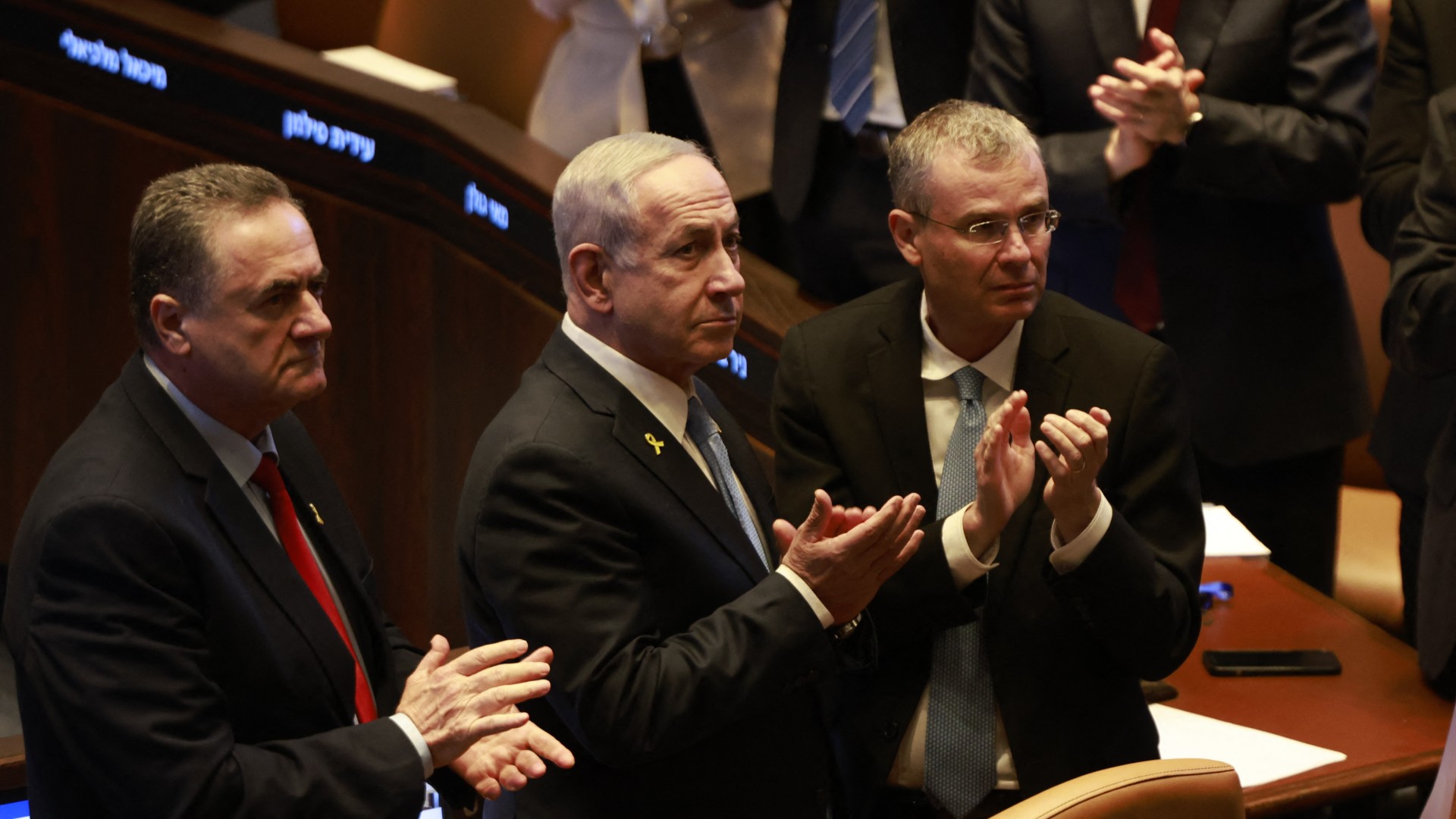
    A cross-party coalition of more than 70 British members of Parliament and House of Lords peers has launched a formal call for the UK government to impose targeted sanctions on Israeli Prime Minister Benjamin Netanyahu and top Israeli justice official Yariv Levin, citing documented systemic abuse of Palestinian civilians by the Israeli government.

    According to reporting from Sky News, the open letter dated last week, addressed to newly appointed UK Foreign Secretary Yvette Cooper, bears the signatures of 71 legislators from across the UK’s political spectrum. The campaign is led by sitting Labour MP Neil Duncan-Jordan, and already includes backing from 30 Labour MPs and seven Labour peers — a notable showing of dissent within the ruling party.

    In the text of the letter, parliamentarians argue that direct responsibility for the widespread, systematically documented torture of Palestinian civilians rests at the highest level of the Israeli government, with Prime Minister Netanyahu personally implicated. The group is calling on Cooper to take immediate action to end what they describe as enduring impunity for senior Israeli leaders by imposing sanctions on both Netanyahu and Levin, who holds multiple senior government roles including deputy prime minister, justice minister and interior minister.

    The letter notes that UK sanctions imposed last year on far-right Israeli ministers Itamar Ben Gvir and Bezalel Smotrich, while a welcome step, have failed to shift the Israeli government’s treatment of Palestinian detainees. Lawmakers add that the situation has since escalated dramatically, with perpetrators of abuse acting with near-total immunity from accountability.

    To back their claims, the letter cites a February 2024 United Nations report that concluded torture has become a core, institutionalized component of Israel’s occupation, inflicted systematically on Palestinian men, women and children through both in-custody abuse and a broader campaign of forced displacement, mass killing, systemic deprivation and destruction of critical infrastructure needed for daily life. It also highlights a recent controversial incident in which Netanyahu publicly praised the decision to dismiss military rape charges against Israeli soldiers accused of assaulting a Palestinian detainee.

    Additionally, legislators point to the interception of the Global Sumud Flotilla bound for Gaza by Israeli forces two months prior, during which multiple British citizens were detained while operating in international waters. Along with Labour signatories, the letter draws support from members of the Green Party, Plaid Cymru, Sinn Féin, the Social Democratic and Labour Party, the Liberal Democrats, the Scottish National Party, and one Conservative Member of Parliament, demonstrating rare cross-party consensus on the need for tougher action against Israeli leaders.

    In response to the letter, a spokesperson for the UK Foreign, Commonwealth and Development Office acknowledged the severity of the allegations, telling Sky News that “the reports of mistreatment of detainees by Israeli forces are disgraceful and we have raised this issue with the Israeli government.” The spokesperson added that all detainees are required to be treated humanely in line with the requirements of international law, and that all credible allegations of torture and abuse must be subject to full, impartial investigation. The UK, they confirmed, continues to pressure the Israeli government to grant the International Committee of the Red Cross immediate and unfettered access to all Israeli detention facilities, and called the prolonged detention of hundreds of Palestinian children without charge “completely unacceptable.”

    The latest call for accountability aligns with mounting international scrutiny of Israel’s treatment of Palestinian detainees. In March 2024, Francesca Albanese, the United Nations Special Rapporteur on human rights in the occupied Palestinian territories, presented a report to the UN Human Rights Council describing Israel’s prison system as “a laboratory of calculated cruelty,” documenting extreme abuses including the sexual assault of Palestinian detainees with bottles, metal rods and knives.

    Since Israel launched its large-scale military operation in Gaza in October 2023, more than 100 Palestinian detainees have been confirmed dead in Israeli custody, independent monitors report. Analysts widely view this number as a significant undercount, with the actual death toll believed to be far higher. This pressure comes after the International Criminal Court issued arrest warrants for Netanyahu and his former defense minister Yoav Gallant in November 2024, charging both with war crimes and crimes against humanity stemming from actions in Gaza since the start of the current conflict.

  • Greaves bats West Indies back into 2nd test against Sri Lanka on day 4

    Greaves bats West Indies back into 2nd test against Sri Lanka on day 4

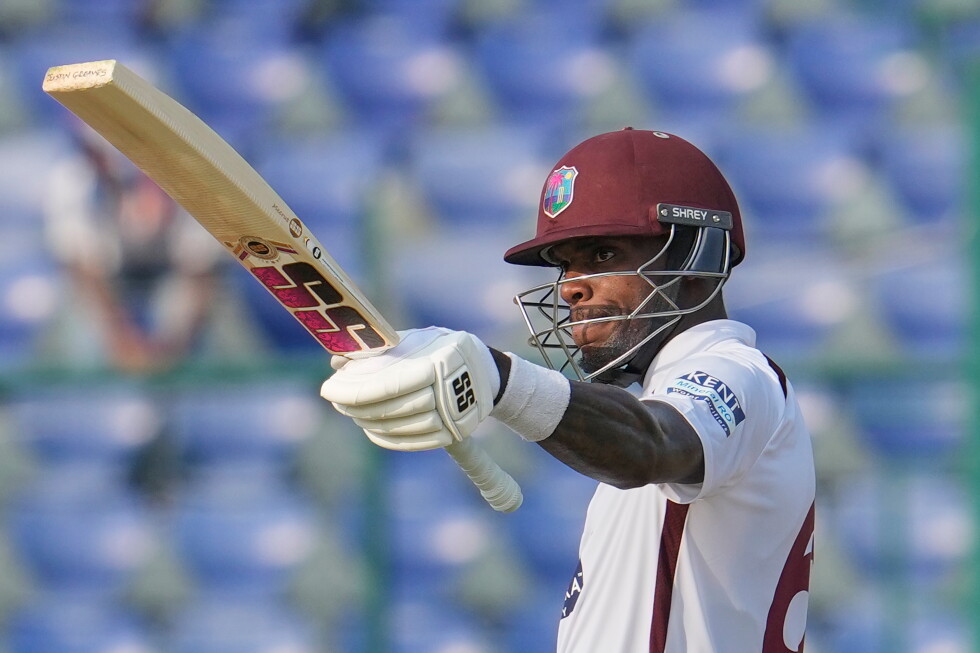
    On a slow, run-friendly pitch at North Sound in Antigua, a dogged, record-building innings from all-rounder Justin Greaves has positioned the West Indies men’s test cricket team on the brink of a milestone: their first test series victory in four years. With one full day of play remaining in the second and final match of the series, the home side holds all the momentum heading into the final session, thanks to Greaves’ 325-ball marathon that yielded 180 runs.

    Resuming on Day 4 at 318-4, with Greaves already sitting on 85 overnight, the West Indies batters set about erasing the sizable first-innings deficit Sri Lanka had built after declaring at 549-9. The defining moment of the day came from a fifth-wicket stand that echoed one of the pair’s prior career-defining performances: Greaves and Shai Hope put together a 242-run partnership, dragging the West Indies from a precarious 144-4 to a comfortable 386-5. This collaboration mirrored the 196-run stand the two put together against New Zealand in December 2024, when Greaves hit an unbeaten 202 and Hope scored 140 to salvage a draw.

    Hope, who missed the first test of the series after picking up a shoulder injury in pre-match training, went on to notch his third century in five test matches, finishing with 112 off 199 balls. His knock included 10 boundaries, and he confidently handled both Sri Lanka’s pace attack and spin spearhead Prabath Jayasuriya, using clever footwork to neutralize the spinner’s threat. He survived a dropped review early in the day, when Sri Lanka’s appeal for a caught behind off Milan Rathnayake was turned down by the on-field umpire, and the touring side opted not to challenge the call. His innings ended in bizarre fashion close to the lunch break: attempting to pad away a length ball from left-arm spinner Sonal Dinusha down the leg side, Hope stepped outside his crease and missed the ball. Though wicketkeeper Kusal Mendis fumbled the catch, the ball ricocheted off his gloves onto the stumps, and Hope was ruled stumped.

    After Hope’s dismissal, Greaves continued to anchor the innings, shepherding the West Indies lower order to add 113 runs for the final five wickets. The right-handed batter eventually fell as the last man out, with the West Indies all out for 499, cutting Sri Lanka’s first-innings lead to just 50 runs. The innings marked Greaves’ third test century, and the second-highest score of his international test career, as he brought up his hundred off 201 balls on Antiguan soil.

    Sri Lanka’s bowlers never let up pressure through the day, relying heavily on disciplined short-pitch bowling to restrict run flow. Pace bowler Asitha Fernando claimed his third career five-wicket test haul, finishing with figures of 5-130 off 40 overs, while Jayasuriya chipped in with 3-131.

    By stumps on Day 4, Sri Lanka had navigated early wickets to reach 92-2 in their second innings. The touring side lost first-innings centurion Lahiru Udara for a four-ball duck and opener Nishan Fernando for 20, before Dinesh Chandimal (40 not out) and Kamindu Mendis (30 not out) put together an unbroken 60-run partnership to close out play. That result pushed Sri Lanka’s overall lead to 142 runs with one day of cricket remaining.

    Through the final 22 overs of Day 4, Sri Lanka scored at a rate of more than four runs per over, a pace they will need to maintain if they hope to set a defendable total and force a victory on a pitch that is expected to deteriorate on the final day. Only 21 wickets have fallen across the first four days, with 1,140 total runs scored, making conditions heavily favorable to batters and the home side, which already holds a 1-0 series lead after winning the opening test by an innings and 217 runs.

    A draw in the second test would be enough for the West Indies to claim their first World Test Championship series win since beating Bangladesh in the Caribbean in 2022, ending a four-year drought without a test series victory.

  • Macron arrives in Syria as first major western leader to visit war-torn country under new leadership

    Macron arrives in Syria as first major western leader to visit war-torn country under new leadership

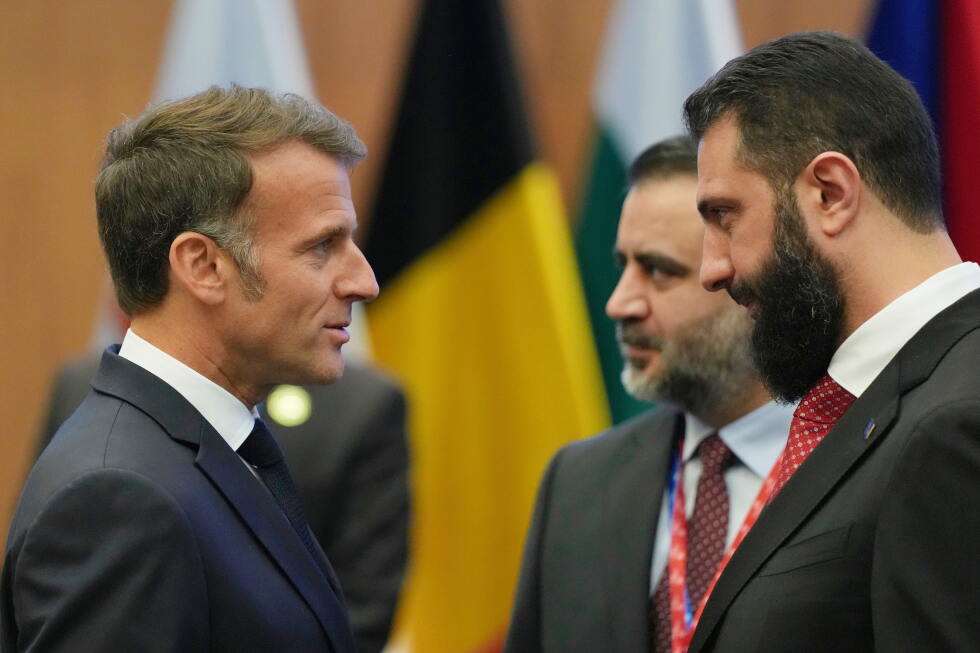
    In a landmark moment for post-conflict diplomacy in the Middle East, French President Emmanuel Macron touched down in Damascus on Monday, marking the first visit to war-ravaged Syria by a major Western European or North American leader since Bashar al-Assad was ousted from power in 2024. Ukrainian President Volodymyr Zelenskyy had traveled to the country earlier this year in April, but Macron’s trip breaks new ground for Western engagement with Syria’s new transitional government.

    The visit arrives at a fragile juncture for the region, coming on the heels of a month-long conflict between Iran and Lebanon that has recently de-escalated, leaving a tentative period of relative calm across the Middle East. Following his engagements in Damascus, Macron will travel onward to Ankara, Turkey, to attend a high-stakes NATO summit. At that same gathering, Syrian President Ahmad al-Sharaa is also scheduled to appear, where he is set to hold a widely anticipated high-profile meeting with U.S. President Donald Trump.

    According to Syria’s official state-run news agency SANA, Macron is not traveling alone: he is accompanied by a delegation of French business leaders, with an agenda focused on two core pillars: regional security cooperation, and unlocking new business and investment opportunities for the war-battered country. Upon his arrival at Damascus International Airport, Macron was formally welcomed by Syrian Foreign Minister Asaad al-Shibani.

    In a public post shared to the social platform X shortly after his arrival, Macron outlined the core purpose of his trip. “I have come to express France’s commitment to the Syrian people. For a sovereign Syria, united in its diversity and at peace with its neighbors,” he wrote. “Together, let us open a new chapter of stability and peace.”

    A statement from Macron’s office expanded on France’s long-running position toward Syria’s new governance, noting that France backs all actors working to build a new Syrian state aligned with the aspirations for political change that emerged during the 2011 Arab Spring uprisings across the Middle East.

    During his time in Damascus, Macron is set to hold formal talks with al-Sharaa at the Syrian presidential palace, and his office confirmed he will also hold direct engagements with a broad cross-section of Syrian society from diverse backgrounds. Full details of the visit’s schedule have not been released to the public, a decision made out of an abundance of caution for security reasons.

    This visit is the latest step in growing diplomatic ties between Paris and Damascus: Macron previously hosted al-Sharaa in Paris back in May 2025. During that meeting, Macron urged European and U.S. leaders to roll back decades-wide crippling economic sanctions imposed on the Assad-era Syrian government. Following that push, the vast majority of those sanctions have now been lifted.

    Notably, France has thrown its support behind Syria’s new leadership even as many other Western governments held initial skepticism, due to al-Sharaa’s background leading the Islamist faction Hayat Tahrir al-Sham, a group that previously maintained ties to al-Qaida. Western capitals have also raised ongoing concerns about three key issues: the protection of women’s rights, the political inclusion of ethnic and religious minority groups, and whether the new transitional government will follow through on its pledges to transition to full democratic rule.

    While Syria has avoided being drawn into the most recent wave of regional conflict, the country still bears the devastating scars of 13 years of full-scale civil war. Much of the country’s critical infrastructure lies in ruins, millions of Syrians have been pushed into extreme poverty, and preliminary estimates place the total cost of reconstruction at hundreds of billions of dollars. To date, while Syria has signed preliminary memorandums of understanding for large-scale infrastructure and investment projects with multiple foreign governments and multinational corporations, none of these major projects have yet moved into implementation.

  • ‘It’s a very sad day’ – Mexican fans react to loss to England

    ‘It’s a very sad day’ – Mexican fans react to loss to England

    Mexico’s 202x FIFA World Cup journey came to a devastating close in front of a heartbroken home crowd in Mexico City, as the national side fell to a narrow 3-2 defeat against England. For supporters who filled the stadium with chants, colors, and unwavering hope throughout the tournament, the final whistle marked the end of a dream that had captivated the entire nation.\n\nFrom the opening kickoff, the match delivered relentless drama: both teams traded attacking blows, with Mexico mounting a fierce late comeback that came agonizingly short of forcing extra time. When the referee blew the final whistle, silence fell over sections of the stands before fans began to applaud their team’s effort, even through tears of disappointment.\n\nSpeaking to reporters outside the stadium after the match, multiple supporters described the result as a devastating blow. “It’s a very sad day for all of us,” one long-time fan told journalists, echoing the sentiment shared by thousands across the country. “We poured everything into supporting this team, and we believed we could pull off the win today. It’s hard to accept that our run is over.”\n\nDespite the heartbreak, many fans acknowledged the pride they felt in the national team’s performance throughout the tournament, highlighting the fighting spirit the squad showed until the final second of the match. Street gatherings that had been planned for a potential victory fizzled into quiet conversations, as fans processed the loss and looked ahead to the next edition of international football’s biggest competition.

  • Lethal weapon: How Bollywood’s ‘Chauhaan’ trivialises the suffering of Kashmiris maimed by Indian forces

    Lethal weapon: How Bollywood’s ‘Chauhaan’ trivialises the suffering of Kashmiris maimed by Indian forces

    Twenty-five-year-old Inam Ahmad’s strained, flickering gaze behind thick glasses is a permanent, visible marker of the irreversible harm pellet guns have inflicted on countless civilian lives in Indian-administered Kashmir. In 2017, at just 16 years old, not long after passing his matriculation exams, Ahmad was struck by dozens of pellets fired by Indian armed forces outside his Srinagar home. The shrapnel became embedded in his skull, neck, and behind his eyes, robbing him of 80 percent of his vision. “Every day I live with pain when the pellets shift or heat up,” he explained. “They never let me forget I will never be normal again.”

    Ahmad’s mother Fahmeeda Jan holds a faded childhood photo of her son: a grinning three-year-old in a green tracksuit, clinging to his younger sister’s hand, bright eyes looking up toward the camera. Full of energy before the shooting, her son’s life and the entire family’s future was upended by the injury. After multiple rounds of surgery, crippling medical debt that drained their savings, and the abrupt end to Ahmad’s education, the constant unrelenting pain often pushes Ahmad to breaking point. “He gets so fed up that he pulls his hair in frustration, becomes aggressive, and says he wants to end his life,” Jan shared. Desperate to restore her son’s sight, she once offered to donate one of her own eyes during a trip for treatment outside Kashmir, but doctors told her such a transplant was medically impossible. “Only those who this weapon has hit truly know what it is,” she says.

    Originally designed for bird hunting, pellet shotguns fire hundreds of small metal fragments over a wide, scattered area, making precise targeting impossible. Indian authorities introduced the weapons to Kashmir in 2010 as a so-called “non-lethal crowd control tool” following widespread anti-India protests. But this official classification has been repeatedly challenged by global human rights and medical bodies. The United Nations Office of the High Commissioner for Human Rights has labeled pellet guns “one of the most dangerous weapons used in Kashmir”, and a 2020 UN guideline on less-lethal law enforcement weapons explicitly states: “Metal pellets, including those discharged by shotguns, should never be used.” Amnesty International has similarly condemned the weapon, noting that “injuries and deaths caused by this cruel weapon bear testimony to how dangerous, inaccurate and indiscriminate it is.” While the weapon is banned for hunting in many countries, official Indian data from 2018 recorded 6,221 people wounded by pellets between July 2016 and March 2017 alone, and no comprehensive full count of casualties has ever been released.

    Ahmad’s story is far from unique. In 2016, 14-year-old Insha Mushtaq was struck by pellets while standing by the window of her family home in Shopian district, resulting in permanent blindness and lifelong facial disfigurement. Just two years later in the same district, 18-month-old Hiba Nisar – the youngest recorded pellet victim – was hit while sitting in her mother’s lap. For thousands of survivors like these, the harm is permanent: pellets remain lodged in soft tissue and bone, causing chronic pain and permanent disability for decades.

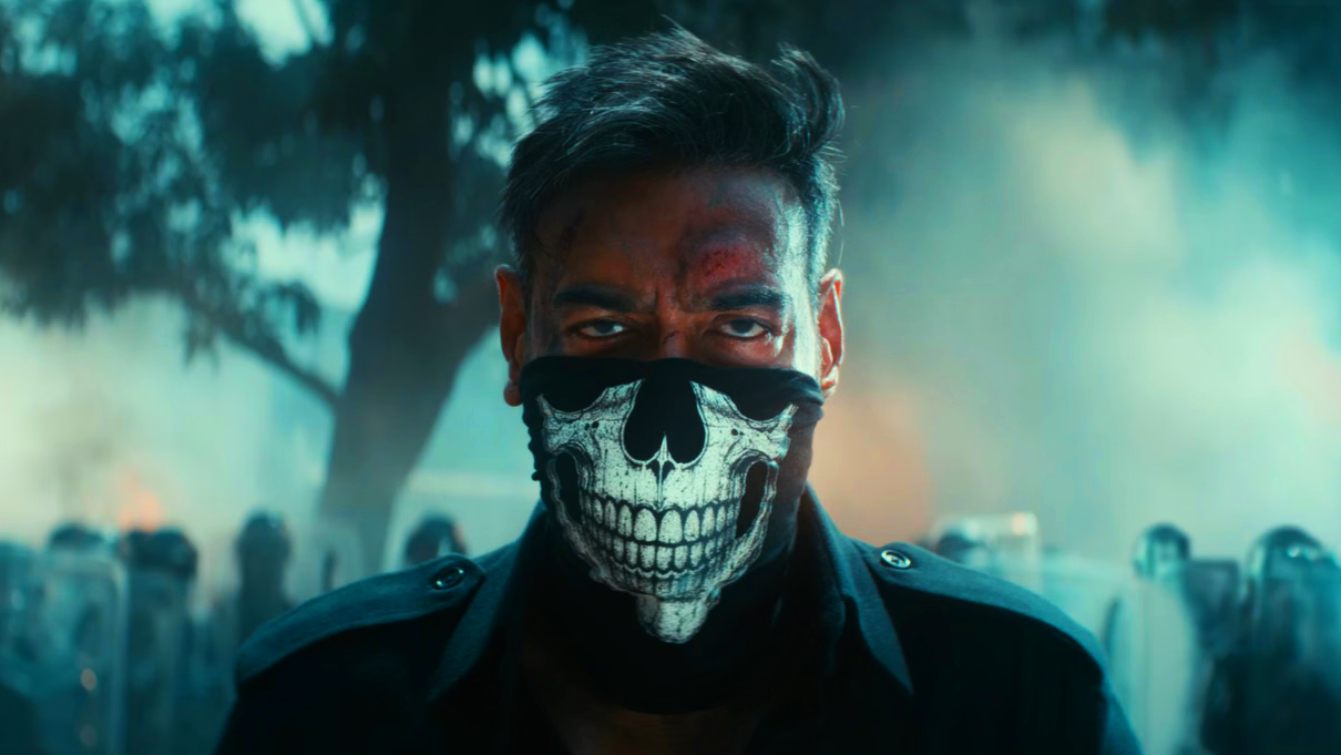
    It is against this backdrop of ongoing collective trauma that a 144-second teaser for the upcoming Bollywood film *Chauhaan* has ignited widespread anger and condemnation across Kashmir and among human rights observers. The film, starring A-list actor Ajay Devgn and backed by major production houses Colour Yellow Productions and Jio Studios – owned by Reliance Industries, a conglomerate led by billionaire Mukesh Ambani long tied to Prime Minister Narendra Modi’s ruling Bharatiya Janata Party and its right-wing Hindutva agenda – claims in its promotional material that pellet guns inflict only “limited damage” on protesters. In the teaser, Devgn’s voiceover argues that India’s current pellet gun use for crowd control is actually too restrained, calling for harsher measures against unrest in the region. Scheduled for a October 2025 theatrical release, the film is set against the backdrop of the decades-long Kashmir conflict, split between India, Pakistan and China, with early footage showing stone-pelting protests, pellet injuries, and paramilitary operations, pointing to a politically charged narrative aligned with the ruling party’s position.

    Critics say the teaser’s claim of “limited damage” is a grotesque trivialization of a humanitarian crisis that has left thousands permanently blinded or maimed across the region. *Chauhaan* is not an isolated case: for years, activists and locals have decried a pattern of Bollywood films set in Kashmir that advance Hindutva ideology, whitewash civilian suffering, and misrepresent the region’s history. Recent high-profile releases including *Uri: The Surgical Strike*, *Shikara*, *The Kashmir Files*, and *Article 370* all drew massive backlash for framing Kashmiri Muslims as terrorists, altering historical events to align with the ruling party’s narrative, and celebrating the 2019 unilateral revocation of Kashmir’s semi-autonomous status, a move endorsed personally by Modi. Author and Kashmir scholar Mirza Waheed argues that the *Chauhaan* trailer reflects a dangerous shift in Indian public life. “Instead of asking what life is really like for a young person permanently blinded by these weapons, what happens to their dreams and their families, the film explicitly calls for even more severe and lethal tactics,” Waheed explained. He calls this trend a symptom of India’s “post-truth, anti-history” political environment, where “such mendacious narratives seek to subvert Kashmir’s recent history, painting the victims in a completely dehumanized light and the perpetrators as virtuous, heroic.”

    Aga Ruhullah Mehdi, a Kashmiri parliamentarian with the opposition National Conference, described the teaser as deeply disturbing for anyone who has lived through pellet gun violence in the region. “What they call ‘ineffective’ left behind thousands of shattered lives,” he wrote. “For those who lost their eyesight, those who still live with pellets lodged in their bodies, and the families who continue to bear those scars, this is not an action sequence or a cinematic backdrop. It is a lived trauma.” Mehdi added that mainstream Indian cinema has repeatedly reduced Kashmir to a setting for conflict-framed narratives that reinforce harmful stereotypes, noting that “Kashmir deserves empathy, honesty and dignity – not the commercialization of its pain.”

    Scholar and author Dr. Niharika Pandit, whose work examines the impact of widespread militarization in Kashmir, says that since 2014, when Modi’s BJP first took national power, Bollywood has increasingly functioned as a public relations arm for the ruling party. “Earlier Hindi cinema used to project Kashmiris as ethereal, but without any agency; the latest batch of movies has turned far more explicitly propagandist,” Pandit explained. “They peddle the narrative that everything is normal in Kashmir, justify the government’s decisions like the abrogation of Article 370, and further erase Kashmiri histories and lived realities. This is epistemic violence: first you inflict widespread bodily harm that cripples young Kashmiris, then you pretend it never happened or frame it as necessary for national security.” Kashmiri academic Dr. Mohamad Junaid, who teaches at the Massachusetts College of Liberal Arts, adds that Hindi cinema has long followed a pattern of exoticizing Kashmir’s landscape while demonizing its people. “The violence we see on screen is a natural outcome of that dynamic. Hindi cinema is just reflecting what the Hindu right-wing has done to India’s public sphere,” he noted.

    For survivors like Inam Ahmad, the controversy over the teaser is not just an abstract political debate – it is a fresh reopening of a wound that never heals. The damage from that 2017 shooting was never limited. It is a daily reality he and thousands of other Kashmiris will live with for the rest of their lives.
  • World Cup 2026: Did hydration breaks foil the campaigns of Arab teams?

    World Cup 2026: Did hydration breaks foil the campaigns of Arab teams?

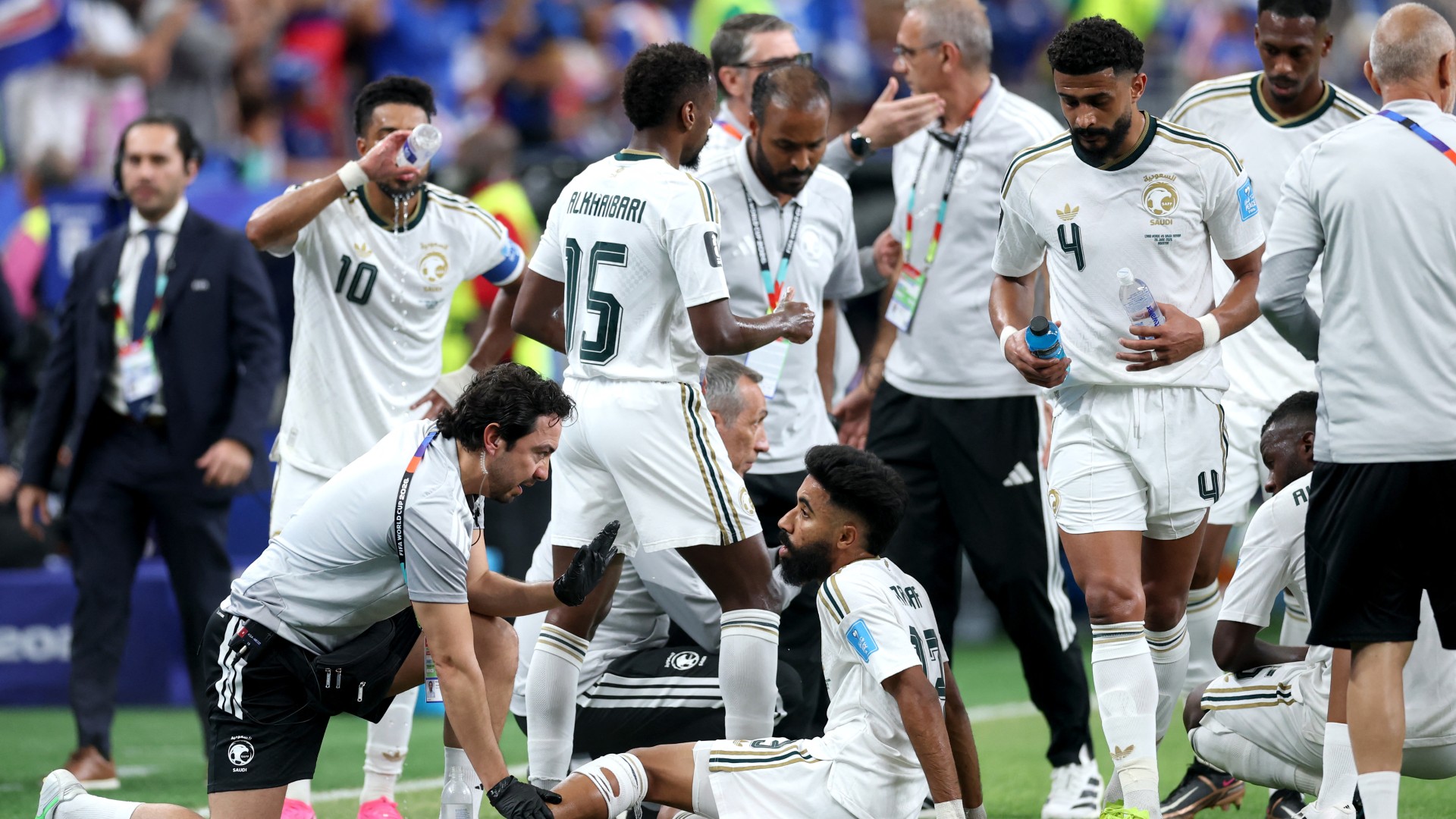
    The 2026 FIFA World Cup has introduced a rule change that is upending one of football’s most fundamental truths: that match momentum is the key to securing victory. In a sport where sustained dominance from opening whistle to final blow is rare, capitalizing on hot streaks against less favored opponents is non-negotiable for teams looking to advance. But this year’s mandatory mid-half hydration breaks, implemented to protect players from extreme heat, have repeatedly stopped those game-changing runs dead in their tracks — and disproportionately benefited top-ranked favorites by handing them critical time to regroup, rethink tactics, and seize back control.

    FIFA rolled out the rule ahead of the tournament, mandating two-minute stoppages at the 22nd and 67th minutes for every one of the event’s 104 matches, even those held in cooled indoor venues across host cities including Atlanta, Dallas, Houston, Los Angeles and Vancouver. Beyond giving players a chance to rehydrate and broadcasters an slot for extra commercial airtime, the breaks have fundamentally altered the rhythm and outcome of matches, repeatedly shifting momentum toward more established, tournament-proven sides.

    Long before the tournament kicked off, hints of this dynamic emerged during a pre-tournament friendly between the United States and Senegal, when then-USMNT coach Mauricio Pochettino went viral for pulling out a laptop to walk through tactical clips with his squad during a stoppage. The same pattern has played out across the World Cup: at nearly every hydration break, players are absorbing just as many tactical instructions as they are drinking water.

    The impact has already played out in high-stakes group stage and knockout matches. Curacao, for example, saw its momentum evaporate after scoring a shock equalizer to level the score at 1-1 against Germany, just before a scheduled hydration break. After the stoppage, Germany refocused and netted two more goals before halftime, effectively putting the game out of reach for the underdog.

    In years past, managers were limited to scribbling quick notes on paper and passing them to players along the touchline, crossing their fingers that the message would be understood correctly. These pre-scheduled breaks eliminate that uncertainty, giving coaches time to assess playcalling and adjust tactics mid-half. The advantage for top teams has hit multiple Arab and North African sides particularly hard.

    A analysis from *The Times* found the second-half hydration break in the Uruguay-Saudi Arabia group stage match caused the largest momentum shift of any group stage game. The two-time World Cup champions scored an 80th-minute equalizer after the break; had Saudi Arabia held onto their 1-0 lead, they would have advanced to the Round of 32 to face Argentina in a dramatic rematch.

    Jordan, making its World Cup debut, also saw bids for historic upset results derailed by hydration breaks, holding 1-1 draws against both Austria and Algeria before second-half stoppages allowed the more favored sides to reset. Morocco similarly saw a dominant first-half performance against Brazil halted by a first-half hydration break, which gave Brazil’s coaching staff time to reorganize; the five-time champions equalized soon after and held on for a 1-1 draw.

    The mandatory breaks have not just upset underdog teams — they have drawn intense anger from fans in attendance at the 2026 tournament. The referee’s whistle calling players to the sidelines midway through each half is regularly met with loud boos from the stands. Many fans have accused FIFA of using player heat safety as a cover to pull in more commercial revenue, though FIFA President Gianni Infantino has insisted the governing body “does not make one dollar off the hydration breaks.”

    That claim has been met with widespread skepticism, however, as the breaks are officially branded as a “Powerade Hydration Break.” Even if FIFA’s assertion holds, the breaks open clear pathways to greater commercial revenue in future tournaments. As global television rights come up for renegotiation, FIFA can point to the extra stoppages created by the expanded 104-match format as justification for higher rights fees. The organization has already announced a new title sponsorship deal with ADI Predictstreet, a sports betting prediction platform launched just months before the World Cup; extra in-game breaks create natural slots for branded betting graphics and promotional content that encourage in-match wagers.

    Critics have also pushed back on growing calls from former star players to make hydration breaks a permanent rule. On social platform X, journalist Leyla Hamed pointed out that many of the former players pushing for institutionalized breaks have ties to betting companies. Her post included screenshots of World Cup winners Roberto Carlos and Iker Casillas advocating for the change, with Casillas even floating a radical restructuring of the sport: “Don’t you think four periods of 25 minutes would be a good idea for football matches?”

    Even top coaches from favored nations have openly criticized how the breaks alter the core identity of football. England manager Thomas Tuchel, whose side benefited from the breaks in their Round of 32 win over DR Congo, shared his frustration ahead of the match: “I think that it interrupts and changes the identity of a football match much more than I thought. It breaks the match almost into four quarters. And I think it changes the characteristic of the match more than I thought.”

    In that very England-DR Congo match, the impact of the breaks was impossible to miss. DR Congo, the underdog, scored in the 7th minute, and before the first hydration break, England had not recorded a single touch in the opposition penalty area or a single shot on goal. After the stoppage, England registered eight shots and 20 touches in DR Congo’s box before halftime. The second break proved even more costly for the African side: after play resumed, England managed three times as many shots on goal and twice as many penalty area touches as before. Tuchel used the break to adjust his tactics, shifting midfielder Declan Rice to right-back, and the change paid off: Harry Kane scored two second-half goals to send England through to the Round of 16. After the match, Tuchel softened his tone, saying “I make the most of it. You know I don’t really love them.”

    For the coming final week of the tournament, the breaks will likely remain in place regardless of controversy: a major heatwave is forecast to hit the U.S. Eastern Seaboard, where multiple knockout matches will be held, making player hydration a legitimate concern. But the debate over the rule’s impact on the sport, and its commercial implications, is only just beginning.

  • The wrong man (of the match) – De Allende picks up Willemse’s award

    The wrong man (of the match) – De Allende picks up Willemse’s award

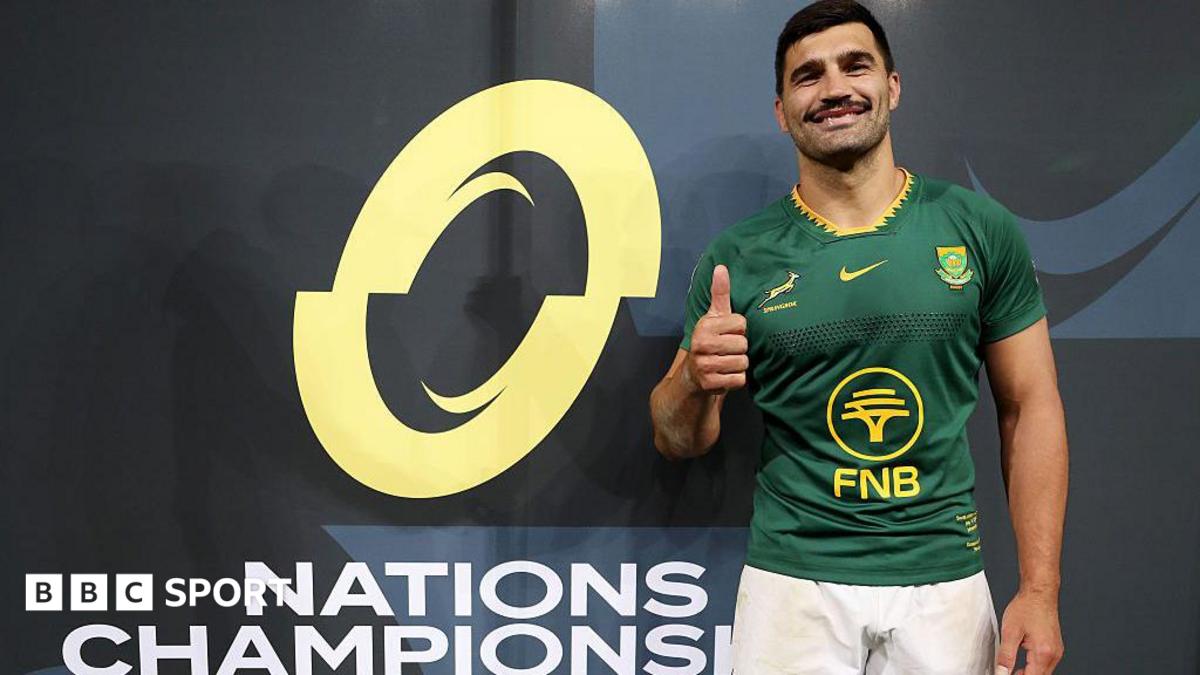
    An awkward administrative mix-up overshadowed an otherwise landmark day for South African rugby in Johannesburg, as two-time world champions the Springboks claimed a victory over England at Ellis Park, and the wrong player was incorrectly awarded the man of the match honor.

    The standout performance of the match belonged to Damian Willemse, who was marking his 50th test cap appearance for the Springboks. Playing at full-back, Willemse delivered a masterclass for the home crowd: he dominated aerial battles, landed a clinical, game-changing 50:22 kick, gained more attacking meters than any other South African player on the pitch, and consistently anchored the world champions’ offensive structure to great effect.

    Supersport, South Africa’s leading local sports broadcaster, had internally selected Willemse as the rightful recipient of the player of the match award. But a critical breakdown in communication between the commentary team and on-pitch presentation staff at Ellis Park led to the honor being mistakenly awarded to his teammate, Damian de Allende – himself a double Rugby World Cup winner with the Springboks, who went on to pose for the official presentation photos and completed the required post-award interviews before the error came to light.

    Remarkably, the mix-up did little to dampen the Springboks’ post-victory celebrations, with the two Damians posing together for photos to formally celebrate Willemse’s 50th cap milestone, a lighthearted moment that softened the impact of the on-field mistake.

    Looking ahead to the next round of the international rugby series, South Africa is set to host Scotland in Pretoria this coming Saturday. For that fixture, Willemse will shift position to take over de Allende’s spot at inside centre, after the double world cup winner was rested for the match. BBC Sport has confirmed it reached out to Supersport for official comment on the award error, with no response published as of yet.

  • Injured Penaud to miss France games against Australia and Japan in Nations Championship

    Injured Penaud to miss France games against Australia and Japan in Nations Championship

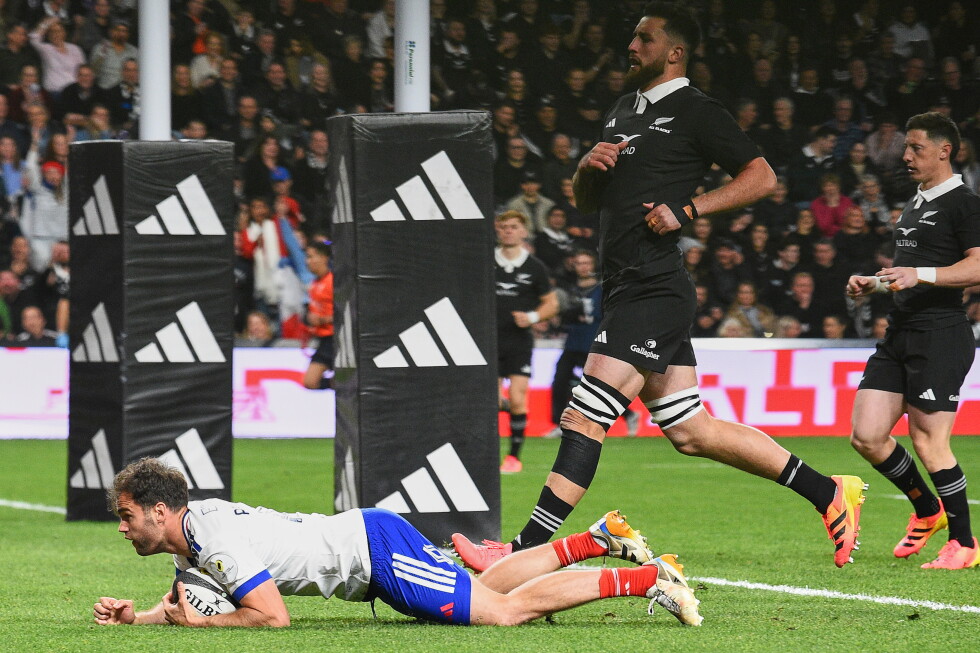
    BRISBANE, Australia — The French national men’s rugby team has confirmed that star winger Damian Penaud will not compete in the country’s two remaining matches on the 2024 Nations Championship schedule, after he picked up a damaging calf injury during France’s narrow opening-round 34-32 defeat to New Zealand over the weekend.

    Penaud turned in an unforgettable individual performance to open the match in Christchurch on Saturday, crossing the try line just two minutes after kickoff to score his 41st international try. The try pushed Penaud further ahead as the all-time leading try scorer in French men’s rugby history, a record he already held entering the tournament. Despite the electric start, the winger was pulled from the game at halftime as trainers noticed discomfort in his calf, and further assessments confirmed the injury would require extended rest.

    On Monday, French rugby officials officially confirmed Penaud’s withdrawal from the tournament squad. The injury rules him out of France’s upcoming match against host Australia in Brisbane this Saturday, as well as a July 18 test against Japan in Tokyo. As of Monday’s announcement, Les Tricolores have not yet named a replacement player to fill Penaud’s spot on the roster for the remaining two matches.

    The injury marks another unexpected turn in Penaud’s 2024 international campaign: the winger had only just returned to the French squad ahead of the Nations Championship, after being dropped from the team’s roster for the 2024 Six Nations tournament earlier this year.

  • Former Irish national swimming coach guilty of sex abuse

    Former Irish national swimming coach guilty of sex abuse

    After more than 30 years living outside Ireland, a once-prominent Irish national swimming coach has finally been held accountable for severe sexual crimes committed against underage female athletes decades ago. 77-year-old George Gibney was found guilty on Monday of 39 counts of indecent assault and one count of attempted rape against four young girls who were between 8 and 14 years old at the time of the offences, which took place between the 1970s and 1980s.

    The jury at Dublin’s Central Criminal Court spent more than seven hours behind closed doors deliberating the evidence before delivering its verdict. The case carries a long, tangled procedural history that stretches back nearly a decade. When the trial opened, Gibney entered guilty pleas for just five of the 79 total charges brought against him. He had maintained his not guilty plea for the remaining 74 counts – 73 counts of indecent assault and one single count of attempted rape.

    Justice officials directed jurors to return not guilty verdicts for 33 of the outstanding counts linked to two of the complainants, following legal procedural guidelines. Following the announcement of the guilty verdicts, the four surviving complainants publicly embraced their friends, family supporters and members of the Garda Síochána, Ireland’s national police service, in a moment of quiet relief after decades of seeking justice.

    The road to conviction began six years ago, when multiple survivors came forward with new allegations against Gibney on the popular BBC investigative podcast *Where is George Gibney?*. That wave of testimonies prompted Irish law enforcement to reopen a dormant investigation into the coach’s alleged crimes. In 2020, a specialized unit within the Garda National Protective Services Bureau launched a full formal criminal investigation, which built a comprehensive case over the course of three years. Investigators passed a full case file to the Director for Public Prosecutions (DPP) in 2023, and after a thorough review of the evidence, the DPP authorized the full slate of criminal charges against Gibney.

    For decades, Gibney evaded Irish justice by living abroad. He was first taken into custody by U.S. Marshals in Florida in July 2025, after Irish authorities filed an official extradition request to bring him back to face trial. He was formally extradited to the Republic of Ireland last year to answer for the 78 counts of indecent assault and one count of attempted rape.

    Following the delivery of the verdict, the trial judge ordered Gibney to be remanded in custody immediately. A sentencing hearing is scheduled for 29 July, where he will receive a formal punishment for his convictions.