博客

  • Microsoft cuts 4,800 jobs and shrinks Xbox in ‘significant restructure’

    Microsoft cuts 4,800 jobs and shrinks Xbox in ‘significant restructure’

    Microsoft, one of the world’s largest technology corporations, has announced a round of company-wide layoffs affecting 4,800 positions, equal to roughly 2.1% of its total global workforce. The company’s Xbox gaming division is set to absorb the largest share of these cuts, in what executives describe as the most sweeping organizational reset in the brand’s decades-long history.

    In an internal memo distributed to all employees, Microsoft Executive Vice President Amy Coleman framed the layoffs as a necessary strategic adjustment to align the company with shifting market conditions amid a rapidly evolving technology landscape. Coleman emphasized that companies cannot halt industry-wide change, but only choose how to adapt alongside it. She confirmed that while the company will not fill eliminated roles with artificial intelligence, the growing adoption of AI is fundamentally reshaping how work is completed across all departments, requiring a leaner, more focused operational structure.

    For Xbox, newly appointed Chief Executive Asha Sharma outlined the full scope of changes in a staff note published to the social platform X. The restructuring will eliminate more than 1,600 roles immediately, with an additional 1,600 positions cut over the coming 12 months. As part of the broader reorganization, four Xbox-owned game development studios — Compulsion Games, Double Fine Productions, Ninja Theory and Undead Labs — will be spun out from Xbox to operate as independent entities, retaining full ownership of their existing intellectual property.

    Sharma pushed back against assumptions that the cuts signal a retreat from the gaming market, telling staff “these changes are about a bigger future for Xbox, not a smaller one.” She added that many legacy companies have mistakenly assumed long-term market dominance is guaranteed, and Xbox would avoid that complacency by proactively resetting its strategy to meet changing consumer expectations.

    As part of the reshuffle, two of Xbox’s highest-performing studios — Minecraft developer Mojang and Candy Crush creator King — will now report directly to Sharma, a shift that analysts say underscores the brand’s new focus on high-value, mass-audience intellectual property. The spin-out of the four smaller studios comes after Microsoft spent years acquiring independent studios to bulk up content for its Game Pass subscription service. Industry analysts note that the decision to spin the studios out rather than shut them entirely is a rare positive development amid a wave of widespread gaming industry layoffs.

    Representatives from the affected studios have publicly commented on the transition, with both expressing gratitude for their time under Xbox ownership and optimism for their independent futures. “We’re thankful to everyone at Xbox for seven great years together,” Double Fine, the studio behind the award-winning Psychonauts franchise, wrote on X. “This outcome preserves our history and culture, and returns ownership of our games to us.” Compulsion Games, developer of the upcoming action-adventure title South of Midnight, echoed that sentiment, noting its immediate priority is supporting its team through the transition and expressing confidence in its independent path forward.

    The latest layoffs come as the global gaming industry continues to grapple with widespread workforce reductions following years of post-pandemic contraction. In 2024 alone, Xbox cut more than 2,000 positions and closed four studios acquired ahead of its multi-billion-dollar purchase of Call of Duty developer Activision-Blizzard. Just over a year ago, Microsoft announced another 9,000 company-wide layoffs as it committed to doubling down on multi-billion-dollar investments in artificial intelligence development. Rising hardware production costs, driven in part by skyrocketing demand for AI data center infrastructure that has outpaced global supply chains, have also forced Microsoft and other consumer tech firms to raise prices on older consoles and gadgets.

    Industry analysts have described the restructuring as a defining moment for Xbox, as the brand navigates an increasingly fragmented gaming market that spans traditional consoles, personal computers, cloud streaming and subscription services. “The challenge is not just cutting costs; it is defining what Xbox stands for in a world where games are moving across console, PC, cloud and subscription platforms,” noted tech analyst Paolo Pescatore in comments to the BBC. Piers Harding-Rolls, head of games research at Ampere Analysis, added that the restructuring clarifies Xbox’s long-term vision: the brand will now prioritize its largest, most popular intellectual properties and global audiences, while smaller studio projects will have more room to grow outside the corporate structure.

    This reset marks one of the most significant strategic shifts for Xbox in its 24-year history, as the brand adapts to a new era of gaming shaped by AI innovation, changing consumer behavior, and ongoing industry-wide cost pressures.

  • Frenchman confesses to murdering his wife after conviction

    Frenchman confesses to murdering his wife after conviction

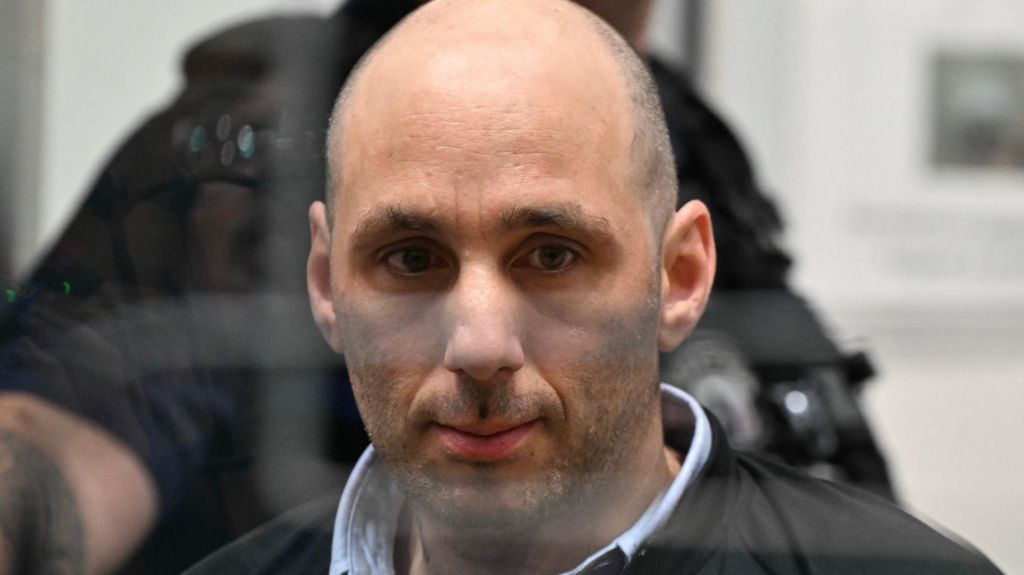
    One of France’s most high-profile missing person cases has taken a dramatic new turn, after a man convicted of murdering his wife despite never having her body recovered has privately confessed to the killing from behind bars.

    Thirty-eight-year-old Cédric Jubillar, who was sentenced to 30 years in prison for the 2020 murder of his 33-year-old spouse Delphine Jubillar, disclosed his guilt in a confidential letter sent to his legal team. The revelation comes nearly 18 months after a mixed jury of six civilians and three judicial magistrates found sufficient circumstantial evidence to uphold a guilty murder verdict, and just two months before his scheduled appeal hearing was set to begin.

    According to Jubillar’s current lead attorney Pierre Debuisson, who took over the case after the original trial, the convicted killer first revealed the truth in a private meeting several weeks ago. Debuisson told reporters at a press conference held Monday that Jubillar stated simply: “I need to tell you the truth. It was me.”

    The confession confirms that Jubillar killed Delphine during a heated argument at the couple’s family home in the southern French town of Cagnac-les-Mines in December 2020, and that he drove his vehicle to move her body to an undisclosed location after the killing. The convicted man has also agreed to guide investigators to the site where he disposed of her remains, a development that will bring long-awaited closure to a case that gripped French public attention for nearly four years.

    The case first emerged in the early hours of December 16, 2020, at the height of France’s national Covid-19 lockdown, when Jubillar contacted local police at 4 a.m. local time to report his wife missing. Delphine, a night nurse working at a nearby clinic, left behind two young children aged six and 18 months at the time of her disappearance.

    Investigations quickly revealed that the couple’s marriage was deeply unstable. Court documents showed Cédric Jubillar struggled with daily cannabis use and irregular employment, while Delphine had started an extramarital relationship with a man she met online and had begun discussing divorce proceedings with her husband.

    Over the following years, law enforcement teams and local volunteers carried out exhaustive searches across the surrounding rural countryside, including specialized cave diving teams that explored dozens of abandoned mine shafts that dot the Tarn department landscape. Despite the extensive search operation, Delphine’s remains were never located, and the case relied entirely on circumstantial evidence to secure a conviction in 2023.

    Throughout the original trial, Jubillar maintained his complete innocence, a position he held until his recent confession. His legal team confirmed that the admission of guilt will almost certainly lead to a postponement of the upcoming appeal, which was scheduled to start in two months.

    For Delphine Jubillar’s two children, who are represented by attorney Malika Chmani, the confession marks a long-awaited breakthrough. “We are relieved for the children. Now he needs to tell us where the body is. I think that is what is going to happen now. I hope so,” Chmani told reporters Monday.

  • ‘That wasn’t a foul’ – Trump on Fifa overturning red card ban

    ‘That wasn’t a foul’ – Trump on Fifa overturning red card ban

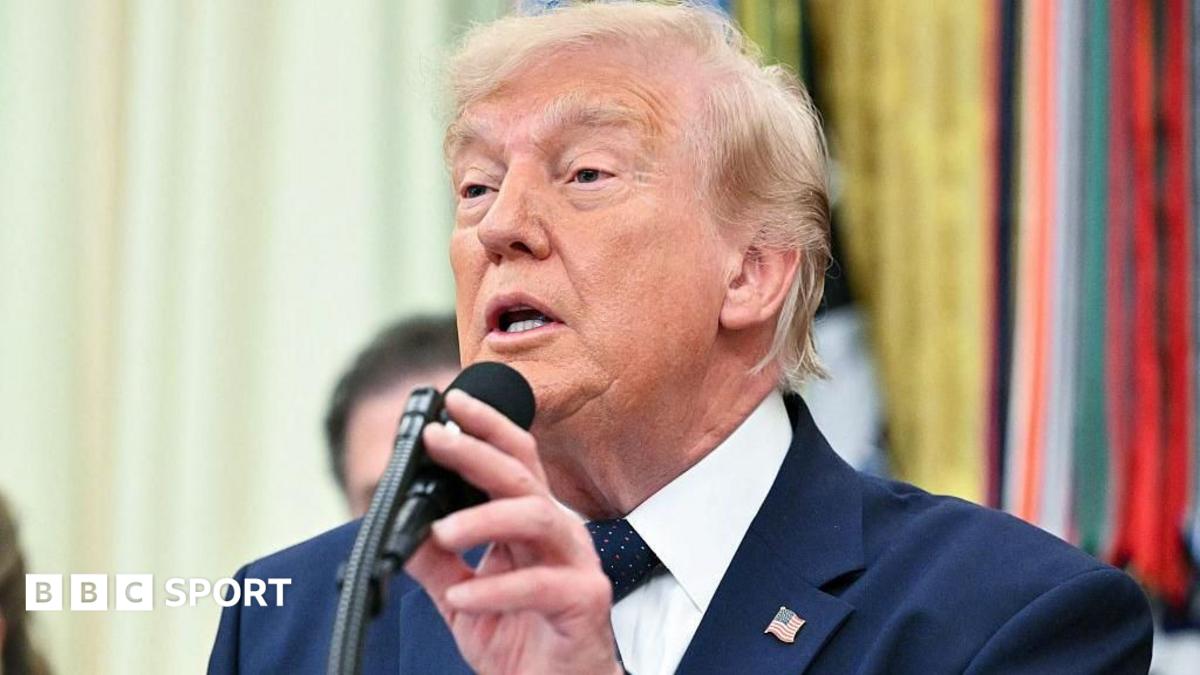
    A surprising political intervention has upended a disciplinary ruling in men’s international soccer, after former U.S. president Donald Trump publicly pushed back against a one-game suspension handed to American striker Folarin Balogun. Following Trump’s comments disputing the foul that led to Balogun’s red card, FIFA has overturned the ban, clearing the way for the in-form forward to take the field for the United States in their next critical match.

    The controversy began when Balogun received a red card during a recent competitive fixture, with match officials ruling his physical challenge met the threshold for a sending-off. That ruling would have forced him to miss the United States’ next matchup, a high-stakes contest with major tournament implications for the American squad. Before the final disciplinary process concluded, Trump broke with typical political non-interference in sports outcomes to publicly share his take on the call.

    “That wasn’t a foul,” Trump stated publicly, echoing the frustration of many American soccer fans who felt the initial red card was overly harsh. His intervention drew immediate attention from global soccer governing body FIFA, which launched a review of the original disciplinary decision. In an unexpected outcome, the organization opted to reverse the one-game ban, allowing Balogun to remain in the starting lineup conversation for the upcoming fixture.

    The moment has sparked conversation across global sports about the intersection of politics and athletic governance, with some observers questioning whether external political pressure influenced FIFA’s ruling, while others argue the review simply corrected a clear on-field officiating error. For the United States men’s national team, the reversal is a significant boost, retaining one of their most promising attacking talents for a match that could shape their progress in ongoing competition.

  • Trump confirms he asked Fifa to review Balogun ban

    Trump confirms he asked Fifa to review Balogun ban

    A major controversy has rocked the 2026 FIFA World Cup after global football’s governing body took the unprecedented step of suspending a mandatory one-match suspension for United States striker Folarin Balogun, a decision that came after former U.S. President Donald Trump confirmed he personally requested a formal review of the red card ruling.

    The 25-year-old American forward, who has notched three goals for the host nation through the early knockout stage, was initially set to miss the USA’s high-stakes round of 16 clash against Belgium after receiving a straight red card for a foul on Bosnia and Herzegovina defender Tarik Muharemovic in the final group stage match. Under standard FIFA rules, an automatic one-match ban would have immediately barred Balogun from the next fixture.

    In a move that has drawn widespread condemnation from football governing bodies and coaches across the globe, FIFA instead opted to suspend the ban for a 12-month probationary period, clearing Balogun to be selected for the Seattle match, which is scheduled to kick off at 17:00 local time on Monday (01:00 BST Tuesday).

    Speaking from the White House on Monday, Trump confirmed he had reached out to FIFA to review the original red card decision, arguing the foul did not merit a sending off. “I didn’t think it was a foul,” Trump told reporters. “If they had put through the ban, it would have left a big stain on this entire tournament. They made the right decision.” The former president also confirmed he spoke directly to FIFA President Gianni Infantino, but claimed he only requested a review and did not pressure the governing body to overturn the ban. “I can’t tell them what to do,” Trump said. “I believe it was the independent commission that made the final call, and it was the right decision.” Trump also lashed out at referee Raphael Claus, a Brazilian official who issued the red card, calling Claus’s decision “horrible” and claiming the referee was “a little bit suspect.”

    The Brazilian Football Confederation (CBF) quickly issued a formal defense of Claus’s professional integrity, pushing back against Trump’s claims. “There is nothing in his professional record that discredits him or gives any grounds for suspicion,” the CBF said in a statement. “He is an exemplary professional.”

    Infantino released his own statement following the call, clarifying that when he received Trump’s request, he informed the U.S. President that the matter would be handled by FIFA’s independent judicial bodies through established legal processes, and that a ruling would be issued in due course by the competent authorities. Later, the FIFA chief emphasized the autonomy of the governing body’s judicial bodies, noting that regardless of personal agreement with a ruling, decisions must be respected. “Respect for independent institutions and the rule of law is what protects the integrity of our competitions and the credibility of FIFA at all times,” Infantino said. When asked by BBC Sport to respond to Trump’s comments about Claus, FIFA declined to add any further comment.

    The decision has sparked fierce backlash from across international football. The Royal Belgian Football Association (RBFA) said it was “astonished” by the ruling, while European football governing body UEFA warned that the decision puts the fundamental integrity of the sport at risk. Belgium filed an official appeal against FIFA’s decision to allow Balogun to play, but the appeal was dismissed by FIFA’s appeal committee, which ruled Belgium had no legal standing to challenge the ruling as the team was not a party to the original disciplinary proceedings against Balogun, only the USA’s next opponent.

    RBFA reiterated its commitment to challenging the outcome regardless of the match’s result, saying in a statement: “Regardless of the sporting outcome of this match, the RBFA is deeply concerned by the course of events and will continue to fight in the coming hours, days and months in defence of the fundamental principles of ethics, fair competition, and the interests of football as a whole.”

    England head coach Thomas Tuchel, who recently had defender Jarell Quansah sent off in England’s dramatic 3-2 group stage win over Mexico, warned the ruling sets a dangerous precedent for future competitions. “Where to draw the line is the question that I ask,” Tuchel said. “Do we appeal if a yellow card is not a yellow card? Do we think it is not a red card or who thinks it? Where does this start and where does this end? It’s my question. I don’t have an answer.”

    UEFA went further, saying that political intervention to effectively cancel a mandatory suspension mid-tournament “crossed a red line.” Historical context adds to the controversy: out of the 189 red cards issued in men’s World Cup history prior to this match, only one other player has avoided an automatic suspension. That case, involving Brazil’s Garrincha at the 1962 World Cup, occurred before automatic suspensions were formally codified, and the decision to waive the ban was long dogged by allegations of political interference.

    FIFA has cited Article 27 of its disciplinary code, which grants the governing body authority to partially suspend disciplinary measures for a probationary period, as the legal basis for its decision. However, the organization has yet to release a specific public explanation for why it chose to apply this rule to Balogun’s case, further fueling criticism over transparency and fair play.

  • Wildfire bars fans from Tour de France segment as parts of Europe sizzle again under extreme heat

    Wildfire bars fans from Tour de France segment as parts of Europe sizzle again under extreme heat

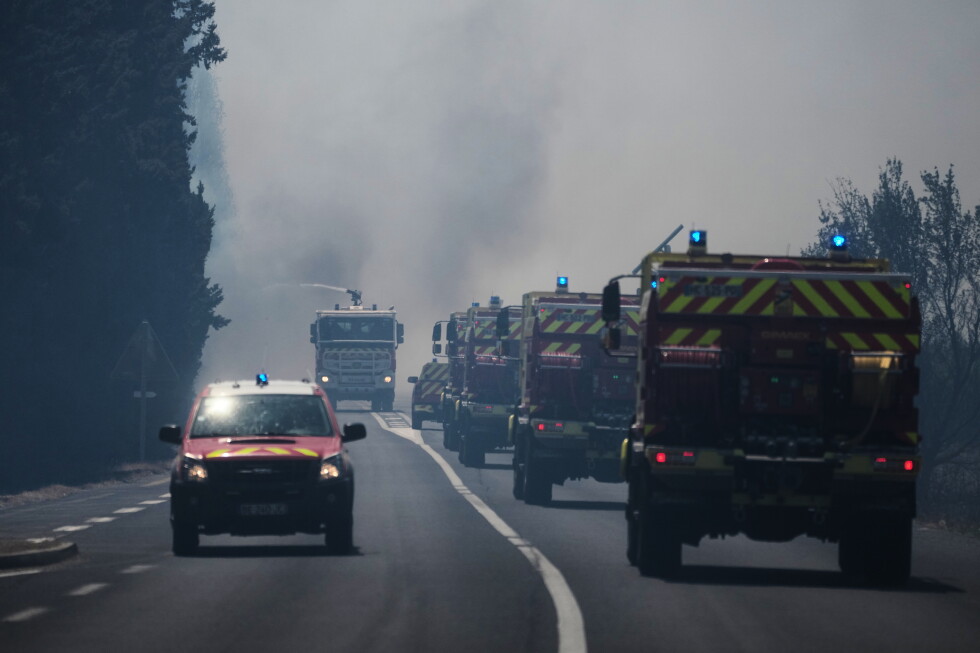
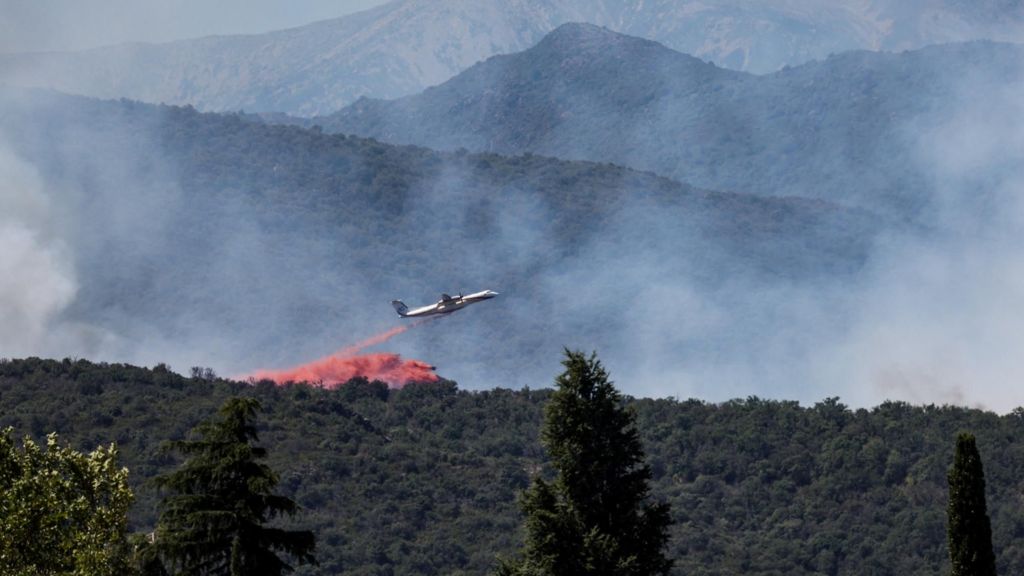
    A massive wildfire raging in southern France has forced major last-minute changes to the 2025 Tour de France, becoming the most high-profile disruption of a summer season defined by record heat and spreading wildfires across southern Europe. The world’s most prestigious cycling race, which had completed its opening two legs in Spain, crossed the border into France on Monday for the third stage, a mountain route ending in the Pyrenees town of Les Angles. The blaze sits just 37 miles from the stage finish line, having already scorched more than 4,500 acres of vegetation and land.

    Tour de France organizers announced sweeping restrictions to the route for the final 25 miles of the stage, after local authorities confirmed that containing the wildfire required the full mobilization of firefighting crews, security forces and government resources. “The top priority remains the protection of people, property, and natural areas, as well as bringing the fire under control,” local authorities said in a statement.

    Under the new rules, the iconic 6-mile publicity caravan of branded sponsor vehicles that precedes the main peloton has been canceled for this section of the route. Only competing riders and race-essential official vehicles are permitted along the course, and spectators were explicitly instructed to avoid gathering along the roadside or at the finish area to reduce security risks and free up resources for fire response efforts.

    The ongoing wildfire crisis spans far beyond France, as climate change-fueled extreme heat pushes multiple southern European countries into a state of emergency. Across the border in Greece, 96 separate wildfires ignited across the country in the 48 hours leading up to Monday, according to government spokesman Pavlos Marinakis. While most blazes were contained quickly before spreading, one large fire in the Mandra region west of Athens required an emergency deployment of 29 water-bombing aircraft and more than 200 ground firefighters to contain before nightfall, when aerial firefighting operations are impossible. As of Monday morning, the fire had diminished in intensity but had not been fully extinguished.

    Strong winds across much of Greece kept wildfire risk at high or very high levels on Monday. A separate blaze on the southern island of Crete, burning through primarily agricultural land, forced the evacuation of an entire village near Ierapetra as gusty winds pushed the fire forward.

    On the Iberian Peninsula, a second major heatwave is sweeping across Spain and Portugal, with hundreds of firefighters already working to contain scattered blazes. Spain’s national weather agency AEMET warned that the heatwave, which began on Sunday, will persist through at least Thursday, bringing record-high daytime and overnight temperatures. Across most of the country, including the capital Madrid, daytime highs were forecast between 99°F and 108°F for Monday and Tuesday, with overnight temperatures remaining above 68°F. These so-called “tropical nights” prevent people’s bodies from cooling down and recovering from daytime heat exposure, increasing the risk of heat-related illness.

    In Portugal, inland areas saw even more extreme temperatures on Monday, while coastal capital Lisbon reached 91°F, with a cool-down forecast for later in the week.

    The broad crisis aligns with long-standing climate warnings from scientists and European climate agencies. The European Union’s Copernicus Climate Change Service confirms that Europe is warming faster than any other continent on Earth, with average temperatures rising twice as quickly as the global average since the 1980s. 2025 is already the third-hottest year ever recorded globally, bringing repeated severe heatwaves across the European continent. Climate researchers warn that rising temperatures are worsening drought and dry conditions, increasing the frequency and intensity of wildfires across southern and southeastern Europe, while also raising public health risks for local populations and visitors alike.

  • NATO chief demands allies present credible plans to reach defense spending targets

    NATO chief demands allies present credible plans to reach defense spending targets

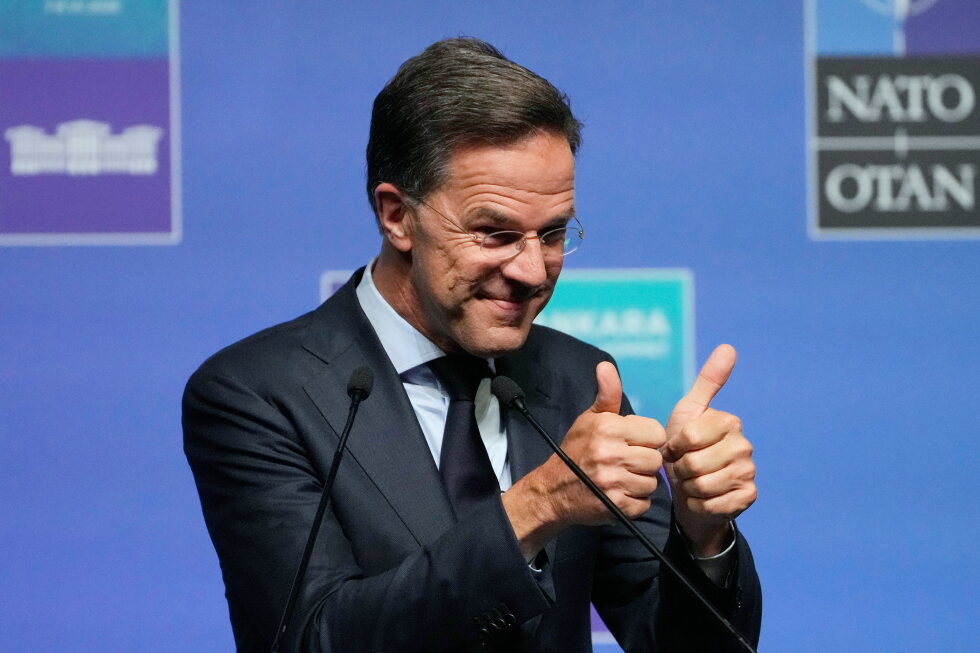
    As NATO prepares to convene its annual two-day summit in Ankara starting Tuesday, Secretary-General Mark Rutte has issued a stark call on all 32 member nations to table detailed, actionable plans to meet the alliance’s ambitious new defense spending target. The gathering comes at a defining moment for the transatlantic bloc, as the United States continues to draw down its long-standing leading security role in Europe and pushes partners to take on a greater share of collective defense costs.

    Last year, all NATO members formally agreed to a landmark new spending framework that commits nations to invest 5% of their total gross domestic product in defense annually. Under the agreement, 3.5% of GDP will go toward core national defense budgets, while the remaining 1.5% will be allocated to upgrading critical infrastructure — including roads, bridges, and port facilities — to enable rapid deployment of troops and military equipment during conflict scenarios.

    The new target represents a significant increase from the alliance’s prior requirement of 2% of GDP, a threshold that many member states have yet to meet even years after it was adopted. Spain, for example, has formally endorsed the 5% goal but has pushed back on the required spending level, arguing it can meet NATO’s security needs without allocating such a large share of its economic output. Other smaller and lower-income member states continue to face budget constraints that make hitting even the old 2% target a major challenge.

    When pressed on consequences for members that fail to present a clear roadmap to compliance, Rutte told reporters in the Turkish capital on Monday that the alliance has established mechanisms to encourage holdouts to fall in line, though he declined to share further details. That comment echoed remarks from U.S. Ambassador to NATO Matthew Whitaker, who hinted last week that Washington has prepared unspecified repercussions for allies that refuse to increase their defense investments.

    On a more encouraging note, Rutte highlighted that preliminary defense spending data from European allies and Canada shows positive momentum so far. NATO’s own projections indicate that combined defense spending by these nations will be $258 billion higher in 2024 and 2025 than it was in the years before the latest push for increased investment, a trend Rutte called “impressive”.

    Even with that growth, however, the increased spending may still fall short of the demands coming from the current U.S. administration. President Donald Trump has repeatedly criticized NATO allies for failing to contribute their fair share to collective defense, and has previously gone so far as to threaten that the U.S. would not honor its mutual defense commitment to members that do not meet spending targets. Trump has also recently demanded “loyalty” from alliance members, after a number of nations refused to allow the U.S. to use their military bases in connection with U.S.-Israeli military actions against Iran.

  • ‘Here to stay’ – Fans react to the rise of soccer in the US

    ‘Here to stay’ – Fans react to the rise of soccer in the US

    For decades, soccer has often been labeled a “second-tier sport” in the United States, overshadowed by legacy giants like American football, basketball, and baseball. But a shifting landscape over the past decade has carved out a permanent, growing space for the beautiful game on American soil — and fans are adamant that this rise is not a passing fad.

    In a series of on-the-ground conversations with soccer supporters across the country, BBC correspondent Nardine Saad captured the widespread conviction that the sport’s growing popularity is here to stay. From packed youth soccer academies in suburban communities to sell-out crowds for Major League Soccer (MLS) matches and international friendlies, the signs of growth are impossible to miss.

    Interviews with long-time fans and new converts alike highlight the multiple forces driving this momentum. Generational shift plays a key role: millions of American children now grow up playing recreational and competitive soccer, creating a built-in fan base that carries that passion into adulthood. The influx of global soccer stars moving to MLS in recent years — from David Beckham’s groundbreaking move to LA Galaxy that opened the door to Lionel Messi’s blockbuster transfer to Inter Miami in 2023 — has also catapulted the sport into mainstream American media attention, drawing casual viewers and new diehard fans.

    Fans also point to changing viewing habits, with more American sports audiences seeking out fast-paced, continuous-action sports that differ from the stop-start structure of American football. For many young fans, soccer’s global connectivity also offers a way to engage with international culture, with many following both European top leagues and their local MLS teams.

    Across all conversations, a consistent theme emerged: this is not a temporary spike in interest. Supporters say the infrastructure, fan base, and cultural traction are all in place to cement soccer as a core part of the American sports landscape for generations to come.

  • Wildfire in southern France forces evacuation of 10,000 people

    Wildfire in southern France forces evacuation of 10,000 people

    As an early summer heatwave continues to parch much of Western Europe, a rapidly spreading wildfire in the French Pyrenees has forced more than 10,000 residents to evacuate over a dozen small communities near the Spanish border, triggering a cross-border emergency response and disrupting the annual Tour de France cycling race.

    The blaze, centered near the village of Trévillach not far from the southern French city of Perpignan, has already scorched at least 4,600 hectares of land, local prefect Pierre Regnault de la Mothe confirmed in a post to social platform X. Firefighting efforts faced worsening conditions on the morning after the evacuation order was issued, with French Interior Minister Laurent Nunez warning that dangerous conditions were extending the battle against the flames. Authorities have repeatedly highlighted that gusty strong winds are expected to fan the fire further, pushing it closer to populated areas.

    Local resident Patrice from Trévillach described the terrifying speed of the fire’s advance in an interview with AFP, noting the blaze came within 300 meters of local homes. “We were shocked by how fast it spread, it was staggering – bordering on panic,” he said.

    The wildfire has also impacted one of the world’s most high-profile annual cycling events. The third stage of the 2026 Tour de France, a 195.9-kilometer route that starts in the Spanish city of Granollers and was scheduled to finish in the French Pyrenean town of Les Angles, has required drastic last-minute adjustments. Tour organizers have urged all spectators and non-essential personnel to avoid the final 40 kilometers of the stage to clear access routes for emergency response vehicles, and have cut the size of the official team motorcade to a minimum.

    “An exceptional fire calls for exceptional measures for the Tour,” said race director Christian Prudhomme. “We invite the public not to come to the edge of the race or to the finish site.”

    The wildfire crisis is not limited to France. Neighboring Spain has also seen multiple blazes burn across its northeastern regions. More than 2,200 hectares of the Les Gavarres natural reserve have already been destroyed by fire, though Catalan regional authorities reported Saturday evening that the blaze there had stabilized and was on track to be fully extinguished within the week. Further south in Spain’s Castellon province, 500 residents were evacuated after a separate wildfire spread into the Sierra de Espadan national park.

    The European Union has mobilized additional resources to support the emergency response. European Commission President Ursula von der Leyen announced that four water-bombing aircraft based in Cyprus and Sweden would be deployed to the region to aid French firefighting teams.

    This latest round of wildfires comes as Southern Europe grapples with a second early-season heatwave, following a record-breaking heat event in June that pushed national average temperatures to all-time highs across France. Forecasters warn temperatures could again climb as high as 40°C across southwestern France this week, after already surpassing that mark in parts of Spain and Portugal. “Although this heatwave is unlikely to break records in the way June’s did, it will still be exceptional for the time of year,” said BBC Weather Lead Forecaster Matt Taylor. “With the heat expected to persist into next week and little widespread rain forecast, the risk of further wildfires will remain elevated.”

    The June heatwave left a devastating human toll, with official counts recording at least 2,025 excess deaths in France, 1,222 in Belgium, and roughly 480 in the Netherlands. Climate scientists have repeatedly linked the increasing frequency and intensity of European heatwaves and wildfires to manmade climate change. Data from the Copernicus Climate Change Service confirms Europe is warming twice as fast as the global average, a trend that has led to longer, hotter summers, strained freshwater supplies, and a sharp rise in the risk of large-scale, uncontrolled wildfires across the continent.

  • Russian attack leaves gaping hole in Kyiv residential building

    Russian attack leaves gaping hole in Kyiv residential building

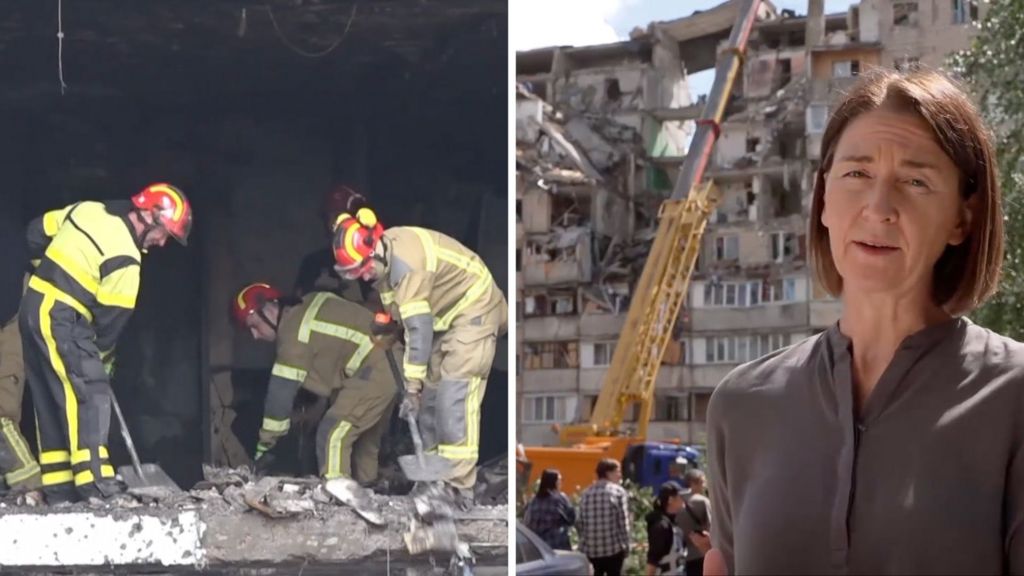
    A devastating Russian strike on Ukraine’s capital Kyiv has left a massive structural gash in a multi-story residential building, marking another violent escalation of attacks on civilian infrastructure in the country’s most populous urban center. The overnight assault prompted immediate on-site reporting from veteran BBC correspondent Sarah Rainsford, who traveled to the damaged neighborhood in the hours immediately following the explosion to document the aftermath. Local emergency services have not yet released full details on casualties or the extent of additional damage to surrounding properties, but initial visual accounts from the scene confirm the strike caused severe, irreversible damage to the targeted residential block. This attack is the latest in a series of recent strikes targeting civilian areas across Ukraine, raising renewed international concerns about the safety of urban civilian populations amid ongoing conflict. Rainsford’s presence at the blast site underscores the continued focus of global media on the human cost of the conflict, even as fighting remains concentrated heavily in Ukraine’s eastern and southern regions.

  • Ebola deaths in Congo top 500 as health workers threaten to strike

    Ebola deaths in Congo top 500 as health workers threaten to strike

    A rapidly spreading Ebola outbreak in the Democratic Republic of the Congo has crossed a grim threshold, with official data confirming more than 500 fatalities from over 1,500 confirmed infections, even as the response effort faces a fresh crisis: frontline workers battling the outbreak have threatened to suspend work over unmet pay and unsafe working conditions.

    Congo’s Ministry of Health released the updated statistics in a Sunday night briefing, reporting that since the outbreak was first declared on May 15, a total of 1,561 confirmed cases have been documented, with 506 people succumbing to the virus. Current data shows the virus’ transmission continues to outpace the ability of response teams to contain it, according to the official update.

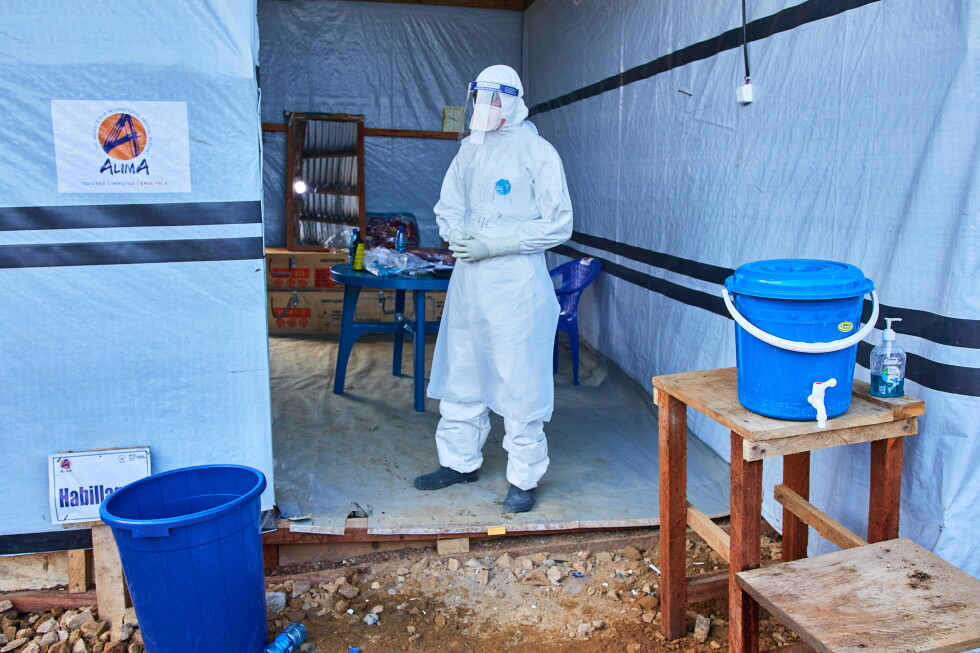
    The strike threat was issued Sunday by frontline teams deployed in Ituri province, the geographic epicenter of the current outbreak. Workers gave authorities a 24-hour deadline to address their grievances, warning that work would stop if demands were not met. The vast majority of these frontline staff are local health professionals, who have worked for months with minimal rest while navigating two extraordinary additional challenges: violent attacks from hostile local communities, and deep-rooted public skepticism about the existence of the virus.

    A copy of the workers’ formal notice to the national government, obtained by the Associated Press, details multiple long-running grievances. Workers both inside hospital facilities and out in the community conducting contact tracing and testing report they have not received earned hazard benefits since the outbreak was declared, and still lack sufficient basic supplies to carry out their high-risk work. Additional complaints include chronically low base salaries, disrespectful treatment from elite response teams deployed from the capital Kinshasa, a pattern of bringing in outside labor from other provinces instead of prioritizing hiring of local Ituri workers, and persistent shortages of adequate personal protective equipment and other critical medical gear.

    The timing of the strike threat has amplified concerns among public health officials, as it comes just days after enrollment opened for experimental clinical trials for Ebola treatments in the region. A work stoppage would not only derail the trial process, but also significantly slow broader efforts to curb transmission of the virus, which has already spread beyond Ituri to two additional eastern provinces: North Kivu and South Kivu.

    Response efforts have been complicated from the start by key biological characteristics of the current outbreak: this event is caused by the Bundibugyo strain of Ebola, for which there are no currently approved vaccines or specific antiviral treatments. By contrast, Congo’s 16 previous Ebola outbreaks were almost all caused by the more common Zaire strain, for which an effective, widely deployed vaccine already exists.

    Public health officials also still face major gaps in basic investigation of the outbreak: investigators have not yet identified patient zero, the initial case that sparked the current transmission chain, and are still working to trace tens of thousands of potential contacts who may have been exposed to infected people, a core step to stopping further spread. The World Health Organization has already warned that the first month of this outbreak was the worst on record for early Ebola spread in Congo.