博客

  • Maine senate candidate asked to drop out of race over sexual assault allegation

    Maine senate candidate asked to drop out of race over sexual assault allegation

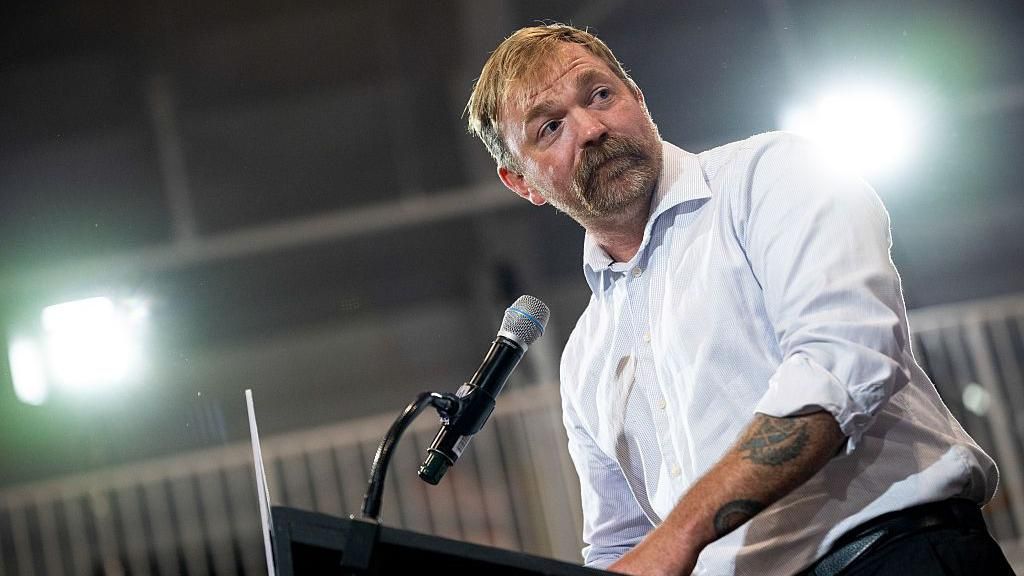
    A high-stakes U.S. Senate race in Maine has been thrown into chaos following a new sexual assault allegation against Democratic nominee Graham Platner, prompting top party figures and national Democratic leaders to publicly demand he exit the contest ahead of November’s pivotal midterm elections. The accuser, 41-year-old Jenny Racicot, shared detailed allegations in a series of interviews with Politico published Monday, marking the most serious claim to emerge against Platner in a growing string of controversies that have roiled his campaign over recent weeks.

    Racicot told Politico she had an on-again, off-again romantic relationship with Platner spanning more than two years before the alleged 202X incident. According to her account, Platner entered her Maine home uninvited while heavily intoxicated and assaulted her sexually. After she explicitly told him the encounter was non-consensual, Racicot said she cut off all contact with him permanently.

    Racicot was originally among the women interviewed for an earlier New York Times report published ahead of Maine’s Democratic primary, where three former girlfriends accused Platner of patterns of erratic and aggressive behavior. She chose not to go public with her assault claim at that time, explaining she did not want to be publicly identified as a rape victim. But after widespread public controversy surrounding the Times’ initial reporting, Racicot said she felt compelled to share her full account publicly.

    Platner, a former combat Marine and commercial oyster farmer who won the Democratic nomination to challenge four-decade incumbent Republican Senator Susan Collins, has forcefully denied the sexual assault allegation, calling it “categorically false.” Despite the denial, he acknowledged in a social media video statement released hours after Politico published the report that he is pausing to evaluate his political future. “Regardless of the inaccuracy of the reporting, but mindful the political reality it will inflict, we are taking the time to reflect on the best path forward for the state that I love, the people that I love, the movement I belong to and the goal of defeating Susan Collins,” he said. In the days following the report, Platner’s campaign has postponed all public events scheduled for this week, and the BBC confirmed it has reached out to his team for additional comment with no further response as of press time.

    This latest allegation is far from the first controversy to upend Platner’s campaign. Earlier this year, reports emerged of a chest tattoo he received in 2007 while drinking with fellow Marines in Croatia that closely resembled the Totenkopf, or death’s head symbol used by Nazi SS forces during World War Two. Platner later said he had the tattoo removed after recognizing the problematic resemblance. Old Reddit posts from 14 years ago were also unearthed, in which Platner argued sexual assault victims should “take some responsibility for themselves” and avoid excessive intoxication. Platner later apologized for the comment, asking voters to judge him by his current character rather than a decade-old offhand remark. Most recently, reports that Platner exchanged sexually explicit messages with women outside his marriage were published, which Platner acknowledged were true, saying he had made mistakes early in his marriage that he and his wife had since worked through together.

    In the wake of Monday’s new sexual assault allegations, prominent Democrats across the country have rapidly withdrawn their endorsements and called for Platner to drop out of the race immediately. Former Democratic National Committee chair Donna Brazile wrote on the social platform X that “It’s time for Mr. Platner to step aside and be replaced by July 13th. Platner needs time to heal, focus on his family and well-being. Enough. Enough.” U.S. Representatives Ruben Gallego and Ro Khanna, both fellow Democrats, also pulled their support, with Khanna saying “the report [is] serious and credible… Graham Platner should drop out from the race. I am withdrawing my endorsement.” Even the Maine Democratic Party, the official state organization that backed Platner’s nomination, issued a statement calling for his withdrawal. “Over the past several weeks, multiple women have made serious, credible allegations against Graham Platner. Today’s statements take those allegations even further,” the party’s leadership said. “Maine Democratic Party leadership is calling on Graham Platner to withdraw as the Democratic nominee for U.S. Senate.”

    The Maine Senate race is widely viewed as one of the most critical pickup opportunities for Democrats as they mount an uphill longshot bid to flip control of the U.S. Senate from Republicans in the 2024 midterm elections. Collins, the Republican incumbent, has held her seat for nearly 30 years and repeatedly fended off Democratic challenges, even as Maine has not backed a Republican presidential candidate since 1988. A Platner withdrawal would force the Maine Democratic Party to nominate a replacement candidate in less than a week, per party deadlines, putting their bid to unseat Collins in serious jeopardy just months before voting begins.

  • Miami Heat sign Antetokounmpo from Milwaukee Bucks

    Miami Heat sign Antetokounmpo from Milwaukee Bucks

    One of the NBA’s biggest superstars has shaken up the league’s Eastern Conference pecking order in a seismic offseason trade, as two-time league Most Valuable Player Giannis Antetokounmpo has finalized a move from the Milwaukee Bucks to the Miami Heat. The multi-player deal sends Antetokounmpo and Bucks forward Bobby Portis to South Florida, with promising Miami youngsters Tyler Herro, Kel’el Ware, Jaime Jaquez Jr. and prospect Kasparas Jakucionis moving north to join the Bucks in return.

    Drafted as a relatively unknown 18-year-old prospect by the Bucks back in 2013, Antetokounmpo spent the entirety of his 13-year professional career in Milwaukee, transforming the small-market franchise from a perennial afterthought into a title contender. He led the team to its first NBA championship in 50 years during the 2021 bubble postseason, cementing his legacy as one of the greatest players in Bucks franchise history. The Greek superstar’s departure, however, comes after months of growing tension between the 31-year-old and the team’s front office.

    Antetokounmpo publicly criticized the Bucks’ management last season over their decision to rule him out of action after he suffered a left knee hyperextension, saying that he was ready and able to return to play but was sidelined against his wishes. After the Bucks missed the playoffs entirely in the 2025-26 campaign, the star doubled down on his frustration in an April interview, noting: “I feel like sometimes people just don’t listen. They listen to the sources. The main source is me. It is what it is.”

    As rumors of Antetokounmpo’s uncertain future in Milwaukee began swirling earlier this offseason, the Eastern Conference rival Boston Celtics emerged as another top suitor for the star, but the Heat ultimately closed the deal to bring the future Hall of Famer to Miami. For the three-time championship franchise, the acquisition is being framed as one of the most transformative moves in team history. Heat president Pat Riley called the trade “one of the great trades” in franchise history, adding that the team has built its culture around pursuing elite championship-caliber talent.

    The Antetokounmpo blockbuster is just one of multiple high-profile moves shaking up the Eastern Conference this offseason. The Philadelphia 76ers have also announced two major additions, confirming they have acquired star wing Jaylen Brown from the Celtics in a multi-piece trade, while also signing unrestricted free agent guard Anfernee Simons. In exchange for Brown, the 76ers sent veteran forward Paul George to Boston, along with two future first-round draft picks and two additional second-round selections, reshaping the rosters of two of the conference’s top contenders for next season.

  • Nephew of PA vice president arrested over Gaza smuggling with Israeli soldiers

    Nephew of PA vice president arrested over Gaza smuggling with Israeli soldiers

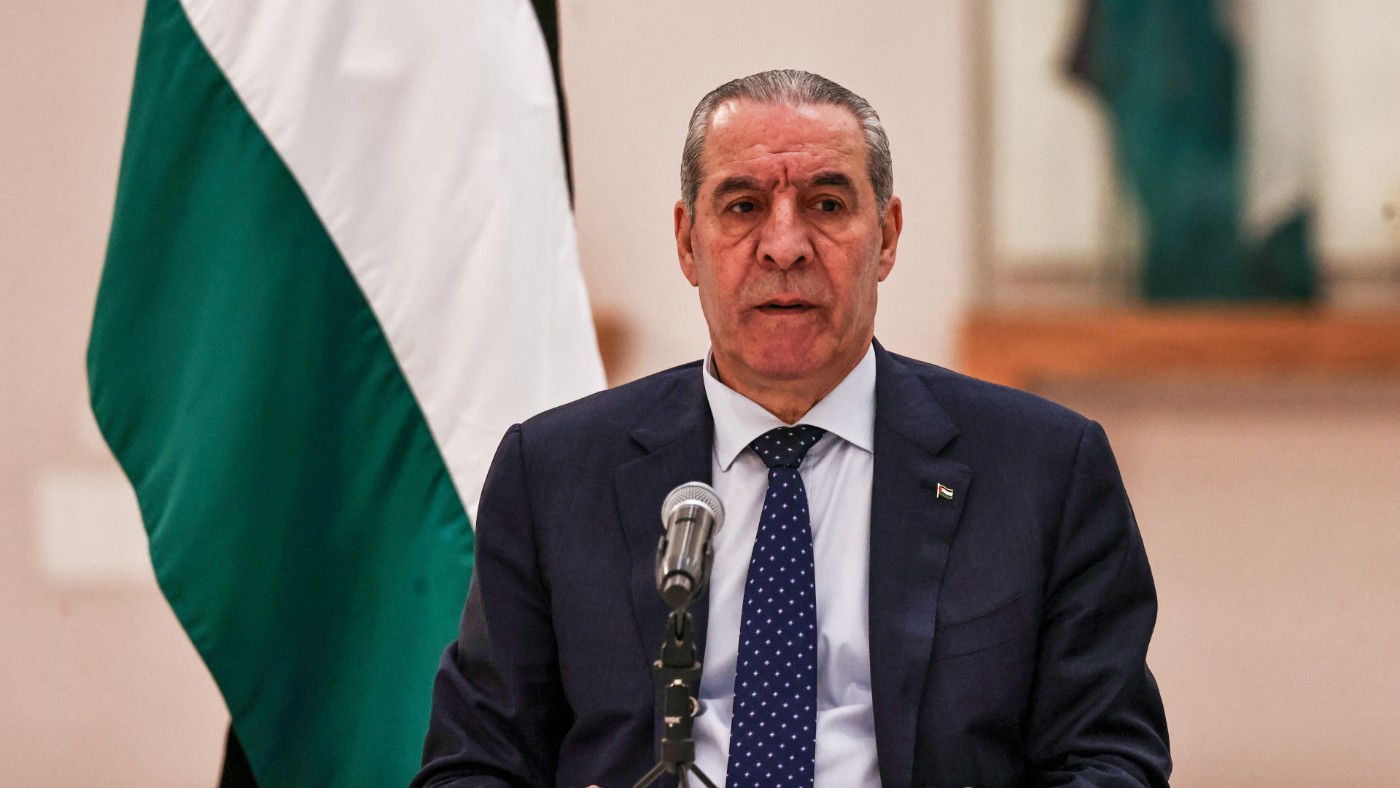
    In a development that has cast new light on systemic illicit trafficking into the blockaded Gaza Strip, Israel’s internal security service Shin Bet has taken into custody Jamal al-Sheikh, the nephew of newly appointed Palestinian Authority Vice President Hussein al-Sheikh, according to an exclusive report from Israeli outlet i24News published Monday.

    The arrest, which occurred in February of this year, stems from allegations that Jamal al-Sheikh, a West Bank resident, orchestrated a cross-border smuggling ring between February 2025 and February 2026, with direct assistance from active-duty Israeli soldiers, a Egyptian national, and Gaza-based merchant partners. Over the course of 12 months, the network successfully moved five separate shipments of contraband into the Palestinian enclave, before a failed sixth attempt in February led to the operation being unraveled and Jamal’s detention.

    Court documents and security briefings cited in the report outline that the first shipment consisted of 10 pallets of confectionery, but subsequent shipments included items classified by Israel as “dual-use” goods—materials that can serve both civilian and military purposes, which are subject to a total ban on entry into Gaza. Other illicit goods trafficked included solar panels, vehicle batteries, tobacco products, electric bicycles, and mobile phones, all of which command exorbitant black market premiums in Gaza amid the long-standing Israeli blockade that has restricted the flow of most basic and commercial goods.

    The final intercepted shipment, which was seized by Shin Bet before it could cross into Gaza, was the network’s largest to date: a single truck carrying more than 500 pallets of cigarettes and 500 iPhone devices, with a total estimated black market value of 200 million Israeli shekels, or roughly $66 million. The report notes that Jamal al-Sheikh expressed hesitation about moving the high-value final shipment over fears of being caught, but a Gaza-based partner in the ring reassured him that Israeli military connections would guarantee safe passage. The merchant claimed his own son, an active Israeli soldier, would facilitate the smuggling. The identities of all Israeli soldiers implicated in the ring remain sealed under a court gag order, per i24News.

    This arrest is far from an isolated incident. It is the latest in a string of high-profile revelations over recent months exposing widespread complicity by Israeli security and commercial actors in illicit profiteering from Gaza’s restricted economy. Just one month prior to Jamal al-Sheikh’s arrest, Bezalel Zini, brother of current Shin Bet chief David Zini, was formally indicted on charges of aiding unauthorized smuggling after being accused of moving millions of shekels worth of contraband cigarettes and other goods into the enclave.

    Beyond shadowy smuggling rings, official commercial activity has also drawn scrutiny for exploiting Israel’s monopoly on entry into Gaza. In June, Israeli news outlet Ynet reported that one major Israeli supermarket chain saw a more than 25% jump in first-quarter 2026 sales, driven almost entirely by sales of goods to Gaza. The chain recorded 152 million shekels ($50 million) in additional profits over the period, 99 million shekels ($33 million) of which came directly from Gaza sales. Israel currently grants exclusive commercial entry approval to just a small handful of Israeli companies, creating a state-sanctioned monopoly that allows for inflated pricing.

    Israel’s strict control over all goods entering and exiting Gaza forms the core of its decades-long siege campaign, a policy that humanitarian organizations worldwide have repeatedly condemned as using mass starvation as a weapon of war against the enclave’s 2.2 million residents. While a ceasefire agreement reached last October allowed for a temporary increase in humanitarian aid entering the territory, new UN data shows that aid flows have actually declined sharply in recent months. The UN Office for the Coordination of Humanitarian Affairs (OCHA) reported that just 41,800 pallets of aid were delivered across Gaza last month, down from 58,600 pallets delivered in January 2026.

    The ongoing restrictions have pushed Gaza’s population into an unprecedented humanitarian catastrophe. OCHA data confirms that the vast majority of Gaza residents now survive on just two meals per day, with 70% of infants and young children suffering from moderate to severe food insecurity. Projections from UN agencies estimate that roughly 246,000 children under the age of 17 will suffer from acute malnutrition in 2026, with more than 31,000 of those children facing life-threatening severe acute malnutrition.

    For context, Hussein al-Sheikh, Jamal’s uncle and the PA’s recently appointed vice president, has been a leading figure in Palestinian politics for more than 20 years, and is widely tipped as the leading candidate to succeed 90-year-old PA President Mahmoud Abbas when he steps down. For decades, al-Sheikh led the PA’s Civil Affairs Commission, the body tasked with coordinating all civilian administrative matters with COGAT, the Israeli military unit that manages all Israeli government policy in the occupied Palestinian territories.

  • World Cup fans react to Balogun’s one-game ban suspension

    World Cup fans react to Balogun’s one-game ban suspension

    A last-minute development has shaken up the United States men’s national team ahead of their critical World Cup matchup against Belgium, with star striker Folarin Balogun cleared to feature in today’s fixture after a dramatic intervention by former U.S. President Donald Trump.

    The young forward had originally been handed a one-game suspension that would have forced him to sit on the sidelines for the high-stakes encounter, a ruling that left American soccer fans bracing for a major disadvantage against their European opponents. However, the situation took an unexpected turn when Trump personally contacted the International Federation of Association Football (Fifa), soccer’s global governing body, to request a formal review of the disciplinary decision.

    Following that outreach, Fifa opted to suspend the ban, clearing the way for Balogun to take the pitch. News of the reversal quickly spread across social media and fan communities, sparking a wide range of reactions from supporters across the globe. American fans in particular have expressed widespread relief, with many taking to social platforms to celebrate the outcome ahead of kickoff, while others have raised questions about the influence of political figures on international sports governing bodies. The sudden shift has already reshaped pre-match expectations, with analysts reworking their projections for today’s game after the last-minute inclusion of one of the USA’s most potent attacking threats.

  • Why European backlash over Trump intervention won’t worry Infantino

    Why European backlash over Trump intervention won’t worry Infantino

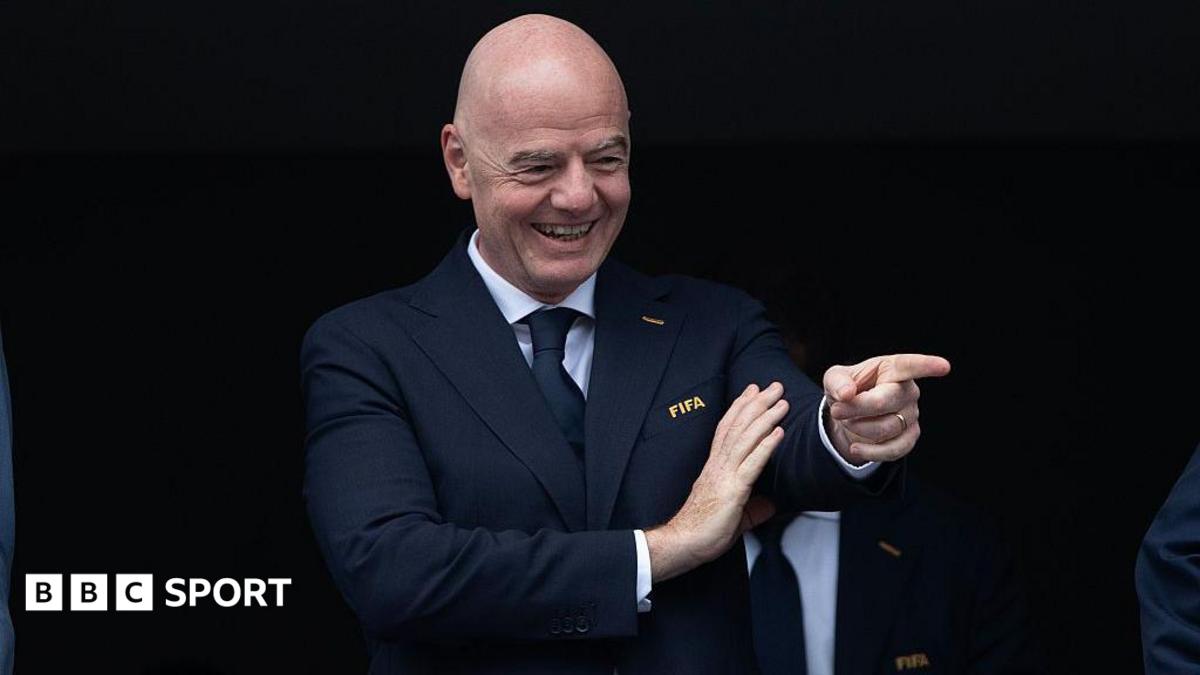
    The 2026 FIFA World Cup co-hosted by the United States has been overshadowed by an unprecedented disciplinary decision that has sparked allegations of political interference, reignited long-simmering criticism of Gianni Infantino’s 10-year tenure as FIFA president, and thrown the governing body’s commitment to its own rules into question.

    The controversy centers on Folarin Balogun, the United States men’s national team star who has netted three goals to carry the co-hosts into the Round of 16 against Belgium. After receiving a red card in the team’s final group stage match against Bosnia-Herzegovina, standard FIFA tournament regulations explicitly prohibit appeals against straight red card suspensions, which would have ruled Balogun out of the decisive knockout tie. In a move never before seen in World Cup history, FIFA opted to overturn the suspension, clearing the star striker to play.

    More than 24 hours after the decision was finalized, FIFA released an 871-word statement that offered no clear explanation for the extraordinary reversal. The missing context was quickly filled by one of the most powerful figures in global politics: U.S. President Donald Trump confirmed publicly that he personally intervened with Infantino to push for a review of the suspension. “I’m the one that got them to do it,” Trump stated, though he pushed back against claims he directly ordered Infantino to scrap the ban, saying he only requested a formal review.

    The revelation of presidential intervention has sent shockwaves through the global football community. In the U.S., public debate has framed the ruling as a correction of an unfair outcome, arguing that Balogun’s ejection from the group stage match already served as sufficient punishment – a view Trump explicitly echoed. But across the sport, critics warn the decision sets a dangerous precedent that undermines the core integrity of football governance. Infantino has repeatedly rejected claims of political meddling, insisting FIFA’s independent disciplinary committee made the final call without outside pressure. Yet the appearance of favoritism is unavoidable: the ruling benefits the tournament co-host, led by a sitting president who has publicly described Infantino as a close personal friend. For many observers, the overturned suspension felt indistinguishable from a political pardon, not a neutral disciplinary ruling.

    Former Liverpool manager Jurgen Klopp summed up the widespread anger: “If Donald Trump and Gianni Infantino really sorted this out between themselves, it is madness; it calls everything into question.” Sepp Blatter, Infantino’s disgraced predecessor who was forced to resign in 2016 amid a sweeping corruption scandal, even took the unusual step of condemning the move, writing on social media: “Football must never become a playground for political power.”

    UEFA, European football’s governing body, has issued an official rebuke calling the decision “unprecedented, incomprehensible and unjustifiable” and accusing FIFA of having “crossed a red line” – the latest flashpoint in a growing rift between the two bodies. Friction between UEFA and Infantino dates back years: in May 2025, UEFA president Aleksander Ceferin led a walkout of European delegates at the FIFA Congress after Infantino arrived more than two hours late following a diplomatic tour of the Middle East alongside Trump. The European body has also openly criticized FIFA’s inflated World Cup ticket prices, contrasting them with the much lower pricing planned for Euro 2028, and recently highlighted its support for Somali referee Omar Artan – who was denied entry to the U.S. for the tournament by American immigration officials – by inviting him to officiate the 2026 UEFA Super Cup. When asked about Artan’s situation earlier this year, Infantino drew widespread condemnation for his dismissive response, telling reporters to “chill, relax.”

    The Balogun controversy is far from an isolated incident during Infantino’s tenure, which has grown increasingly polarizing since he took office in 2016. Critics have pointed to a long string of contentious decisions: the creation of the FIFA Peace Prize, which was awarded to Trump during the World Cup draw, has sparked accusations that Infantino violated FIFA’s rules on political neutrality. Human rights campaign group FairSquare filed an ethics complaint over the award last December, and when no action was taken, 50 Members of the European Parliament submitted a second open letter demanding an investigation – a request that has also gone unanswered. FIFA has been criticized for the controversial 2030 and 2034 World Cup hosting allocation, which handed the 2034 tournament to Saudi Arabia without competitive bidding following a decision to split the 2030 edition across three continents, drawing criticism over the kingdom’s well-documented human rights concerns. Even the expanded Club World Cup, a flagship Infantino initiative, has been condemned by global player union FIFPRO as being created “without dialogue, sensitivity, and respect” for athlete welfare. The recent last-minute fiasco over a planned kick-off time change for the England-Mexico Round of 16 tie, which saw FIFA reverse course after five hours of confusion while pretending the initial change never happened, has further underscored claims of a lack of transparency and organizational competence within FIFA.

    For many, the Balogun decision feels like the latest in a pattern of unaccountable decision-making that has eroded trust in FIFA’s leadership. With Infantino up for re-election next year, many have wondered if this latest controversy could finally threaten his grip on the presidency. But a closer look at the political math within FIFA makes an upset extremely unlikely.

    Infantino’s support base stems from his signature FIFA Forward programme, which directs billions in funding to football development projects in smaller and lower-income member associations, and the expanded 48-team World Cup format that added 16 new qualification spots – 13 of which went to confederations outside of Europe’s wealthy football ecosystem. While the expanded format has drawn criticism, it has given long-underrepresented nations such as Cape Verde, Curacao, Jordan and Uzbekistan their first-ever shots at World Cup qualification, turning Infantino into a popular figure among the vast majority of FIFA’s 211 member associations, each of which holds one vote in presidential elections.

    To win re-election, a candidate needs 106 votes. Already, the 10 member nations of CONMEBOL (South America) have pledged their full support. The 54 members of the Confederation of African Football (CAF) have followed with a unanimous endorsement, and the 47 members of the Asian Football Confederation (AFC) have also backed Infantino. Combined, those pledges add up to 111 votes – enough to secure re-election even before counting support from other confederations.

    UEFA, which represents European football, may be openly opposed to Infantino’s leadership, but European football is financially self-sustaining, while most of the rest of the global game depends on the revenue FIFA generates from tournaments like the World Cup – revenue that funds the development projects that have cemented Infantino’s support. Even with the firestorm over the Balogun decision, Infantino’s path to a fourth term as FIFA president remains unobstructed, leaving critics to question what the controversy means for the future of football governance.

  • Why a Diljit Dosanjh film vanished from streaming after two days

    Why a Diljit Dosanjh film vanished from streaming after two days

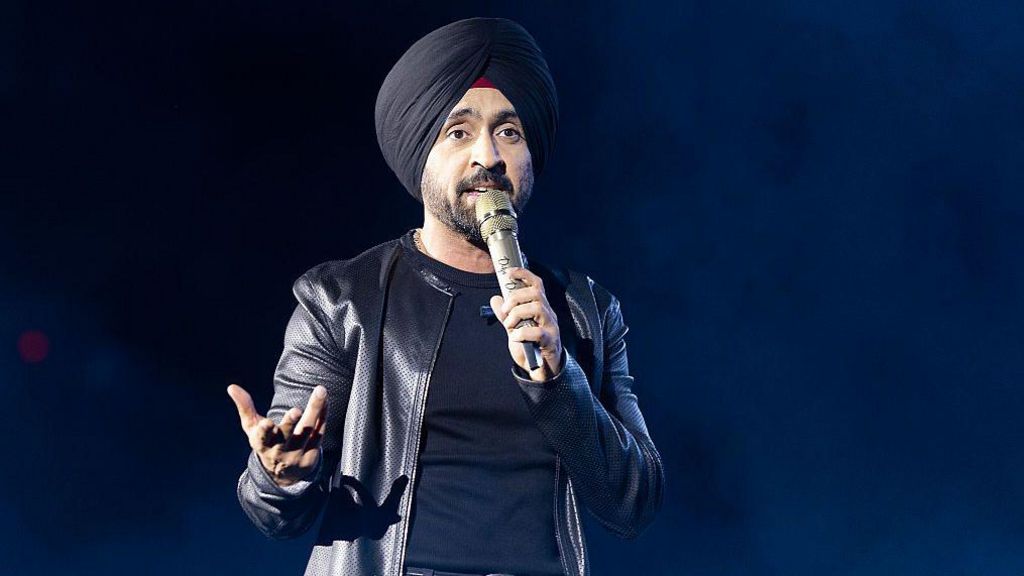
    A sudden and unexpected takedown of a high-profile Indian biopic starring one of the country’s most popular entertainers has ignited widespread controversy over censorship and artistic freedom in India.

    The film, *Satluj*, features Punjabi singer-actor Diljit Dosanjh in the lead role of Jaswant Singh Khalra, a human rights activist who exposed grave allegations of enforced disappearances and extrajudicial killings during the decades-long separatist insurgency in Punjab that lasted from the early 1980s to the mid-1990s. Thousands of people lost their lives in the conflict between Sikh militants fighting for an independent Khalistan state and Indian security forces. Human rights organizations have long accused security forces of systematic arbitrary detentions, secret disappearances and extrajudicial executions during the government’s counterinsurgency crackdown; authorities have repeatedly denied the allegations, arguing harsh tactics were necessary to quell the uprising.

    Khalra dedicated his work to investigating claims that hundreds of victims of the crackdown were secretly cremated by officials without notifying their families or keeping official records. The activist was abducted and murdered in 1995, and multiple Punjab police officers were later convicted of their roles in his killing.

    After a three-year battle to secure a public release, *Satluj* made its surprise debut on Indian streaming platform ZEE5 on June 27, 2026. Just 48 hours later, the platform removed the film from its Indian catalog, announcing it would remain unavailable “until further notice” citing unspecified “current developments” and offering no additional context. The takedown means the film is no longer accessible to viewers through any official channel in India.

    The film’s journey to release has been fraught with obstacles from its completion in 2022. Originally titled *Ghallughara* — a Punjabi term referencing historic massacres of Sikhs in the 18th century — the project first hit roadblocks when India’s Central Board of Film Certification (CBFC), the government body that approves films for theatrical release, demanded the title be changed with no public explanation. It was later renamed *Punjab ’95*, referencing the year of Khalra’s abduction, and was slated to premiere at the 2023 Toronto International Film Festival before producers pulled it amid ongoing certification deadlock in India.

    Director Honey Trehan revealed in previous interviews that CBFC’s objections grew steadily over years of review: what started as 21 requested edits ballooned to 127 proposed cuts, including demands to remove all references to Khalra, cut scenes depicting police violence, and alter core factual content of the biopic. Trehan said the board argued the film could spark public unrest in Punjab and challenged its portrayal of historical events. Filmmakers challenged the CBFC’s demands in Bombay High Court before eventually withdrawing their petition and agreeing to changes in a bid to move forward, only to see the list of requested alterations continue to grow.

    Unable to secure theatrical certification, the producers opted to release the film directly to streaming under a third new title, *Satluj*. Unlike theatrical releases, streaming platforms in India are not required to obtain CBFC approval under the 2021 Information Technology Rules, though the regulations still allow government-ordered takedowns. Trehan confirmed at the time of release that the final version launched on ZEE5 was the film’s original cut, “without any cuts or compromises” to the creative team’s original vision.

    Following the takedown, a spokesperson for production company RSVP Movies told *The Indian Express* the removal was carried out on direct government orders. India’s federal Ministry of Information and Broadcasting has not issued any public comment on the decision, and the BBC has requested a response from the ministry. The CBFC has also not publicly responded to Trehan’s accounts of its demands, and the BBC has also sought comment from the board.

    In a live social media video addressing the takedown, Dosanjh said the outcome was not unexpected, but its speed still caught the team off guard. “What I had already expected is exactly what happened,” he said. “I thought the film might get banned when government offices opened on Monday, but I didn’t know it would happen as early as Sunday evening.” Dosanjh added that the long-running uncertainty about the film’s status led producers to limit promotional activity: “If we had promoted it, the film would definitely not have been released at all.” Despite the takedown, he said he was grateful that audiences finally got the chance to see the film after years of delays.

    Despite being available for just two days, *Satluj* has already drawn widespread critical acclaim. *The Hollywood Reporter* called it “one of the finest Indian films of the year”, and the brief window of availability generated intense public discussion online about censorship and artistic expression in India.

    In the wake of the removal, Trehan told reporters he was stunned by the latest development. “I am at a loss right now. I don’t know how to react to this development,” he said. ZEE5 has said it remains supportive of the film and its creative vision, and that it “hoped to bring it back soon” without offering a timeline for its return.

  • A stoic Cristiano Ronaldo exits last World Cup with ‘clear conscience’ after Portugal loses to Spain

    A stoic Cristiano Ronaldo exits last World Cup with ‘clear conscience’ after Portugal loses to Spain

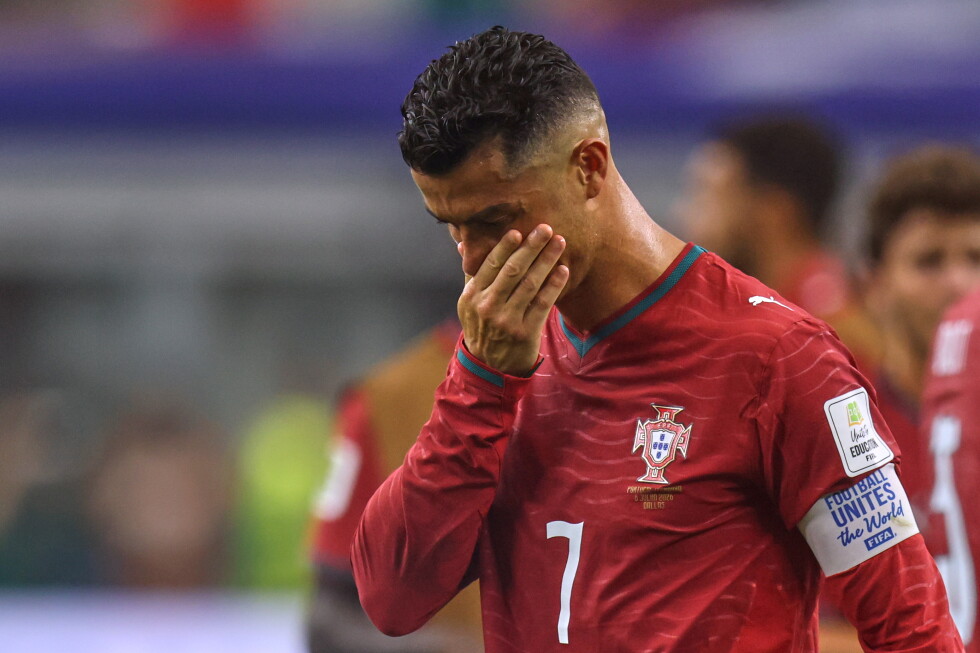
    ARLINGTON, Texas — For soccer legend Cristiano Ronaldo, the final chapter of his unprecedented World Cup journey ended not with celebration, but quiet stoicism Monday. The 41-year-old Portuguese icon walked off the field following his team’s 1-0 round-of-16 defeat to neighboring rival Spain, offering only a brief wave to the cheering crowd and barely showing the emotion he later acknowledged feeling.

    After the final whistle, Ronaldo briefly raised his right hand to shield his eyes, opening up about his disappointment. “Sad — it’s normal after being eliminated like this,” he told reporters. This tournament marked the sixth and final World Cup appearance of Ronaldo’s storied career, a milestone no other men’s player has reached in modern tournament history.

    Reflecting on his decades of contributions to Portugal’s national side, Ronaldo made clear he had no regrets about his effort on the sport’s biggest global stage. “I’ve given everything, I’ve given my best, and I leave with a clear conscience,” he said. “This is soccer, this is life for a soccer player. Sometimes you win and sometimes you lose.”

    Ahead of the knockout clash with Spain, Ronaldo had shared he hoped to extend his tournament run and savor every remaining moment. Even before the match, however, he confirmed what he repeated after the loss: this four-year cycle tournament would be his last. Throughout his World Cup career, the furthest Ronaldo ever led Portugal was a semifinal finish during his tournament debut in 2006, a result that remains the country’s deepest World Cup run to date.

    The match itself held a near-miss that could have shifted the momentum for Portugal. In the first half, Ronaldo had a potential goal stopped by an extraordinary leaping save from Spain’s record-setting goalkeeper Unai Simón. The chance came after teammate João Félix’s header bounced off Simón’s shoulder, leaving Ronaldo to launch a right-footed backward strike. Simón, still airborne, managed to reach back and secure the ball with both hands — one of three shots Ronaldo took, two of which landed on target.

    As for what comes next in his legendary career, Ronaldo said he would not rush into any decisions. “Yes, it was my last World Cup, but everything else I’ll have time to think about, to be with my family, and not make any decision hot-headed and move on with life,” he explained.

    Portugal’s head coach Roberto Martínez was quick to praise Ronaldo’s unparalleled legacy and leadership, framing the forward as a generational talent that deserves global celebration. “He is an example, a role model to follow. This is somebody that we need to celebrate. We’re talking about a football icon,” Martínez said in translated comments. “There aren’t too many Cristiano Ronaldos out there. I think we need to thank him. His dream was to win the World Cup and he did this as an amazing example in the locker room.”

    Under Ronaldo’s leadership, Portugal has claimed its first-ever major international titles: the 2016 UEFA European Championship, followed by UEFA Nations League trophies in 2019 and 2025. He leaves the World Cup holding a string of unprecedented records: he is the only player to score in five consecutive World Cups, and sits as the all-time leading goalscorer in men’s international soccer with 146 career goals across national team matches. He notched three goals in this 2026 tournament, bringing his total career World Cup goals to 11 — a mark that ties him for ninth on the all-time leaderboard.

    Monday’s exit bookended a historic World Cup rivalry with Spain that began eight years ago, when 33-year-old Ronaldo scored a stunning group-stage hat trick to secure a 3-3 draw against the Spanish side, a match still widely regarded as one of the greatest in World Cup history. That performance made him the oldest player to record a World Cup hat trick, a record that stood until 38-year-old Lionel Messi scored three for Argentina in a June 2026 group-stage win over Algeria.

  • Canada makes largest defence procurement deal in its history, citing ‘dangerous and divided world’

    Canada makes largest defence procurement deal in its history, citing ‘dangerous and divided world’

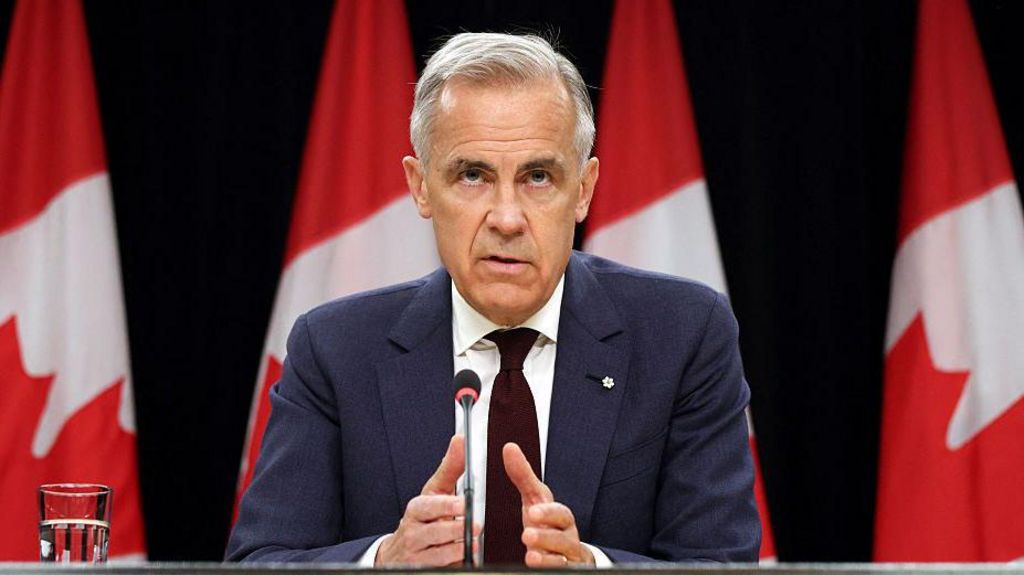
    Just days ahead of a critical NATO summit in Turkey, Canadian Prime Minister Mark Carney has announced one of the most consequential defence investments in the nation’s modern history: a massive contract to build a new 12-vessel submarine fleet awarded to German defence firm Thyssenkrupp Marine Systems (TKMS), the world’s leading builder of non-nuclear submarines.

    The deal marks the largest military procurement in Canadian history, and forms a core pillar of Carney’s sweeping pledge to ramp up national defence spending. Since taking office, Carney has already lifted Canada’s defence expenditure to 2% of national GDP, with a binding commitment to hit 5% by 2035 – a target that aligns with longstanding pressure from NATO, and more recently from former U.S. President Donald Trump, who has pushed all 32 alliance members to boost their military investment. The timing of the announcement, delivered on Monday in Halifax, Nova Scotia, puts Carney in a strong position to demonstrate Canada’s commitment to collective defence when he meets with other NATO leaders this week.

    Canada’s need for a new submarine fleet has grown increasingly urgent in recent years. The country’s current aging Victoria-class vessels, purchased in 1998, are in a state of severe disrepair: official government data confirms only one out of the four existing submarines is currently seaworthy. For a nation that boasts the longest coastline on the planet, shifting geopolitical and environmental conditions have amplified security risks dramatically: rapid climate change is melting Arctic sea ice, opening new navigable waterways that create potential flashpoints for adversarial activity and threaten Canadian sovereignty over its northern territories.

    TKMS beat out South Korea’s Hanwha Ocean in a competitive bidding process to secure the contract. The German bid is structured as a joint partnership with Norway, which TKMS says offers Canada a low-risk, NATO-aligned solution that includes shared provisions for maintenance, training, logistics, and operations. Unlike Canada’s current fleet, the new conventionally-powered submarines will be purpose-built with advanced under-ice operational capabilities, tailored to meet the unique security challenges of the Arctic.

    While the federal government has not publicly released a full cost estimate for the project, officials confirmed negotiations to finalize the formal contract will now launch, a process expected to take several months. Beyond just military capability, Carney emphasized that the investment will drive long-term domestic economic growth, noting the project will build and expand sustainable Canadian industrial capacity in the defence and shipbuilding sectors.

    The procurement project moves at an unprecedented pace for Canadian defence policy. Canada first launched the search for a contractor to replace its aging fleet in July 2024, with Carney pledging to select a winning bidder by June 2025 – a timeline that analysts describe as remarkably fast by Canadian standards. David Perry, president of the Canadian Global Affairs Institute, called the timely selection a major win for Carney’s government, saying the contract delivers significant credibility to the prime minister’s promise to accelerate and expand defence spending.

    Perry noted that the decision to award the contract to a German firm also aligns with Carney’s broader geopolitical strategy. As Canada navigates growing trade tensions with its southern neighbor and longstanding ally the United States, Carney has actively prioritized strengthening economic and security partnerships with Europe. “This project will push our core defence modernization forward consequentially,” Perry explained, adding that the new fleet will transform Canada’s maritime operational capacity. Once completed, the fleet is expected to maintain three reliably operational submarines at any given time – a massive upgrade from the current status of just one occasionally operational vessel, which has been Canada’s reality for years.

    In a statement ahead of the announcement, Carney framed the investment as a necessary response to an increasingly unstable global environment. “In a more dangerous and divided world, Canada must be prepared to defend our interests, protect our citizens, build our economy, and secure our future,” he said. “To that end, we are making the largest defence procurement in our nation’s history with speed, ambition, and discipline.” Canadian federal officials have reaffirmed that the new submarine fleet is an critical investment to protect the country’s maritime sovereignty and national security across its vast territorial waters, particularly in the fast-changing Arctic region.

  • Can China repeat its EV success with robotaxis?

    Can China repeat its EV success with robotaxis?

    Across multiple major Chinese cities, driverless robotaxis are no longer a distant vision of the future — they are already weaving through daily commuter traffic. In Beijing’s high-tech Yizhuang district, these steering-wheel-empty vehicles share asphalt roads with traditional human-driven cars, while autonomous delivery vans cruise dedicated lanes moving packages to pickup hubs across the area. The district has emerged as one of China’s flagship testing and commercialization zones for autonomous driving technology, with domestic industry leaders including Baidu, WeRide, and Pony.ai already offering paid commercial robotaxi rides within clearly demarcated zones. Booking a service takes just a few taps on a mobile app; within minutes, an uncrewed vehicle arrives, and after confirming the destination on an in-car touchscreen, it smoothly merges into Beijing’s dense, chaotic mix of buses, cyclists, electric scooters, and pedestrians, navigating varied hazards with surprising confidence. The underlying technology is still maturing, but one pressing question is already at the forefront of global industry discussion: can Chinese firms replicate the success they achieved in electric vehicles, and turn robotaxis into another globally dominant sector?

    Chinese autonomous vehicle developers already hold a critical structural advantage: the sprawling industrial ecosystem that turned China into the world’s largest EV market, which now overlaps directly with self-driving technology. Unlike Tesla, which develops most of its autonomous driving hardware and software in-house, China’s self-driving sector is built on an interconnected network of specialized suppliers and manufacturers. Established domestic automakers such as BYD, Chery, Geely, and SAIC build the base vehicles, while dedicated technology firms develop and refine the autonomous driving software. Critically, autonomous vehicles rely on most of the same core components as electric cars: batteries, sensors, processing chips, and onboard computing hardware. Since these supply chains already operate at massive, proven scale in China, companies can iterate on technology far faster and at much lower development costs than many global competitors. “What you see is a pace of innovation and adaptation in the Chinese EV industry that I don’t think is matched anywhere else around the world,” explained Kyle Chan, a foreign policy fellow at the Brookings Institution. “China’s EV capacity doesn’t just stop there. It actually spills over into other related industries through something that I call these overlapping tech industrial ecosystems.”

    Supportive government policy has also accelerated the rollout. National and local governments have rolled out pilot programs across dozens of cities that allow companies to test fully driverless vehicles on public roads, creating the space for real-world refinement beyond closed testing tracks. China also offers an unrivaled training ground for autonomous algorithms: extremely diverse and complex real-world driving conditions. A single trip through a major Chinese city can expose a self-driving system to everything from jaywalking pedestrians to illegally parked scooters, mixed-traffic buses, and unpredictable last-minute maneuvers from other road users. “The traffic environment here in China is very complex,” Maeve Zhang, chief marketing officer at WeRide, told the BBC. This variety of road scenarios generates massive volumes of unique driving data that developers use to refine and improve their software at an accelerated rate.

    While China-based driving data is a major asset, companies face significant hurdles when planning rapid expansion into overseas markets, each with their own unique environmental challenges that domestic data cannot fully prepare systems for. “In the Middle East, the temperature is very high. In South East Asia, there is heavy rain… and in Switzerland, winter temperatures can be very, very low,” Zhang notes. Extreme heat and cold can degrade battery performance and reduce component lifespan, while heavy precipitation, fog, and snow interfere with the cameras and lidar sensors that autonomous systems depend on to detect surrounding obstacles.

    Robotaxis are just one pillar of China’s broader autonomous driving ambitions. QCraft, another major domestic player, is adapting its autonomous software for passenger cars, public transit buses, and last-mile delivery vehicles. The company reports its autonomous buses are already operating in more than 20 Chinese cities, and it is actively expanding into international markets. “It’s very promising on the technology side that maybe the next five, seven, at most 10 years, it will get into everybody’s life,” said James Yu, QCraft’s chairman and chief executive.

    Chinese companies are already expanding globally at a rapid pace, and their primary commercial rivals remain based in the United States. Waymo, Alphabet’s standalone robotaxi division, still holds the position of global commercial leader, operating paid fully driverless services in multiple U.S. cities. Amazon-owned Zoox and Tesla are moving forward with development far more cautiously, while Uber abandoned in-house autonomous vehicle development years ago, after a fatal 2018 testing crash derailed the program. Today, both Uber and its U.S. ride-hailing rival Lyft are actively partnering with Chinese autonomous driving firms to bring driverless services to their platforms. This partnership model gives U.S. ride-hailing firms immediate “access to millions of customers that they wouldn’t have if they created their own app,” explained Tu Le, founder of automotive industry consultancy Sino Auto Insights. “Through these partnerships, they’re able to commercialise and broaden their scope.”

    Despite Chinese firms’ advantages in low-cost manufacturing, Waymo has spent years building out mature customer service systems and app infrastructure that many newer competitors have not yet matched. “Having experienced Waymo and the WeRides and the Ponys… I would have to say the user experience for Waymo is much better than all the other competitors. I feel like Waymo is really becoming a standard mode of transportation for California,” Le noted.

    Public and political perceptions of driverless technology also differ sharply across global markets. In the U.S., labor unions have raised widespread alarms that mass deployment of robotaxis could displace hundreds of thousands of workers in taxi, delivery, and freight industries. In China, policymakers frame wide-scale automation as a solution to the country’s shrinking working-age population, but broad public discussion of potential downsides is limited by government censorship of dissenting views, making it difficult to accurately measure broader public opinion. Chinese President Xi Jinping has positioned AI and robotics as core components of the country’s push to develop “new quality productive forces” that will create high-skilled jobs and drive long-term economic growth, giving companies strong policy and financial incentives to invest heavily in autonomous driving development.

    Proponents of the technology argue that widespread robotaxi adoption could deliver major public benefits, particularly for underserved groups. “If we can bring the cost down for a robotaxi ride so that it’s as cheap – or maybe even cheaper – than hailing an Uber with a normal driver, then it really helps broaden mobility,” Le said. “Elderly folks, folks that are disabled – these robotaxis really allow them a lot more ability to travel.”

    Even with these potential benefits, widespread public and regulatory acceptance faces major headwinds, particularly around safety concerns. Earlier this year, a software glitch in Baidu’s Apollo Go robotaxi service left roughly 100 uncrewed vehicles stranded across Wuhan, with some passengers reporting they were trapped inside after doors automatically locked following the malfunction. Baidu suspended services in the city for several weeks, though the company says it remains on track to launch commercial service in the United Kingdom later this year. The incident underscored how high-profile technical failures can quickly erode public trust in the technology, mirroring similar issues that have derailed autonomous driving projects elsewhere. General Motors shuttered its Cruise robotaxi division last year to refocus its autonomous development efforts on personal consumer vehicles, after California regulators suspended Cruise’s operating permit in 2023 following a crash where one of its robotaxis dragged a pedestrian several meters after she was first struck by a human-driven vehicle.

    These challenges have led many analysts to argue that robotaxis will be far harder to export globally than electric vehicles. Deploying a commercial robotaxi network requires far more than building a capable vehicle: developers must navigate complex local regulatory approval processes, build high-resolution local road maps, establish on-the-ground local operation and maintenance teams, and win sustained public trust — all hurdles that even well-established U.S. firms have struggled to overcome. Chinese companies also face growing geopolitical barriers to global expansion. Unlike traditional electric vehicles, robotaxis continuously collect large volumes of mapping, location, and visual road data, which makes them a target for national security concerns in many overseas markets that are wary of Chinese-based technology firms accessing sensitive geographic information.

    Despite these well-documented challenges, industry leaders remain optimistic that regulatory attitudes are shifting in favor of autonomous driving. “We see very positive attitudes and very good policies and regulations coming out from governments both here in China and in some other international markets,” Zhang said.

    For Brookings’ Chan, the global race to commercialize robotaxis represents far more than just the arrival of a new transportation option. “China is trying to create this sort of high-tech economy that’s digitally connected, that’s AI-powered, and that builds on its existing strengths today in batteries, EVs, motors and other related technology,” he explained.

  • Spain may style itself as Israel’s most fervent adversary, but its sanctions are far from comprehensive

    Spain may style itself as Israel’s most fervent adversary, but its sanctions are far from comprehensive

    Amid growing global outcry over Israel’s military campaign in Gaza, widely condemned by critics as genocide, most Western governments in Europe and the Americas have remained conspicuously silent on the issue. Spain has emerged as a rare exception, positioning itself as one of the most outspoken Western critics of Israel’s actions, positioning itself as an outlier among Western nations.

    Spanish Prime Minister Pedro Sanchez has pushed for multilateral action to halt global arms trade with Israel, including a high-profile campaign to suspend the EU-Israel Association Agreement. Spain was also the first and only European Union member state to formally recall its ambassador to Israel, and announced a halt to new arms sales to Israel as early as October 2023.

    However, a 2025 investigation from Barcelona’s Delas Centre for Peace Studies reveals a stark gap between this rhetoric and actual trade data. The report finds that military imports from Israel actually increased dramatically after October 2023, totaling €36.7 million ($41.9 million) by February 2025 alone. This included arms, ammunition, tanks, and armored fighting vehicles categorized under standard international trade codes. The report explicitly notes that Spain never imported more Israeli military equipment than it did in the 16 months following the 7 October 2023 attacks.

    This pattern shifted only in September 2025, when Sanchez signed into law a formal full arms embargo against Israel, alongside a ban on imports of goods from Israeli-occupied Palestinian territories. Unlike the earlier partial pause on new sales licenses, this legislation establishes a formal, blanket legal prohibition on arms trade with Israel.

    Eirene de Prada, an international law professor and member of Juristas por Palestina (Lawyers for Palestine), explained that the new legislation marks a formal shift from administrative restraint to binding legal rule. But she warns that broad loopholes, exceptions for pre-existing contracts, and ambiguous regulatory gaps leave the embargo far weaker than its public framing suggests. In comments to Middle East Eye, De Prada accused the Spanish government of deliberate doublespeak: while the embargo sends a strong symbolic statement condemning Israeli actions, regulatory loopholes embedded in the Royal Decree-Law allow trade with Israeli defense firms to continue largely uninterrupted.

    Under Spanish legislative rules, a Royal Decree-Law is classified as an emergency measure for extraordinary and urgent need, requiring parliamentary approval within 30 days of enactment. Royal Decree-Law 10/2025, passed in October 2025, justifies the embargo by noting that the extreme humanitarian crisis in Gaza creates an urgent need to block the transfer of defense and dual-use materials that Israel uses against civilian populations.

    Alejandro Pozo, an investigator at the Delas Centre, argues that even with its flaws, the legislation represents a meaningful step forward. He notes that the embargo sets a critical global precedent, proving that a full arms embargo on Israel is a politically feasible policy for Western nations. Even so, Pozo confirms that the law leaves all pre-existing military contracts intact and grants Spanish authorities broad discretion to approve exceptions when deemed justified.

    Just three months after the law’s passage, the Spanish government exercised one of these exceptions to authorize transfers of defense and dual-use materials for four Airbus-led aeronautical projects, citing the projects’ significant industrial and export potential. The approved transfer included an anti-missile defense system produced by Elbit Systems, an Israeli defense manufacturer widely documented as complicit in Israel’s military campaign in Gaza.

    Pozo explains that Israel’s core interest in trade with Spain is not selling finished weapons to Spanish buyers, but gaining access to Western markets that lower the cost of Israel’s domestic military production and sustain its long-term occupation of Palestinian territories. He added that Israeli defense firms also exploit loopholes in EU trade rules, which allow Spain to trade defense equipment via other EU member states and purchase Israeli weapons manufactured by EU-based Israeli subsidiaries. These transactions are not covered by the current embargo, and account for a large share of Israeli military-related activity in Spain. Many Israeli-designed weapons are produced in Spain by local subsidiaries of Israeli firms or by domestic Spanish manufacturers operating under Israeli production licenses.

    To close these gaps, Pozo argues that policymakers must target the financial flows that directly or indirectly fund Israel’s war machine, rather than only regulating direct arms transfers. He calls for sanctions modeled after the sweeping comprehensive sanctions the EU imposed on Russia, which target all core Israeli economic and political interests.

    Spain is far from alone in facing this contradiction between anti-Israel rhetoric and continued complicity in what UN Special Rapporteur Francesca Albanese has termed the “economy of genocide.” Colombia, another leading critic of Israel’s actions, implemented a national ban on coal exports to Israel that took effect in August 2025. But after the ban went into effect, South Africa – which brought Israel’s case before the International Court of Justice (ICJ) and co-founded the Hague Group supporting Palestinian legal claims – stepped in to become Israel’s largest coal supplier.

    South African Trade Minister Parks Tau has argued that imposing unilateral sanctions on Israel without formal multilateral UN backing violates World Trade Organization non-discrimination rules and exposes South Africa to costly international legal challenges. But Patrick Bond, director of the Centre for Social Change at the University of Johannesburg, rejects this claim. He points to a July 2024 ICJ ruling, later upheld by the UN General Assembly, that explicitly requires all nations to end any form of complicity with Israel’s illegal occupation of Palestinian territories. Bond argues this ruling creates a binding international legal obligation to restrict trade with Israel, and that South African authorities already have the legal authority to ban such exports under existing “dangerous exports” regulations – no new legislation is required. “The coal export ban could be implemented immediately,” Bond confirmed.

    Even in Colombia, where President Gustavo Petro has spearheaded a regional push for sanctions against Israel, untangling long-standing military ties has proven far more complex than banning coal exports. In February 2024, Petro announced his government would end all new arms purchases from Israel and reduce bilateral military cooperation, but Colombian Defence Minister Ivan Velasquez later confirmed that all existing contracts would be honored, including maintenance for Colombia’s fleet of Israeli-built Kfir fighter jets. The Colombian Armed Forces also still rely heavily on the Israeli-made Galil rifle, which was used extensively by Israeli forces in Palestine and Lebanon, and was deployed to suppress left-wing insurgent groups during Colombia’s decades-long civil war.

    To break these long-standing ties, Colombia signed a €3.1 billion contract with Swedish defense firm Saab in November 2025 to purchase 17 Gripen E/F fighter jets, which will replace the aging Kfir fleet by 2032. In May 2026, Petro also unveiled a domestically produced rifle to gradually replace the Galil, but the transition is expected to take five years to complete.

    A shared vulnerability of both Spain and Colombia’s embargo policies is their vulnerability to reversal by future administrations. In Colombia, President-Elect Abelardo de la Espriella, who takes office in August 2026, has already publicly proposed expanding collaboration with Israeli defense industries. His commitment to expanding extractive mining also threatens to roll back Petro’s coal export ban, which was implemented via presidential decree and has not been enshrined in permanent national legislation.

    In Spain, the embargo has greater formal legal standing as a properly enacted law, but it is still not immune to rollback. De Prada explains that a future administration with a parliamentary majority could substantially amend or fully repeal the embargo. It could also weaken the embargo in practice through broad interpretation of the “general national interests” clause that allows for frequent exceptions, or by simply reducing the rigor of regulatory enforcement.

    Pozo confirms that if the center-right Partido Popular or far-right Vox win the 2027 national elections, they could easily eliminate the embargo entirely. This would likely be a symbolic political act rather than a response to domestic defense needs, as both parties have openly condemned Sanchez’s Gaza policy. Both parties voted against the embargo in October 2025, with Vox reiterating Israel’s claimed right to self-defense and accusing the Sanchez government of using the embargo as a smokescreen to distract from domestic corruption allegations.

    Experts say Colombia’s incoming right-wing administration’s plan to rapidly reset ties with Israel serves as a clear warning to Spain’s current government. De Prada argues that sustained, long-term policy of holding Israel accountable requires far more robust regulatory measures than the current limited embargo. She told Middle East Eye: “Ultimately, the next step must be moving from a limited, reversible embargo to a comprehensive, permanent policy of non-cooperation, non-assistance, and non-recognition, supported by effective parliamentary oversight, administrative transparency, and full supply chain traceability.”

    Until that shift occurs, the gap between symbolic political gestures and concrete action, and between public rhetoric and policy practice, remains unmistakeable.